
Plan the best Paxos boat trips, from the Blue Caves and western cliffs to Tripitos Arch, Antipaxos beaches, hidden coves and self-drive boat options.
Paxos is compact, but it rewards precise planning. Villages sit close together on a map while olive-grove lanes, steep western cliffs, irregular buses and boat-dependent sights can make two apparently simple days feel very different. This guide focuses on practical choices: where to base yourself, when walking is realistic, what changes with wind, and how to combine beaches, villages and sea excursions without turning the trip into a checklist.
Quick planning notes
- The western Blue Caves are accessible only by sea and are most impressive in calm conditions.
- Antipaxos can be combined with the caves on many excursions, but a dedicated transfer gives you more beach time.
- Self-drive motorboats are widely available, but rental rules, horsepower limits and permitted areas must be confirmed with the operator.
- Never pressure a captain to follow a fixed route when wind or swell makes a cave entrance unsafe.
Why a boat day matters on Paxos
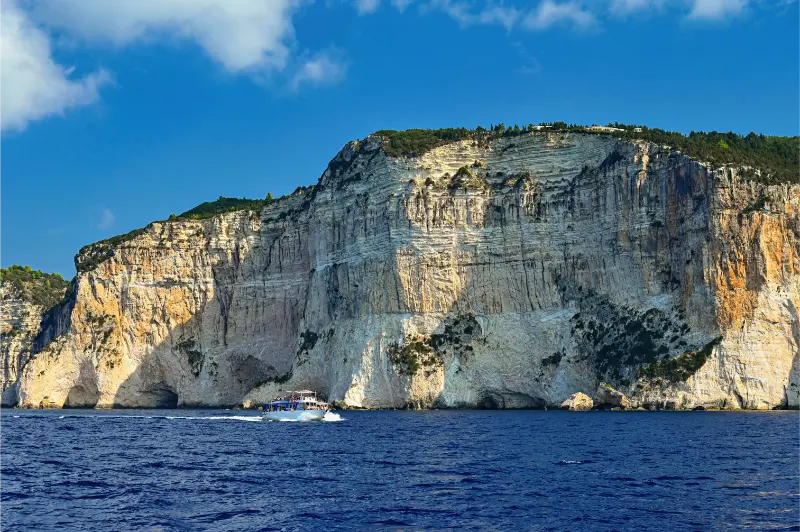
Paxos is one of those islands where the coastline seen from land tells only half the story. The east side is gentle enough for roads and village beaches, while the west side rises in pale cliffs cut by caves, arches and inaccessible coves. A boat reveals that contrast in a few hours and explains why sea excursions are not an optional add-on but one of the island’s defining experiences.
You can join a larger excursion, book a small skippered boat or rent a low-powered craft if local rules and your experience allow. The right choice depends on budget, comfort and how much independence you want. Families and first-time boaters often enjoy a skippered trip because someone else manages wind, mooring and cave judgment.
The Blue Caves
The famous Blue Caves lie along the steep western coast, where the cliffs open into a series of sea caverns. The local tourism authority notes that they are reachable only by boat and that summer excursions depart regularly from Gaios. Light, water color and the echo inside the caves are strongest when the sea is calm enough for a safe approach.
Do not assume every trip enters every cave. Swell can make a narrow opening unsafe even when the harbour looked calm at breakfast. A responsible captain may shorten the route, stay outside a cave or choose another swimming stop. That is good seamanship. Sit where instructed and keep hands inside the boat when maneuvering close to rock.
Tripitos Arch and southern cliffs
Tripitos is a natural stone arch on the southern western coast and another classic sight from the sea. It can also be approached on foot from inland paths, but the boat perspective shows the scale more clearly. Many circumnavigation trips include the arch together with caves, sea stacks and short swims.
Photography is easiest when you are not trying to stand in a moving boat. Use a wrist strap, protect cameras from spray and prioritize balance over the perfect angle. If the captain cannot stop because of sea conditions, enjoy the moving view rather than asking for repeated close passes.
Antipaxos: Vrika and Voutoumi
Antipaxos lies only a few nautical miles south of Gaios and is famous for Vrika and Voutoumi. Local boats run frequent summer transfers, and many full-day cruises combine the beaches with Paxos’s west coast. This is efficient, but it can mean less beach time and arrival during the busiest part of the day.

If swimming and lunch on Antipaxos are your priority, choose a dedicated transfer and return later. If you mainly want the dramatic coast, choose a circumnavigation that includes the caves. The two experiences overlap but are not identical, and the best itinerary depends on what you want most from the day.
Self-drive boats and skipper options
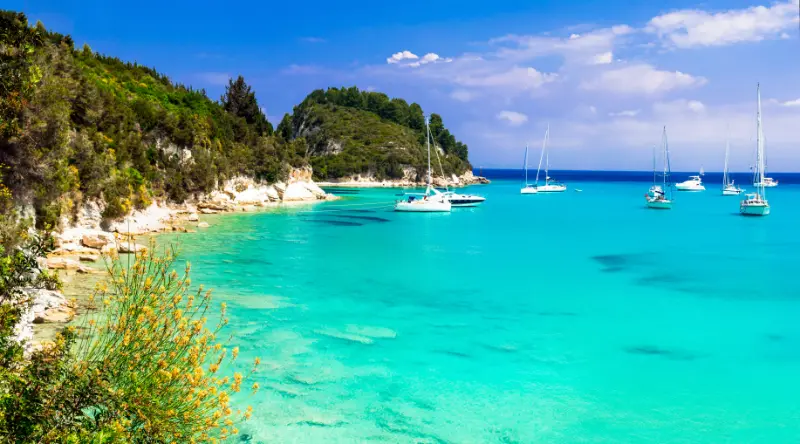
Boat rental is popular because many east-coast coves are easy to reach from Gaios, Loggos or Lakka. Some operators rent lower-powered boats without requiring a conventional boating licence, but rules and insurance conditions must be confirmed directly. A short handover is not a substitute for judgment around swimmers, anchors, rocks and changing weather.
If you have never handled a small motorboat, hiring a skipper is often money well spent. You gain local knowledge, can relax during swims and are more likely to see caves or coves that suit the day’s conditions. It also removes the temptation to push farther than you should because you paid for a full-day rental.
Sea conditions, wildlife and responsible behavior
The Ionian can look deceptively smooth inside a protected bay. Check wind and swell for the open west coast, not just the harbour. Carry sun protection, water and a dry layer, and tell the operator if anyone has mobility concerns or is prone to seasickness. Children should wear correctly sized flotation equipment whenever instructed.
Keep distance from wildlife and never chase dolphins, monk seals or nesting birds for a photograph. Avoid anchoring on sensitive seagrass when a sandy patch or mooring is available. The clearest water and quietest coves remain attractive only if boat traffic respects the same places everyone has come to enjoy.
What to ask before booking
Ask the exact departure point, approximate passenger number, whether shade and a toilet are available, how long you spend on Antipaxos, whether swimming stops depend on weather and what happens if the trip is cancelled. Also confirm whether the quoted price includes fuel on private or rental boats.
For a day trip from Corfu, distinguish between tours that merely cruise past Paxos and those that give meaningful time ashore. If you are already staying on Paxos, local departures are usually better because you avoid the long approach from Corfu and can choose smaller boats or more flexible timing.

Accommodation and booking strategy
Paxos has a limited accommodation supply compared with Corfu, and the most attractive village-centre rooms, waterfront apartments and family villas can sell early in July and August. Compare the exact location rather than only the property name: a room described as “Gaios” may sit well above the harbour, while a villa near Lakka may require a car or taxi after dinner. Check current Paxos accommodation on Booking.com.
For a short first visit, prioritize convenience over a dramatic view. For a longer stay, a quieter villa can work well if you already know how you will reach groceries, beaches and evening restaurants. If mobility is limited, ask the host about gradients, stairs and the nearest point a taxi can reach; the island’s beautiful old lanes are not always stroller- or suitcase-friendly.
Frequently asked questions
Are the Paxos Blue Caves worth it?
Yes, especially in calm weather. The caves and western cliffs are among the landscapes you cannot properly appreciate from the road.
Can I rent a boat in Paxos without a licence?
Some operators offer low-powered boats under local rules, but eligibility, horsepower and permitted areas must be confirmed directly with the rental company.
Should I combine Paxos caves and Antipaxos in one day?
It is efficient and popular. Choose a combined trip if you want variety; choose a dedicated Antipaxos transfer if beach time is your priority.
Useful official resources
For information that can change after publication, check the Visit Paxos tourism portal, the official Paxos travel-information page and, for sea connections, the official getting-to-Paxos page. Hiking information is also available from Visit Greece. Ferry times and local transport can change with season, weather and operator, so verify the exact date before committing to a tight connection.
Related Paxos guides
- Antipaxos Guide: Voutoumi, Vrika, Hiking and the Best Day Trip from Paxos
- Best Beaches in Paxos: Monodendri, Kipiadi, Orkos, Marmari and More
- Gaios Paxos Guide: Harbour, Castle, Mongonissi and Where to Stay
- Paxos with Kids: Family Beaches, Boat Trips and Practical Tips
A practical way to plan the day
Build each day around one anchor rather than several fixed appointments. On a calm day, make the boat trip or exposed west-coast walk the anchor and keep the afternoon flexible. When wind is stronger, choose an east-coast beach, village lunch or short olive-grove walk. This approach suits Paxos because distances are small enough to change direction, while the most memorable experiences—clear water, cliff light, quiet lanes and village evenings—depend more on conditions than on an ambitious schedule.
Keep water, sun protection, offline maps and a small cash reserve in your day bag. Mobile reception can vary near cliffs and remote coves, and not every beach has a bar or a reliable taxi pickup point. If you are using buses, photograph the current timetable after arrival and confirm the final return of the day. If you are using boats, ask what happens if wind forces a route change. Those simple checks remove most of the stress from an otherwise very easy island to enjoy.
A final rule is to leave some room for repetition. Paxos is not an island where every hour needs a new attraction. Returning to the same waterfront for breakfast, repeating a beach that was exceptionally calm, or walking the same olive lane at sunset often produces a stronger sense of place than collecting ten different stops. The island is small enough that familiarity becomes part of the experience rather than a sign that you have run out of things to do.