

Leros is one of the most distinctive diving destinations in the Dodecanese because clear Aegean water overlaps with a dense military history. The island was a major naval base and battlefield, so the underwater landscape includes wrecks and wartime remains alongside ordinary reefs and coves.
The right way to plan a dive here is not to arrive with a single wreck name and insist on it. Certification, recent experience, wind, depth, visibility and heritage restrictions all matter. This guide explains how I would choose a dive centre, what beginners should expect and why the War Museum is worth adding to a diving trip.
Why Leros is different for divers
Many Greek islands offer clear water and reefs; Leros adds an unusually concentrated twentieth-century military history. The Battle of Leros and the island’s years as a fortified naval base left wrecks and submerged remains that make diving here as much about context as marine scenery. Visit Greece actively presents diving as one of the island’s experiences.
That does not mean every visitor should chase a famous wreck name. Sites vary by depth, sea conditions, legal access and diver certification. The smart approach is to choose a reputable local dive centre, explain your logged experience honestly and let the operator select the site for the day.
Wreck diving and military heritage
The waters around Leros contain material connected with the intense air and naval fighting of 1943. Some sites are appropriate only for experienced divers; others can be viewed at more accessible depths depending on conditions and current rules. Wreck penetration adds another level of risk and should never be improvised simply because visibility looks good.
I strongly recommend visiting the War Museum before or after a history-focused dive. Seeing maps, photographs and recovered objects makes the underwater remains part of a wider story rather than an anonymous piece of metal on the seabed.
If you are a beginner
Leros can still work well for a first scuba experience. Sheltered bays allow operators to choose calmer training water, and a Discover Scuba-style session can focus on buoyancy, breathing and marine life rather than wartime wrecks. Ask exactly what is included, how many participants share an instructor and whether the site requires a boat.
Do not choose a centre only because it advertises the deepest or most dramatic wreck. For a beginner, instructor quality, equipment condition and conservative site selection matter more than a famous name. If you are anxious underwater, say so before gearing up; a good professional will adjust the plan.
For certified divers: questions to ask
- What certification and recent experience does the proposed site require?
- What are the expected depth, current and visibility today?
- Is the dive from shore or boat, and what is the emergency plan?
- Is any penetration planned, and if so, what specialist training is required?
- What environmental or heritage restrictions apply to the wreck or artefacts?
- Is rental equipment serviced locally and is nitrox available if relevant to your plan?
Snorkelling if you do not scuba
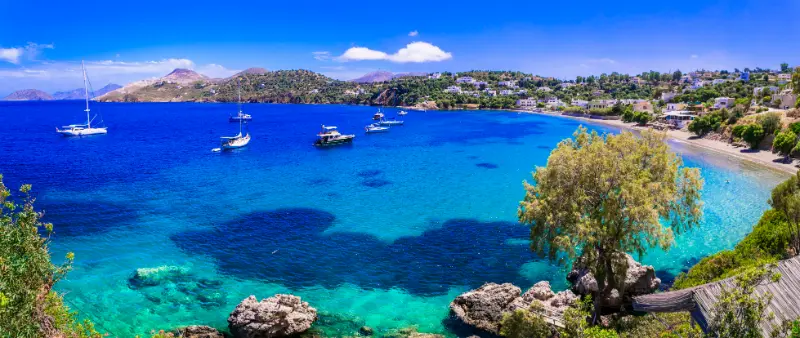
You do not need a tank to enjoy the island’s clear coves. Small rocky edges around organised beaches can provide much more interesting snorkelling than the centre of a sandy bay. Choose calm water, stay away from boat lanes and use a visible surface marker where local traffic makes that sensible.
Kryfos, Dio Liskaria, Vromolithos and the coves around the island may all offer interesting water depending on conditions, but I would never recommend a specific rocky entry without looking at wind and boat traffic on the day. Ask locally and enter where you can also exit safely.
Diving responsibly around wrecks
Wrecks are cultural heritage and, in some cases, war graves. Do not remove objects, move ammunition, force access into unstable structures or treat the seabed as a souvenir shop. Good buoyancy is part of heritage protection: avoid kicking sediment into fragile interiors and do not hold onto corroded structures for a photograph.
A good two-dive day
For experienced divers, I would keep the rest of the day light. A morning two-dive trip, long lunch and sunset in Panteli is enough. For beginners, one training dive plus a relaxed beach afternoon avoids turning the first scuba experience into an endurance event. Museum visits are better on another half-day unless the dive operation finishes early.
When to go and how to use the day
Diving in Leros works differently by season. In July and August I would put walks, castle visits, museums and exposed viewpoints early in the day, then use the hottest hours for lunch, a shaded rest or swimming. Late afternoon is when the villages and waterfronts become more enjoyable again. May, June, September and early October are easier for travellers who want to combine sightseeing with walking rather than organising the entire day around heat.
Wind matters on Leros because the coastline is deeply indented. A beach that feels exposed one day may be pleasant the next, while another bay can stay relatively calm. I would keep one flexible afternoon rather than assigning every beach to a fixed date. Sea state and operator judgement should decide the site; do not pressure a centre to run a wreck dive when conditions are marginal.
Transport and realistic pacing
Most dive logistics are handled by the operator; choose accommodation based on the rest of your trip rather than trying to sleep beside one exact dive site. The island is not huge, but short map distances do not always mean a quick, flat walk. Hills, summer heat and the shape of the bays make route planning important. If you are relying on buses, confirm the current timetable locally rather than building the day around an old online schedule.
For most visitors, two substantial experiences plus a good meal and a swim create a better day than five rushed stops. This is especially true around the island’s sheltered bays and wartime sites, where it is easy to underestimate how much time disappears into viewpoints, photographs, museum rooms and unplanned waterfront breaks.
What to pack
- Shoes with useful grip for castle approaches, stone lanes and uneven coastal paths.
- A refillable water bottle; exposed hills and quieter beaches may have limited services.
- High-SPF sunscreen, a hat and a light shoulder cover for strong summer sun.
- Swim shoes if you prefer them for pebble or mixed-surface beaches.
- A light layer for breezy evenings and boat rides outside peak summer.
- Offline maps or saved pins if your plan includes minor roads, remote coves or walking routes.
Who this plan suits best
It suits certified wreck enthusiasts, beginners who want calm Aegean water, underwater photographers and history travellers who want to connect museum material with the seascape. Leros rewards travellers who leave space in the schedule. The island is not about racing between a long list of blockbuster sights; its appeal comes from the combination of small bays, layered twentieth-century history, low-key villages and evenings that still feel local.
Common mistakes to avoid
- Treating every beach as equally sheltered regardless of wind direction.
- Assuming a short distance on the map is automatically an easy walk in midday heat.
- Using old museum or bus hours without checking them again for the current season.
- Planning only beaches and missing the island’s unusually important Italian and Second World War heritage.
- Changing accommodation unnecessarily on a short stay instead of using one practical base.
- Trying to fit a museum, a castle, a remote beach and a long dinner into one tightly timed afternoon.
How I would make the plan more reliable
The most useful way to plan Leros diving guide is to separate fixed commitments from flexible ones. A museum opening time or ferry departure is fixed; a swim, café stop or sunset viewpoint is flexible. Put the fixed element first, then keep the beach or meal that follows adjustable. This prevents a small timetable change from collapsing the entire day.
I would also avoid judging travel time from distance alone. Leros has bays, hills and narrow roads, and a route that looks very short can include parking, a climb or a wait for a taxi. Add buffer time, especially when you have a ferry later that day. On a holiday this small adjustment is more valuable than adding one extra attraction.
Finally, use local conditions as information rather than an inconvenience. If wind makes your planned beach uncomfortable, switch bay. If the castle is closed, spend longer in the villages and return another morning. If a museum hour changes, move the swim forward. Leros works best when the itinerary responds to the island instead of trying to force the island to follow a spreadsheet.
Budget and booking notes
Leros is generally easier to manage financially than islands dominated by luxury resorts, but summer accommodation and transport still reward early planning. Book the room that solves the most daily problems: walkable dinner, acceptable beach access, manageable steps and a sensible route from the ferry. Spending slightly more on the right base can save repeated taxi fares and wasted time.
For tours and activities, compare the cancellation terms, exact meeting point and whether transport is included. For independent days, keep small cash available for local services that may not fit a fully digital routine. Prices and opening periods change, so treat any old blog total as a reference rather than a promise.
Accessibility and slower travel
Travellers with limited mobility should ask unusually specific questions on Leros: number of steps from the road to the room, whether the restaurant route is level, where a taxi can actually stop and whether a beach has a stable entry. Historic lanes and hillside accommodation can be beautiful but demanding. A well-chosen base and a few taxi transfers can make the same island much easier.
Slow travel also improves the experience for everyone else. Staying longer in one bay, returning to the same taverna and walking a village twice at different times of day reveals more than a fast island checklist. Leros has enough detail for this approach, especially when history, swimming and local life are all part of the reason you came.
Continue planning Leros
Start with the Leros Travel Guide for the island-wide overview, then use these dedicated guides: Agia Marina, Platanos and Panteli Leros Guide; Lakki Leros Guide; Leros War Museum and WWII Guide; Alinda and Krithoni Leros Guide; Best Beaches in Leros; Leros Hiking Guide; Leros Without a Car; Leros with Kids; Where to Stay in Leros.
Leros Diving Guide FAQ
Is Leros good for beginner divers?
Yes, because local operators can choose sheltered training sites when conditions allow. Beginners should prioritise instructor quality and calm water over wreck depth.
Can I dive WWII wrecks without advanced certification?
Some wreck-related sites may be accessible to less experienced divers, while others require deeper or specialist skills. The operator should match the site to your certification and recent experience.
Should I visit the War Museum if I am diving?
Yes. It gives historical context to the island’s submerged military heritage and makes a wreck-focused dive much more meaningful.
Is snorkelling worthwhile?
Yes, especially along rocky edges of calm coves. Stay out of boat traffic and choose entries that are safe for both entering and exiting.
Can I take artefacts from a wreck?
No. Leave military and archaeological material where it is. Objects may be protected heritage, dangerous or part of a war grave.
Useful official information
For current local information I check the Municipality of Leros and Visit Greece – Leros. Visit Greece currently lists diving among the island’s signature experiences; local operators should confirm legal sites and day-specific conditions. Opening hours, local transport, boat services and seasonal businesses can change, so recheck anything time-sensitive shortly before the day you plan to use it.
Leave a Reply