
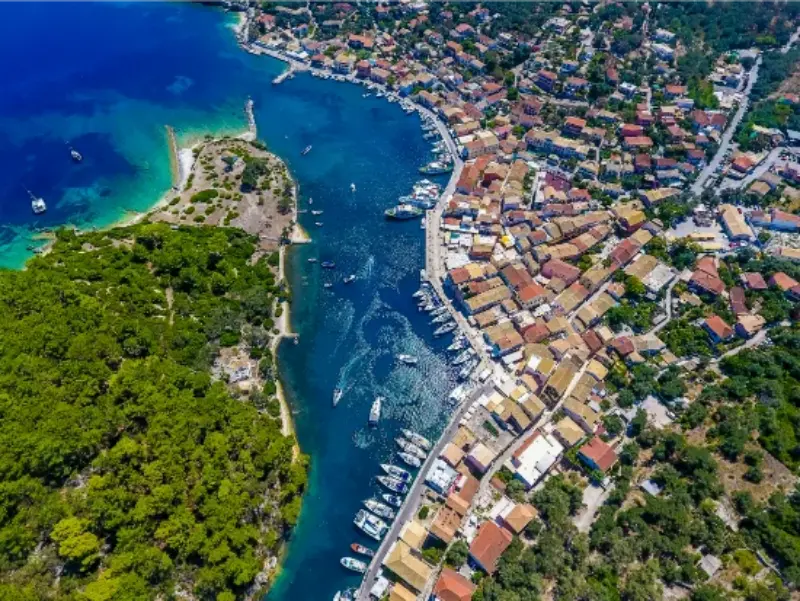
Plan a family holiday in Paxos with kid-friendly beaches, short boat trips, easy village days, transport advice, heat safety and realistic itinerary ideas.
Paxos is compact, but it rewards precise planning. Villages sit close together on a map while olive-grove lanes, steep western cliffs, irregular buses and boat-dependent sights can make two apparently simple days feel very different. This guide focuses on practical choices: where to base yourself, when walking is realistic, what changes with wind, and how to combine beaches, villages and sea excursions without turning the trip into a checklist.
Quick planning notes
- Paxos is compact and calm, but most beaches are pebbly and some have steep or rough access; choose the beach around your children’s age.
- Harami, Mongonissi and serviced Monodendri are easier family options when sea conditions are calm.
- Choose shorter boat trips for young children and always ask about shade, toilet access and life jackets before booking.
- Gaios is the easiest family base if you want supermarkets, pharmacies, taxis and restaurants within walking distance.
Why Paxos works for families
Paxos combines short driving distances, clear water and small villages without the scale of a large resort island. Families can build simple days around one beach and one village rather than spending hours in a car. Restaurants are generally relaxed about children, and evening waterfront walks give the whole family something to do after the heat eases.
The main adjustment is the beach style. Most shores are pebbly, and remote coves may have no shade, toilets or food. With water shoes, an umbrella and a realistic plan, that is easy to manage. If you want guaranteed sand and shallow entry, include Antipaxos or Mongonissi rather than expecting every Paxos beach to look the same.
Best beaches with children
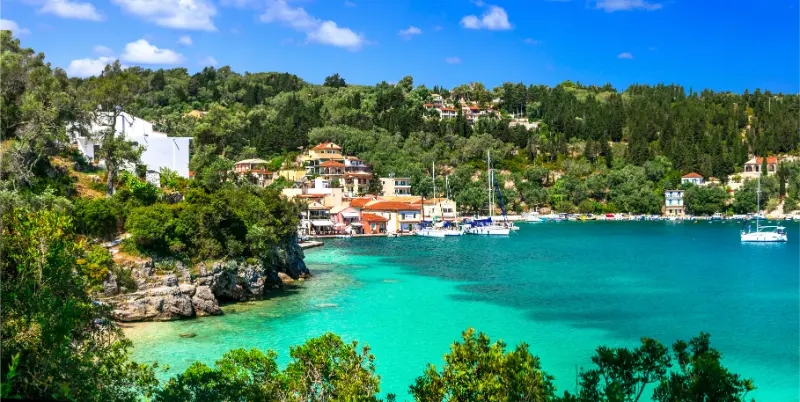
Harami near Lakka is practical because it is close to the village and usually easy to combine with food and facilities. Mongonissi has a more sheltered, sandier character and is another strong family choice. Monodendri offers seasonal infrastructure that reduces how much gear you need to carry.
For older children who enjoy snorkeling and pebbly coves, Kipiadi and Marmari can be excellent. The important variable is the sea on the day. Even a normally friendly beach can become uncomfortable in wind, so ask locally which coast is sheltered rather than following a fixed weekly plan.
Boat trips with children
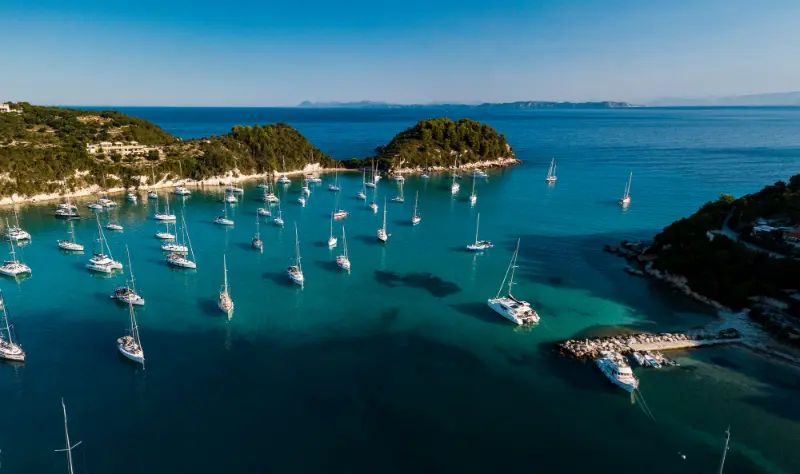
A boat day can be the highlight of a Paxos family holiday, but choose the format carefully. A full circumnavigation with caves and several swims may be exciting for school-age children and tiring for a toddler. Ask about shade, toilet availability, trip length, life jackets and whether the boat makes beach landings or expects passengers to swim from the boat.
Antipaxos works particularly well because Vrika has shallow water and pale sand. If the children mainly want a beach, take a direct transfer rather than a long sightseeing cruise first. For the Blue Caves, accept that the captain may change the route if swell makes cave entry unsafe.
Village days and low-effort activities
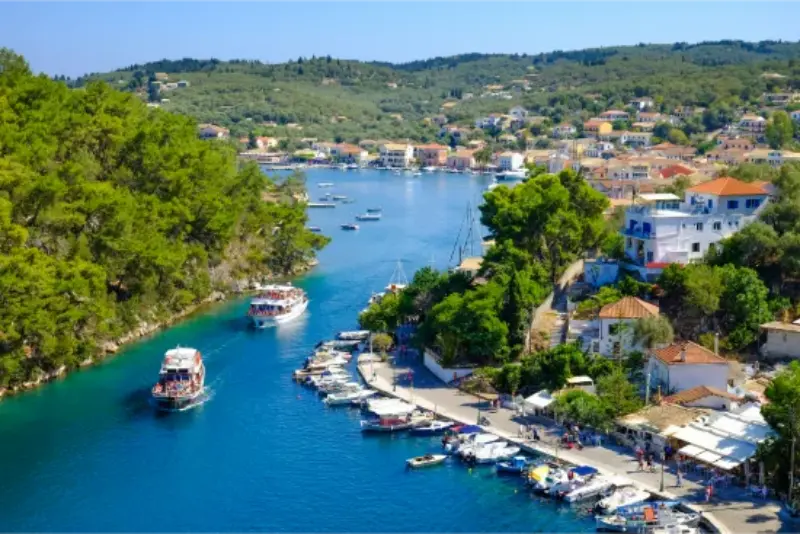
Gaios is easy with children because you can combine the harbour, a bakery, a short swim and dinner without a car. Lakka offers the same pattern on a smaller scale, with Harami close by. Loggos is excellent for an early evening meal after a beach walk. These are not “attractions” in the theme-park sense, but they create low-stress family days.
For older children, a short olive-grove hike or the walk toward the Lakka lighthouse adds variety. Keep distances modest in summer and make the destination meaningful—a swim, ice cream or sunset—rather than asking children to walk simply because adults want exercise.
Heat, sun and water safety
The clearest safety strategy is to avoid making midday the active part of the day. Swim early, have a long shaded lunch and return to the beach later. Use high-SPF sunscreen, hats and UV clothing, and carry more drinking water than you expect to need at unorganized beaches.
Pebbles can be painful on small feet, so water shoes are useful. Do not allow children to jump from rocks before an adult has checked depth and submerged hazards. On boats, follow the crew’s life-jacket instructions even if the sea looks flat. Calm harbour water can become choppy around headlands.
Accommodation choices for families
Gaios is simplest for first-time families because groceries, pharmacies and transport are concentrated there. Lakka is a good alternative if walkable swimming matters more. Villas can be excellent for space and a pool, but check pool fencing, balcony safety, steps and whether every outing will require a car.
A washing machine, fridge and shaded outdoor area often matter more than luxury finishes. If you travel with a stroller, ask about steps before booking. Historic villages have charming lanes that can be frustrating with wheels, especially when the room is above the final point a taxi can reach.
A realistic four-day family plan
Day one: settle into Gaios or Lakka and use a nearby beach. Day two: direct boat to Antipaxos, keeping the afternoon flexible. Day three: explore Loggos and an easy east-coast beach. Day four: choose either a short caves cruise or a relaxed Mongonissi day depending on energy and weather.
The plan deliberately avoids a different “must-see” every few hours. Children often enjoy repetition, so returning to a favorite beach or bakery is not wasted time. Paxos is especially good at that kind of slow family rhythm.
Accommodation and booking strategy
Paxos has a limited accommodation supply compared with Corfu, and the most attractive village-centre rooms, waterfront apartments and family villas can sell early in July and August. Compare the exact location rather than only the property name: a room described as “Gaios” may sit well above the harbour, while a villa near Lakka may require a car or taxi after dinner. Check current Paxos accommodation on Booking.com.
For a short first visit, prioritize convenience over a dramatic view. For a longer stay, a quieter villa can work well if you already know how you will reach groceries, beaches and evening restaurants. If mobility is limited, ask the host about gradients, stairs and the nearest point a taxi can reach; the island’s beautiful old lanes are not always stroller- or suitcase-friendly.
Frequently asked questions
Is Paxos good for young children?
Yes, if you choose accessible beaches and accommodation carefully. The island is compact, but many beaches are pebbly and some remote coves lack facilities.
Which Paxos beach is best for kids?
Harami, Mongonissi and serviced Monodendri are practical options when the sea is calm. Vrika on Antipaxos is also popular for its shallow sandy water.
Do we need a car with children?
Not necessarily if you stay in Gaios or Lakka and use taxis, buses and boats. A car adds convenience for villas and multiple beach days.
Useful official resources
For information that can change after publication, check the Visit Paxos tourism portal, the official Paxos travel-information page and, for sea connections, the official getting-to-Paxos page. Hiking information is also available from Visit Greece. Ferry times and local transport can change with season, weather and operator, so verify the exact date before committing to a tight connection.
Related Paxos guides
- Best Beaches in Paxos: Monodendri, Kipiadi, Orkos, Marmari and More
- Paxos Boat Trips Guide: Blue Caves, Tripitos Arch and Antipaxos
- Where to Stay in Paxos: Gaios, Lakka, Loggos or Mongonissi?
- Antipaxos Guide: Voutoumi, Vrika, Hiking and the Best Day Trip from Paxos
A practical way to plan the day
Build each day around one anchor rather than several fixed appointments. On a calm day, make the boat trip or exposed west-coast walk the anchor and keep the afternoon flexible. When wind is stronger, choose an east-coast beach, village lunch or short olive-grove walk. This approach suits Paxos because distances are small enough to change direction, while the most memorable experiences—clear water, cliff light, quiet lanes and village evenings—depend more on conditions than on an ambitious schedule.
Keep water, sun protection, offline maps and a small cash reserve in your day bag. Mobile reception can vary near cliffs and remote coves, and not every beach has a bar or a reliable taxi pickup point. If you are using buses, photograph the current timetable after arrival and confirm the final return of the day. If you are using boats, ask what happens if wind forces a route change. Those simple checks remove most of the stress from an otherwise very easy island to enjoy.
A final rule is to leave some room for repetition. Paxos is not an island where every hour needs a new attraction. Returning to the same waterfront for breakfast, repeating a beach that was exceptionally calm, or walking the same olive lane at sunset often produces a stronger sense of place than collecting ten different stops. The island is small enough that familiarity becomes part of the experience rather than a sign that you have run out of things to do.
If your trip falls outside the busiest summer weeks, confirm restaurant opening days, boat excursions and local transport after arrival. Shoulder season can be excellent for walking and quiet villages, but services are naturally thinner. A flexible plan, one dependable base and a willingness to switch from sea to land activities when conditions change are more useful than a rigid itinerary copied from peak-season travel advice.