
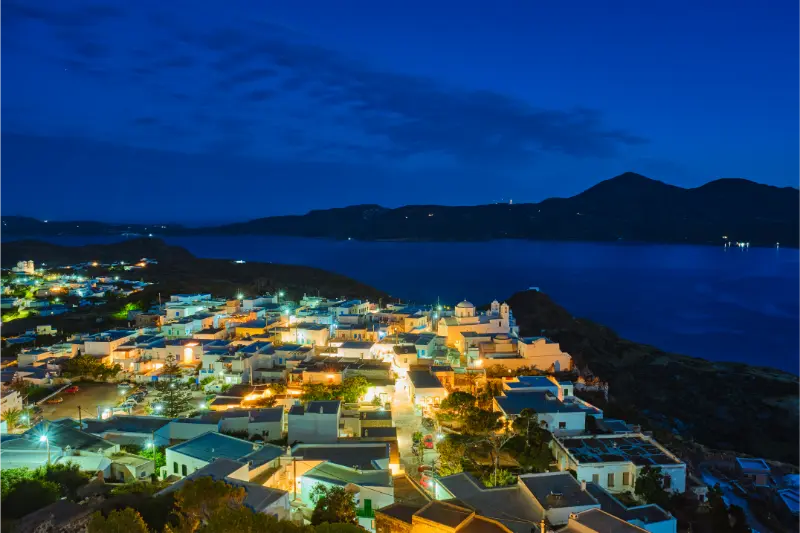
Plaka is the place on Milos where I would slow the pace down. The island is famous for beaches and boat trips, but its capital works best when you stop treating it as another quick photo stop and allow an afternoon to turn into an evening. Whitewashed lanes, small churches, terraces, views over the gulf and the climb toward the old castle area create a completely different experience from the coastal villages.
For a first visit, I would arrive well before sunset rather than exactly at sunset. That gives you time to explore the lanes, visit the Archaeological Museum if it is open, find the viewpoints without rushing and then stay for dinner after day-trippers begin to leave. Plaka is compact, but the combination of slopes, heat and narrow streets makes pacing more important than distance.
For the bigger picture, start with my Milos Travel Guide. Milos is easiest to enjoy when each day follows geography and wind rather than a rigid checklist, so this article focuses only on the details that matter for this particular stop.
Quick planning facts
- Plaka is the capital of Milos and sits inland above the western side of the island.
- The Archaeological Museum of Milos is in Plaka and displays finds from the Neolithic period to Late Antiquity.
- The museum currently lists €5 full and €3 reduced admission, with summer opening 08:30–15:30 and Tuesday closed.
- Cars do not belong in the historic pedestrian core; parking is outside the narrow central lanes.
- Sunset is popular, so arriving early is far more comfortable than trying to find parking at the last minute.
Why this place is worth adding to a Milos itinerary
Milos rewards travellers who separate sightseeing from beach time. A morning archaeological visit, a slow village evening or one carefully chosen cove usually works better than trying to fit four corners of the island into the same day. Roads are not long in absolute distance, but parking, wind, heat and narrow approaches can make a packed schedule feel much more demanding than it looks on a map.
The other reason to plan selectively is that Milos changes character from coast to coast. The north can be dramatically exposed when the meltemi blows, while the south may be calmer; a village can feel almost empty at midday and crowded at sunset; a tiny harbour that looks like a ten-minute stop can become the place where you want to sit for an hour. Use the weather and your own energy as planning tools.
What to see and what to pay attention to
The old lanes
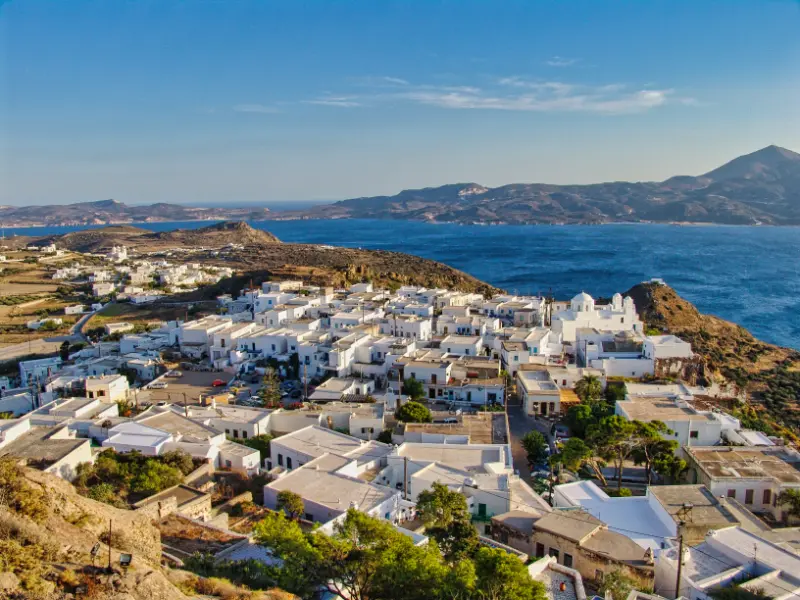
The best part of Plaka is not one monument but the network of whitewashed alleys, steps, small squares and churches. Walk without trying to follow the shortest route. The village rewards small detours, especially later in the day when the light softens and doorways, bougainvillea and stone details become more noticeable.
Castle hill and viewpoints
The climb toward the old castle area is the classic sunset experience. The path is uneven and exposed in places, so footwear matters more than many visitors expect. The reward is a wide view over western Milos and the sea rather than a single framed lookout.
Archaeological Museum of Milos
The museum gives context to the island beyond beaches. Finds from Phylakopi, inscriptions, sculpture and a modern replica of the Venus de Milo help connect the villages you see today with Milos as an important Aegean settlement over thousands of years.
Churches and quiet corners
Plaka has several small churches and terraces that are easy to rush past. Even if you are not visiting for religious reasons, their positions reveal how the village developed around ridges, courtyards and views.
Dinner after sunset
Staying for dinner changes the rhythm. Instead of joining the immediate post-sunset traffic, you can let the village quiet down and walk back to the parking area later. Reservations can be useful in peak summer if you have a particular restaurant in mind.
A realistic way to structure the visit
Start at the lower edge of the historic centre, visit the museum early if it is on your plan, then wander slowly upward through the lanes. Leave the steepest climb for the final hour before sunset. After the viewpoint, descend carefully while there is still some light and have dinner in or near the centre rather than rushing immediately back to the car.
I would keep at least one flexible block in every two days on Milos. Wind can cancel or reroute boat trips, parking can become difficult at famous beaches, and you may simply discover that one place deserves more time than expected. A flexible afternoon lets you swap a north-coast stop for the south, move a sunset village to another day or take a longer lunch without breaking the entire itinerary.
Getting there and transport
Plaka is easiest by car, scooter, taxi or bus from Adamas. Parking is outside the pedestrian centre and fills quickly before sunset in high season. If you are driving, I would rather arrive an hour too early than fifteen minutes too late. The village is also close to Tripiti and the ancient Milos area, so these places combine naturally in one half-day.
If transport is a major concern, also use my Greece ferry guide for inter-island planning and the Greek island-hopping guide if Milos is part of a longer Cyclades route. Ferry times, local bus frequency and excursion departures are seasonal, so always verify the current timetable rather than relying on a screenshot from an older trip.
Who this is best for
Plaka suits couples, photographers, history-focused travellers and anyone who wants an evening away from beach logistics. Families can enjoy it too, but pushchairs and steep steps are awkward in the upper lanes. Travellers with limited mobility should focus on the flatter lower areas and museum rather than making the castle climb the centre of the visit.
Best time of day and season
June and September are often excellent for balancing warm sea temperatures with slightly less pressure than peak August, while May and October can be very rewarding for walking and villages if your priority is not guaranteed beach weather. In July and August, start exposed walks and archaeological sites early, keep midday for swimming or shade, and approach sunset hotspots with extra parking time. Outside the main season, confirm restaurants, buses and visitor sites before building a day around them.
Wind matters as much as temperature. Milos is an Aegean island, and the same beach can look completely different on two consecutive days. Check a reliable marine forecast, ask locally and move to a more sheltered coast when needed. This is especially important for cliff-backed coves and boat excursions, where rough sea or falling material can create genuine safety issues.
Parking, roads and practical comfort
Do not underestimate short island drives. The main roads are manageable, but final approaches to fishing villages and beaches can be narrow, dusty or crowded. Park legally even if it means walking farther, never block turning space, and avoid taking a rental vehicle onto tracks your contract excludes. Carry water, sun protection and secure footwear in the car so a spontaneous stop does not become uncomfortable.
If you travel without a car, base selection becomes more important. Adamas gives the strongest transport flexibility, while Pollonia is convenient for Kimolos and north-east Milos. Taxis are useful for sunset evenings when parking pressure is high, but availability can tighten in summer, so arrange important rides in advance rather than assuming a car will appear immediately.
Food, water and a slower rhythm
One of the easiest ways to improve a Milos itinerary is to stop treating meals as interruptions. Villages such as Plaka, Pollonia and Adamas are more enjoyable when you sit down before you are exhausted. Carry water to beaches and archaeological sites, but use lunch or an early dinner as a deliberate rest period. Local dishes, cheeses, pies and seafood can vary by restaurant and season, so ask what is genuinely available rather than ordering only from a pre-made online list.

Photography without making the trip miserable
The island photographs beautifully because volcanic rock, white villages and blue water create strong contrast, but the best light often comes with the biggest crowds. Arrive early or stay later instead of fighting for the same viewpoint. Never cross barriers, climb unstable cliffs or enter private terraces for a marginally better angle. At fishing villages, remember that coloured doors and waterfront steps may belong to somebody’s home or working space.
Common mistakes to avoid
- Planning the island as if every famous beach must be visited regardless of wind.
- Arriving at sunset hotspots at the last minute and expecting easy parking.
- Wearing flip-flops for archaeological paths, steep village steps or difficult beach access.
- Treating small fishing settlements as photo sets instead of residential places.
- Booking a critical onward ferry immediately after a weather-sensitive boat excursion.
- Trying to combine the far west, north coast and south coast in one rushed day.
What to combine nearby
Depending on your route, useful related guides include Sarakiniko Beach guide, Kleftiko boat trip guide, Kimolos Travel Guide. The goal is not to do all of them together, but to group stops by geography and weather so you spend more time experiencing Milos and less time driving back and forth.
Current information and official sources
For details that can change—opening hours, admission, access restrictions or local notices—check the official source used for this guide shortly before your visit. Milos is a living island, not a static attraction, and weather or operational changes can matter more than what any travel article said months earlier.
Frequently asked questions
How long do you need in Plaka?
Three to four hours works well if you include the museum, a slow walk, sunset and dinner. Without the museum, two hours can cover the village at a relaxed pace.
Is Plaka better at sunset?
Sunset is beautiful, but the village is also quieter earlier in the afternoon. Arrive before the peak period so the experience does not become a parking exercise.
Can you drive into Plaka old town?
The historic core is pedestrian and narrow. Park outside and continue on foot.
Is the Archaeological Museum worth it?
Yes if you want context for Phylakopi, ancient Milos and the island’s long history. It is small enough to fit into the same afternoon.
Can Plaka be combined with Klima?
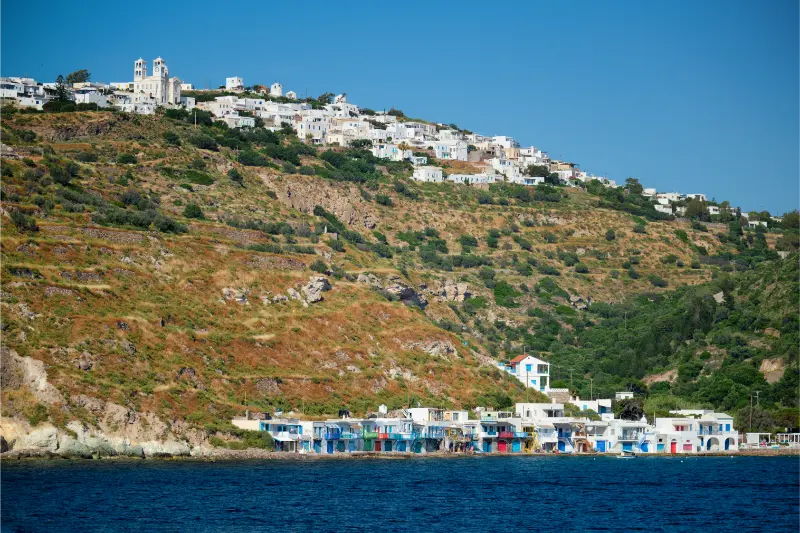
Yes. Klima, Tripiti, the Catacombs and Plaka form one of the most logical clusters on Milos.
Final thoughts
Plaka Milos Guide works best when you give it a clear role in the day instead of squeezing it between unrelated stops. Build around one main experience, leave room for weather and parking changes, and keep the pace slow enough to notice why Milos feels different from the other Cyclades.
That approach also keeps the site more useful for future trips: one day can be geology and beaches, another archaeology and villages, another a boat trip, and another Kimolos or the quieter north-east. Milos does not need to be conquered in a checklist. It rewards travellers who let the island’s wind, landscape and small settlements shape the route.