

Explore Sikinos Chora with a practical guide to Kastro, Chorio, Panagia Pantanassa, the folklore and Byzantine museums, Zoodochos Pigi and where to stay.
Chora is where Sikinos reveals its character most clearly. The settlement sits high above the sea rather than around the ferry harbour, and its whitewashed lanes, old houses, small squares and cliff-edge views make it worth more than a quick evening visit. Visit Greece emphasizes the traditional Cycladic architecture, while local tourism material distinguishes the historic Kastro core from quieter Chorio.
Quick planning notes
- Give Chora at least one full morning and two evenings; the atmosphere changes dramatically after the day heat fades.
- Kastro and Chorio are adjacent but feel different: one more compact and social, the other quieter and more residential.
- Panagia Pantanassa, the folklore museum and the Byzantine collection add useful context beyond the picturesque lanes.
- The walk to Zoodochos Pigi is one of the easiest ways to combine Chora with a sunset or late-afternoon viewpoint.
Kastro: the compact historic core
Kastro forms the tightest part of Chora, with narrow paved lanes, white houses and small gathering spaces that feel almost theatrical in the evening. Fast Ferries notes the survival of traditional mansions and Cycladic architecture, but the best way to appreciate the area is not to follow a strict route. Walk slowly, notice doorways and courtyards, and return to the same lanes at a different hour when light and activity have changed.
The settlement is small enough that orientation comes quickly. That is useful because you can separate practical errands from sightseeing: buy water and breakfast supplies first, then explore without constantly checking a map. The absence of traffic inside the narrowest lanes is part of the appeal, but luggage can be awkward, so confirm how close a taxi or transfer can get to your accommodation.
Panagia Pantanassa and the main squares
Panagia Pantanassa is one of the principal churches of the island and, according to Fast Ferries, dates to 1787. Its central position makes it a natural reference point when moving through Kastro. Respect services and local worship; a church that looks like a sightseeing landmark is still an active religious space.
Nearby squares and cafe tables become the social center after sunset. Rather than rushing to dinner at a fixed time, use the evening to understand the rhythm of Chora: families appear, walkers return from trails, and visitors who spent the afternoon at the beach gather in a surprisingly compact area. This is one reason to sleep in Chora rather than visit only on a bus from the port.

Chorio and the folklore museum
Chorio is quieter and more residential, with traditional houses and a slower pace than Kastro. The Folklore Museum is housed in an old olive press and presents tools and everyday objects connected with older island life. It is a small museum, but on Sikinos scale is an advantage: the collection helps explain the terraces, agriculture and domestic architecture you see on walks.
Opening patterns on small islands can change by season, so confirm locally rather than building an entire day around a published hour. If the museum is closed, Chorio is still worth walking through. The relationship between the houses, lanes and agricultural edge of the village provides much of the context the exhibits are designed to explain.
Byzantine art and island churches
Fast Ferries also highlights a Byzantine museum in Chora with icons from the fifteenth and sixteenth centuries. Together with Panagia Pantanassa, the many chapels around the island and the later Christian use of Episkopi, it shows how religious history is woven into everyday geography rather than concentrated in one monumental site.
Dress with the same modesty you would use in other Greek churches and avoid photographing people during worship without permission. When a building is closed, do not treat that as a failure: many of the island’s churches are better understood as part of a living landscape than as formal museums.
Zoodochos Pigi Monastery
The fortified Monastery of Zoodochos Pigi stands above Chora on the cliff edge. Fast Ferries describes it as fortress-like, while Visit Greece includes the Chora–monastery walk among the island’s recommended signed routes. The ascent is not a major hike, but sun and wind can make it feel more exposed than the distance suggests.
Late afternoon is ideal for the landscape, provided you leave enough daylight for the return. Respect any access restrictions and avoid treating monastery grounds as a sunset terrace. The strongest experience is the combination of the walk, the defensive architecture and the view over the Aegean.
Eating and evenings in Chora
Chora has the island’s strongest concentration of cafes and tavernas, but choice is still modest compared with Ios or Santorini. This makes advance research less important than asking what is available that day. Local dishes may include fava fritters, caper preparations, pies, goat and rooster cooked with wine, while local wine is part of Sikinos identity.
In high summer, eat a little earlier or reserve if there is one place you particularly want. At quieter times, be flexible about opening days. A small island does not need dozens of restaurants to offer a good food experience; the quality often comes from seasonal ingredients and repeat visits where staff recognize you.
Who should stay in Chora
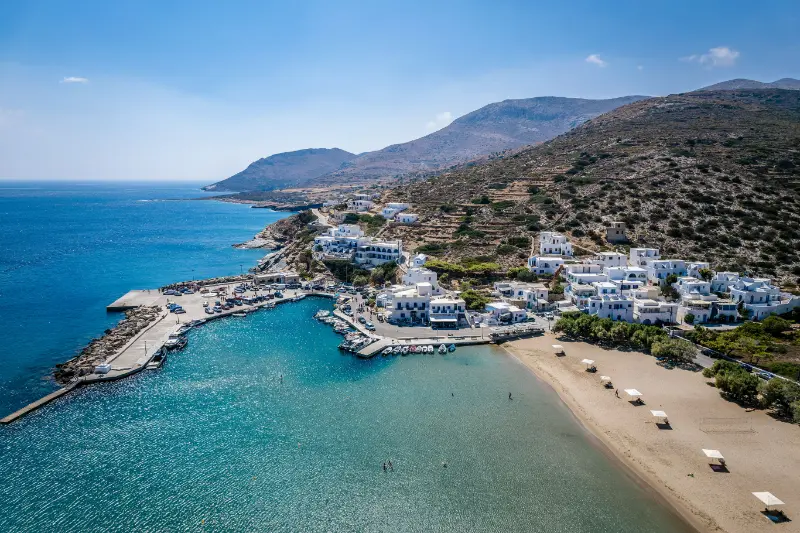
Chora is the best base for travellers who value atmosphere, restaurants, sunset walks and direct access to several hiking routes. It is also convenient if you plan to visit Episkopi and the monastery more than once or want to experience village life before day visitors arrive from the port.
Alopronia is easier for people with very early ferry departures, families who want immediate beach access or anyone with limited tolerance for hill transfers. If you stay in Chora, ask your host about luggage help and current bus connections from the port, especially when arriving on an evening ferry.

Where to stay and when to book
Sikinos has a much smaller accommodation supply than Santorini, Paros or Naxos. That is part of its appeal, but it also means that the best-located rooms in Chora and Alopronia can disappear early for July and August. Compare the exact position on a map, not only the property name, because a beautiful hillside room may involve steps, steep lanes or a walk that feels very different with luggage in midday heat. Check current Sikinos accommodation on Booking.com.
For a short first visit, convenience usually matters more than a dramatic view. Chora is stronger for evenings, atmosphere and trail access, while Alopronia is easier for ferry days and quick swims. If you are travelling without a car, ask the host how far the nearest bus stop is and whether they can help with luggage when ferries arrive late.
How to make the trip work in practice
Sikinos works best when the itinerary follows the island rather than fighting it. Plan one main objective per half-day: a monument, a trail, a beach or a long meal. Boat-access beaches depend on wind, walking routes are exposed to sun, and small museums or churches may not operate with big-island opening patterns. Keep a second option ready and confirm local details after arrival.
Carry water, sun protection and an offline map whenever you leave the two main settlements. Services are intentionally limited outside Chora and Alopronia. That does not make the island difficult; it simply rewards travellers who prepare before setting out and who leave enough time to enjoy a place instead of rushing between checkpoints.
Frequently asked questions
Is Sikinos Chora worth staying in?
Yes. Chora offers the strongest evening atmosphere, restaurants, traditional architecture and access to several trails. It is the best all-round base if beach-at-the-door convenience is not your first priority.
How far is Chora from Alopronia?
Visit Greece describes Alopronia as about 3 km from Chora. The road is short, but the elevation makes walking with luggage less attractive than using the bus or a transfer.
What is the best time to walk around Chora?
Early morning is quiet and good for photography; late afternoon into evening gives softer light and more local activity.
Useful sources for current information
For details that can change, use the Municipality of Sikinos, the official Visit Greece Sikinos page, the Visit Greece hiking guide and the official Sikinos beaches overview. Ferry routes and seasonal sailings should be checked again shortly before travel through the Fast Ferries Sikinos page or your booked operator.
Related guides
- Alopronia Sikinos Guide: Port, Beach, Ferries and Where to Stay
- Episkopi Sikinos Guide: Roman Mausoleum, Byzantine Church and Archaeology
- Sikinos Hiking Guide: Seven Trails, Monastery, Episkopi and Coast
- Where to Stay in Sikinos: Chora, Alopronia or the Countryside?
A slower rhythm is part of the destination
One of the easiest mistakes on Sikinos is to judge the island by the number of formal attractions. Its strength is the relationship between Chora, terraced fields, dry-stone walls, chapels, old paths and small coves. A morning walk that ends with lunch can be a complete day rather than a gap between major sights. The same is true of an evening in Kastro: there is no need to add another excursion simply because the map looks small.
This slower approach also protects the trip from weather changes. If wind makes a boat excursion unattractive, walk a signed trail or spend more time in Chora. If the afternoon is too hot for hiking, use the beach and move the trail to early morning. Travellers who leave this flexibility usually see more of the island in a meaningful way than those who try to complete a fixed checklist.