
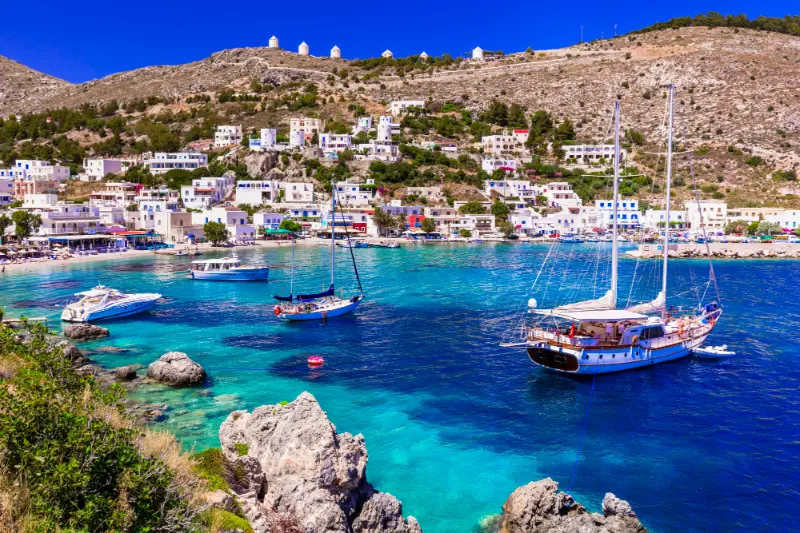
You do not need a rental car to enjoy Leros, but you do need to choose the right base. The island’s most useful car-free areas cluster around Agia Marina, Platanos, Panteli, Alinda and Lakki, while the quietest coves and remote corners require more deliberate transport planning.
I would build a no-car trip around everyday convenience rather than trying to reproduce a road-trip itinerary with taxis. Stay where you can walk to dinner and at least one swim, then spend transport money on the few places that genuinely add something different: Lakki and the War Museum, the castle ridge or one beach on another coast.
Can you enjoy Leros without renting a car?
Yes, but the answer depends heavily on where you stay. Leros is small enough that taxis are realistic for selected trips and several of the most interesting places cluster around Agia Marina, Platanos, Panteli, Alinda and Lakki. The challenge is not distance alone; it is seasonal bus frequency, hills and the fact that some quiet beaches are easiest by private vehicle.
A no-car trip works best when you accept that you will not sample every cove. Choose a base with a beach or evening restaurants on foot, then use buses and taxis for two or three deliberate excursions. That usually costs less energy than renting a car merely to move it twice a day.
Best bases without a car
| Base | Why it works | Main limitation |
|---|---|---|
| Agia Marina / Platanos | Services, castle access, central position | Hills and less resort-style beach time |
| Panteli | Beach, tavernas and evenings on foot | Slopes; smaller range of practical services |
| Alinda / Krithoni | Easy beach routine and central access | Spread-out bay; check exact bus stop location |
| Lakki | Ferry port, taxis, architecture and history | Less romantic for a pure beach holiday |
Buses: useful, but keep the schedule flexible
Public buses connect the main settlements seasonally, but I would not copy a timetable into a long-term travel plan. Frequencies can change and online schedules are not always updated everywhere at the same time. Check the current timetable after arrival, then use it for the days where the route is straightforward.
If a museum has fixed hours and you need two bus connections to reach it, a taxi can be the better use of money. Save the bus for beach or village days with a wider time window.
Taxis: where they add the most value
- Late ferry arrival or early departure from Lakki.
- War Museum visit when bus timing is awkward.
- Castle approach for travellers who want to avoid the steepest climb.
- One remote beach day chosen according to wind.
- Evening return after dinner when buses have finished or walking is uncomfortable.
Walking as everyday transport
Central Leros is very walkable if you choose accommodation well. Agia Marina, Platanos and Panteli can form one walking zone for fit travellers, while Alinda and Krithoni add a second coastal zone. The biggest planning mistake is booking a property that looks close to everything on a flat map but sits high on a slope.

Ask the accommodation about steps, gradients and the nearest practical road pickup point. A “500-metre walk” can be pleasant at 08:00 and miserable at 14:00 in August.
A four-day no-car plan
| Day | Plan |
|---|---|
| 1 | Agia Marina, Platanos, castle and Panteli on foot/taxi |
| 2 | Alinda, Krithoni and Bellenis Tower |
| 3 | Bus or taxi to Lakki, War Museum and nearby swim |
| 4 | Choose one beach or boat excursion according to wind and current transport |
When I would still rent a car for one day
Renting for a single day can be the best compromise if you want Blefoutis, Gourna, Xirokampos and several viewpoints without depending on multiple taxis. Keep the car day geographically coherent, and do not use it for the central settlements where parking and hills can make walking simpler.
When to go and how to use the day
A car-free Leros holiday works differently by season. In July and August I would put walks, castle visits, museums and exposed viewpoints early in the day, then use the hottest hours for lunch, a shaded rest or swimming. Late afternoon is when the villages and waterfronts become more enjoyable again. May, June, September and early October are easier for travellers who want to combine sightseeing with walking rather than organising the entire day around heat.
Wind matters on Leros because the coastline is deeply indented. A beach that feels exposed one day may be pleasant the next, while another bay can stay relatively calm. I would keep one flexible afternoon rather than assigning every beach to a fixed date. Choose beaches based on the transport you actually have that day rather than the theoretical island-wide list.
Transport and realistic pacing
Combine walking with buses and occasional taxis; confirm seasonal service after arrival and keep ferry-day transfers simple. The island is not huge, but short map distances do not always mean a quick, flat walk. Hills, summer heat and the shape of the bays make route planning important. If you are relying on buses, confirm the current timetable locally rather than building the day around an old online schedule.
For most visitors, two substantial experiences plus a good meal and a swim create a better day than five rushed stops. This is especially true around the central settlements and Alinda, where it is easy to underestimate how much time disappears into viewpoints, photographs, museum rooms and unplanned waterfront breaks.
What to pack
- Shoes with useful grip for castle approaches, stone lanes and uneven coastal paths.
- A refillable water bottle; exposed hills and quieter beaches may have limited services.
- High-SPF sunscreen, a hat and a light shoulder cover for strong summer sun.
- Swim shoes if you prefer them for pebble or mixed-surface beaches.
- A light layer for breezy evenings and boat rides outside peak summer.
- Offline maps or saved pins if your plan includes minor roads, remote coves or walking routes.
Who this plan suits best
It suits couples, solo travellers, short-stay visitors and families who choose a practical beachfront or central base rather than a remote villa. Leros rewards travellers who leave space in the schedule. The island is not about racing between a long list of blockbuster sights; its appeal comes from the combination of small bays, layered twentieth-century history, low-key villages and evenings that still feel local.
Common mistakes to avoid
- Treating every beach as equally sheltered regardless of wind direction.
- Assuming a short distance on the map is automatically an easy walk in midday heat.
- Using old museum or bus hours without checking them again for the current season.
- Planning only beaches and missing the island’s unusually important Italian and Second World War heritage.
- Changing accommodation unnecessarily on a short stay instead of using one practical base.
- Trying to fit a museum, a castle, a remote beach and a long dinner into one tightly timed afternoon.
How I would make the plan more reliable
The most useful way to plan Leros without a car is to separate fixed commitments from flexible ones. A museum opening time or ferry departure is fixed; a swim, café stop or sunset viewpoint is flexible. Put the fixed element first, then keep the beach or meal that follows adjustable. This prevents a small timetable change from collapsing the entire day.
I would also avoid judging travel time from distance alone. Leros has bays, hills and narrow roads, and a route that looks very short can include parking, a climb or a wait for a taxi. Add buffer time, especially when you have a ferry later that day. On a holiday this small adjustment is more valuable than adding one extra attraction.
Finally, use local conditions as information rather than an inconvenience. If wind makes your planned beach uncomfortable, switch bay. If the castle is closed, spend longer in the villages and return another morning. If a museum hour changes, move the swim forward. Leros works best when the itinerary responds to the island instead of trying to force the island to follow a spreadsheet.
Budget and booking notes
Leros is generally easier to manage financially than islands dominated by luxury resorts, but summer accommodation and transport still reward early planning. Book the room that solves the most daily problems: walkable dinner, acceptable beach access, manageable steps and a sensible route from the ferry. Spending slightly more on the right base can save repeated taxi fares and wasted time.

For tours and activities, compare the cancellation terms, exact meeting point and whether transport is included. For independent days, keep small cash available for local services that may not fit a fully digital routine. Prices and opening periods change, so treat any old blog total as a reference rather than a promise.
Accessibility and slower travel
Travellers with limited mobility should ask unusually specific questions on Leros: number of steps from the road to the room, whether the restaurant route is level, where a taxi can actually stop and whether a beach has a stable entry. Historic lanes and hillside accommodation can be beautiful but demanding. A well-chosen base and a few taxi transfers can make the same island much easier.
Slow travel also improves the experience for everyone else. Staying longer in one bay, returning to the same taverna and walking a village twice at different times of day reveals more than a fast island checklist. Leros has enough detail for this approach, especially when history, swimming and local life are all part of the reason you came.
Continue planning Leros
Start with the Leros Travel Guide for the island-wide overview, then use these dedicated guides: Agia Marina, Platanos and Panteli Leros Guide; Lakki Leros Guide; Leros War Museum and WWII Guide; Alinda and Krithoni Leros Guide; Best Beaches in Leros; Leros Diving Guide; Leros Hiking Guide; Leros with Kids; Where to Stay in Leros.
Leros Without a Car FAQ
What is the best base in Leros without a car?
Panteli works well for beach-and-evening atmosphere, Agia Marina/Platanos for central services and sightseeing, and Alinda for an easy beach holiday.
Are buses enough for the whole island?
They are useful for the main corridor, but seasonal frequency can limit remote-beach plans. Mix buses with taxis rather than forcing every day around the timetable.
Can I walk between Agia Marina and Panteli?
Yes if you are comfortable with hills. Avoid the hottest part of the day and remember that accommodation can sit above the water.
How do I reach the War Museum without a car?
Use the current bus service if it fits the museum hours or take a taxi. The museum is close enough to Lakki to combine both in one outing.
Should I rent a car for one day?
It can be worthwhile for a north-and-south beach circuit or remote coves, while keeping the rest of the holiday car-free.
Useful official information
For current local information I check the Municipality of Leros and Visit Greece – Leros. Bus schedules are seasonal; use the municipality and local stops to confirm the current service after arrival rather than relying on an old timetable. Opening hours, local transport, boat services and seasonal businesses can change, so recheck anything time-sensitive shortly before the day you plan to use it.
Leave a Reply