
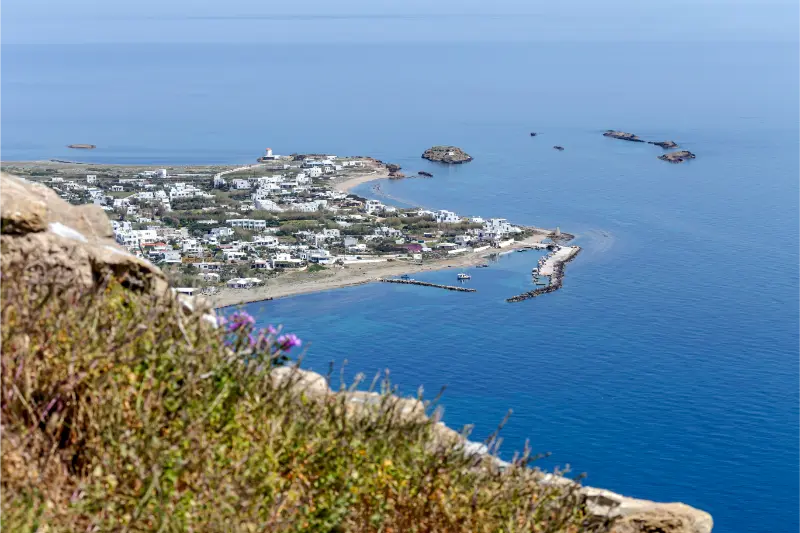
Skyros Chora is the place where the island feels most distinctive. White houses climb a steep rock below a Byzantine castle, narrow lanes twist between tiny chapels and workshops, and a few minutes of downhill walking takes you toward Magazia and the sea. It has enough history for a serious sightseeing day, but it is also the best place simply to wander, stop for coffee and understand why Skyros does not feel exactly like the Cyclades or the greener northern Sporades.
Why Chora deserves more than a quick photo stop
Chora is compact on a map but vertical in real life. The most rewarding route is not to rush straight to the castle and back. Start lower in the town, climb gradually through residential lanes and small squares, visit the museum area and Brooke Square, continue toward the monastery and castle, then return by a different route. The changing views are part of the experience: white roofs, dry hills, the long beach zone of Magazia and Molos, and the contrast between the lush north of the island and the starker south.
The town also keeps Skyrian craft traditions visible. Woodcarving, ceramics, embroidery and characteristic furniture are not just souvenir themes; they are part of the island’s domestic culture. Even if you do not plan to buy anything, looking at local workshops and traditional interiors makes later museum visits much easier to appreciate.
The Castle of Skyros and Agios Georgios monastery
The castle sits on the highest point of Chora, on a rock that the municipality describes as rising about 179 metres above the settlement. Its strategic position explains the settlement pattern below: houses cluster tightly around the protected height, while the sea and surrounding terrain are visible from multiple levels.
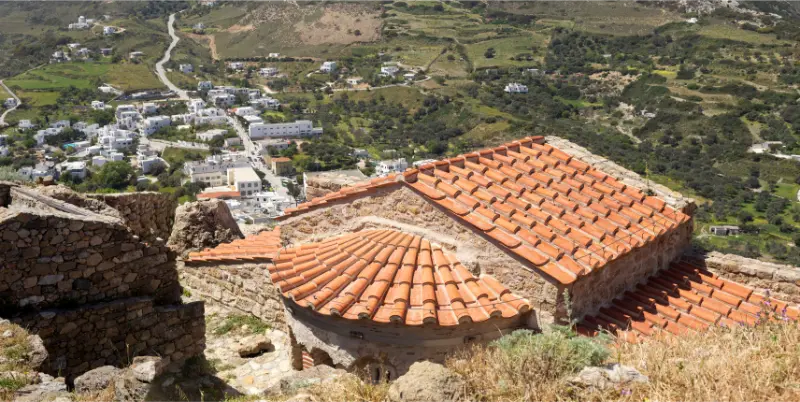
The Monastery of Agios Georgios is directly below the castle and is one of the island’s most important religious landmarks. The municipality traces its foundation to the Byzantine period and notes its long relationship with the Great Lavra of Mount Athos. Dress respectfully, expect steps and uneven surfaces, and check access conditions before the climb because restoration work, services or local restrictions can affect visiting arrangements.
Brooke Square and the Rupert Brooke connection
Rupert Brooke, the English poet who died in 1915 while serving in the Royal Naval Division, is closely associated with Skyros because he was buried on the island. Brooke Square in Chora has become one of the town’s best-known viewpoints and cultural stops. The square works especially well near the beginning or end of a Chora walk because it opens the landscape after the tight lanes.
Do not treat the memorial as an isolated “British history” sight. It is more interesting when combined with the nearby museums and the wider story of Skyros in the early twentieth century. If you later drive south, Brooke’s grave can be visited in a much more remote landscape, but that requires separate transport planning.
Museums worth adding to the route
The Archaeological Museum of Skyros was founded in 1963 and displays material from sites including Chora and Palamari, as well as finds ranging from the Early Helladic period to Roman times. It is especially useful before a visit to Palamari because it gives context to objects and settlements that can otherwise look abstract on site.
The Faltaits Historical and Folklore Museum adds a different layer, focused on local life, documents, art and the traditions that make Skyros culturally distinct. Museum schedules are often more limited than visitors expect on smaller islands, so check opening days rather than assuming both can be visited whenever you arrive.
Walking from Chora to Magazia
One of the pleasures of staying in or near Chora is that a cultural morning can turn into a beach afternoon without a car. Magazia lies below the town and is linked by roads and foot routes. The downhill journey is easy to underestimate; remember that you must climb back later, and summer heat can make the return much harder than the outward walk.
Magazia is a long sandy beach with organised sections, food nearby and an immediate visual connection to Chora above. Continue north and the beachfront develops into Molos. If your ideal day combines old-town atmosphere with swimming, this Chora–Magazia pairing is one of the strongest reasons to base yourself on the east side of Skyros.
Where to eat and when to visit
Chora is better for an unhurried evening than for a checklist lunch stop. Look for local cheese, pies, goat or lamb dishes when available, seafood, and the island’s famous lobster dishes if they fit your budget. The most atmospheric tables are not always the ones with the most dramatic view; small places in the lanes can be equally memorable.
In July and August, visit the upper town early or in the late afternoon. White walls reflect heat, the climb is exposed in places, and the reward is much greater when you are not racing the sun. Spring and September are excellent for walking, while carnival season offers a completely different cultural experience centred on the Geros, Korella and Trata traditions.

A realistic half-day Chora itinerary
- Coffee and orientation in the lower lanes before the day gets hot.
- Archaeological Museum or Faltaits Museum, depending on opening hours.
- Brooke Square and the viewpoints above the east coast.
- Climb toward Agios Georgios and the castle area.
- Return through a different set of lanes and stop for lunch.
- Walk or take transport to Magazia for a late-afternoon swim.
Where to stay if Chora is your priority
Choose Chora if you value atmosphere, evening restaurants and walking access to cultural sights. Choose Magazia or Molos if you want flatter beach access while remaining close to town. Linaria is better for the ferry and west-coast sunsets but feels separate from Chora’s evening life.
Parking inside the old core is limited by the nature of the streets, so drivers should check the exact parking arrangement of their accommodation. For a fuller comparison, read Where to Stay in Skyros.
Booking accommodation and activities
For accommodation, you can compare places to stay in Skyros on Booking.com. Check the map carefully: a property described simply as “Skyros” may be in Chora, Magazia, Molos, Linaria or a much quieter rural area, and those choices create very different holidays.
If you want to add an organised experience, boat trip or activity, the widget below can be used as a starting point. Availability on smaller Greek islands is seasonal, so compare the meeting point and cancellation terms with your transport plan.
Useful official resources and a note on changing information
The Municipality of Skyros publishes visitor information on beaches, nature, sights and local transport. Visit Greece is useful for broad destination information, while ferry schedules should be checked directly with the operator before travel. Bus routes on Skyros are seasonal and can change from month to month, so use any timetable in this guide as a planning clue rather than a promise.
Opening hours, road conditions, wind, sea state and seasonal services can all change. For archaeological sites, museums, organised beaches and boat trips, verify the current situation shortly before setting out. That is especially important outside July and August, when a place may be open but transport frequency can be much lower than in high summer.
When to go and how to shape the day
Late spring and September are especially comfortable for combining beaches, walks and sightseeing because the island is active without the most intense summer heat. July and August offer the widest range of seasonal services, but exposed Chora climbs, archaeological sites and mountain walks are much more pleasant early in the morning or later in the day. Sea temperature and wind matter as much as air temperature, so choose the beach coast after looking at the actual conditions each morning.
A useful Skyros rhythm is to put the most active part of the day before lunch, keep the hottest hours for a long meal or rest, then return to the beach or Chora in the late afternoon. This is not wasted time: it reduces driving, makes children and walkers happier, and leaves enough energy for the island’s best evenings. Outside high season, daylight, museum hours and restaurant opening days become more important than heat, so confirm key stops the day before.
For a first visit, four or five nights is a good minimum if you want Chora, two contrasting beach areas and one inland or cultural excursion without rushing. A week lets you react to wind, repeat a favourite beach and include a northern or southern exploration day. With only two nights, stay close to Chora/Magazia and resist the temptation to circle the whole island.
Practical planning notes for Skyros
Skyros is compact, but roads, wind and the separation between Chora on the east side and Linaria on the west make daily planning important. Do not estimate travel only from kilometres. A beach day in the north, a cultural morning in Chora and a ferry departure from Linaria can fit into one day on paper but feel rushed in practice. Group sights by coast and keep one flexible day for weather.
For summer travel, reserve accommodation and any essential vehicle early, but avoid pre-booking every hour. The island’s strongest experiences—choosing the sheltered coast, lingering in a village, changing plans after local advice—depend on flexibility. In shoulder season, verify restaurant, museum and excursion opening days because businesses can reduce schedules before ferry and flight services fully stop.
If you rent a car, photograph existing damage, check tyre condition and ask specifically about unpaved-road restrictions. If you do not drive, choose Chora/Magazia and budget for occasional taxis. In either case, leave a generous buffer before a ferry or flight and avoid scheduling an international connection too tightly after leaving the island.
Plan the rest of your Skyros trip
Skyros works best as a connected itinerary rather than ten separate checklists. Start with the existing Skyros Travel Guide, then use the specialist guides below according to your priorities.
Skyros Chora Guide: Castle, Monastery, Brooke Square, Museums and Sunset; Best Beaches in Skyros: Magazia, Molos, Atsitsa, Pefkos, Agios Fokas and Kalamitsa; Linaria Skyros Guide: Port, Marina, Beaches, Sunset and Where to Stay; Skyrian Horse Guide: Where to See the Rare Skyros Horse Responsibly; Mount Kochylas Skyros Hiking Guide: Trails, Wildlife, Views and Safety; Palamari and North Skyros Guide: Archaeology, Atsitsa, Pine Forests and Quiet Beaches; Skyros Without a Car: Buses, Taxis, Walking and the Best Base; Where to Stay in Skyros: Chora, Magazia, Molos, Linaria or Atsitsa?; Skyros with Kids: Family Beaches, Horses, Easy Sights and Practical Tips; Skyros Food Guide: Lobster Pasta, Ladopita, Cheese, Honey and What to Eat