
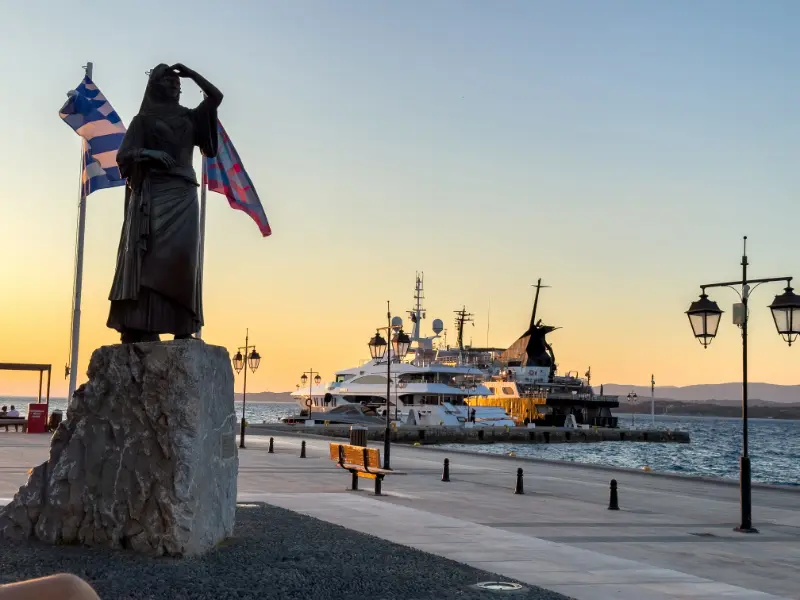
Spetses is one of the easiest islands to add to an Athens trip without sacrificing the feeling of a real island escape. It sits in the Saronic Gulf, combines pine-covered interior hills with neoclassical mansions and a strong maritime identity, and has a compact town that rewards walking rather than rushing between sights. The absence of freely circulating private cars changes the rhythm immediately: luggage, beaches and dinner plans are organised around walking, bicycles, buses, boats, sea taxis and a small number of authorised vehicles.
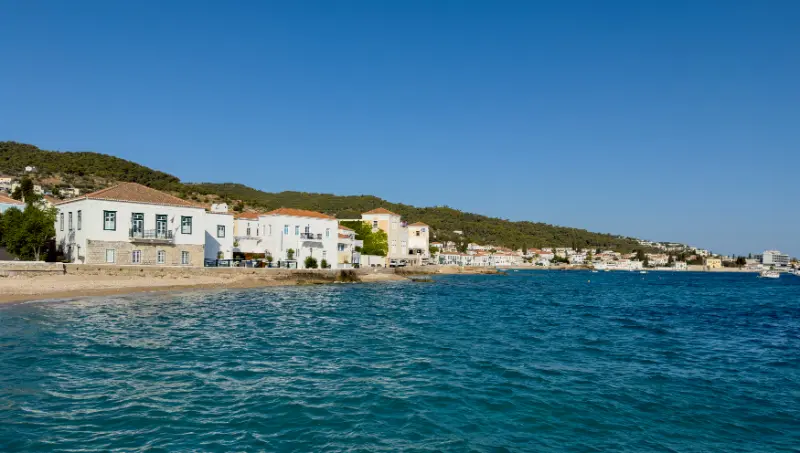
The island works for couples, families, history-focused travellers and anyone who wants a short Greek-island trip without flying. It is also more varied than its elegant harbour image suggests. A four-day stay can include the Bouboulina House Museum, the state Spetses Museum, traditional shipyards, a remote beach reached by boat, a 25-kilometre cycling loop and quiet pine trails. The key is to treat Spetses as a small island with distinct zones rather than as one long seafront resort.
Quick planning overview
| Question | Best answer |
|---|---|
| Best first base | Dapia or nearby Kounoupitsa for easy arrival, restaurants and transport |
| Best atmosphere | Old Harbour in the evening |
| Best beach strategy | Use town beaches for short swims and boats/bus for remote beaches |
| Best active day | Cycle the perimeter road or choose one of the marked walking routes |
| Ideal stay | 3–4 nights for a balanced first trip |
Why Spetses feels different from the Cyclades
The visual language is not white cube houses and blue domes. Spetses grew through shipping, trade and the fortunes of powerful maritime families, so its identity appears in captain’s mansions, shaded courtyards, terracotta roofs, pebble mosaics and harbours built around boats rather than around a postcard viewpoint. The island’s history during the Greek War of Independence is especially visible through Bouboulina, the 1821 collections and the annual Armata commemoration.
The pine landscape also changes the experience. On the western and northern sides, beaches sit below wooded slopes; inland paths cross a central ridge; and the 25-kilometre perimeter road gives cyclists a practical way to understand the entire coastline in one day. This mixture of history, forest and sea makes Spetses a better choice for travellers who want activity and culture as well as swimming.
Arriving at Dapia
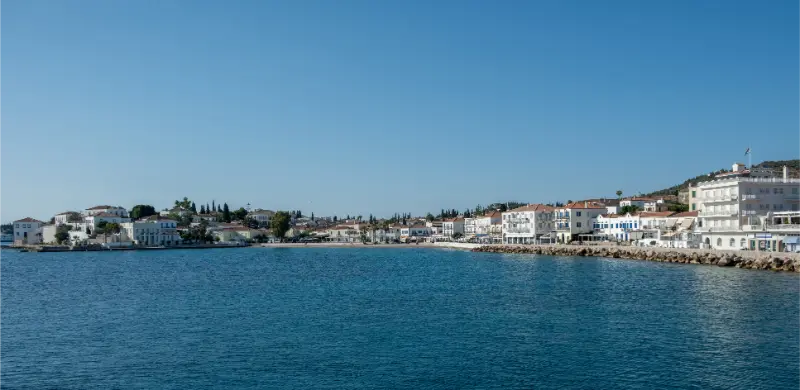
Most ferry passengers arrive directly at Dapia, the town’s central waterfront. Do not plan a complicated first hour. Walk to your accommodation if the distance is realistic, or arrange luggage assistance or an authorised taxi if you are staying farther away. Dapia is where you will find ticket agencies, boats, sea taxis, cafés and many of the services that make the island easy to navigate without a conventional car.
If you arrive from the mainland via Kosta rather than Piraeus, you still reach the same island rhythm once you cross the narrow channel. The municipality lists regular high-speed ferry services from Piraeus as well as boat connections from the Argolid coast. Exact timetables change, so build the trip around the actual sailing on your date rather than a generic journey time copied months earlier.
Dapia, Bouboulina Square and the centre
Dapia is the practical heart of Spetses, but it is worth looking beyond the ferry ramp. Historic cannons, civic buildings, the Poseidonion frontage and Bouboulina Square introduce the island’s maritime story before you enter a museum. Early morning is the best time for a calm walk because the waterfront is cooler and delivery traffic is lower.
West of the centre, Kounoupitsa stretches along a pleasant waterfront with restaurants and easy swimming access. Eastward, the route to Agios Mamas and the Old Harbour becomes increasingly atmospheric. Staying near Dapia is especially useful for a short trip because every route begins close to your room.
Old Harbour and traditional shipyards
The Old Harbour is the place to understand why Spetses became a naval power. Traditional wooden shipyards still operate here, and the municipality describes them as a living continuation of local shipbuilding rather than a staged attraction. Continue past the yards toward the lighthouse and the outdoor sculptures associated with Natalia Mela for one of the island’s most rewarding late-afternoon walks.
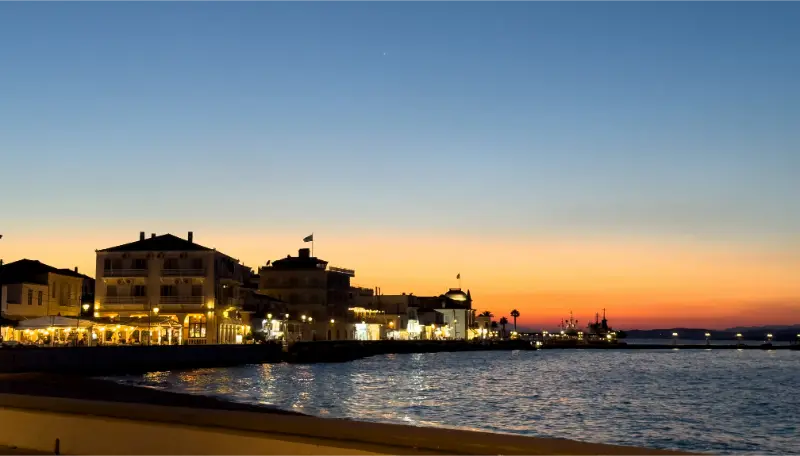
The Old Harbour changes character after dark. Restaurants and bars create a more polished evening scene than the quieter residential streets around it. You do not need to stay here to enjoy it; walking from Dapia is part of the experience, although tired families or travellers with limited mobility may prefer a carriage or taxi for the return.
Bouboulina and the museums
History deserves at least half a day. The Bouboulina House Museum occupies the historic family home connected with Laskarina Bouboulina, while the Spetses Museum is housed in the mansion of Hatzigiannis Mexis. Together they cover the island’s revolutionary history, maritime wealth and a much longer archaeological story. Do not treat them as interchangeable: one is tightly focused on a remarkable historical figure and household, the other places Spetses within broader local history.
Opening patterns can be seasonal and special events can alter access, particularly around Armata. Check current information before committing a specific hour. If the weather turns windy or overcast, these museums are also an excellent way to rescue a day that is no longer ideal for a boat beach.
Which beaches to choose
Agios Mamas and Agios Nikolaos are easy town swims; Kaiki and Scholes are convenient on the western side; Agia Marina is organised and close to town; Agia Paraskevi and Agioi Anargyroi combine a more distant setting with road, bus or boat access; Zogeria is one of the most attractive pine-fringed options; and Xilokeriza offers clear water on the less inhabited side of the island. No single beach is best in every wind condition.
The official municipal beach guide confirms daily boat services in season from Dapia to several remote beaches, a bus route serving Agia Paraskevi, Agioi Anargyroi and Xilokeriza, and sea taxis for direct coastal transfers. That mix means you can have a varied beach holiday without renting any vehicle, but you should ask about the final return time before settling into a remote cove.
Getting around without a private car
Spetses is often described as car-free, but the useful interpretation is that private cars are not freely permitted and visitors rely on other modes. Walking works superbly within the town and along the waterfront. Bicycles are practical for fit travellers, buses serve selected beach corridors, sea taxis reach coves directly, horse carriages operate from central stands and authorised taxis solve luggage or longer transfers.
The arrangement is part of the island’s appeal, but it requires a different planning mindset. Choose accommodation partly by how far you are willing to walk after dinner. Families should avoid assuming every beach has a direct bus. Cyclists need to account for hills and heat rather than judging the island by its compact map.
Cycling and hiking
The municipality lists a 25-kilometre perimeter road around the island and a network of 19 walking routes totalling about 65 kilometres. The cycling loop is a satisfying full-island overview for riders comfortable with moderate hills, while the trail network reaches the central ridge and quieter inland terrain. Start early in summer, carry enough water and do not turn a scenic ride into a midday endurance test.
Walking is also useful as transport: the Dapia–Old Harbour and Dapia–Kounoupitsa corridors are enjoyable rather than merely functional. For a dedicated active day, choose one inland route and return to the coast for a swim instead of trying to combine a long hike with a distant boat schedule.
Food and evenings
Spetses is strongest when dinner is part of the walk. Dapia is easy and central, Kounoupitsa offers a waterside atmosphere, and the Old Harbour becomes the obvious choice for a more polished night out. Rather than chase a single famous restaurant, choose the area that fits the rest of the evening and check recent opening information because seasonal patterns change.
Local meals are a good time to slow the itinerary down. Build one long lunch into a beach day and one late dinner after a museum or harbour walk. The island is compact enough that you can change atmosphere without needing a car, which is one of its biggest advantages over larger Greek islands.
Where to stay
Dapia is the safest first-time choice for ferry convenience and transport. Kounoupitsa works well for travellers who want a quieter waterfront while remaining walkable to the centre. The Old Harbour is strongest for evening atmosphere and architectural character, while properties farther from town suit repeat visitors who prioritise privacy and beach access over immediate services.
Ask about steps, luggage transfer and the real walking time from Dapia before booking. A room that looks close on a map may involve hills or lanes that feel very different with suitcases. For a two-night trip, convenience usually beats seclusion; for five nights, a quieter location becomes easier to justify.
How many days do you need?
Two nights are enough to understand the shape of Spetses Town and enjoy one beach, but three or four nights are much more satisfying. A longer stay allows a museum morning, a slow Old Harbour evening, a remote-beach day and either a cycling or walking day without forcing every activity into the hottest hours.
If you are combining Spetses with Hydra or Poros, avoid changing islands every night. Three nights on one island usually feels richer than three separate one-night stops because ferry days eat into usable time and the best atmosphere on the Saronic islands often appears before day-trippers arrive or after they leave.
When to visit
May, June, September and early October offer the best balance for travellers who want beaches and walking in the same trip. July and August bring the strongest holiday atmosphere, more beach services and the highest demand, while midday heat makes cycling and inland walking less comfortable. Spring can be excellent for hiking and flowers, and the island remains attractive outside peak summer for history, architecture and quiet waterfront walks.
September has an additional cultural dimension because of Armata, the annual commemoration of the 1822 naval battle. In 2026 the municipality scheduled the wider programme from 28 August to 13 September, with the main reenactment on 12 September. If you travel for Armata, book transport and accommodation early because this is not a normal quiet September weekend.
What to pack
Comfortable walking shoes matter more here than on a resort holiday because even a relaxed day involves waterfront promenades, lanes and museum visits. Add reef-safe sun protection, a refillable water bottle, a hat, swim shoes if you dislike pebbles and a light layer for breezy ferry decks or late evenings.
Cyclists should bring or rent a helmet and carry more water than they expect to need. Families benefit from a compact beach shade for unorganised coves, while anyone staying in an old mansion or lane should pack luggage that is easy to carry over steps and uneven surfaces.
Practical tips that make the trip easier
- Book ferries early for July, August and Armata weekends, but still recheck the sailing close to departure because operational changes can occur.
- Do not assume “car-free” means completely vehicle-free streets; service vehicles, taxis and permitted traffic still exist, so walk attentively.
- Keep one flexible beach day. Wind direction can make a different coast more comfortable than the beach you originally saved.
- Ask beach-boat crews about the final return before disembarking, especially if you plan a long lunch or late swim.
- For a first cycling loop, start after breakfast only in cooler months; in summer, begin much earlier and avoid the strongest heat.
- Visit at least one museum before Armata or a shipyard walk so the revolutionary and maritime references around town make more sense.
- Use water taxis strategically for a group: the higher fare can become reasonable when split among several people and can save a complicated transfer.
- If accessibility is important, note that Agios Mamas has a municipal accessibility ramp; confirm current operation and assistance arrangements before relying on it.
- Combine nearby sights geographically: Dapia and museums on one half-day, Old Harbour and lighthouse on another, west-coast beaches on a separate day.
- Leave one evening unplanned. Spetses is at its best when you can stop for a drink, watch boats return and continue dinner later without watching the clock.
Continue planning your Spetses trip
Use these guides as one connected cluster rather than separate checklists: Spetses Travel Guide; Dapia and Spetses Town Guide; Old Harbour Spetses Guide; Bouboulina and Spetses Museums Guide; Best Beaches in Spetses; Spetses Without a Car; Spetses Cycling and Hiking Guide; Spetses with Kids; Where to Stay in Spetses; Spetses 4-Day Itinerary. For nearby alternatives, compare Hydra, Poros and Aegina.
Useful official sources before you go
For time-sensitive details I cross-check the Municipality of Spetses visitor portal, the official transport page, the official beach guide and Visit Greece. Ferry schedules, beach boats, bus frequencies, museum access and event programmes can change, so verify the details that affect a specific day shortly before travelling.
Frequently asked questions
Is Spetses worth more than a day trip?
Yes. A day trip shows Dapia and perhaps one museum, but two to four nights let you experience the Old Harbour after day visitors leave, reach remote beaches and enjoy cycling or walking.
Can I visit Spetses without a car?
Yes. Private cars are not freely permitted, and visitors normally use walking, bicycles, buses, sea taxis, boats, horse carriages and authorised taxis.
Which beach is best for a first visit?
Agia Paraskevi, Agioi Anargyroi and Zogeria are strong destination beaches, while Agios Mamas or Agios Nikolaos are easiest for a quick swim close to town.
Is Spetses good for children?
Yes, especially for families comfortable with walking and boats. Choose a convenient base, match beaches to age and sea conditions, and avoid overloading each day.
Can I combine Spetses with Hydra?
Yes. Ferry links within the Saronic Gulf make the pairing practical, but stay long enough on each island to avoid turning the trip into constant packing.
Final planning advice
Treat Spetses as an island of layers: a maritime town, a museum destination, a beach escape and an active car-light landscape. If you give each layer its own half-day rather than chasing everything at once, the island feels elegant and relaxed instead of logistically complicated.
Leave a Reply