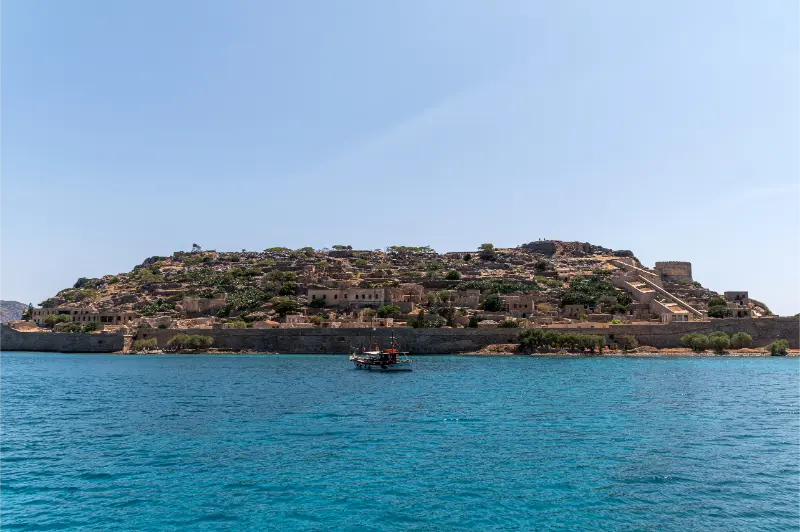

Spinalonga is a small island with an unusually dense history. Venetian fortifications, Ottoman-period settlement remains and the twentieth-century leprosy colony occupy the same compact space, while the surrounding water and dry Cretan landscape make the island visually striking before you even step ashore.
It is one of the most worthwhile cultural excursions in eastern Crete and adds a completely different historical layer to my broader Crete Travel Guide and Crete Road Trip.
Why this place deserves more than a quick photo
Many visitors know Spinalonga mainly from books or television references to the leprosy colony, but the island’s fortifications and earlier settlement history are equally important. Understanding all three periods prevents the visit from becoming a single tragic story disconnected from the physical place.
The island is also manageable in a few hours, which makes it easy to combine with Elounda, Plaka or Agios Nikolaos. The main constraint is transport by boat, so the day should be planned around sailing schedules rather than a rental-car clock.
A short history before you visit
Venetian authorities fortified Spinalonga because of its strategic position controlling access to the Gulf of Elounda. The defensive works remain among the most visible features of the island.
After political control changed, Spinalonga also developed an Ottoman-period settlement. In the twentieth century, the island became associated with the isolation and treatment of people with leprosy, a chapter that lasted for decades and left buildings and powerful personal histories.
Spinalonga’s modern heritage significance continues to receive formal cultural attention in Greece. For current destination context and boat information, use official regional or Greek tourism sources close to your travel date because access is seasonal and weather-dependent.
What to see: the essential highlights
- Venetian fortifications: walls, gates and elevated defensive positions explain why this small island mattered strategically.
- Main settlement streets: surviving structures make it possible to imagine daily life beyond the military architecture.
- Leprosy-colony buildings: emotionally important remains that should be approached with respect rather than as a dark-tourism spectacle.
- Views toward Plaka and Elounda: the short sea distance emphasises both connection and historical isolation.
- Perimeter walking route: a compact way to understand the whole island if weather and access allow.
- Interpretive exhibits: current displays and signs add essential context to buildings that might otherwise seem anonymous.
The route I would follow
Most visitors have a fixed amount of time between boat arrival and departure, so orient yourself immediately and avoid spending the first half hour only around the landing area.
- Confirm the return boat time as soon as you disembark.
- Enter through the fortifications and read the introductory historical material.
- Follow the settlement route, paying attention to buildings from different periods.
- Visit the areas connected with the leprosy colony slowly and respectfully.
- Continue along the perimeter or higher paths if time and heat allow.
- Return to the landing point with a comfortable margin for the boat.
If your boat allows only a short stop, focus on the main historical route instead of attempting every wall and viewpoint. The interpretation matters more than covering every metre.
How much time do you need?
Around two hours on the island works for many visitors, though longer gives you more time to read and walk the perimeter. Boat excursion formats vary, so check how much actual island time is included before booking.
Do not compare excursions only by price or total duration; a long cruise with swimming stops may give less archaeological time than a short direct boat from a nearby port.
How to get there
Boats commonly operate from Elounda and Plaka, with other excursions available from the wider Agios Nikolaos area. Plaka is physically closest and can provide a very short crossing, while Elounda has a broader tourism infrastructure.
Sailing frequency is seasonal and weather-dependent. Confirm the current return schedule before driving across Crete, particularly outside high season.
Best time of day and best season
Spring and early autumn are excellent because the island is exposed and can be hot in summer. In July and August, choose an early sailing if possible and carry water.
Wind can affect comfort and boat operations. If the forecast is poor, keep the day flexible and verify operator messages before leaving your accommodation.
Tickets, opening hours and current information
Boat tickets and archaeological admission may be separate and can change. Check exactly what an excursion includes. Use official cultural information for current site admission and local operators for sailing schedules.
What to wear and what to bring
- Water and strong sun protection.
- Secure walking shoes for stone and uneven paths.
- A hat that can handle wind on the boat.
- Offline copy of the return ticket or excursion confirmation.
- A respectful mindset for the medical and social history of the colony.
Visiting with children
Spinalonga can work with older children who are ready for difficult historical themes. Explain the island honestly but age-appropriately, focusing on community, medicine and changing attitudes rather than sensational details.
For younger children, keep the visit shorter and balance it with a boat ride or beach time around Elounda. The island has limited shade, so heat management is more important than completing the perimeter.
Accessibility and physical effort
The island includes uneven stone, slopes and historic surfaces. Some main routes may be easier than upper fortifications, but travellers with mobility needs should ask the boat operator and official site staff about current accessible options.
Boarding small excursion boats can itself be a mobility challenge. Verify vessel access before buying a ticket rather than only researching the archaeological path.
Photography without missing the place itself
Wide images from the walls looking toward the Cretan coast communicate Spinalonga’s isolation and strategic position. Narrow streets are best photographed when you include doorways, shadows and sea glimpses rather than empty façades alone.
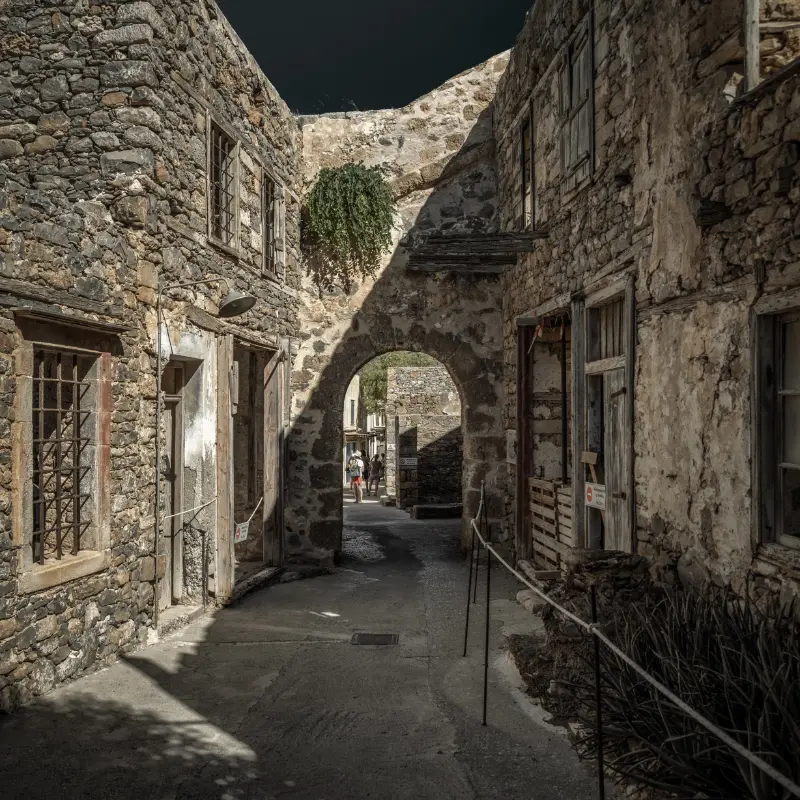
Be sensitive around buildings connected with illness and forced isolation. Spinalonga is historic, but it is also within living family memory and should not be reduced to dramatic photo props.
What to combine with your visit
Elounda and Plaka make the easiest same-day combination. A relaxed lunch by the water after the visit provides a useful emotional and physical break.
On a longer eastern Crete route, continue toward Agios Nikolaos or connect the excursion with the broader Crete road trip. Do not try to add Chania or western Crete on the same day; the island is much larger than first-time visitors expect.

Where to stay for the easiest visit
Elounda is ideal for resort comfort and frequent excursion options. Plaka is smaller and atmospheric, while Agios Nikolaos provides a lively town base with more evening choice.
Choose the base according to the rest of eastern Crete rather than Spinalonga alone; the boat ride is short enough from the main local departure points that changing hotels just for the excursion is unnecessary.
Common planning mistakes
- Booking a cruise without checking how much time is actually spent on Spinalonga.
- Visiting in peak midday heat without water.
- Focusing only on the leprosy colony and ignoring Venetian/Ottoman layers.
- Forgetting that boat schedules are weather and season dependent.
- Treating sensitive historical buildings as a dark-tourism photo set.
A slower, better way to experience it
Spinalonga is strongest when you let the layers coexist. Stand on a Venetian wall, look down at later houses and remember that the same small island meant defence, home, exclusion and memory to different people.
Read names, dates and personal accounts where interpretation is provided. They humanise the twentieth-century history and prevent the settlement from becoming an abstract backdrop.
Frequently asked questions
Where do boats to Spinalonga leave from?
Common departure points include Plaka and Elounda, with wider excursion options from the Agios Nikolaos area. Services vary by season.
How long do I need on Spinalonga?
Around two hours is enough for the main route; more time is useful if you enjoy detailed historical interpretation.
Can I visit independently?
Yes, by buying transport on a local boat and visiting the site independently, subject to current schedules and admission arrangements.
Is Spinalonga suitable for children?
It can be, especially for older children, but the leprosy-colony history should be explained sensitively and the heat needs careful management.
What is the best base?
Elounda and Plaka are the most convenient for the crossing; Agios Nikolaos is a good larger-town base nearby.
Final advice
Spinalonga is small enough for a half-day yet complex enough to stay in your memory far longer. Its power comes from the collision of military, community and medical history within one dry, beautiful island landscape.
Choose a boat that gives you enough time ashore, visit early in hot weather and approach the twentieth-century story with respect. It is one of eastern Crete’s most meaningful excursions.
Choosing between Plaka and Elounda boats
For many independent travellers, the choice is between a very short crossing from Plaka and a slightly longer excursion from Elounda. Plaka is ideal if your only goal is to maximise time on Spinalonga with minimal boat travel. Elounda offers more restaurants, accommodation and excursion choice, and the crossing can feel more like a small outing in its own right.
I compare the actual time ashore, not just the departure price. A cheap cruise that includes several swim stops may give less time at the archaeological site than a simple direct boat. Read the itinerary line by line before paying.
Understanding the leprosy-colony period responsibly
The twentieth-century history can easily be sensationalised. People sent to Spinalonga built community, worked, formed relationships and experienced changing medical treatment under difficult conditions. The site deserves language that recognises those people as residents and patients rather than turning them into scenery for a “haunted island” story.
A good eastern Crete day around Spinalonga
My preferred rhythm is an early boat, two thoughtful hours on the island, then lunch in Plaka or Elounda. In the afternoon, choose one beach or a relaxed walk in Agios Nikolaos rather than another long archaeological visit. The emotional intensity of Spinalonga benefits from a lighter second half of the day.