
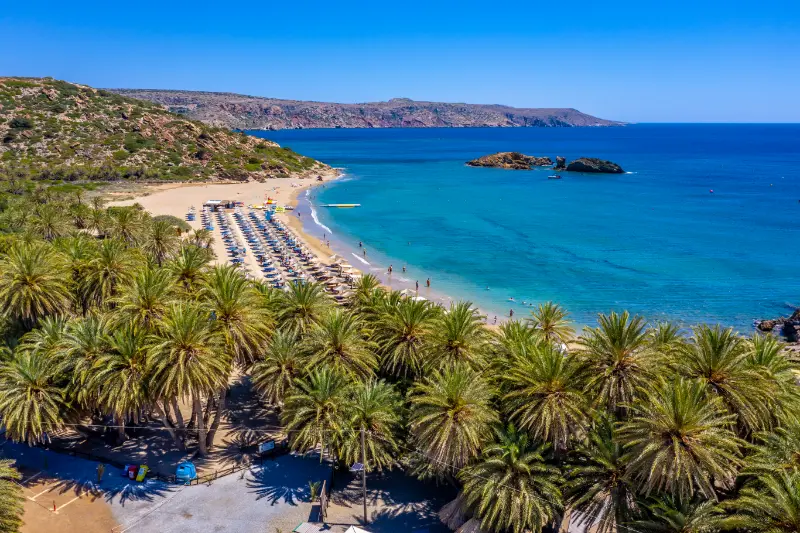
Vai is one of those places where the landscape is instantly recognisable: a sandy bay backed by a dense grove of native Cretan date palms, Phoenix theophrasti. The combination feels almost tropical, yet it belongs completely to eastern Crete. The mistake is to drive several hours for a quick photograph and leave; Vai works better as the centre of a full east-coast day.
Base yourself in Sitia if possible. From there, you can combine Vai with Toplou Monastery, the archaeological area of Itanos or Palaikastro without spending most of the day in the car. The palm forest is protected, so treat it as a natural site first and a beach facility second.
Why this place deserves its own stop
The strongest reason to come is the landscape itself. The attraction is not only one viewpoint or one activity, but the sequence of terrain, light and local life around it. Build enough margin into the day that you can stop when conditions are good rather than racing to match an overfilled schedule.
What to see and do
Arrive before the peak
Vai becomes much more enjoyable before the main wave of day visitors. Early arrival improves parking, gives you a quieter first swim and makes the palm-backed beach feel like a landscape rather than a crowd scene. If you arrive late, consider staying into the late afternoon after some organised groups have left.
Respect the palm forest
The Cretan date palm is native to the region and the forest is the defining feature of Vai. Follow marked access and do not push into protected areas for photographs. The most responsible experience is to enjoy the visual relationship between palms and beach without treating the grove as an unrestricted picnic zone.
Use the viewpoint
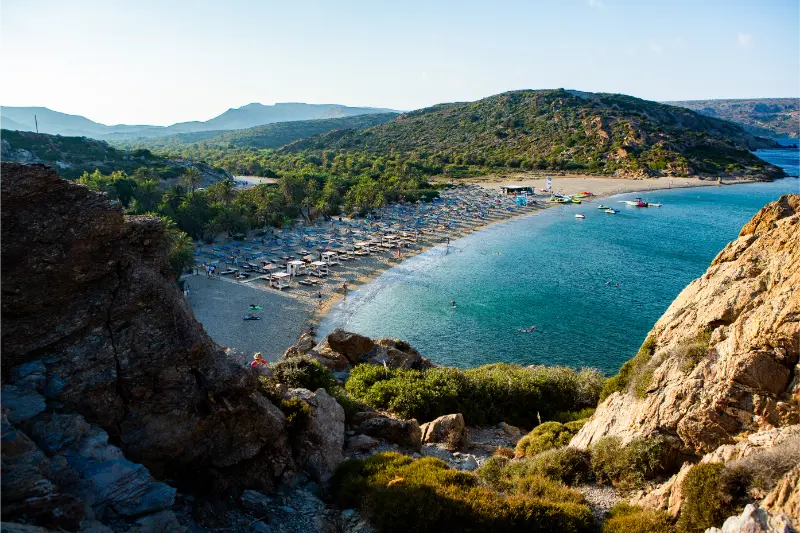
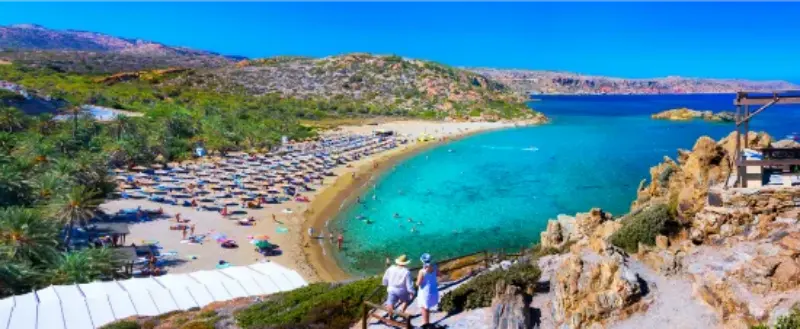
A short climb to the established viewpoint gives the classic perspective over the curve of the beach and the palm forest. It is more useful than wandering randomly behind the beach because you see the scale and shape of the landscape. Do it before the hottest part of the day.
Add Itanos
The ancient site and beaches at Itanos are close enough to make an excellent second stop. The contrast is strong: at Vai the palm forest dominates; at Itanos, archaeology, rocky coastline and quieter coves change the mood. This is one of the easiest ways to make the long drive east feel worthwhile.
Keep Toplou or Palaikastro as alternatives
Toplou Monastery adds history and culture, while Palaikastro and Chiona add archaeology and a more local beach atmosphere. Do not attempt every stop. Choose one secondary place based on weather and energy, and let Vai remain the main beach experience.
A realistic plan
| Part of the day | Plan |
|---|---|
| 08:30 | Arrive at Vai, swim and walk the beach |
| 10:30 | Viewpoint before peak heat |
| 12:00 | Leave for lunch or a second stop |
| Afternoon | Itanos, Toplou or Palaikastro |
| Evening | Return to Sitia for dinner |
Use this as a framework rather than a timetable. Crete rewards flexibility: parking can take longer than expected, mountain roads slow down, a good lunch becomes part of the day, and heat can change the order of activities. The best itinerary is the one that leaves enough margin to enjoy the main experience rather than simply arriving at every planned pin on a map.
How to get there and move around
Vai is in far eastern Crete, so driving time is the main planning issue. From Sitia it is a manageable excursion; from Agios Nikolaos it becomes a much longer day. Parking and facilities are available around the beach area in season, but conditions and charges can change. Bring water even if you plan to use beach services, and do not leave valuables visible in the car.
Respect seasonal conditions
Natural sites in Crete change with weather, heat, wind and water levels. A route that is comfortable in spring can be much more demanding in August. Check local conditions, start earlier than you think you need to, and never treat a gorge or remote beach as an urban attraction with guaranteed services every few minutes. Water, suitable shoes and a realistic turn-around time matter more than squeezing another stop into the same day.
Build a flexible backup plan
Wind, road works, heat or a temporary access restriction can change the day. Keep one nearby alternative in mind instead of driving across the island to rescue the schedule. This is one of the simplest ways to make a Crete road trip feel relaxed: organise each day around one geographic area and choose two or three compatible options within it.
Best time to visit
Late May, June and September give the best balance of warm water and lighter pressure. July and August are busiest, so arrive early. Outside the main season the beach can feel wonderfully quiet, but services may be limited and wind can change swimming conditions quickly.
For any outdoor or archaeological visit, check the same-day forecast and the official operating information. Crete can have very local conditions: wind on one coast, heat in an inland valley and cloud over the mountains at the same time. Planning by region and keeping one backup option nearby is more effective than relying on a rigid island-wide schedule.
Food and local rhythm
For a better food day, I prefer lunch away from the busiest beach zone, either around Palaikastro or back in Sitia. That gives you more choice and makes the beach time feel less commercial. Carry a reusable bottle and avoid leaving food waste near the protected palm area.
One of my favourite planning rules in Crete is to protect lunch. Do not schedule every meal as a 20-minute gap between attractions. A proper stop gives you shade, hydration and a chance to ask local staff about road, wind or beach conditions. It also makes the day feel like a trip through Crete rather than a sequence of parking lots.
How to combine it with nearby places
Use Sitia as the natural base. If you have several nights in the east, keep Zakros for a separate day because both places deserve unhurried time.
If your route already includes two long drives, resist adding a third distant highlight simply because it is famous. Crete is large enough that geographic discipline improves almost every itinerary. A day focused on one corner of the island usually produces more time walking, swimming or eating and less time looking through a windscreen.
Where to stay
For most travellers this works best as a day trip from an established base rather than a one-night hotel change. Choose accommodation based on the wider region and your next day, not only this single attraction. If an early start matters, staying within 30–45 minutes can dramatically improve the experience and reduce the temptation to rush.
Photography and timing
The most flattering light is usually early or late, but photography should not dictate unsafe timing. On exposed roads, gorges and archaeological sites, practical considerations come first. Carry a phone or camera securely, avoid stepping backward near drops or uneven stones, and take a moment to look without a screen. The best photographs often come after you have understood the shape of the place.
Common mistakes to avoid
- Driving from western Crete only for a two-hour beach stop
- Arriving at midday in August and expecting easy parking
- Entering protected palm areas for photographs
- Trying to combine Vai and Zakros in a rushed half-day
- Ignoring wind and sea conditions because the water looks calm in photos
- Leaving the area without seeing another east-Crete stop such as Itanos
Official information
For current access, opening hours, tickets or regional information, check Visit Greece – Sitia Geopark shortly before the trip. I use official pages for variable details because older travel articles can remain online long after rules have changed.
Frequently asked questions
Is Vai worth the drive?
Yes if you are already staying in eastern Crete. From Chania or Rethymno, the drive is too long for a simple beach day.
Is the palm forest natural?
Yes. The grove is formed by the native Cretan date palm, Phoenix theophrasti, and is a protected natural feature.
Can I visit Itanos on the same day?
Yes. Itanos is close and makes one of the best complementary stops.
Are there facilities at Vai?
There are seasonal beach facilities, but availability and prices can change. Bring basic supplies anyway.
How long should I stay?
Three to five hours is comfortable for swimming, the viewpoint and a relaxed beach visit before adding one nearby stop.
Final advice
Build this stop around one clear reason for going, then let the surrounding area add depth. That approach keeps the day realistic and usually creates better memories than a checklist. In Crete, distance, heat and road shape matter as much as the number of attractions on a map.
For the wider picture, continue with Sitia Travel Guide, Kato Zakros Guide, Crete Travel Guide. These guides make it easier to connect this stop to the rest of the island without unnecessary backtracking.