
Three days is an excellent amount of time for Thessaloniki. It is long enough to understand the city’s Roman, Byzantine, Ottoman, Jewish and modern layers without turning every hour into a sprint, yet short enough that you can stay central and do almost everything on foot or with a few simple metro/bus rides.
The key is not to organise the itinerary by a random “top ten” list. Thessaloniki works better when each day has a geographic and historical logic. Day one focuses on the seafront and museums, day two on Roman and Byzantine central monuments, and day three on Ano Poli, markets, Jewish history and food. You can swap days for weather, but keep the clusters intact.
Why this deserves a place in your Thessaloniki itinerary
A three-day structure prevents the most common mistake: combining the White Tower, Ano Poli, two museums, several churches and Ladadika into one exhausting day because the map makes the centre look small. Distances are manageable, but museum time, heat and steep streets still matter.
It also leaves room for the city’s strongest non-monument experiences—coffee, market browsing, long meals and the waterfront at sunset. Those pauses are not wasted time; they are part of the reason Thessaloniki feels different from a destination built around one archaeological zone.
At a glance
| Best for | First-time visitors, couples, food lovers and culture-focused city breaks |
| Time needed | Three full days plus arrival/departure time if possible |
| Best time | Spring, early summer and autumn; year-round with weather adjustments |
| Area | Central Thessaloniki with one upper-city day |
| Pair it with | Halkidiki, Pella, Aigai, Mount Olympus or Kavala before/after |
What to see and focus on
The itinerary is intentionally selective. It includes enough history to understand the city without making every day museum-heavy.
- White Tower and seafront.
- Archaeological Museum and Museum of Byzantine Culture.
- Rotunda, Galerian Complex and Agios Dimitrios.
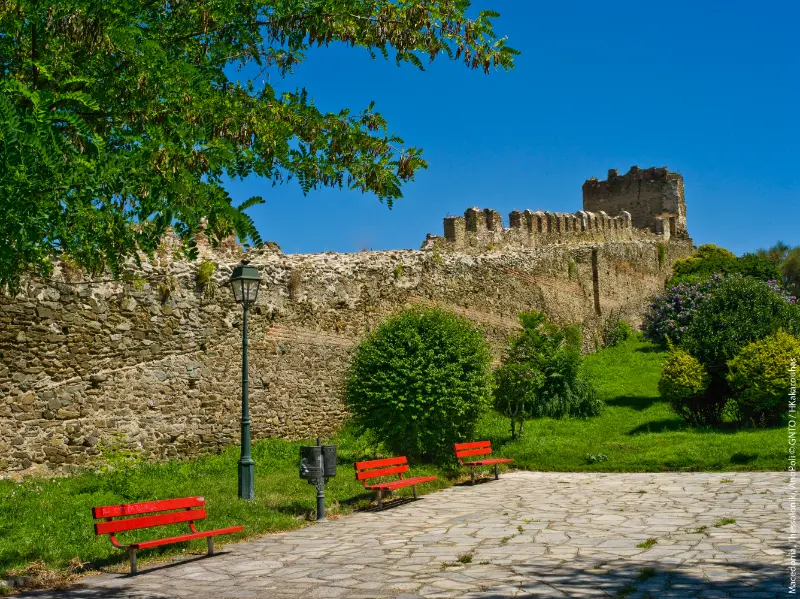
- Ano Poli, walls and Heptapyrgion.
- Kapani, Modiano, Ladadika and Jewish heritage context.
How to think about Thessaloniki in three layers
The first layer is the Roman and Byzantine city: Galerius, the Rotunda, churches, walls and museums. The second is the port and commercial city shaped by Ottoman rule, Jewish life, refugees and trade. The third is modern Thessaloniki—the waterfront, food, nightlife, universities and neighbourhood culture.

A good itinerary lets those layers overlap rather than assigning each one to a separate lecture. You can eat beside an Ottoman-era market after visiting a Byzantine church and end the same day by the modern waterfront. That coexistence is the city’s strength.
Day 1: museums and the seafront
Start at the Archaeological Museum while your concentration is fresh, then move to the Museum of Byzantine Culture if you enjoy museums. If two large museums feel excessive, choose one and give the saved time to the waterfront. Continue to the White Tower and walk the seafront toward sunset.
Dinner can be in Ladadika if you want energy and convenience, or in a quieter central side street if you prefer a more relaxed first evening. Do not stay out too late if day two includes a full historical walk.
A practical route that works
Use this three-day sequence as a framework and adjust for opening days.
- Day 1: Archaeological Museum, Museum of Byzantine Culture or one of the two, White Tower and waterfront, Ladadika dinner.
- Day 2: Galerian Palace, Kamara, Rotunda, Agios Dimitrios, central coffee, optional Roman Agora and evening food in the centre.
- Day 3: Bus/taxi uphill to Heptapyrgion, descend through Ano Poli, visit Jewish Museum or central heritage sites, browse Kapani/Modiano and finish with a long meal.
- Optional evening: return to the seafront for sunset or drinks.
- If you have a fourth day, use it for Pella, Aigai, Halkidiki or Mount Olympus rather than adding more central monuments.
Check Tuesday closures for several archaeological monuments before locking the order. If day two falls on a closure day, swap it with day one or three.
How to get there and move around
A central hotel around Aristotelous, the waterfront or the commercial centre keeps this itinerary simple. Most day-one and day-two sights are walkable, while Ano Poli is easier with transport uphill and walking downhill.
Use the metro for cross-centre movement when useful, but do not overuse transport. Thessaloniki’s street life is part of the experience, and many distances are short enough that walking is faster than waiting.
Best time of day and season
Spring and autumn offer the easiest walking weather. Summer requires earlier starts, museum time during midday heat and a slower afternoon. Winter needs shorter outdoor blocks and more flexible plans around rain.
If your trip includes a Sunday or Tuesday, check museum and monument schedules carefully. Different institutions follow different closure patterns, so one old timetable can distort the whole itinerary.
Tickets, opening hours and 2026 planning
Current 2026 visitor information lists the Archaeological Museum at €10 general admission, the Museum of Byzantine Culture at €10, the Rotunda at €10 and Heptapyrgion at €10. These are separate admissions and can change, so budget for the attractions you genuinely want rather than trying to enter everything.
Use the official museum and Hellenic Heritage pages linked in the individual guides on this site for same-day confirmation. Thessaloniki has enough free public-space experiences that a good itinerary does not need to be ticket-heavy.

Food and coffee nearby
Build food into the geography. Have bougatsa or koulouri near the centre, use Kapani and Modiano during daytime, and save Ladadika for one evening rather than eating there every night.
One long meal per day is usually enough. The rest can be coffee, pastry and small snacks, which leaves both time and appetite for the city.
Is it worth it with children?
With children, shorten the museum blocks and keep the waterfront as a daily reset. Day three’s upper-city slopes are much easier if you take transport uphill.
Do not make children complete every church and museum. Choose one strong historical story each day and balance it with open space, food and rest.
Accessibility and physical effort
The flat waterfront and central museums are relatively easy. Ano Poli and fortress areas require more planning because of gradients, stairs and uneven paving.
Travellers with limited mobility can adapt day three by using taxis between viewpoints and prioritising accessible museums and monuments in the lower city.
How to combine it with the rest of Thessaloniki
Use the detailed guides to adjust each day: Archaeological Museum, Museum of Byzantine Culture, Galerian Complex, Agios Dimitrios and Heptapyrgion.
For food and neighbourhood rhythm, add Kapani and Modiano, Ladadika and the Thessaloniki food guide.
Mistakes to avoid
- Putting Ano Poli and two major museums on the same summer day.
- Ignoring Tuesday closures.
- Eating every dinner in Ladadika because it is famous.
- Skipping the Jewish history of the city.
- Treating the waterfront only as a route between attractions.
Three days is enough only if you accept that you will not see everything. The goal is a coherent city experience, not a completed spreadsheet.
A slower version of the visit
A slower itinerary can remove one museum and one minor monument. Use that time for coffee in a neighbourhood, a longer lunch and a second waterfront walk after dark.
If you fall in love with one period—Roman, Byzantine, Jewish or modern—follow that interest instead of returning to the master plan. A personal itinerary is better than a perfectly balanced one.
Practical packing and small details
- Comfortable shoes for long urban walks.
- A light layer for museums and sea breeze.
- Water bottle and sun protection.
- Offline map.
- A list of official opening pages saved on your phone.
Travel light each day. Thessaloniki has cafés, shops and services everywhere in the centre, so there is no need to carry a heavy daypack.

Responsible travel and local etiquette
Respect active churches, memorial sites and residential areas in Ano Poli. Not every beautiful doorway or courtyard is a public attraction.
Use public transport or walking rather than repeated short taxi rides when practical. The city is compact enough that low-impact movement is often the easiest option too.
FAQ
Is three days enough for Thessaloniki?
Yes. Three full days are enough for the main museums, historic monuments, Ano Poli, markets, food and waterfront at a comfortable pace.
Where should I stay?
A central base near Aristotelous Square, the waterfront or the commercial centre makes this itinerary easiest.
Do I need a car?
No. A car is unnecessary inside central Thessaloniki and is more useful only for regional day trips.
What should I do if museums are closed Tuesday?
Swap the museum-heavy and outdoor-focused days after checking current official schedules.
What is the best day trip after three days in the city?
Pella, Aigai, Halkidiki, Mount Olympus or Kavala all work depending on your interests and transport.
Final thoughts
Three days lets Thessaloniki breathe. You can understand the history, eat well, climb into Ano Poli and still have time to walk by the sea without watching the clock.
Keep each day geographically coherent, confirm opening hours and leave enough blank space for the city to surprise you.
Continue planning with our new Thessaloniki guides: best day trips from Thessaloniki, Thessaloniki on a budget, solo travel in Thessaloniki.