
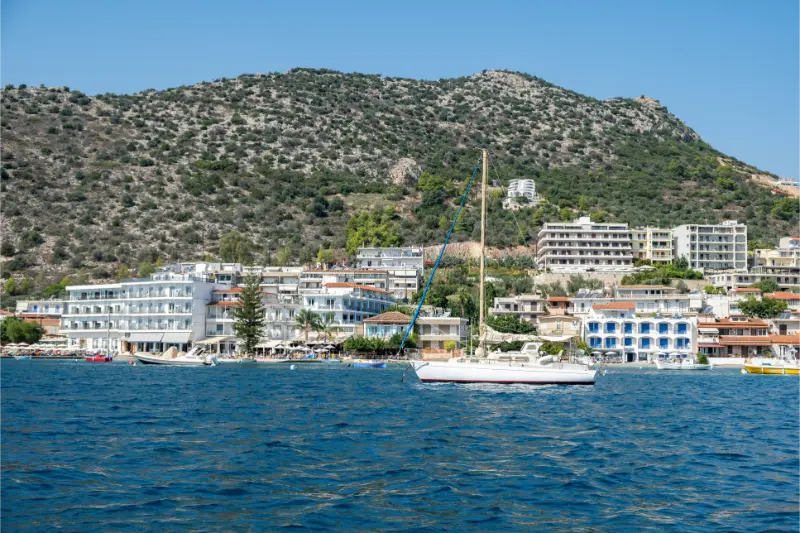
Tolo is one of the easiest beach bases in Argolis for travellers who want to combine swimming with some of Greece’s most important archaeological sites. The village curves around a sheltered bay south-east of Nafplio, with hotels, apartments and tavernas close to the water and the long Psili Ammos beach forming the centre of summer life. It is far more resort-oriented than Nafplio, but that is exactly why it works for families and travellers who want a beach-first holiday without giving up Mycenae or Epidaurus.
Visit Peloponnese describes Tolo as an amphitheatrically built seaside settlement overlooking the small islands of Romvi, Koronisi and Daskalio. The official regional guide also emphasises water sports, excursion boats, nearby Ancient Asine and easy access to beaches such as Plaka Drepano, Vivari, Kondyli and Kandia. The result is a useful base where you can keep most evenings simple and reserve the car for day trips.
Why this Argolis stop belongs in your itinerary
Tolo is best for families, beach-focused couples and first-time Peloponnese visitors who want a straightforward holiday setup. You can walk from many hotels to the beach and dinner, yet Nafplio is close enough for an evening out and major archaeological sites are realistic day trips. The compromise is summer density: in July and August the waterfront can feel busy, parking is tight and the most central stretches are not for travellers seeking remote, silent beaches.
Quick planning summary
- Best all-round seasons: April to June and September to October for archaeology, walking and comfortable road trips.
- July and August: excellent for beach time, but visit exposed archaeological sites early and expect heavier traffic around Nafplio and Tolo.
- Transport: a car gives the most flexibility across Argolis; central Nafplio, Argos, Tolo and Palaia Epidavros are walkable once you arrive.
- Heat strategy: put stone sites and hilltop castles in the morning, keep the middle of the day for lunch, museums or swimming.
- Always recheck: archaeological opening hours, museum closures, KTEL timetables, boat excursions, festival schedules and wildfire restrictions close to your trip.
What to see and do
Psili Ammos beach
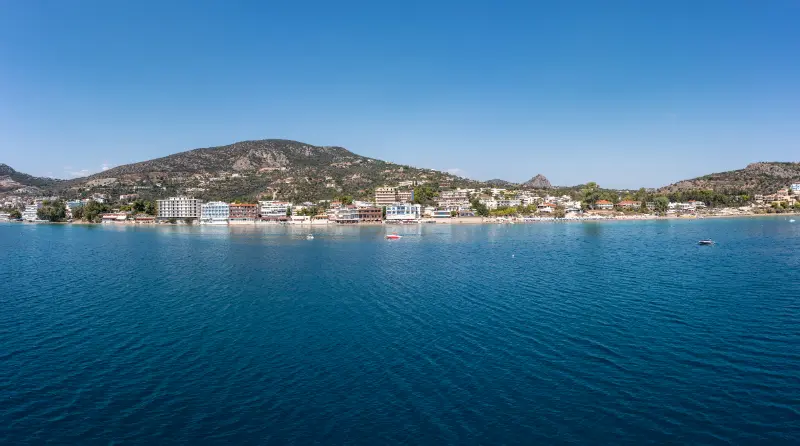
Psili Ammos is the main beach experience and the practical reason many people choose Tolo. The long sandy stretch has organised sections, water sports, cafés and accommodation close behind it. Families appreciate the easy logistics, though summer weekends can be crowded. Walk the beach before choosing your favourite section: the character changes from busier hotel frontage to quieter edges, and wind or boat activity can affect conditions from one part of the bay to another.
Build some margin into the visit. Distances in Argolis are short, but parking, heat, meal times and the temptation to stop at viewpoints make realistic days slower than a map suggests. One major site plus one beach, town or food experience usually feels better than four rapid stops.
Tolo waterfront and village lanes
Tolo does not have a formal old town, but the waterfront, small streets and hillside accommodation create a pleasant evening routine. Restaurants focus heavily on fish and familiar Greek dishes, while bars and cafés are more active in high season. If you stay uphill, check the gradient before booking; sea views can be excellent, but the walk back from dinner may be steeper than the map suggests.
Build some margin into the visit. Distances in Argolis are short, but parking, heat, meal times and the temptation to stop at viewpoints make realistic days slower than a map suggests. One major site plus one beach, town or food experience usually feels better than four rapid stops.
Romvi, Koronisi and Daskalio
The small islets in Tolo Bay give the water its distinctive view. Visit Peloponnese notes that the uninhabited islands have small coves and can be reached by small boat, canoe or pedal craft when conditions are suitable. Do not treat them as a casual swim target unless you understand currents and boat traffic. For most visitors, a rental boat or organised outing is the safer and more enjoyable way to explore the bay.
Build some margin into the visit. Distances in Argolis are short, but parking, heat, meal times and the temptation to stop at viewpoints make realistic days slower than a map suggests. One major site plus one beach, town or food experience usually feels better than four rapid stops.
Ancient Asine
Ancient Asine lies close enough to combine archaeology and swimming in one outing. The coastal site has a long history and is linked to Homeric tradition; below it, Kastraki beach provides clear water and an easy cooling-off stop. Go early, wear shoes with grip and allow time to read the site rather than simply walking to the viewpoint. It is one of the best low-effort cultural excursions from Tolo.
Build some margin into the visit. Distances in Argolis are short, but parking, heat, meal times and the temptation to stop at viewpoints make realistic days slower than a map suggests. One major site plus one beach, town or food experience usually feels better than four rapid stops.
Boat trips to Hydra and Spetses
Seasonal excursion boats often connect Tolo with Hydra, Spetses or coastal swimming stops. These trips are convenient because they avoid driving back toward a larger port, but they are day cruises rather than substitutes for staying on the islands. Check the exact itinerary, sea conditions, time ashore and cancellation policy. A cruise with only a short stop on Hydra can feel rushed if your main goal is to explore the town slowly.
Build some margin into the visit. Distances in Argolis are short, but parking, heat, meal times and the temptation to stop at viewpoints make realistic days slower than a map suggests. One major site plus one beach, town or food experience usually feels better than four rapid stops.
Nafplio evenings
Nafplio is close enough for dinner, sunset or a walk through the old town. This pairing is one of Tolo’s biggest strengths: sleep by the beach, then use Nafplio for architecture and atmosphere. In peak season, leave extra time for parking and consider going later in the afternoon rather than during the busiest midday hours. Do not drive after a long dinner if you have been drinking; use a taxi when appropriate.
Build some margin into the visit. Distances in Argolis are short, but parking, heat, meal times and the temptation to stop at viewpoints make realistic days slower than a map suggests. One major site plus one beach, town or food experience usually feels better than four rapid stops.
Epidaurus and Mycenae day trips
Tolo is strategically placed between the Argolic Gulf beaches and the famous inland sites. Ancient Epidaurus, Mycenae, Tiryns and Argos are all realistic excursions, but avoid scheduling two major archaeological sites and a long beach afternoon on the same day. One significant cultural visit before lunch followed by swimming is usually the best rhythm for a summer stay.
Build some margin into the visit. Distances in Argolis are short, but parking, heat, meal times and the temptation to stop at viewpoints make realistic days slower than a map suggests. One major site plus one beach, town or food experience usually feels better than four rapid stops.
A realistic itinerary
- Day 1: settle in, explore Psili Ammos and walk the waterfront at sunset.
- Day 2: visit Ancient Asine in the morning, swim at Kastraki or Plaka Drepano, then have dinner in Tolo.
- Day 3: take a day trip to Mycenae or Epidaurus, returning for a late swim.
- Day 4: choose a boat excursion or spend the afternoon and evening in Nafplio.
Treat the itinerary as a framework rather than a timetable. If the sea is rough, switch a boat or snorkelling plan for archaeology. If a site is unusually hot or crowded, shorten it and return another morning. Argolis is compact enough that flexibility rarely costs much driving.
Where to stay
Stay directly behind Psili Ammos if beach access is your priority and you do not mind summer activity. The central waterfront is best for walking to dinner. Hillside rooms can offer much better views and quieter nights but require steeper walks or a car. Travellers with toddlers, mobility concerns or heavy beach gear should prioritise flat access over panorama when choosing accommodation.
Before booking, zoom into the map and read recent comments about parking, road noise, stairs and walking access. In Nafplio and hillside Tolo especially, a property that looks central can involve steep lanes or restricted vehicle access. On the coast, “sea view” does not always mean “walkable beach.”
For accommodation, compare current options on Booking.com. Use map view rather than sorting only by review score, because location changes the experience substantially in Argolis.
Getting there and getting around
Tolo is reached by road from Nafplio and is served by local/regional buses in season, though timetables should be checked close to travel. A car is useful for archaeology and quieter beaches but not necessary for a simple beach holiday. Parking becomes difficult in the busiest summer weeks, so once you find a legal space, walk for local errands rather than moving the car repeatedly.
From Athens, most road trips reach Argolis through Corinth. Public transport is possible for the main towns, but connections between beaches, small archaeological sites and villages are much less convenient. If you rent a car, park legally and avoid blocking narrow residential streets, beach access or emergency routes.
Best time to visit
Spring is outstanding for wildflowers, green landscapes and archaeology without extreme heat. June and September are the best compromise if you want warm sea temperatures and cultural sightseeing. July and August are ideal for a beach-first trip but require early starts. October can remain pleasant on the coast, while winter is better for city breaks, food and archaeology than for relying on resort services.
Wind and local exposure matter more than the regional forecast suggests. A calm morning in Nafplio can coincide with choppier conditions on another part of the Argolic Gulf. Check the day’s weather and marine conditions before committing to boat trips, long swims or exposed ridge walks.
Food and local products
Seafood is the obvious strength: grilled fish, octopus, calamari and small fish are common, alongside Greek salads, grilled meats and family-friendly dishes. Waterfront tables are convenient, but walk one street back as well. For wine, ask for bottles from Nemea rather than defaulting to generic house wine; Argolis sits close to one of Greece’s most important red-wine regions.
Across Argolis, look for citrus from the Argive plain, local olive oil, seasonal vegetables, cheeses, grilled meats and fish on the coast. Nemea’s Agiorgitiko adds a strong wine identity. The best way to eat locally is to match the meal to the landscape: seafood by the gulf, market produce in Argos and wine-focused dishes inland.
Travelling with children
Tolo is one of the simplest family bases in Argolis because the beach, food and accommodation are concentrated in a small area. Choose a section of Psili Ammos with the water depth and facilities that suit your children, carry shade protection and avoid scheduling a long archaeological excursion every day. A short Ancient Asine visit or Nafplio evening is often enough culture between beach days.

Family days work best when the difficult element comes first. Do the fortress, archaeological site or hike in the morning, then reward everyone with lunch and a swim. Carry water and hats, and do not underestimate how tiring reflective stone, cobbles and uneven paths become in summer.
Costs and practical details
Argolis can be relatively good value because beaches, town walks and many viewpoints cost little or nothing. Budget separately for state archaeological tickets, museums, boat trips, organised water sports and wine tastings. Keep some cash for small tavernas, kiosks and seasonal businesses, although cards are widely accepted in larger towns.
How this guide fits the wider region
Continue planning with Ancient Asine and Drepano; Nafplio guide; Best beaches near Nafplio; Epidaurus guide. These pages form one connected Argolis cluster, so you can move between archaeology, coast, towns and food without repeating the same planning work.
Common mistakes
- Booking a steep hillside property without checking the walk to the beach.
- Driving into central Tolo for every small errand in August.
- Assuming every boat excursion provides enough time on Hydra or Spetses.
- Trying to visit Mycenae and Epidaurus on the same hot summer day.
- Ignoring nearby Plaka Drepano and Ancient Asine because the main beach is convenient.
Frequently asked questions
How many days should I spend in Argolis?
Three days are enough for Nafplio, Mycenae and Epidaurus at a brisk pace. Five to seven days are much better if you also want beaches, Argos, Tiryns, wine country and the eastern coast without constant driving.
Do I need a car?
Not for a simple Nafplio stay, but a car dramatically improves access to archaeological sites, Tolo, Drepano, coastal villages, Nemea wineries and the eastern Argolis peninsula.
Can I visit Argolis as a day trip from Athens?
Yes for one major objective such as Mycenae plus Nafplio or Epidaurus, but a day trip cannot reproduce the slower combination of archaeology, evenings and beach time that makes the region special.
Is Argolis suitable outside summer?
Yes. Spring and autumn are arguably better for archaeology and walking. Winter suits Nafplio, Argos and historical sites, although beach resorts and boat services become much quieter.
What should I verify shortly before travelling?
Check archaeological opening hours, museum operating days, current bus or ferry timetables, boat excursions, performance schedules, trail conditions and any wildfire-related access restrictions.
Useful official source
For information that can change, check Visit Peloponnese – Tolo and confirm current access, opening hours or local conditions close to your travel date.
Final advice
Argolis is at its best when you use its compact geography to slow down rather than accelerate. Visit a major site early, eat a proper lunch, spend time by the sea or in a town, and keep evenings simple. That rhythm produces a richer trip than racing from monument to monument simply because everything appears close on the map.