
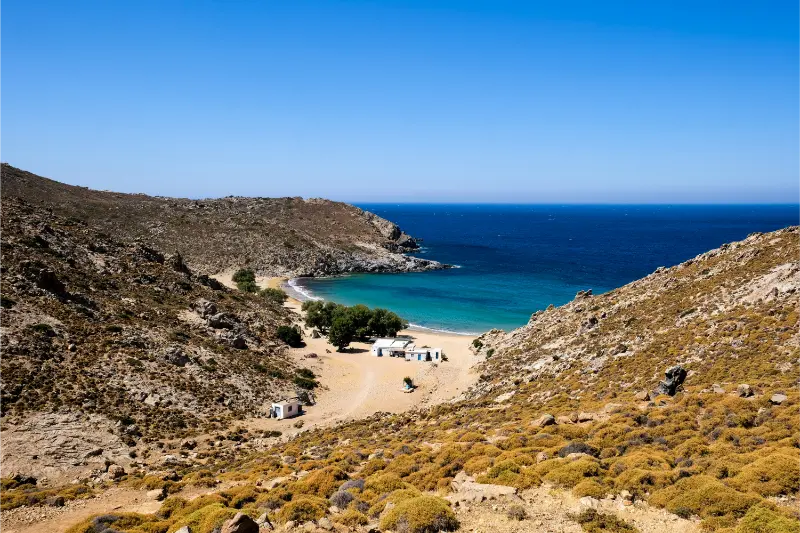
Patmos is better for walking than many visitors expect. Its small scale, old footpaths and rugged coastline create routes that connect the port, Chora, chapels, archaeological viewpoints and beaches. Visit Greece describes an extensive network of old paths that once linked settlements, fields and religious sites, with routes ranging from the classic Skala–Chora climb to a five-hour Vagia circuit.
This is not high-mountain trekking, but summer heat, exposed rock and limited shade can turn a modest route into a serious outing. The best hiking season is spring and autumn; in July and August, start early, carry more water than you think you need and keep the middle of the day for swimming or museums.
Four walks to know before you arrive
| Route | Approximate character | Best for |
|---|---|---|
| Skala–Chora–Skala | 40 min up, 30 min down according to Visit Greece | First-time walkers and heritage |
| Kastelli circuit | Archaeological hill and views over Skala bays | Short scenic outing |
| Vagia circular route | About 5 hours, Mediterranean vegetation and coves | Longer hiking day |
| Psili Ammos approach | Trail to remote south-coast beach | Hike-and-swim day |
Skala to Chora via the Cave of the Apocalypse
This is the route I would recommend to almost every active first-time visitor. The historic climb links Skala with Chora and passes the Cave of the Apocalypse. Visit Greece gives an approximate ascent of 40 minutes and descent of 30 minutes, before sightseeing stops.
Start early enough that the cave and monastery are still inside their morning visiting window. The walk becomes far more demanding if you begin after a late breakfast under strong sun. Take water and wear shoes with grip because old stone can be smooth.
Kastelli circuit
Kastelli provides one of the easiest ways to add archaeology and panorama to a stay in Skala. Visit Greece describes fortification remains and views over the bays of Skala, Merikas and Chochlakas, with distant islands visible in clear weather.
Use this route in the morning or late afternoon. It is a short outing, but there is no reason to turn it into a heat challenge. Pair it with lunch and a nearby swim rather than stacking it after a long boat trip.
Vagia circular route
The Vagia circuit is the more substantial walk highlighted by Visit Greece, taking about five hours and passing Mediterranean vegetation, chapels, coves and clear-water beaches. This is the route where footwear, water and route-finding matter most.
Do not assume that “five hours” includes long swimming stops or lunch. Build margin for heat and navigation, tell someone your plan and check current path condition locally. If conditions are poor, switch to a shorter north-coast beach day instead of forcing the route.
Hiking to Psili Ammos
The municipality describes Psili Ammos as reachable by sea or scenic trails, making it a classic hike-and-swim objective. The attraction is obvious: you earn a remote beach rather than stepping off a bus. The risk is equally obvious: after a long swim and lunch in the sun, you still need to hike back unless you have confirmed a boat.
Carry enough water for both directions, use sun protection and avoid flip-flops. The Patmos beach guide explains how Psili Ammos fits among easier swimming options.
What to carry
- 1.5–2 litres of water per person for longer summer routes, more in extreme heat.
- Supportive shoes with grip rather than smooth sandals.
- Hat, sunscreen and a light long-sleeve layer.
- Offline map or downloaded route information.
- Small first-aid kit and any essential medication.
- Swimwear and compact towel for routes that finish at a beach.
- A charged phone and enough battery for navigation.
Heat, wind and fire risk
Wind can make Patmos feel cooler while sun exposure remains intense. Start before the island heats up, especially on south-facing or exposed routes. During periods of high fire risk, access to natural areas can be restricted; respect local instructions even if your route app says the trail is open.
A strong meltemi can also affect boat plans. If your hiking day depends on a boat pickup, confirm the operation that morning and have a walking return plan that is realistic for your fitness.
Walking without a car
Patmos is well suited to combining buses with one-way walks. The 2026 timetable links Skala with Chora, Grikos and Kampos, giving you several ways to avoid retracing a route. For example, bus to Kampos, walk toward Vagia, then return from the same corridor.
Check the last bus before you start walking, not after you reach the beach. The Patmos Without a Car guide gives the transport framework behind these combinations.
Guided hiking and active experiences
A guide is useful for longer circuits if you want local knowledge of path condition, chapels and landscape. Before booking, ask about total walking time, elevation, shade, water supply and whether transport back is included.
Official sources and what to recheck
For current destination information, use Visit Greece – Patmos and the 2026 Municipality of Patmos visitor brochure. Bus schedules are seasonal, so verify them on Patmos Bus shortly before travelling. The key route descriptions come from Visit Greece’s walking trails on Patmos page.
Continue planning your Patmos trip
Start with the main Patmos travel guide, then use specialist pages according to the trip you are building. Useful next reads are Skala; Chora; Monastery of Saint John; Cave of the Apocalypse; Grikos and Petra. Keeping the guides connected helps you plan one coherent holiday rather than treating every sight as a separate day trip.
Frequently asked questions
Is Patmos good for hiking?
Yes. The island has old paths linking Skala, Chora, archaeological viewpoints, chapels and beaches.
What is the easiest classic walk?
The Skala–Chora route is the best first walk, with about 40 minutes uphill and 30 minutes downhill before stops.
What is the longest route mentioned by Visit Greece?
The Vagia circular route is described as a roughly five-hour walk.
Can I hike to Psili Ammos?
Yes, but carry water and plan the return before setting out.
When is the best hiking season?
Spring and autumn are most comfortable. Summer hikes should start very early and avoid peak heat.
Final planning advice
Build Patmos walking around temperature and transport, not ambition. One heritage walk, one scenic circuit and one beach trail are enough for most holidays. Leave room to stop at a chapel, swim in a quiet bay or turn back when the wind and heat change the day.
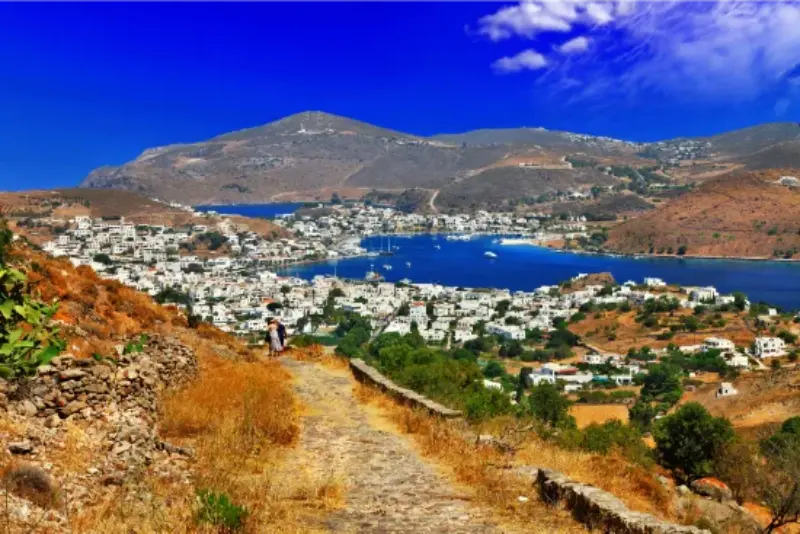
Navigation and trail markings
Do not rely on one app as if digital mapping were authoritative. Download an offline map, look for local waymarks and ask about recent path condition, especially after winter weather. On quiet trails, turn around early if the route becomes unclear rather than trying to force a shortcut across scrub or private land.
Hike-and-swim logistics
A swim is a perfect reward after walking, but wet feet and fatigue can make the return harder. Dry off, eat something and give yourself recovery time before starting back. If you carry sandals for the beach, keep proper shoes for the trail rather than hiking in footwear chosen only for the water.
Practical packing checklist
For a Patmos day out, carry water, sun protection, supportive shoes, a light layer for wind, swimwear when relevant, modest clothing for sacred sites, a charged phone and a small amount of cash. Keep ferry and bus information saved offline. The island is compact, but small practical choices make the difference between a relaxed day and repeatedly returning to your room for something you forgot.

Seasonal planning
May, June, September and early October are especially comfortable for mixed sightseeing and walking, while July and August offer the strongest holiday atmosphere but require earlier starts and more attention to heat. Outside peak season, verify ferry frequency, buses, restaurant openings and beach services rather than assuming the summer pattern applies. Religious sites remain important throughout the year, but their schedules can change around services and feast days.
Common planning mistakes to avoid
The most common mistake on Patmos is trying to fit a cultural morning, remote beach, long lunch and sunset outing into one day simply because the island is small. Distances are short, but heat, bus timing, sacred-site opening windows and ferry traffic slow the rhythm. Choose one activity that has a fixed time, one flexible activity and one good meal. Keep a backup plan for wind or transport changes, and never make the final bus or an uncertain boat the only way to reach a ferry departure.
A second mistake is treating every famous place as compulsory. Patmos is strongest when you have enough time to notice the relationship between Chora, the monastery, the port and the coast. If energy is low, replace a distant stop with an easy swim or an evening walk. A trip that leaves room for weather and mood will usually feel more complete than one that technically checks every box.
Keep the final hour of the day deliberately unscheduled. On Patmos, a quiet coffee, an unexpected church service, a swim near your base or a slower sunset walk often becomes more memorable than another rushed stop.
Leave a Reply