
The Acropolis is the sight most first-time visitors associate with Athens, but the quality of the experience depends much more on timing and pacing than on how many monuments you try to squeeze into one morning. The hill is exposed, the stone can be slippery, and the most famous viewpoints become busy quickly. I prefer to treat the Acropolis as the centrepiece of a wider walk rather than as a single box to tick. That gives the ruins context and makes the day feel like an exploration of Athens rather than a queue followed by a photograph.
If this is your first trip, start with my broader Athens travel guide and the Greece itinerary ideas. The Acropolis fits naturally into the first full day in the city, when your energy is high and you can connect it with Plaka, Anafiotika, the Ancient Agora and the Acropolis Museum without spending much time on transport.
What the Acropolis actually includes
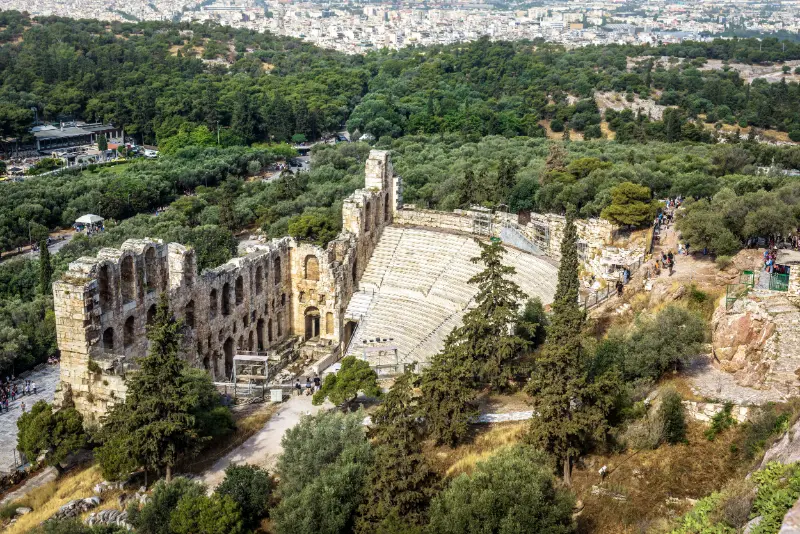
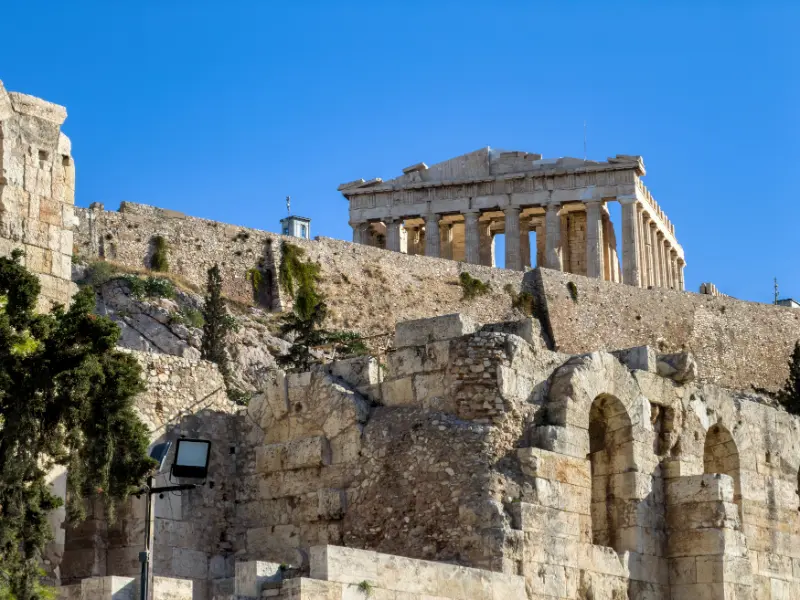
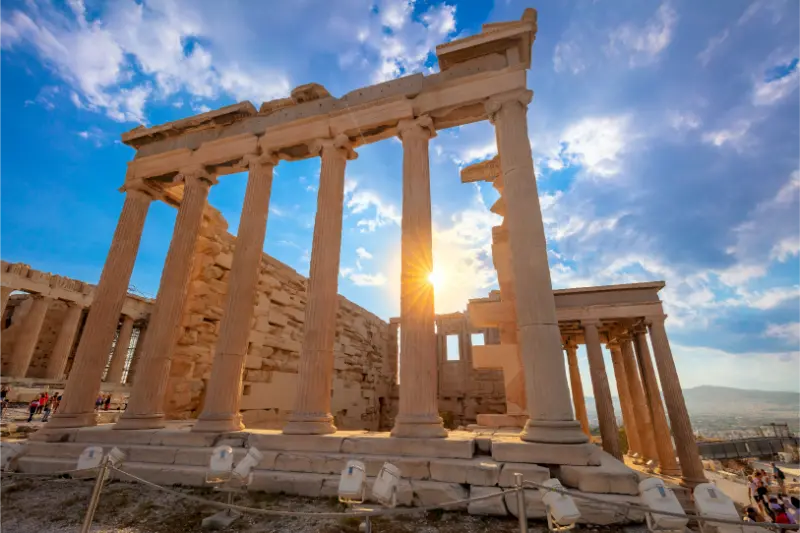
The Acropolis is the fortified limestone hill above central Athens. The Parthenon is its most famous building, but it is only one part of the archaeological complex. As you climb, you encounter the monumental Propylaea gateway, the small Temple of Athena Nike, the Erechtheion with its famous Caryatid porch, and viewpoints over the Theatre of Dionysus and the city. The monuments are close together, yet the details reward a slower visit.
One mistake is to arrive expecting a perfectly preserved ancient city. What makes the Acropolis powerful is the combination of surviving architecture, restoration work, landscape and scale. Read a little beforehand or use an official guide so the fragments make sense. Even a basic understanding of why the Parthenon was built and how the hill changed over centuries transforms the visit.
The best time of day to visit
In warm months, early morning is usually the easiest choice. Temperatures are lower, the light is softer and you avoid spending the middle of the day on an exposed hill. Late afternoon can also be beautiful, especially when the sun begins to soften, but opening hours and last-entry rules vary seasonally. Always confirm the current time slot and entry conditions on the official ticketing information before your visit.
I would not design the day around the idea of being completely alone at a world-famous monument. Instead, aim for a comfortable visit. Have water before you enter, eat something beforehand and keep the schedule around the Acropolis flexible. If your chosen time is busy, a ten-minute pause at a viewpoint can be more enjoyable than pushing through the densest group.
Tickets and reservations: keep the plan simple
Ticketing systems for major Greek archaeological sites can change, including prices, time slots and combination products. Buy from the official channel or a clearly identified authorised provider, and read what is actually included before paying. If you use a guided tour, check whether admission is bundled or must be purchased separately. This small detail causes many avoidable problems.
Save the ticket offline on your phone and take a screenshot of the relevant booking information. Do not plan a tight airport, ferry or long-distance bus connection immediately after a timed attraction. The Acropolis deserves a buffer, and Athens traffic or summer heat can slow down even a simple walk.
What to wear and bring
Comfortable footwear matters more here than stylish shoes. Some stone surfaces have been polished by millions of footsteps and can feel slick, especially on slopes. In summer I would choose light clothing, a hat and sun protection. A small bottle of water is useful, but avoid carrying more than you need because the climb feels longer with a heavy daypack.
The hill is visually open and shade is limited in places. Families should plan more pauses than adults travelling alone. For anyone with reduced mobility, check the latest accessibility arrangements in advance because lifts, routes and assistance procedures can be affected by maintenance or operating conditions.
A practical Acropolis walking route
I like to begin from the southern side when it fits the ticket and access arrangements, because the approach helps connect the Acropolis with the Theatre of Dionysus and the Odeon of Herodes Atticus. From there, continue upward to the main summit area, take time at the Propylaea and then circle the Parthenon rather than rushing directly to one photo point.
After the Erechtheion, walk toward the viewpoints over Athens. Look for the green National Garden, Mount Lycabettus, the dense neighbourhoods below and the hills to the west. The city suddenly becomes easier to understand geographically. Leave enough time for the descent: tired visitors often hurry on the smooth stone, which is exactly when you should slow down.
Pair the Acropolis with the museum
The Acropolis Museum is the most logical second half of the experience. Seeing sculptures, architectural fragments and explanations indoors after walking among the monuments gives structure to what you have just seen. It also provides an air-conditioned break on hot days. I would not cram another major museum immediately afterwards unless museums are the main purpose of your trip.
A simple rhythm works well: Acropolis early, coffee or a light meal, museum, then an unhurried walk through Plaka. If you prefer museums first, reverse the order on a cooler day. The important point is to avoid turning both places into a race.
Plaka and Anafiotika after the ruins
Plaka sits directly below the Acropolis and is one of the easiest places to continue on foot. The main lanes can be busy and commercial, but a few turns away there are quieter stairways, neoclassical houses and small churches. Anafiotika, tucked against the slope, has a very different atmosphere with narrow passages and whitewashed houses that recall the Cyclades.
These neighbourhoods are best enjoyed without a strict checklist. Give yourself permission to wander for forty minutes, stop for a drink and then continue toward Monastiraki or Syntagma depending on the rest of the day. For transport details, see my guide to getting around Greece and Athens.
Should you add the Ancient Agora on the same day?
Yes, if you enjoy archaeology and still have energy. The Ancient Agora provides a different perspective because it was tied to civic, political and social life rather than the sacred monumental setting of the Acropolis. The walk between the two is short enough to make sense, and the Temple of Hephaestus is one of the most complete ancient temples in Greece.
However, families with young children or travellers visiting in high heat may enjoy the day more by choosing either the Agora or the museum as the second major stop, not both. Athens rewards repeat visits and flexible afternoons. Seeing fewer places properly is often better than collecting entry scans.
Photography without letting the camera take over
The classic Acropolis photographs are easy to find, but the best memories often come from the changing angles as you move around the hill. Morning light can bring out the texture of the marble, while later light creates a warmer city panorama. Be mindful of restricted areas, barriers and other visitors who are also trying to enjoy the space.
For wider views of the Acropolis itself, photograph it from outside the site. Philopappos Hill, Areopagus and several rooftop areas offer strong perspectives. That means you do not need to spend the entire archaeological visit searching for the perfect frame.
Visiting with children
The Acropolis can work very well with children if you turn it into a story rather than a lecture. Pick two or three things to look for: the columns of the Parthenon, the Caryatids and the theatre below, for example. Explain one myth or one piece of history in simple language and let the physical scale do the rest.
Avoid the hottest part of the day, carry water and build in a reward afterwards such as ice cream in Plaka or time in a shady square. Strollers are not practical on every section, so families with very young children should check current access information and choose equipment accordingly.
How much time should you allow?
For the Acropolis itself, many visitors are comfortable with roughly one and a half to two hours, but there is no ideal universal duration. History enthusiasts can stay longer; fast walkers may feel satisfied sooner. Add the museum and a neighbourhood walk and you have an excellent half day or relaxed full day.
The key is not to schedule by the minute. Security checks, heat, photographs and short rests all affect the pace. Keep one flexible block in the afternoon so the day can expand naturally.
Common mistakes to avoid
- Arriving at midday in summer without shade, water or a plan.
- Buying a ticket from an unclear reseller without checking what is included.
- Wearing smooth or unstable footwear on polished stone.
- Scheduling the Acropolis between two tight transport connections.
- Looking only at the Parthenon and missing the Erechtheion, theatres and city views.
- Trying to visit every major archaeological site and museum in one exhausting day.
Frequently asked questions
Is the Acropolis worth visiting if I do not know much about ancient history?
Absolutely. The setting and views are impressive even without deep historical knowledge. A short introduction before you go, or a good guide, makes the architecture much easier to understand and usually increases the value of the visit.
Do I need a guided tour?
No, but a good guide can add context that is difficult to get from looking at ruins alone. Independent travellers can also have an excellent visit with a reliable audio guide or a little preparation. Choose based on how much detail you enjoy rather than because you feel a tour is compulsory.
Can I visit the Acropolis and leave Athens on the same day?
Yes, but only if your onward departure is comfortably later. I would avoid combining a timed morning visit with a connection that leaves no room for delays. If you are catching a ferry or flight, use the transport planning advice in my Greece transport guide.

What else should first-time visitors do in Athens?
Beyond the archaeological core, make time for the National Garden, local food, a neighbourhood evening and at least one elevated city view. My first-time Athens guide puts these pieces into a practical plan.
My preferred way to experience the Acropolis
I would build the day around one simple idea: arrive with energy, move slowly on the hill, learn enough to understand what you are seeing and then continue on foot through the city below. The Acropolis is not isolated from Athens; it is the landmark that helps the rest of central Athens fall into place. Give it space in the itinerary and it will feel less like an obligatory attraction and more like the starting point for understanding Greece.
Leave a Reply