
Kos is one of the most versatile islands in the Dodecanese. It combines a lively main town, long beaches, archaeological sites, mountain villages and unusually good conditions for cycling. Unlike smaller islands where one village dominates the trip, Kos gives you several possible bases and enough variety for a full week without feeling repetitive.
The island is associated with Hippocrates, the ancient physician, and history appears throughout the landscape. At the same time, this is an easy beach destination with organized resorts and family-friendly stretches of sand. That combination makes Kos a strong first Greek island for travellers who want more than one type of holiday.
Kos Town: the best first base for many travellers
Kos Town mixes harbour life, archaeological remains, bike lanes, cafés and restaurants. You can move between ancient ruins and modern streets within minutes, then cycle along the waterfront in the evening. The Castle of the Knights dominates the harbour area, while traces of ancient and Roman Kos appear around the centre.
Staying here works well without a car. You have the widest choice of transport, boat trips and restaurants, and the town is lively enough for evening walks without needing a resort entertainment program.
The Asklepieion
The Asklepieion is the island’s most important archaeological site and is traditionally connected with the medical legacy of Hippocrates. It sits on terraces above Kos Town with views toward the coast. The setting is part of the experience, so give yourself time to walk through the levels rather than treating it as a quick stop.
Visit earlier in the day in summer and bring water. Opening hours and ticket prices for archaeological sites can change seasonally, so confirm official information before travel.
Cycling is genuinely useful here
Kos has a strong cycling culture, and the flatter terrain around Kos Town makes bikes practical rather than purely recreational. Dedicated paths cover significant parts of the urban and coastal area. For short distances, a bicycle can be more enjoyable than repeatedly using taxis.
Choose a properly maintained bike, use lights when needed and remember that not every road on the island has dedicated cycling infrastructure. Families should select protected or low-traffic routes rather than assuming the entire island is equally bike-friendly.
Tigaki and Marmari
Northwest of Kos Town, Tigaki and Marmari are popular for long sandy beaches and resort accommodation. They are good choices for families and travellers who want easy beach access every day while remaining close enough to visit the capital.
The shoreline can be breezy, which feels refreshing in summer but may create choppier conditions on certain days. Check local conditions before planning water sports with children.
Kefalos and the southwest
Kefalos lies on the opposite side of the island and gives access to some of Kos’s most attractive beaches and a different atmosphere from the capital. The village sits above the coast, while Kamari and nearby beach areas provide accommodation and tavernas by the sea.
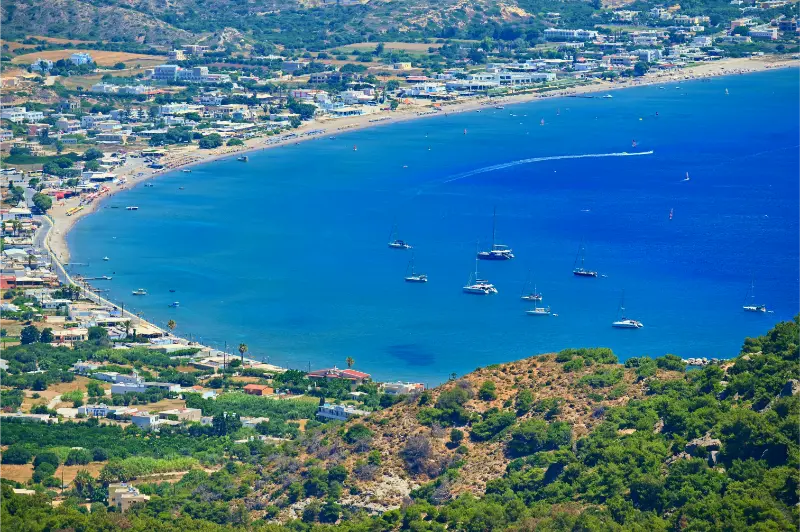
This side works well for travellers who plan to rent a car and prioritize beaches. The trade-off is longer travel to Kos Town, so decide whether you want to split your stay or make day trips.
Agios Stefanos and island views
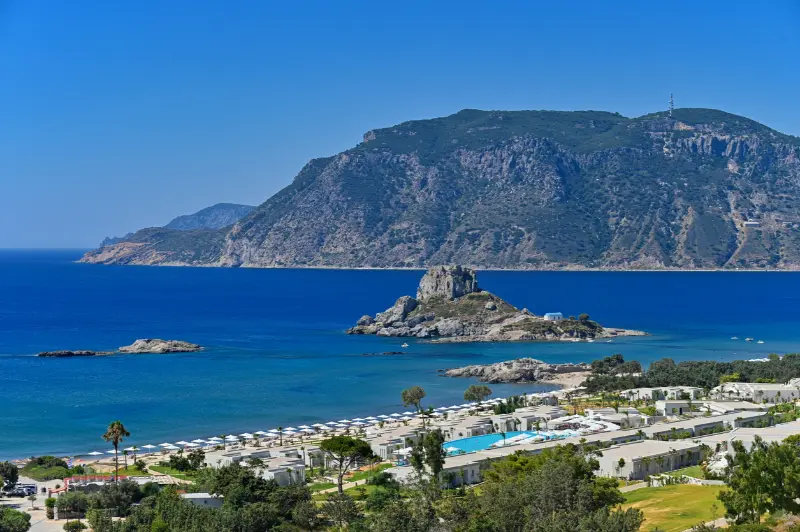
Agios Stefanos is one of the most photogenic beach-and-history combinations on Kos, with ruins near the shore and views toward the small islet of Kastri. It is a good example of why Kos feels varied: the island rarely forces you to choose between swimming and sightseeing on the same day.
Arrive outside peak hours if you want a quieter experience, and respect archaeological remains rather than treating them as beach furniture.
Zia and the mountain interior
Zia is a well-known village on the slopes of Mount Dikeos and attracts visitors for sunset, food and views. It can become busy in the evening, particularly when organized excursions arrive. The village is still worth seeing, but I prefer to arrive earlier, walk beyond the main souvenir streets and stay after some groups leave.
A drive through the interior reveals a greener and more rural side of Kos than the beach-resort strip. Combine Zia with nearby villages rather than making a long journey for sunset alone.
Therma and natural hot water
On the southeastern coast, Therma is known for warm thermal water mixing with the sea in a rocky cove. Conditions and access can change after storms or road works, so check locally before making a special trip. The experience is very different from a formal spa: expect a natural coastal setting, uneven ground and seasonal variation.
Visit with suitable footwear and avoid overcrowding the hottest area. If you have medical concerns related to heat or mineral water, seek appropriate advice rather than assuming every thermal pool is suitable for everyone.
Where to stay
**Kos Town** is best for first-time visitors without a car, nightlife and cultural sights. **Tigaki** and **Marmari** suit families and beach-focused travellers. **Kardamena** has a stronger resort and nightlife atmosphere on the south coast. **Kefalos** works for quieter beach days and road-trip exploration.
For a five-night trip, I would usually choose one base rather than moving hotels. For seven to ten nights, splitting between Kos Town and the southwest can make the island feel more varied.
Do you need a car?
Not for the entire trip. Buses connect the main settlements, and cycling handles many local journeys around Kos Town. A rental car becomes valuable if you want to explore the interior, Kefalos, isolated beaches and villages on your own schedule.

If you rent, plan one or two full exploration days rather than paying for a vehicle that sits unused while you relax on the beach. For general advice, see my guide to transport in Greece.
Boat trips and nearby islands
Kos Town and other ports offer excursions to nearby islands and coastal areas, with routes varying by season. Boat trips can be fun, but read the itinerary carefully: some tours spend more time in transit than swimming. Small-group options often provide a calmer experience than large party boats.
If island hopping is part of your holiday, check scheduled ferries separately from day tours. Excursion boats and public ferries serve different purposes.
A five-day Kos itinerary
Day 1: Kos Town
Explore the harbour, central archaeological areas and old streets. Rent bikes for a short waterfront ride, then have dinner in town.
Day 2: Asklepieion and inland villages
Visit the Asklepieion early. Continue toward the interior and Zia later in the day. Stop in smaller villages rather than driving directly back.
Day 3: Tigaki or Marmari
Make this a simple beach day. If you are staying in Kos Town, cycle part of the route only if conditions and distance suit you; otherwise use a bus or car.
Day 4: Kefalos and southwest beaches
Drive or use a suitable transfer to explore Agios Stefanos and the Kefalos area. Stay for dinner before returning if you are comfortable with the journey after dark.
Day 5: boat trip or Therma
Choose a boat excursion if you want another island perspective, or spend a slower day visiting Therma and a nearby beach. Keep the final hours flexible around your flight or ferry.
Kos with children
Kos is one of the easier Greek islands for families because it offers long beaches, flat cycling areas and a range of accommodation styles. The challenge is summer heat at archaeological sites, so schedule culture early and swimming later.
Tigaki and Marmari are obvious family bases, but Kos Town also works well for older children who enjoy bikes, boats and evening walks. Check beach depth and wind conditions each day rather than relying on a general description.
Food to look for
Kos has traditional Dodecanese and island cooking alongside international resort menus. Seek out local cheeses, honey, simple grilled dishes and seasonal vegetables. In the villages, lunch can be a good reason to slow down instead of rushing between viewpoints.

As always in busy tourist areas, compare menus before sitting at a prime waterfront table. A sea view is pleasant, but it is not automatically a sign of the best kitchen.
Best time to visit
May, June and September are excellent for sightseeing and beach time with lower heat than peak summer. July and August provide the liveliest resort atmosphere and warmest evenings but also the highest demand. April and October can be attractive for cycling and culture, though beach weather and seasonal services are less predictable.
Kos versus Rhodes
Kos feels flatter, easier for cycling and generally more compact for a mixed beach-and-history holiday. Rhodes has a larger UNESCO-listed medieval city and a broader range of monumental sights. Both work well for families and first-time visitors. Compare my Rhodes travel guide before choosing.
Common mistakes
- Staying in a resort and never seeing Kos Town or the interior.
- Renting a car for the entire week when you only need it for two days.
- Visiting archaeological sites at midday in extreme summer heat.
- Assuming every cycling route is separated from traffic.
- Planning a day trip without checking how much time the boat actually spends at each stop.
Frequently asked questions
How many days do you need in Kos?
Five days gives a strong overview. A week is better for families and travellers who want several pure beach days.
Is Kos good without a car?
Yes, especially if you stay in Kos Town or a well-connected resort. A car adds flexibility for the southwest and inland villages.
Is Kos mostly a resort island?
No. Resorts are important, but archaeology, villages, cycling and the capital give the island a much broader identity.
Which area is best for first-time visitors?
Kos Town is the easiest all-round base. Beach-focused families may prefer Tigaki or Marmari.
Why Kos works for so many travellers
Kos does not ask you to build the holiday around one signature sight. You can cycle in the morning, visit ancient ruins before lunch, swim in the afternoon and eat in a mountain village at sunset. That flexibility is its greatest strength, especially for groups or families whose members do not all want the same kind of day.
More detailed Dodecanese guides
Continue with Kos Town; Asklepieion of Kos; Nisyros for more detailed planning.
More in-depth Kos guides
Continue planning Kos with Tigaki and Marmari Kos Guide; Kefalos and Kamari Kos Guide; Kardamena Kos Guide; Zia and Mount Dikeos Kos Guide; Therma Beach Kos Guide; Kos Cycling Guide; Best Beaches in Kos; Kos Without a Car; Kos with Kids; Where to Stay in Kos.
Related itinerary: Kos, Nisyros and Kalymnos in 10 Days: Dodecanese Island-Hopping Itinerary.
Leave a Reply