
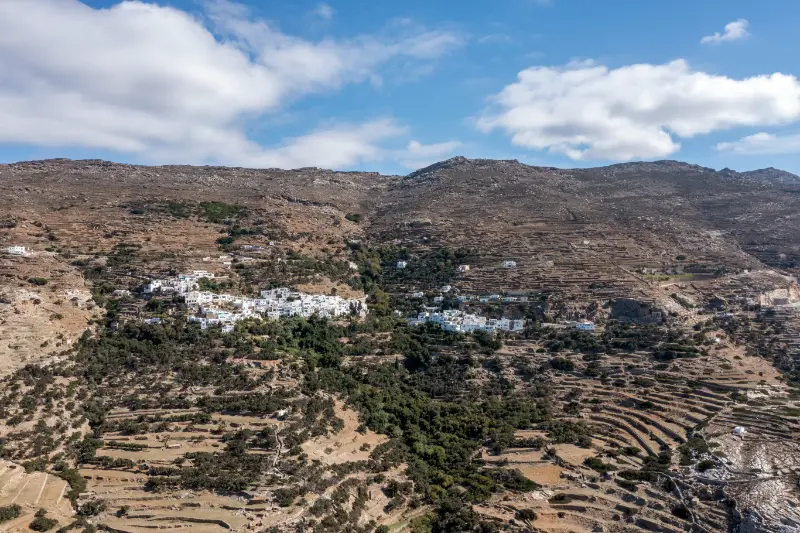
Tinos works well for families who enjoy a mix of beaches, villages and food rather than a resort with constant organised entertainment. The island’s strongest family days are simple: a morning village before the heat, a long lunch, a beach chosen for the day’s wind and an early evening walk. Chora provides practical services, while places such as Pyrgos and Volax give children something more memorable than another row of souvenir shops.
The key is not to copy an adult road-trip itinerary. Tinos has winding roads, strong summer sun and beaches whose conditions change with wind. Young children do not benefit from visiting six villages because they are “on the way.” Choose one cultural anchor, one swim and one good meal. Families who keep that rhythm usually see more of the island because nobody is exhausted by day three.
At a glance
| Age/need | Good choice | Avoid |
|---|---|---|
| Toddlers | Chora/Agios Fokas, easy beaches | Long exposed hikes |
| Primary-school kids | Pyrgos museum, Volax, short trails | Too many villages in one day |
| Teenagers | Kolymbithra, hiking, food, photography | Rigid family timetable |
| No-car family | Central Chora base | Remote accommodation without transfers |
Best base for families
Chora is the easiest base if you want pharmacies, supermarkets, buses and restaurants close by. The Agios Fokas side can be especially useful because you combine town access with a beach atmosphere. Families renting a car may prefer a villa or beach settlement, but should check how long the evening drive to food really takes and whether parking is straightforward.
Easy family beaches
Agios Fokas, Agios Sostis and the Porto/Agios Ioannis area are practical starting points because access and services are easier than at remote northern coves. “Family-friendly” does not mean calm every day: check wind and waves before children enter. Bring water shoes if your child dislikes pebbles and a compact sun shelter where beach rules allow it.
Pyrgos with children
Pyrgos works surprisingly well with school-age children because the marble museum turns craft into something tangible. The Museum of Marble Crafts includes tools, machinery, raw stone and audiovisual material, which is easier to engage with than a room of labels. Follow the museum with a snack in the square rather than another hour of adult sightseeing. Note the published Tuesday closure when planning.
Volax as a short adventure
The giant boulders around Volax give children an immediate visual reason to care about the stop. Keep the visit safe by discouraging risky climbing and using proper shoes. A short village walk plus a look at basket weaving is enough for younger children; older families can add a piece of the marked trail network in the cool morning.
Panagia Evangelistria respectfully
Families can visit the shrine, but explain before entering that it is an active place of worship. Keep the visit shorter with small children and avoid the busiest pilgrimage periods if your goal is calm cultural sightseeing. Bring water for the uphill approach, dress everyone appropriately and do not let children run through queues or ceremonial spaces.
Food with children
Tinos’s food culture makes family meals easier because you can order dishes for the table: breads, cheeses, local sausages, salads, meat, potatoes and simple pasta or grilled options depending on the taverna. Eat earlier than peak dinner time if toddlers struggle with late nights. A bakery breakfast and picnic lunch can also protect the budget without reducing the sense of place.
Car seats and road days
If renting a car, reserve the correct child seat rather than hoping one will be available at the desk. Inspect the seat before leaving and ask for help fitting it if necessary. Island distances look short, but bends make drives slower. Build breaks into western or northern loops and never leave children in a parked car while taking a viewpoint photograph.
Heat, naps and shade
In July and August, the middle of the day should not be the time for a long village staircase or exposed hike. Use early morning for culture, retreat to shade for lunch and naps, then swim later. Keep refillable bottles cold and carry more water in the car than the family expects to drink. This pacing is not “missing time”; it is what makes the evening enjoyable.
How this fits into a wider Tinos trip
Use this page together with Tinos travel guide, Tinos Chora Guide, Pyrgos and Panormos Tinos Guide, Volax Tinos Guide, Kardiani and Isternia Tinos Guide, Panagia Evangelistria Tinos Guide. Keeping related places and practical topics connected makes it easier to build days by geography instead of repeatedly crossing the island.
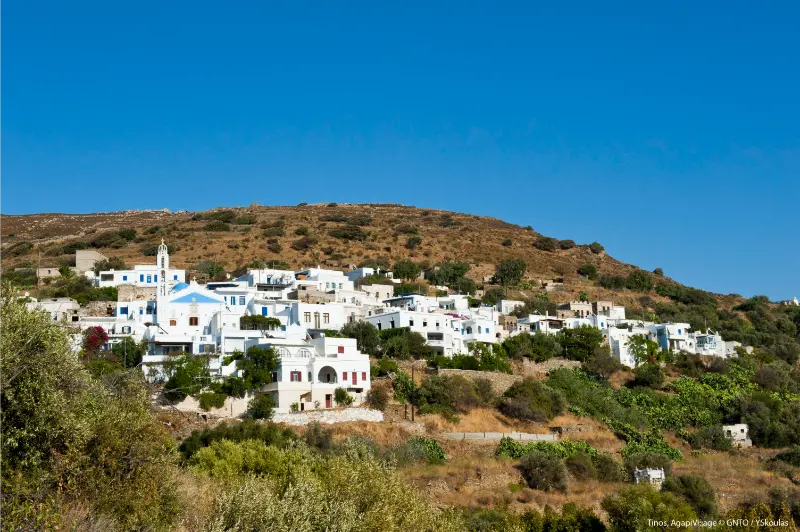
How to plan around wind and summer heat
Tinos is famously exposed to Aegean wind, and the same breeze that makes a terrace comfortable can make a north-facing beach rough or an exposed ridge unpleasant. Check the day’s conditions before committing to a remote beach, boat outing or long hike. In July and August, use early morning for villages, churches and walking, reserve the hottest hours for lunch or swimming, and return to sightseeing later in the afternoon. A flexible itinerary is a practical advantage, not a failure to plan.
Driving realistically on Tinos
Distances on the map look short, but roads between villages are winding and often narrow. Add time for oncoming traffic, photo stops and finding sensible parking outside historic lanes. Do not follow a navigation app blindly onto a rough shortcut simply because it saves three minutes. If you are uncomfortable with steep bends, base in Chora and use buses, taxis or organised excursions for selected days rather than turning every transfer into stress.
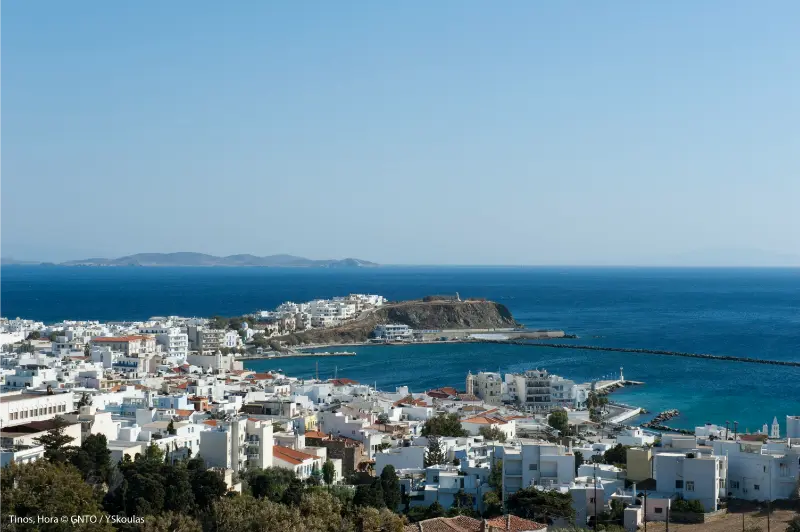
Food and daily rhythm
Tinos is a destination where lunch can be part of the sightseeing rather than a break from it. Build time for village squares, bakeries, local cheeses, capers, artichokes, sausages and seasonal dishes instead of planning every meal at the waterfront. Opening patterns outside peak summer can be irregular in small villages, so carry water and a snack even when you expect to find a taverna. In August, reserve famous restaurants but leave ordinary meals spontaneous.
Booking and time-sensitive information
Ferry times, bus schedules, museum hours and road access can change. Recheck anything that would cause a serious problem if wrong: the last bus, the final ferry of the day, a museum you are crossing the island to visit, or access to a remote beach after strong weather. Save confirmations offline and keep enough margin before departure. Tinos rewards slow planning; it punishes itineraries where one ten-minute delay breaks the rest of the day.
Official museum information
For current opening hours and temporary closures at the Museum of Marble Crafts in Pyrgos, use the official Piraeus Bank Group Cultural Foundation museum page. In 2026 the published seasonal schedule lists daily opening except Tuesday, with longer hours from March through mid-October. Always check again for exceptional closures before a dedicated museum trip.
Tours and activities
A guided village day, food experience or private transfer can be useful when it reduces transport friction or adds local interpretation. Compare the actual time spent at each stop, pickup location, group size and cancellation policy rather than choosing the itinerary with the longest list of villages.
Common planning mistakes
- Choosing a beautiful remote beach with no shade for a toddler.
- Planning adult-length village days in summer heat.
- Assuming every beach is calm because it was calm in a photograph.
- Arriving at the marble museum on Tuesday without checking.
- Renting a car without confirming the correct child seat.
Frequently asked questions
Is Tinos good for families?
Yes, especially for families that like beaches, villages and food more than large resort attractions.
Where should families stay?
Chora and the Agios Fokas side are easiest for services; beach settlements work well with a car.
Which beach is easiest with children?
Agios Fokas and organised eastern beaches are practical, but conditions should always be checked on the day.
Is Volax suitable for kids?
Yes for a short supervised visit; avoid risky boulder climbing and midday heat.
Do you need a car with children?
Not necessarily from Chora, but a car simplifies naps, beach equipment and flexible village days.
Final practical advice
Tinos is most rewarding when you leave space between the famous stops. One village, one meaningful cultural visit and one swim often make a better day than six pins on a map. Choose a base that suits your transport style, group nearby experiences, check wind and heat each morning, and verify time-sensitive information shortly before you travel. The island’s villages, food and walking routes are not filler between beaches; together they are the reason Tinos feels different from many other Cycladic destinations.
Photography without slowing everyone down
The best photographs on Tinos usually come from side light, village details and wide landscapes rather than stopping a car in an unsafe place. In villages, park first and walk back to the viewpoint. Ask before photographing craftspeople at work and never treat worshippers as part of a travel portrait. Early morning and late afternoon also reduce harsh contrast on white walls and marble while making walking more comfortable.
What to carry each day
A small day bag should include water, sun protection, a light layer for wind, offline maps and footwear that can handle stone steps. Add swim shoes if your group dislikes pebbles and a reusable bag for beach rubbish. On hiking days carry significantly more water and a power bank. On church days bring clothing that allows you to enter respectfully without having to return to the hotel.
Leave a Reply