

Tinos Chora is more than the ferry port you pass through on the way to the island’s villages. It is the practical centre of a Tinos trip, the home of Panagia Evangelistria, the easiest place for buses, and the island’s strongest choice if you want restaurants and evening walks without driving every night. The town feels busiest around ferry arrivals and major religious dates, but a few streets away from the port it becomes a mix of marble details, small squares, bakeries, galleries and residential lanes.
For first-time visitors, the useful question is not whether Chora is the prettiest place on Tinos; villages such as Pyrgos, Kardiani and Volax have more distinctive landscapes. The question is whether Chora makes your holiday easier. If you are staying only a few nights, arriving without a car, travelling with children or planning day trips by bus, the answer is often yes. This guide explains how to use the town well without spending the entire trip there.

At a glance
| Base | Best for | Main trade-off |
|---|---|---|
| Central Chora | No-car trips, restaurants, first visits | Busy around ferries and feast days |
| Agios Fokas side | Beach access, couples, families | Longer walk to church and port |
| Kionia side | Sunset, quieter stay, beach | Less convenient for evening town walks |
| Outside town | Parking, villas, privacy | Car or taxi more useful |
Start with Panagia Evangelistria
The Church of Panagia Evangelistria rises above Chora at the top of Megalocharis Avenue and is the island’s defining pilgrimage site. Visit with enough time to understand that this is an active place of worship, not simply a monument. Dress respectfully, keep voices low, avoid blocking worshippers for photographs and be particularly considerate during services or major feast days. The icon associated with the shrine was discovered in 1823 after visions attributed to the nun Pelagia, and the site became closely connected with modern Greek religious and national history.
Walk down Megalocharis Avenue slowly
The broad route between the church and the waterfront is part of the experience. Shops selling candles, religious objects and local products reflect the pilgrimage economy that shaped modern Chora. Parallel lanes are often more enjoyable for a relaxed walk because they reveal cafés, old houses and smaller businesses without the same movement of organised groups. If a ferry has just arrived, give the main street twenty minutes and explore sideways rather than assuming the town is always crowded.
The old harbour and waterfront
The waterfront is where Chora becomes a holiday town rather than a pilgrimage centre. Ferries, excursion boats, cafés and evening promenades give it constant movement. The best time is usually early morning before the heat builds or after sunset when the traffic eases. Keep in mind that the island has more than one port area and ferry operations can change berths; on departure day confirm exactly where your vessel leaves instead of relying on where you arrived.
Where to eat in Chora
Chora gives you the widest choice of food on the island, which is useful when a group has different priorities. Look beyond the most obvious waterfront tables and try small streets where menus focus on Cycladic ingredients, local cheeses, capers, artichokes, sausages and seasonal vegetables. Tinos has a serious food identity, so it is worth mixing one carefully chosen dinner with simpler bakery breakfasts and casual lunches. Reservations help at popular restaurants in August and on pilgrimage weekends.
Beaches you can reach from town
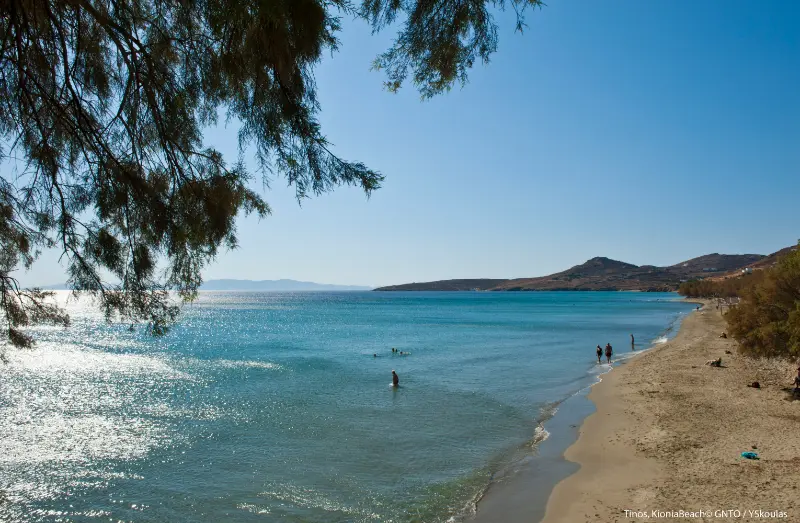
Agios Fokas is the obvious beach extension of Chora: long, close to town and practical for a swim without turning the day into an expedition. Kionia lies in the opposite direction and combines a beach stay with access to the Sanctuary of Poseidon and Amphitrite area. Neither should replace a day exploring the wilder north or west coast, but both are valuable when you have half a day, arrive late, or want a low-logistics beach after sightseeing.
Shopping for local products
Use Chora for products you can carry home rather than generic souvenirs. Ask about Tinian cheeses, cured meats, capers, sun-dried tomatoes, thyme honey and local spirits, and check airline rules before buying liquids. For marble pieces or decorative objects, prefer shops that can explain who made the item and where. The island’s craft tradition is important enough that buying directly from makers or reputable workshops adds more meaning than choosing mass-produced Cycladic décor.
Where to stay in Chora
Stay near the centre if you want to walk to dinner, the church and the bus terminal. Stay toward Agios Fokas for easier beach access and a quieter resort feel, but check the exact distance back to the centre in the evening. Travellers with a rental car should verify parking before booking because a charming room in a narrow lane may be inconvenient with luggage. Light sleepers should also ask about ferry-road noise if the property faces a main approach to the port.
A realistic first day
If your ferry arrives before lunch, do not immediately drive across the island. Check in, walk the waterfront, eat something simple, visit Panagia Evangelistria later in the afternoon when appropriate, and finish with dinner in town. This gives you time to understand the geography, buy water and supplies, and confirm bus or rental-car details. The next morning you can start a village day with much less friction.
How this fits into a wider Tinos trip
Use this page together with Tinos travel guide, Pyrgos and Panormos Tinos Guide, Volax Tinos Guide, Kardiani and Isternia Tinos Guide, Panagia Evangelistria Tinos Guide, Best Beaches in Tinos. Keeping related places and practical topics connected makes it easier to build days by geography instead of repeatedly crossing the island.

How to plan around wind and summer heat
Tinos is famously exposed to Aegean wind, and the same breeze that makes a terrace comfortable can make a north-facing beach rough or an exposed ridge unpleasant. Check the day’s conditions before committing to a remote beach, boat outing or long hike. In July and August, use early morning for villages, churches and walking, reserve the hottest hours for lunch or swimming, and return to sightseeing later in the afternoon. A flexible itinerary is a practical advantage, not a failure to plan.
Driving realistically on Tinos
Distances on the map look short, but roads between villages are winding and often narrow. Add time for oncoming traffic, photo stops and finding sensible parking outside historic lanes. Do not follow a navigation app blindly onto a rough shortcut simply because it saves three minutes. If you are uncomfortable with steep bends, base in Chora and use buses, taxis or organised excursions for selected days rather than turning every transfer into stress.
Food and daily rhythm
Tinos is a destination where lunch can be part of the sightseeing rather than a break from it. Build time for village squares, bakeries, local cheeses, capers, artichokes, sausages and seasonal dishes instead of planning every meal at the waterfront. Opening patterns outside peak summer can be irregular in small villages, so carry water and a snack even when you expect to find a taverna. In August, reserve famous restaurants but leave ordinary meals spontaneous.
Booking and time-sensitive information
Ferry times, bus schedules, museum hours and road access can change. Recheck anything that would cause a serious problem if wrong: the last bus, the final ferry of the day, a museum you are crossing the island to visit, or access to a remote beach after strong weather. Save confirmations offline and keep enough margin before departure. Tinos rewards slow planning; it punishes itineraries where one ten-minute delay breaks the rest of the day.
Official shrine information
For feast-day programmes, religious announcements and the shrine’s own account of its history, consult the official Panagia Tinou website. The sanctuary is an active religious institution, so on-site instructions always take priority over travel-blog advice.
Tours and activities
A guided village day, food experience or private transfer can be useful when it reduces transport friction or adds local interpretation. Compare the actual time spent at each stop, pickup location, group size and cancellation policy rather than choosing the itinerary with the longest list of villages.
Common planning mistakes
- Treating Chora only as a ferry terminal.
- Visiting the church as if it were a photo attraction rather than an active shrine.
- Booking a room without checking port-road noise or parking.
- Spending every beach day near town and missing the island’s more distinctive coast.
- Assuming the berth used on arrival will automatically be the departure point.
Frequently asked questions
Is Tinos Chora worth staying in?
Yes, especially for first-time visitors, short stays and travellers without a car. It has the best transport connections and evening choice.
Can you walk to a beach from Chora?
Agios Fokas is the easiest beach area to combine with town, while Kionia is also close enough for a short transfer.
How long do you need in Chora?
One focused day covers the church and town, but several nights make sense if you are using Chora as a base for island excursions.
Is Chora good for families?
Yes. Choose a quieter street or the Agios Fokas side if early nights matter.
Do you need a car in Chora?
No for the town itself. A car becomes useful for flexible village and remote-beach days.
Final practical advice
Tinos is most rewarding when you leave space between the famous stops. One village, one meaningful cultural visit and one swim often make a better day than six pins on a map. Choose a base that suits your transport style, group nearby experiences, check wind and heat each morning, and verify time-sensitive information shortly before you travel. The island’s villages, food and walking routes are not filler between beaches; together they are the reason Tinos feels different from many other Cycladic destinations.
Leave a Reply