
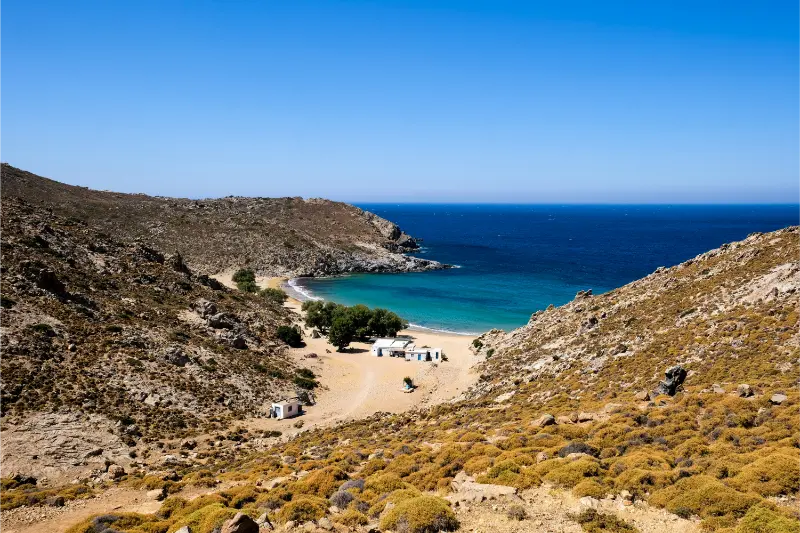
Chora is the image of Patmos that stays with most visitors: white cubic houses climbing beneath the dark fortified walls of the Monastery of Saint John, narrow stone lanes, hidden courtyards, small churches and sudden views over the Aegean. It is also a living settlement and part of a UNESCO World Heritage property, not a stage set. The best way to experience it is slowly and with respect for the people who live behind the whitewashed walls.

This guide focuses on Chora itself rather than repeating the monastery and cave in detail. You will find a walking strategy, viewpoints, the windmills, historic mansions, Nikolaidis Mansion, evening atmosphere, transport and where to stay. For the religious monuments, use the dedicated Monastery of Saint John and Cave of the Apocalypse guides.
Why Chora is UNESCO-listed
UNESCO inscribed the Historic Centre of Chora together with the Monastery of Saint John the Theologian and the Cave of the Apocalypse in 1999. The organisation describes Chora as one of the few Greek settlements that has evolved continuously since the 12th century, with medieval fabric, later merchant houses and a religious life closely tied to the monastery.
That context changes the way I would visit. Do not think of Chora as “the pretty old town above Skala.” The lanes, houses and churches form part of the heritage value. Keep voices low around churches and residential alleys, dress appropriately if you intend to enter religious spaces, and avoid blocking narrow passages for photographs.
A walking route through Chora
- Begin near the main approach before the heat builds.
- Climb through the white lanes rather than heading straight to the monastery door.
- Detour to the windmills for open views and a clearer sense of the hilltop setting.
- Visit one cultural interior, such as Nikolaidis Mansion when open.
- Return through a different set of lanes and save the main square or a terrace for late afternoon.
Distances are short but the route is not flat. Smooth stone, steps and summer heat make supportive footwear worthwhile. The reward comes from wandering slowly enough to notice carved doorways, small chapels and changes in view between the houses.
The windmills and viewpoints
The restored windmills on the ridge are an easy visual landmark and one of the best places to understand why Chora feels so dramatic. From here you can see the relationship between the fortified monastery, the settlement and the sea. Go early for softer light and fewer people, or near sunset if you are comfortable walking back through the lanes after dark.
Wind is part of the experience. A breezy evening can feel much cooler than the port, while a still midday climb can be punishing. Carry a light layer outside high summer and do not underestimate sun exposure just because the air feels fresh.
Nikolaidis Mansion: a useful cultural stop
The Nikolaidis Mansion is a 17th–18th-century example of Patmian urban architecture and now hosts archaeological material and photographic archives. The Directorate of Archaeological Museums lists a €5 ticket, summer opening from 1 April to 31 October at 08:30–15:30 with Tuesday closed, and a shorter winter schedule. Check again before your visit because museum hours can change.
This is a good stop when you want to understand domestic architecture rather than only religious monuments. It also works well in the hotter middle part of the day, letting you alternate exterior walking with an interior visit.
Chora after sunset
Chora becomes especially atmospheric after day visitors drift away. The municipality’s 2026 brochure describes its evening character as a blend of serenity, spirituality and elegance, which is accurate: dinner feels more intimate than in Skala, and the absence of a loud party scene is part of the appeal.
Do not confuse quiet with empty. Popular restaurants still benefit from reservations in July and August, and transport back to Skala should be planned if you are not staying in Chora. If you want more late-night choice, Skala remains the practical option.
Walking from Skala to Chora
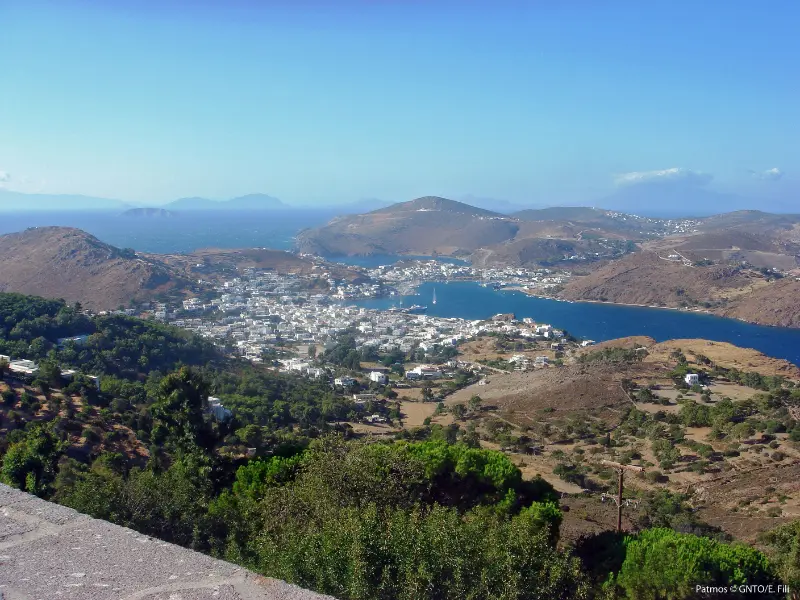
Visit Greece describes the old Skala–Chora–Skala trail as roughly 40 minutes uphill and 30 minutes downhill, passing the Cave of the Apocalypse and the historic Patmian School. It is one of the most satisfying ways to connect the port and the old town because the climb explains the island’s geography better than a quick taxi ride.
In summer, start early. The walk is not technically difficult, but exposed heat changes the effort. If you plan to visit the monastery immediately afterward, carry modest clothing and enough water. The Patmos Hiking Guide includes this route in a broader walking plan.
Where to stay in Chora
Choose Chora if you value atmosphere, architecture and calm evenings more than immediate access to the ferry. It suits couples, photographers, repeat visitors and anyone who wants to step into the historic lanes before excursion traffic arrives. The compromise is practical: luggage transfers, stairs and the need to use bus or taxi for many beach days.
Ask accommodation hosts exactly how luggage reaches the property. A room that looks close on a map can involve steps or a lane inaccessible to vehicles. For a direct comparison with Skala, Grikos and Kampos, see Where to Stay in Patmos.
Combine Chora with the monastery and cave without rushing
A common mistake is trying to visit Chora, the monastery and the Cave of the Apocalypse in one compressed hour between bus services. Give the heritage zone at least half a day. Visit the monastery early, walk the lanes, pause for coffee or lunch, then descend to the cave if its opening period fits. The spiritual sites have specific visiting hours and should not be treated like shops that are open continuously.
The official monastery site currently lists morning opening every day and afternoon opening on Tuesday, Thursday and Saturday only, with slightly different afternoon closing times. Because religious schedules can change, verify the day before you go.
Tours and guided experiences
A knowledgeable guide can add real value in Chora because the architectural details and religious history are easy to walk past without context. If you book a tour, check whether it actually enters the monastery and cave or only views them externally.
Official sources and what to recheck
For current destination information, use Visit Greece – Patmos and the 2026 Municipality of Patmos visitor brochure. Bus schedules are seasonal, so verify them on Patmos Bus shortly before travelling. For UNESCO context, consult UNESCO World Heritage Centre. For Nikolaidis Mansion, use the Greek Ministry of Culture museum page.
Continue planning your Patmos trip
Start with the main Patmos travel guide, then use specialist pages according to the trip you are building. Useful next reads are Skala; Monastery of Saint John; Cave of the Apocalypse; Grikos and Petra; Best Beaches. Keeping the guides connected helps you plan one coherent holiday rather than treating every sight as a separate day trip.

Frequently asked questions
Is Chora the same as Patmos Town?
Yes. Chora (Hora) is the historic hilltop capital of Patmos.
Is Chora better than Skala for a first stay?
Choose Chora for atmosphere and heritage; choose Skala for ferries, buses and broader evening convenience.
Can I walk from Skala?
Yes. Visit Greece describes the old path as about 40 minutes uphill and 30 minutes down.
Do I need a ticket just to walk around Chora?
No. The settlement is lived-in public space; individual museums and attractions may charge admission.
What should I wear?
Normal summer clothing is fine for the streets, but modest dress is required when entering churches, the monastery and the cave.
Final planning advice
Give Chora two different moments if your itinerary allows: one morning for heritage and one evening for atmosphere. The town is small enough that you do not need a checklist, but layered enough that a rushed single pass misses much of what makes Patmos distinctive.
Photography without disturbing residents
Chora is exceptionally photogenic, but many doors, terraces and courtyards belong to private homes. Photograph architecture from public lanes, avoid leaning equipment against walls or blocking entrances, and do not follow residents through gates for a better angle. Sunrise and early morning naturally give you quieter streets without needing to push into private space.
A cooler midday plan
If you reach Chora near midday in summer, slow the schedule. Choose an indoor museum when open, take a long lunch, then return to exterior viewpoints as the light softens. This is safer and produces better photographs than spending the hottest two hours climbing between exposed viewpoints.
Practical packing checklist
For a Patmos day out, carry water, sun protection, supportive shoes, a light layer for wind, swimwear when relevant, modest clothing for sacred sites, a charged phone and a small amount of cash. Keep ferry and bus information saved offline. The island is compact, but small practical choices make the difference between a relaxed day and repeatedly returning to your room for something you forgot.
Seasonal planning
May, June, September and early October are especially comfortable for mixed sightseeing and walking, while July and August offer the strongest holiday atmosphere but require earlier starts and more attention to heat. Outside peak season, verify ferry frequency, buses, restaurant openings and beach services rather than assuming the summer pattern applies. Religious sites remain important throughout the year, but their schedules can change around services and feast days.
Leave a Reply