
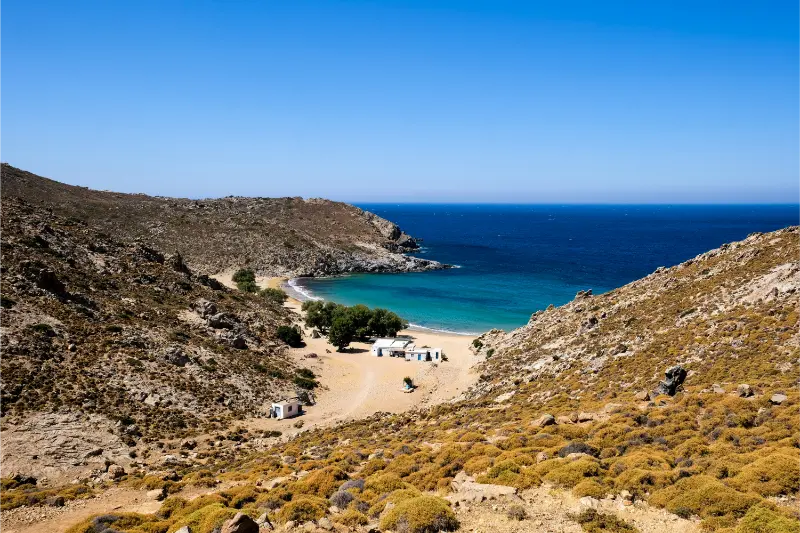
Patmos is one of the most culturally distinctive islands in the Dodecanese. Its spiritual importance is internationally recognised: UNESCO lists the historic centre of Chora together with the Monastery of Saint John the Theologian and the Cave of the Apocalypse as a World Heritage property. Yet Patmos is not only a pilgrimage destination. It also has elegant villages, quiet coves and a relaxed summer atmosphere.
The island works best when you allow religious heritage and ordinary holiday time to coexist. Spend a morning in Chora and the monastery, then swim in the afternoon and eat by the harbour in Skala. That balance prevents the trip from becoming either a rushed church tour or a beach holiday that ignores what makes Patmos unique. For a wider Dodecanese route, see my Kos guide and Symi guide.
Understanding the UNESCO-listed landscape
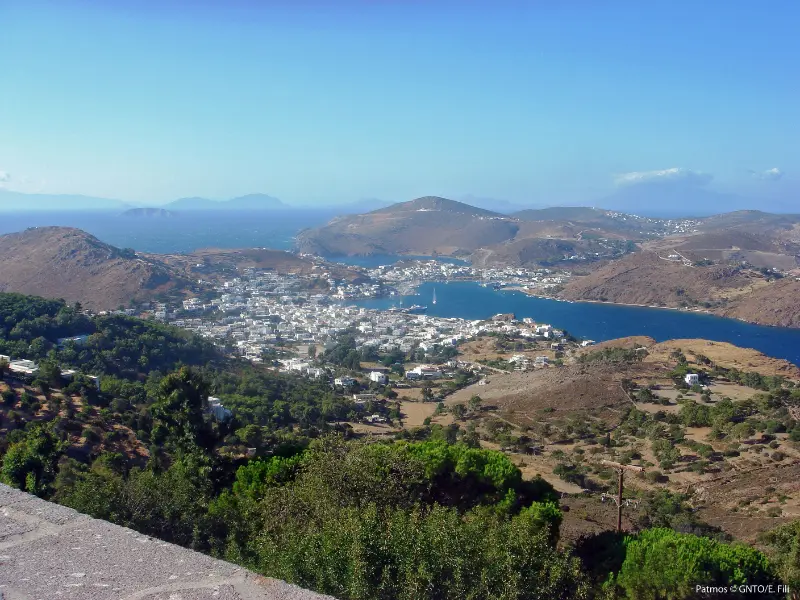
UNESCO’s property brings together Chora, the monastery and the Cave of the Apocalypse because their historical and spiritual relationship matters as much as each individual building. The monastery was founded in the late eleventh century and dominates the island visually from its hilltop position.
Approach the area with time and respectful clothing. This is a living religious environment. Opening hours, access and dress expectations can change, so verify official information shortly before your visit rather than relying on an old itinerary.
Chora
Patmos Chora is one of the most atmospheric settlements in the Dodecanese, with whitewashed houses, small squares and lanes wrapped around the monastery. It is beautiful during the day but especially compelling in the evening when temperatures fall and the stone streets quiet down.
Some historic houses and cultural spaces have limited opening periods. I treat them as bonuses rather than structuring the entire day around a single interior. The village itself is the main experience.
The Cave of the Apocalypse
Tradition identifies the cave as the place where Saint John received the visions recorded in the Book of Revelation. Whether you visit as a believer, historian or curious traveller, the space deserves quiet behaviour.
Combine the cave with Chora because they form one cultural route. The road between Skala and Chora makes logistics straightforward by bus, taxi or car, but walking in midday heat is not something I recommend casually.
Skala as a base
Skala is the main port and the island’s practical centre. It has restaurants, shops, transport and ferry connections, which makes it a convenient first base. The atmosphere is busier than Chora but never on the scale of major resort islands.
Staying in Chora gives more beauty and evening atmosphere, while Skala makes luggage and transport easier. Couples often prefer Chora; first-time island hoppers may find Skala simpler.
Best beaches
Patmos beaches are generally smaller and more understated than the huge sandy bays of islands such as Naxos. Psili Ammos is among the best known, while Agriolivado, Kambos, Lambi and Grikos offer different combinations of access and facilities.
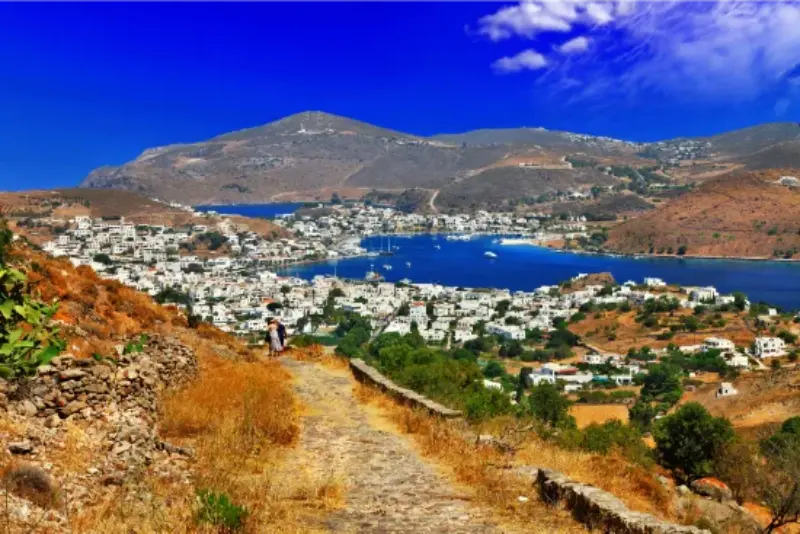
Wind and sea conditions should guide the day. Ask locally which coast is most sheltered. If reaching a beach requires a walk, carry water and do not assume shade will be available.
A four-day Patmos itinerary
Day one: arrive in Skala and settle in with a waterfront walk. Day two: visit the Cave of the Apocalypse and spend several hours in Chora and the monastery, returning for sunset or dinner. Day three: choose two beaches or one long beach day. Day four: explore Grikos, another coastal village or take a short boat trip depending on conditions.
With six days, add a completely slow day and revisit Chora after dark. Patmos improves when religious sites are not squeezed between ferry arrival and departure.
Getting around
Buses connect Skala with Chora and several beach areas in season. Taxis are useful for evening returns. A rental car or scooter adds flexibility but is not essential for a four-day stay.
Patmos has no commercial airport, so most visitors arrive by ferry. That makes schedule planning important, especially if you are connecting to an international flight. Build buffer time into the end of the trip.
Religious etiquette
Carry clothing that covers shoulders and knees when visiting major religious sites and follow posted rules on photography. Silence phones and avoid blocking worshippers while taking pictures. These small gestures matter.
Patmos attracts pilgrims from many countries. A respectful visitor does not need to share the religious beliefs of the site, only to recognise that other people may be there for prayer rather than tourism.

Best time to visit
May, June and September are particularly attractive for combining sightseeing, walking and swimming. July and August are warmer and busier, with stronger ferry services. Easter has deep religious significance but requires very early accommodation planning.
For quiet travel, October can be beautiful if weather and ferry schedules cooperate. Some seasonal businesses will already be reducing hours, so verify practical details.
Who Patmos suits
Patmos is excellent for travellers interested in culture, religion, architecture and slower island life. Couples and solo travellers often appreciate the evening atmosphere of Chora, while families can build easy days around beaches and short transfers.
If your priority is nightlife or enormous sandy beaches, Patmos may feel too restrained. If you want a place where history is still present in daily life, it is one of the strongest choices in the Aegean.
Frequently asked questions
How many days do I need in Patmos?
Four days is a good first visit. Five or six days lets you balance heritage sites with beaches at a much slower pace.
Does Patmos have an airport?
No commercial airport. Most visitors arrive by ferry, often via another Dodecanese island or Piraeus depending on the route.
Is Patmos only for religious travellers?
No. Its religious heritage is central, but the island also offers beaches, walking, architecture, food and relaxed coastal villages.
Is Patmos UNESCO listed?
Yes. UNESCO lists the historic centre of Chora with the Monastery of Saint John the Theologian and the Cave of the Apocalypse.
Planning Patmos in practice
Because Patmos has no commercial airport, ferry planning comes first. Check which route fits your wider trip before choosing non-refundable hotel dates. Connections through Kos, Leros, Rhodes or Piraeus vary by season, and the fastest option on one date may not exist on another.
Keep religious visits to cooler morning hours when possible. Chora’s lanes and monastery areas involve slopes, and respectful clothing can feel warm in summer. Carry a light layer or scarf that meets dress rules without forcing you to wear heavy clothing all day.
The island’s spiritual importance can make some visitors feel they need to see every monastery. You do not. Choose the UNESCO core sites, then allow time for beaches and ordinary village life. This balance gives a more honest impression of modern Patmos.
For departure day, avoid scheduling a remote beach immediately before the ferry. Stay within easy reach of Skala, have a relaxed meal and arrive at the port with margin. Island travel becomes much less stressful when the final hours are simple.
Patmos is particularly rewarding for readers and history lovers because the landscape is tied to texts and long religious traditions. Reading a short history before arrival makes the monastery and cave far more intelligible.
Travel days also deserve their own space in the itinerary. Leave time for breakfast, packing, transfers and delays instead of counting a ferry or drive as invisible time. This simple adjustment makes the entire Greece trip feel calmer and more realistic.
Patmos is particularly rewarding for readers and history lovers because the landscape is tied to texts and long religious traditions. Reading a short history before arrival makes the monastery and cave far more intelligible.
Travel days also deserve their own space in the itinerary. Leave time for breakfast, packing, transfers and delays instead of counting a ferry or drive as invisible time. This simple adjustment makes the entire Greece trip feel calmer and more realistic.
Patmos is particularly rewarding for readers and history lovers because the landscape is tied to texts and long religious traditions. Reading a short history before arrival makes the monastery and cave far more intelligible.
Travel days also deserve their own space in the itinerary. Leave time for breakfast, packing, transfers and delays instead of counting a ferry or drive as invisible time. This simple adjustment makes the entire Greece trip feel calmer and more realistic.
Patmos is particularly rewarding for readers and history lovers because the landscape is tied to texts and long religious traditions. Reading a short history before arrival makes the monastery and cave far more intelligible.
Travel days also deserve their own space in the itinerary. Leave time for breakfast, packing, transfers and delays instead of counting a ferry or drive as invisible time. This simple adjustment makes the entire Greece trip feel calmer and more realistic.
Patmos is particularly rewarding for readers and history lovers because the landscape is tied to texts and long religious traditions. Reading a short history before arrival makes the monastery and cave far more intelligible.
Patmos is particularly rewarding for readers and history lovers because the landscape is tied to texts and long religious traditions. Reading a short history before arrival makes the monastery and cave far more intelligible.
More detailed Dodecanese guides
Continue with Lipsi; Leros for more detailed planning.
More in-depth Patmos guides
Continue planning with Skala Patmos Guide; Chora Patmos Guide; Monastery of Saint John Patmos Guide; Cave of the Apocalypse Patmos Guide; Grikos and Petra Patmos Guide; Best Beaches in Patmos; Patmos Hiking Guide; Patmos Without a Car; Patmos with Kids; Where to Stay in Patmos.