

Ios is one of the easier Cycladic islands to enjoy without a rental car if your priorities are Chora, Mylopotas, the port and a few organised excursions. The main visitor corridor is compact, and seasonal public transport concentrates on the places most travellers use. The challenge begins when you want remote beaches, the north of the island or complete freedom outside peak summer.
The solution is not automatically to rent a vehicle. A well-chosen base plus buses, walking, occasional taxis and one organised beach day can be simpler and cheaper. Start by comparing accommodation in Where to Stay in Ios.
The car-free core of Ios
| Port / Gialos | Ferry access, useful arrival/departure base |
| Chora | Food, sights, nightlife, central hub |
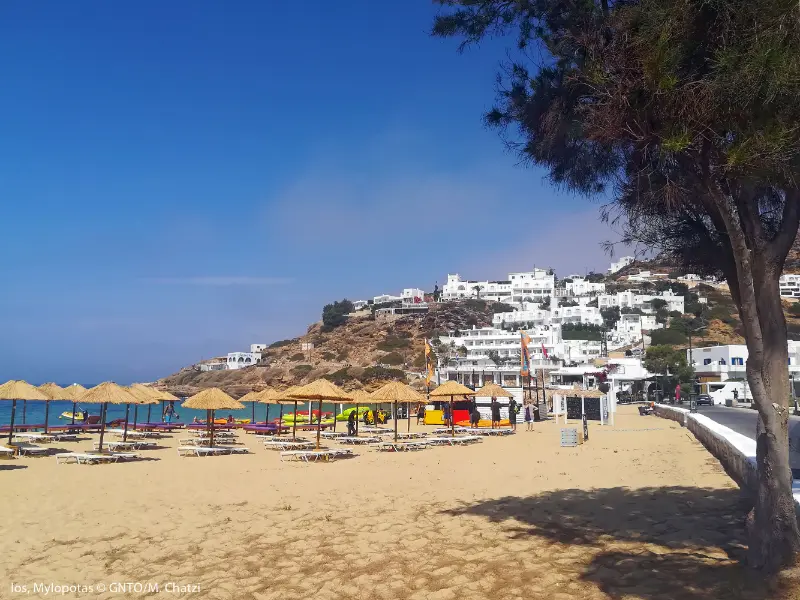
| Mylopotas | Main beach, facilities, easy summer connection |
| Manganari | Possible seasonal connection; verify locally |
| Remote north/east | Often easier by taxi, tour or rental vehicle |
Seasonal buses: what to expect
Municipal planning documents describe public transport focusing on links between the port, Chora and Mylopotas, with broader coastal connections in summer. Exact schedules change, so do not copy a timetable from a previous year into your itinerary. Check when you arrive and photograph the current schedule at the stop if it is posted.
Build in buffer time around ferries. A bus that is perfect for a beach day is not necessarily the connection you should trust for the final ferry of the trip. When the departure matters, use an earlier bus or arrange a taxi.
Best base: Chora
Chora is the strongest car-free base for most first-time visitors because evenings happen there and the main beach connection is nearby. You can walk to restaurants, museums, sunset viewpoints and bars, then use buses for Mylopotas and the port. The trade-off is stairs and steep lanes, especially with luggage.
Read the Chora Ios guide before choosing a room. “Central” can mean wonderfully atmospheric or inconveniently noisy depending on the exact lane.
Best base: Mylopotas
Choose Mylopotas if swimming is more important than nightlife and you want to walk from bed to sand. You can still reach Chora for dinner, but late-night returns require more attention to the last bus or taxi availability. It is particularly good for couples and families who expect to spend several full beach days.
My Mylopotas Beach guide explains the different beach sections, water activities and family considerations.
Best base: port / Gialos
The port area is underrated for short stays and awkward ferry times. You can walk to a beach, eat nearby and avoid hauling luggage through Chora. It is less atmospheric than staying in the village, but one night here can remove a lot of stress from an early departure.
For a three-night trip, I would usually choose Chora rather than split accommodation. For a very early ferry, moving to the port on the final night can be sensible if your hotel cannot arrange a reliable transfer.
Reaching Manganari without a car
Manganari is the remote beach most car-free travellers want to add. Seasonal buses or organised services can make it possible, but availability varies by date. Confirm on the island before promising yourself a specific day. If transport is limited, a boat or shared excursion may be the better use of time.
The Manganari guide explains why the south deserves a dedicated day rather than a rushed out-and-back.
When taxis make sense
A car-free trip does not have to mean zero taxis. Two strategic rides can solve a remote dinner, an early ferry or a one-way hike and still cost less than renting, fuelling and parking a vehicle for a week. Ask about approximate fares before setting off and keep a local taxi contact saved.
During ferry arrivals and late-night peaks, demand can exceed supply. Do not wait until the last minute when the journey is time-critical.
Walking between key areas
Walking is part of the Ios experience, but hills and heat matter. Chora, the windmills and nearby cultural stops are naturally walkable. Fit travellers may walk sections toward the port or Mylopotas, yet a route that looks short on a map can feel much longer at 14:00 in August.
For walking as an activity, use the Ios hiking guide. For simple transport, do not turn every bus replacement into a hike; protect your energy for the places where walking is actually rewarding.
A four-day car-free plan
- Day 1 – arrive, settle in Chora, sunset and dinner
- Day 2 – bus to Mylopotas, return for Chora evening
- Day 3 – seasonal bus/tour to Manganari or a boat day
- Day 4 – Archaeological Museum, Skarkos and an easy walk near Chora/port
When I would rent a vehicle anyway
Consider a one- or two-day rental if you want Homer’s Tomb, Agia Theodoti, Psathi and multiple remote beaches on your own schedule. Renting for the entire stay is unnecessary for many visitors; concentrating it into one exploration day reduces cost and parking hassle.
Only rent the vehicle type you are licensed and confident to drive. Cycladic roads, wind and nighttime visibility are not the place to learn scooter handling.
Frequently asked questions
Can I visit Ios without driving at all?
Yes. Chora, Mylopotas, the port and selected excursions can fill a satisfying short trip.
Is Ios good for a car-free beach holiday?
Yes if you stay at Mylopotas or use it as your main beach. Remote-beach collectors will find a vehicle more useful.

Should I pre-book taxis?
For early ferries, late arrivals or time-critical transfers, yes. For ordinary daytime journeys, ask locally based on season and demand.
What is the biggest mistake without a car?
Booking remote accommodation because it looks peaceful, then discovering every dinner or beach requires a taxi. Choose the base before the room.
Continue planning
Use Where to Stay in Ios to choose your base, Best Beaches in Ios to decide which shore is worth the effort, and the Ios Travel Guide for the full trip structure.
Planning details that make a real difference
Ios looks compact on a map, but the island is hilly and summer heat changes how long simple journeys feel. Group each day geographically instead of bouncing from the port to the north, back to Chora and then to the south. One beach area plus one cultural or evening area is usually enough. This reduces transport time and leaves room for swims, meals and the unexpected delays that are normal on an island.

In July and August, protect the middle of the day. Use early morning for walking, archaeology or village exploration, then move to the beach, lunch or shade. September often keeps warm sea temperatures while making active days easier, but some seasonal services gradually reduce frequency. May and early June are attractive for walking and quieter travel, although the sea may feel cooler and not every beach business will operate at peak-summer hours.
Wind should remain a flexible part of the plan. The Meltemi can affect beaches, small boats and comfort even on a cloudless day. Ask locally which coast is behaving best rather than forcing a beach because it was written into the itinerary. This is also why cultural options in Chora are valuable: a windy morning can become a museum-and-village morning without feeling wasted.
For money, carry a payment card plus some cash. Do not rely on a single ATM on the day of departure, and keep enough cash for a taxi if a card terminal fails. If you are travelling in peak season, reserve accommodation and important ferry connections early, but leave ordinary beach days flexible.
How I would fit this into a first Ios trip
On a first four- or five-night visit, I would give one full day to Mylopotas, one to Manganari or another remote coast, one morning to Chora and archaeology, and one flexible block to hiking, a boat trip or the north. Evenings naturally return to Chora for sunset and food. This structure shows both the social and quiet sides of the island without turning the trip into a checklist.
Ferry times should shape the first and last day. If you arrive late, do not schedule a remote beach immediately; settle in, eat and walk through Chora. If you leave early, protect the final evening from transport stress by confirming the bus or taxi before dinner. The best island itinerary is not the one with the most stops, but the one that still feels enjoyable when wind, heat or ferry timing changes the order.
Ferry arrival and luggage strategy
Car-free planning begins at the ferry, not after check-in. If your hotel is in upper Chora, ask whether there is a luggage transfer or a practical drop-off point. Dragging a suitcase up steps in afternoon heat can make an otherwise short transfer unpleasant. Travellers arriving late should also check whether reception, buses and taxis are still operating at the expected arrival time, especially if the ferry is delayed.
On departure day, reverse the logic. Pack before dinner, confirm the next morning’s transport and keep ferry documents accessible. If the sailing is early, allow enough time to reach the port without depending on the final possible connection. A relaxed extra half-hour at the harbour is better than watching a ferry depart while waiting for a taxi.
Shoulder-season transport
May, early June, late September and October can be excellent for a quieter Ios trip, but public transport usually runs around demand. A route that is frequent in August may operate less often or not at all on your dates. This does not make a car-free trip impossible; it means concentrating on Chora, Mylopotas and walking, then using one paid transfer or excursion for a remote objective instead of expecting summer-level mobility every day.
Leave a Reply