
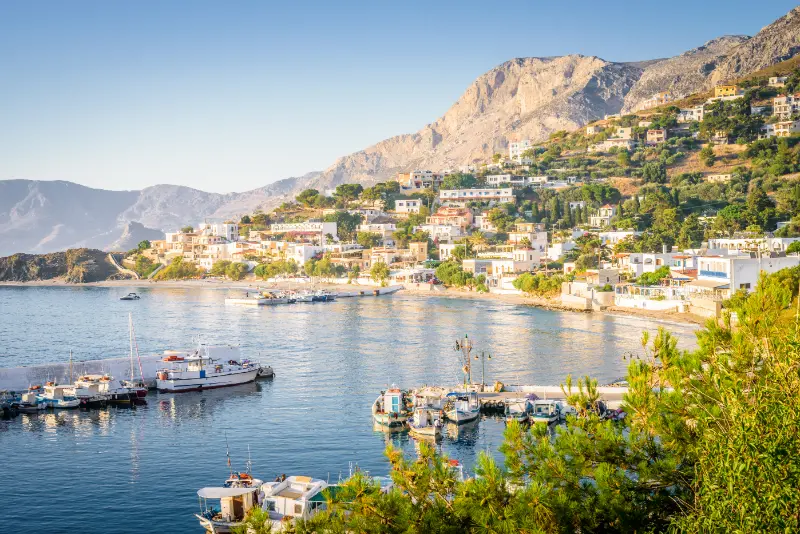
Kalymnos is one of the rare places where climbing is not a niche activity hidden from the rest of the destination. The cliffs rise directly behind villages, climbers eat breakfast beside beach holidaymakers, and rest days can mean swimming in clear water or taking a small boat to Telendos. That combination is why the island works as a climbing holiday rather than only a climbing area.
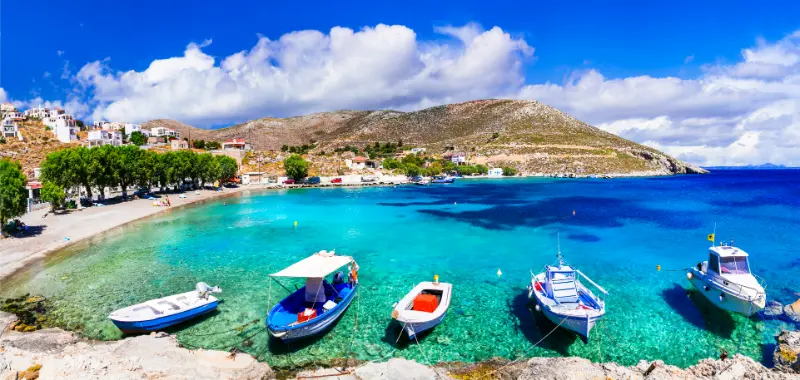
The Municipality of Kalymnos describes almost 2,500 well-equipped sport routes for a wide range of levels, while Visit Greece highlights 77 organised climbing areas. Numbers change as routes are developed, rebolted or retired, so the important point is scale rather than memorising a total. You can build a week around different styles without spending half the trip in a car.
Kalymnos climbing at a glance
| Planning point | Practical approach |
|---|---|
| Style | Mostly sport climbing, from easier slabs and technical walls to steep tufa and cave climbing; some multipitch exists. |
| Main base | Massouri, Myrties and Armeos give the easiest access to many sectors and climber services. |
| Best season | Spring and autumn are generally most comfortable; Visit Greece specifically highlights September. |
| Beginners | Use a qualified local instructor rather than treating bolts as a substitute for experience. |
| Safety | Check current route information, equipment, bolt condition, weather, approach and descent before every session. |
Why the limestone is special
Kalymnos limestone offers unusual variety: slabs, vertical faces, pockets, tufas, stalactites and huge overhanging caves. Grande Grotta is the visual icon, but reducing the island to one cave misses the point. The best week mixes styles and aspects so you can adapt to weather and avoid repeatedly loading the same muscles.
Route grades are not a promise of identical difficulty from sector to sector. Rock polish, length, exposure and style can change how a route feels. Warm up below your limit on the first day, especially if you have travelled, and learn the local feel before chasing a grade.
Where to base yourself
Massouri and nearby Armeos are the obvious climbing base because many sectors sit above the west-coast road and climbing services are concentrated there. Myrties works well if you also want Telendos access. A scooter or car expands the number of sectors you can reach, but a surprising amount of climbing is possible from a west-coast base without driving every day.
If you are travelling with a non-climbing partner, this area is also the easiest compromise: beaches, restaurants, sunset and Telendos provide independent activities. Read Massouri and Myrties before choosing accommodation based only on distance to a crag.
Best time for a climbing trip
Visit Greece identifies September as an ideal month because climbing weather can be excellent while the sea remains pleasant for swimming. October and parts of spring are also popular because active days are more comfortable than in peak summer. Winter climbing can be possible, but accommodation, transport and restaurant choices may be quieter.
In hot weather, aspect is everything. Climb early, seek shade, or switch the session to a different part of the island rather than pushing through direct sun. Heat affects judgment, hydration and skin as much as performance. Wind can be helpful on a hot wall but dangerous on exposed approaches or descents.
Beginners: how to start safely
If you have never sport climbed outdoors, Kalymnos is a wonderful place to learn precisely because qualified local instructors and established infrastructure exist. Book instruction rather than asking a more experienced holiday friend to improvise. Outdoor belaying, clipping, lowering, route finding and rockfall management are skills, not automatic extensions of indoor climbing.
A good beginner day should feel conservative. Expect instruction, an equipment check, a short approach and routes chosen for learning rather than ego. Ask what is included, what qualification the guide holds, and how the group handles rescue or weather changes.
Equipment and route information
Bring personal equipment you trust, but verify rope length and number of quickdraws against current route information. Long sport routes can require more rope than a home crag, and lowering accidents happen when climbers assume every pitch fits their setup. Tie a stopper knot in the free end of the rope and communicate before lowering.
Use current guidebooks or reliable updated resources, because routes can be rebolted, damaged or temporarily discouraged. Do not rely on an old screenshot. Inspect fixed hardware as you climb and retreat if something is uncertain. Salt air and exposure are reasons to respect maintenance, even on a famous crag.
Rockfall, goats and people below
A well-bolted sport route is not the same as an indoor wall. Loose rock can exist, goats can dislodge stones, and climbers above you can drop equipment. Helmets are a sensible default for climber and belayer, and bags should be organised away from the fall line.
If a sector is busy, do not spread ropes and gear across every flat space. Keep access paths clear and avoid shouting unnecessarily near homes, chapels or quiet valleys. The island’s climbing future depends partly on visitors behaving like guests rather than owners of the cliff.
Rescue and emergency planning
The municipality notes a local rescue team able to assist in climbing and rough-terrain incidents. That is reassuring infrastructure, not permission to take bigger risks. Save emergency contacts, know the name of your sector, and make sure someone can explain how to reach you.
Travel insurance should explicitly cover outdoor climbing at the grade and style you plan to do, including rescue and medical treatment. European health cover or ordinary travel insurance may not replace specialist activity cover. Carry identification and enough battery to communicate.
Rest days that actually help
The advantage of Kalymnos is that rest does not have to mean boredom. Swim on the west coast, visit the Archaeological and Maritime museums in Pothia, take the boat to Telendos, or explore Vathy. A genuine rest day often improves the second half of a climbing week more than another “easy” session that becomes five pitches.

If fingers or elbows are painful rather than simply tired, stop. The island will still be there tomorrow. Build the trip around memorable days, not the maximum possible route count.
A balanced five-day climbing rhythm
- Day 1: easy sector, technique, conservative grades and equipment check.
- Day 2: fuller climbing day on a style that suits the conditions.
- Day 3: rest day with Telendos, Pothia or a beach.
- Day 4: different sector or guided skill-building day.
- Day 5: favourite style, but finish before fatigue turns into poor decisions.
When to go and how to use the day
Kalymnos works in more than one season, but the ideal timing depends on what you want to do. Summer is straightforward for swimming and long evenings, yet exposed walks and limestone cliffs can become very hot in the middle of the day. Spring and autumn are better for active itineraries, and Visit Greece specifically highlights September as an excellent climbing month because the rock conditions and sea temperatures can work well together. Wind can change swimming, boating and climbing comfort from one coast to another, so keep at least one day flexible.
In July and August I would front-load anything strenuous: walk, climb or explore archaeological sites early, take a long lunch or swim around midday, and return outside later in the afternoon. In the shoulder season the same itinerary can be more continuous, but daylight and boat frequency may be reduced. The practical habit that improves almost every Kalymnos trip is to check wind and sea conditions before committing to a remote beach or a boat-based day.
What to pack for this part of Kalymnos
- Shoes with grip rather than relying only on beach sandals; limestone paths and village steps can be polished or loose.
- A refillable water bottle and more water than you expect for exposed walks, beaches without services and climbing approaches.
- Sun protection that works while moving: hat, high-SPF sunscreen and a light layer for shoulders.
- Swim shoes if you dislike pebbles or rocky entries; many of the island’s most attractive coves are not soft-sand beaches.
- A small dry bag or waterproof phone pouch for caiques, sea taxis and beach days.
- A light layer for breezy evenings, especially outside peak summer or after sunset on the west coast.
A realistic planning rule
For a climbing holiday, avoid building a day that depends on every connection, meal and swim happening at an exact minute. Kalymnos is compact, but its mountain spine, indented coast and seasonal transport mean that a short distance can still require a deliberate route. Two strong experiences plus an unhurried meal usually create a better day than five photo stops. This is especially true if one element depends on wind, a boat, a museum timetable or a trail that you have not walked before.
It is also worth separating “possible” from “comfortable.” You may be able to combine a morning in Pothia, a west-coast swim, Telendos and a sunset dinner, but that does not mean every traveller will enjoy the transfers. Families, slower walkers and anyone visiting in extreme heat should reduce the number of moves. Climbers should treat approach walks and recovery time as part of the schedule rather than invisible minutes between sightseeing stops.
Continue planning Kalymnos
Build the rest of the trip with Pothia Kalymnos Guide; Massouri and Myrties Kalymnos Guide; Telendos Island Guide; Vathy and Rina Kalymnos Guide; Best Beaches in Kalymnos; Kalymnos Hiking Guide; Kalymnos Diving and Sponge Heritage Guide; Kalymnos Without a Car; Where to Stay in Kalymnos. Start with the Kalymnos Travel Guide if you want the broader five-day overview before choosing detailed day plans.
Kalymnos climbing FAQ
How many climbing routes are on Kalymnos?
The Municipality of Kalymnos describes almost 2,500 equipped sport routes, while route totals evolve as development and maintenance continue. Use current local information rather than treating any number as permanent.
Is Kalymnos good for beginner climbers?
Yes, if you learn with a qualified local instructor. The island has routes across a wide range of levels, but outdoor sport climbing still requires proper skills and judgment.
What is the best month for climbing?
Visit Greece specifically highlights September. Spring and autumn are generally preferred to the hottest summer period, but conditions vary by aspect, wind and year.
Do I need a car for climbing?
Not for every day if you stay around Massouri, Myrties or Armeos. A vehicle makes it easier to reach more distant sectors and adapt to weather.
Is Grande Grotta suitable for everyone?
It is an iconic steep sector, but not every route or condition suits every climber. Choose sectors based on your actual grade, style and experience rather than fame.
Useful official information
For current destination information I check the Municipality of Kalymnos and Visit Greece – Kalymnos. Transport, museum opening hours, boat services, climbing access and seasonal businesses can change, so recheck the details that matter to your day shortly before travel. The municipality’s climbing page also explains local route scale, instructor availability and rescue infrastructure.
Leave a Reply