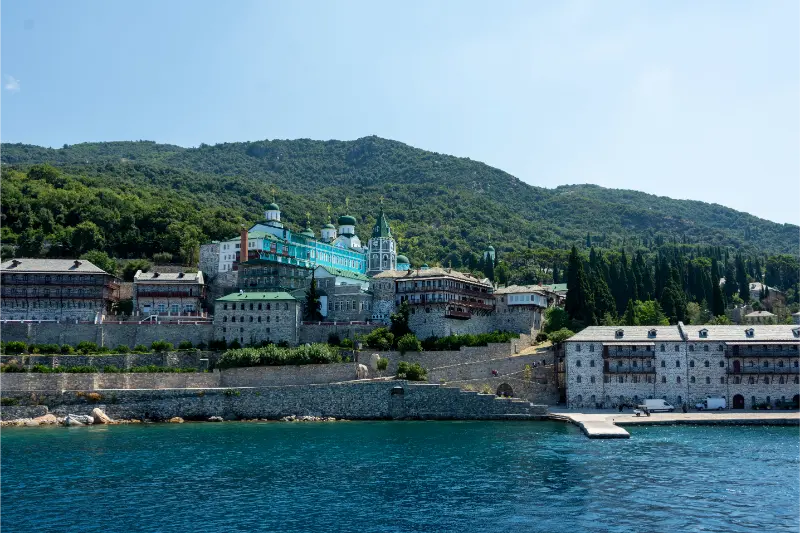
A Mount Athos cruise is the simplest way for general travellers to understand the scale of the Athos peninsula without entering the monastic state. Boats from Ouranoupoli travel along the western coast, where monasteries appear between forested slopes and the sea. The experience is visual and geographical: you begin to see how isolated the communities are and why maritime access has shaped life here for centuries.
The official Halkidiki tourism site states that Mount Athos includes 20 monasteries and is a UNESCO World Heritage property, and that sightseeing cruises allow visitors to admire monasteries from the sea. Entry into Mount Athos itself is a separate matter governed by specific religious and administrative rules. This guide focuses only on the public cruise experience and how to plan it respectfully.

Why it is worth adding to your itinerary
The experience shows a coastline and cultural landscape that are difficult to understand from the road. It is less about checking monuments off a list and more about seeing distance, isolation and geography from the perspective that has connected communities here for centuries.
What to see and do
Understand what the boat can show you
The western coastline contains several of the most dramatic monastery settings, including complexes that appear to rise directly from steep terrain above the sea. You are viewing them at a distance, so bring binoculars if details matter. The value is the full landscape: monastery, mountain, forest and water in the same frame.
Listen to the commentary
On a good cruise, commentary turns distant architecture into a sequence you can understand. Note monastery names only if that interests you; you do not need to memorise everything. I prefer to listen for patterns—how monasteries are positioned, where small harbours sit and how the terrain separates communities.
Choose your deck position thoughtfully
Open decks give the clearest views but also the strongest sun and wind. Move rather than guarding one seat for the whole trip. The coastline can be clearer from different sides as the boat turns, and a shaded section is valuable during long stretches between major viewpoints.
Respect the place you are observing
Mount Athos is not a themed attraction. It is a living Orthodox monastic community with rules and spiritual significance. Photograph from the boat where permitted, keep commentary volume reasonable and avoid treating restrictions as a curiosity to challenge. Respect makes the experience more meaningful, not less.
Pair the cruise with Ouranoupoli, not another long drive
Cruise days are longer than they look because boarding, sailing and sun exposure are tiring. Stay in Ouranoupoli and keep the rest of the day simple: dinner, a swim or an easy waterfront walk. Saving a two-hour road transfer for another day improves the trip immediately.
A realistic itinerary
| Part of the day | Plan |
|---|---|
| Before departure | Arrive early, confirm boarding point and check sea conditions |
| Outbound cruise | Use commentary and binoculars to understand the coast |
| Main viewing section | Rotate between shade and open deck; photograph selectively |
| Return | Hydrate and rest rather than planning a second major excursion |
| Evening | Dinner and harbour walk in Ouranoupoli |
Use this as a framework rather than a strict timetable. Northern Greece rewards flexibility: traffic, wind, mountain weather, ferry operations and opening hours can change the rhythm of a day. Protect the main experience and treat secondary stops as optional. That produces a better trip than racing to every pin saved on a map.
How to get there and move around
Most public sightseeing cruises associated with Mount Athos depart from Ouranoupoli, while other routes may operate from Ormos Panagias. Schedules vary by season and operator, so book from current information and reconfirm close to departure. The official Halkidiki site distinguishes sightseeing cruises from entry to the monastic state. Do not assume a cruise ticket gives any right to disembark inside Mount Athos.
Choose the cruise for the experience you actually want
A Mount Athos cruise is about landscape, monasteries seen from the sea and the scale of the peninsula, not close-up access to every complex. Read the route description before booking, check whether commentary is included, and choose a boat size and duration that match your tolerance for sun, wind and time on deck.

Sea conditions matter
Even in summer, wind can change comfort and visibility. Bring a light layer, sun protection and water, and keep valuables secure when moving around the deck. If you are prone to seasickness, choose a larger vessel when possible and follow medical advice about prevention before boarding.
Best time to visit
Late spring to early autumn offers the broadest cruise season, but wind and sea state matter more than the calendar. A calm September morning may be more comfortable than a hot, windy August afternoon. Leave one flexible day in a longer Halkidiki itinerary if the cruise is important to you.
Check the same-day weather and any official operating information shortly before you leave. Northern Greece can combine coastal heat, mountain cloud and strong wind within the same regional itinerary. Planning by conditions rather than by a rigid spreadsheet is one of the easiest ways to improve the trip.
Food and local rhythm
Eat lightly before sailing if you are sensitive to motion. After the cruise, Ouranoupoli is ideal for a fish or seafood dinner. Hydrate first, especially after several hours on an exposed deck, and avoid turning the evening into another long car journey.
Do not compress every meal into the smallest possible gap between attractions. A long lunch or early dinner is also a planning tool: it gives you shade, hydration and time to decide whether the next stop still makes sense. This matters even more on driving, hiking and boat days.
How to combine it with nearby places
Spend two or three nights in Ouranoupoli and use a separate day for Ammouliani. This creates a balanced eastern-Halkidiki stay with culture, sea and beach time.
When building a longer route, group places by geography. A northern-Greece itinerary becomes tiring when each day starts with a two-hour transfer in the opposite direction. Two or three nights per base usually produces more walking, swimming and local evenings than changing hotels every day.
Where to stay
Stay in Ouranoupoli the night before if your cruise leaves early. Removing a long pre-dawn drive reduces the risk of missing departure and makes the day much calmer. A second night is useful if you want dinner and a relaxed waterfront walk after returning.
Practical planning notes
Download an offline map before leaving the main city or resort area. Mobile coverage is generally good but can weaken in mountains, wetlands and isolated coastal stretches. Save the official destination name and your accommodation pin, and carry a charging cable or power bank on days with heavy navigation and photography.
Carry water, sun protection and a light layer even when the forecast looks simple. Coastal wind can cool a boat quickly, while archaeological parks and wetland roads can be completely exposed. In hiking areas, replace casual footwear with shoes that have reliable grip. Small preparation choices make a bigger difference than adding another attraction.
If you are travelling with children or older relatives, judge difficulty by heat, surfaces and standing time rather than kilometres. A short archaeological site under strong sun can feel harder than a longer shaded walk. Build in benches, café stops and permission to skip the final viewpoint.
Common mistakes to avoid
- Assuming the cruise enters monasteries
- Booking the tightest possible connection before departure
- Spending the whole cruise in full sun
- Forgetting binoculars when architecture is your main interest
- Treating religious access rules as optional
- Planning a long cross-Halkidiki drive immediately after returning
Official information
For current opening hours, tickets, access rules or regional information, check Halkidiki Tourism – Mount Athos shortly before the trip. I prefer official sources for variable details because transport timetables, admission prices and seasonal operations can change after older travel articles were published.
Frequently asked questions
Can women take a Mount Athos cruise?
Yes. Public sightseeing cruises offshore are open to general visitors, including women; entry into the monastic state is governed by separate rules.
Do cruises stop at monasteries?
Standard sightseeing cruises are designed to view monasteries from the sea, not to provide general tourist entry.
Where do cruises leave from?
Ouranoupoli is the main departure point highlighted by the official Halkidiki tourism site; some routes also operate from Ormos Panagias.
Do I need binoculars?
They are not essential, but they make distant architectural details much easier to appreciate.
What if the weather is windy?
Cruise comfort and schedules can change with sea conditions, so reconfirm with the operator and keep a flexible backup plan.
Final advice
Build the day around one clear reason for coming, then let the surrounding region add depth. Northern Greece is especially rewarding when you leave margin for a good meal, a change in weather or a place you did not expect to enjoy. The goal is not maximum coverage; it is a route that still feels enjoyable on the final day.
For the wider picture, continue with Ouranoupoli Guide, Ammouliani Guide, Halkidiki Travel Guide. These guides connect this stop to the rest of the region without unnecessary backtracking.