
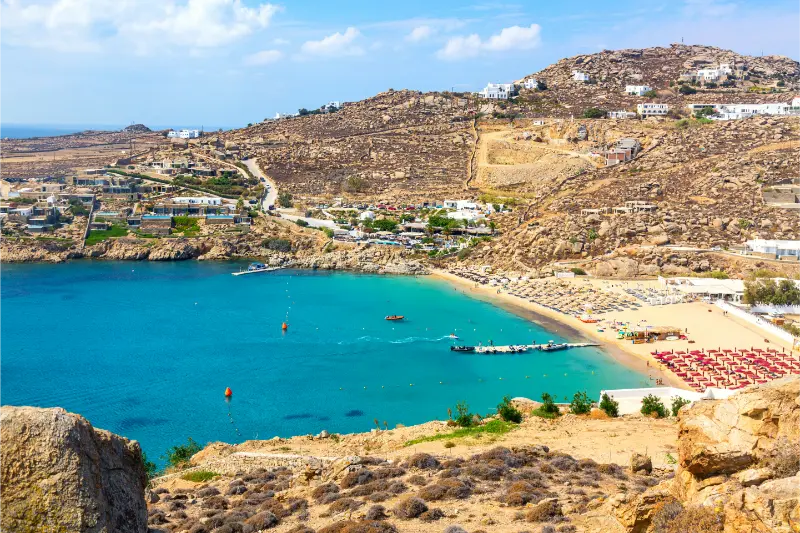
Mykonos is famous for beach clubs, but choosing a beach only by reputation is one of the easiest ways to misread the island. Psarou, Paradise, Super Paradise, Elia and Agios Sostis offer very different days, from highly organised luxury to quieter sand with little infrastructure. Wind direction, transport and the cost of organised seating can matter as much as water colour. The best beach is therefore the one that matches the atmosphere you want rather than the one with the loudest global name.
This guide is built for travellers who want more than a quick photo stop. Keep Mykonos Travel Guide, Mykonos Town Guide, Delos Day Trip Guide open while planning so this place fits naturally into the wider trip instead of forcing unnecessary backtracking.
Why this place deserves its own guide
The difference between an average visit and a very good one is usually logistical rather than dramatic: arriving at the right time of day, understanding the terrain, leaving space for weather changes and knowing what not to combine. Greece rewards flexible planning. A destination can be world-famous and still feel disappointing if the day is overpacked, while a simple walk or village lunch can become a highlight when the schedule leaves room for it.
What to see and do
Psarou
Psarou is associated with upscale beach culture, yachts and high-end organised service. It can be an excellent choice if that polished environment is exactly what you want. It is a poor choice if you dislike reservations, premium pricing or a social scene built around seeing and being seen. Confirm minimum-spend or lounger policies directly with venues before committing, because conditions can change by date and season.
Paradise and Super Paradise
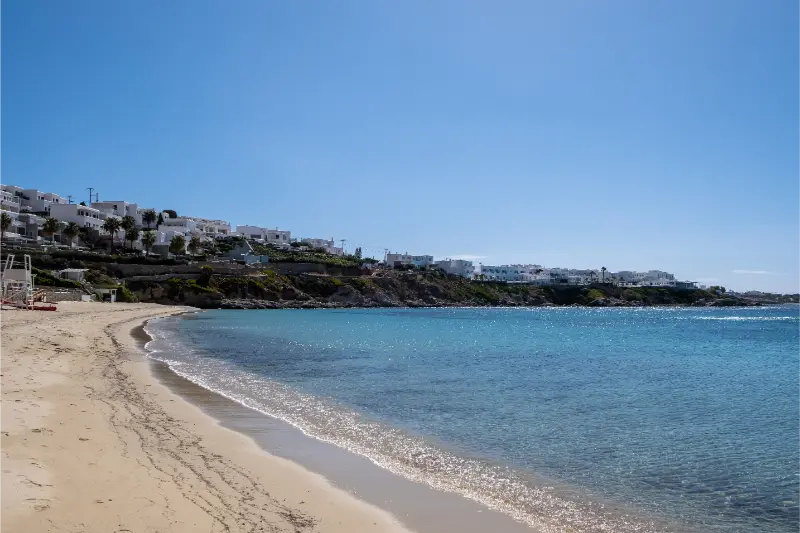
These southern beaches became synonymous with Mykonos nightlife and beach-party culture. During the day they can be relatively straightforward swimming beaches before music and energy increase. Travellers who want quiet should not choose them merely because they are famous. Transport is generally easier than at remote northern beaches, but late returns can be busy, so know your bus or taxi options before drinking.
Elia
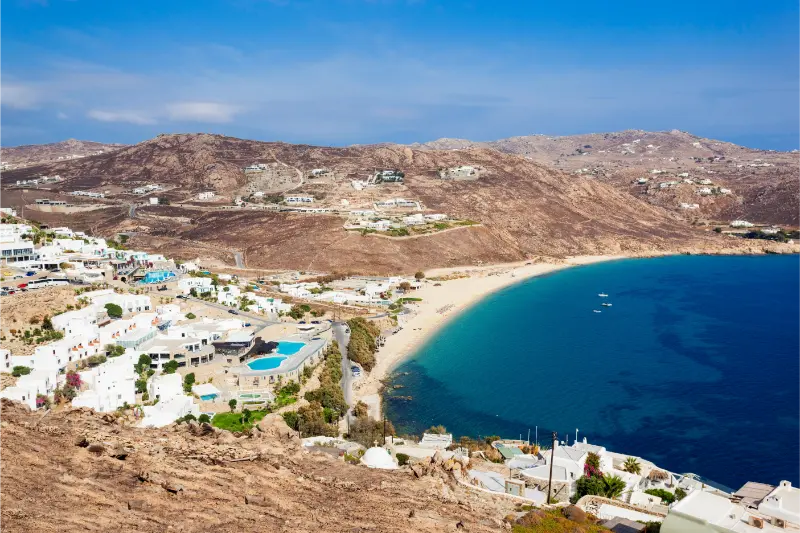
Elia is one of the island’s larger organised beaches and can feel less compressed than some club-focused bays. It works well for travellers who want services, swimming and a full beach day without necessarily making the party scene the main purpose. Wind and sea state still matter, and organised zones can take up substantial space in high season.

Agios Sostis
Agios Sostis on the north side represents a very different Mykonos. It is less developed, with no dense row of beach clubs, and appeals to travellers looking for a simpler landscape. That also means fewer facilities and more dependence on a car or taxi. Bring what you need, respect the natural setting and do not expect the convenience of the southern resort beaches.
Ornos and family-friendly convenience
Ornos is popular because it combines an accessible beach with accommodation, restaurants and transport connections. Families and travellers without a car often find it easier than more remote options. It can become busy and heavily organised, so “family-friendly” should not be confused with “quiet.” Its real advantage is convenience.
How the wind changes your choice
Mykonos is called the island of the winds for good reason. The meltemi can make one coast uncomfortable while another side of the island is more sheltered. Check the day’s wind rather than locking every beach into your itinerary weeks in advance. A flexible plan can turn a mediocre beach day into an excellent one without changing the island.
Best time to visit
June and September are strong months for warm weather with somewhat less pressure than peak summer. July and August bring the fullest beach-club calendar and highest demand. Morning is best if you want easier parking and a calmer swim. For party beaches, the atmosphere often builds later, so choose arrival time based on whether swimming or nightlife is your priority.
Check conditions close to the day of your visit. Heat, wind, sea state, religious services, archaeological works or seasonal opening hours can matter more than the average weather for the month. When an official website publishes current access information, use that as the final reference instead of an old blog post or a saved social-media screenshot.
How to get there and move around
Public buses connect Mykonos Town with several popular beaches, and water taxis may link parts of the south coast seasonally. Remote beaches are easier with a rental car or scooter, but driving and parking become stressful in peak season. Scooters and ATVs are not automatically “easy” choices: wind, road surfaces and traffic require confidence and proper licensing.
Build realistic transfer time into the day. Greek islands and historic city centres often look compact on a map, but narrow roads, parking searches, pedestrian zones and seasonal traffic slow everything down. If public transport is central to the plan, verify the latest timetable shortly before travel and keep a backup option for the final connection of the day.
Where to stay
Stay in Mykonos Town if you want nightlife and the widest transport choices. Ornos and Platis Gialos work well for beach-first stays with easier local access. If quiet mornings matter, a remote villa can be attractive, but you will depend more heavily on driving or taxis. Decide whether you want to commute to the beach or to nightlife; doing both every day wastes time.
For accommodation, zoom in on the exact property rather than relying on the neighbourhood label. Check stairs, parking, bus access, late-night noise and the walk back after dinner. A property that is geographically close can still be inconvenient if the route is steep or the last bus finishes earlier than expected.
Food and local experience
Beach restaurants range from simple meals to high-end dining. Before sitting down at an organised venue, ask about lounger charges, minimum spends and reservation rules. For value, consider spending the morning on an organised beach and eating later in a village or Mykonos Town. Water and a proper meal are especially important if you are combining sun with alcohol.
Give meals enough time. Greek travel is rarely improved by treating lunch as a twenty-minute gap between attractions. A slower meal also creates a useful buffer when the morning has taken longer than expected. In heavily visited places, moving one or two streets away from the most obvious viewpoint often changes both atmosphere and value.
A realistic itinerary
Choose one primary beach and one backup based on wind. Spend the morning swimming rather than trying to sample three beaches. Have a long lunch, then decide whether to stay for the late-afternoon atmosphere or return to Mykonos Town. On another day, use a northern beach such as Agios Sostis for contrast. The island feels much richer when you experience both its organised and natural sides.
Use one priority and one secondary activity as the backbone of the day. If weather, traffic or a long lunch pushes the schedule back, drop the secondary stop instead of compressing everything. A good itinerary should survive a delay without turning the rest of the day into a race.
Families, mobility and accessibility
Families should plan around shade, toilets, meal timing and realistic walking stamina. Historic lanes, archaeological ground, fortress paths, beaches and mountain villages vary greatly in accessibility. Travellers who need step-free access should contact the site, transport provider or accommodation directly because general descriptions such as ‘easy walk’ are not precise enough for an important mobility decision.
Safety and responsible travel
Follow barriers, lifeguard instructions, religious-site rules and local signs even when other visitors ignore them. Do not climb unstable ruins, walk close to eroding cliffs, enter sea caves in rough water or drive onto protected sand for convenience. Responsible behaviour is not only about preserving the destination; it usually produces a calmer and safer trip for you as well.
Common mistakes to avoid
- Choosing a beach solely because it is famous
- Assuming all loungers and beach clubs have similar prices or policies
- Ignoring wind forecasts
- Riding scooters or ATVs without appropriate experience
- Trying to visit four beaches in one day instead of enjoying one properly
What to combine with it
Plan the full stay with Mykonos Travel Guide, spend an evening using Mykonos Town Guide and reserve a separate morning for Delos rather than combining archaeology and a major beach day.
Combine places that sit naturally on the same route. Crossing an island twice in one day or zigzagging through Athens wastes energy that could be spent walking, swimming or eating. If two excellent attractions pull you in opposite directions, separate them into different days and enjoy both properly.
FAQ
How much time should I allow?
Protect at least half a day for a focused visit once transport, walking, breaks and a meal are included. If this is one of your main priorities, give it most of the day rather than squeezing it between two distant attractions.
Do I need to book in advance?
High-demand tours, tastings, organised beach services and timed archaeological visits can require or benefit from advance booking in peak season. Ordinary village walks and many beaches do not, but current access conditions should always be checked.
Can I visit without a rental car?
Often yes in central Athens and on well-served island routes. Rural villages, remote beaches and multi-stop road-trip days are easier by car. Rent only when it adds meaningful flexibility, and never treat a scooter or ATV as the default solution if you lack experience.
Is it suitable for children?
Usually, with an adjusted pace. Heat, stairs, exposed paths, long boat days and limited shade affect children more quickly than adults. Plan a shorter version of the day and keep swimming, food or playground time available as a reset.
How reliable are old prices and timetables?
Not very. Ticket prices, ferry schedules, museum hours, beach-service policies and bus frequency change. Use official or local sources close to the visit, particularly when one connection or opening window determines the entire day.
Final advice
Plan the logistics carefully, then leave space for the destination to change the plan. The most satisfying days in Greece usually have a clear structure but enough flexibility for a longer swim, an unexpected viewpoint, a village café or a sunset that makes the next scheduled stop suddenly unimportant.
More Mykonos in-depth guides
Continue planning Mykonos with Ano Mera; Armenistis Lighthouse; Ornos and Agios Ioannis; Paradise and Super Paradise; Elia and Agrari; Panormos and Agios Sostis; Archaeological Museum of Mykonos; Mykonos without a car; Mykonos with kids; Mykonos 4-day itinerary.