
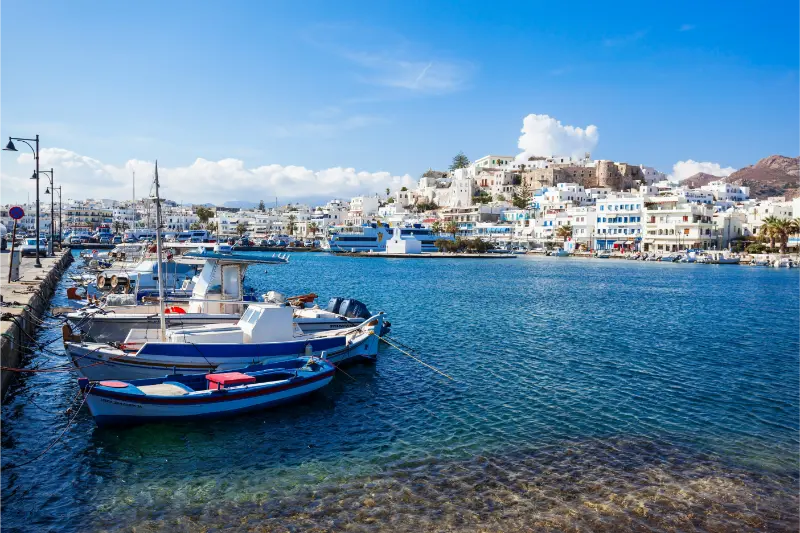
Naxos Chora Guide is the focus of this guide. Naxos Chora is both the island capital and one of the most useful bases in the Cyclades. Ferries arrive almost in the centre, the Portara dominates the harbour entrance, the Kastro rises behind the waterfront, and Agios Georgios beach is close enough to reach on foot. This mix makes Chora much more than a place to sleep before driving inland.
Give Chora at least one full day at the beginning or end of a Naxos trip. The town is at its best when you alternate between the harbour, steep old lanes, the Venetian Kastro and a beach break. Then use it as the launch point for mountain villages and the longer sandy beaches of the west coast.
At a glance
| Best for | First-time Naxos visitors, car-free stays, families and island hopping |
|---|---|
| Ideal stay | 2 nights in Chora plus extra nights elsewhere if desired |
| Main landmarks | Portara, Kastro and the old market lanes |
| Car needed? | No for town; useful for inland villages and remote beaches |
Why this place deserves time in your Greece itinerary
A good visit is less about collecting landmarks and more about understanding how the destination works. Naxos Chora is both the island capital and one of the most useful bases in the Cyclades. Ferries arrive almost in the centre, the Portara dominates the harbour entrance, the Kastro rises behind the waterfront, and Agios Georgios beach is close enough to reach on foot. This mix makes Chora much more than a place to sleep before driving inland.

My planning approach here is simple: build the day around the strongest local experiences, leave breathing room for weather and crowds, and use nearby destinations only when they add something genuinely different. Give Chora at least one full day at the beginning or end of a Naxos trip. The town is at its best when you alternate between the harbour, steep old lanes, the Venetian Kastro and a beach break. Then use it as the launch point for mountain villages and the longer sandy beaches of the west coast.
What to see and do
Portara
The huge marble doorway of the unfinished Temple of Apollo stands on the islet of Palatia beside the harbour and has become the symbol of Naxos. It is especially popular around sunset, when the doorway frames the sea and town.
Go once in daylight as well as near sunset if possible. Daylight makes the relationship between the monument, harbour and Kastro easier to understand, while sunset delivers the atmosphere.
Kastro
The fortified upper town preserves the Venetian layer of Naxos history. Climb slowly through the gates and narrow lanes, noticing how the architecture changes from the lower commercial streets. Museums and cultural spaces may add depth depending on current opening schedules.
The Kastro is best explored without a rigid route. Wear shoes with grip because polished stone and steps can be slippery.
Old Market lanes
Between the waterfront and Kastro lies a maze of small shops, cafés, restaurants and passages. It can feel touristy in the busiest hours, but early morning reveals a quieter side and evenings are lively without being overwhelming.
Use these lanes to move between major sights rather than treating shopping as a separate activity.
Agios Georgios beach
One of Chora’s greatest practical advantages is having a sandy beach close to the centre. It is easy to spend the morning sightseeing, swim in the afternoon and return on foot for dinner.
The shallow water can suit families, but wind conditions change; Naxos is well known for breezy summer days that also attract wind- and kite-sports enthusiasts elsewhere on the coast.
Harbour and evening promenade
The waterfront is the town’s social spine. Ferries, fishing boats, cafés and restaurants create constant movement, especially around arrival times. Walk it after dark when the Portara and Kastro are illuminated.
If ferry noise or nightlife bothers you, stay a few streets back rather than directly on the harbour.
Where to stay
Old Town/Kastro edge
Best for atmosphere and historic lanes, but expect steps and difficult luggage access.
Agios Georgios
Excellent for families and beach-first travellers who still want to walk into town.
Harbour/new town
Most practical for ferries, buses and short stays, though potentially busier and noisier.
When choosing accommodation, look beyond the marketing label and check the exact map position, stairs, parking or transfer access, and walking time to the places you will use most. On Greek islands in particular, two hotels described as being in the same village can offer very different daily experiences because of gradients, pedestrian lanes or spread-out coastal development.
How to get there and get around
Chora surrounds the main ferry arrival area, making it one of the easiest Greek island capitals for travellers without a car. Buses leave for popular beaches and villages, while rental cars are useful for a dedicated island-exploration day. If you rent, collect the car after your town days rather than paying to park it while you walk everywhere.
For short stays, it is usually better to choose one transport strategy rather than mixing a rental car, taxis and tours every day. If the destination is walkable, keep car days for the places that genuinely need one. If you do rent, photograph the vehicle at collection, understand fuel and insurance conditions, and never assume an attractive coastal track is suitable for a standard rental car.
A realistic itinerary
Day 1
Arrive, walk the harbour and old market, climb into the Kastro, then visit the Portara for late-afternoon light and sunset. Finish with dinner in the old lanes.
Day 2
Spend the morning at Agios Georgios or take a bus to a west-coast beach, return for a slow lunch, then revisit the Kastro and harbour after dark.
Day 3 option
Rent a car or join a tour for Halki, Filoti, Apiranthos and mountain Naxos. The Naxos travel guide covers the wider island in detail.

Best time to visit
Chora is lively through the main travel season, with June and September offering an excellent balance of beach weather and manageable pressure. July and August bring the greatest ferry activity and accommodation demand. Spring is attractive for walking and inland villages even before the sea reaches peak warmth.
Weather is only one part of timing. Ferry frequency, boat excursions, seasonal restaurants and opening hours can also change outside the main summer period. In peak season the opposite problem appears: almost everything is operating, but parking, restaurant reservations and popular viewpoints require more patience. Build flexibility into the plan rather than trying to optimise every hour.
Food and evenings
Naxos is one of the Cyclades’ strongest food islands. Chora is the easiest place to sample local cheeses, potatoes, meats and kitron-based drinks before seeking more traditional tavernas in mountain villages. Do not eat every meal on the harbour; the old lanes and inland day trips broaden the experience.
A useful rule for a better Greece trip is to separate the places you choose for a view from the places you choose for food. Sometimes they are the same restaurant, but not always. Walk one or two streets away from the most obvious waterfront or viewpoint, read the menu before sitting down, and leave room for a bakery breakfast, a simple taverna lunch and one longer dinner rather than making every meal an event.
Practical tips for different travellers
Couples
Couples can make the destination feel more relaxed by avoiding the most obvious sunset rush and booking one slower evening with no transport after dinner. A room with a view is worthwhile only if you will actually spend time there; otherwise put the budget into location, a boat trip or a special meal.
Families
Families should check gradients, shade, beach entry and transfer logistics before booking. A beautiful old-town room can become inconvenient with a stroller, while a resort outside the centre may require repeated taxis. Keep the hottest hours simple and build in a swim, playground or rest period rather than expecting children to follow an adult sightseeing pace.
Solo travellers
Solo travellers benefit from walkable bases and public transport, but should still plan the last connection of the day rather than assuming buses or boats run late. Joining a small-group excursion can be useful for remote sights, while self-guided mornings are ideal for photography and museums.
Road-trip travellers
If this stop is part of a larger road trip, resist the temptation to check out every morning. Two or three nights in one base often saves more time than it costs because packing, parking and check-in repeatedly can consume the best hours of the day.
Common mistakes to avoid
- Leaving Chora immediately after the ferry and never exploring the Kastro.
- Renting a car for the entire stay even when the first two days are completely walkable.
- Going to the Portara only at the busiest sunset moment.
- Booking inside the steep old town without checking luggage access.
- Treating Naxos only as a beach island and missing its food and mountain culture.
How to combine it with the rest of Greece
Use Chora as the gateway to the complete Naxos guide and connect onward with the Paros guide, Antiparos guide and island-hopping guide.

The most efficient itinerary usually moves geographically rather than bouncing back and forth. Check ferry days, driving times and airport locations before fixing hotel dates. On an island trip, one extra night in a well-connected hub is often more valuable than adding another island simply to increase the destination count.
FAQ
Is Naxos Chora a good place to stay?
Yes. It is one of the best all-round bases in the Cyclades because ferries, buses, restaurants, history and a beach are all close.
How many days do you need in Chora?
Two days are ideal before dedicating more time to beaches and mountain villages elsewhere on Naxos.
Do I need a car in Chora?
No. Walk and use buses, then rent a car only for the days you explore the interior.
Is the Portara free to visit?
The outdoor monument area is generally approached as an open landmark, but respect any current access rules and archaeological protections.
Is Chora good for families?
Yes, particularly around Agios Georgios where beach access and town facilities are easy to combine.
Final advice
Plan enough structure to protect the important parts of the trip, but leave room to change the order when weather, crowds or local advice suggest a better option. That flexibility is often what turns a busy Greece itinerary into a trip that actually feels like a holiday.
More Naxos in-depth guides
Continue planning Naxos with Temple of Demeter Naxos Guide; Apeiranthos Naxos Guide; Chalki Naxos Guide; Filoti Naxos Guide; Apollonas and Kouros Naxos Guide; Plaka Beach Naxos Guide; Mikri Vigla Naxos Guide; Alyko and Hawaii Beach Naxos Guide; Panagia Drosiani Naxos Guide; Naxos Road Trip.