
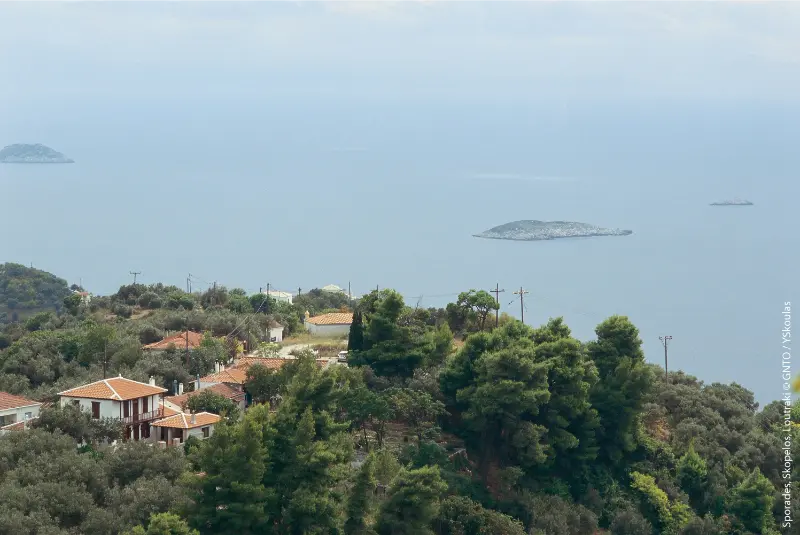
A boat day changes the way Skopelos makes sense. From the road, the island feels mountainous and forested; from the water, you see how pine slopes drop into coves, cliffs and clear bays. Excursions may stay around Skopelos or continue toward Alonissos and the wider Northern Sporades marine environment, depending on season and operator.
I would choose a trip based on the route and time on the water, not the number of advertised stops. A slower cruise with two good swimming stops can be more enjoyable than an itinerary that spends the whole day approaching, photographing and leaving places.
Coastal cruises around Skopelos
Coastal excursions focus on beaches, coves and viewpoints that are easier or more impressive from the sea. They are a good choice when you already have a land-based itinerary and want one day without driving.
Ask whether the boat has shade, toilets and easy water access. These details matter more than the marketing name, especially for families or travellers who are not comfortable climbing ladders.
Alonissos and the marine park
Some excursions continue toward Alonissos and the protected marine environment of the Northern Sporades. The region is internationally important for marine life, including the Mediterranean monk seal.
A wildlife trip should never promise a guaranteed seal sighting. Choose operators that keep responsible distances and explain protection rules instead of chasing animals for photographs.
Sea caves, reefs and snorkelling
Visit Greece highlights clear water, reefs, caves and wrecks as part of the broader Skopelos diving environment. Even without scuba equipment, boat stops can give excellent snorkelling when sea conditions are calm.
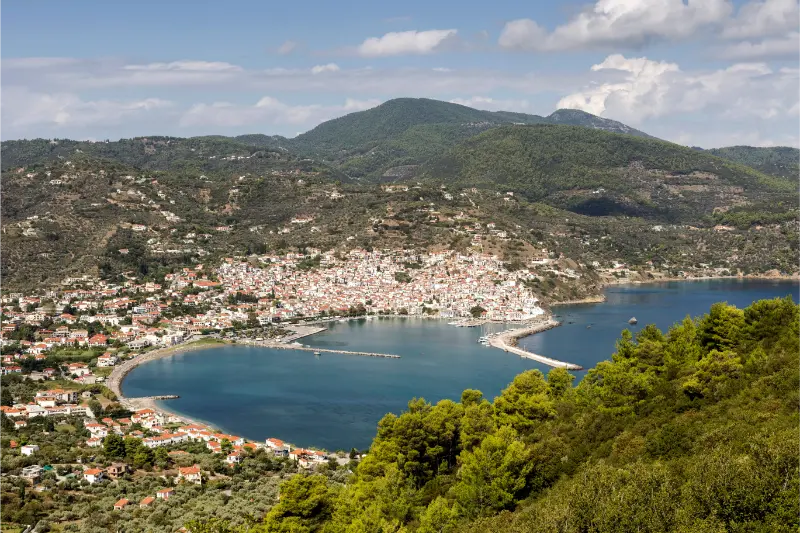
Bring your own well-fitting mask if snorkelling matters to you. Never enter caves without the crew’s approval, and avoid touching marine life or standing on fragile underwater surfaces.
Private boat versus organised cruise
Private boats offer flexibility but require more responsibility. If you rent without a skipper, understand local licensing rules, insurance, fuel, weather limits and anchoring restrictions before departure.
An organised cruise is easier for a first visit and often better value for solo travellers or couples. A skippered private trip makes most sense when several people share the cost or when you have a very specific route in mind.
Weather and cancellations
Wind can alter a route even when the sky looks clear from your hotel. A responsible captain may change swimming stops or cancel because conditions offshore differ from the harbour.
Book with a flexible mindset and keep a land-based alternative ready. If a trip is cancelled for safety, use the day for Chora, Glossa or a sheltered beach rather than treating the change as lost holiday time.
What to bring
Pack high-SPF sunscreen, a hat that can be secured, water, a light layer for the return journey and a dry bag for electronics. Motion-sickness medication may help susceptible travellers, but follow medical advice and the product instructions.
Carry only what you can keep organised in a small space. Large beach bags become awkward on crowded boats, and wet decks are not ideal places for loose phones and cameras.
Choosing an operator
Compare boat size, passenger numbers, shade, swimming access and cancellation policy. A smaller boat can reach different coves, while a larger vessel may be steadier and have more facilities.

Read the route carefully because “marine park”, “Alonissos” and “Skopelos cruise” can describe very different days. Choose according to the experience you want rather than the most stops.
Responsible marine travel
Do not feed wildlife, chase animals or ask the crew to approach protected species more closely. Use reef-safe practices, take litter back to port and avoid anchoring independently in restricted zones.
The Northern Sporades are special partly because of their marine environment. A responsible trip leaves the sea exactly as it was found.
Getting around Skopelos
Skopelos is compact on a map but not flat. Roads curve through forested hills, and journey times are slower than straight-line distances suggest. A rental car gives the greatest flexibility for beaches and northern villages, while seasonal buses can work well for travellers based in Chora or along the main west-coast corridor.
If you drive, allow extra time after dark and do not rush on narrow bends. If you rely on buses, check the current timetable after arrival because frequency changes through the season. Taxis are a useful backup for one-way trips, late dinners and locations away from the principal route.
Where to stay and booking strategy
For live availability, compare accommodation in Skopelos on Booking.com. Choose the map location before comparing room design: a hillside apartment may have a spectacular view but require steep walking, while a beach property may leave you dependent on transport for evening restaurants.
For a first visit, Chora is the easiest all-round base. Panormos suits beach-first holidays, Glossa gives village character and north-island access, and Neo Klima offers a quieter west-coast compromise. A split stay becomes worthwhile at around six nights.
Ferries and arrival planning
Skopelos has no commercial airport, so most travellers arrive by ferry after flying to Skiathos or travelling overland to a mainland port. Visit Greece explains the common Skiathos-airport connection, while published 2026 ferry schedules show seasonal services from Mantoudi that can call at Skiathos, Glossa and Skopelos.
Schedules change by date and weather, so treat any timetable in an article as a planning example rather than a permanent promise. Check the operator close to travel, confirm the exact Skopelos port on the ticket and leave buffer time when connecting a ferry with a flight.
Common mistakes to avoid
- Assuming every beach has sand, shallow water, shade and full services.
- Booking a hillside room without checking stairs and luggage access.
- Trying to see Chora, Glossa, Mamma Mia locations and several beaches in one day.
- Using an old bus or ferry timetable instead of checking the current season.
- Driving unfamiliar winding roads too quickly after dark.
- Treating religious chapels as film props rather than active places of worship.
Useful official information
For destination background, use the Visit Greece diving guide. The Municipality of Skopelos is also useful for local notices. Recheck opening arrangements, transport, weather and any fire-related access restrictions shortly before the day you travel.
Tours and activities
Seasonal boat trips, transfers and guided experiences vary considerably by month. The widget below can help you see what is actually bookable for your dates. Compare meeting points, duration, cancellation rules and whether transport from your accommodation is included.
Continue planning your Skopelos trip
- Skopelos Travel Guide: Beaches, Mamma Mia Locations and a 4-Day Itinerary
- Skopelos Chora Guide: Castle Views, Churches, Harbour Walks and a 2-Day Stay
- Agios Ioannis Kastri Skopelos Guide: Chapel Steps, Views and Mamma Mia Planning
- Northern Sporades Island Hopping Guide: Skiathos, Skopelos and Alonissos Routes
- Glossa and Loutraki Skopelos Guide: Village Views, Port, Beaches and Where to Stay
- Panormos, Milia and Kastani Skopelos Guide: Three West-Coast Beaches Compared
- Best Beaches in Skopelos: Stafylos, Velanio, Panormos, Milia, Kastani and More
- Mamma Mia Locations in Skopelos: Kastani, Agios Ioannis Kastri and a Film-Fan Itinerary
- Skopelos Hiking Guide: Pine Forests, Monasteries, Coastal Walks and Safety
Final advice
Skopelos works best when you leave enough empty space in the itinerary for the island itself. A road may be slower than expected, a beach may be perfect for another hour, or wind may make you change coast. Those changes are not failures; they are normal parts of travelling on a green, mountainous island.
Check the next day’s weather and transport each evening, then choose one main experience and one secondary option. That simple habit prevents rushed driving and produces a trip that feels more like a holiday than a checklist.
A realistic daily rhythm
Start with the activity most sensitive to heat or crowds, whether that is a chapel climb, village walk or forest route. Use late morning and afternoon for the sea, lunch or a shaded harbour, then return to villages when temperatures fall. This rhythm reduces unnecessary driving and fits the way Skopelos is naturally experienced.
Keeping one flexible block each day also protects the itinerary from wind and ferry changes. If the sea is rough, you can switch to Chora or Glossa; if the weather is calm, use the opportunity for a boat or beach day.
Responsible travel on a green island
Skopelos depends on healthy forest and clean coastal water. Respect fire restrictions, never leave rubbish at remote beaches and avoid parking where emergency or local access is blocked. On boats, follow protected-area rules and keep distance from wildlife.
Support village shops, bakeries and family-run tavernas rather than treating the island only as scenery. Spending locally helps preserve the communities that make Skopelos different from a purpose-built resort.
What to pack
Bring shoes with grip for steps and short trails, water shoes for pebbled beaches, high-SPF sunscreen, a refillable bottle and a light layer for ferry decks or breezy evenings. An offline map is useful when mobile coverage becomes inconsistent in forested areas.
A small dry bag protects phones and documents on boats, while a compact beach shade can be useful away from organised sections. Pack lightly enough that stairs in Chora or Glossa do not become a problem on arrival day.