
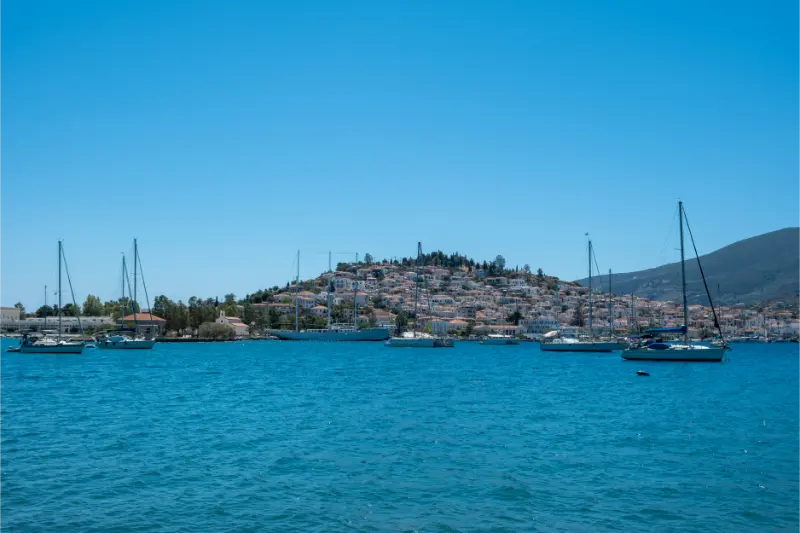
Poros Without a Car is the kind of Poros experience that rewards practical planning more than a long checklist. The island is compact, green and closely connected to the Peloponnese, so you can combine town life, swimming and history without spending hours in transit. The challenge is deciding what belongs in the same day and what deserves its own slower visit.
I would approach this as a guide for solo travellers, couples, short-break visitors and anyone who prefers not to rent a vehicle. The most useful base is usually Poros Town for maximum transport flexibility; Askeli for a beach-first stay with town access. If you have extra time, pair the plan with town days, west-coast beach days and one prearranged taxi excursion to the Temple of Poseidon. The details below focus on how the place actually fits into a holiday rather than simply listing sights.
Quick planning summary
| Question | Practical answer |
|---|---|
| Best for | solo travellers, couples, short-break visitors and anyone who prefers not to rent a vehicle |
| Ideal pace | three to five nights is easy without a car if you choose the right base and group sights by area |
| Best base | Poros Town for maximum transport flexibility; Askeli for a beach-first stay with town access |
| Pair it with | town days, west-coast beach days and one prearranged taxi excursion to the Temple of Poseidon |
Why Poros is one of the easier Greek islands without a car
Poros is compact, the main town is walkable and the official municipal tourism site lists bus, taxi, sea transportation and the ferry connection to Galatas among the island’s ways to get around. You do not need a rental car to enjoy the harbour, several popular beaches or a relaxed short break. The main limitation is reaching inland and northern sights on your own schedule.
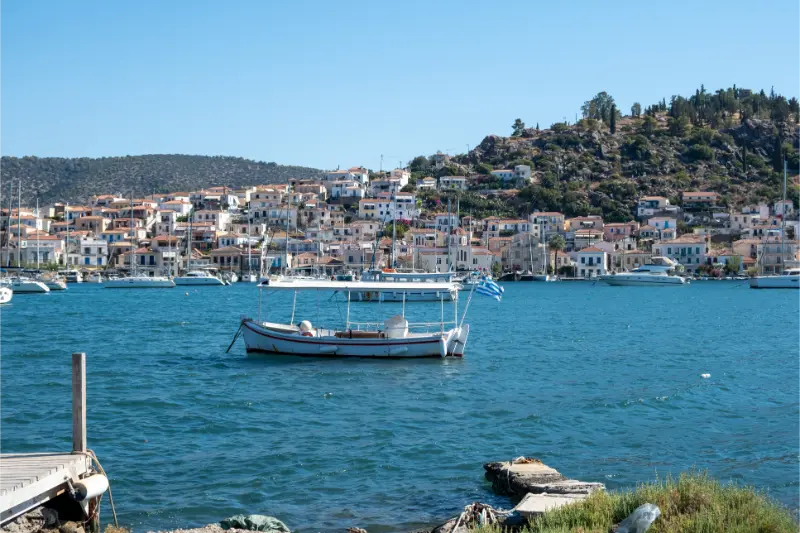
That makes base choice more important than transport ambition. Stay where your evenings and most-used services are within walking distance, then pay for one or two taxi rides when they unlock something genuinely different. This is usually cheaper and less stressful than renting a vehicle you barely use.
Walking in Poros Town
Within Poros Town, walking is the default. The waterfront, Koryzi Square, restaurants, shops and clock-tower lanes are close together, though the upper streets are steep. Comfortable shoes matter more than distance. If you have mobility limitations, keep accommodation near harbour level and ask specifically about steps between the port and the entrance.

The town is pleasant for evening walks because you can move between dinner, dessert and the harbour without checking a timetable. This freedom is the strongest reason to choose Poros Town over a remote beach property when travelling car-free.
Using buses for beaches
Seasonal bus routes commonly serve popular beach areas, but frequencies change. The official Poros tourism website maintains transport information and should be checked close to your dates. Askeli is generally one of the easiest beach areas to reach, while west-coast beaches may require more attention to the current schedule and final return.
Do not build a day around a screenshot from a previous year. Photograph the current timetable when you arrive and note where the return stop actually is. On quieter dates, a taxi one way and bus back can be a sensible compromise.
Water taxis and the Galatas crossing
The narrow channel between Poros and Galatas creates transport options that feel unusual for an island holiday. Small boats and water taxis are part of local movement, and the mainland crossing can take only minutes. This gives car-free travellers access to Galatas and, with onward transport, Lemonodasos or mainland sights.
For late-night or early-morning travel, confirm operation rather than assuming a boat will be waiting. If you have a fixed mainland taxi or bus connection, leave a buffer for the crossing. Short distance does not eliminate the need for timing.
When taxis are worth the money
Use taxis for the Temple of Poseidon, a point-to-point transfer with luggage or a beach return after public transport becomes inconvenient. Instead of taking several short taxis every day, group inland sights into one planned loop. Ask the driver about pickup arrangements before being dropped at an isolated site.
Families and groups may find taxis surprisingly competitive compared with multiple bus tickets plus waiting. Solo travellers can save by using buses for predictable routes and reserving taxis for the one or two places public transport does not serve well.
Best bases without a car
Poros Town is the strongest all-round base because ferries, food, taxis and much of the evening atmosphere are on your doorstep. Askeli is the best alternative for travellers who want a proper beach close to their room but still expect to visit town regularly. Neorio can be attractive for couples who prioritise greenery and swimming, provided they are comfortable with seasonal transport or occasional taxis.
Monastiri and more isolated properties can be beautiful, but check restaurant access and nighttime transport before booking. A bargain room becomes less attractive if you need two taxis every evening simply to eat.
How much time should you allow?
For this plan, three to five nights is easy without a car if you choose the right base and group sights by area. Poros is compact enough to encourage overplanning, but short distances do not mean every stop belongs in the same day. Travel time, waiting for a bus or taxi, swimming, changing clothes and sitting down for a meal all use time that does not appear on a map.
A useful rule is one main area in the morning and one in the afternoon. If you are staying several nights, leave at least one unstructured half-day. Poros is at its best when you have time to choose a beach based on that day’s wind and to stay longer at a waterfront table when the atmosphere is good.
Transport and realistic day planning
The official Poros municipality tourism site lists buses, taxis, sea transportation and ferry boats to and from Galatas. Frequencies are seasonal, so I would not build a trip around an old timetable. Photograph the current schedule when you arrive, save one taxi contact and keep the final part of any ferry-departure day close to Poros Town.
If you rent a car or scooter, use it to reach places that are genuinely awkward by public transport rather than moving it for every meal. Parking can be more stressful than walking in the compact town. For isolated beaches or the Temple of Poseidon, agree on a return plan before a taxi drops you off.
Best time of year for this Poros experience
Late spring and September are especially attractive for travellers who want warm days, walking and swimming without the peak pressure of July and August. High summer brings the broadest beach services and liveliest evenings, but small coves fill faster and midday heat makes exposed archaeological or uphill walks less comfortable.
Poros also works outside the classic beach season because the town, mainland connection and cultural sights do not disappear when sunbeds do. In cooler months, verify ferry frequency, museum hours and seasonal restaurants before booking. The trip becomes more about walking, food and local atmosphere than swimming.
Food, water and the rhythm of the day
Build meals into the itinerary rather than treating them as gaps between attractions. Poros Town has the widest choice, while Askeli, Neorio and other beach areas have seasonal options. In summer, a long lunch during the hottest hours can be smarter than forcing another walk. Carry water even when you expect a beach bar to be open.
For seafood, ask about price by weight before ordering larger fish and compare a few menus. Lemon is part of the area’s identity because of the Lemon Forest opposite the island, but the best meals are often simple Greek dishes rather than elaborate themed menus. Leave room for seasonal fruit and a waterfront coffee.
Who will enjoy this most?
This plan is particularly good for solo travellers, couples, short-break visitors and anyone who prefers not to rent a vehicle. Couples benefit from the island’s short distances and evening waterfront, families can keep transfers brief, and solo travellers can base themselves in Poros Town without needing a vehicle. The main adjustment is pace: children and less-mobile travellers need fewer uphill walks and more certainty about return transport.
Travellers seeking intense nightlife or huge resort beaches may prefer another Greek island. Poros is strongest as an easy, green Saronic escape where town life, pine coves and mainland access sit close together. That compactness is a feature, not an invitation to schedule every hour.
Budget and booking strategy
Compare the total cost of location, not only the room price. A cheap property far from town can create repeated taxi costs, while a central room may remove most evening transport. The same logic applies to ferries: a faster service may cost more but create meaningful extra time on a short trip.
In July and August, book well-located accommodation and popular ferry departures earlier. For shoulder season, flexibility can save money, but verify that the beach services or water-sports operators you care about are running. Museum and archaeological opening patterns can also differ from summer schedules.
What to pack
- Shoes with grip for the clock-tower lanes, archaeological ground and uneven coastal paths.
- A refillable water bottle, hat and high-SPF sunscreen for summer.
- A light cover-up for Zoodochos Pigi Monastery and other religious sites.
- A small dry bag for water taxis, beach days and boat crossings.
- A downloaded ferry ticket and screenshots of current local transport information.
Keep the beach bag lighter than you think. Poros is easy when you can switch from town to bus or boat without carrying a full day’s luggage. Buy heavy water locally and keep valuables in a small bag you can take onto ferries and water taxis.
Common mistakes to avoid
- Trying to visit Poros Town, three beaches, the Temple of Poseidon and Lemonodasos in one day.
- Assuming a small cove will have unlimited shade or sunbeds in August.
- Using last year’s bus or ferry timetable without checking current service.
- Booking a hillside room without asking about stairs and luggage access.
- Walking long exposed road sections at midday simply because the island looks small on a map.
- Ignoring summer fire-risk restrictions in pine-covered areas.
More Poros guides
Continue planning with Poros Town Guide: Clock Tower, Waterfront, Museums, Food and Where to Stay; Askeli and Monastiri Poros Guide: Beaches, Monastery, Water Sports and Where to Stay; Love Bay and Russian Bay Poros Guide: Pine Coves, Naval History, Swimming and Sunset; Temple of Poseidon Poros Guide: Ancient Kalaureia, Demosthenes, Access and Visiting Tips; Lemon Forest and Galatas from Poros: Day Trip, Ferries, Citrus Groves and Practical Tips. For the island overview, also read the Poros Travel Guide.
Frequently asked questions
Do I need a car for this Poros trip?
No for most short stays. Poros Town, popular beaches and Galatas can be managed with walking, buses, taxis and boats. A rental vehicle is most useful for inland sights, flexible beach-hopping or mainland road trips.
How many nights should I spend on Poros?
Two nights is enough for a relaxed introduction; four or five nights lets you add several beaches, the Temple of Poseidon and a mainland outing without rushing. A day trip is possible but should be deliberately simple.
Is Poros good in September?
Yes. September is often a strong balance for warm sea, active services and less intense peak-season pressure. Ferry and business schedules still need to be checked for the exact dates.
Can I combine Poros with another Saronic island?
Yes, but direct connections vary by date and vessel. Check real ferry schedules before designing an island-hopping route rather than assuming nearby islands connect every day.
What should I check on the morning of the trip?
Check ferry or local transport status, wind and heat, any fire-risk restrictions, and opening hours for the specific cultural site you plan to visit. Then keep one backup beach or town activity in mind.
Check official information before you go
For destination, transport, beaches and municipal visitor information, use the official Poros Municipality tourism website. For broader destination context and beach descriptions, see Visit Greece: Poros. Opening hours, ferry services and local transport can change, so verify the specific service you need close to travel.
Final planning advice
Poros works best when you use its compact size to reduce stress rather than increase the number of stops. Pick one cultural anchor, one beach or neighbourhood, and a good meal. If the wind, heat or ferry timing changes, the island gives you enough alternatives to adjust without losing the day.
The biggest advantage is choice without huge distances: a waterfront morning can become a pine-cove afternoon, and a beach day can end with a clock-tower sunset. Leave a little empty time in the schedule. On Poros, that is often when the trip begins to feel like a holiday rather than an itinerary.
Leave a Reply