
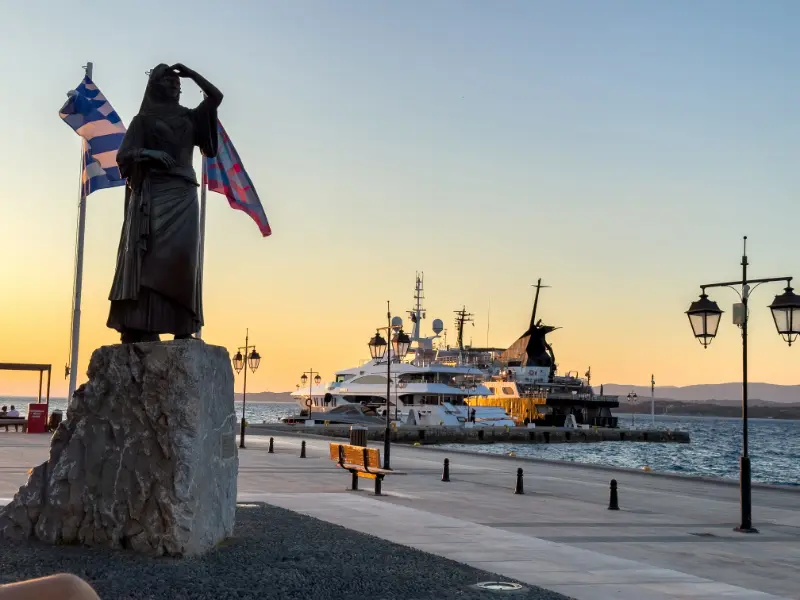
Spetses is one of the easiest Greek islands to visit without a rental car because the restriction on private vehicles is part of normal island life rather than a niche tourist choice. The centre is walkable, bicycles are widely available, buses serve key beach routes, sea taxis connect the coast and horse carriages remain part of the town’s transport mix. The result is liberating once you plan around distance and heat instead of around parking.
The phrase “car-free island” can be misunderstood. Service vehicles, taxis and permitted traffic still exist, and roads are not pedestrian-only parks. The practical advantage is that visitors do not need to hire a car. Your main decisions are where to stay, how much walking you enjoy, and which beach or activity requires a boat or bus.
Quick planning overview
| Mode | Best use | Main limitation |
|---|---|---|
| Walking | Dapia, Kounoupitsa, Old Harbour, town beaches | Heat and luggage |
| Bicycle/e-bike | Perimeter road and flexible beach access | Hills, heat, rider confidence |
| Bus | Selected beaches | Seasonal timetable |
| Beach boat | Agia Paraskevi, Agioi Anargyroi, Zogeria | Fixed returns and weather |
| Sea taxi | Direct beach transfers | Higher cost |
| Horse carriage | Town transfer and experience | Limited routes/capacity |
| Authorised taxi | Luggage and longer road transfers | Availability at busy times |
Walking: the default mode
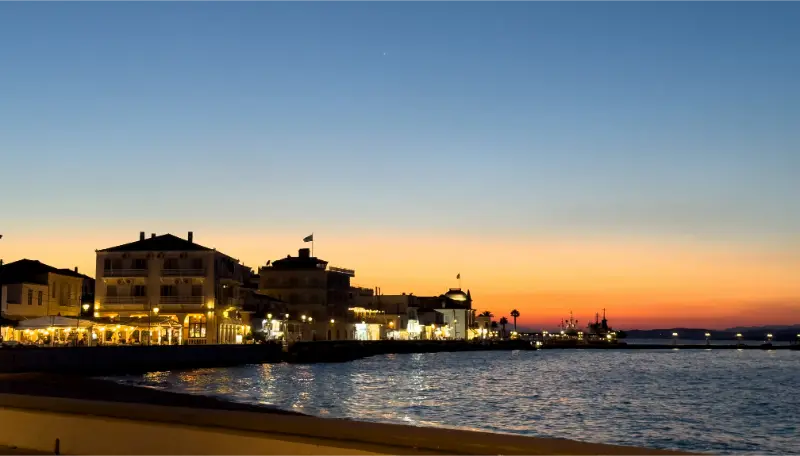
Within Spetses Town, walking is usually faster and more enjoyable than waiting for any vehicle. Dapia to Kounoupitsa and Dapia to the Old Harbour are classic waterfront routes with enough interest that they feel like sightseeing rather than commuting.
The limitation is summer heat. A route that is delightful at 19:00 can feel exhausting at 14:00. Use shade, water and realistic pacing, especially with young children or older travellers.
Bicycles and e-bikes
The municipality promotes cycling and notes that the perimeter road around the island is roughly 25 kilometres. Standard bicycles work for fit riders comfortable with hills, while e-bikes can make the route accessible to more people. Rental shops are concentrated around town.
Wear a helmet, test brakes before leaving and ask the rental shop about the route. Do not treat the absence of normal car traffic as an excuse to ride casually: roads can still carry buses, scooters, taxis, service vehicles and other cyclists.
Beach buses
The municipal beach information lists a bus route serving Agios Mamas, Agia Paraskevi, Agioi Anargyroi and Xilokeriza. This is the backbone of a low-cost no-car beach day on the southern and western side of the island.
Frequency changes seasonally, so do not copy a timetable from an old blog. Check the current schedule locally and note the last return before going down to the beach.
Beach boats from Dapia
Seasonal boats connect Dapia with beaches including Agia Paraskevi, Agioi Anargyroi and Zogeria. The boat itself becomes part of the day and solves the problem of reaching bays that are less convenient by road.
The trade-off is schedule dependence. Ask about weather, exact pickup point and final return. If you dislike fixed times, a sea taxi may be a better fit despite the higher price.
Sea taxis
Sea taxis provide direct coastal transport from Dapia and can be especially useful for groups, late returns or beaches poorly served by buses. They also allow you to build a point-to-point day instead of returning to the same road stop.
Agree on the fare and pickup plan before departure. For remote coves, confirm whether mobile coverage is reliable enough to call for the return or arrange a specific time in advance.
Horse carriages
Horse-drawn carriages are one of Spetses’ signature forms of transport and operate from central stands. They can be useful for a scenic transfer as well as the experience itself, particularly between Dapia and parts of the waterfront.
Treat them as a limited transport option rather than the answer to every journey. Availability, route and cost vary, and some travellers may prefer walking or taxis for practical reasons.
Authorised taxis and luggage
Authorised taxis are important because hotel access and luggage are the moments when a car-free trip can become awkward. If your property is uphill, far from Dapia or near the Old Harbour, ask the accommodation to explain the transfer before arrival.
Taxi demand spikes around ferry arrivals and events. Pre-arranging a pickup is especially sensible for families, older travellers and anyone with large luggage.
Best bases without a car
Dapia is the easiest because every transport mode converges there. Kounoupitsa is still walkable and quieter. The Old Harbour is atmospheric but less convenient for luggage and some beach departures. Remote beach properties can be lovely but reduce spontaneous access to town.
For a first no-car visit, location is more valuable than extra room size. Choose the base that removes one daily transport problem rather than the property that looks most isolated in photographs.
A no-car three-day plan
Day one: walk Dapia, museums and the Old Harbour. Day two: use a bus or beach boat to a destination beach. Day three: rent bicycles for part of the perimeter road or choose a marked walking route, then use a sea taxi for a final swim if needed.
This structure uses a different transport mode each day and prevents the trip from feeling repetitive. It also gives you alternatives if wind disrupts boats.
How many days do you need?
Two nights are enough to understand the shape of Spetses Town and enjoy one beach, but three or four nights are much more satisfying. A longer stay allows a museum morning, a slow Old Harbour evening, a remote-beach day and either a cycling or walking day without forcing every activity into the hottest hours.
If you are combining Spetses with Hydra or Poros, avoid changing islands every night. Three nights on one island usually feels richer than three separate one-night stops because ferry days eat into usable time and the best atmosphere on the Saronic islands often appears before day-trippers arrive or after they leave.

When to visit
May, June, September and early October offer the best balance for travellers who want beaches and walking in the same trip. July and August bring the strongest holiday atmosphere, more beach services and the highest demand, while midday heat makes cycling and inland walking less comfortable. Spring can be excellent for hiking and flowers, and the island remains attractive outside peak summer for history, architecture and quiet waterfront walks.
September has an additional cultural dimension because of Armata, the annual commemoration of the 1822 naval battle. In 2026 the municipality scheduled the wider programme from 28 August to 13 September, with the main reenactment on 12 September. If you travel for Armata, book transport and accommodation early because this is not a normal quiet September weekend.
What to pack
Comfortable walking shoes matter more here than on a resort holiday because even a relaxed day involves waterfront promenades, lanes and museum visits. Add reef-safe sun protection, a refillable water bottle, a hat, swim shoes if you dislike pebbles and a light layer for breezy ferry decks or late evenings.
Cyclists should bring or rent a helmet and carry more water than they expect to need. Families benefit from a compact beach shade for unorganised coves, while anyone staying in an old mansion or lane should pack luggage that is easy to carry over steps and uneven surfaces.
Practical tips that make the trip easier
- Ask your accommodation exactly how luggage reaches the property before booking, not after you arrive at Dapia.
- Download an offline map because phone signal is useful but should not be the only way to navigate inland routes.
- Check the last bus or beach-boat return before leaving town and photograph the timetable if it is posted locally.
- For e-bike rentals, ask about battery range, charger policy and what to do if the bike develops a problem away from town.
- Do not cycle after drinking; use a taxi, carriage or walk instead.
- Carry water on every longer walk or ride because roadside services are uneven away from town.
- Sea taxis are often best booked with a clear return arrangement rather than “call us later” at a remote cove.
- During Armata and major sporting events, normal waterfront routes and transport availability can change significantly.
- If someone in the group has reduced mobility, prioritise Dapia and verify step-free access at the hotel rather than assuming the whole waterfront is accessible.
- Use transport to reduce heat exposure: walk early and late, use a bus or boat for the longest midday movement.
Continue planning your Spetses trip
Use these guides as one connected cluster rather than separate checklists: Spetses Travel Guide; Dapia and Spetses Town Guide; Old Harbour Spetses Guide; Bouboulina and Spetses Museums Guide; Best Beaches in Spetses; Spetses Without a Car; Spetses Cycling and Hiking Guide; Spetses with Kids; Where to Stay in Spetses; Spetses 4-Day Itinerary. For nearby alternatives, compare Hydra, Poros and Aegina.
Useful official sources before you go
For time-sensitive details I cross-check the Municipality of Spetses visitor portal, the official transport page, the official beach guide and Visit Greece. Ferry schedules, beach boats, bus frequencies, museum access and event programmes can change, so verify the details that affect a specific day shortly before travelling.
Frequently asked questions
Do I need a car in Spetses?
No. Visitors generally do not need or use private cars. Walking, bicycles, buses, boats, sea taxis, carriages and authorised taxis cover the main travel needs.
Can I reach the best beaches without a car?
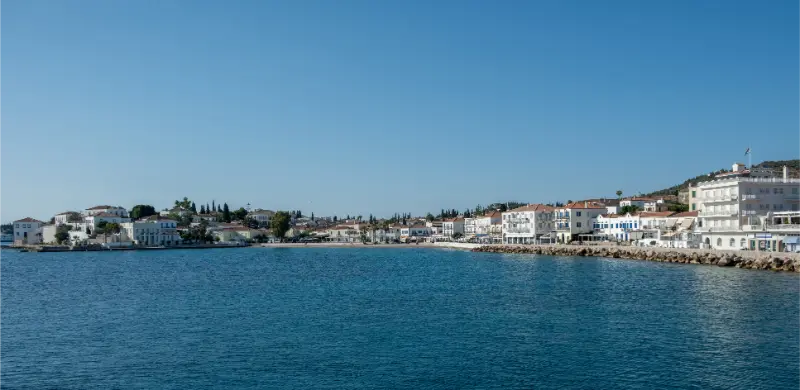
Yes. Several destination beaches are served by bus, seasonal boat or sea taxi, while town beaches are walkable.
Is cycling easy?
Town routes are straightforward, but the 25-kilometre island loop has moderate hills and summer heat can make it demanding.
Where should I stay without a car?
Dapia is the simplest first-time base because ferry arrivals, boats, taxis and central services are close together.
Are horse carriages practical or just tourist attractions?
They can be both. They are part of the island’s transport tradition and can be useful for selected waterfront journeys, although they do not replace buses or taxis for every route.
Final planning advice
Spetses without a car is not a compromise; it is the normal way to experience the island. Choose a sensible base, learn the bus and boat options on arrival, and use walking for the parts of town where moving slowly is actually the attraction.
Leave a Reply