

You can visit Corfu without renting a car, but the experience is much better if you choose your base around the bus network instead of booking an isolated villa and hoping transport will solve itself. Corfu Town is the easiest hub because city and intercity routes converge there, while a few resort areas work well if your priority is beach time rather than island-wide sightseeing.
There are two main bus systems to understand. Corfu City Bus handles the urban area and nearby destinations such as Kanoni, Benitses, Dassia/Ipsos, Achilleion and Pelekas. Green Buses operate the intercity network to places including Kassiopi, Sidari, Paleokastritsa and other villages and beaches. Once you understand that division, a car-free itinerary becomes much simpler.
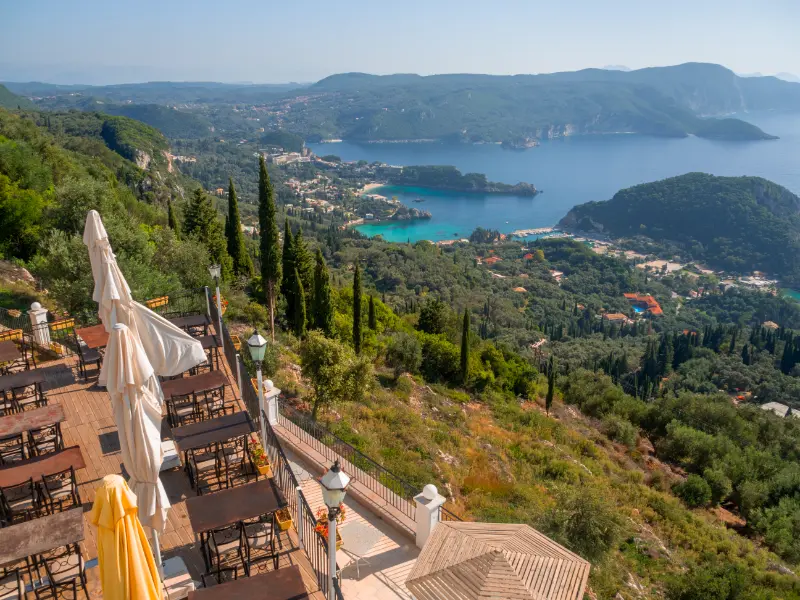
This guide focuses on transport strategy rather than every timetable. For destination details, open the main Corfu guide and the individual guides linked below.
Best car-free bases
| Base | Why it works |
|---|---|
| Corfu Town | Best bus connections, airport/port access, culture and evening choice |
| Dassia/Ipsos | Frequent urban corridor plus beaches |
| Benitses | South-east coast with city-bus access |
| Paleokastritsa | Good if beach scenery matters more than crossing the whole island |
Understand the two bus networks first
Corfu City Bus publishes routes including 2A to Kanoni, 6 to Benitses, 7 to Dassia/Ipsos, 10 to Achilleion, 11 to Pelekas and 15 linking airport, bus station, town and port. Check the official City Bus routes because seasonal changes and temporary detours are common.
Green Buses handle longer island routes. Their 2026 network includes A4 to Kassiopi and A6 to Afionas/Arillas, as well as services to Sidari, Roda/Acharavi, Paleokastritsa and southern destinations. Use Green Buses for the current timetable rather than relying on a screenshot from an older blog.
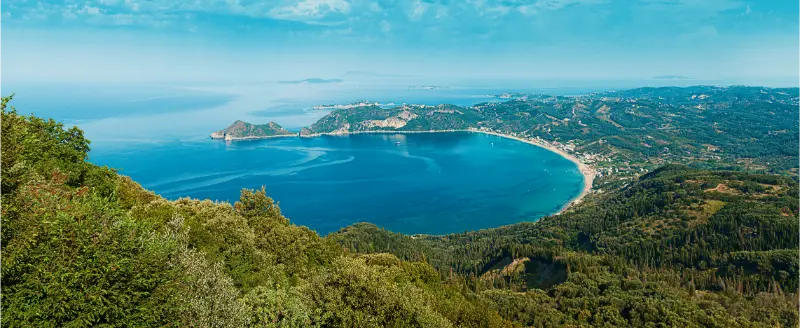
Why Corfu Town is the easiest base
If you want culture plus several day trips, Corfu Town is hard to beat. You can walk the Old Town, reach Kanoni easily, connect to intercity buses and use taxis only for gaps. The airport and ferry port are also close enough that arrival and departure logistics are simpler.
The trade-off is that you do not wake up on a resort beach. For many first-time visitors, that is a good exchange: beach days become deliberate excursions, while evenings give you far more dining and walking variety.
Best day trips by bus
Paleokastritsa is an obvious choice because the main bays, monastery area and boat trips are concentrated enough for a bus day. Kassiopi also works because the harbour, castle and coves are walkable after arrival; see my Kassiopi guide. Sidari is practical for Canal d’Amour, and Pelekas can be paired with a west-coast beach when schedules line up.
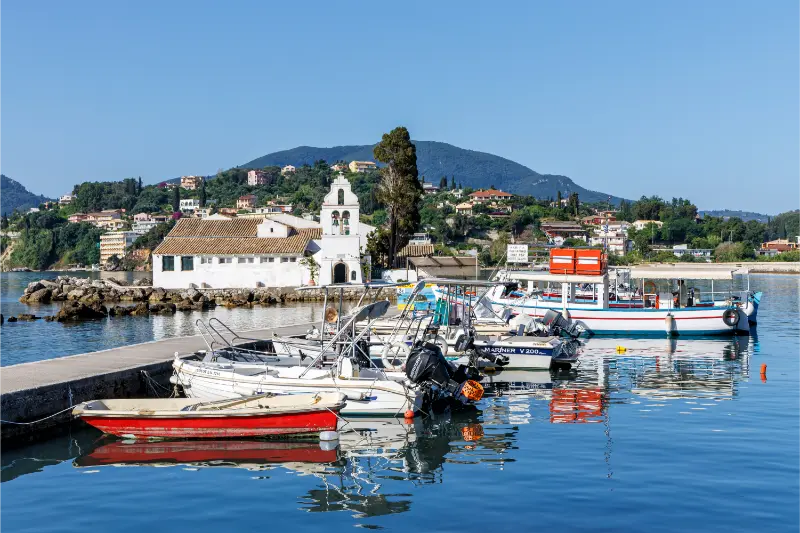
Build each day around the final return bus, not the first outbound service. Screenshot or write down the return options and arrive at the stop early, especially in peak season when traffic can affect running times.
When boats are more useful than buses
Boat excursions are ideal for coastline experiences that road transport cannot reproduce: caves around Paleokastritsa, north-east coastal bays, Paxos/Antipaxos day trips and local beach transfers where offered. They are not a substitute for a general island network, because weather can cancel departures.
Keep sea trips on flexible days. If wind cancels a boat, switch to a town, museum or bus-based beach day instead of losing the whole itinerary.
Taxis and private transfers: use them strategically
Taxis are most valuable for early flights, late returns, awkward hotel access and one-off cross-island gaps. They become expensive if you use them as a full replacement for a rental car every day. Ask for an estimated fare or use the official queue/booking channels rather than accepting an unclear arrangement.
A smart car-free trip often uses buses for routine days and one taxi for a route that would otherwise require several changes. That keeps the budget predictable.
Places that are harder without a car
Old Perithia, Mount Pantokrator, remote south-west beaches and some inland villages require more planning. You can still reach them with a combination of bus, taxi or organised tour, but spontaneous hopping is harder. The Old Perithia guide and Pantokrator guide explain why these are better treated as dedicated days.
If those remote places are your main reason for travelling, consider renting a car for only two or three days rather than the whole holiday. Partial rental is often the best compromise.
A 5-day car-free Corfu outline
This outline works because every day has a single transport logic. Do not schedule a Green Bus north-coast trip and an unrelated south-coast attraction for the same afternoon. Car-free travel is easiest when you accept that geography matters.
| Day | Plan |
|---|---|
| 1 | Corfu Old Town and fortresses |
| 2 | Paleokastritsa by Green Bus + local boat if sea is calm |
| 3 | Kanoni, Vlacherna and Mon Repos by City Bus |
| 4 | Kassiopi or Sidari by Green Bus |
| 5 | Pelekas/Glyfada, Benitses or flexible boat day |
Small habits that make public transport easier
- Stay within walking distance of a useful bus stop.
- Check Sunday and holiday schedules separately.
- Carry some cash even if cards are widely accepted.
- Save your hotel pin and bus-station location offline.
- Leave buffer time for airport or ferry connections.
- Do not plan the final international departure around a same-day remote bus return.
Airport and port logistics
The airport is close to Corfu Town, so a car-free trip starts easily. City Bus line 15 connects airport, the intercity bus station, town and port corridor. For an early flight, however, check whether the first service is early enough; a pre-booked taxi may be worth the cost for peace of mind.
At the ferry port, allow walking time from the bus stop to the correct terminal or gate. If you are connecting to an international ferry, arrive with more buffer than you would for a local bus.
How to handle luggage on a split stay
A two-base trip is still possible without a car if both hotels are near useful bus routes. Travel between bases in the late morning rather than during the busiest commuter or beach-return windows, and keep luggage compact enough that you can manage it yourself.
If a second hotel sits up a steep road, use a taxi for the final kilometre. Saving money on every transfer is less important than arriving safely with your bags.
One more practical planning note
When planning Corfu Without a Car, keep the day deliberately flexible. Corfu rewards travellers who respond to wind, heat and traffic rather than following a fixed checklist. Confirm opening or transport information on the morning itself, carry water, save important locations offline and avoid adding a distant attraction just because there is an empty hour on paper. The island is most enjoyable when each day has one clear geographical focus, enough time for a meal and enough margin to change the plan if a beach is rough, a road is congested or a cultural site has temporary access restrictions.
I also recommend building a deliberate pause into the middle of the day. In peak summer, a shaded lunch, swim or hotel break is not wasted time; it protects the part of the afternoon when you are more likely to enjoy a village, viewpoint or coastal walk. If you are driving, refill water before leaving a larger resort area and keep fuel comfortably above empty, because small mountain and coastal roads do not always have services exactly when you need them.
Finally, check the return route before sunset. Corfu roads can be slower after dark, and bus frequencies often thin out in the evening. If a place is especially beautiful late in the day, consider staying nearby for dinner rather than immediately crossing the island. That simple decision often turns a rushed sightseeing day into a much more memorable travel experience.
Timing, comfort and local conditions
Corfu changes character through the day, so timing deserves as much attention as the list of places. Early morning is best for exposed walks, castles and viewpoints; the middle of the day is better for swimming, lunch and shade; late afternoon works well for villages and west-facing scenery. This rhythm is particularly useful in July and August, but it also makes shoulder-season days feel less rushed because you can spend longer where the conditions are best.
If you are using a rental car, keep the route geographically compact and avoid relying on the fastest navigation estimate. Village traffic, scooters, narrow bends and summer parking can add time that does not appear on the map. If you are using buses, verify the current return service before leaving the main town and save the timetable offline in case mobile data becomes unreliable at a remote stop.
A good Corfu day also needs a backup. Strong wind can change a beach, cloud can hide a mountain view and restoration work can affect access to a monument. Choose an alternative in the same part of the island so a change of plan costs twenty minutes rather than two hours. This is one of the easiest ways to travel more comfortably and still see a lot.
Frequently asked questions
Can I see Corfu properly without a car?
Yes, especially if you stay in Corfu Town and focus on destinations connected by City Bus and Green Buses.
Which bus goes to the airport?
Corfu City Bus line 15 links the airport with the bus station, town and port corridor.
Can I reach Paleokastritsa by bus?
Yes. It is served by the intercity Green Bus network; check the current timetable.
Is Kassiopi possible as a bus day trip?
Yes. Green Buses list the A4 Corfu–Kassiopi route and the village is walkable once you arrive.
Should I rent a car for just part of the trip?
That is often ideal if you want remote villages or mountain routes but prefer not to drive every day.
Final thoughts
Corfu without a car is realistic when you build the holiday around transport instead of fighting it. Base yourself near useful routes, dedicate each day to one corridor and use boats or taxis as targeted tools. You will see less road and often enjoy the places you choose more slowly.