

Corfu can be an excellent family island because you can combine beaches, short cultural stops, boat trips and villages without needing a new hotel every night. The key is to reduce transfers. A family holiday becomes much easier when you choose one or two bases, build days around the heat and accept that the most photogenic beach is not always the best beach for small children.
Corfu’s coast is varied. Some beaches are broad and sandy, others are pebble coves with quick drop-offs, and scenic places such as Porto Timoni require a real hike. Match the beach to the age and confidence of your children. The island has enough choice that you never need to force a difficult access route just because it appears on every social-media list.
Start with the best beaches in Corfu guide and then use this article to decide how to structure the days around naps, shade, food and transport.
Family choices at a glance
| Need | Good starting point |
|---|---|
| Sandy organised beach | Glyfada or Agios Gordios, depending on sea conditions |
| Easy town culture | Old Fortress/Spianada area and short Old Town walks |
| Short scenic outing | Kanoni and Vlacherna |
| Boat day | Paleokastritsa or a local coastal cruise in calm weather |
| Car-free base | Corfu Town or a well-connected east-coast resort |
Choosing the right family base
Corfu Town is best if you want restaurants, walks and public transport, but it is not a classic beach-resort base. Dassia, Ipsos and parts of the east coast offer easier bus connections and beach access. Glyfada or west-coast resorts can feel more holiday-focused but make cultural trips longer.
Before booking, check the actual walking route to the beach, not just the straight-line distance. Hills, steps and narrow roads matter with a stroller. Also verify whether a hotel pool has fencing and what the room layout is like; those details are more important than an extra half-star in the review score.
Best types of beaches for children
Broad sandy beaches are usually easiest for sand play and long stays, but you still need to judge waves. Glyfada and Agios Gordios are useful options when the west is calm. On the east, more sheltered conditions can be attractive on windy days, and organised beaches make food and toilets simpler.
Pebble coves around Kassiopi or Barbati can be beautiful for older children who swim confidently. Bring water shoes and do not assume a clear entry stays shallow. Choose based on the actual sea that morning.
Cultural stops that do not require a museum marathon
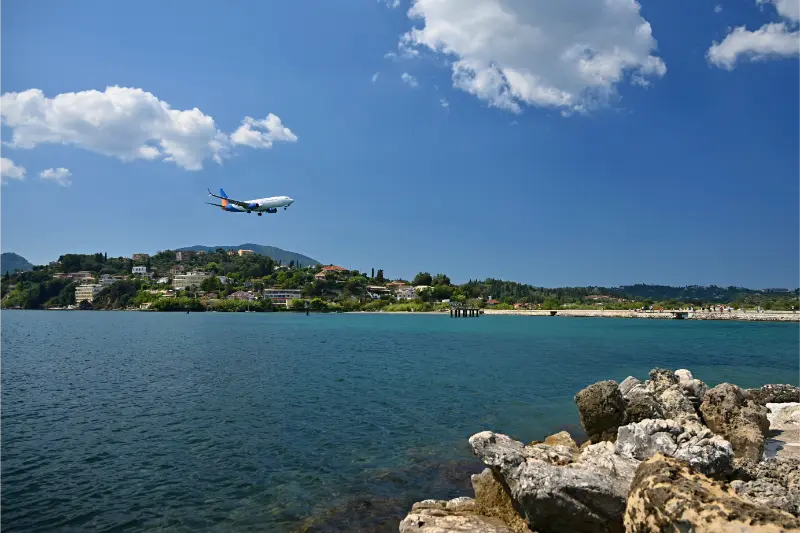
Kanoni, Vlacherna and Mon Repos work well because the day combines views, outdoor walking and short pieces of history. Use the Kanoni and Mon Repos guide for a half-day route. In Corfu Town, break the Old Town into short loops rather than expecting children to enjoy three consecutive hours of churches and museums.
Fortresses can appeal to school-age children because the space feels exploratory, but watch edges, stairs and heat. Pack water and use shaded squares for frequent pauses.
Boat trips with children
Choose short or half-day boat trips before committing to a full-day cruise. Ask about shade, toilets, life jackets, swimming stops and the return time. A smaller child who loves the first hour may still find six hours on a boat exhausting.
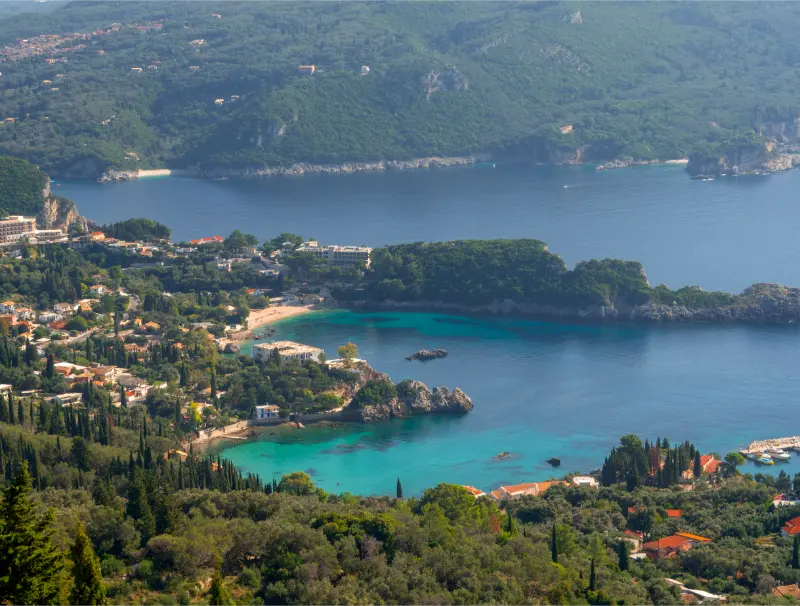
Sea conditions matter more than the brochure. If wind is strong, move the boat trip to another day. Paleokastritsa is useful because you can still have a good beach day if the boat portion is cancelled.
Porto Timoni, Pantokrator and other harder family days
Porto Timoni is not a stroller beach and the return climb can be tough in heat. Active older children may enjoy it, but read the Porto Timoni guide before deciding. Mount Pantokrator is easier as a scenic drive than as a midday family hike.
Old Perithia can be a good village lunch stop, but combine it with only one other major activity. Children often enjoy travel more when there is time to settle into a place rather than repeatedly getting in and out of the car.
Heat, meals and the family rhythm
Use mornings for castles, hikes or exposed viewpoints. Let the hottest part of the day be beach shade, pool time, lunch or a hotel break. Return outside for a village walk or town promenade in the early evening. This rhythm sounds slower but usually lets families do more over the week because nobody is exhausted by day three.
Keep emergency snacks and water in the car, but never leave food melting in direct heat. A small insulated bottle and dry snacks solve many late-afternoon problems.
A flexible 5-day family plan
If you have seven days, add one village/mountain day and one completely unstructured beach or pool day. Family itineraries need recovery space more than adult checklist trips.
| Day | Low-stress plan |
|---|---|
| 1 | Corfu Town in short loops + early dinner |
| 2 | Easy sandy beach day |
| 3 | Paleokastritsa beach + optional short boat trip |
| 4 | Kanoni, Mon Repos and pool/rest afternoon |
| 5 | North or west coast based on weather; keep it flexible |
Safety basics
- Use appropriate child seats in rental cars and confirm availability before arrival.
- Never leave children unattended near pools or the sea.
- Use hats, high-SPF sunscreen and shade during peak UV hours.
- Carry water on every walk, even short castle climbs.
- Check boat life-jacket arrangements before departure.
- Choose beaches by daily conditions, not by a fixed ranking.
Eating out with children
Greek dining times can be flexible, but children may not want to wait until late evening. Many tavernas are accustomed to families and can serve simple grilled foods, pasta, potatoes, salads and yoghurt alongside local dishes. Keep one familiar snack with you so a delayed table does not become a crisis.
Encourage children to try small portions of local food rather than ordering a large unfamiliar dish. Corfu’s kumquat products, ginger beer and baked sweets can be fun introductions, though check alcohol content in liqueurs and allergies in sweets.
Rainy-day and windy-day alternatives
Corfu is green because it receives more rain than many Aegean islands. If a beach day collapses, use museums, the Old Fortress, cafés, a short town walk between showers or a drive to a village restaurant. Strong wind can also make one coast rough while another is usable.
Keep one indoor or low-exposure idea saved for every two or three beach days. Families cope much better with weather changes when the backup feels like a real activity rather than punishment.
One more practical planning note
When planning Corfu with Kids, keep the day deliberately flexible. Corfu rewards travellers who respond to wind, heat and traffic rather than following a fixed checklist. Confirm opening or transport information on the morning itself, carry water, save important locations offline and avoid adding a distant attraction just because there is an empty hour on paper. The island is most enjoyable when each day has one clear geographical focus, enough time for a meal and enough margin to change the plan if a beach is rough, a road is congested or a cultural site has temporary access restrictions.
I also recommend building a deliberate pause into the middle of the day. In peak summer, a shaded lunch, swim or hotel break is not wasted time; it protects the part of the afternoon when you are more likely to enjoy a village, viewpoint or coastal walk. If you are driving, refill water before leaving a larger resort area and keep fuel comfortably above empty, because small mountain and coastal roads do not always have services exactly when you need them.
Finally, check the return route before sunset. Corfu roads can be slower after dark, and bus frequencies often thin out in the evening. If a place is especially beautiful late in the day, consider staying nearby for dinner rather than immediately crossing the island. That simple decision often turns a rushed sightseeing day into a much more memorable travel experience.
Timing, comfort and local conditions
Corfu changes character through the day, so timing deserves as much attention as the list of places. Early morning is best for exposed walks, castles and viewpoints; the middle of the day is better for swimming, lunch and shade; late afternoon works well for villages and west-facing scenery. This rhythm is particularly useful in July and August, but it also makes shoulder-season days feel less rushed because you can spend longer where the conditions are best.
If you are using a rental car, keep the route geographically compact and avoid relying on the fastest navigation estimate. Village traffic, scooters, narrow bends and summer parking can add time that does not appear on the map. If you are using buses, verify the current return service before leaving the main town and save the timetable offline in case mobile data becomes unreliable at a remote stop.
A good Corfu day also needs a backup. Strong wind can change a beach, cloud can hide a mountain view and restoration work can affect access to a monument. Choose an alternative in the same part of the island so a change of plan costs twenty minutes rather than two hours. This is one of the easiest ways to travel more comfortably and still see a lot.

Frequently asked questions
Is Corfu good for toddlers?
Yes, if you choose an easy-access base and sandy or organised beaches and avoid overly ambitious day trips.
Which area is easiest without a car?
Corfu Town has the best overall transport connections; some east-coast resorts also work well on city-bus routes.
Is Porto Timoni suitable for young children?
It is a rough, steep trail and not stroller-friendly. Older active children may manage with supervision and proper shoes.
Are boat trips suitable for families?
Often yes, but choose a duration that matches the children and verify shade, life jackets and sea conditions.
How many bases should a family use?
One base is easiest for a week; two bases can work for longer trips if they meaningfully reduce driving.
Final thoughts
Corfu with children works best when you use the island’s variety to reduce pressure, not increase it. Pick an easy base, choose beaches by conditions, keep cultural stops short and interesting, and protect the middle of the day from heat. The result is a holiday the adults can enjoy too.