

Ios can work much better for families than its nightlife image suggests. The trick is to build the holiday around the island you experience in the morning and afternoon: sandy beaches, short distances, Chora’s lanes, simple museums and relaxed meals. You do not need to place children anywhere near the late-night bar scene to enjoy the island.
For most families I would choose either Mylopotas for direct beach access or a quiet edge of Chora for transport and restaurants. The Where to Stay in Ios guide compares those bases, while this article focuses on daily family logistics.

Ios with kids at a glance
| Easiest beach | Mylopotas |
| Best remote family day | Manganari in calm conditions |
| Easy culture stop | Archaeological Museum in Chora |
| Main challenge | Heat, hills and late-night noise in central Chora |
| Best strategy | One main activity per day plus swimming |
Mylopotas for families
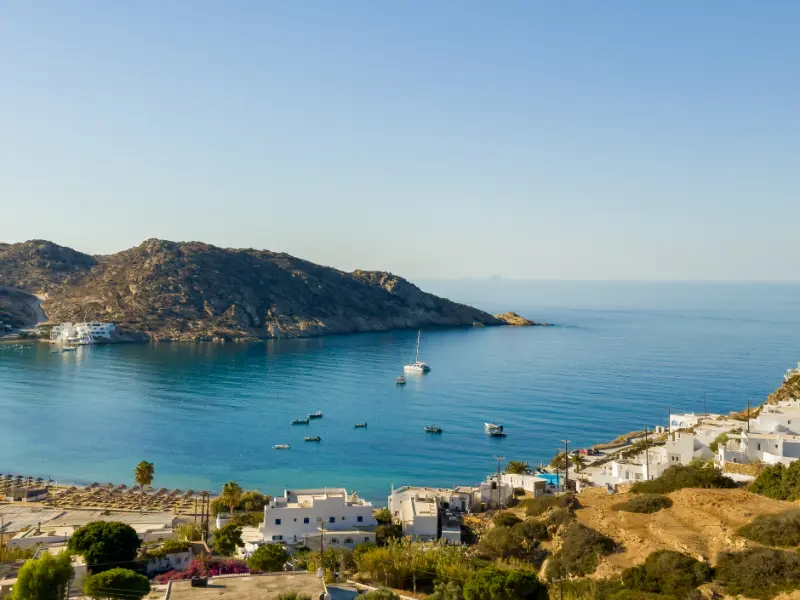
Mylopotas is the easiest family beach because food, shade options and transport are concentrated around one long bay. Arrive early for cooler sand and a calmer start. Walk the beach before choosing a spot so you can distance yourself from louder venues if that suits your family.
Water conditions change, and no beach should be labelled permanently “safe for children.” Check wind, waves and local flags. My Mylopotas guide covers the beach in more detail.
Manganari as an adventure day
Manganari can be a highlight for older children because the journey makes it feel like an excursion. The sandy bays are appealing when the sea is calm, but parents need to plan transport, food, shade and the return before leaving the main visitor areas.
With toddlers, the convenience of Mylopotas may outweigh the beauty of a longer south-coast outing. With school-age children who travel well, Manganari can be the memorable “big beach day” of the trip.
Chora before nightlife begins
Chora is lovely for families in the morning and early evening. Children can explore narrow lanes, windmills and church viewpoints while adults enjoy the architecture. Go before the late-night crowds and choose a restaurant outside the loudest bar streets.
The Chora guide includes the museums and sunset areas. Remember that stairs are a real issue with strollers; a baby carrier may be more practical in the old lanes.
Museums and culture on a hot or windy day
The Archaeological Museum is small enough to work with children when you keep expectations modest. Pick two or three objects and connect them to the Skarkos settlement instead of trying to read every label. In 2026 the Ministry lists a €5 general ticket and free-entry categories under national rules; check the current details for children before visiting.
The Gaitis–Simossi Museum adds contemporary art and is open seasonally. Its 2026 rules list free admission for children up to 12, making it an easy cultural stop for families. Temporary exhibitions change, so check what is on before promising a specific experience.
Easy walks
The windmills and Odysseas Elytis Theatre area give you views without committing to a long hike. The Agia Irini–Valmas route described by Visit Greece can suit active families with older children when temperatures are comfortable. Skarkos can also be combined with a short walk and a history story.
For longer routes, use Ios Hiking Guide. In July and August, do not schedule exposed walks around midday simply because the distance looks short.
Transport with children
A car is not mandatory if you stay near Chora or Mylopotas. Seasonal buses handle the core corridor, and taxis can solve awkward journeys. Families should prioritise accommodation near a practical stop rather than saving a small amount on a room that requires a steep daily walk.
The Ios Without a Car guide explains where public transport is strongest. If you rent a vehicle, request the correct child seat in advance and verify installation rather than assuming one will be available on arrival.
Food with children
Greek island eating is family-friendly when you use shared dishes. Bread, grilled meat, potatoes, pasta, simple fish, tomato, cucumber, yogurt and fruit make it easy to build a meal for different preferences. Dinner starts late in Greece, but you do not have to follow the latest local rhythm with tired children.
Carry snacks and water on remote beach days. Waiting for a taverna to open or discovering that a seasonal kitchen is closed is a minor inconvenience for adults and a major problem with hungry children.
Heat and sun strategy
Plan the most active part of the day before 11:00, then move toward shade, lunch or swimming. The Cycladic wind can mask heat, so keep offering water. Use high-SPF sunscreen, hats and UV clothing for children who spend hours in the sea.
In a heatwave, change the plan. A museum, long lunch and late-afternoon beach is better than forcing an itinerary because you prepaid for nothing. Family travel improves when the schedule remains flexible.
A four-day family plan
- Day 1 – settle in, short Chora walk, early dinner
- Day 2 – Mylopotas beach with a long midday break
- Day 3 – Manganari if transport and weather are good, otherwise another easy beach
- Day 4 – Archaeological Museum, Skarkos and sunset before an early dinner
Frequently asked questions
Is Ios too much of a party island for families?
No, provided you choose accommodation away from the loudest nightlife streets. Most family activities happen at completely different times of day.
Which beach is best with young children?
Mylopotas is the easiest logistically. Choose the day’s calmest section and supervise swimming based on current conditions.
Do families need a car?
Not for a short stay based in Chora or Mylopotas. A vehicle becomes useful if you want remote beaches and the north of the island.
How many nights should a family stay?
Four to six nights works well because it allows repeat beach days and avoids rushing. A two-night stop is possible but offers little margin for wind or tired children.
Continue planning
Use Best Beaches in Ios, Ios Without a Car and the main Ios travel guide to build a family itinerary around realistic travel days.
Planning details that make a real difference
Ios looks compact on a map, but the island is hilly and summer heat changes how long simple journeys feel. Group each day geographically instead of bouncing from the port to the north, back to Chora and then to the south. One beach area plus one cultural or evening area is usually enough. This reduces transport time and leaves room for swims, meals and the unexpected delays that are normal on an island.
In July and August, protect the middle of the day. Use early morning for walking, archaeology or village exploration, then move to the beach, lunch or shade. September often keeps warm sea temperatures while making active days easier, but some seasonal services gradually reduce frequency. May and early June are attractive for walking and quieter travel, although the sea may feel cooler and not every beach business will operate at peak-summer hours.
Wind should remain a flexible part of the plan. The Meltemi can affect beaches, small boats and comfort even on a cloudless day. Ask locally which coast is behaving best rather than forcing a beach because it was written into the itinerary. This is also why cultural options in Chora are valuable: a windy morning can become a museum-and-village morning without feeling wasted.
For money, carry a payment card plus some cash. Do not rely on a single ATM on the day of departure, and keep enough cash for a taxi if a card terminal fails. If you are travelling in peak season, reserve accommodation and important ferry connections early, but leave ordinary beach days flexible.
How I would fit this into a first Ios trip
On a first four- or five-night visit, I would give one full day to Mylopotas, one to Manganari or another remote coast, one morning to Chora and archaeology, and one flexible block to hiking, a boat trip or the north. Evenings naturally return to Chora for sunset and food. This structure shows both the social and quiet sides of the island without turning the trip into a checklist.
Ferry times should shape the first and last day. If you arrive late, do not schedule a remote beach immediately; settle in, eat and walk through Chora. If you leave early, protect the final evening from transport stress by confirming the bus or taxi before dinner. The best island itinerary is not the one with the most stops, but the one that still feels enjoyable when wind, heat or ferry timing changes the order.
What to look for in family accommodation
For families, the most useful room features are often practical rather than photogenic: road-level access, a refrigerator, effective air conditioning, a shaded balcony, enough space to dry swimwear and a short walk to breakfast or a mini-market. Ask about steps before booking. A property can be only a few hundred metres from Chora on a map and still involve a climb that becomes tiring with a sleeping child.
Noise is the other major variable. In peak summer, central Chora can stay lively well after midnight. Families who want village access should look at the quieter approaches rather than the core bar lanes. At Mylopotas, ask whether the property is close to a music venue or busy beach business. Reviews from the same season are more useful than a generic “quiet hotel” label.
Health, ferries and backup plans
Carry the everyday items you would not want to search for late at night: children’s sunscreen, any regular medication, basic pain relief you normally use, rehydration supplies and a small first-aid kit. Know where to seek local medical help and keep travel-insurance information accessible. If a child becomes unwell, simplify the itinerary rather than trying to preserve a prepaid schedule.
Ferry days deserve extra snacks, water and a change of clothes in hand luggage. Wind can affect crossings, and even a normal journey can be tiring for young children. Keep the first island evening simple and avoid booking a non-refundable activity immediately after arrival. The same buffer on the final day reduces stress if transport timing changes.
Leave a Reply