

Sifnos is one of the smaller Greek islands where a car is useful but not automatically necessary. The central villages form a strong transport hub, seasonal buses reach the main beach settlements and the old path network lets you turn some transfers into walks. A successful no-car trip depends less on distance than on choosing the right base and respecting the current timetable.
This guide is for travellers who prefer buses, walking and occasional taxis. It explains which areas are easiest, where the system becomes inconvenient and how to avoid the common mistake of booking a beautiful remote room that quietly creates a taxi-dependent holiday.
Can you visit Sifnos without a car?
Yes, particularly from late spring through the main summer season when buses are more frequent. Apollonia and Artemonas are the strongest bases because routes radiate through the centre. Kamares is also practical thanks to the port, beach and direct connection inland.
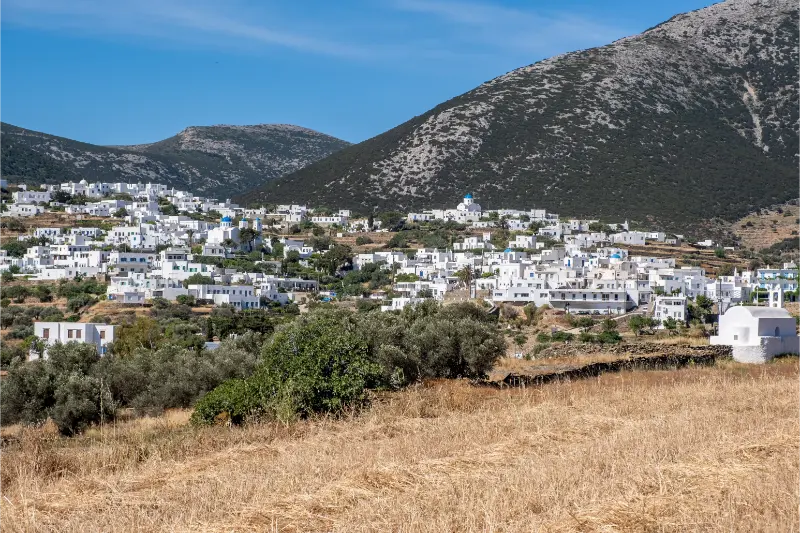
The answer becomes more conditional in shoulder season. Municipal timetables change several times a year, and a route that runs frequently in July may be limited in April or October. Check the schedule for your exact dates before making accommodation decisions.
Best no-car bases
| Apollonia | Best overall for buses, restaurants and evening life |
| Artemonas | Excellent central access with quieter atmosphere |
| Kamares | Best for ferry convenience + beach |
| Platis Gialos | Good beach base when bus frequency is strong |
| Faros | Possible but quieter and more timetable-dependent |
| Remote villas | Often poor without pre-arranged transport |
How the bus network works in practice
The municipality publishes seasonal routes linking Artemonas and Apollonia with Kamares, Platis Gialos, Faros, Vathi, Kastro and Herronissos at different times of year. The exact pattern changes, so think in corridors rather than memorising a permanent timetable.
Photograph the current timetable at your accommodation or bus stop and keep the official online notice bookmarked. Build dinner plans around the last return service before you sit down, not after. On an island, “I will just take the next bus” may mean waiting much longer than in a city.
Arrival at Kamares without a car
If you stay in Kamares, arrival is simple once you know the walking distance to the hotel. If you continue inland, look for the bus or taxi connection after disembarking. Ferries unload quickly and the port can feel chaotic for ten minutes; do not let that pressure you into an unnecessary rental.
For early departures, either sleep in Kamares or pre-arrange a taxi from the central villages. The convenience can be worth one final night near the port.
Walking between the central villages
Apollonia, Artemonas and the neighbouring settlements are made for walking. You can move through old paved lanes instead of treating every village as a bus stop. This is one reason the centre is so strong without a car: restaurants, bakeries, pharmacies and atmosphere are all available on foot.
Use the central-villages guide for a route that makes the walk part of the sightseeing rather than simply transport.
Using hiking trails as transport
Some of Sifnos’s best paths connect places you might otherwise visit separately: central villages to Kastro, Faros to Chrysopigi, Platis Gialos toward Fikiada and Vathi. A one-way hike plus bus return can create a full day without a vehicle.
This only works when you plan the logistics first. Check the Sifnos Hiking Guide, carry water and confirm the last practical bus. Taxis are the safety valve, not the primary schedule.
Beaches without a car
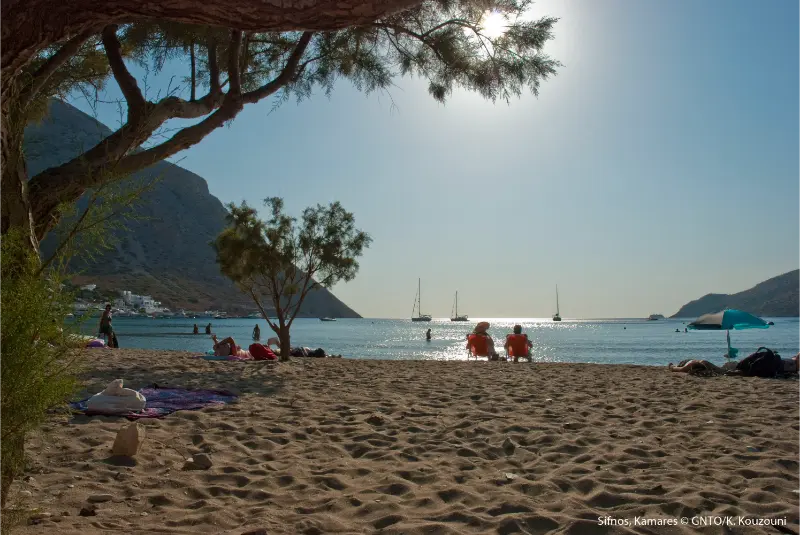
Kamares is the easiest because the beach sits beside the port settlement. Platis Gialos, Faros and Vathi are good targets when buses operate at useful frequencies. Remote beaches such as Fikiada require hiking or boat access and should be treated as excursions rather than casual transport stops.
See Best Beaches in Sifnos to choose beaches by access as well as scenery.
When a taxi makes sense
Use taxis strategically: late dinners, early ferries, luggage transfers and route combinations that would require long waits. Booking one taxi can be cheaper and easier than renting a car for a week simply to solve two awkward journeys.
In peak summer, pre-book important transfers. Do not assume a taxi will be waiting in a small beach village at midnight.
When you should rent a car instead
A car becomes more attractive if you are staying in a remote property, travelling with mobility constraints, carrying substantial child equipment, planning several far-flung beaches each day or visiting when bus service is thin. It also helps photographers and hikers who want very early starts outside normal transport hours.
Even then, parking and pedestrian access in central villages should be checked with the hotel. A rental car is not useful if it spends the week far from your room while you walk the same lanes anyway.
A five-day no-car outline
- Day 1: arrive in Kamares, bus to Apollonia/Artemonas, central village evening.
- Day 2: bus to Platis Gialos for beach and pottery.
- Day 3: bus or one-way walk to Kastro, return according to timetable.
- Day 4: Faros–Chrysopigi coastal walk and swim.
- Day 5: Kamares beach before ferry, or a Vathi day if connections fit.
Luggage, heat and accessibility
No-car does not mean no walking. Some accommodation sits up steep lanes, and bus stops may be on a road below the property. Ask the hotel for the exact luggage route. Travellers with mobility limitations should prioritise flatter Kamares or carefully chosen central accommodation near road access.
In summer, a ten-minute uphill walk with luggage at 14:00 feels very different from the same distance on a map. Arrange transfers when they materially improve the trip.
Official transport information
The Municipality of Sifnos publishes updated bus notices through its official sites. Use sifnos.gr or the municipality pages close to your travel date rather than relying on an old third-party schedule.
Tours and activities
If you want a guided walk, food experience, boat trip or another organised activity, compare what is available for your exact dates. On a small Cycladic island the choice can change by season, so check the meeting point, duration, language, cancellation terms and whether transport is included before booking.
Frequently asked questions
Do I need a car in Sifnos?
No. A central base, buses, walking and occasional taxis can cover a very good first trip.
Where should I stay without a car?
Apollonia and Artemonas are best for overall flexibility; Kamares is best for port and beach convenience.
Can buses reach the main beaches?
Seasonal services connect several main beaches, including Platis Gialos, Faros and Vathi, but frequency changes.
Can I visit Kastro without a car?
Yes by seasonal bus, taxi or walking route from the central area.
Are buses frequent at night?
Not necessarily. Always check the last return before planning dinner away from your base.
Should families rent a car?
Not automatically. Families staying near central transport or Kamares can manage well without one, but a car helps with lots of equipment and remote accommodation.
Final practical advice
The secret to Sifnos without a car is not squeezing the car itinerary onto buses. Build a different trip: stay centrally, walk where the old paths make sense, use the bus for main beach corridors and spend taxi money only on the journeys that genuinely need it. Done this way, no-car travel can feel simpler rather than restrictive.
Planning details that are easy to overlook
Build each day around geography rather than a list of saved pins. Sifnos is compact, but repeated returns through the central road network can still waste time. Group central villages together, south-coast beaches together and Kastro with the eastern side. This leaves more time for meals and swimming, which are not empty gaps in a Sifnos itinerary but part of the experience.
In July and August, heat changes the order of the day. Walk early, swim through the hottest hours and return to villages in late afternoon. In May, June, September and October, longer daytime walks become more realistic, but ferry and bus frequency may be lower. Always verify the transport that operates on your exact dates before making a non-refundable plan around it.
Carry a refillable bottle, sun protection and shoes with grip even on days that are not labelled “hiking”. Stone lanes can be polished, coastal paths can be dusty and a five-minute viewpoint detour can become uncomfortable in smooth sandals. A light layer is useful for wind on evening terraces and ferry decks.
For churches and monasteries, dress respectfully and avoid entering during services simply to take photographs. For pottery workshops, ask before photographing artisans at work. For beaches, leave stones, plants and shells where they are and take rubbish back to a serviced settlement if there are no bins.
Finally, keep one flexible half-day in the itinerary. Wind, a changed bus timetable, a festival or a restaurant recommendation may give you a better plan than the one you made months earlier. Sifnos rewards travellers who organise the essentials but leave enough room for the island to change the schedule.
A realistic pace for the day
Avoid planning Sifnos as a sequence of ten-minute stops. Roads are short, but parking, bus waits, stone lanes, meals and beach access all add time. A realistic day normally has one main village or walk, one swim and one unhurried meal. This rhythm also makes it easier to adapt when wind changes the beach choice or when a small museum has different seasonal hours than expected.
If you are combining this area with another part of the island, choose the nearest logical neighbour rather than crossing Sifnos repeatedly. Keep Kastro with the eastern side, Faros and Chrysopigi with the south-east, Platis Gialos with the south and Kamares with ferry-day logistics. This simple approach reduces unnecessary transfers and creates more time for the experiences that make the island distinctive.

Leave a Reply