

Choosing where to stay in Leros matters more than choosing the “best hotel” in isolation. A room with a beautiful view can still create a frustrating trip if every dinner requires a car, while a simpler property in Panteli, Alinda or Agia Marina can make the whole holiday easier.

The island is compact, so there is no single area you must use. The goal is to match your base to the trip: Panteli for atmosphere, Alinda for an easy beach routine, Agia Marina and Platanos for central sightseeing, Lakki for ferry logistics and twentieth-century history, or a quieter southern base when you have a car.
Quick comparison of the best bases
| Area | Best for | Main trade-off |
|---|---|---|
| Panteli | Couples, evenings, views, compact beach stay | Slopes and seasonal popularity |
| Agia Marina / Platanos | Sightseeing, services, central location | Less of a resort feel |
| Alinda / Krithoni | Families, beach routine, relaxed stays | More spread out along the bay |
| Lakki | Ferries, architecture, WWII history | Functional rather than romantic |
| Vromolithos | Beach stay near Panteli | Fewer town services at the door |
| Xirokampos | Quiet southern escape | Car or taxis more useful |
Panteli: best for atmosphere and evenings
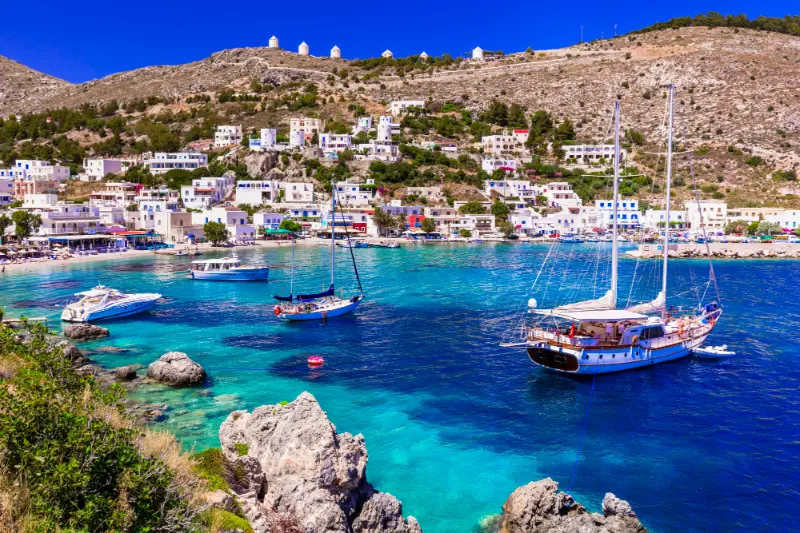
Panteli is the easiest choice if you picture a small bay, waterfront tavernas and windmills above you. Couples often prefer it because the evening is built into the location: you can swim, shower and walk to dinner without getting back in the car.
The trade-off is terrain. Many properties climb the hillside, so a sea view may come with steps. Ask specifically about access if luggage, strollers or mobility are concerns.
Agia Marina and Platanos: best for central sightseeing
Choose Agia Marina or Platanos if the castle, everyday town life and practical services matter more than waking directly beside a holiday beach. This is a good base for first-time visitors who want to walk between the central settlements and use taxis for more distant coves.
Platanos is hillier and more residential; Agia Marina keeps you closer to the water. Staying between them can work very well if you find accommodation with straightforward road access.
Alinda and Krithoni: best for families and an easy beach routine
Alinda is my default recommendation for travellers who want the beach to be available without planning. The bay has accommodation and restaurants, while Krithoni gives a smaller-scale alternative closer to Agia Marina. Families benefit from being able to return to the room during the hottest hours.
The downside is that the area stretches along the coast. Check exactly where the property is relative to the beach, restaurants and current bus stops rather than relying on the general label “Alinda.”
Lakki: best for ferry logistics, architecture and history
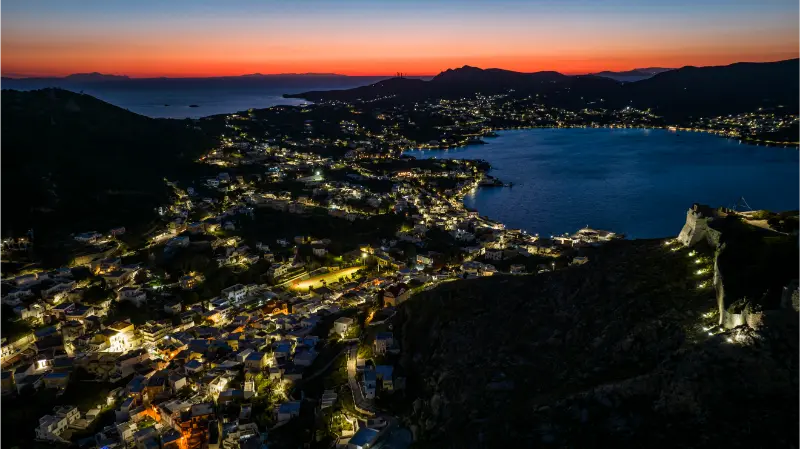
Lakki is the most practical base for a late arrival, early departure or a trip focused on Italian architecture and WWII history. The ferry port and taxis simplify logistics, and the War Museum sits nearby.
I would not automatically choose Lakki for a romantic beach week. It is a working harbour town with a unique architectural story. Travellers who value sunset tavernas may prefer Panteli and simply visit Lakki.
Vromolithos and Xirokampos: when quieter is better
Vromolithos gives you more of a beach focus while remaining close to Panteli. Xirokampos, farther south, is better for repeat visitors or travellers who deliberately want a quiet base and do not mind driving. These are excellent choices when your priorities are clear, but less forgiving if you expect to walk everywhere.
Best area by travel style
- First trip: Panteli or Agia Marina/Platanos.
- Families: Alinda/Krithoni or Vromolithos after checking beach entry.
- Couples: Panteli.
- Without a car: Panteli, Agia Marina/Platanos or Alinda near transport.
- WWII history and architecture: Lakki.
- Quiet road-trip stay: Xirokampos or another southern base.
- Late ferry arrival: Lakki.
One base or split stay?
For four or five nights, I would use one base. Leros is compact enough that changing hotels usually creates more work than it saves. A split stay becomes interesting at a week or more if you want two genuinely different moods, such as three nights in Lakki for history followed by four in Panteli or Alinda for beach time.
When to go and how to use the day
Choosing where to stay in Leros works differently by season. In July and August I would put walks, castle visits, museums and exposed viewpoints early in the day, then use the hottest hours for lunch, a shaded rest or swimming. Late afternoon is when the villages and waterfronts become more enjoyable again. May, June, September and early October are easier for travellers who want to combine sightseeing with walking rather than organising the entire day around heat.
Wind matters on Leros because the coastline is deeply indented. A beach that feels exposed one day may be pleasant the next, while another bay can stay relatively calm. I would keep one flexible afternoon rather than assigning every beach to a fixed date. Pick the area that makes your ordinary morning easy; use taxis or a car for the exceptional day rather than the other way around.
Transport and realistic pacing
Ferry logistics favour Lakki, while the central settlements and Alinda reduce the need for daily driving. Always check the real walk from the hotel to beach, dinner and bus stop. The island is not huge, but short map distances do not always mean a quick, flat walk. Hills, summer heat and the shape of the bays make route planning important. If you are relying on buses, confirm the current timetable locally rather than building the day around an old online schedule.
For most visitors, two substantial experiences plus a good meal and a swim create a better day than five rushed stops. This is especially true around your chosen base, where it is easy to underestimate how much time disappears into viewpoints, photographs, museum rooms and unplanned waterfront breaks.
What to pack
- Shoes with useful grip for castle approaches, stone lanes and uneven coastal paths.
- A refillable water bottle; exposed hills and quieter beaches may have limited services.
- High-SPF sunscreen, a hat and a light shoulder cover for strong summer sun.
- Swim shoes if you prefer them for pebble or mixed-surface beaches.
- A light layer for breezy evenings and boat rides outside peak summer.
- Offline maps or saved pins if your plan includes minor roads, remote coves or walking routes.
Who this plan suits best
It suits every travel style once the base matches the trip; the main mistake is choosing purely by room view and ignoring hills, road access and evening logistics. Leros rewards travellers who leave space in the schedule. The island is not about racing between a long list of blockbuster sights; its appeal comes from the combination of small bays, layered twentieth-century history, low-key villages and evenings that still feel local.
Common mistakes to avoid
- Treating every beach as equally sheltered regardless of wind direction.
- Assuming a short distance on the map is automatically an easy walk in midday heat.
- Using old museum or bus hours without checking them again for the current season.
- Planning only beaches and missing the island’s unusually important Italian and Second World War heritage.
- Changing accommodation unnecessarily on a short stay instead of using one practical base.
- Trying to fit a museum, a castle, a remote beach and a long dinner into one tightly timed afternoon.
How I would make the plan more reliable
The most useful way to plan where to stay in Leros is to separate fixed commitments from flexible ones. A museum opening time or ferry departure is fixed; a swim, café stop or sunset viewpoint is flexible. Put the fixed element first, then keep the beach or meal that follows adjustable. This prevents a small timetable change from collapsing the entire day.
I would also avoid judging travel time from distance alone. Leros has bays, hills and narrow roads, and a route that looks very short can include parking, a climb or a wait for a taxi. Add buffer time, especially when you have a ferry later that day. On a holiday this small adjustment is more valuable than adding one extra attraction.
Finally, use local conditions as information rather than an inconvenience. If wind makes your planned beach uncomfortable, switch bay. If the castle is closed, spend longer in the villages and return another morning. If a museum hour changes, move the swim forward. Leros works best when the itinerary responds to the island instead of trying to force the island to follow a spreadsheet.
Budget and booking notes
Leros is generally easier to manage financially than islands dominated by luxury resorts, but summer accommodation and transport still reward early planning. Book the room that solves the most daily problems: walkable dinner, acceptable beach access, manageable steps and a sensible route from the ferry. Spending slightly more on the right base can save repeated taxi fares and wasted time.
For tours and activities, compare the cancellation terms, exact meeting point and whether transport is included. For independent days, keep small cash available for local services that may not fit a fully digital routine. Prices and opening periods change, so treat any old blog total as a reference rather than a promise.
Accessibility and slower travel
Travellers with limited mobility should ask unusually specific questions on Leros: number of steps from the road to the room, whether the restaurant route is level, where a taxi can actually stop and whether a beach has a stable entry. Historic lanes and hillside accommodation can be beautiful but demanding. A well-chosen base and a few taxi transfers can make the same island much easier.
Slow travel also improves the experience for everyone else. Staying longer in one bay, returning to the same taverna and walking a village twice at different times of day reveals more than a fast island checklist. Leros has enough detail for this approach, especially when history, swimming and local life are all part of the reason you came.
Continue planning Leros
Start with the Leros Travel Guide for the island-wide overview, then use these dedicated guides: Agia Marina, Platanos and Panteli Leros Guide; Lakki Leros Guide; Leros War Museum and WWII Guide; Alinda and Krithoni Leros Guide; Best Beaches in Leros; Leros Diving Guide; Leros Hiking Guide; Leros Without a Car; Leros with Kids.
Where to Stay in Leros FAQ
What is the best area for a first trip to Leros?
Panteli is the easiest all-round choice for atmosphere, while Agia Marina/Platanos is stronger for sightseeing and services. Alinda is best if beach convenience dominates.
Where should families stay?
Alinda and Krithoni are strong family bases because beach time is easy to build into the day. Vromolithos can also work well near Panteli.
Where is best without a car?
Panteli, Agia Marina/Platanos and central Alinda are the safest choices, provided your accommodation is near the routes and services you intend to use.
Is Lakki a good place to stay?
Yes for ferry convenience, architecture and WWII history. It is less suited to travellers whose main priority is a romantic beach atmosphere.
Should I split my stay?
Usually not for four or five nights. With a week or more, a short Lakki plus Panteli/Alinda split can create two different moods.
Useful official information
For current local information I check the Municipality of Leros and Visit Greece – Leros. Before booking, verify the current ferry arrival port, local transport and any seasonal road or service changes that affect your chosen base. Opening hours, local transport, boat services and seasonal businesses can change, so recheck anything time-sensitive shortly before the day you plan to use it.
Leave a Reply