
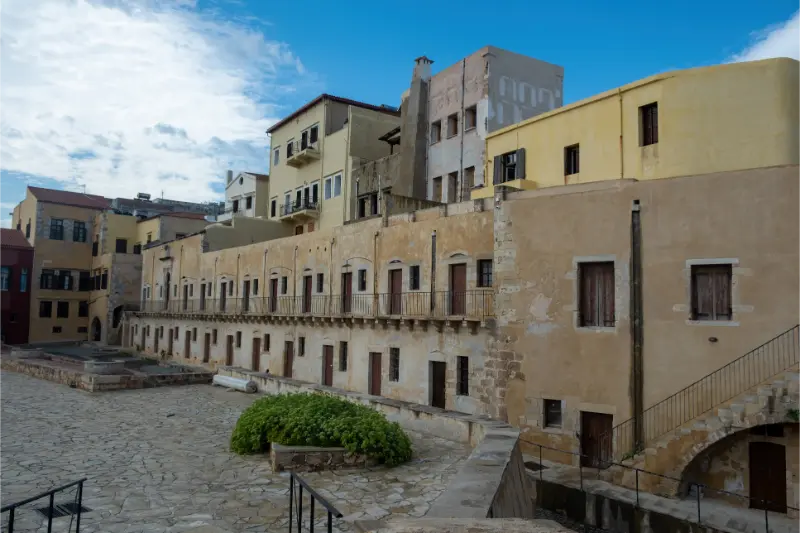
Chania Old Town is the kind of place that rewards walking without a strict agenda, but a little structure helps you see much more than the famous waterfront. The Venetian Harbour is the visual centre, yet the real character is in the districts behind it: Topanas, the Jewish quarter, Kasteli and Splantzia, where Venetian, Ottoman and modern Cretan layers sit only a few streets apart.
This guide focuses on a full day or two slow half-days in the historic centre. It works especially well if you are staying in Chania and want one day with no long drive. Pair it with the broader Chania Travel Guide for beaches and day trips, and use the Crete Travel Guide if you are deciding how Chania fits into a longer island itinerary.
Why this place deserves its own stop
The reason to stay rather than pass through is the rhythm of the place. A few hours shows the main sights; an overnight stay reveals the morning market, the evening promenade and the ordinary streets between attractions. That slower rhythm is what makes a travel guide useful rather than just a list of things to photograph.
What to see and do
Start at the Venetian Harbour
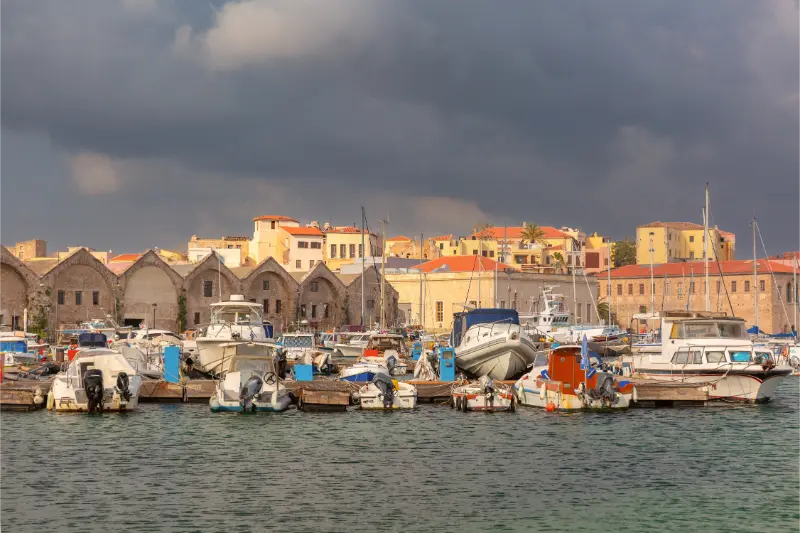
The harbour is best understood early, before day-trip traffic and restaurant terraces fill the waterfront. Walk the curve of the port slowly and look back toward the old town rather than heading immediately for the lighthouse. The harbour was developed by the Venetians from the 14th century for trade and defence, and its long line of arsenals still helps explain why Chania became such an important maritime centre. Morning light is also kinder for photographs of the waterfront and the lighthouse.
Walk through Topanas
Topanas, on the western side of the old town, is one of the most atmospheric areas for unhurried walking. Venetian façades, narrow lanes, small hotels and restored houses create a quieter texture behind the harbour. Instead of following only the busiest shopping streets, take parallel alleys and allow yourself to loop back. This is where Chania feels less like a waterfront attraction and more like a lived historic neighbourhood.
Cross into Splantzia
Splantzia gives a different perspective on Chania. The district preserves strong Ottoman-era layers alongside churches and everyday residential streets. The square around Agios Nikolaos is a good pause point and an easy place to notice how different periods overlap. I like to use Splantzia as the transition between the busy harbour and the more local eastern side of the old centre.
Climb to Kasteli Hill
Kasteli is important because modern Chania sits directly over ancient Kydonia. Hellenic Heritage notes that the Minoan palatial complex lies partly beneath today’s urban fabric and has recently been included in the UNESCO World Heritage List with the other Minoan palatial centres of Crete. The surviving excavations do not look like a complete palace, so context matters; the hill is valuable precisely because it connects the modern city to a much deeper history.

Finish toward the lighthouse
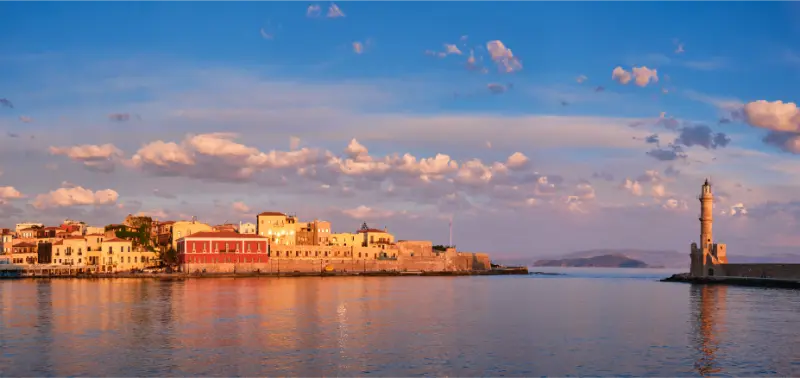
The walk along the breakwater toward the Egyptian lighthouse gives the classic harbour panorama, but do it only in suitable weather. Wind and spray can make the exposed section uncomfortable, and there is little shade. Late afternoon is ideal when conditions are calm. If you do not want the full walk, the harbour-side viewpoints still give excellent photographs without committing to the entire breakwater.
A realistic plan
| Part of the day | Plan |
|---|---|
| Early morning | Harbour waterfront, Firkas side and quiet photographs |
| Late morning | Topanas, Jewish quarter and Kasteli |
| Lunch | Old Town or Splantzia, away from the busiest harbour tables |
| Afternoon | Museum or shaded lanes, then Splantzia |
| Evening | Harbour and lighthouse views at softer light |
Use this as a framework rather than a timetable. Crete rewards flexibility: parking can take longer than expected, mountain roads slow down, a good lunch becomes part of the day, and heat can change the order of activities. The best itinerary is the one that leaves enough margin to enjoy the main experience rather than simply arriving at every planned pin on a map.
How to get there and move around
Chania Old Town is compact enough to explore entirely on foot. If you arrive by car, use a parking area outside the pedestrian core and leave the vehicle there. The most frustrating version of the day is trying to move the car between sights that are only ten minutes apart on foot. Comfortable shoes matter because stone paving can be polished and uneven.
How to pace the visit
Do not treat the historic centre as a checklist. A good walking day has pauses built into it: one museum or monument, one long section on foot, a proper lunch and a quieter hour late in the afternoon. That rhythm is especially important in Crete, where heat and bright light can make a route that looks short on a map feel much longer. Keep the most exposed walking for morning or early evening and use midday for food, museums or a shaded café.
Parking and luggage
If you are driving, decide where the car will stay before you choose accommodation. Historic cores often have narrow or pedestrian streets, limited access and parking that fills quickly in high season. A hotel that looks perfectly central can be awkward if you arrive with large luggage and a rental car. I prefer to park once, walk the old centre, and only use the car again when leaving for a day trip.
Best time to visit
April to June and September to October are especially comfortable for walking. July and August bring the longest evenings but also the greatest heat and pressure. In peak summer, make the old town an early-morning and evening experience and use the middle of the day for a museum, lunch or a nearby swim at Nea Hora.
For any outdoor or archaeological visit, check the same-day forecast and the official operating information. Crete can have very local conditions: wind on one coast, heat in an inland valley and cloud over the mountains at the same time. Planning by region and keeping one backup option nearby is more effective than relying on a rigid island-wide schedule.
Food and local rhythm
Chania is one of Crete’s strongest food cities. Look for boureki, kalitsounia, dakos, local greens, cheeses and dishes built around good olive oil rather than choosing a restaurant only for its harbour view. Visit Greece highlights the depth of Chania’s local food culture, from stamnagathi and cheeses to tsigariasto and regional pies.
One of my favourite planning rules in Crete is to protect lunch. Do not schedule every meal as a 20-minute gap between attractions. A proper stop gives you shade, hydration and a chance to ask local staff about road, wind or beach conditions. It also makes the day feel like a trip through Crete rather than a sequence of parking lots.
How to combine it with nearby places
If you have another half-day, walk or drive toward Halepa for the Archaeological Museum and a different architectural atmosphere. For beach days, use the Falassarna guide or Balos guide rather than trying to attach a distant famous beach to the same old-town day.
If your route already includes two long drives, resist adding a third distant highlight simply because it is famous. Crete is large enough that geographic discipline improves almost every itinerary. A day focused on one corner of the island usually produces more time walking, swimming or eating and less time looking through a windscreen.
Where to stay
For most travellers this works best as a day trip from an established base rather than a one-night hotel change. Choose accommodation based on the wider region and your next day, not only this single attraction. If an early start matters, staying within 30–45 minutes can dramatically improve the experience and reduce the temptation to rush.
Photography and timing
The most flattering light is usually early or late, but photography should not dictate unsafe timing. On exposed roads, gorges and archaeological sites, practical considerations come first. Carry a phone or camera securely, avoid stepping backward near drops or uneven stones, and take a moment to look without a screen. The best photographs often come after you have understood the shape of the place.
Common mistakes to avoid
- Walking only the harbour and missing the neighbourhoods behind it
- Driving into the old core without a parking plan
- Eating every meal on the most tourist-heavy waterfront strip
- Doing the lighthouse walk in strong wind without checking conditions
- Trying to combine the old town with a distant west-coast beach on the same short day
- Visiting only at midday in July or August
Official information
For current access, opening hours, tickets or regional information, check Visit Greece – Chania and Hellenic Heritage – Kydonia shortly before the trip. I use official pages for variable details because older travel articles can remain online long after rules have changed.
Frequently asked questions
How much time do I need in Chania Old Town?
A full day is ideal for the harbour, several historic districts, a museum or long lunch and an evening return to the waterfront. Two half-days work even better if you are staying nearby.
Is Chania Old Town walkable?
Yes. The historic centre is compact and designed for walking. The main challenge is heat rather than distance, so plan shade and breaks in summer.
Where is the best area for atmosphere?
Topanas is excellent for historic lanes, while Splantzia feels more local and layered. The harbour is beautiful but it is only one part of the old town.
Can I swim near the old town?
Yes. Nea Hora is the easiest practical beach near the centre and works well after a morning of sightseeing.
Is the lighthouse walk essential?
No. It is scenic in calm weather, but the harbour is rewarding even without walking the full breakwater.
Final advice
Build this stop around one clear reason for going, then let the surrounding area add depth. That approach keeps the day realistic and usually creates better memories than a checklist. In Crete, distance, heat and road shape matter as much as the number of attractions on a map.
For the wider picture, continue with Chania Travel Guide, Crete Travel Guide, Falassarna Beach Guide. These guides make it easier to connect this stop to the rest of the island without unnecessary backtracking.