

Evia can be one of the easiest Greek islands for a family road trip because you can drive across the bridges at Chalkida without coordinating a ferry on arrival. That flexibility matters with children: snacks, naps, luggage and unexpected stops are simpler when the car remains part of the trip. The challenge is the island’s size. Trying to “see Evia” from one base creates long days that are not especially child-friendly.
I would plan a family trip around two compact regions rather than a giant loop. Central Evia plus the north works well, as does central Evia plus Karystos in the south. Choose beaches for access and sea conditions rather than fame, and leave enough free time for the days when everyone prefers the pool or a second swim.
Best family bases
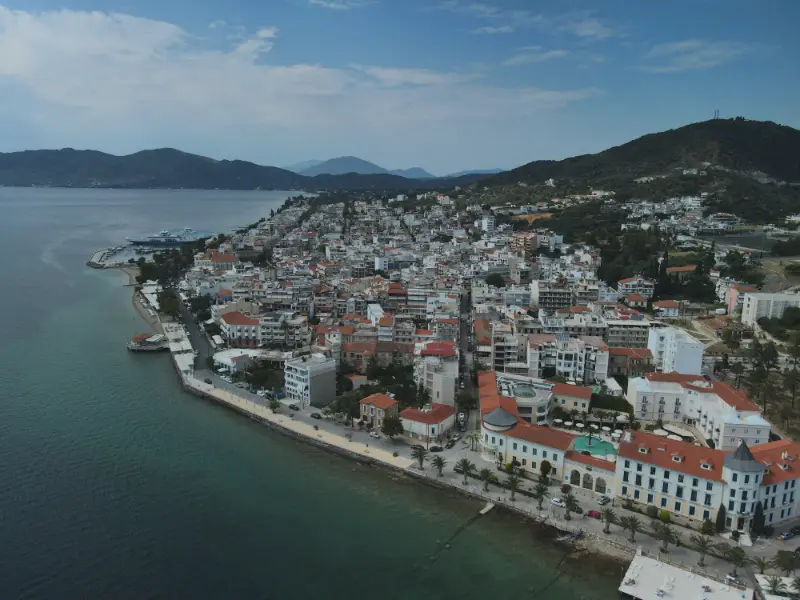
Eretria is a practical all-round base because it combines a walkable waterfront, archaeology, beaches and proximity to Chalkida. Edipsos works for a north-Evia stay, while Karystos gives families a useful southern town with services and beaches.
Remote villas can be wonderful if you want privacy, but check driving time to a supermarket, pharmacy and evening restaurants. A spectacular view loses some appeal when every forgotten item requires a 30-minute mountain drive.
Chalkida with children
The Euripus Strait gives Chalkida an unusual natural phenomenon that children can actually watch rather than simply read about. The waterfront is easy for an evening walk, and cafés make breaks simple.
Karababa Castle adds views and a little history, but summer heat can make exposed climbs unpleasant. Use mornings for sightseeing and late afternoon for the waterfront.
Eretria archaeology without overload
Ancient Eretria can introduce children to archaeology without the scale and crowds of the Acropolis. Keep the visit short, use the museum for context and turn the rest of the day into beach time.
Bring hats and water. Archaeological sites often have uneven ground, so a lightweight stroller may be less useful than expected; check access needs if travelling with a toddler.
Edipsos and thermal water
Edipsos is interesting because hot mineral water reaches the coast in places, but thermal water is not automatically appropriate for young children or for long immersion. Temperatures vary and spa facilities may have age or health rules.

Treat the thermal element as something to investigate responsibly rather than a guaranteed children’s activity. Ask the facility, follow local signage and keep ordinary sea swimming as the main family plan.
Choosing family beaches
For younger children, prioritise shelter, easy entry, nearby shade and a short walk from the car. Gulf-facing beaches may be calmer on many days than the open Aegean side, though conditions always change.
Bring water shoes for pebbles and check wind before driving to exposed beaches such as Chiliadou or long east-coast shores. If the sea looks rough, change plans without hesitation.

Road-trip rhythm with kids
Limit major drives to one per day and combine them with a clear reward: a beach, boat trip, castle or lunch stop. Schedule around naps where possible and avoid adding a “quick” mountain detour late in the afternoon.
The best family itinerary is rarely the one with the most places. Two bases, several flexible beach days and one or two memorable excursions will usually feel richer than a daily packing-and-driving routine.
How much time should you allow?
For Evia with kids, I would allow at least a full day if you are visiting from another part of Evia, and longer when the area itself is your base. Evia’s distances are deceptive because many roads cross mountains or follow indented coastlines. A schedule that looks efficient in kilometres can become rushed once you add parking, lunch, swimming and photo stops.
If you have only one day, choose two priorities and leave the rest for another trip. With two or three days, you can add a slower beach afternoon, a local dinner and one inland or cultural excursion. That extra time is usually what turns an Evia visit from a driving exercise into an actual holiday.
Best time to visit
Late spring and early autumn are excellent for road trips because temperatures are usually more comfortable for walking and driving. July and August bring the warmest sea and the widest range of seasonal beach services, but also stronger sun, busier weekends and higher fire risk in dry landscapes.
For hiking or exposed archaeological sites, start early even outside peak summer. For beach days, check wind as well as temperature: the Aegean coast can be rough while the gulf side is comfortable, or vice versa. In winter, Evia remains accessible by road, but seasonal accommodation, boat trips and beach businesses may close.
Getting around this part of Evia
A rental car is the most useful tool for exploring Evia beyond the main towns. Public buses connect important settlements, but they are not designed around a visitor trying to combine remote beaches, trailheads and villages in one day. Taxis work well for specific transfers but become expensive as a substitute for a car over long distances.
Download offline maps before crossing the mountains, keep fuel above half a tank on remote drives and avoid planning unfamiliar rural roads after dark. If you are renting in Athens, check the company’s rules before taking the vehicle on any ferry route. Road conditions and temporary closures should be verified locally after severe weather or during periods of high fire danger.
Where to stay and booking strategy
For live availability, compare accommodation across Evia on Booking.com. On this island, the map pin matters as much as the hotel rating. A property advertised under a well-known town name may be several kilometres away on a hillside or rural coast.
Before paying, check parking, road access, walking distance to dinner and whether air conditioning is included. If you are building a road trip, choose accommodation that shortens the next day’s drive instead of returning to the same base purely out of habit. Two well-chosen bases usually beat one central-looking base for a week.
Eating well without overplanning
Evia rewards simple meals: grilled fish on the coast, meat and pies in mountain villages, salads, local cheese, honey, figs and olive-oil-based dishes. Ask what is fresh and regional rather than ordering only the same famous Greek dishes at every stop.
For restaurants that matter to you, book ahead on summer weekends. Otherwise, keep some flexibility and eat where the day naturally ends. Long evening drives on mountain roads are rarely worth it just to reach a restaurant with a slightly higher online score.
Common planning mistakes
- Treating North Evia, central Evia and South Evia as if they were one compact resort area.
- Ignoring wind and sea conditions when choosing an Aegean-facing beach.
- Scheduling a remote beach, a mountain hike and a long transfer on the same day.
- Following an old boat or bus timetable without checking the current season.
- Underestimating summer heat, fire restrictions and the lack of shade at exposed sites.
- Booking accommodation without checking its exact road access and parking situation.
A simple one-day plan
Start early and make the main purpose of the day Evia with kids. Use the coolest morning hours for walking, archaeology or driving to a viewpoint. Break for a long lunch rather than adding another distant attraction, then use the afternoon for a swim, an easy town walk or a short coastal stop.
Keep the last hour flexible. If the weather is good, stay for sunset or another swim. If wind rises or everyone is tired, return to your base before dark. This flexibility is especially valuable in Evia, where the best days often come from doing less driving than you originally planned.
Useful official information
For destination background, start with Visit Greece. For mountain routes around Steni, the official tourism site also publishes descriptions of the marked trail network and the Stropones Gorge. Always recheck opening hours, local transport, ferry departures and seasonal boat trips close to your travel date.
Weather and fire-risk information are particularly important for mountain and forest areas. If a road, trail or beach access is officially closed, do not bypass barriers because an older map suggests a route continues.
Tours and activities
Organised experiences on Evia are more seasonal than on Santorini or Mykonos. The widget below is useful for checking whether boat trips, outdoor activities, food experiences or transfers are available on your dates. Verify meeting points and cancellation terms before paying.
Continue planning your Evia trip
- Evia Travel Guide: Chalkida, Beaches, Hot Springs and a 7-Day Road Trip
- Chalkida Evia Guide: Evripos Tides, Karababa Castle, Waterfront and a 2-Day Stay
- Loutra Edipsou Guide: Evia Hot Springs, Seafront Baths and a Wellness Stay
- Karystos and Dimosari Gorge Guide: South Evia Road Trip, Hiking and Mount Ochi
- Eretria and Amarynthos Evia Guide: Archaeology, Beaches, Food and Where to Stay
- Limni and Rovies North Evia Guide: Seafront Villages, Beaches and Road Trips
- Lichadonisia Day Trip from Evia: Boats, Beaches, Snorkelling and Practical Tips
- Best Beaches in Evia: Chiliadou, Agia Anna, Kalamos, Korasida, Marmari and More
Final advice
Evia with Kids works best when it is treated as part of Evia rather than an isolated attraction. Build the day around realistic road times, weather and one or two strong experiences. The island’s advantage is variety: when wind, heat or energy levels change, you can often switch from beach to village, mountain to waterfront, or archaeology to a long lunch without wasting the day.
The most useful habit is to check tomorrow’s conditions each evening. Ten minutes spent confirming weather, transport and opening information can save hours of unnecessary driving. Leave room to change your mind, because Evia is large enough to reward a second trip rather than a first trip overloaded with every possible stop.