
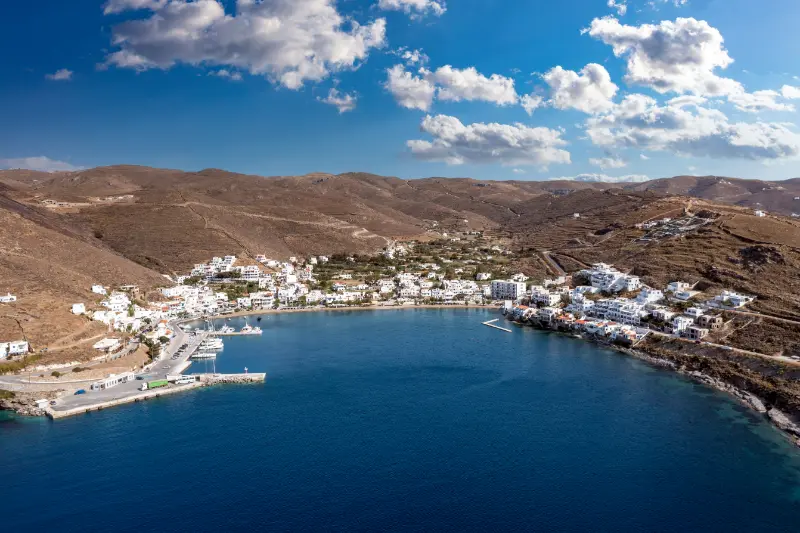
You can visit Kythnos without renting a car, but the trip has to be designed around transport rather than around a wishlist of remote beaches. The main settlements are linked by local buses and taxis, seasonal boats can solve some beach access, and walking works well inside Chora, Dryopida, Merichas and Loutra. The compromise is simple: you gain a relaxed holiday and avoid difficult roads, but you give up the freedom to jump between isolated coves whenever the wind changes.
This guide is designed to sit beside my complete Kythnos travel guide, not replace it. The general guide covers the island as a whole; here I focus on the decisions that matter for kythnos without a car: access, timing, wind, where to stop, what to combine in one day and what is better saved for another outing.
Quick planning summary
- Best trip length for Kythnos: four to six nights for a relaxed first visit; two or three nights works for a focused short break.
- Best seasons for walking and sightseeing: spring and autumn; summer is strongest for swimming and the widest range of seasonal services.
- Transport: a rental car gives the most beach freedom, while buses, taxis and boats can support a simpler car-free itinerary.
- Wind matters: choose beaches according to conditions on the day rather than locking the whole week into a fixed list.
- Remote coves may have no shade, food, toilets or phone signal; carry water and a backup plan.
- Lavrio is normally the fastest mainland gateway, while Piraeus also serves Kythnos on many schedules; always confirm the current ferry timetable.
Start with the right base
For a car-free first trip, Merichas is the easiest arrival-and-departure base, Chora is strongest for evenings, and Loutra gives you a beach and harbour without daily transport. Kanala can be peaceful but requires more careful schedule checking. The right base reduces the number of taxi rides more than any transport trick.
Before booking, ask the accommodation host where the nearest bus stop is and whether the walk involves steep roads. A property that looks 500 metres from a stop can be inconvenient with luggage if the route is exposed or uphill.
Using local buses
The municipality lists bus operators under its transport information, but schedules can change by season. Peak-summer services are usually more useful than shoulder-season timetables, and late-night frequency should never be assumed. Photograph the current schedule after arrival and confirm the final return if you plan dinner away from your base.
Use buses for the main spine of the island rather than expecting them to reach every beach. Chora, Dryopida, Merichas, Loutra and other principal areas are the places around which a no-car itinerary should be built.
When taxis are worth the money
A few strategic taxi rides can cost less than renting a car for an entire trip. Use them for a late dinner, a one-way hiking route, a transfer to a beach that would otherwise require two buses, or an early ferry connection.
Save local taxi numbers in your phone when you arrive and pre-book important journeys. On a small island, supply is limited; a taxi that was easy to find at noon may be unavailable when several ferries or weddings create demand.
Boats and beach access
Seasonal boat services or local excursions can make famous beaches such as Kolona easier without a car. They can also turn transport into part of the experience. The limitation is weather: a strong wind day can disrupt a boat plan completely.
Never build the final ferry day around a boat excursion. Use boats in the middle of the stay, keep a land-based alternative and confirm where you will be dropped off and picked up before boarding.
Walking realistically
Walking is excellent inside the villages and on proper hiking routes, but it is not a universal substitute for a car. Summer roads can be hot, narrow and uncomfortable for pedestrians. Distances that look short on a map may involve elevation and little shade.
Use walking for Chora, Dryopida, Loutra waterfront, Merichas and planned trails. Do not improvise long road walks in midday heat simply because a beach appears nearby.
A 4-day car-free structure
Day one: stay around Merichas and Chora. Day two: bus or taxi to Loutra with a beach and thermal-spring stop. Day three: Dryopida and Katafyki, adding one accessible beach. Day four: use a boat or taxi for Kolona or another priority beach, then return early for the ferry.
This itinerary deliberately leaves out several remote southern coves. That is the right trade-off. A car-free trip works when you accept depth over coverage rather than spending the holiday solving transport problems.
How this fits into a first Kythnos trip
A first visit should have three layers: one village day, one or two easy beach days and one day for the place that requires extra logistics, such as Kolona, a remote southern cove or a long hike. Chora and Dryopida provide the cultural backbone; Loutra adds the thermal-spring story; Merichas keeps ferry days simple. The mistake is trying to touch every coast in 48 hours because the island looks small on a map.
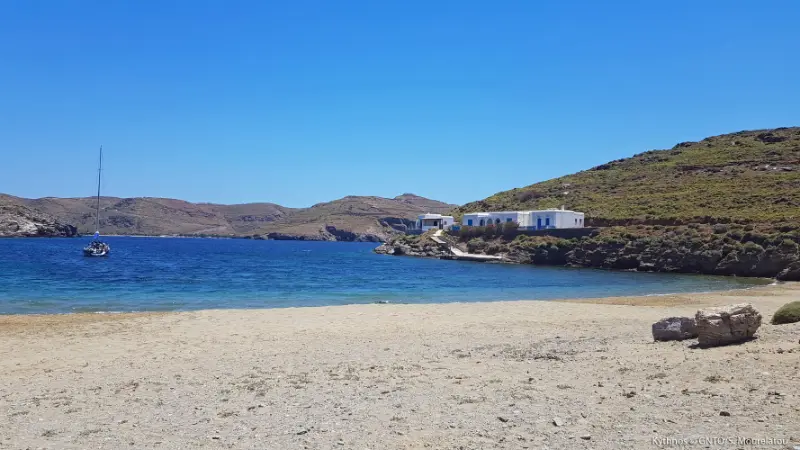
If you have five nights, keep at least one half-day deliberately empty. Use it for weather changes, a beach you want to repeat, a delayed ferry or an unexpected local festival. That empty space is often what makes a small-island holiday feel relaxed rather than over-planned.
Getting around: car, bus, taxi or boat?
A car is the easiest way to explore Kythnos because beaches are scattered around a deeply indented coastline. It is not mandatory. The municipality lists local bus and taxi services, and seasonal boats can help with selected beaches. The important point is that public transport is not designed to reproduce the freedom of a rental car. Build a smaller, coherent itinerary instead of using taxis to chase every remote cove.
If you rent a vehicle, ask specifically about unpaved-road exclusions. Some famous beaches are approached by tracks whose condition can change. A small island is exactly where a damaged tyre, blocked track or contract exclusion can consume half a holiday. For a no-car trip, use my Kythnos without a car guide to choose a base before booking accommodation.

When to go and how weather changes the plan
June and September are particularly attractive for travellers who want warm-weather island life without the most intense August pressure. July and August offer the strongest summer atmosphere but also the highest heat, demand and road traffic. May and October can be excellent for hiking and villages, although sea temperature and seasonal beach services are less predictable.
The meltemi is not merely a weather footnote. Wind can change swimming comfort, boat excursions and the value of a west- or east-coast plan. Check conditions each morning and be willing to switch sides of the island. That simple habit improves Kythnos more than a rigid seven-day schedule.
Costs and booking priorities
Accommodation is the item I would book first for July and August, followed by ferry tickets if your dates are fixed. Car rental can also become scarce in peak periods because the island fleet is finite. Restaurants generally require less advance planning than famous Santorini or Mykonos venues, but a special dinner or festival night can still be worth reserving.
Keep some budget for taxis or boat transfers even if you rent a car. A one-way taxi can turn a hike into a much better route, and a calm-weather boat trip can remove the stress of a difficult beach road. Spend for convenience where it buys time rather than automatically choosing the cheapest transport every day.
Common mistakes to avoid
- Choosing a remote beach because it looks close on the map without checking the final road or walking access.
- Planning Kolona for the ferry-departure day and leaving no buffer for transport or wind.
- Assuming every cove has umbrellas, drinking water and food.
- Walking exposed roads or trails in the hottest part of an August day.
- Booking accommodation without asking about steps, parking and luggage access.
- Relying on an old bus timetable saved from a previous season.
- Treating Chora and Dryopida as quick photo stops instead of part of the island experience.
- Ignoring wind direction when choosing a beach.
- Driving unsuitable rental cars onto rough tracks.
- Trying to visit five beaches per day instead of spending meaningful time at one or two.
Continue planning Kythnos
Use this guide with the rest of the Kythnos cluster: Chora and Loutra Kythnos Guide: Cycladic Lanes, Thermal Springs, Food and Where to Stay; Dryopida and Katafyki Cave Kythnos Guide: Village, Museums, Pottery and Visiting Tips; Merichas and Episkopi Kythnos Guide: Port, Beaches, Ferries and Where to Stay; Kolona and Apokrousi Kythnos Guide: Sandbar, Access, Swimming and Sunset; Panagia Kanala Kythnos Guide: Church, Beaches, South-East Coast and Where to Stay; Best Beaches in Kythnos: 15 Beaches for Families, Snorkelling, Wind and Quiet Days; Kythnos Hiking Guide: Castle of Oria, Vryokastro, Dryopida and Coastal Routes; Kythnos with Kids: Family Beaches, Villages, Easy Days and Practical Tips; Where to Stay in Kythnos: Chora, Loutra, Merichas, Kanala or Beach Areas?. If this is your first article, start with the Kythnos Travel Guide and then open the detailed pages that match your base, transport and beach priorities.
Useful official sources before you go
For information that can change, recheck these official or municipal sources before travelling: Official tourism and transport information; Beaches; Kythnos main portal. Ferry schedules, buses, museum or cave opening arrangements, beach services and road conditions can change by season. I would verify any detail that affects a specific day rather than relying on a screenshot saved months earlier.
Frequently asked questions
Can I visit Kythnos without driving?
Yes, especially if you stay in Merichas, Chora or Loutra and accept a smaller beach list.
Are buses frequent?
Frequency is seasonal. Check the current timetable after arrival and confirm evening returns.
Can I reach Kolona without a car?
Boat services, taxis or transfers may be available depending on season and weather. Verify locally.
Which base is easiest?
Merichas is easiest for ferry logistics, Chora for evenings and Loutra for a coastal stay.
Should I rent a car for one day?
That can be an excellent compromise if you want remote beaches but prefer not to drive throughout the holiday.
Final planning advice
Kythnos is at its best when the plan stays flexible. Choose one good base, keep a car or transport strategy that matches your priorities, and let wind decide some of the beach choices. The island does not need a checklist mentality. A slow village evening, one memorable swim and a well-timed walk can be more satisfying than racing around every named cove.
The final test is simple: if the itinerary leaves no time to sit in Chora, linger over lunch in Dryopida, repeat a favourite beach or change plans because the wind shifted, it is too full. Kythnos rewards the opposite approach—fewer transfers, longer stops and enough flexibility to enjoy the island you actually find when you arrive.
Leave a Reply