
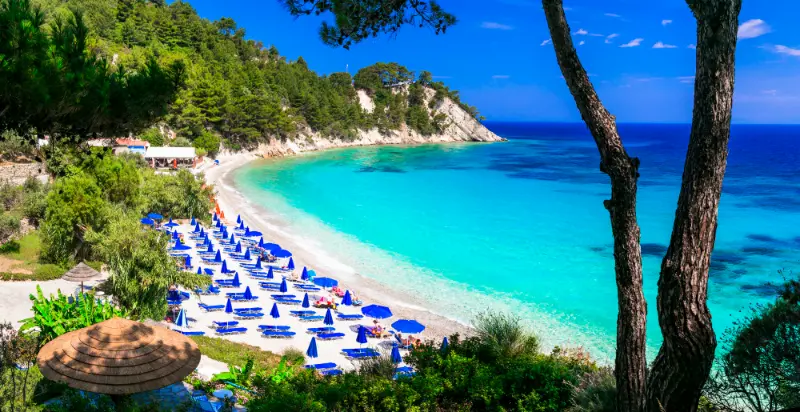
You can enjoy Samos without renting a car, but the island becomes a different trip. Instead of chasing every remote cove and mountain village, you build around the bus network, walkable bases and a small number of strategic taxis or excursions. For many travellers that trade-off is positive: no parking stress, no mountain-road anxiety and less need to appoint a sober driver after dinner or a wine tasting.
The strongest no-car bases are Vathy, Pythagoreio and Kokkari, each for different reasons. Vathy has the main KTEL hub and services; Pythagoreio combines sights, restaurants and port activity; Kokkari gives you beach atmosphere plus seasonal bus access. The south-west is possible without a car but requires more acceptance of local limits.
How the KTEL network works
The official KTEL Samos website is the starting point for current schedules, tickets and operator information. In September 2026, current published route data include links between Vathy and major destinations as well as services involving Kokkari/Tsamadou, Pythagoreio, Karlovasi, Votsalakia and selected villages. Frequency is seasonal, so the existence of a route does not mean it runs often enough for every plan.
Build each day backward from the return bus. If the last realistic departure is in late afternoon, do not book a sunset dinner at that beach unless you also budget for a taxi. Screenshoting a timetable is useful, but check for updates on the day because operators can alter seasonal service.
Vathy: best overall no-car base
Vathy is the most practical choice if your priority is reaching several parts of the island by bus. You also have the Archaeological Museum, waterfront, shopping and easy taxi access. The weakness is beach atmosphere: you will travel for most dedicated swimming days.
Pythagoreio: best balance of sights and evenings
Pythagoreio works exceptionally well for first-time visitors who want a pretty evening base, restaurants, the archaeological museum and access to UNESCO sites. Airport transfer distance is also short. It is less central for north-western Samos, so do not plan daily trips to Karlovasi or western hiking.

Kokkari: best no-car beach atmosphere
Kokkari lets you wake up near the sea, walk to restaurants and reach Lemonakia or Tsamadou with limited extra transport. It is an excellent choice for couples and beach travellers who are happy to see fewer distant sights.
Karlovasi: useful for the west
Karlovasi can work as a second no-car base if you arrive by ferry there or want Potami and western Samos. It is less efficient as the only base for a first visit because the major south-east sights are far away.
Taxis: where they add the most value
A no-car trip becomes much easier if you treat taxis as part of the budget rather than a failure of public transport. Use them for airport or port transfers with luggage, a late dinner after the last bus, the final leg to a trailhead or a wine museum visit when no one should be driving afterward.
Ask for an estimated fare or metered arrangement as appropriate and have accommodation call a trusted taxi when you need a precise pickup. Remote beaches are not always places where you can expect a taxi to appear instantly.
Boat trips and organised excursions
An organised boat or island tour can replace a rental-car day when it reaches places that would otherwise require awkward transfers. The best use of a tour is solving geography, not collecting as many stops as possible. Check how much actual swimming or free time is included.
A realistic five-day no-car structure
| Day | Plan |
|---|---|
| 1 | Vathy or Pythagoreio orientation and local sights |
| 2 | Pythagoreio + Heraion / archaeology |
| 3 | Kokkari + Lemonakia/Tsamadou |
| 4 | One organised boat, wine or village excursion |
| 5 | Flexible beach or Karlovasi day depending on timetable |
What you probably will not do easily without a car
- Multiple remote beaches in one day.
- Spontaneous mountain-village hopping.
- Early/late trailheads far from settlements.
- Long sunset drives on the west coast.
- Changing plans repeatedly after the final bus has left.
How a car-free Samos holiday fits into a wider Samos trip
Use this page together with the Samos travel guide, Pythagoreion and Heraion UNESCO guide, Kokkari, Samos Town and Vathy, Karlovasi and Potami, Manolates and Vourliotes, Marathokampos and Votsalakia, Samos wine, best beaches, hiking, Samos without a car and where to stay. The strongest Samos itineraries are built by geography: combine the north coast with mountain villages, the west with Karlovasi or Marathokampos, and the south-east with Pythagoreio and Heraion. That avoids spending the best part of the day repeatedly crossing an island whose roads are far more winding than its map distances suggest.
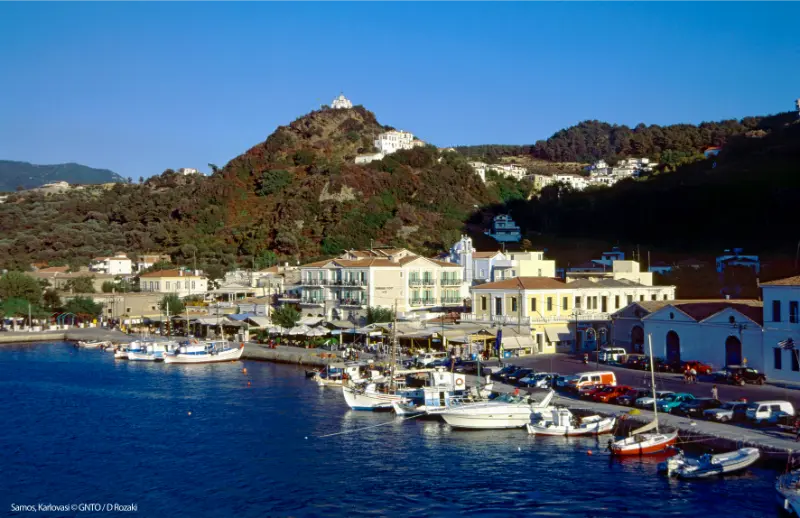
A no-car trip is best for travellers who value simplicity, walkable evenings and a slower pace. It is less suitable for visitors whose must-do list is dominated by remote beaches, hiking trailheads and mountain villages.
Getting around and checking transport
Use Vathy, Pythagoreio or Kokkari as the base and combine buses with selected taxis. Airport and ferry transfers should be planned before arrival, especially if landing late or departing early.
For buses, use the official KTEL Samos website close to the day you travel. KTEL Samos operates from Vathy and publishes routes and online ticketing; seasonal frequency changes, so an old screenshot should never be treated as a permanent timetable. If one specific connection matters—for example a last bus after a beach day—verify it the same morning and have a taxi number as backup.
Heat, wind and realistic daily pacing
Samos rewards early starts. In July and August, use the cooler morning for village walks, archaeological sites or hiking, keep the hottest hours for swimming or shade, and return to sightseeing in late afternoon. The north coast can be breezy, while inland roads and trails may feel much hotter than the waterfront. A flexible plan works better than forcing a fixed beach or mountain day in poor conditions.
Tours and activities
Boat trips, wine experiences and guided excursions can be useful when they solve a transport problem or add local interpretation. Compare the real time spent at each stop, boat size, shade, swimming access, transfer arrangements and cancellation rules rather than choosing the excursion with the longest list of place names.
Common planning mistakes
- Choosing an isolated hotel because it is cheaper.
- Planning the outward bus but not the return.
- Assuming taxis are instantly available at remote beaches.
- Trying to reproduce a rental-car road trip using only buses.
- Changing hotels too often while carrying luggage on public transport.
Frequently asked questions
Can you visit Samos without renting a car?
Yes, especially if you base in Vathy, Pythagoreio or Kokkari and accept that some remote places will require taxis or tours.
What is the best base without a car?
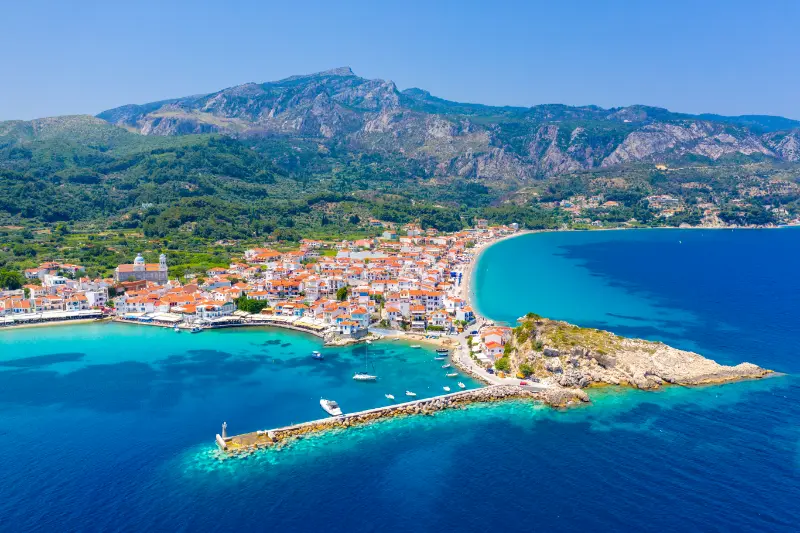
Vathy for transport, Pythagoreio for sights and evenings, Kokkari for beach atmosphere.
Are buses frequent?
Frequency is highly seasonal and route-dependent. Check the official KTEL Samos timetable for your exact dates.
Can you reach beaches by bus?
Several major resort areas and beaches are served in season, but remote coves are not practical by bus.
Should you use taxis?
Yes, selectively. A few taxis can make a no-car trip much more efficient while still costing less than a full-week rental for some travellers.
Final practical advice
Samos feels most rewarding when you leave room for one unplanned stop each day: a roadside viewpoint, a village square, a swim at a smaller cove or a long lunch. The island has enough variety that you do not need to “complete” it. Pick a strong base, cluster nearby experiences, check time-sensitive transport and opening information again shortly before departure, and let weather decide which day becomes the beach day and which becomes the mountain day.
How to budget the no-car option
Compare a week of car rental, fuel and parking with buses plus perhaps four or five taxis. For a solo traveller or couple, the no-car option can be financially attractive. For a family taking repeated long taxi rides, a short rental period may be cheaper. Hybrid planning—five days without a car and two rental days—is often the smartest compromise.
Luggage strategy
A carry-on sized suitcase or manageable backpack makes bus travel much easier. If you plan to change base, confirm luggage storage and station distance before booking. A beautiful hillside hotel can be an excellent choice for drivers but frustrating when you are pulling a heavy case uphill from a bus stop.
Extra planning notes
A useful final planning rule is to make the day geographically coherent. Samos looks compact on a map, but mountain roads, village traffic and beach access can turn a short distance into a meaningful part of the day. Keep one main objective, add one or two nearby stops and leave room for weather. In peak summer, carry water in the car, download the map before leaving strong signal and avoid arriving at remote beaches or trailheads just before sunset unless you already understand the return route. In spring and autumn, check seasonal opening hours because beach bars, excursion schedules and some services may be reduced even when the weather is excellent. For any detail that can change—bus times, museum hours, ferry ports, tasting reservations or trail access—verify it again shortly before departure instead of relying on an old blog screenshot.
Leave a Reply