

Serifos is a Cycladic island for travellers who want the architecture and blue water of the Aegean without turning every day into a queue for famous viewpoints. Its hilltop Chora is dramatic, its coastline is full of coves, and the old mining landscapes in the south-west give the island a rougher, more industrial history than many neighbours.
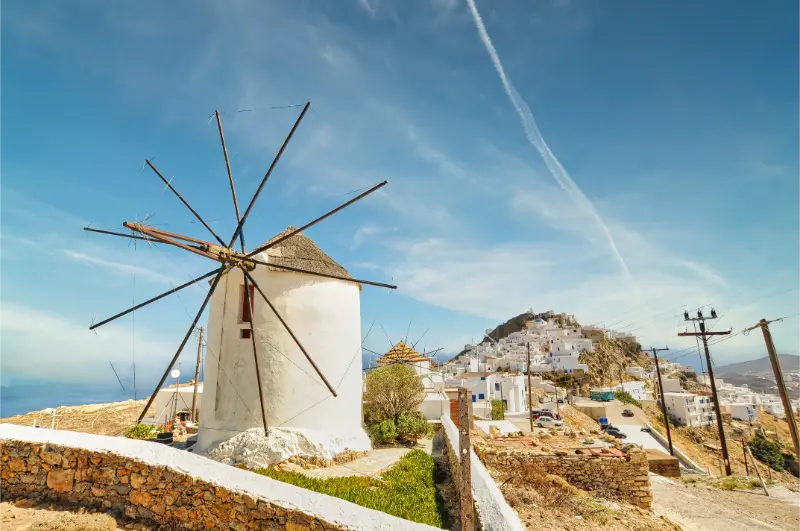
I would choose Serifos for a slower four- or five-day stay, especially after a busier island. It combines well with Sifnos or Milos, but it deserves more than a one-night ferry stop because the best parts are spread beyond the port.
Why visit Serifos?
Serifos feels compact without feeling tiny. Livadi provides practical services and an easy arrival, Chora rises dramatically above it, and beaches fan out around the coast. The island still rewards spontaneous drives and unplanned swims.
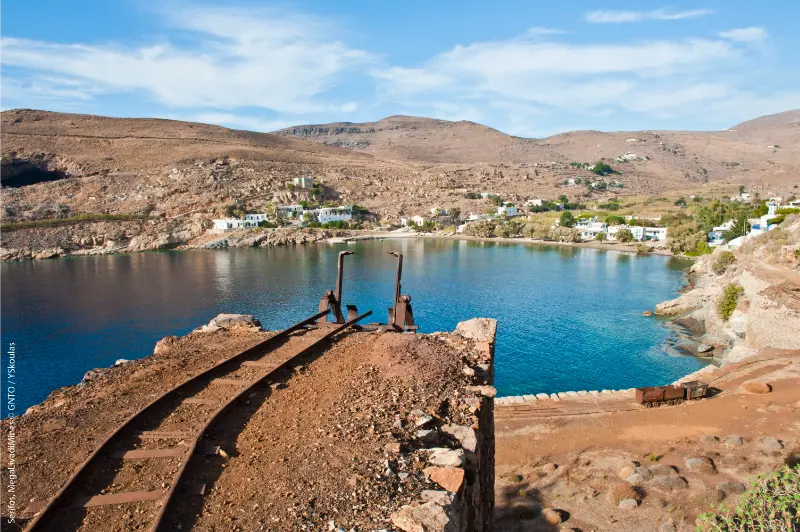
Its mining heritage makes it visually distinctive. Around Megalo Livadi and the south-west you can see traces of the island’s industrial past beside a beautiful bay, reminding you that Cycladic life was never only tourism.
Where to stay
Your choice is mainly between convenience by the port, atmosphere in Chora and quieter beach-oriented accommodation elsewhere.
Livadi
Livadi is the port and most practical base for restaurants, buses, car rental and ferry days. It is ideal if you want to minimise logistics.
Chora
Stay in Chora for sunset views, whitewashed lanes and a more atmospheric evening setting. Be prepared for steps, slopes and less convenient luggage handling.
Livadaki area
The area around Livadaki and nearby beaches can suit travellers who want swimming close to accommodation while remaining near the main port services.
Megalo Livadi and the south-west
This quieter part of the island appeals to repeat visitors and road trippers who value landscape and seclusion over nightlife and convenience.
Best things to do
Climb through Chora
Walk from the lower town toward the upper settlement and castle viewpoints. The route is steep but rewarding, especially late in the day when the light softens.
Spend time at Psili Ammos
Psili Ammos is one of Serifos’s best-known beaches, with clear water and a natural setting. Arrive outside peak hours if you want a calmer experience.
Explore Megalo Livadi
The bay and former mining area offer a very different landscape from Chora. Treat old industrial structures with caution and observe them rather than entering unstable ruins.
Drive the island loop
A rental car or scooter lets you connect beaches, chapels and villages efficiently. Distances are moderate, but roads can be narrow and exposed.
Hike old paths
Historic footpaths link settlements and reveal the island beyond the beach road. Choose a short route in warm weather and carry more water than you expect to need.
Watch sunset from above Livadi
The height difference between Chora and the port creates one of the island’s defining views. Give yourself time rather than arriving exactly at sunset.
Beaches and nature
Serifos has sandy beaches, pebbled coves and stretches of coast with very little development. Ganema, Vagia and Psili Ammos are common favourites, but wind exposure varies. On windy days, ask locally which side of the island is most sheltered.
The rocky interior and old mining terrain are part of the appeal. This is not a lush island, yet the contrast between bare hills, stone walls and deep blue sea is precisely what makes it photogenic.
Food and local character
Food is straightforward and satisfying: grilled fish, local cheeses, vegetable dishes, capers, simple meat dishes and Cycladic sweets. Chora is atmospheric for dinner, while Livadi offers the widest practical choice.
Do not schedule every meal at the waterfront. A small taverna in a village or beach bay can become a highlight because the island’s pace is as important as any single attraction.
How to get there
Serifos is reached by ferry, most commonly from Piraeus and from other western Cyclades islands. Conventional and faster ferries can have very different journey times, and the timetable changes seasonally.
If your international flight lands late, avoid a tight same-day ferry connection. A night in Athens or near the port can be cheaper than losing a prepaid ferry and accommodation night after a delay.
Getting around
For beaches and the mining coast, a rental vehicle is useful. Scooters are popular but should be chosen only by experienced riders because wind, gravel and bends can turn a short ride into a demanding one.
A bus network can cover the main settlements and selected beaches in season. Car-free travel is possible from Livadi, but it requires more patience and a simpler itinerary.
How many days do you need?
Three full days cover Chora, a beach circuit and the mining coast. Four or five days is better if you want slower beach time and a hike.
A relaxed 4-day Serifos itinerary
Day 1 – Livadi and Chora
Arrive, settle in Livadi and go up to Chora in the late afternoon. Explore both lower and upper town, then stay for dinner.
Day 2 – East and north beaches
Choose Psili Ammos and one additional beach rather than racing around the whole island. Leave room for a long lunch.
Day 3 – Mining coast
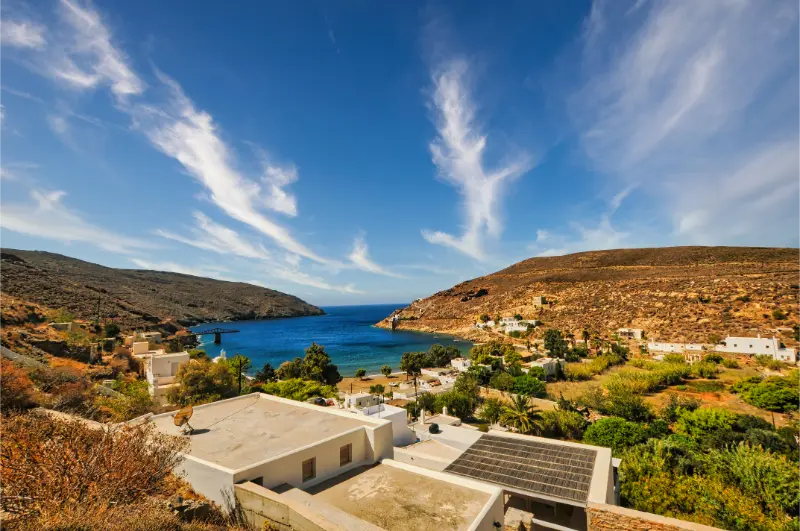
Drive toward Megalo Livadi, stopping at beaches and viewpoints on the way. Spend time understanding the landscape rather than treating the old mining area as a photo prop.
Day 4 – Slow island day
Pick a favourite beach, short hike or return to Chora. Keep the final day flexible around your ferry departure.
Best time to visit
June and September are excellent for warm weather with a calmer rhythm. July and August bring the busiest ferries and strongest summer atmosphere, but also more wind and higher accommodation demand.
May and early October can be beautiful for walking, though some seasonal services may be limited. Always check ferry frequency before building a shoulder-season island-hopping route.
Is it a good choice for families?
Families can enjoy Serifos, especially when based near Livadi or an easy beach. The main challenge is Chora’s steep terrain and the logistics of moving between beaches without a car.
For younger children, plan fewer stops and choose beaches with simple access. Avoid long exposed walks in the middle of hot days.
Budget and booking tips
Accommodation prices change sharply with season, location and room type. I prefer to compare a few bases before booking rather than choosing the first hotel that looks inexpensive. A cheaper room far from the places you actually want to see can cost more once transport, parking and lost time are included.
For ferries, flights, rental cars, boat trips and guided activities, treat schedules and prices as dynamic. Check the operator again shortly before travel, especially outside July and August. Weather can affect sea transport, while seasonal businesses may open later in spring or close earlier in autumn.
Mistakes to avoid
Do not underestimate the climb in Chora or assume a hotel labelled “near Chora” is flat and easy. Ask about steps, parking and luggage access before booking.
Do not treat abandoned mining structures as safe attractions. View them respectfully from secure areas and avoid entering unstable buildings or tunnels.
Who Serifos suits best
Serifos works best for travellers who are comfortable giving a destination enough time to reveal its character. If your priority is to collect as many islands or regions as possible in a single week, this may feel slower than expected. If instead you enjoy mixing beaches or landscapes with local food, village walks, cultural stops and unplanned pauses, the trip becomes much more rewarding. Couples can build quiet evenings around scenic towns, solo travellers gain flexibility to follow weather and transport conditions, and repeat visitors to Greece will appreciate seeing a side of the country that is less dominated by the most internationally famous stops.
It is also a strong choice for independent travellers who like making decisions day by day. A rental vehicle can open up more options, but it should not turn the holiday into a driving challenge. Pick one main objective for each day, then add nearby stops only if time and energy allow. That approach keeps the itinerary useful for different ages and budgets and reduces the temptation to race from viewpoint to viewpoint.
Planning the pace of your trip
My preferred way to plan this kind of Greece trip is to separate transfer days from sightseeing days. Arrival and departure always take longer than the timetable suggests once luggage, check-in, parking, meals and possible delays are included. Treating those hours as real travel time makes the itinerary far more realistic. On full days, start early for exposed archaeological sites, long drives or hikes, then reserve the hottest part of the afternoon for lunch, swimming or rest.
Keep at least one half-day flexible. Wind, heat, ferry changes or a beach you unexpectedly love can easily change priorities. A flexible block prevents one cancelled boat trip or poor-weather morning from becoming a problem. It also leaves space for the experiences that are difficult to schedule in advance: a village festival, a recommendation from a hotel owner, a quiet cove discovered on the road or simply the decision to stay longer over lunch.
How to combine Serifos with the rest of Greece
Serifos is especially logical with Sifnos, while Milos adds volcanic landscapes and a larger range of excursions.
For a more active contrast, consider Andros once this guide is part of your route, but check seasonal ferry connections rather than assuming every Cyclades pair has a direct daily service.
Frequently asked questions
Is Serifos quieter than Santorini or Mykonos?
Generally yes. It has tourism infrastructure but a far less urbanised, nightlife-driven feel.
Where should I stay first time?
Livadi is easiest for transport and services; Chora is best for atmosphere.
Do I need a car?
Not absolutely, but a car makes beach exploration and the mining coast much easier.
How many days are enough?
Four days is a comfortable first visit.
Is Serifos good for hiking?
Yes, especially outside the hottest summer weeks when old paths are more comfortable to explore.
Practical final advice
Build your days around geography rather than a checklist. Group nearby beaches, villages and sights together, leave room for a long lunch or an unexpected swim, and avoid crossing the same area repeatedly. This matters even more on islands and mountain roads, where short distances can take longer than they appear on a map.
Carry water, sun protection and shoes suitable for uneven ground. Download an offline map before remote drives or hikes, and do not rely on mobile coverage in every cove or mountain village. If a route uses an unpaved road, confirm the conditions locally and check whether your rental agreement permits it.
Most importantly, allow the destination to feel different from the headline islands. The value of this trip is not in reproducing Santorini or Mykonos somewhere else, but in experiencing its own landscapes, food, architecture and daily rhythm. A slower itinerary usually produces a better trip than adding another island simply because it fits on the map.
Useful official information
For destination updates and inspiration, consult the Greek National Tourism Organisation: Visit Greece – Serifos. Always recheck transport timetables and seasonal opening details close to your travel dates.
More detailed Serifos guides
For deeper trip planning, continue with these dedicated Serifos guides: Chora Serifos Guide; Livadi and Livadakia Serifos Guide; Mega Livadi and Koutalas Serifos Guide; Psili Ammos and Agios Sostis Serifos Guide; Ganema, Vagia and Koutalas Beaches Serifos Guide; Serifos Villages Guide; Serifos Hiking Guide; Serifos Without a Car; Serifos with Kids; Where to Stay in Serifos.
Related itinerary: Milos, Sifnos and Serifos in 10 Days: Western Cyclades Island-Hopping Itinerary.
Related itinerary: Kea, Kythnos and Serifos in 10 Days: Quiet Cyclades Island-Hopping Itinerary.