

Spetses rewards active travellers because the island’s lack of normal private-car traffic is paired with a practical perimeter road and a surprisingly extensive trail network. The municipality describes a 25-kilometre road circling the island and 19 walking routes totalling about 65 kilometres, reaching the central ridge and places such as Profitis Ilias and Rigani.
That does not mean every visitor should attempt a full island loop at noon in August. Terrain, heat, wind and cycling experience matter. The best approach is to separate “transport cycling” from “sport cycling,” choose a walking route that matches your fitness and use beaches as recovery points rather than trying to collect every landmark in one exhausting day.
Quick planning overview
| Activity | Good choice for | Key challenge |
|---|---|---|
| 25-km bike loop | Fit recreational cyclists | Hills and summer heat |
| Town cycling | Short transfers and exploring | Mixed users on narrow roads |
| E-bike loop | Broader range of riders | Battery and rental quality |
| Marked trails | Walkers seeking pine landscapes | Navigation and sun exposure |
| Ridge routes | Experienced hikers | Elevation and limited services |
| Beach-walk combinations | Most visitors | Return transport |
The 25-kilometre island loop
The perimeter road gives cyclists the simplest mental map of Spetses: leave town, follow the coast through changing terrain, pass access points for beaches and eventually return to the built-up east side. The distance sounds modest, but the route is not flat and summer conditions can turn a recreational ride into a demanding workout.
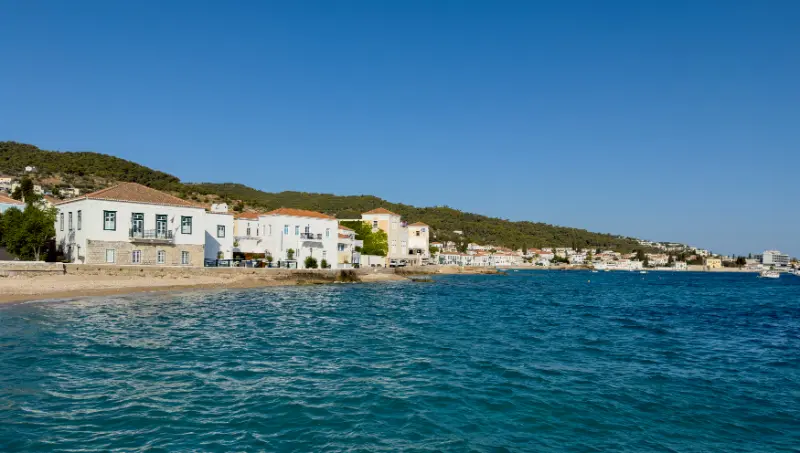
Start early, pace the first hills conservatively and plan one meaningful stop rather than many short interruptions. If you are unsure about completing the loop, ride an out-and-back section and keep energy for the return.
Standard bike or e-bike?
A standard bicycle suits confident riders who already cycle regularly. An e-bike is better for mixed-ability couples, travellers who want to stop at several beaches or anyone who values the scenery more than the training effect. The extra assistance is especially useful when headwind and hills combine.
Whatever you rent, inspect brakes, tyres and saddle position before leaving. Ask what support exists if you have a puncture or electrical issue far from town, and save the rental shop’s number offline.
Walking network: 19 routes and 65 km
The municipality’s walking network was developed through the Greek Paths of Culture programme and reaches from town or the perimeter road toward central-ridge locations. That scale means hiking is not an improvised side activity; it can fill several days for travellers who enjoy landscapes and quiet inland terrain.
Choose a route using distance, elevation and shade rather than a single attractive viewpoint. Ask locally about maintenance and fire conditions, because trail quality can change after winter growth, storms or summer restrictions.
Central ridge and Profitis Ilias
Routes toward the central ridge reveal a different island from the waterfront. Pine forest, open views and chapel landscapes replace the café and yacht atmosphere of Dapia. Profitis Ilias and Rigani are reference points within this inland network.
Carry more water than a town walk would require and do not expect regular shops. In hot weather, leave early enough to be descending before the strongest afternoon sun.
Combining activity with beaches
The smartest active days finish at water. Cyclists can build a stop at Agia Paraskevi, Agioi Anargyroi or Zogeria into the perimeter ride, while walkers can choose routes that end near the coast and arrange a bus, boat or sea taxi return.
This is also a safety strategy. A long ride followed by another hour of walking in heat is unnecessary when the island’s transport network offers alternatives.
Cycling in town
For short distances, bicycles are convenient between Dapia, Kounoupitsa and the Old Harbour, but the busiest waterfront sections are not race tracks. Pedestrians, carriages, taxis and service vehicles share limited space.
Ride slowly through crowded areas and dismount when pedestrian density makes cycling inconsiderate. The absence of private-car traffic should make the island calmer, not encourage aggressive riding.
Heat and seasonal planning
May, June, September and October are the best periods for longer rides and walks. In July and August, early starts are essential. The island may feel breezy by the sea while inland slopes become much hotter once you leave the waterfront.
Check fire-risk announcements in extreme summer weather. Pine landscapes are part of the island’s identity and require cautious behaviour: no smoking on trails, no open flames and no ignoring temporary access restrictions.
Navigation and equipment
A phone with offline maps, a power bank, water and sun protection are basic equipment. Hikers should wear shoes with real tread; cyclists need helmets and ideally a small repair kit. Do not depend on fashion sandals simply because the route begins in town.
Tell someone your planned route if you are heading inland alone. The island is small, but a wrong turn, minor injury or heat exhaustion still matters when you are away from services.
A two-day active plan
On day one, rent a bike and ride a partial or full perimeter loop with one long beach stop. On day two, choose a marked inland trail and finish with an easy town swim. This spreads the load across different muscles and keeps each day interesting.
If weather is poor, switch the cycling day to museums and do the active route later. Flexibility is more important than completing a pre-planned mileage target.
How many days do you need?
Two nights are enough to understand the shape of Spetses Town and enjoy one beach, but three or four nights are much more satisfying. A longer stay allows a museum morning, a slow Old Harbour evening, a remote-beach day and either a cycling or walking day without forcing every activity into the hottest hours.
If you are combining Spetses with Hydra or Poros, avoid changing islands every night. Three nights on one island usually feels richer than three separate one-night stops because ferry days eat into usable time and the best atmosphere on the Saronic islands often appears before day-trippers arrive or after they leave.

When to visit
May, June, September and early October offer the best balance for travellers who want beaches and walking in the same trip. July and August bring the strongest holiday atmosphere, more beach services and the highest demand, while midday heat makes cycling and inland walking less comfortable. Spring can be excellent for hiking and flowers, and the island remains attractive outside peak summer for history, architecture and quiet waterfront walks.
September has an additional cultural dimension because of Armata, the annual commemoration of the 1822 naval battle. In 2026 the municipality scheduled the wider programme from 28 August to 13 September, with the main reenactment on 12 September. If you travel for Armata, book transport and accommodation early because this is not a normal quiet September weekend.
What to pack
Comfortable walking shoes matter more here than on a resort holiday because even a relaxed day involves waterfront promenades, lanes and museum visits. Add reef-safe sun protection, a refillable water bottle, a hat, swim shoes if you dislike pebbles and a light layer for breezy ferry decks or late evenings.
Cyclists should bring or rent a helmet and carry more water than they expect to need. Families benefit from a compact beach shade for unorganised coves, while anyone staying in an old mansion or lane should pack luggage that is easy to carry over steps and uneven surfaces.
Practical tips that make the trip easier
- Begin long rides and hikes early in summer and plan to be near shade or water by midday.
- Rent a helmet even if local riders appear casual about wearing one; your holiday is not the place to take avoidable head-injury risk.
- Ask the rental shop which direction they recommend for the island loop based on current road conditions and wind.
- Carry at least one extra water bottle beyond what you think you need on ridge routes.
- Download offline maps and save the accommodation and rental-shop numbers before leaving town.
- Choose e-bikes based on condition and support, not just price; a weak battery far from town is not a bargain.
- On shared waterfront roads, slow down around pedestrians, children, horses and delivery vehicles.
- Use beach boats or buses as bailout options if heat or fatigue makes the planned return unsafe.
- Check municipal announcements for fire-risk restrictions or route closures during extreme summer conditions.
- Never enter the sea exhausted at a rough or unsupervised cove; recover, hydrate and assess conditions first.
Continue planning your Spetses trip
Use these guides as one connected cluster rather than separate checklists: Spetses Travel Guide; Dapia and Spetses Town Guide; Old Harbour Spetses Guide; Bouboulina and Spetses Museums Guide; Best Beaches in Spetses; Spetses Without a Car; Spetses Cycling and Hiking Guide; Spetses with Kids; Where to Stay in Spetses; Spetses 4-Day Itinerary. For nearby alternatives, compare Hydra, Poros and Aegina.
Useful official sources before you go
For time-sensitive details I cross-check the Municipality of Spetses visitor portal, the official transport page, the official beach guide and Visit Greece. Ferry schedules, beach boats, bus frequencies, museum access and event programmes can change, so verify the details that affect a specific day shortly before travelling.
Frequently asked questions
How long is the cycling loop around Spetses?
The municipality describes the perimeter road as about 25 kilometres.
How many hiking routes are there?
The municipal activity guide lists 19 walking routes covering about 65 kilometres in total.
Do I need a mountain bike?
Not for the main perimeter road. A well-maintained hybrid, city bike or e-bike can work, while trail-focused routes may justify different equipment.
Is Spetses good for hiking in August?
It can be, but only with very early starts, careful heat management and attention to fire-risk conditions. Shoulder seasons are more comfortable.
Can I combine cycling with beaches?
Yes. That is one of the best ways to use the perimeter road, as long as you protect the bike and do not leave valuables unattended.
Final planning advice
Active travel is one of the best ways to understand why Spetses feels different from a conventional resort island. Ride or walk slowly enough to notice the pine landscape, use the sea as a recovery stop and treat heat management as part of the route rather than an afterthought.
Leave a Reply