
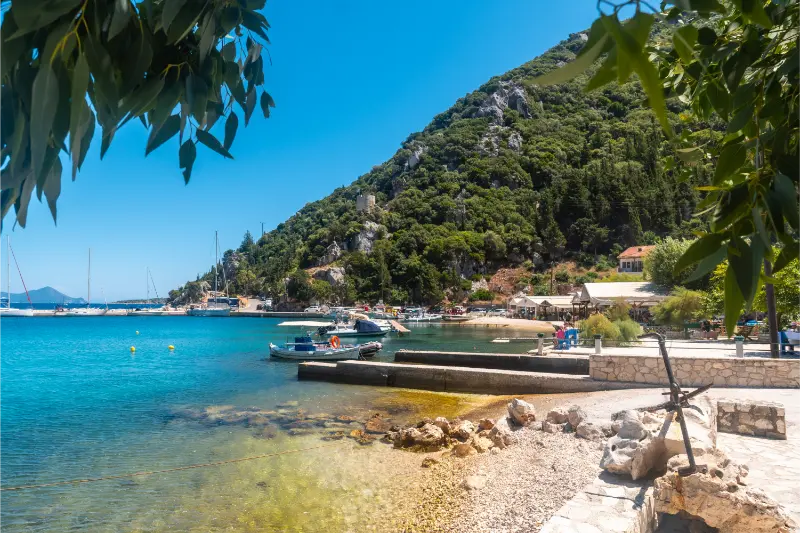
A boat day is one of the best ways to understand Ithaca because the island’s coastline is more intricate than the road map suggests. Cliffs, narrow coves and beaches that are awkward on foot become easy from the water, and the island’s mountainous profile makes much more sense when seen from offshore. The challenge is choosing the right trip: a short beach transfer, a shared cruise and a private boat charter are very different products.
Gidaki from Vathy: the simplest boat experience
For many first-time visitors, a boat to Gidaki is the easiest introduction. Seasonal boats leave from Vathy and turn a beach day into a short coastal excursion. This is ideal if you are staying without a car or want one memorable swim without committing to a full-day cruise.
Ask whether the fare is a simple return transfer or includes multiple stops. Confirm the last pickup before getting off the boat. A beach that feels wonderfully remote becomes stressful if you misunderstand the schedule.
North-coast trips and Afales Bay
Afales is more dramatic and works especially well by sea because the bay contains coves that are difficult or time-consuming to reach on foot. A north-focused trip may leave from Frikes or Kioni depending on operator and season. Sea state matters: the exposed northern coast can be rougher than the sheltered water around Vathy.

If the captain changes the route because of wind, treat that as good seamanship rather than a disappointment. The best boat day is the safe route chosen for that morning, not the itinerary printed months earlier.
Hidden coves versus named highlights
Private or small-group trips often work best when you stop asking for a checklist of famous beaches. Captains can choose a cove based on wind, boat traffic and water clarity. A nameless bay with no other boats can be more memorable than a crowded “must-see” beach.
If a specific beach is essential, say so before booking and ask how often conditions prevent that stop. This is particularly important for exposed places and cliff-backed coves.
Can you visit Kefalonia by boat?
Ithaca and Kefalonia are close enough that day trips or transfers between them are part of the local travel pattern. Excursion availability varies by season and operator. Fiskardo and Sami are obvious points of interest, but a dedicated ferry or planned overnight may make more sense if you want real time on Kefalonia rather than a short lunch stop.
For scheduled ferry connections, use the Ithaca ferries and island-hopping guide. Excursion boats and ferries are not interchangeable: tickets, luggage rules, vehicle transport and cancellation policies differ.
Shared cruise or private boat?
Option Best for Main trade-off Beach transfer Gidaki and simple swimming day Little flexibility Shared cruise Budget-conscious sightseeing Fixed timetable and group Small-group cruise More swimming and fewer people Higher price Private skippered boat Families or custom route Most expensive Self-drive rental boat Experienced confident operators Weather, licence/rules and navigation responsibility
Renting a small boat yourself
Some boats may be available without a formal skipper depending on engine size and Greek regulations, but “no licence required” does not mean “no experience required.” Ask for a proper briefing, understand the anchor, know the operating area and save the base phone number.
Do not enter caves, narrow channels or exposed offshore water just because a social-media video shows someone doing it. Wind can rise quickly and an afternoon return can be much less comfortable than the morning departure.
What to bring on a boat day
- High-SPF sunscreen and a hat that can be secured in wind.
- Water and a snack even if lunch is included.
- Light layer because wind over water can feel cool after swimming.
- Dry bag or waterproof pouch for phone and documents.
- Water shoes for pebble landings.
- Any motion-sickness medication you normally use, taken according to instructions before departure.
Swimming from boats safely
Wait until the captain confirms the engine is off and the boat is secure. Use the ladder rather than jumping unless the crew explicitly says the water is deep and safe. Keep distance from other boats and never swim across an active anchorage.
Children and weaker swimmers should use flotation aids appropriate to their ability and stay close to the boat. Clear water makes depth hard to judge.
Best time of day and season
Morning departures often benefit from calmer conditions and lower heat. July and August have the widest excursion choice but also more boat traffic. June and September can be excellent if services are operating, with warm water and fewer crowded anchorages.
Always re-confirm the trip the evening before. Small-boat operators may postpone or change routes when wind is unsuitable, and that flexibility is a safety feature.
How a boat trip fits a five-day Ithaca itinerary
Place the boat day after at least one land day, so you understand the coastline you are seeing. Keep the following evening free rather than driving straight to a northern dinner after hours in the sun. If you have only three days, choose either a Gidaki transfer or a half-day cruise; a full circumnavigation can consume most of the trip.
Booking accommodation and activities
For accommodation, compare places to stay in Ithaca on Booking.com. Check the exact village rather than booking from the island name alone: Vathy, Kioni, Frikes and the northern villages create very different daily logistics.
For organised activities and excursions, use the widget below as a starting point. Availability on Ithaca is seasonal and inventory can be limited, so verify the meeting point, cancellation terms and whether transfers are included before paying.
Official resources to recheck before you go
For an official destination overview, use Visit Greece’s Ithaca page. It describes Vathy, the fishing villages, pebbled coves and the island’s walking character, and it is a useful starting point before checking local conditions.
For beaches, the official Visit Greece beaches of Ithaca page covers Filiatro, Dexa, Gidaki, Platia Ammos, Afales, Sarakiniko and Skinos. For local notices, municipal services and seasonal announcements, check the Municipality of Ithaca.
More Ithaca guides for planning the same trip
Continue with Vathy Ithaca Guide · Kioni and Frikes Ithaca Guide · North Ithaca Villages Guide · Best Beaches in Ithaca · Ithaca Hiking and Odysseus Sites Guide · Ithaca Boat Trips Guide · Ithaca Without a Car · Where to Stay in Ithaca · Ithaca with Kids · How to Get to Ithaca. Start with the Ithaca Travel Guide if you need the island overview before choosing detailed day plans.
Questions to ask before paying
Ask the maximum passenger number, actual cruising time, number of swim stops, included food or drinks, shade, toilet availability and cancellation policy. If the operator advertises a full circumnavigation, ask whether that changes in strong wind. A precise conversation prevents disappointment much better than comparing star ratings alone.
For private trips, agree whether fuel is included and whether the quoted duration counts from boarding or from leaving the harbour. Small differences can change the real cost substantially.
Photography and phones on the water
Salt water damages phones quickly. Keep devices in a dry pouch and use a wrist strap only if it cannot catch on ladders or ropes. The best photographs often come before entering the water, when the boat is stable.
Do not ask a captain to approach cliffs, swimmers or caves more closely for a photograph. Professional judgement about swell and rock clearance should override the image you imagined.
Practical timing by season
In May and early June, walking and village exploration are easier in cooler temperatures, but the sea is cooler and some seasonal services run less frequently. July and August bring the fullest transport and restaurant choice, along with stronger heat, parking pressure and demand for taxis and boats. September is often the best compromise for warm water and calmer roads, while October requires more careful checking of ferry frequencies and business opening days.
Whatever the month, plan the following day with the actual wind and temperature forecast rather than using a fixed itinerary written weeks earlier. Ithaca is compact enough that changing from a north-coast beach to a Vathy day, or from hiking to a museum and long lunch, rarely ruins the trip. Flexibility is one of the island’s greatest advantages.

Common planning mistakes
The most common mistake is treating short distances as short journeys. Roads are narrow and winding, parking takes time and a spontaneous swim can easily add an hour. Do not schedule every meal, beach and village. Choose one main purpose for the day and let secondary stops remain optional.
Another mistake is relying on a single old timetable or map review. Ferries, local buses, excursion boats and seasonal businesses change. Confirm anything time-critical close to travel and keep departure day simple. Finally, avoid judging the island only by famous names: a quiet unnamed cove or ordinary village square can be more memorable than a hurried checklist stop.
How to keep the trip relaxed
Ithaca rewards repetition. Returning to the same waterfront for coffee, revisiting a beach when the wind changes and recognising the road to your village are not wasted opportunities; they are what turns a destination into a place you remember. Leave at least one half-day unplanned so weather, local advice or simple tiredness can change the schedule without creating a sense of failure.
A practical rule is to stop adding major stops once the day already includes one long drive, one swim and one substantial meal. That may sound conservative, but it produces more time in the water and less time looking at the island through a windscreen.