
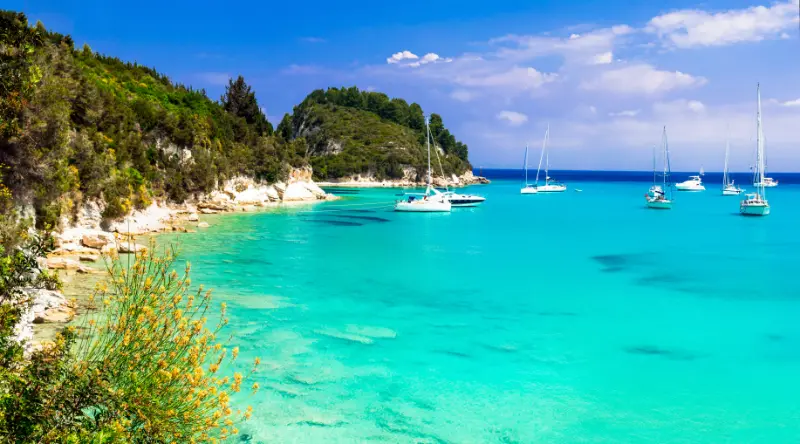
Paxos is one of those Greek islands that makes more sense when you stop thinking in terms of “top sights” and start thinking in terms of small harbours, olive groves, hidden coves and time on the water. The island is compact, but the west coast cliffs, the villages of Gaios, Loggos and Lakka, and the easy access to tiny Antipaxos create enough variety for several unhurried days.

I would choose Paxos for a quieter Ionian trip after reading the Corfu travel guide or the Parga travel guide. It is close enough to both to combine naturally, yet its scale and atmosphere are very different.
Why visit Paxos and Antipaxos?
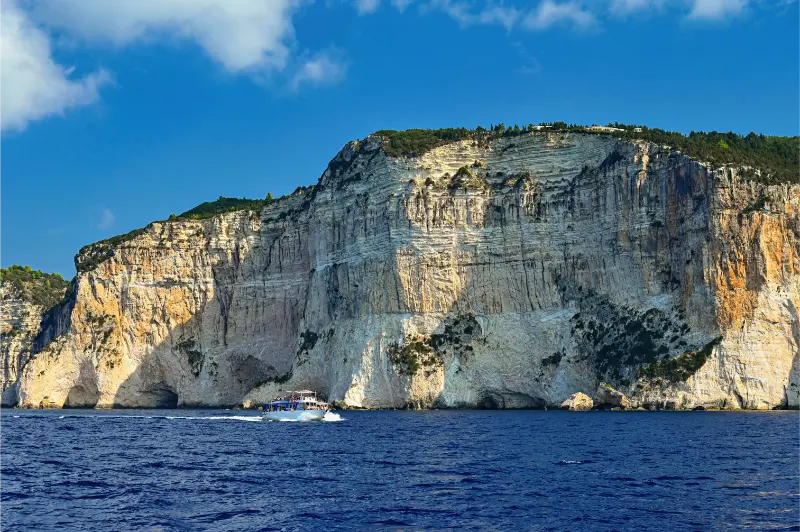
Paxos is green, low-rise and deeply shaped by olive cultivation. The east coast is gentler and holds the main settlements, while the west coast is more dramatic, with pale cliffs, caves and viewpoints above deep blue water. Antipaxos, just to the south, is smaller still and famous for bright turquoise coves such as Voutoumi.
The real strength of the trip is the balance between land and sea. One day can be spent walking old paths between villages, another on a small boat exploring the cliffs, and another simply moving slowly between a beach and a waterfront dinner.
Where to stay
Gaios
The main port is the most practical base for first-time visitors. It has the widest choice of restaurants, shops and transport, and the waterfront setting feels lively without becoming a large resort.
Lakka
Lakka sits around a sheltered bay in the north and suits travellers who want a compact village with easy access to northern beaches and sunset viewpoints.
Loggos
Small Loggos is the quietest of the three main harbours. It works well for couples and repeat visitors who prefer a village atmosphere and are happy to use taxis, buses, boats or a rental vehicle for longer trips.
Best things to do
Walk through Gaios
Start at the harbour, cross the small bridges and lanes around the waterfront, and allow time to watch boats arriving rather than treating the town only as a transport point.
Explore the west-coast cliffs and sea caves
A boat trip is the easiest way to understand the island’s dramatic western side. Conditions matter, so I would keep this excursion flexible and choose the calmest day available.
Spend a day on Antipaxos
Antipaxos is the classic swimming excursion. Voutoumi and nearby coves can look almost tropical in strong sun, but summer boat traffic means an early departure is usually more pleasant.
Walk between villages
Paxos has a strong network of old paths through olive groves. The official tourism site highlights the roughly 12 km Lakka–Gaios route and shorter walks around Loggos, Orkos and Lakka.

Watch sunset from the west side
The cliffs around Erimitis and nearby viewpoints face the open Ionian Sea. Arrive with time to park safely and avoid standing close to unstable cliff edges.
Rent a small boat if conditions and experience allow
Independent boating can open up coves that are awkward by road, but it should only be considered within local rules, weather limits and your own boating experience.
Beaches
Paxos has many pebble and shingle beaches rather than long sandy stretches. Monodendri, Levrechio and Marmaria are among the easier options, while smaller coves reward travellers who are prepared to walk. Antipaxos provides the most famous turquoise-water beach experience.
Food and local character
Meals are part of the destination rather than an activity to squeeze between sights. I would alternate harbour tavernas with quieter village restaurants and look for Ionian dishes, local olive oil, seafood and simple grilled food. The setting matters as much as the menu here.
How to get there
Paxos has no airport. Most travellers arrive by sea, often via Corfu or the mainland coast. Services vary by season and operator, so the exact connection should be planned around your travel dates rather than assumed months in advance.
Getting around
The island is small but not flat enough to treat every transfer as an easy walk. Local buses, taxis, rental cars, scooters and boats all have a role. If you drive, remember that village lanes and parking areas are much tighter than they may appear on a map.
A realistic 5-day itinerary
Day 1 – Gaios and nearby beaches
Settle in, walk the harbour and choose an easy swim close to town.
Day 2 – Lakka and the north
Explore Lakka, nearby coves and a west-facing sunset viewpoint.
Day 3 – Antipaxos
Use the best-weather day for a boat excursion and swimming.
Day 4 – West coast and walking
Combine an olive-grove walk with cliff viewpoints or a sea-cave trip if conditions are suitable.
Day 5 – Loggos and a slow final day
Spend time in Loggos, choose one last beach and avoid an overfilled departure day.
How I would plan the trip
I would build a trip to Paxos and Antipaxos around geography rather than a list of attractions. Choose one main area for each day, add only nearby stops, and keep at least one half-day flexible. On a Greek island, the distance on the map rarely tells the full story: narrow roads, parking, ferry schedules, heat and the temptation to stop at an unexpected beach can all stretch a simple transfer.
Transfer days deserve their own space in the itinerary. A morning ferry, a rental-car pickup or a mountain drive can consume more time than the timetable suggests once luggage, check-in and meals are included. Treating those hours as real travel time is one of the easiest ways to make the holiday feel relaxed rather than rushed.
Best time to visit
For a first trip to Paxos and Antipaxos, late spring and early autumn are usually the easiest seasons to balance warm weather with a calmer pace. July and August bring the most reliable beach conditions but also the highest demand, stronger midday heat and more pressure on parking and accommodation. In shoulder season, some seasonal services may run less frequently, so transport and opening times should be checked close to the trip.
If walking, archaeological sites or road trips are central to the plan, I would avoid putting the most exposed activities in the middle of the day. Start early, leave the hottest hours for lunch or swimming, and return to villages and viewpoints later in the afternoon.
Budget and booking strategy
Accommodation prices can change dramatically by month and by exact location. I compare the total cost of the stay rather than the room rate alone: a cheaper property can become less attractive if it requires daily taxis, long drives or paid parking. On small islands and in mountain regions, location is often worth more than an extra category of hotel.
Ferry timetables, domestic flights, rental-car prices and boat excursions are dynamic. I would book the fixed parts of the trip first, then leave weather-dependent activities flexible where possible. Always recheck schedules a few days before travel and again on the day when sea conditions are relevant.
Practical mistakes to avoid
The most common mistake in Paxos and Antipaxos is trying to see too much in too little time. A better trip usually comes from choosing fewer bases, driving the same roads less often and leaving space for a beach, village or meal that turns out to be better than expected.
Do not assume every attractive cove has easy access, shade, facilities or reliable phone coverage. Carry water, sun protection and shoes suitable for uneven ground. Download an offline map before remote drives or hikes, and ask locally before taking a rental car onto rough roads that may not be covered by the rental agreement.
Who this destination suits
Paxos and Antipaxos works especially well for independent travellers who enjoy combining landscapes with local food and small-scale sightseeing. Couples can build days around beaches, sunset walks and slow dinners, while solo travellers gain flexibility to follow weather and transport conditions. Families can also enjoy the destination, but the most comfortable plan usually uses fewer bases and avoids very long transfer days.
Travellers with limited mobility should check accommodation access carefully. Historic villages can have steep lanes, steps and parking outside the centre, while some beaches require rough paths or stairways. A beautiful location on a map is not always the most practical base for every traveller.
How to combine it with the rest of Greece
Paxos combines naturally with Corfu, which adds a UNESCO-listed old town and a larger island road trip, or with Parga on the mainland. For a broader comparison of western islands, use the Kefalonia guide and Lefkada guide.
Frequently asked questions
How many days do I need in Paxos and Antipaxos?
For a first visit, four to seven days usually gives enough time to understand the destination without turning every day into a transfer. A shorter stay can work if you focus on one area and accept that you will leave some places for another trip.
Do I need a car?
It depends on the destination and your base, but a car is often the easiest way to reach beaches, villages and archaeological sites away from the main town. If you prefer not to drive, choose accommodation around the strongest public-transport hub and build the itinerary around available buses, boats and organised excursions.
Is it suitable for a first trip to Greece?
Yes, provided you match the destination to your travel style. It is particularly rewarding for travellers who want to go beyond the most famous Greek islands while still having enough infrastructure for an independent holiday.
Should I book everything in advance?
Book the parts that can sell out or determine the structure of the trip, such as peak-season accommodation, flights and important ferry connections. Keep beach days and weather-sensitive excursions more flexible whenever cancellation terms allow.
What should I pack?
Bring sun protection, a reusable water bottle, comfortable walking shoes and a light layer for windy evenings or mountain areas. For beach-heavy itineraries, water shoes can be useful on pebbled or rocky shores.
Final advice
The best way to experience Paxos and Antipaxos is to resist the temptation to turn it into a checklist. Spend enough time in one area to notice the rhythm of the place, eat where the day naturally takes you, and leave room for local recommendations. That slower approach is what makes a second-tier destination in the guidebooks feel like a first-rate travel experience.
Useful official information
For destination information and current travel inspiration, consult the Greek National Tourism Organisation: Visit Greece. Transport timetables, seasonal opening hours and excursion schedules should always be checked again close to your travel dates.
A closer look at Antipaxos
Antipaxos is small enough that many visitors experience it only from a beach boat, but its interior paths and old vineyards add another dimension. If your boat schedule allows a longer stop, walking even part of the island changes the experience from a quick swim into a sense of place.
Official tourism information describes a network of gentle paths linking the settlement, beaches and viewpoints. The longer Agrapidia–lighthouse–Voutoumi route is around eight kilometres, which means a walking day should be planned around heat and the last return boat rather than improvised at noon.
More Ionian Islands guides
Continue with Antipaxos for more detailed planning in the Ionian Islands.
More detailed Paxos guides
- Gaios Paxos Guide: Harbour, Agios Nikolaos Castle, Mongonissi, Food and Where to Stay
- Lakka Paxos Guide: Harbour, Harami Beach, Lighthouse, Sunset and Where to Stay
- Loggos Paxos Guide: Harbour, Levrechio, Marmari, Old Soap Factory and Where to Stay
- Best Beaches in Paxos: Monodendri, Kipiadi, Orkos, Marmari, Erimitis and More
- Paxos Boat Trips Guide: Blue Caves, Tripitos Arch, Antipaxos and Hidden Coves
- Paxos Hiking Guide: Gaios to Lakka, Loggos Trails, Erimitis and Olive Groves
- Paxos Without a Car: Buses, Taxis, Boats, Walking and the Best Base
- Where to Stay in Paxos: Gaios, Lakka, Loggos or Mongonissi?
- Paxos with Kids: Family Beaches, Boat Trips, Easy Villages and Practical Tips
- How to Get to Paxos in 2026: Ferries from Corfu, Igoumenitsa and Day Trips
Related itinerary: Corfu and Paxos in 7 Days: Ionian Island-Hopping Itinerary.