
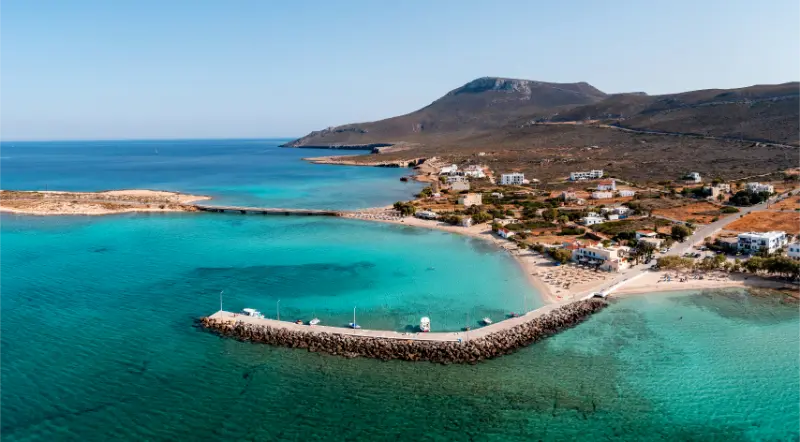
Where you stay in Kythira changes the holiday more than the hotel star rating. The island is spread out enough that a cheap room in the wrong area can create hours of unnecessary driving, while the right base lets you swim, eat or walk without getting back in the car every evening.
There is no universal best area. Chora is strongest for history, Kapsali for a beach-and-evening routine, Avlemonas for quiet east-coast charm, Agia Pelagia for the north, and Mylopotamos for inland atmosphere. Livadi and Diakofti solve different practical problems.
Quick planning summary
| Question | Practical answer |
|---|---|
| Best for | Where To Stay In Kythira travellers and first-time visitors |
| Car needed? | Very useful for broad island exploration; selected bases can work without one |
| Best timing | Morning and late afternoon for walking; beach or shade around midday in summer |
| What to verify | Seasonal hours, road access, wind and local transport close to the travel date |
Quick comparison
Chora: best for architecture and atmosphere. Kapsali: best for beach access and waterfront evenings. Avlemonas: best for couples and clear-water coves. Agia Pelagia: best for a practical northern base. Mylopotamos: best for village character and walking. Livadi: useful central-south road access. Diakofti: useful for port logistics and a quieter beach setting.
Your choice should follow the dominant reason for the trip. If you intend to hike and visit villages, do not choose a base only because it appears directly on a beach. If your children need an easy swim every morning, do not choose a dramatic hill village and assume the drive will feel short every day.
Chora: best for culture and atmosphere
Choose Chora if the castle, historic lanes and evening walks are central to the trip. It feels most like a destination rather than a resort. The compromise is that swimming requires a move down to Kapsali or another beach, and hillside parking or stairs can matter.
Chora suits couples, photographers and first-time visitors who want a memorable evening base. Ask where you can actually park and how many steps separate the room from the main lanes.
Kapsali: best all-round beach base in the south
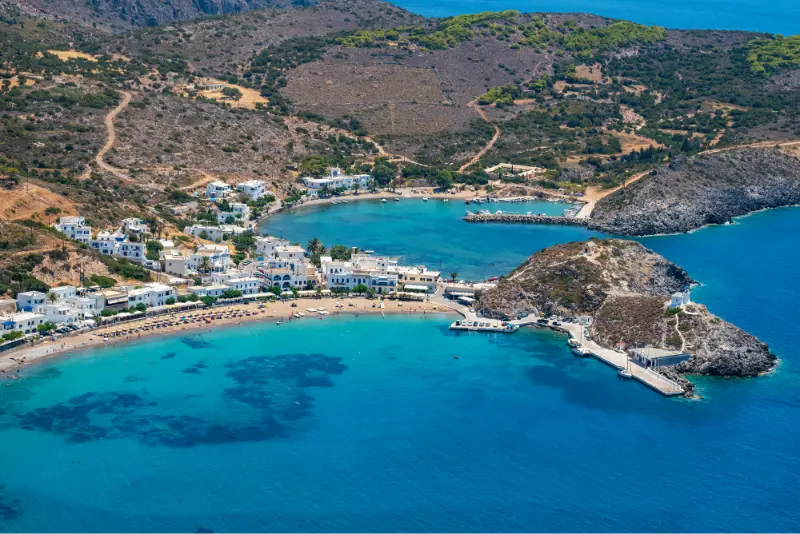
Kapsali is easier if you want to swim, eat and have a drink without driving. The twin bays and view toward the castle create a strong holiday atmosphere. It also gives access to seasonal boat trips toward Chytra.
The main disadvantage is that it can feel busier in peak summer and is not central for northern exploration. If you stay here, group north-coast sights into one or two full days rather than driving back and forth.
Avlemonas: best for calm east-coast charm
Avlemonas suits travellers who value a small village, rocky swimming coves and quiet evenings. It is romantic without relying on nightlife and works well for an east-coast itinerary including Paleopolis and nearby beaches.
Families with toddlers should check whether the swimming access suits them, because the village is known more for rocky natural-pool style entries than broad shallow sand.
Agia Pelagia: best for northern practicality
Agia Pelagia gives you accommodation, waterfront food and immediate access to the north. It works well for longer stays, families and travellers who want Potamos and northern beaches to be a real part of the holiday.
If most of your wish list is Chora, Kapsali, Mylopotamos and south-west beaches, the location becomes less efficient. Choose it because you want the north, not simply because a room is available.
Mylopotamos, Livadi and Diakofti
Mylopotamos offers shade, history and an inland village rhythm, ideal for walkers and slower travel. Livadi is less romantic but can be convenient for road connections in the central-south. Diakofti is useful around ferry logistics and for travellers who prefer a quieter, simpler coastal base.
These areas prove that accommodation strategy is not only about beauty. Sometimes the best base is the one that shortens the trips you actually plan to make.
Should you split the stay?
For a week or more, a split stay can make sense if you genuinely want both the north/east and south/west. For three or four nights, changing hotels usually wastes time. Kythira is large enough to reward regional planning but small enough that one well-chosen base still works for most first visits.
If you split, do it once. Two nights in the north or east plus four or five nights in the south is more practical than moving every other day.
How Kythira changes the way you plan a Greek-island day
Kythira is not a compact resort island where every attraction sits around one bay. Villages, beaches and historical sites are spread across a rugged landscape, so the best days normally focus on one side of the island rather than crossing from north to south several times. I plan mornings around one anchor place, add a nearby beach or village, and leave dinner close to wherever the afternoon naturally ends.
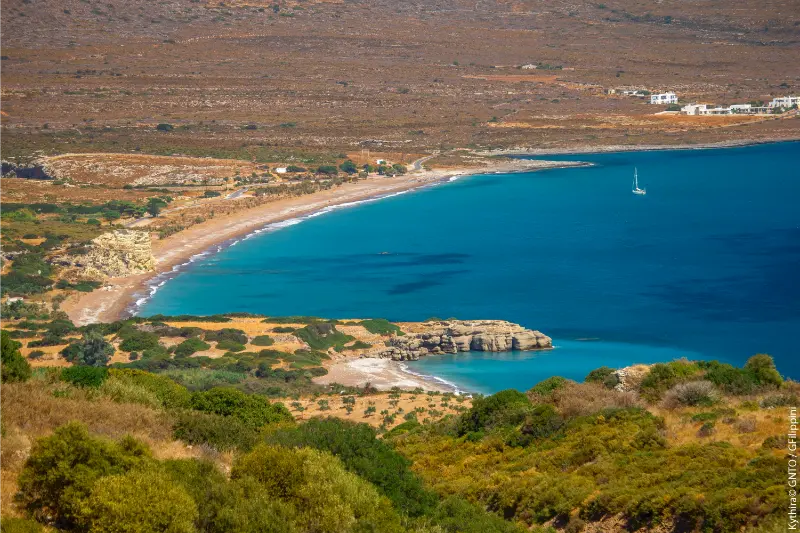
The island also rewards flexibility. Wind can change which beach feels comfortable, a waterfall can be less dramatic after a dry period, and seasonal businesses do not all keep the same hours outside the busiest weeks. Treat the itinerary as a framework, not a contract. One unhurried village, one swim and one meaningful cultural stop often produce a better day than a long checklist.
Driving, parking and realistic travel time
Even when map distances look short, allow extra time for bends, village streets, parking and short walks from the road. Kythira is manageable by car, but it is not an island where I would schedule activities back-to-back. In popular places such as Chora, Kapsali, Kaladi or Mylopotamos, arriving earlier also makes parking and photography noticeably easier.
If you rent a car, choose a vehicle you are comfortable using on narrow roads and never assume that every road to a remote beach has the same surface. Ask locally about the final approach before committing to an isolated cove, especially after unusual weather. For no-car travel, build the holiday around a strong base and use taxis or seasonal public transport selectively rather than trying to imitate a full road trip.
Best season and daily rhythm
Late spring and early autumn are especially attractive if walking, villages and archaeology matter as much as swimming. July and August deliver the warmest sea and the widest choice of seasonal services, but they also require earlier starts, more careful parking and a serious approach to shade and hydration. September is often a useful compromise for travellers who want warm water without the same daytime intensity.
In summer, I keep exposed walks, castles and viewpoints for morning or late afternoon. Midday is better for a shaded lunch, a protected beach or a long break. Kythira’s most memorable places are often atmospheric rather than monumental, so giving them time is part of the experience rather than wasted schedule space.
Food, water and what to carry
Kythira is known for products such as thyme honey, local rusks and the aromatic Fatourada liqueur, but the practical food rule is simpler: eat where the day already takes you. A lunch in Mylopotamos, a waterfront meal in Kapsali or Avlemonas, and a village dinner in the north all make more sense than driving across the island for one saved restaurant pin.
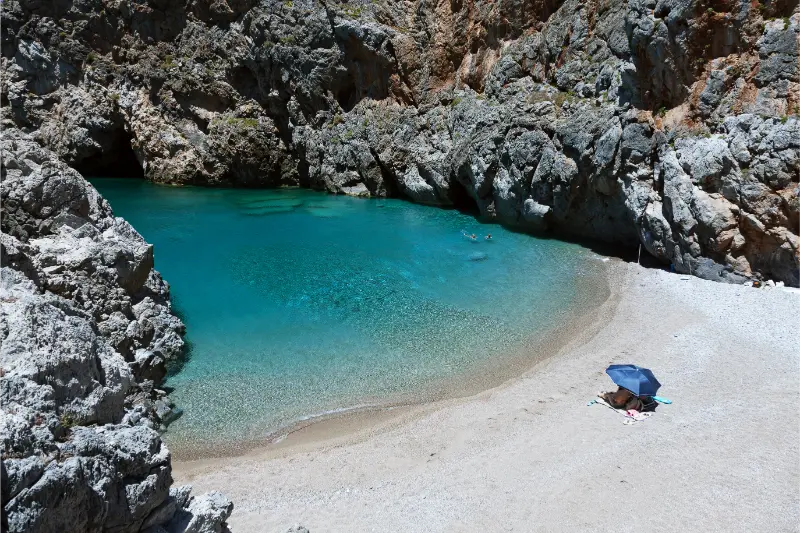
For remote beaches and trails, carry water, sun protection and at least a small snack. Some coves have seasonal facilities while others have none. I also keep swim shoes, a light shoulder cover for churches and monasteries, and an offline map on my phone. Small preparations matter more here than on an island built around organised beaches.
Accessibility and slower travel
Historic settlements, castle approaches, waterfall paths and rocky coves can involve steps or uneven ground. Travellers with limited mobility should ask accommodation hosts very specific questions about stairs, parking distance and the route to the nearest restaurant or beach. A beautiful room can be inconvenient if every outing begins with a steep climb.
Slow travel works exceptionally well on Kythira. Staying longer in one area reduces driving and makes room for repeat swims, village cafés and weather changes. If you have only three nights, do less. With a week, divide the island into south, east, west/inland and north rather than changing hotels repeatedly.
Common mistakes to avoid
The most common mistake is underestimating how spread out the island feels. The second is treating every beach recommendation as suitable in every wind direction. Other avoidable errors include wearing sandals on rough trails, arriving at a cave or museum without checking seasonal hours, and assuming a waterfall will look identical in late August and after spring rain.
I would also avoid booking accommodation solely on a low map price. Location affects almost every day on Kythira. A base with dinner, a swim and a useful road connection nearby can save enough driving and taxi time to be worth a slightly higher room rate.
How this fits into a complete Kythira trip
Use this guide as one part of a regional plan. The existing Kythira Travel Guide gives the island-wide overview, while the dedicated guides below let you plan the areas and travel styles in more detail. I would normally combine one cultural or walking focus with one beach area each day rather than criss-crossing the island.
Continue planning with Chora and Kapsali Kythira Guide: Castle, Twin Bays, Chytra and Where to Stay; Avlemonas and Paleopolis Kythira Guide: Coves, History, Beaches and Where to Stay; Agia Pelagia Kythira Guide: Beaches, North Coast, Food and Where to Stay; Mylopotamos Kythira Guide: Kato Chora, Watermills, Waterfall and Village Life; Kythira Waterfalls and Caves Guide: Fonissa, Watermills and Agia Sophia; Best Beaches in Kythira: 15 Beaches for Families, Snorkelling and Wild Scenery; Kythira Hiking Guide: Best Kythera Trails, Gorges, Villages and Safety; Kythira Without a Car: Taxis, Buses, Transfers and the Best Bases; Kythira with Kids: Family Beaches, Easy Days and Practical Tips; Where to Stay in Kythira: Chora, Kapsali, Avlemonas, Agia Pelagia or Mylopotamos?.
Where To Stay In Kythira FAQ
What is the best area for a first trip?
Chora/Kapsali is the strongest all-round choice if history, beach time and evening atmosphere all matter.
Where should couples stay?
Chora and Avlemonas are especially attractive for atmosphere; Kapsali suits couples who want the sea immediately outside.
Where is best with children?
Kapsali or Agia Pelagia usually simplify beach and meal logistics.
Is Mylopotamos too inland?
Not if walking, waterfalls and village life are priorities, but it is less convenient for daily beach-first routines.
Should I change hotels during a week?
Only if the second base clearly reduces driving for a different region of the island. One move is enough.
Useful official information
Use Visit Kythera to compare settlements and beaches, then verify the exact property location on a map. Ask hosts directly about parking, stairs and walking distance to food or swimming.
Opening times, local road conditions, public transport, boat trips and seasonal businesses can change. Recheck anything time-sensitive shortly before you use it, especially outside July and August or after unusual weather.
Leave a Reply