

Choosing where to stay in Samos matters more than choosing the “best hotel.” The island is large enough and mountainous enough that a beautiful property in the wrong area can turn every day into a long drive. The right base should make your most frequent activity easy: Kokkari for north-coast beaches and atmosphere, Pythagoreio for archaeology and evenings, Vathy for public transport, Votsalakia for a slow south-west beach stay, or Karlovasi for western exploration.
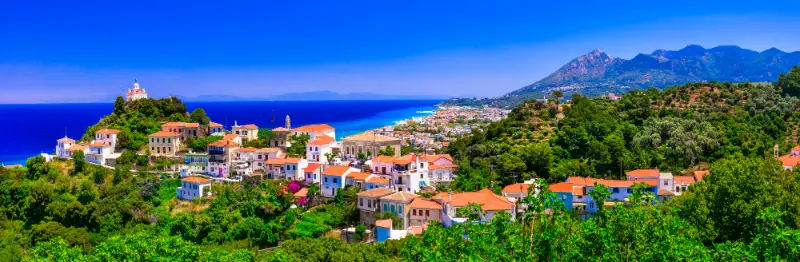
For stays longer than a week, splitting the trip between east/north and west can make sense. For four or five nights, one base is usually better. Packing, checking out and moving luggage costs more holiday time than most people expect.
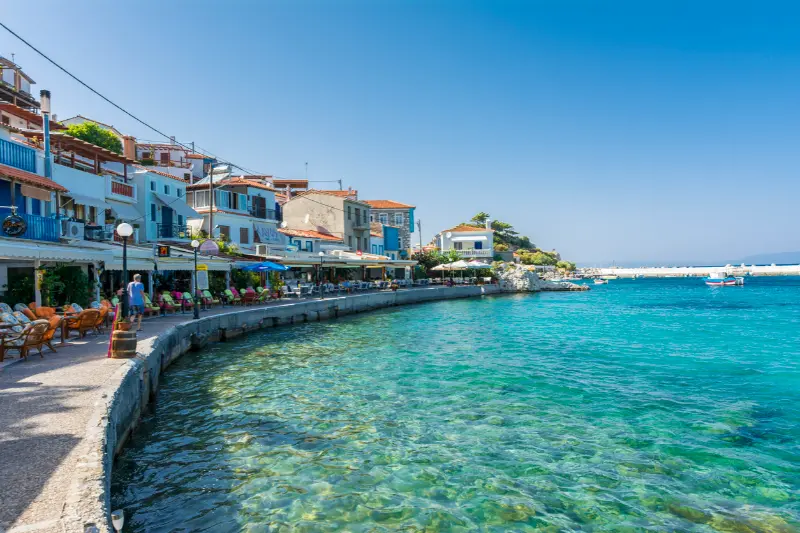
Kokkari: best for couples and north-coast atmosphere
Choose Kokkari if you want a compact village, waterfront dinner, attractive nearby beaches and easy access to Manolates/Vourliotes. It feels polished enough for a romantic trip without becoming a large resort.
Main trade-off: north-coast wind and pebble beaches. Families should check whether that beach style suits young children.
Pythagoreio: best first-time all-round base
Pythagoreio combines a beautiful harbour, restaurants, archaeology, airport convenience and access to Heraion and south-east beaches. It is one of the strongest first choices for travellers who want history and evenings without staying in the capital.
Main trade-off: the west side of the island is far enough away that repeated Karlovasi or Kerkis days become tiring.
Vathy / Samos Town: best without a car
Vathy wins on logistics: main bus hub, museums, services, shopping, taxis and port connections. It suits travellers who want to use public transport and see several areas rather than stay next to one beach.
Main trade-off: you will travel for the classic beach experience. Choose it because you value transport and culture, not because you expect a resort outside the hotel door.
Votsalakia / Kampos: best for relaxed beach weeks
The south-west is excellent for apartments, long beach days, families and access to Mount Kerkis. It works especially well for travellers who are happy to spend several days locally rather than crossing the island constantly.
Main trade-off: distance from the airport, Vathy and Pythagoreio. A car is strongly recommended for a broad sightseeing trip.
Karlovasi: best for western Samos and repeat visitors
Karlovasi is practical for western hiking, Potami, ferries and local life. It is a good choice for travellers who prefer a working town to a resort and for split stays that reduce driving.
Main trade-off: it lacks the immediate holiday atmosphere of Kokkari or Pythagoreio.
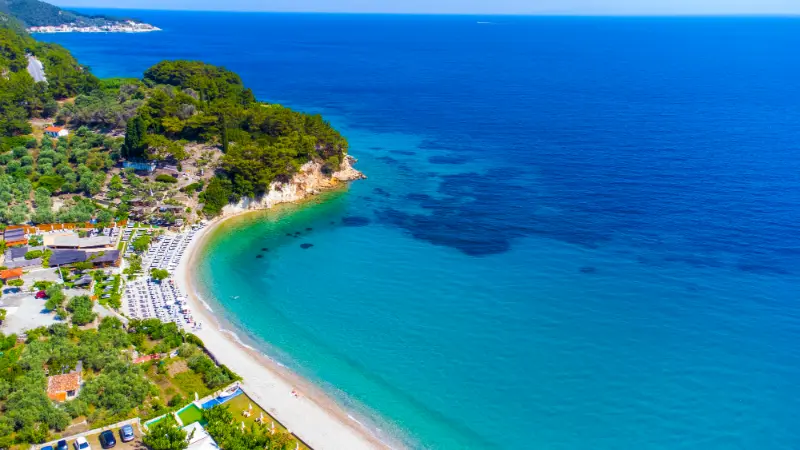
South-east coast: best for quiet coves and car-based exploring
Areas around Mykali, Psili Ammos, Posidonio and Klima can be excellent if you want sea views and quieter nights. They are best with a car because restaurants, shops and beaches are distributed rather than concentrated in one walkable centre.
Best areas by traveller type
| Traveller | Best first choices | Why |
|---|---|---|
| Couples | Kokkari, Pythagoreio | Atmosphere, dinners, attractive setting |
| Families | Votsalakia, Pythagoreio, south-east | Practical beaches and apartments |
| Without a car | Vathy, Pythagoreio, Kokkari | Buses, taxis, walkable evenings |
| Hikers | Marathokampos/Votsalakia, Karlovasi | Kerkis and western trail access |
| History lovers | Pythagoreio, Vathy | UNESCO sites and museums |
| Wine/food travellers | Vathy, Kokkari + mountain villages | Wine museum and Ambelos access |
One base or two?
With five nights, stay in one place and accept one or two longer days. With eight to ten nights, splitting between Pythagoreio/Kokkari and the west or south-west can reduce driving enough to justify the hotel move. Do not split simply because a map makes the island look large; split because your priority list genuinely belongs to two different regions.
What to check before booking accommodation
- Exact walking distance to restaurants and bus stop.
- Parking availability if renting a car.
- Slope or stairs between property and waterfront.
- Air-conditioning policy and room location.
- Recent comments about road noise or evening noise.
- Whether “sea view” is direct or partial.
- Cancellation terms for shoulder-season travel.
How where to stay in Samos fits into a wider Samos trip
Use this page together with the Samos travel guide, Pythagoreion and Heraion UNESCO guide, Kokkari, Samos Town and Vathy, Karlovasi and Potami, Manolates and Vourliotes, Marathokampos and Votsalakia, Samos wine, best beaches, hiking, Samos without a car and where to stay. The strongest Samos itineraries are built by geography: combine the north coast with mountain villages, the west with Karlovasi or Marathokampos, and the south-east with Pythagoreio and Heraion. That avoids spending the best part of the day repeatedly crossing an island whose roads are far more winding than its map distances suggest.
The best base depends on what you want to do repeatedly. Choose geography first, then hotel. A cheaper room can become expensive if it creates daily taxi rides or long fuel-heavy drives.
Getting around and checking transport
No-car travellers should prioritise Vathy, Pythagoreio or Kokkari. Drivers have far more freedom and can consider Votsalakia, south-east coves or countryside properties. Always check the exact map location rather than relying on the resort name.
For buses, use the official KTEL Samos website close to the day you travel. KTEL Samos operates from Vathy and publishes routes and online ticketing; seasonal frequency changes, so an old screenshot should never be treated as a permanent timetable. If one specific connection matters—for example a last bus after a beach day—verify it the same morning and have a taxi number as backup.
Heat, wind and realistic daily pacing
Samos rewards early starts. In July and August, use the cooler morning for village walks, archaeological sites or hiking, keep the hottest hours for swimming or shade, and return to sightseeing in late afternoon. The north coast can be breezy, while inland roads and trails may feel much hotter than the waterfront. A flexible plan works better than forcing a fixed beach or mountain day in poor conditions.
Tours and activities
Boat trips, wine experiences and guided excursions can be useful when they solve a transport problem or add local interpretation. Compare the real time spent at each stop, boat size, shade, swimming access, transfer arrangements and cancellation rules rather than choosing the excursion with the longest list of place names.
Common planning mistakes
- Booking a remote property without checking evening food options.
- Choosing west Samos for a trip centred on Pythagoreio.
- Assuming every Kokkari property is flat and steps-free.
- Splitting a short trip between too many hotels.
- Paying for a sea view while ignoring road noise or parking difficulty.
Frequently asked questions
What is the best area for a first visit?
Pythagoreio is the strongest all-round choice; Kokkari is better if beach atmosphere matters more than archaeology.
Where should you stay without a car?
Vathy for the widest bus network, Pythagoreio for a balanced trip, or Kokkari for a beach-focused stay.
Where is best for families?
Votsalakia and selected south/east beaches work well for a slower family routine, while Pythagoreio is convenient for mixed sightseeing.
Where should hikers stay?
Votsalakia/Marathokampos for Mount Kerkis and Karlovasi for western routes. Ambelos walkers can use Kokkari as a comfortable base.
Is a split stay worth it?
Usually for eight nights or more when you genuinely want both east/north and west Samos. For a short trip, one base is easier.
Final practical advice
Samos feels most rewarding when you leave room for one unplanned stop each day: a roadside viewpoint, a village square, a swim at a smaller cove or a long lunch. The island has enough variety that you do not need to “complete” it. Pick a strong base, cluster nearby experiences, check time-sensitive transport and opening information again shortly before departure, and let weather decide which day becomes the beach day and which becomes the mountain day.
Booking by map, not marketing name
Accommodation platforms sometimes use the nearest well-known resort name for properties that are several kilometres away. Open the exact map, inspect road access, calculate the walk to dinner and look at elevation. “Near Kokkari” can mean very different things depending on whether you have a car.
Season and atmosphere
The same base can feel completely different in May, August and October. Peak summer gives maximum restaurant choice and transport frequency but more demand. Shoulder season is calmer and often better for walking, while some seasonal businesses reduce hours. Match the base not only to activities but also to the month you travel.
Extra planning notes
A useful final planning rule is to make the day geographically coherent. Samos looks compact on a map, but mountain roads, village traffic and beach access can turn a short distance into a meaningful part of the day. Keep one main objective, add one or two nearby stops and leave room for weather. In peak summer, carry water in the car, download the map before leaving strong signal and avoid arriving at remote beaches or trailheads just before sunset unless you already understand the return route. In spring and autumn, check seasonal opening hours because beach bars, excursion schedules and some services may be reduced even when the weather is excellent. For any detail that can change—bus times, museum hours, ferry ports, tasting reservations or trail access—verify it again shortly before departure instead of relying on an old blog screenshot.
Leave a Reply