Author: Jessica

  • Anafi Chora Guide: Castle, Alleys, Churches, Sunset and Where to Stay

    Anafi Chora Guide: Castle, Alleys, Churches, Sunset and Where to Stay

    Explore Anafi Chora with its whitewashed lanes, Venetian castle remains, churches, sunset viewpoints, restaurants and the best places to stay.

    This guide is written for independent travellers who want practical detail rather than a checklist. Distances on Anafi are short, but heat, wind and limited transport can make a simple day more demanding than it appears on a map. The best plans leave margin and use Chora as the logistical anchor.

    Quick planning notes

    • Base yourself in Chora for the easiest transport and evening logistics.
    • Check the current ferry and local bus schedule close to travel.
    • Start exposed walks early and carry more water than you expect to drink.
    • Keep one alternative beach or walking plan for windy days.

    Understanding Chora’s layout

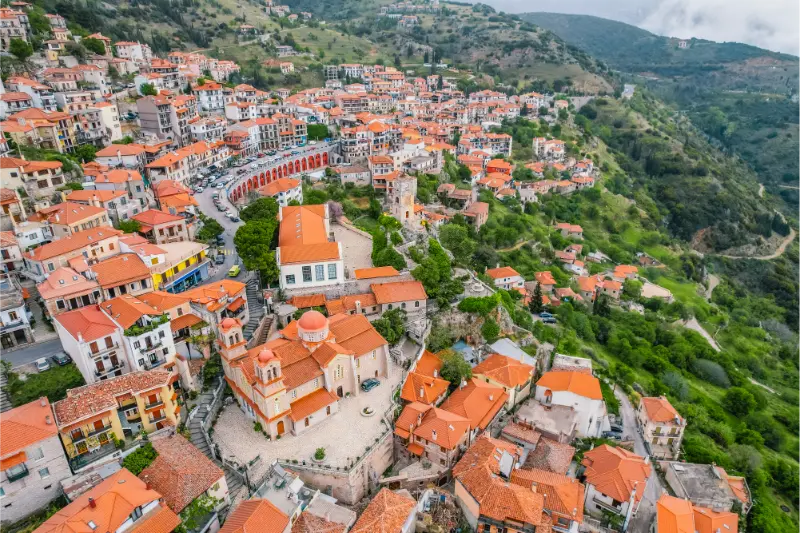
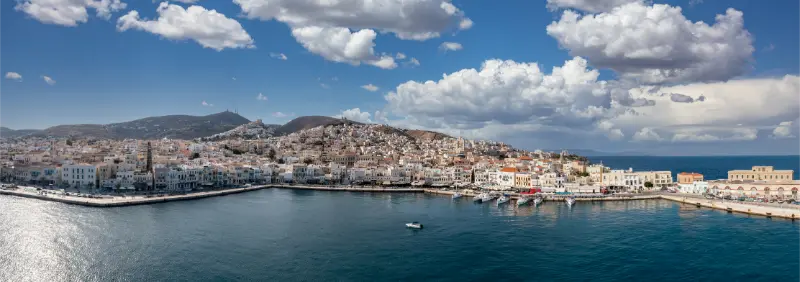
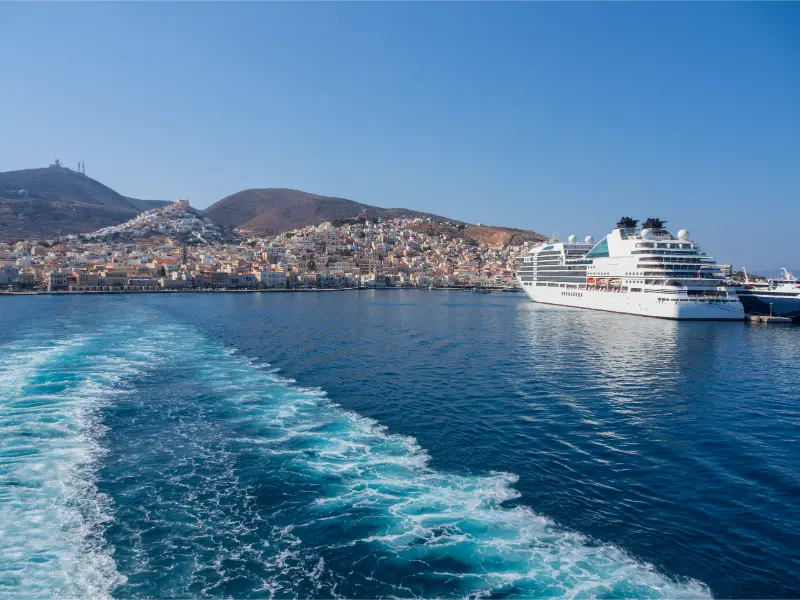
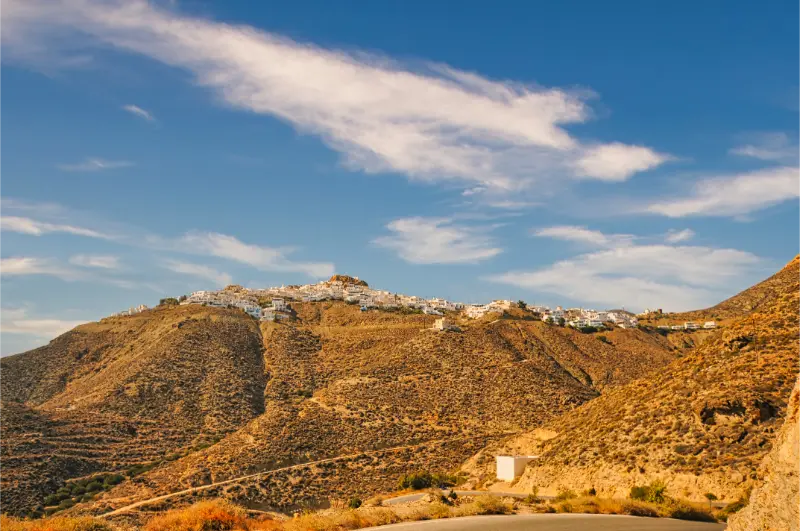
    Anafi Chora rises above the southern coast in a compact amphitheatre of whitewashed houses. The village is small enough to cross on foot, but the lanes twist, climb and split around terraces, chapels and old domestic buildings. The best way to understand it is to walk without a fixed route during daylight, then repeat the same lanes after dinner when the village becomes quieter and more atmospheric.
    Anafi Island Greece

    the island the main village rises above the southern coast in a compact amphitheatre of whitewashed houses. The village is small enough to cross on foot, but the lanes twist, climb and split around terraces, chapels and old domestic buildings. The best way to understand it is to walk without a fixed route during daylight, then repeat the same lanes after dinner when the village becomes quieter and more atmospheric. In practice, the most useful approach is to slow down, confirm the day’s conditions locally and avoid linking too many stops into one itinerary. This creates time for swimming, shade, meals and unexpected delays rather than turning a small island into a race.

    The castle and upper village

    The upper lanes lead toward the remains of the Venetian castle, historically used as a lookout over the Cretan Sea. Do not expect a fully reconstructed fortress. The interest is in the position, the surviving fabric and the panorama. The church of Agios Georgios occupies the upper area today, and the climb is especially rewarding near sunset when the light softens across the dry Cycladic landscape.

    The upper lanes lead toward the remains of the Venetian castle, historically used as a lookout over the Cretan Sea. Do not expect a fully reconstructed fortress. The interest is in the position, the surviving fabric and the panorama. The church of Agios Georgios occupies the upper area today, and the climb is especially rewarding near sunset when the light softens across the dry Cycladic landscape. In practice, the most useful approach is to slow down, confirm the day’s conditions locally and avoid linking too many stops into one itinerary. This creates time for swimming, shade, meals and unexpected delays rather than turning a small island into a race.

    Churches and local architecture

    Anafi’s Chora is known for domed houses, thick walls and traditional bread ovens, details that are easy to miss if you only follow the main lane. Small churches punctuate the settlement and local festivals keep several of them active parts of island life. Walk respectfully through residential alleys, avoid treating doorways as photo props, and remember that the village is a lived community rather than an open-air set.

    the island’s the main village is known for domed houses, thick walls and traditional bread ovens, details that are easy to miss if you only follow the main lane. Small churches punctuate the settlement and local festivals keep several of them active parts of island life. Walk respectfully through residential alleys, avoid treating doorways as photo props, and remember that the village is a lived community rather than an open-air set. In practice, the most useful approach is to slow down, confirm the day’s conditions locally and avoid linking too many stops into one itinerary. This creates time for swimming, shade, meals and unexpected delays rather than turning a small island into a race.

    Eating and evenings

    Most of the island’s dining options are concentrated in or around Chora. Evenings are relaxed rather than club-oriented: a meal, a drink, a slow walk and a viewpoint are the normal rhythm. In July and August, a few popular places can fill quickly, so reserve one dinner that matters to you but leave other nights flexible. Earlier meals work well for families and hikers planning a sunrise start.

    Most of the island’s dining options are concentrated in or around the main village. Evenings are relaxed rather than club-oriented: a meal, a drink, a slow walk and a viewpoint are the normal rhythm. In July and August, a few popular places can fill quickly, so reserve one dinner that matters to you but leave other nights flexible. Earlier meals work well for families and hikers planning a sunrise start. In practice, the most useful approach is to slow down, confirm the day’s conditions locally and avoid linking too many stops into one itinerary. This creates time for swimming, shade, meals and unexpected delays rather than turning a small island into a race.

    Where to stay in Chora

    Staying near the centre gives the easiest access to restaurants and buses, while rooms toward the edge of the settlement can feel quieter and offer broader views. Exact walking access matters because a short map distance can involve steep steps. Ask hosts about luggage transfer from the port and the nearest vehicle-access point before arrival, especially if you travel with large suitcases.

    Staying near the centre gives the easiest access to restaurants and buses, while rooms toward the edge of the settlement can feel quieter and offer broader views. Exact walking access matters because a short map distance can involve steep steps. Ask hosts about luggage transfer from the port and the nearest vehicle-access point before arrival, especially if you travel with large suitcases. In practice, the most useful approach is to slow down, confirm the day’s conditions locally and avoid linking too many stops into one itinerary. This creates time for swimming, shade, meals and unexpected delays rather than turning a small island into a race.

    Best time of day

    Morning is best for quiet photography and errands, late afternoon for shade and viewpoints, and evening for atmosphere. Midday can feel very exposed in midsummer, so use those hours for the beach or a long lunch. If you have only one evening, walk the upper village before sunset and return through the centre after dark.

    Morning is best for quiet photography and errands, late afternoon for shade and viewpoints, and evening for atmosphere. Midday can feel very exposed in midsummer, so use those hours for the beach or a long lunch. If you have only one evening, walk the upper village before sunset and return through the centre after dark. In practice, the most useful approach is to slow down, confirm the day’s conditions locally and avoid linking too many stops into one itinerary. This creates time for swimming, shade, meals and unexpected delays rather than turning a small island into a race.

    Planning around wind and heat

    Anafi is exposed to the Aegean, so weather should shape the day rather than sit in the background. In midsummer, schedule exposed walking before 10:00 and again after the strongest heat. Wind can make one coast uncomfortable while another feels manageable. Check the forecast, but also ask locally because residents understand how a particular direction affects Roukounas, Kleisidi and the Kalamos side. Build at least one flexible day into a four- or five-night stay.

    Anafi Island Greece

    Water, cash and phone coverage

    Carry water before leaving Chora, especially on trails and remote beach days. Card acceptance is common in many businesses, but a modest cash reserve is useful for small purchases or temporary terminal problems. Save ferry tickets, accommodation directions and bus information offline. Mobile service is generally useful around settled areas, yet no hiker should rely on continuous signal as a safety system.

    Responsible travel on a small island

    Anafi’s appeal depends on low-density landscapes, clean beaches and a small resident community. Take rubbish back to Chora when bins are not available, stay on established paths, avoid removing stones or archaeological material and keep noise low around chapels and monasteries. Water and waste systems on small Cycladic islands face heavy summer pressure, so short showers and refillable bottles are practical environmental choices rather than symbolic gestures.

    Booking strategy

    July and August need earlier accommodation booking than the island’s quiet reputation might suggest because room supply is limited. Ferries also deserve attention: a small number of weekly departures can make one missed connection expensive. Reserve the critical pieces first—ferry, room and any must-do excursion—then keep meals and beach choices more spontaneous. Shoulder-season visitors should confirm opening dates because services reduce outside the main summer period.

    What to pack

    Bring closed walking shoes, sandals with reliable grip, a hat that stays on in wind, high-SPF sunscreen, a light long-sleeve layer, refillable water bottle and a small daypack. A headlamp is useful for early or late walks, while a compact first-aid kit helps with blisters and minor scrapes. If you are arriving on an overnight ferry, keep the first morning simple rather than starting a major hike sleep-deprived.

    How long to stay

    Two nights only show the surface of Anafi. Three nights allow Chora, one strong beach day and one major outing, while four or five nights create enough margin for Kalamos, Roukounas and a second hike without racing. Travellers who love walking can easily use a week. The island rewards repetition: the same Chora viewpoint or beach can feel completely different as light and wind change.

    Useful official information

    Municipality of Anafi publishes practical information on trails, sights, churches and beaches. For current ferry times, compare the actual sailing date before travel because frequencies change by season.

    Accommodation and activities

    Compare accommodation on Booking.com. For guided activities and bookable experiences in the wider Cyclades, compare the exact departure island before paying.

    Related Anafi guides

  • Matala Crete Guide: Beach, Caves, Red Beach and a 2-Day Stay

    Matala Crete Guide: Beach, Caves, Red Beach and a 2-Day Stay

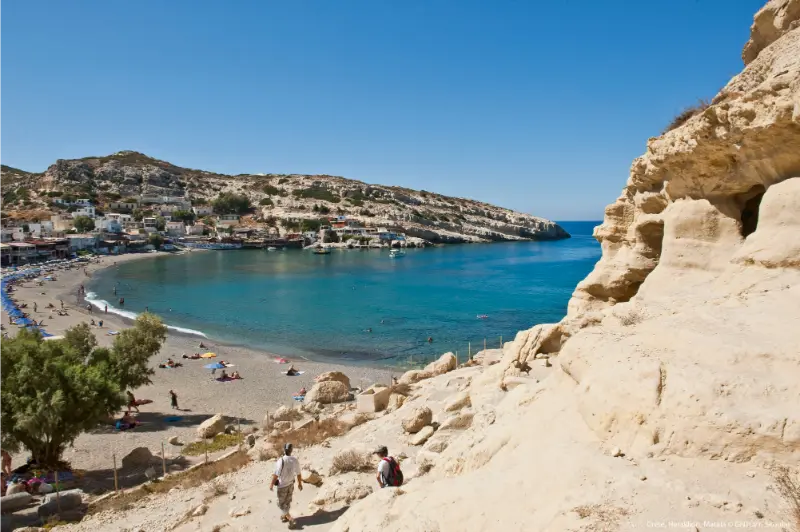
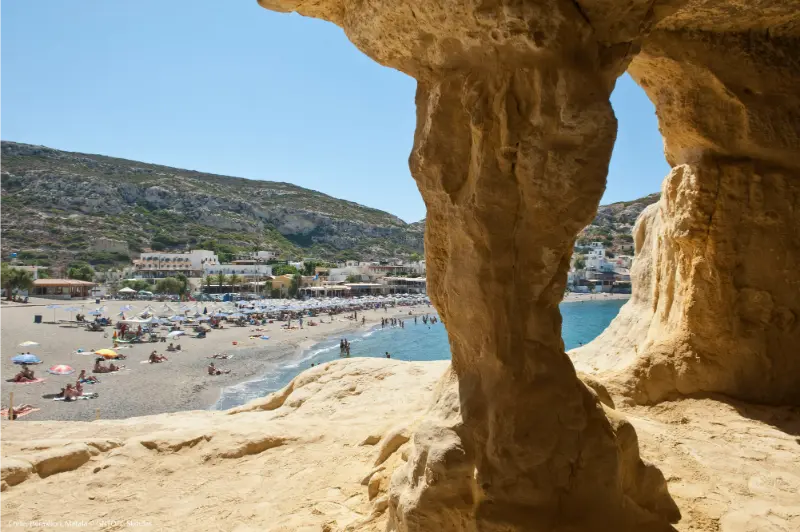
    Matala is one of the easiest places in Crete to recognise from a single image: a sandy bay backed by a honey-coloured cliff full of rock-cut caves. The village became famous for the travellers and hippies who stayed in the caves during the 1960s and 1970s, but the archaeological story is much older. Hellenic Heritage explains that the caves were originally Greco-Roman tombs, while ancient Matala also served as a port linked first with Phaistos and later with Roman Gortyna.

    If this is your first trip to the area, use this article together with Crete Travel Guide, Heraklion Travel Guide and Crete Road Trip. Those guides cover the wider destination, while this page focuses on the practical decisions that make a visit to Matala Crete Guide work smoothly.

    Crete Heraklion Matala

    Why Matala Crete Guide is worth your time

    Matala works as more than a quick photo stop because the bay combines archaeology, swimming, a compact village and short walks. The atmosphere becomes calmer in the morning and evening after day-trippers leave, which is why an overnight stay changes the experience. The surrounding south coast also makes it easy to add Kommos, Phaistos or inland villages without long transfers.

    The most satisfying way to use a focused guide like this is to decide what you actually want from the stop before building the timetable. Some travellers care most about history, others about landscape, walking, swimming or photography. Once the priority is clear, it becomes much easier to choose the right time of day, avoid unnecessary transfers and leave enough space for the experience rather than simply collecting another pin on a map.

    Main highlights

    • Matala beach and the rock-cut caves
    • the archaeological cave site
    • the walk toward Red Beach
    • evening atmosphere in Matala village
    • nearby Kommos beach
    • easy road-trip links with Phaistos and southern Crete

    Matala beach and the rock-cut caves

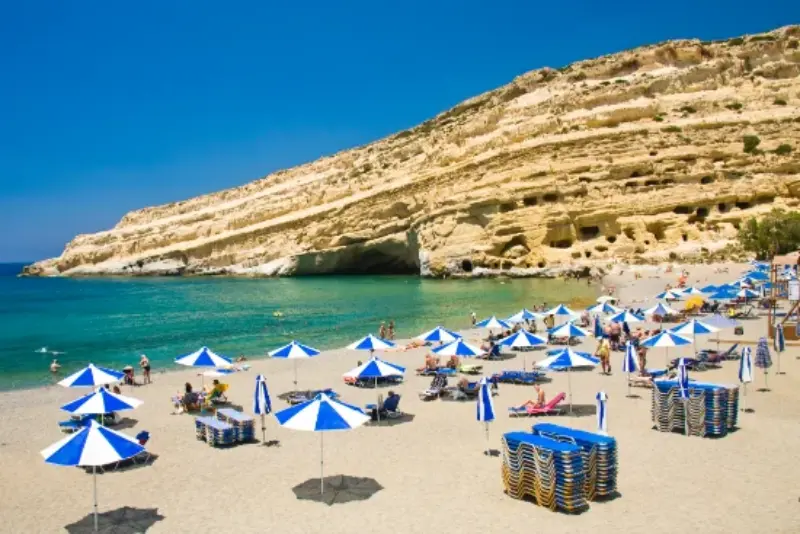
    The beach is compact and visually dramatic because the caves rise directly beside it. Arrive early if you want a quieter swim and clear view of the cliff. Afternoon wind and waves can change swimming conditions, so do not assume the bay will always be calm simply because it is sheltered on a map.

    the archaeological cave site

    The caves are a protected archaeological site, not an abandoned free-access cliff. Hellenic Heritage currently lists general admission at €5 and reduced admission at €3. From April through September, published hours are 10:00-19:00, changing in October and winter. Heat or weather can trigger temporary closures, so recheck the official site on the day.

    the walk toward Red Beach

    Red Beach is reached on foot over a hill rather than by a flat coastal promenade. The route is short but steep and exposed, so proper shoes and water matter. In high temperatures, the walk can feel much harder than the distance suggests. Do not attempt it near midday solely because you can see the beach from town.

    evening atmosphere in Matala village

    Once buses and day visitors leave, the village becomes easier to enjoy. A simple dinner, a walk along the bay and sunset light on the cliffs are strong reasons to stay overnight. Matala can be lively in summer, so choose accommodation slightly away from the central bars if quiet sleep is important.

    Best time to visit

    May, June, September and early October are excellent. July and August bring the strongest summer atmosphere but also heat and crowds. Hellenic Heritage currently lists the archaeological site as open 10:00-19:00 from April through September and 10:00-18:00 in October, with winter hours 08:30-15:30. The site can close temporarily because of heat or weather, so current-day verification matters.

    Time of day matters almost as much as the month. Early mornings are usually best for exposed walks, archaeological sites and popular viewpoints, while late afternoon works well for villages, waterfronts and softer photography light. If access depends on weather, boats, trail conditions or opening hours, check official information shortly before leaving your accommodation rather than relying on a screenshot saved months earlier.

    How to get there and get around

    Matala is about an hour to an hour and a half by car from Heraklion depending on traffic and route. Hellenic Heritage lists intercity bus access as well, though schedules vary seasonally. A car is valuable if you plan to combine Phaistos, Kommos or other south-coast villages. Parking fills quickly in summer, so arrive early if visiting only for the day.

    Transport should be planned around the whole day, not just the headline attraction. A rental car gives freedom in rural areas but creates parking problems in old villages and cities. Buses can be excellent when the route is direct, yet seasonal frequency may make multi-stop itineraries awkward. Taxis are most valuable when they remove one difficult gap rather than replacing every transfer. Always protect enough time for the return journey.

    How much time do you need?

    For Matala Crete Guide, a focused visit usually needs at least half a day once transport, walking and breaks are included. Travellers who enjoy hiking, photography or long lunches should protect more time. The mistake is not staying too long; it is scheduling another major attraction so close afterwards that every small delay becomes stressful. One well-planned experience is better than three rushed stops.

    Beach Of Matala At Crete Greece

    A realistic itinerary

    On day one, arrive before late morning, visit the caves before the hottest period, swim and take a long lunch. Walk to Red Beach only if heat and footwear are appropriate, then return for sunset and dinner. On day two, leave early for Phaistos or Kommos before continuing your Crete road trip. This gives Matala enough time to feel like a destination rather than a parking stop.

    Build a buffer into the schedule. That margin absorbs parking, a bus delay, an unexpected queue, stronger wind, a slower walking pace or the discovery of a place where you simply want to stay. Greece rarely rewards itineraries planned in thirty-minute blocks. Protect the essential logistics, then leave enough flexibility for the day to develop naturally.

    Where to stay

    You do not necessarily need accommodation beside Matala Crete Guide. Choose the base that makes the wider trip simpler. On islands, a central town can be better if you plan several day trips, while staying locally makes sense when sunrise, sunset or early trail access is important. In cities, proximity to useful public transport often saves more time than a room with a slightly better view. Always check parking if you are renting a car.

    Food and breaks

    Plan at least one proper break rather than relying on snacks all day. In villages, move a street or two away from the most photographed corner before choosing a taverna. Around beaches and natural attractions, opening hours can be seasonal, so carry water and do not assume a café will be open exactly when you need it. A slower lunch during the hottest part of the day is often smarter than forcing another exposed walk.

    What to bring

    • comfortable shoes with good grip
    • refillable water bottle
    • sun protection and a hat
    • a light layer for wind or cooler conditions
    • offline map or downloaded route
    • charged phone or small power bank
    • a little cash for small purchases

    Pack for the terrain rather than the photograph. Volcanic paths, polished village paving, cave stairs and mountain roads all create different practical needs. Good shoes, water and sun protection make a bigger difference than carrying extra clothing you never use. If the day includes a swim, keep dry footwear available for the return walk or drive.

    Common mistakes to avoid

    • arriving at the same peak hour as every excursion group
    • trying to combine too many distant stops
    • ignoring heat, wind, sea or trail conditions
    • using outdated opening hours or access information
    • forgetting to plan the return transport
    • treating residential, religious or protected places as photo sets

    The most common mistake at Matala Crete Guide is overestimating how much fits comfortably into one day. Maps hide steep lanes, parking searches, queues and the time you will naturally spend taking photos or sitting down for coffee. Prioritise the two or three elements that matter most and make everything else optional.

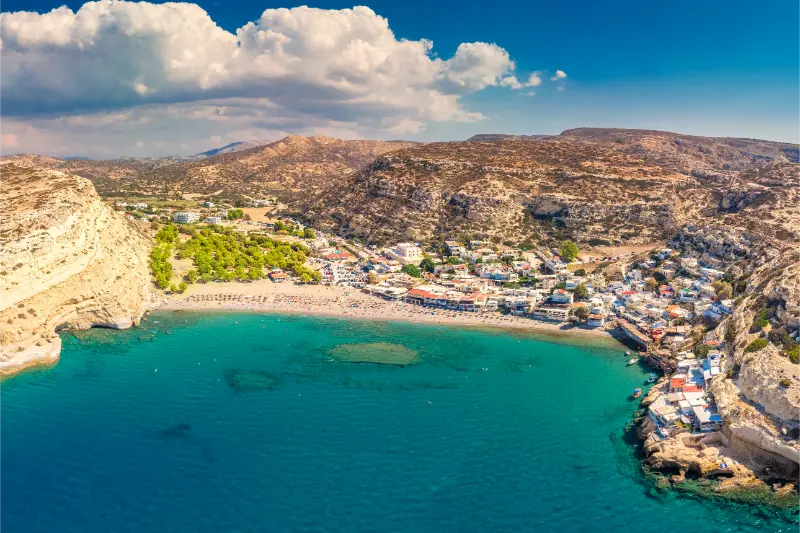
    Beach Of Matala Crete Greece

    Is it suitable for families?

    Usually yes with the right expectations, but adapt the day to heat, walking distance and attention span. Families often do better with an early start, one main experience and a predictable meal break. At viewpoints, caves, mountain paths and archaeological sites, uneven surfaces require active supervision. A shorter successful visit is better than forcing children through an adult sightseeing schedule.

    Accessibility and mobility

    Accessibility varies significantly. Modern transport and some organised attractions may be straightforward, while historic villages, natural trails, caves and archaeological terrain can include steps, steep gradients and rough ground. Check the latest accessibility information for the exact place. When mobility is limited, a taxi or private transfer can sometimes remove the hardest approach even if the final attraction still requires some walking.

    What to combine with it

    Kommos beach is only a few kilometres away and provides a more open, quieter coastal landscape. Phaistos is the obvious archaeological partner, while Gortyna can be added on a broader south-central Crete route. Heraklion is a practical arrival or departure point but should not be squeezed into the same sightseeing day.

    For more context, continue with Crete Travel Guide, then use Heraklion Travel Guide and Crete Road Trip to build the surrounding itinerary. This keeps Matala Crete Guide connected to the rest of the trip instead of turning it into an isolated detour.

    FAQ

    Do I need to book in advance?

    For major archaeological sites, organised tours, water-sport lessons and time-sensitive transport, advance booking can be sensible. Ordinary village walks and viewpoints usually do not require reservations.

    What is the best time of day?

    Early morning is generally best for cooler temperatures and fewer people. Late afternoon can be excellent for atmosphere and photography, provided access hours and the return journey still work.

    Can I visit without a car?

    City and major resort attractions are often possible by bus or taxi. Rural, mountain and multi-stop days are easier with a car, but organised excursions can be a good alternative.

    Is it worth visiting outside peak summer?

    Yes. May, June, September and October are often excellent, though seasonal buses, boats, tavernas and activity centres may run less frequently.

    Should I trust old prices and timetables?

    No. Tickets, opening hours, access rules and transport schedules change. Recheck official or local information shortly before the visit, especially for sites affected by heat, weather or conservation rules.

    Final advice

    Treat Matala Crete Guide as an experience rather than a task to complete. Arrive with the essential logistics under control, then give yourself enough time to notice the details that make the place distinctive. That balance between preparation and flexibility is what turns a technically correct itinerary into a day that genuinely feels like Greece.

  • Where to Stay in Lefkada: Best Areas for Beaches, Couples, Families and Road Trips

    Where to Stay in Lefkada: Best Areas for Beaches, Couples, Families and Road Trips

    Where you stay in Lefkada changes the holiday more than almost any individual attraction. Lefkada Town is best for transport and evening variety, Nydri for boat trips, Agios Nikitas for west-coast atmosphere, Vasiliki for the south and windsurfing, Nikiana and Lygia for quieter east-coast convenience, and Sivota for a small harbour feel. There is no single base that is “central” to every experience.

    Aerial View Vasiliki Beach Windsurfing Lefkada Island Greece

    The island’s roads cross mountains, so a hotel that appears only 20 kilometres from a beach can still involve a slow drive. Before booking, decide whether your priority is boat trips, west-coast beaches, family convenience or a road trip. The main Lefkada guide gives the broad overview; this article focuses only on the accommodation decision.

    Quick planning snapshot

    Best all-round baseLefkada Town or Nydri
    Best west-coast feelAgios Nikitas
    Best for windsurfing/southVasiliki
    Best quiet east-coast compromiseNikiana or Lygia
    Best small-harbour atmosphereSivota

    If you have a week and a car, splitting the stay can be smarter than searching for one perfect location. Three nights near the west coast plus four nights around Nydri or the south reduce repeated cross-island drives.

    Lefkada Town: best for transport and urban evenings

    Choose the capital if you want restaurants, cafés, old-town walks and the most useful bus connections. It is particularly strong for short stays, no-car travellers and anyone arriving late or leaving early. The trade-off is that the island’s dramatic beaches are day trips rather than outside your door.

    Parking varies by accommodation, so confirm it before booking a central property. Being able to walk to dinner can still outweigh the extra beach drive.

    Nydri: best for boat trips and first-time convenience

    Nydri has the broadest excursion ecosystem: cruises, sailing, Meganisi connections, restaurants and frequent buses to Lefkada Town. It works extremely well for first-time visitors who value convenience over traditional-village atmosphere.

    The waterfront can be busy and commercial in summer. Book away from the loudest sections if early sleep matters, and check whether your room faces a road or nightlife area.

    Agios Nikitas and the west coast

    Agios Nikitas puts you close to Mylos, Kathisma and the island’s dramatic western scenery. It is romantic and walkable in the centre, but parking pressure and strong beach conditions make it less universally easy than Nydri. Couples and beach-focused travellers often love it; families with toddlers should choose accommodation carefully.

    Kathisma Beach Lefkada Island Greece

    Vasiliki, Nikiana, Lygia and Sivota

    Vasiliki is the obvious south-coast base for windsurfing, Agiofili access and Cape Lefkatas road trips. Nikiana and Lygia are quieter east-coast choices between the capital and Nydri, useful for families with a car. Sivota suits travellers who want a yacht-harbour atmosphere and do not need a large town every evening.

    How to plan the visit without wasting half the day

    Check the exact road and walking route from accommodation to the centre or beach. Lefkada is hilly, and “500 metres from the sea” can mean a steep return climb. Also confirm private parking if you rent a car, especially in Agios Nikitas and central Lefkada Town.

    For a split stay, avoid moving every two nights. A three-plus-four-night division gives each base enough time to be useful. Move on a midday beach-free period rather than sacrificing your best swimming hours to packing.

    When to go and how weather changes the experience

    In July and August, location matters more because traffic, parking and restaurant demand are highest. Booking early is particularly valuable in Agios Nikitas and sought-after waterfront areas.

    In May, early June, late September and October, a larger base such as Lefkada Town or Nydri gives more dining reliability because small resort areas can be quieter or partly seasonal.

    Who this plan works best for

    Couples often prefer Agios Nikitas or Sivota; families usually benefit from Nydri, Nikiana, Lygia or easy-access parts of Vasiliki; no-car travellers should prioritise Lefkada Town or Nydri; serious road-trippers can stay almost anywhere if parking is simple.

    Nikiana Lefkada Greece

    A realistic way to fit it into your Lefkada trip

    For a first one-week trip, stay four nights in Nydri or Lefkada Town and three nights in Agios Nikitas or Vasiliki. This creates two geographic perspectives without turning the holiday into constant packing.

    If you have only three or four nights, choose one base and accept longer day trips. The time saved by not moving hotels usually matters more than being perfectly positioned for every beach.

    Common mistakes to avoid

    • Booking only by hotel rating without checking the road location.
    • Assuming Nydri and Agios Nikitas offer the same type of evening.
    • Choosing a remote villa for a no-car trip.
    • Ignoring parking in high season.
    • Changing accommodation too often in an attempt to minimise every drive.

    The right base is the one that makes your evenings and transport easy. Beaches are daytime destinations; accommodation affects every morning and every night.

    Tours and activities around Lefkada

    Boat trips, sailing days and guided activities can be useful when you want to see coves or nearby islands without building the entire day around driving and parking. Availability changes through the season, so compare the exact departure point, duration and cancellation conditions before booking.

    Frequently asked questions

    What is the best area to stay in Lefkada for first-time visitors?

    Nydri is the easiest for excursions and services, while Lefkada Town is strongest for transport and town atmosphere. Choose based on whether boat trips or urban evenings matter more.

    Where should couples stay?

    Agios Nikitas and Sivota are attractive for atmosphere; Lefkada Town works for couples who prefer restaurants and walking; luxury villas are spread across the island.

    Where is best for families?

    Nydri, Nikiana and Lygia are practical because services and easier east-coast beaches are nearby. Vasiliki can also work well for active families.

    Should I split my stay?

    For seven nights or more, a two-base stay can reduce driving. For a short trip, one base is usually simpler.

    Continue planning your Lefkada trip

    Start with the main Lefkada travel guide if you are still choosing your base and trip length. For the island’s most famous west-coast scenery, use the Porto Katsiki and Egremni guide. The Lefkada Town guide, Nydri guide and Vasiliki guide help you compare very different bases rather than booking only by hotel price. Compare the specific bases in the Agios Nikitas guide and Sivota and Mikros Gialos guide.

    Final practical advice

    Do not search for a mythical “middle of Lefkada” hotel that is equally convenient for everything. The island is shaped by mountains and coastlines, not straight-line distances.

    Choose the base that fits your evening style, then build day trips outward. That approach usually produces less driving and a more coherent holiday.

    Extra planning notes for a smoother day

    For a longer stay, remember that where to stay in Lefkada should be one part of a broader Lefkada plan rather than the only objective. Build in time for meals, parking, short walks and weather changes. Distances on the island are manageable, but the roads frequently bend around mountains and bays, so a schedule that looks sparse on a flat map can already be full in practice. Travelling earlier in the morning usually improves parking, temperatures and photography, while late afternoon is better for slower village walks and harbour dinners. If a beach or boat day is uncomfortable because of wind, switch to an inland village, the capital or a sheltered bay instead of forcing the original plan. This flexible approach is especially useful in July and August, when traffic and heat magnify every small delay. Keep drinking water in the car, download the route before leaving your accommodation, and confirm seasonal transport or boat information close to the day of travel.

  • Corfu Road Trip: A Realistic 7-Day Itinerary for Town, Beaches, Villages and Mountains

    Corfu Road Trip: A Realistic 7-Day Itinerary for Town, Beaches, Villages and Mountains

    A Corfu road trip should not be a race around the island’s edge. The island is long enough, mountainous enough and busy enough in summer that zigzagging between famous places wastes time. Seven days works best when you group the north-east, north-west, central west and south into separate geographical days and keep at least one slot flexible for wind or boat conditions.

    This itinerary assumes you rent a compact car for most of the week, but you do not need it for central Corfu Town. If your accommodation is in the historic centre, pick up the car after the city day or use a rental location with realistic parking. The plan also works in reverse if you stay first on the coast and finish in town before a flight.

    Keep the main Corfu travel guide open for broad planning. The route below links to the detailed destination guides when a stop deserves more than a paragraph.

    7-day Corfu route overview

    DayFocus
    1Corfu Old Town and fortresses
    2Paleokastritsa + Angelokastro
    3Kassiopi + north-east coast
    4Pantokrator + Old Perithia
    5Porto Timoni + Afionas
    6Glyfada/Pelekas or south-west beaches
    7Flexible: boat, favourite beach, Kanoni/Achilleion or weather reschedule

    Before you rent the car

    Choose the smallest car that fits your luggage comfortably. Corfu’s village roads, parking spaces and mountain lanes reward compact dimensions more than extra horsepower. Photograph the vehicle at pickup, understand the insurance excess and ask whether any unpaved approaches are excluded by the rental agreement.

    Download offline maps but do not follow every shortcut blindly. A navigation app can choose a road that is technically passable yet stressful. Signed main approaches are often slower on screen and much easier in reality.

    Day 1: Corfu Town without road-trip pressure

    Spend the first day on foot in the UNESCO-listed centre. Use my Corfu Old Town guide for the Old Fortress, Spianada, Liston, churches and museum choices. If your hotel is central, leave the rental car parked or collect it the next morning.

    This light start protects you from flight delays and gives you context for the Venetian and British layers you will notice around the island later.

    Day 2: Paleokastritsa and Angelokastro

    Drive west early for Paleokastritsa, choose one or two bays and take a short boat trip only if the sea is calm. Later, climb to Angelokastro when the heat is less intense. The Paleokastritsa guide and Angelokastro guide explain the details.

    Do not add Porto Timoni to this day. Paleokastritsa plus Angelokastro already gives you beach, boat scenery and a historic climb.

    Day 3: Kassiopi and the north-east coast

    Use Kassiopi as the anchor: harbour, castle and a swim. Then work south along the north-east coast only as far as your energy allows—Avlaki, Kalami, Nissaki or Barbati are all possibilities.

    This coast is ideal for a long lunch and repeated short swims. Avoid driving back and forth between coves just to compare them. Choose one place that feels right and stay.

    Day 4: Pantokrator and Old Perithia

    Drive or hike part of Mount Pantokrator in the cooler morning, then descend toward Old Perithia for lunch and village time. This is the day that prevents the trip from becoming seven consecutive beaches.

    If mountain visibility is poor, swap this day with a beach day. Corfu’s weather can vary by elevation even when the coast is bright.

    Day 5: Porto Timoni and Afionas

    Start early for the descent to Porto Timoni. Wear proper shoes, carry water and leave enough energy for the climb back. Use Agios Georgios Pagon as your easy afternoon beach and return to Afionas for sunset if you are staying nearby.

    Agios Georgios Pagon Beach Corfu Island Greece

    This is intentionally a short driving day. The physical effort is the hike, so you do not need to add Sidari and three other north-coast stops.

    Day 6: central west coast or the south-west

    If you want facilities and an easy sunset, choose Glyfada and Pelekas. If you want open dunes and longer sandy landscapes, drive to Issos/Halikounas instead. Pick one region based on your base and wind.

    A road trip is not improved by touching every corner. Central west and south-west are different enough that either can fill a day.

    Day 7: keep it flexible

    Use the final full day for whatever the weather or your interests pushed aside. Options include Kanoni and Mon Repos, the Achilleion grounds if accessible, a Paxos/Antipaxos boat trip, or simply returning to your favourite beach.

    Do not schedule a weather-sensitive boat trip as the only activity on the morning of your international flight. Ferries, traffic and wind deserve buffer time.

    Where to base yourself for this itinerary

    For seven days, one central base can work, but two bases reduce driving. A practical split is two or three nights in Corfu Town followed by four nights in the north or west. Kassiopi suits north-east exploring; Paleokastritsa suits the west; a central location gives the best compromise if you dislike moving hotels.

    Panoramic View Viewpoint Resort Town Paleokastritsa Corfu Greece

    Check parking before booking. ‘Free parking nearby’ can mean a steep ten-minute walk, which is fine until you arrive with luggage at midnight.

    Driving distances are deceptive

    Corfu looks compact on a map, but travel times expand on mountain roads, through villages and in summer traffic. A 35-kilometre journey can feel much longer than the same distance on a mainland highway. Build lunch and parking time into the route instead of calculating only moving time.

    If navigation says you are running late, remove a stop. Do not speed on unfamiliar roads or overtake aggressively to protect an itinerary that you created for yourself.

    Budgeting fuel, parking and boat extras

    A road trip budget should include more than the rental rate. Add fuel, paid parking where applicable, boat excursions, beach equipment and occasional taxis when nobody wants to drive at night. These small costs can exceed the difference between two rental-car quotes.

    Book only the time-sensitive elements in advance. Beaches, villages and viewpoints do not need reservations; keeping them flexible lets you follow the weather.

    One more practical planning note

    When planning Corfu Road Trip, keep the day deliberately flexible. Corfu rewards travellers who respond to wind, heat and traffic rather than following a fixed checklist. Confirm opening or transport information on the morning itself, carry water, save important locations offline and avoid adding a distant attraction just because there is an empty hour on paper. The island is most enjoyable when each day has one clear geographical focus, enough time for a meal and enough margin to change the plan if a beach is rough, a road is congested or a cultural site has temporary access restrictions.

    Beach Of Agios Georgios Corfu

    I also recommend building a deliberate pause into the middle of the day. In peak summer, a shaded lunch, swim or hotel break is not wasted time; it protects the part of the afternoon when you are more likely to enjoy a village, viewpoint or coastal walk. If you are driving, refill water before leaving a larger resort area and keep fuel comfortably above empty, because small mountain and coastal roads do not always have services exactly when you need them.

    Finally, check the return route before sunset. Corfu roads can be slower after dark, and bus frequencies often thin out in the evening. If a place is especially beautiful late in the day, consider staying nearby for dinner rather than immediately crossing the island. That simple decision often turns a rushed sightseeing day into a much more memorable travel experience.

    Timing, comfort and local conditions

    Corfu changes character through the day, so timing deserves as much attention as the list of places. Early morning is best for exposed walks, castles and viewpoints; the middle of the day is better for swimming, lunch and shade; late afternoon works well for villages and west-facing scenery. This rhythm is particularly useful in July and August, but it also makes shoulder-season days feel less rushed because you can spend longer where the conditions are best.

    If you are using a rental car, keep the route geographically compact and avoid relying on the fastest navigation estimate. Village traffic, scooters, narrow bends and summer parking can add time that does not appear on the map. If you are using buses, verify the current return service before leaving the main town and save the timetable offline in case mobile data becomes unreliable at a remote stop.

    A good Corfu day also needs a backup. Strong wind can change a beach, cloud can hide a mountain view and restoration work can affect access to a monument. Choose an alternative in the same part of the island so a change of plan costs twenty minutes rather than two hours. This is one of the easiest ways to travel more comfortably and still see a lot.

    Frequently asked questions

    Is seven days enough for Corfu?

    Yes. Seven days allows a good mix of town, beaches, north coast, mountains and one flexible day without rushing.

    Do I need a car for the whole week?

    No. Corfu Town is easier without one. Renting for four to six days is often enough.

    Which side of Corfu has the best beaches?

    The west is known for sand and dramatic scenery, while the north-east has clear pebble coves. Conditions should influence your choice.

    Can I combine Corfu Town and Paleokastritsa in one day?

    You can, but each deserves time. With a week available, separate them so neither becomes a rushed stop.

    Where should I stay for a road trip?

    A split between Corfu Town and a north or west-coast base reduces driving and gives more varied evenings.

    Final thoughts

    A good Corfu road trip is built around regions, not a list of viral sights. Keep days geographically coherent, move mountain and boat plans with the weather, and leave one flexible day at the end. You will spend less time behind the wheel and understand the island far better.

  • Fokida Road Trip: 7-Day Itinerary from Delphi and Amfissa to Galaxidi, Giona and Lake Mornos

    Fokida Road Trip: 7-Day Itinerary from Delphi and Amfissa to Galaxidi, Giona and Lake Mornos

    Fokida is one of the best regions in mainland Greece for a road trip because the landscape changes faster than the distances suggest. In one week you can move from the sanctuary of Delphi to the olive plain, swim in the Gulf of Corinth, enter a bauxite mine, hike below 2,500-metre peaks and finish beside the remote Lake Mornos reservoir.

    The mistake is trying to sleep in a different village every night. Roads become slower in mountainous Dorida, and Delphi alone deserves a full day. This itinerary uses three main bases—Delphi/Itea, Amfissa or Gravia, and Lidoriki—so driving remains part of the scenery rather than the whole holiday.

    Why this place deserves its own stop

    Fokida links the internationally famous Delphic landscape with some of Central Greece’s least-visited mountain country. That makes it unusually good for travellers who want archaeology without a week of museums and outdoor scenery without committing to a pure hiking holiday.

    The regional economy also changes along the route: olives and olive oil around Amfissa, seafood on the coast, bauxite mining inland and livestock products around Lidoriki and Giona. Building meals around those transitions makes the road trip feel coherent rather than like ten unrelated attractions.

    • Delphi archaeological site and museum
    • Athena Pronaia and the Delphic olive landscape
    • Amfissa, Harmaina and Castle of Salona
    • Itea, Kirra and Galaxidi coast
    • Vagonetto Mining Park and Gravia
    • Mount Giona villages and hiking
    • Lidoriki and Lake Mornos

    Day 1: Delphi without rushing

    Arrive in modern Delphi and use the afternoon for orientation rather than trying to complete the sanctuary immediately. Read the Delphi travel guide and walk the town viewpoints over the olive plain.

    If you arrive early, visit Athena Pronaia or the museum, but leave enough energy for a full archaeological morning. One overnight in Delphi changes the experience because you can enter before the biggest day-tour wave.

    Day 2: Delphi site, museum and Athena Pronaia

    Start early at the Sanctuary of Apollo, then spend real time in the Delphi Archaeological Museum. After lunch, continue to Athena Pronaia rather than adding a distant town.

    Sleep in Delphi again or move down to Itea if you want a coastal evening. This is already a full day; do not add Arachova, Galaxidi and Amfissa just because they are nearby.

    Aerial View Town Arachova Greece Near Parnassus Mountain Temple Delphi

    Day 3: Itea, Kirra and Galaxidi

    Use the morning for the Itea and Kirra coast: waterfront, a swim and the ancient-port landscape. After lunch, drive west to Galaxidi and spend the late afternoon walking the harbours and neoclassical streets.

    Stay in Galaxidi for atmosphere or return to Itea for easier logistics. In summer, this low-intensity day is a useful recovery after the steep Delphi site.

    Day 4: Amfissa and Vagonetto

    Move inland to Amfissa. Start with the Castle of Salona and Harmaina, have lunch in town, then visit the Vagonetto Mining Park at a pre-booked tour time.

    If the mine tour is only available in the morning, reverse the sequence. Stay in Amfissa or continue toward Gravia only if you still have daylight.

    Day 5: Gravia and western mountain villages

    Use the Gravia and Western Parnassus guide for the historic inn and a village such as Kaloskopi or Polydrosos. This day is about mountain culture and history rather than a summit.

    Experienced hikers can instead make Giona the main objective, but then drop most other stops and start before dawn or stay near the trailhead.

    Day 6: Mount Giona or a lower-level nature day

    Choose the full Mount Giona hiking guide only if the group has appropriate experience and the weather is stable. Everyone else can use Kaloskopi, Stromi and forest routes for a much easier day.

    Move toward Lidoriki afterward only if the hike finishes early enough. A tired driver on a winding mountain road is not an efficient itinerary.

    Day 7: Lidoriki and Lake Mornos

    Finish with the Lidoriki and Lake Mornos guide. Choose a few reservoir viewpoints, one village and a long lunch rather than trying to complete every shoreline road.

    From here, continue toward Nafpaktos, Lamia or back toward the Corinthian Gulf depending on the next stage of the trip. If returning to Athens, consider one final overnight instead of a very long mountain-to-city drive.

    Where to sleep

    Use Delphi for archaeology, Itea or Galaxidi for the coast, Amfissa/Gravia for the central inland section and Lidoriki for western Fokida. You do not need all four bases; choose three based on your priorities.

    If your trip is only five days, remove Lake Mornos or the Giona section rather than compressing every day. Fokida becomes less enjoyable when the schedule is built around hotel checkout times.

    Driving and fuel strategy

    Fill the tank before remote mountain loops and do not wait for the final village shown on the map. Roads around Giona and Mornos are slower than coastal routes, and mobile reception can weaken in valleys.

    Download offline maps, carry water and keep a paper note of accommodation phone numbers. Avoid unfamiliar mountain roads after dark, particularly in winter or after heavy rain.

    Food strategy across the region

    Use location to choose what you eat: olives and olive oil around Amfissa, seafood around Itea and Galaxidi, mountain meat, dairy and pies around Lidoriki and Giona. That simple rule produces more regional meals than searching for a single famous restaurant.

    Leave room for long lunches. In rural Fokida, meal time is not wasted itinerary space; it is one of the best ways to understand why the landscape looks and works as it does.

    Best season for the road trip

    Late spring and early autumn offer the best balance of daylight, hiking conditions and coastal weather. Summer is excellent for swimming but demands early archaeological and mountain starts. Winter can be atmospheric but makes high routes, caves and minor roads less predictable.

    If Giona is a priority, check snow conditions independently from the coast. A sunny 20°C afternoon in Itea says very little about conditions above 2,000 metres.

    How to shorten the itinerary

    For four days, keep Delphi, Amfissa/Vagonetto, Itea/Galaxidi and one mountain or Mornos day. For five days, add Gravia or Giona. For a family trip, favour Vagonetto and the coast over technical hiking.

    Do not cut the museum from Delphi simply to create time for another village. The road trip should deepen places, not multiply them.

    Useful official information

    Hellenic Heritage – Delphi provides current Delphi tickets, hours and access information.

    Visit Greece – Amfissa provides official context for Amfissa and the Delphic olive landscape.

    Vagonetto – official visitor information provides current reservation rules and ticket information for the mining park.

    Visit Greece – Mount Giona provides official hiking and safety context for the mountain section.

    Opening hours, ticket prices, road conditions, trail access and public transport can change. Recheck the relevant official source shortly before travelling, especially for archaeological sites, mountain routes and guided visits.

    Where to stay

    If you want one booking for the first half, Itea is the most flexible base for Delphi, Amfissa and Galaxidi. Move inland for the final mountain days rather than commuting back to the coast each evening.

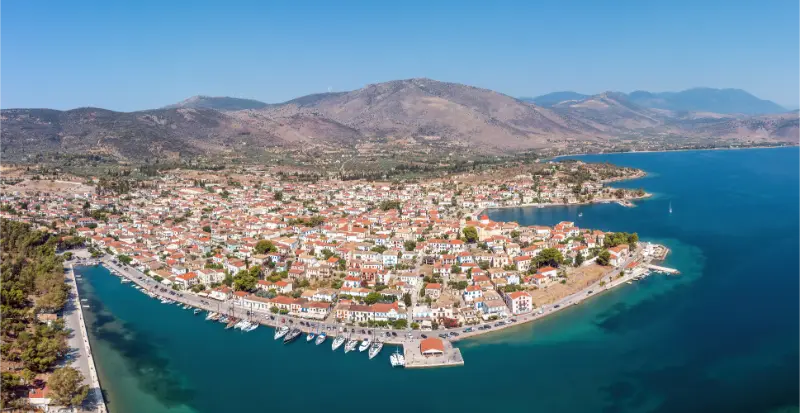
    Galaxidi Greece From Aerial Drone View Traditional Town

    Frequently asked questions

    How many days do I need for Fokida?

    Seven days is comfortable for archaeology, coast and mountains. Four to five days can work if you remove one major area.

    Do I need a car?

    For the complete itinerary, yes. Public transport can cover the main towns, but Giona and Lake Mornos require much more flexibility.

    Where should I spend the most time?

    Delphi deserves a full day; the second priority depends on whether you prefer coast, hiking or mountain villages.

    Is Fokida good with children?

    Yes if you adapt the itinerary: Vagonetto, beaches and shorter archaeological visits work well, while serious mountain hikes should be replaced with easier walks.

    Final advice

    A Fokida road trip works when you let the region change character around you. Move from oracle to olive grove, from harbour to mine, and from forest to reservoir at a pace that leaves time for meals and weather. The distances are modest; the variety is enormous.

    A family-friendly version

    With children, keep Delphi to the cooler morning, make Vagonetto the major indoor attraction and use Itea/Kirra for swimming and recovery. Replace a full Giona summit with a forest walk from Kaloskopi and reduce the Lake Mornos driving loop.

    Two-night bases become even more valuable with a family because packing every morning consumes time and makes weather changes harder to absorb.

    A history-focused version

    History travellers can add more time in Amfissa and Gravia, read the 1821 context carefully and use Vagonetto to include industrial heritage. The road trip then becomes a sequence from ancient sanctuary to medieval/early-modern town, revolution and twentieth-century mining.

    Avoid letting the famous Delphi period dominate every day. Fokida is most interesting when different historical layers remain visible side by side.

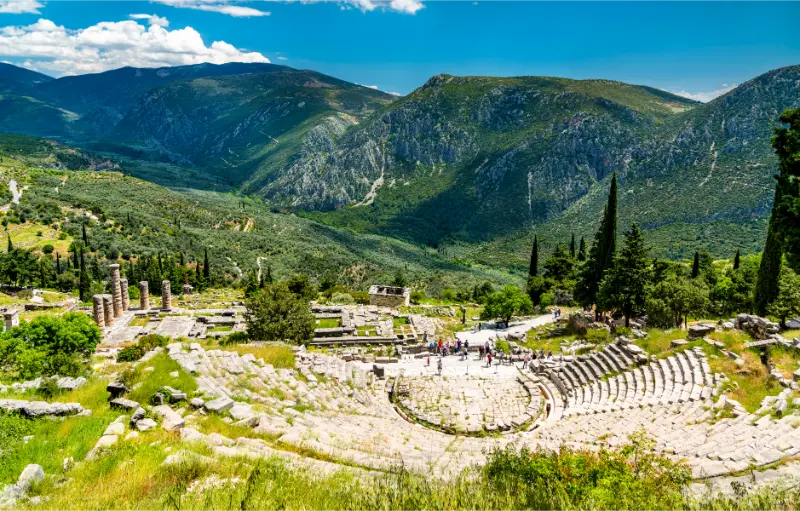
    Ancient Theatre Archaeological Site Delphi UNESCO World Heritage Greece

    Final planning checklist

    • Recheck official information for Fokida road trip shortly before departure, especially any timed entry, trail or road condition.
    • Download offline mapping and keep the accommodation or attraction phone number available without mobile data.
    • Leave at least one unscheduled hour in the day so a meal, weather change or slower mountain road does not force unsafe rushing.
    • Use local businesses for food and supplies where possible and respect private agricultural, residential and religious spaces.
    • If conditions on the day differ from the plan, shorten the itinerary rather than trying to recover lost time by driving faster.

    The strongest Fokida road trip visit is the one that fits the conditions you actually find. Fokida combines archaeology, coast and mountains within short map distances, but the practical pace changes dramatically between each environment. Build margin into the day and let one good experience replace two rushed ones when necessary.

    Use the where to stay in Fokida guide to choose the best base for each stage of this itinerary, and the Fokida food guide to match meals to the coast, olive plain and mountains.

    Families can use the Fokida with kids guide, while travellers without a rental car should use the Fokida without a car guide.

  • Lake Kournas Guide: Swimming, Pedal Boats, Villages and a Half-Day Trip from Chania

    Lake Kournas Guide: Swimming, Pedal Boats, Villages and a Half-Day Trip from Chania

    Lake Kournas is one of the easiest nature breaks to add between Chania and Rethymno. The freshwater lake sits close to the north coast but feels completely different from a beach: hills rise around the water, the colour shifts with light and depth, and a few hours can include swimming, a pedal boat, lunch and a short walk without a demanding hike.

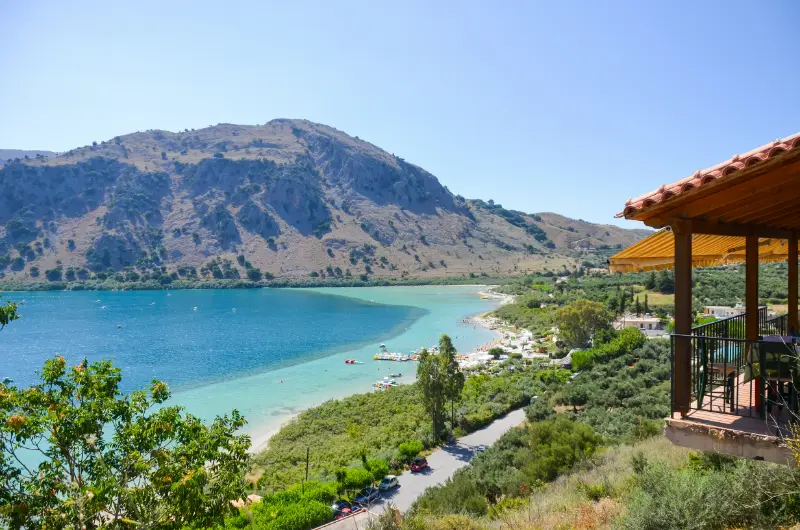
    Picturesque Lake Kournas Crete Greece

    This is not a destination that needs an over-engineered itinerary. It works because it is simple. Stop here on a transfer day, pair it with Georgioupoli, or use it as a gentle recovery day after Samaria or a long west-Crete drive. The key is choosing the right time of day and avoiding the temptation to turn a half-day nature stop into an all-island excursion.

    Why this place deserves its own stop

    The strongest reason to come is the landscape itself. The attraction is not only one viewpoint or one activity, but the sequence of terrain, light and local life around it. Build enough margin into the day that you can stop when conditions are good rather than racing to match an overfilled schedule.

    What to see and do

    See the lake before the busiest hours

    Morning is the most peaceful time, especially in summer. Water can be calmer, parking is easier and the lake feels more natural before the shore becomes busy with lunch traffic and water activities. If you prefer warm swimming, late morning is a good compromise.

    Rent a pedal boat selectively

    Pedal boats are popular because they let you see the lake from a different angle. Treat them as an optional activity rather than the only reason to visit. Check the current price and rental conditions on arrival, wear sun protection and do not overestimate how far you want to pedal in midday heat.

    Swim where conditions are suitable

    Swimming can be refreshing, but lake conditions differ from the sea. Enter gradually, watch children closely and use established access areas. Water depth can change quickly and the bottom can be soft in places. If you are not a confident swimmer, stay close to shore.

    Look for wildlife without chasing it

    The lake supports birds and aquatic life, and visitors sometimes see turtles. Observe from a respectful distance rather than feeding or surrounding animals for photographs. The best wildlife encounters usually happen when the shore is quiet.

    Add Georgioupoli or a village lunch

    Georgioupoli on the coast makes the most convenient second stop, while inland villages can provide a slower lunch. Keep the pairing local. Driving from Lake Kournas to Balos or Elafonissi on the same afternoon misses the point and creates unnecessary road time.

    Picturesque Lake Kournas Crete Greece

    A realistic plan

    Part of the dayPlan
    09:00Arrive and walk the shore
    10:00Pedal boat or swim
    11:30Coffee or short second walk
    13:00Lunch near the lake or in a nearby village
    AfternoonGeorgioupoli or continue to Chania/Rethymno

    Use this as a framework rather than a timetable. Crete rewards flexibility: parking can take longer than expected, mountain roads slow down, a good lunch becomes part of the day, and heat can change the order of activities. The best itinerary is the one that leaves enough margin to enjoy the main experience rather than simply arriving at every planned pin on a map.

    How to get there and move around

    Lake Kournas is easiest by car and sits conveniently between Chania and Rethymno. Parking can become congested in peak season, so arrive early or later in the afternoon. Roads near the lake are straightforward, but the final approach can be busy with pedestrians. Once parked, do not move the car between restaurants and activity areas unless necessary.

    Respect seasonal conditions

    Natural sites in Crete change with weather, heat, wind and water levels. A route that is comfortable in spring can be much more demanding in August. Check local conditions, start earlier than you think you need to, and never treat a gorge or remote beach as an urban attraction with guaranteed services every few minutes. Water, suitable shoes and a realistic turn-around time matter more than squeezing another stop into the same day.

    Build a flexible backup plan

    Wind, road works, heat or a temporary access restriction can change the day. Keep one nearby alternative in mind instead of driving across the island to rescue the schedule. This is one of the simplest ways to make a Crete road trip feel relaxed: organise each day around one geographic area and choose two or three compatible options within it.

    Best time to visit

    Late spring through early autumn is best for swimming and water activities. In high summer, the lake can be hot and busy at midday. Spring is excellent for greener scenery, while autumn can be quieter with warm light and pleasant temperatures. After unusual weather, local water and activity conditions may change.

    For any outdoor or archaeological visit, check the same-day forecast and the official operating information. Crete can have very local conditions: wind on one coast, heat in an inland valley and cloud over the mountains at the same time. Planning by region and keeping one backup option nearby is more effective than relying on a rigid island-wide schedule.

    Food and local rhythm

    The shore has places to eat, but quality and atmosphere vary. A longer lunch works well because this is a slow-day destination. If the lakefront feels too busy, continue to a nearby village or Georgioupoli. Keep expectations simple: good salads, grilled food, local cheese and cold drinks are enough to make the stop enjoyable.

    One of my favourite planning rules in Crete is to protect lunch. Do not schedule every meal as a 20-minute gap between attractions. A proper stop gives you shade, hydration and a chance to ask local staff about road, wind or beach conditions. It also makes the day feel like a trip through Crete rather than a sequence of parking lots.

    How to combine it with nearby places

    Lake Kournas fits naturally between Chania and Rethymno. It is also an excellent low-effort day after a more demanding hike in the Crete road-trip itinerary.

    Crete Chania Kournas Lake

    If your route already includes two long drives, resist adding a third distant highlight simply because it is famous. Crete is large enough that geographic discipline improves almost every itinerary. A day focused on one corner of the island usually produces more time walking, swimming or eating and less time looking through a windscreen.

    Where to stay

    For most travellers this works best as a day trip from an established base rather than a one-night hotel change. Choose accommodation based on the wider region and your next day, not only this single attraction. If an early start matters, staying within 30–45 minutes can dramatically improve the experience and reduce the temptation to rush.

    Photography and timing

    The most flattering light is usually early or late, but photography should not dictate unsafe timing. On exposed roads, gorges and archaeological sites, practical considerations come first. Carry a phone or camera securely, avoid stepping backward near drops or uneven stones, and take a moment to look without a screen. The best photographs often come after you have understood the shape of the place.

    Common mistakes to avoid

    • Arriving at the busiest midday period in August
    • Treating a pedal boat as essential rather than optional
    • Feeding wildlife or approaching animals too closely
    • Combining the lake with a distant west-Crete headline beach on the same short day
    • Leaving valuables visible in a parked car
    • Expecting a remote wilderness atmosphere around the main visitor shore

    Official information

    For current access, opening hours, tickets or regional information, check Visit Greece shortly before the trip. I use official pages for variable details because older travel articles can remain online long after rules have changed.

    Frequently asked questions

    How long do I need at Lake Kournas?

    Three to four hours is enough for a walk, swim or pedal boat and lunch. A relaxed half-day is ideal.

    Can I swim in the lake?

    Swimming is common in suitable areas, but use caution because depth and bottom conditions differ from a beach.

    Is Lake Kournas good for children?

    Yes, especially for families who want a gentle nature stop. Supervise children carefully around the water and pedal boats.

    Do I need to book a pedal boat?

    Usually you can arrange one on arrival, but availability and prices vary by season.

    Can I visit between Chania and Rethymno?

    Yes. It is one of the easiest stops to include on a transfer day between the two cities.

    Final advice

    Build this stop around one clear reason for going, then let the surrounding area add depth. That approach keeps the day realistic and usually creates better memories than a checklist. In Crete, distance, heat and road shape matter as much as the number of attractions on a map.

    For the wider picture, continue with Chania Travel Guide, Rethymno Travel Guide, Crete Road Trip. These guides make it easier to connect this stop to the rest of the island without unnecessary backtracking.

  • Best Beaches in Laconia: Elafonisos, Gytheio, Mani, Monemvasia and Vatika Coast

    Best Beaches in Laconia: Elafonisos, Gytheio, Mani, Monemvasia and Vatika Coast

    Laconia has one of the most varied coastlines in the Peloponnese. You can choose between the pale sand and shallow-looking turquoise water of Elafonisos, long open beaches near Gytheio, tiny pebble coves in Mani, and quieter stretches around Monemvasia and Vatika. There is no single “best beach” because the right choice depends on sand versus pebbles, wind, children, facilities and how much driving you want.

    Beach Water Bay Greek Coast Line Turquoise Blue Transparent Water White Pebbles Greece Mani Peninsula Peloponnese

    This guide is organised by travel style rather than by an arbitrary ranking. That matters in Laconia: a beautiful beach can be the wrong choice for a family in strong wind, while a less famous bay may be perfect because it is five minutes from your accommodation.

    Quick planning summary

    • Simos for famous sand and colour
    • Mavrovouni for space near Gytheio
    • Alypa and Skoutari for smaller Mani coves
    • Pounta and Pavlopetri for beach plus archaeology

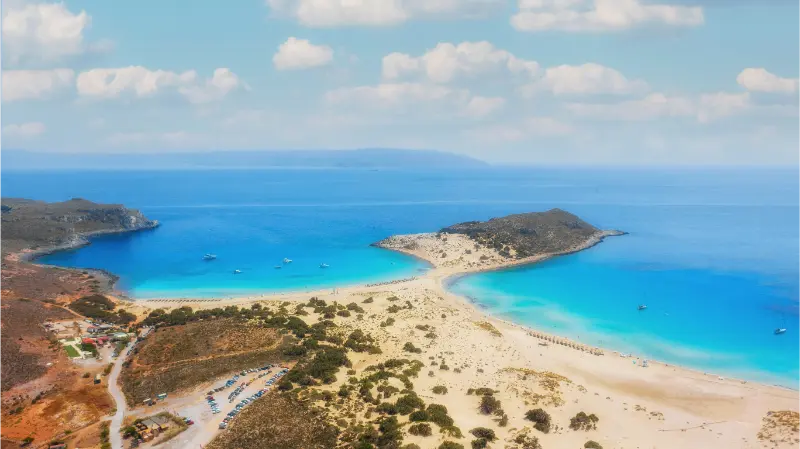
    Simos Beach, Elafonisos: for iconic sand and colour

    Simos is the headline beach of Elafonisos and the obvious choice if your priority is pale sand, clear water and a landscape that feels more island-like than mainland Peloponnese. Its popularity means July and August require planning: arrive early, respect dunes and avoid treating protected coastal vegetation as extra parking space.

    Elafonisos deserves more than a rushed ferry crossing. Use the Elafonisos travel guide to decide whether to stay overnight, especially if you want morning and evening beach time without the day-trip peak.

    Pounta and Pavlopetri: for beach plus archaeology

    Pounta lies on the mainland opposite Elafonisos and pairs naturally with the submerged archaeological landscape of Pavlopetri. The sand, wind exposure and shallow coastal setting create a very different day from Mani’s pebble coves.

    This is a place where responsible behaviour matters. Pavlopetri is protected underwater cultural heritage, not a collection of souvenirs. Do not move stones or disturb features while swimming or snorkelling.

    Mavrovouni: for space and long beach walks

    Near Gytheio, Mavrovouni gives you a long beach where it is easier to spread out than in tiny Mani coves. The coast is also used by loggerhead sea turtles for nesting, so marked nests and night-time conservation guidance must be respected.

    The beach can be breezy and conditions vary. Families should check the sea on the day rather than relying on a generic description of the shoreline.

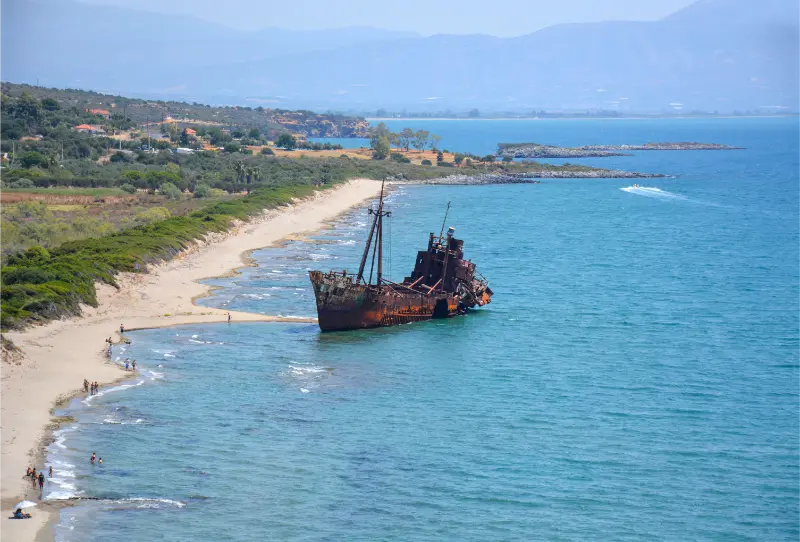
    Valtaki: for the Dimitrios shipwreck

    Valtaki is memorable because the rusting Dimitrios shipwreck dominates part of the beach. It works best for photography and a swim during a Gytheio day rather than as the only beach on a week-long holiday.

    Shipwreck Dimitrios Gytheio Peloponnese Greece

    Keep a safe distance from deteriorating metal and do not climb the wreck. The visible hull is photogenic precisely because it is decaying, which also makes it unsuitable as a playground.

    Skoutari: for a quieter Mani bay

    On the Mani Peninsula, Skoutari offers a calmer village-and-bay atmosphere than the most famous beach names. It is a good compromise for travellers who want to combine a swim with stone architecture and lunch without driving to the far end of the peninsula.

    As elsewhere in Mani, beach texture and organisation vary by cove. Carry water and simple beach gear even when you expect facilities.

    Alypa and Kokkala: for small-scale east Mani scenery

    Alypa is one of the most visually dramatic small coves, with pebbles, deep clear water and stone buildings close to the shore. Kokkala offers a little more village infrastructure and can be easier for a longer stop.

    Neither is ideal if your dream beach means kilometres of sand and organised loungers. Choose them for intimacy, scenery and the road-trip experience.

    Archangelos and the southeast coast

    Archangelos is useful for travellers based between Monemvasia and the Vatika area. The small seaside settlement and nearby beaches can break up a driving day and often feel more relaxed than the region’s headline destinations.

    Because seasonal services change, check accommodation and food availability before choosing a tiny coast base outside the main summer months.

    Beaches near Neapoli

    The official regional tourism portal highlights a range of beaches around Neapoli, from the town beach to more open sandy areas toward Pounta and Pavlopetri. Neapoli itself is practical because you can combine swimming with restaurants, museums and ferry connections.

    Use the Neapoli Voion guide if you want a beach base with more services than remote coves provide.

    How to choose the right beach by traveller type

    Families with small children should prioritise easy access, manageable entry, shade options and proximity to facilities rather than chasing the most photogenic cove. Strong swimmers and couples may enjoy the deeper pebble bays of Mani. Windsport travellers will care more about exposure and daily conditions.

    For a mixed trip, alternate beach types. One day on Elafonisos, one long beach near Gytheio and one small Mani cove will show far more of Laconia than visiting three similar stretches of sand.

    Best time to visit

    For most Laconia trips, May, June, September and early October give the best balance of comfortable temperatures and functioning visitor services. July and August bring the highest heat and demand, so start outdoor visits early. Winter can be rewarding for museums, towns and quiet landscapes, but small businesses and rural visitor facilities may have reduced hours.

    Weather matters more than the calendar for exposed archaeology, mountain paths and small coves. Check the forecast the evening before, then change the order of your day if wind, heat or rain makes the original plan less sensible. Flexibility is one of the easiest ways to improve a Peloponnese road trip.

    How much time to allow

    Do not plan this part of Laconia by kilometres alone. Mountain and coastal roads, parking, walking time and spontaneous stops all add minutes. I prefer to leave at least one unscheduled block in each day so a museum, beach, meal or viewpoint can take longer without damaging the rest of the itinerary.

    If you are using Sparta, Gytheio, Monemvasia or Neapoli as a base, compare the return drive before adding a second distant attraction. One well-paced experience plus a local meal usually produces a better day than three hurried stops.

    Where to stay

    Your best base depends on the rest of the trip. Sparta suits archaeology and Taygetos; Gytheio works for the Laconian Gulf and northern Mani; Areopoli or a Mani village reduces driving on the peninsula; Monemvasia is best for atmosphere; Neapoli works for Vatika, Elafonisos and Cape Maleas. See my comparison of Laconia bases before booking.

    Check current accommodation options

    Useful internal guides

    Continue planning with Elafonisos travel guide, Mavrovouni Beach guide, Alypa Beach Guide, Skoutari guide, Neapoli Voion guide and Archangelos guide.

    Practical mistakes to avoid

    • Trusting old opening hours, ticket prices or road-access information without checking again.
    • Underestimating heat on exposed archaeological sites, limestone paths and beaches with little shade.
    • Adding too many distant stops because driving distances look short on a map.
    • Parking in narrow village lanes, private entrances or emergency turning areas.
    • Assuming every beach, trail or archaeological site has water, toilets or staffed facilities.
    • Leaving valuables visible in a parked car or relying entirely on mobile reception for navigation.

    Responsible travel

    Laconia contains archaeological sites, active villages, nesting beaches, religious buildings and fragile mountain environments. Leave stones, pottery, fossils, plants and wildlife where they are. Follow marked routes, carry rubbish out and treat churches and monasteries as places of worship rather than themed attractions.

    Spending locally matters too. A family-run room, bakery, village taverna, guide or locally produced food item keeps more of the value of tourism in the communities you are visiting.

    Frequently asked questions

    Which Laconia beach is best for white sand?

    Simos on Elafonisos is the best-known choice for pale sand and vivid water.

    Aerial View Tropical Seascape Beach Simos Elafonisos Island Peloponnese Greece

    Which beaches are easiest from Gytheio?

    Mavrovouni and Valtaki are two obvious nearby options.

    Are Mani beaches mostly sandy?

    Many Mani coves are pebbly or mixed rather than broad sandy beaches.

    When is the best beach season?

    June and September are excellent for warm weather with less peak-season pressure; July and August are busiest and require earlier starts.

    Useful official and specialist sources

    For current details and deeper background, use Visit Peloponnese – beaches near Gytheio, Visit Peloponnese – beaches near Neapoli.

    For information that can change, I always prefer to check an official source shortly before travel. Archaeological-site opening days, museum tickets, road access, ferry timetables and seasonal services can all change after an article is published. The regional portal Visit Peloponnese is useful for destination context, while the Greek Ministry of Culture and Hellenic Heritage are the best starting points for state-run museums and archaeological sites.

    Final advice

    The best way to experience this part of Laconia is to give it enough time to feel different from the region’s headline sights. Build the day around one clear purpose, leave room for a meal or unplanned stop, and use current local information when conditions or access can change.

    That slower approach is especially valuable in the Peloponnese, where landscape, villages and the road between attractions are often as memorable as the formal sight itself.

    Building this into a longer Peloponnese trip

    If Laconia is part of a longer Peloponnese itinerary, avoid changing regions every day. A sensible sequence is to approach Sparta from Arcadia or the motorway, spend time around Mystras and Taygetos, then move toward Gytheio and Mani or toward Monemvasia and the Vatika peninsula. This creates a natural geographic flow and reduces repeated mountain crossings.

    Travellers continuing toward Messinia can leave Mani through the western side of the peninsula, while those heading north-east can return via Monemvasia, Geraki or the main road network. Build in one flexible night if beach weather or mountain conditions are important to you; it is much easier to move a beach day than to force an exposed hike in bad weather.

  • Kefalonia Without a Car: Buses, Taxis, Boats and the Best Bases for Easy Exploring

    Kefalonia Without a Car: Buses, Taxis, Boats and the Best Bases for Easy Exploring

    You can visit Kefalonia without renting a car, but the trip needs a different structure. The island is large, beaches are scattered, and the bus network is designed around real transport needs rather than a tourist hop-on/hop-off circuit. A successful car-free holiday therefore depends more on choosing the right base than on trying to reproduce a road-trip itinerary by public transport.

    Argostoli and Lassi are the easiest starting points for most car-free visitors. Sami can also work well for the caves and Antisamos, while resort bases such as Skala are convenient if your priority is staying local. KTEL publishes seasonal timetables and changes frequencies during the year, so every plan should be checked shortly before travel. The examples below use the schedule published for 11–25 September 2026.

    Kefalonia Without a Car at a glance

    QuestionPractical answer
    Best base overallArgostoli for transport links; Lassi for beach + capital access
    Good secondary baseSami for caves/Antisamos; Skala for a resort stay
    Main bus operatorKTEL Kefalonias
    Biggest limitationRemote beaches and multi-stop road-trip days
    Best strategyBuses for major corridors + selective taxi/boat excursion

    What the 2026 KTEL network can realistically do

    In the timetable published for 11–25 September 2026, KTEL listed daily Argostoli–Fiskardo service at 10:00 with a 17:00 return, weekday Argostoli–Myrtos service around 10:00 with a 17:15 return, and several Argostoli–Sami departures. Airport/Lassi services were also published throughout the day. Those examples show that key sights can be reached without driving.

    They also reveal the limitation: one daily bus gives you access, but not complete flexibility. If you miss it or want to combine three remote places, the plan falls apart. Always use the current KTEL Kefalonia timetable rather than saving these September times for a future season.

    Argostoli: the strongest car-free base

    Argostoli gives you the best chance of finding buses, taxis and organised excursions in one place. It also has enough restaurants, shops and waterfront atmosphere that a no-travel day does not feel wasted. For short stays, this matters more than being directly on a famous beach.

    The Argostoli guide explains what to do locally. Lassi is close enough to function as the beach extension of an Argostoli-based trip.

    Lassi: the easiest beach compromise

    Lassi works well when the holiday priority is swimming but you still want access to the capital. Seasonal bus services connect Lassi with Argostoli and the airport corridor, and taxis cover the short gaps when the timetable is inconvenient.

    Staying in Lassi will not make Myrtos, Assos or Fiskardo close. Treat those as organised day trips, bus days or occasional taxi/car-hire days rather than daily outings.

    Sami without a car

    Sami is strong for a second base because Melissani is nearby, Antisamos can have local bus service in season and the harbour adds boat/ferry possibilities. The town is relatively flat and everyday services are concentrated.

    A split stay of Argostoli/Lassi plus Sami is more realistic than trying to commute across the island every day. It turns geography into an advantage instead of a problem.

    Taxis, boat trips and one-day car hire

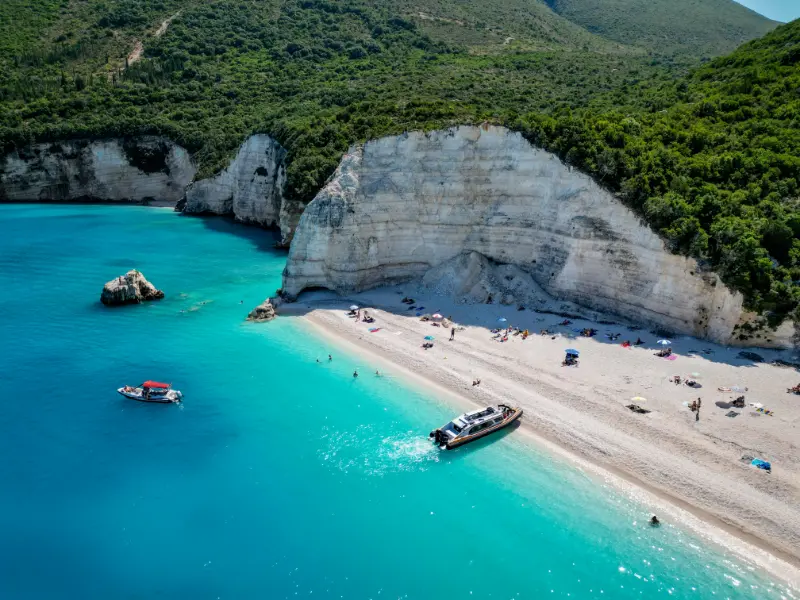
    Car-free does not have to mean bus-only. One taxi to a hard-to-reach beach, a boat day from Sami or Agia Efimia, and one day of car hire can unlock the places public transport serves poorly while still avoiding a week-long rental.

    4K Boat Taxis Fteri Beach Kefalonia Cephalonia Greece

    Price those alternatives before the trip. A cheap room far from every bus stop can cost more overall than a central hotel once repeated taxis are added.

    When to go and how the season changes the experience

    For Kefalonia without a car, June and September are usually the easiest months to balance warm swimming conditions with less pressure on roads, parking and restaurants. July and August bring the widest range of seasonal services, boat trips and nightlife, but they also bring the strongest heat and the most competition for parking. May and October can be rewarding for walking and quieter travel, yet weather and seasonal opening hours become less predictable.

    Do not plan the entire trip from average temperature charts. Wind direction, recent weather and sea state can change the best beach for a particular day. Keep one or two flexible days and move the most weather-sensitive boat or west-coast plan when conditions look best.

    Driving, roads and parking

    Kefalonia rewards a car, but the driving is slower than the map suggests. Mountain roads, village streets, bends and summer traffic all add time. Build margin into every estimate, especially when you have a ferry, boat departure or restaurant reservation. Avoid stopping on blind corners for photographs and use formal viewpoints or safe pull-outs instead.

    Parking is usually the hidden problem at famous places. Arriving before the middle of the day can make Myrtos, Assos, Fiskardo and other popular stops much easier. If you dislike driving on steep roads, choose a base that reduces the number of cross-island days rather than forcing yourself through a seven-day road-trip schedule.

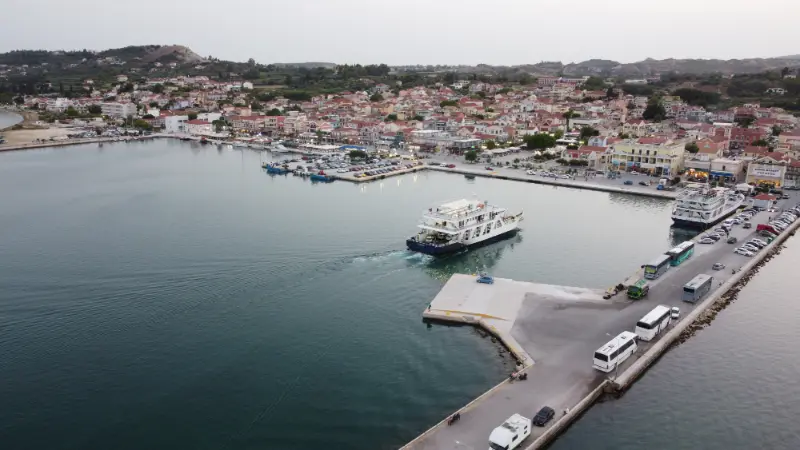
    Photos Kefalonia Island Greece Display Lixouri Region Arriving Bus Ship

    Buses and car-free planning

    KTEL Kefalonias publishes seasonal local routes linking Argostoli with the airport, Lassi, Sami, Fiskardo, Myrtos and other destinations. Frequencies change through the season, sometimes substantially. Use buses for the routes they serve well and accept that a taxi, boat excursion or one-day car rental may be the sensible tool for places outside the main network.

    Before travelling, check the official KTEL Kefalonia local timetable. Do not rely on a blog timetable copied months earlier. For a full strategy, see my Kefalonia without a car guide.

    Food, water and the rhythm of the day

    A good Kefalonia day has space for lunch. Long coastal drives and beach parking feel much easier when you are not trying to fit six attractions around them. Keep water in the car, especially for remote beaches and hiking, and do not assume every scenic cove has a taverna or kiosk.

    Robola wine is one of the island’s best-known local products, while meat pies, seafood and simple grilled dishes appear widely. If wine tasting is part of the day, designate the driver or use a transfer; winding island roads are not the place to combine driving with alcohol.

    How to connect this guide with the rest of Kefalonia

    Start with the Kefalonia travel guide if this is your first visit. The Myrtos Beach guide, Assos guide, Fiskardo guide, Melissani and Drogarati Caves guide and Mount Ainos guide cover the island’s major landscape and sightseeing anchors in more depth. Use those pages to build clusters of nearby stops instead of crossing the island several times in one day.

    If you have seven nights, one base can work for a relaxed holiday but two bases usually reduce driving for travellers who want to see both the north and south. The point of a split stay is not to collect hotels; it is to move once so that several later days become easier.

    Booking experiences and boat trips

    Kefalonia has boat trips, sea kayaking, sailing, cave visits and day excursions, but availability is seasonal and weather-dependent. Compare duration, transport included, boat size, shade and cancellation terms before booking. A shorter high-quality trip can be better than an all-day itinerary with too many stops.

    Common planning mistakes to avoid

    • Trying to combine Myrtos, Assos, Fiskardo, Melissani, Drogarati and a sunset stop in one day.
    • Choosing accommodation only by nightly price without checking how much driving it creates.
    • Assuming every famous beach has sand, shallow water, shade and full facilities.
    • Saving a seasonal bus timetable and assuming it will still apply on different dates.
    • Booking a weather-sensitive boat excursion on the only free day of the trip.
    • Underestimating the sun on remote pebble beaches where natural shade may be limited.

    Frequently asked questions

    Can I see Myrtos without a car?

    Seasonal KTEL services can operate to Myrtos, but frequency is limited and changes through the year. Check the current timetable.

    Can I get from the airport to Argostoli by bus?

    Yes, KTEL publishes airport services in season. Exact times change, so verify for your arrival date.

    What is the best base without a car?

    Argostoli is the most flexible overall; Lassi is better if beach access matters more than being in the transport hub.

    Can I visit Fiskardo by bus?

    Seasonal services operate, but a single daily pattern may define your entire day. Check the current schedule.

    Is Sami good without a car?

    It can be, particularly for caves, Antisamos and boat links, but a split stay is usually easier than using Sami to explore the whole island.

    Should I rent a car for just one day?

    That can be an excellent compromise if you are comfortable driving. Use the day for remote beaches or villages that are awkward by bus.

    More Kefalonia in-depth guides

    Continue planning the island with Lassi and Makris Gialos Kefalonia Guide; Sami and Antisamos Kefalonia Guide; Skala Kefalonia Guide; Lixouri and Paliki Kefalonia Guide; Agia Efimia Kefalonia Guide; Fteri Beach Kefalonia Guide; Best Beaches in Kefalonia; Kefalonia with Kids; Where to Stay in Kefalonia.

    A simple way to plan the day without rushing

    When I build a day around Kefalonia without a car, I start with one non-negotiable experience and treat everything else as optional. That might be a particular beach, a cave visit, a harbour dinner or a boat departure. I then add one nearby secondary stop and leave the rest of the day open. This sounds conservative on paper, but it is exactly what prevents Kefalonia from becoming a sequence of car parks and rushed photographs.

    Keep a weather backup in the same part of the island. If the sea is rough, switch from a beach to a village, cave or inland drive; if the afternoon is extremely hot, reverse the order and save the open-air stop for later. The best itineraries are not the ones with the most reservations. They are the ones that can absorb wind, traffic, a late lunch or the discovery of a beach you did not expect to love.

    What I would prioritise on a short visit

    With only three or four days on Kefalonia, I would not attempt complete island coverage. Choose one part of the island, add Myrtos or another major landmark if the route is sensible, and protect at least one slow beach afternoon. On a one-week trip, add a second base or two longer day trips. With ten days or more, the island finally gives you room for remote beaches, a mountain day and weather flexibility without sacrificing the evenings.

    Lixouri Second City More Large Of Kefalonia Greece

    That approach also improves value. Fewer long drives mean less fuel, fewer emergency taxis and fewer meals bought only because you are late. More importantly, it creates time for the small things that make an Ionian island memorable: swimming twice in the same bay because the light changed, staying for dessert, or stopping at a viewpoint when the road is quiet.

  • Kea Diving Guide: Britannic, Burdigala, Patris Wrecks and Responsible Diving

    Kea Diving Guide: Britannic, Burdigala, Patris Wrecks and Responsible Diving

    Kea has one of the most historically significant underwater landscapes in Greece. The waters around the island are associated with major shipwrecks including HMHS Britannic, the sister ship of Titanic, as well as Burdigala and the nineteenth-century steamer Patris. That history makes Kea fascinating to divers, but it is also exactly why this is not a place for casual independent wreck exploration.

    The modern story is increasingly about protection and controlled access. Visit Greece describes a Kea Marine Historical Site with protected zones, conservation rules and guided diving linked to maritime heritage. If wrecks are the reason for your trip, plan through qualified, authorised operators and treat legal access rules as part of the experience rather than an obstacle.

    Why Kea became a wreck-diving destination

    Kea sits near important sea routes between Attica and the Aegean. The surrounding channels have seen heavy maritime traffic for centuries, and several major accidents created an unusually rich concentration of underwater heritage. Jacques-Yves Cousteau’s work around Britannic in the 1970s helped bring international attention to the area.

    Today the attraction is broader than one famous wreck. Maritime archaeology, geology and marine life combine in a destination that appeals to experienced divers who value history as much as scenery.

    HMHS Britannic: understand the limits

    Britannic is world-famous, but fame does not make it a normal recreational dive. It is a protected historic wreck in deep water and access is regulated. Do not travel to Kea assuming a standard open-water certification entitles you to book a descent.

    Kea Island Tzia Greece

    Any legitimate operation should be able to explain qualification requirements, permissions, support procedures and what type of dive is actually available on your dates. If those answers are vague, choose another activity. There is no responsible shortcut around depth, law or training.

    Burdigala, Patris and other underwater heritage

    Visit Greece groups Britannic with the French ship Burdigala and the Greek steamer Patris as part of Kea’s maritime story. These wrecks belong to different historical periods and offer different archaeological contexts. Their significance is one reason protected zones and specialised guiding matter.

    Kea’s waters also contain aircraft remains and other sites. The important point for visitors is that “wreck diving” is not a single product. Ask exactly which site an operator visits, what level of certification is required and whether the dive is archaeological, technical or recreational in character.

    Koundouros reef and non-wreck diving

    You do not need to build the entire dive trip around deep historic wrecks. Visit Greece highlights Koundouros reef for sponges, corals and pelagic fish, while areas around small offshore islets can provide attractive marine scenery. These options may suit a wider range of certified recreational divers.

    Discuss experience level honestly with the dive centre. Current, depth, boat procedures and visibility can vary. A conservative site choice that lets you enjoy the dive is better than chasing a famous name at the edge of your training.

    Certification and operator questions

    • What certification and recent logged experience are required for this exact site?
    • Is the site inside a protected or controlled-access zone?
    • Which permits or archaeological restrictions apply?
    • What gas, equipment and redundancy does the operator require?
    • What is the maximum planned depth and bottom time?
    • What emergency oxygen, surface support and evacuation plan are in place?
    • What happens if weather cancels the dive?

    These are normal questions, not signs of nervousness. A professional operator should welcome them and should never pressure you to exceed your certification.

    Weather and cancellation planning

    Aegean wind can affect boat operations, so give a diving trip flexibility. If you have one non-refundable day and one must-do site, weather can disappoint you. A three- or four-night stay gives operators more room to move activities.

    Build a strong land itinerary too. Ancient Karthaia, Ioulida and the hiking network mean a cancelled dive does not have to become a wasted day.

    Responsible wreck etiquette

    Historic wrecks are cultural heritage, not souvenir fields. Do not touch, remove, enter or disturb material beyond what is explicitly allowed under the operator’s plan and local law. Good buoyancy is essential because contact can damage both archaeological material and marine growth.

    Photography should also be secondary to safe diving. A camera increases task loading. If you are not completely comfortable with the dive profile, leave the camera on the boat and focus on the team and the environment.

    A sensible Kea dive-trip structure

    DayPlan
    1Arrive, check in, meet operator, paperwork and equipment review
    2Conservative local reef or checkout dive
    3Primary planned dive if weather and qualifications permit
    4Backup dive or land day in Ioulida/Karthaia
    5No-dive buffer before flying, then ferry onward

    The final no-dive interval before flying must follow your training agency and dive computer guidance. Do not compress it because a flight time looks convenient.

    Non-divers travelling with divers

    Kea works well for mixed groups because the island has real land content. A non-diver can spend the day in Ioulida, on a beach, hiking or visiting Karthaia while the diving member is on the boat. Choose accommodation based on everyone’s evening needs rather than locating the whole holiday next to the dive centre.

    Kea Tzia Island Cyclades Greece Spathi Bay Beach Aerial Drone View

    Vourkari and Korissia are convenient for harbour access; Ioulida gives stronger village atmosphere. Confirm the actual departure harbour with the operator before booking around an assumption.

    Where to stay and how to book

    For a dive-focused trip, stay where your chosen operator can collect you easily, often around the port or a harbour area. Do not book solely from a generic “diving in Kea” map pin; ask the operator which harbour and meeting point they use. If the group also values evenings and restaurants, Vourkari or Ioulida can balance diving with a more complete island stay.

    For live availability and current rates, compare places to stay in Kea on Booking.com. I recommend checking the exact pin on the map before paying: on Kea, two properties described with the same village name can be separated by steep roads, long walks or a stretch that is much easier with a car.

    Official resources to check before your trip

    Read Visit Greece’s overview of Kea’s underwater world and protected maritime heritage and verify access directly with a qualified local dive operator before planning around a specific wreck.

    Opening hours, ferry times, bus routes and beach services can change by season. Recheck them close to your travel date rather than treating an old timetable or a social-media post as permanent.

    Tours and activities

    Kea has a smaller organised-tour market than Santorini or Mykonos, so availability is often seasonal. The widget below is useful for checking whether guided hikes, sailing, diving or other bookable experiences are operating on your dates. Verify meeting points and cancellation terms before paying.

    Continue planning your Kea trip

    How I would fit this into a first Kea itinerary

    For a first stay of four or five nights, I would not make Kea diving guide the only purpose of the trip. Kea works best when one day is built around Ioulida and the historic interior, one around the coast, one around a substantial walk or archaeological experience, and at least one remains flexible for wind and weather. That structure lets you use this guide in context rather than forcing every attraction into consecutive hours. If you are arriving from Athens on a Friday and leaving Sunday, cut the plan further: choose one village experience, one beach area and one signature activity. The island is close enough to return to, so there is little value in turning a short break into a race.

    Kea also changes character between weekdays and summer weekends. Its proximity to Attica means Friday-evening and Sunday-return traffic can feel much busier than a midweek stay. If accommodation prices, restaurant reservations or ferry availability look tight, consider shifting the same itinerary by a day or travelling in June or September. Shoulder-season travel is particularly attractive for walking because the sun is less punishing and you can spend more of the day outdoors instead of organizing everything around midday heat.

    Keep one practical rule throughout the trip: verify the next day’s transport and opening information the evening before. Ferry operators, local buses, museums, restaurants and boat activities can all change seasonally. Ten minutes of checking is more useful than relying on a screenshot saved months earlier. It also gives you permission to change plans when the wind or temperature makes another part of the island more appealing.

    Small practical details that make the trip easier

    Another detail worth planning is the difference between map distance and real travel time. Kea’s roads are not long, but bends, village traffic, beach approaches and parking can slow a day considerably. Avoid stacking reservations back to back. Leaving thirty or forty minutes of slack between a beach, a museum, dinner or a ferry transfer makes the trip feel calmer and gives you room to stop when a viewpoint or village turns out to be more interesting than expected.

  • Where to Stay in Syros: Best Areas for Culture, Beaches, Couples and No-Car Trips

    Where to Stay in Syros: Best Areas for Culture, Beaches, Couples and No-Car Trips

    Choosing where to stay in Syros is less about finding the “best” village and more about deciding what you want to do before breakfast and after dinner. Ermoupoli is unbeatable for culture, ferry convenience and a no-car trip; Galissas offers an easy sandy-beach routine; Kini combines sunset with a village waterfront; Finikas and the south-west provide quieter coastal practicality.

    The island is small, but changing base is not always worth it. For a three- or four-night trip, one well-chosen hotel is usually better than repacking. For a week, a split between Ermoupoli and a beach village can make sense if you strongly want both urban evenings and immediate access to sand.

    This guide compares the main bases by transport, beach access, atmosphere, families and couples, with the practical details that accommodation listings often hide—steps, hills, parking and distance from the bus stop.

    At a glance

    Best first-time baseErmoupoli
    Best for cultureErmoupoli or Vaporia
    Best classic beach baseGalissas
    Best for sunsetKini
    Best without a carCentral Ermoupoli

    Ermoupoli: best all-round base

    Ermoupoli is the strongest choice for first-time visitors who want to experience more than beaches. Ferries arrive here, buses leave for much of the island, taxis are easier to find and the city contains the greatest concentration of restaurants, museums, shops and evening life. Arrival and departure days remain useful because sightseeing starts outside the hotel door.

    The drawback is that there is no broad sandy resort beach in the centre. Asteria is excellent for an urban swim but not equivalent to Galissas. If you are happy to take a bus for beach days, this compromise is minor; if the beach is the entire holiday, choose the coast.

    Vaporia: romantic and architectural

    Vaporia is technically part of Ermoupoli but deserves separate consideration because the experience is different. Sea-facing neoclassical mansions, Agios Nikolaos and Asteria create a memorable setting, especially for couples and architecture lovers. Some rooms offer extraordinary views.

    The practical warning is elevation. Check how many steps separate the property from the waterfront, parking and luggage drop-off. A beautiful balcony can be less charming if every dinner requires a difficult climb for someone with mobility limitations.

    Ano Syros: atmosphere over convenience

    Staying in Ano Syros puts you inside the medieval lanes after most day visitors have left. It suits travellers who value atmosphere, views and slow evenings more than quick beach access. Small guesthouses can feel intimate and distinctive.

    The same qualities create logistical challenges: steps, limited vehicle access and fewer transport options at the door. Confirm how luggage reaches the property and how you will return at night. It is usually a better choice for experienced independent travellers than for a first no-car family trip with a stroller.

    Galissas: easiest sandy-beach base

    Galissas is the straightforward choice for travellers who want a broad sandy beach a short walk from accommodation. Families benefit from the generally shallow entry and simple daily routine, while couples can add the Agia Pakou viewpoint and quiet evenings.

    Seasonal buses connect the village with Ermoupoli, so a car is not automatically necessary. However, check the exact timetable for your dates, particularly if you want late dinners in the capital. The village is calmer than Ermoupoli and has a smaller restaurant choice.

    Kini: sunset and village evenings

    Kini suits travellers who imagine swimming late, watching the western sky change colour and walking directly to a waterfront dinner. It has enough services for a comfortable stay and seasonal boat trips may add access to more remote beaches.

    It is less convenient than Ermoupoli for museums and ferry-day logistics, but that is the trade-off for a more coastal rhythm. Couples often appreciate Kini; families can enjoy it too, though Galissas may offer the simplest classic beach setup.

    Finikas and Posidonia: practical south-west

    Finikas has a marina, shops, restaurants and useful access to south-western beaches. Nearby Posidonia offers historic villas and a quieter residential atmosphere, while Agathopes provides one of the island’s easiest sandy beach days. This area works well with a car and can also function with seasonal buses.

    Choose it if you want a local coastal base rather than a nightlife centre. Check walking routes carefully because accommodation may be spread out rather than clustered around a single pedestrian core.

    Vari, Azolimnos and the south coast

    Southern bases such as Vari and Azolimnos can be practical for families, shorter transfers and easy beach access. Azolimnos is particularly convenient to Ermoupoli, while Vari offers a more complete beach-village feel. Neither provides the cultural density of the capital.

    These areas are good compromises for travellers who want the sea close but still plan several trips into town. As always, the current bus schedule matters more than the straight-line distance when you are not renting a car.

    Should you split your stay?

    For three or four nights, usually no. The time spent checking out, moving luggage and checking in again outweighs the small distances on Syros. Pick one base and travel out for the day. For six or seven nights, a split such as three nights in Ermoupoli and three or four in Galissas or Kini can create two distinct rhythms.

    Syros Island Hermoupolis Cityscape Panorama Aerial Drone View Greece Cyclades

    Splitting makes the most sense when your priorities genuinely change halfway through the trip—culture first, beach second—not because two hotels look attractive online. Families with lots of luggage should be especially conservative about moving.

    How much time to allow

    For stays under five nights, choose one base; for a week or more, a two-base plan can work if you want a clear town-and-beach contrast. Syros is compact on a map, but steep streets, beach stops and meal times make a rushed schedule less enjoyable than it looks. Build the day around two or three meaningful anchors rather than a list of ten pins. That gives you room for a swim, a museum that takes longer than expected, or a bus connection that is less frequent outside the busiest summer weeks.

    If you are visiting on a day trip, identify the one experience that matters most and protect time for the return to the port. If you are staying several nights, group places by coast: Ermoupoli and Ano Syros together, Galissas with the south-west, and Kini with the west. This simple geographic approach cuts backtracking and gives every stop a more relaxed rhythm.

    Getting around and transport reality

    Central Ermoupoli gives the widest bus and taxi options; beach villages can work without a car only when the seasonal timetable fits your evenings. The public bus network is useful for the main settlements and beaches, but timetables are seasonal. Check the official KTEL Syros schedule shortly before travelling rather than planning from an old screenshot. Taxis are valuable for early ferries, late dinners and combinations that do not line up neatly with buses.

    Panoramic View Ermoupolis City Syros Island With Ferries Cruise Liners Greece

    A rental car gives more flexibility for remote coves and village combinations, but it is not automatically the best choice in Ermoupoli. Central streets can be steep, narrow and busy, and parking may be some distance from your accommodation. Travellers who stay centrally can often combine walking, buses and an occasional taxi and avoid driving every day.

    Best time of day

    Think about your preferred evenings before booking: city restaurants and theatre point toward Ermoupoli, while sunset and barefoot dinners point toward Kini or Galissas. In July and August, the middle of the day can feel much hotter on stone streets and exposed beaches than the air temperature suggests. Use morning for uphill walking, museums or uncrowded swimming, keep lunch unhurried, and save sunset-facing beaches or waterfront walks for later.

    Wind matters as much as temperature in the Cyclades. A beach that looks perfect in a photograph may feel very different on a strong northerly day. Keep at least one flexible beach afternoon and ask locally which coast is calmer that day; this is more useful than locking every swim into the itinerary weeks in advance.

    What to bring

    Before paying a deposit, ask the property about stairs, parking, luggage drop-off, bus-stop distance, road lighting and beach gradient. Add a refillable bottle, strong sun protection, a light layer for evening wind and offline maps. Shoes with grip are much more useful than smooth sandals in Ano Syros, on polished marble steps and on rough paths to quieter coves.

    For beaches, pack a small dry bag or waterproof pouch for phones and ferry tickets. For churches and cultural sites, carry something that lets you dress respectfully without returning to your room. Families should add water shoes when children dislike pebbles and a compact shade solution for beaches with limited natural cover.

    Costs and reservations

    Beachfront and view rooms can carry a premium in peak season; sometimes a central room plus bus fares is cheaper and more flexible than a remote rental plus car hire. Accommodation prices rise sharply around popular summer weekends, so lodging and ferry tickets deserve priority. Ordinary beach days and village walks do not need to be over-planned, and leaving some free time makes it easier to react to wind, heat and local events.

    For paid museums and attractions, confirm opening hours on the official site on the day before your visit. Small Cycladic museums sometimes close one weekday or change seasonal hours. For restaurants with a specific sunset table in mind, reserving ahead is sensible in July and August; otherwise, eating a little earlier or later usually provides more flexibility.

    How this fits into a wider Syros trip

    Start with the Syros Travel Guide for the island overview, then use Ermoupoli Guide, Ano Syros Guide, Vaporia & Asteria, Galissas & Kini, Posidonia & Agathopes for the parts of the trip that need more detail. Linking the guides by geography and travel style makes it easier to plan realistic days instead of zig-zagging across the island.

    Tours and activities

    If you want a guided experience, boat trip or organised activity, compare what is available for your exact dates. Check the meeting point, cancellation terms, language, duration and what is included before booking; on an island, wind can also affect marine activities.

    Common mistakes to avoid

    • Choosing by sea-view photos without checking terrain.
    • Assuming “Ermoupoli” always means flat walking near the port.
    • Booking a beach village without checking the last bus.
    • Splitting a short trip between multiple hotels.
    • Ignoring luggage access in Ano Syros or Vaporia.

    Frequently asked questions

    What is the best area for a first visit to Syros?

    Ermoupoli is the easiest all-round choice for culture, transport, food and ferry convenience.

    Where should couples stay?

    Vaporia for architecture and romance, Kini for sunset and a coastal village atmosphere.

    Where should families stay?

    Galissas is a strong beach-first choice; Ermoupoli is best for services and varied activities.

    Where should I stay without a car?

    Central Ermoupoli is clearly the most flexible base, with Galissas or Kini possible when seasonal bus frequencies are good.

    Is it worth staying in Ano Syros?

    Yes for atmosphere and views if you are comfortable with steps and more complicated luggage access.

    Should I split a one-week stay?

    It can work well if you want several culture-focused nights in Ermoupoli followed by a slower beach base.

    Final practical advice

    Choose your Syros base by daily routine, not by a single photograph. Ermoupoli is the safest first choice, Galissas simplifies family beach days, Kini excels at sunset and Vaporia adds architectural romance. Once you match the base to transport and evening habits, the island’s small scale makes everything else much easier.

    Check the timetable before booking

    If your accommodation choice depends on buses, compare it with the official KTEL Syros timetable for your dates before paying a non-refundable rate.