Author: Jessica

  • Where to Stay in Sifnos: Best Areas for Beaches, Food, Couples and No-Car Trips

    Where to Stay in Sifnos: Best Areas for Beaches, Food, Couples and No-Car Trips

    Choosing where to stay in Sifnos changes the rhythm of the entire trip. A room in Apollonia means evening restaurants and central buses; Kamares gives you the ferry and a sandy beach outside the door; Platis Gialos turns the holiday into a classic beach stay; Faros and Vathi slow everything down. Because the island is compact, you do not need to move hotels simply to see different coasts.

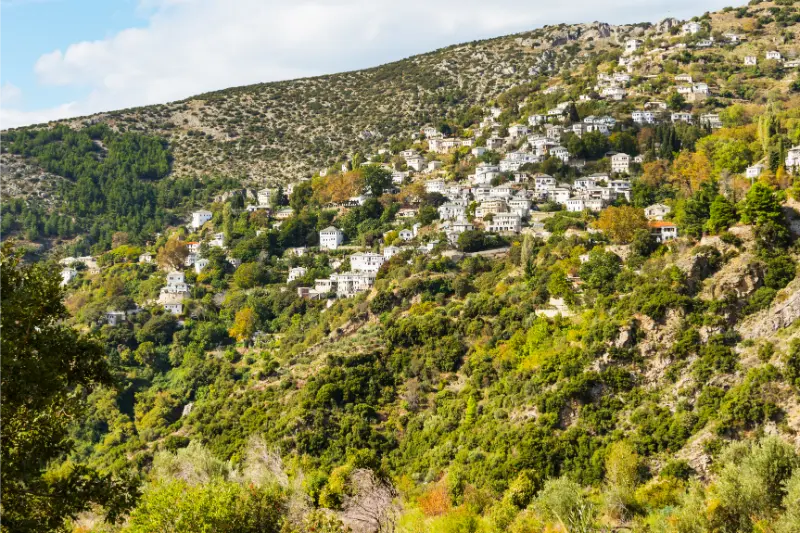
    Sifnos Island Faros Traditional Village Greece Cyclades

    The useful question is not “what is the best village?” but “what do I want to do before breakfast, after dinner and on ferry day?” This guide compares the main bases by beaches, transport, food, families, couples and no-car practicality.

    Best areas at a glance

    Best first-time baseApollonia / Artemonas
    Best for ferry convenienceKamares
    Best classic beach stayPlatis Gialos
    Best quiet coastal atmosphereFaros
    Best secluded bayVathi
    Best history and atmosphereKastro

    Apollonia: best for food and central transport

    Apollonia is the strongest all-round choice if you want restaurants, bars, services and transport close at hand. It is not on the coast, so every beach day begins with a bus, taxi or car. In exchange, evenings are effortless and you are positioned well for several directions.

    Choose it for a first visit, a short stay focused on food or a no-car trip. Avoid accommodation directly above the busiest pedestrian nightlife if you are a light sleeper; “central” can mean very different levels of noise.

    Artemonas: best for village atmosphere

    Artemonas is close enough to Apollonia to share many practical advantages but feels calmer and more architectural. Neoclassical houses, old churches, bakeries and pottery create a village-first experience. It is also a useful bus terminus.

    Couples and walkers often prefer it to the busier centre. Families can do well too, but check the exact slope, steps and distance to the road before booking with a stroller. See Apollonia and Artemonas for the detailed comparison.

    Kamares: best for easy arrival and beach

    Kamares removes the friction from ferry days. You can stay beside a broad sandy bay, eat without driving and often walk from the port to accommodation. It is one of the easiest bases for families and travellers who value logistics.

    The compromise is that evenings feel more like a port-and-beach settlement than a traditional inland village. If you want central dining, use the bus or taxi to Apollonia. Read the Kamares guide before choosing which side of the bay suits you.

    Platis Gialos: best for a beach-first holiday

    Platis Gialos is the clearest choice for travellers who want a long sandy beach and enough restaurants and services to stay local for much of the day. It works especially well for families, couples and a one-base summer holiday.

    It is farther from the port and depends more on buses or a car for evening variety. Pottery workshops and hiking routes keep it from feeling like a pure resort. See the Platis Gialos guide.

    Faros: best for quiet coastal walks

    Faros suits travellers who imagine small beaches, a fishing-village waterfront and the ability to walk to Chrysopigi. It is romantic without feeling designed only for couples, and the coastal route adds real interest beyond swimming.

    The trade-off is a smaller restaurant and transport choice. If you stay here without a car, confirm the seasonal bus timetable and be comfortable with quieter evenings. The detailed Faros and Chrysopigi guide explains the area.

    Vathi: best for a slower bay

    Vathi is a large sandy bay on the west side of the island with accommodation, restaurants, groceries and pottery. It feels more self-contained and removed from the central evening scene. That can be exactly right for a slow week and exactly wrong for someone who wants a different bar every night.

    Walkers benefit from routes through protected landscape toward Fikiada and Platis Gialos. No-car travellers should check bus frequency carefully before committing.

    Kastro: best for historic atmosphere

    Kastro is the atmospheric choice: a former capital with medieval lanes, archaeology and sea views. Staying after day visitors leave can be memorable, but the village has fewer services and more awkward luggage access than Apollonia or Kamares.

    Choose it because you actively want heritage and quiet, not because the photos are beautiful. Steps, parking and late transport should all be discussed with the accommodation before booking. See Kastro guide.

    Best areas for families

    Kamares and Platis Gialos are the easiest family choices because beach, food and accommodation can be close together. Central Apollonia is practical for older children who enjoy evening walks and varied day trips. Faros can suit families who prefer a smaller village, but beach size and transport are more limited.

    Ask about shade, cot availability, road crossings, steps and the real walking distance to the beach. “300 metres from the sea” can still involve a steep return.

    Best areas for couples

    Artemonas and Kastro are strongest for atmosphere; Faros gives a coastal-romantic feel; Apollonia is best if restaurant choice matters. Couples who plan a beach-heavy stay may prefer a sea-view room at Platis Gialos and travel inland for selected dinners instead of every night.

    Best areas without a car

    Apollonia/Artemonas are the most flexible because of the bus network. Kamares is exceptionally easy for ferry logistics and beach time. Platis Gialos can work well in the main season, while Faros and Vathi require more attention to the current timetable.

    A remote villa may look peaceful but can create a taxi bill and remove spontaneity. Match the accommodation to your transport plan before paying a non-refundable rate.

    Should you split your stay?

    For three to five nights, no. Sifnos is compact enough that one base is simpler. For a week, a split can make sense if you genuinely want two different holidays—for example, three nights in Apollonia for food and villages followed by four nights at Platis Gialos for the beach.

    Do not move just to reduce driving by ten minutes. Packing, check-out and waiting for rooms will cost more usable time than most island transfers.

    Booking questions that matter

    • How many steps are there from road or parking to the room?
    • Is the nearest bus stop served late enough for dinner?
    • Can luggage be dropped at the entrance?
    • Is the advertised beach walk flat or steep?
    • Is air conditioning included and adequate for the room size?
    • Does a sea-view terrace face strong prevailing wind?
    • If arriving late by ferry, how is check-in handled?

    How long to stay

    Four nights gives a useful first taste; five to seven nights lets Sifnos work as intended. With a week, you can have village evenings, two or three beach days, a real hike, Kastro and a food-focused day without treating every meal as a transfer window.

    Use the area guides before booking

    Compare Apollonia and Artemonas, Kamares, Platis Gialos, Faros and Chrysopigi and Kastro before choosing a base. For beach priorities, use the Sifnos beach guide.
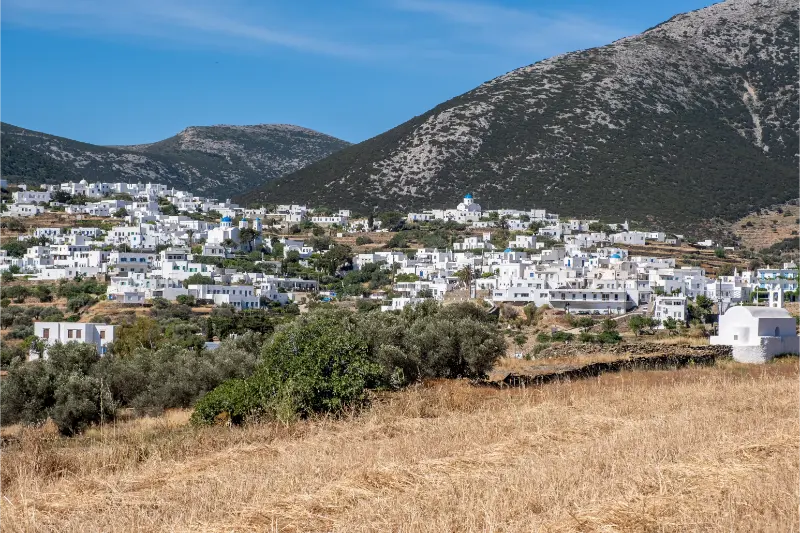
    Greece Sifnos Island Artemonas Town Traditional Architecture Blue Sky

    Tours and activities

    If you want a guided walk, food experience, boat trip or another organised activity, compare what is available for your exact dates. On a small Cycladic island the choice can change by season, so check the meeting point, duration, language, cancellation terms and whether transport is included before booking.

    Frequently asked questions

    What is the best area for a first trip to Sifnos?

    Apollonia or Artemonas offer the best balance of food, buses and access to different coasts.

    Where should families stay?

    Kamares and Platis Gialos are the easiest beach-first family bases.
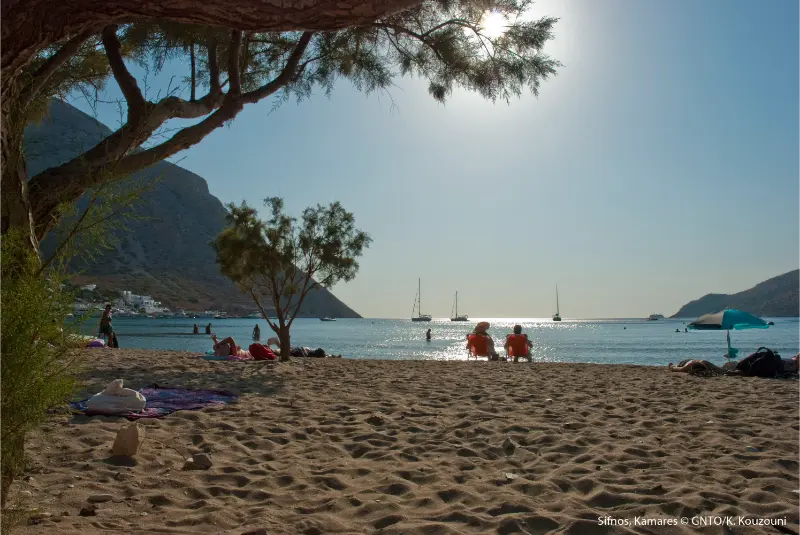
    Sifnos Kamares

    Where should couples stay?

    Artemonas, Kastro and Faros are strong choices for atmosphere; Apollonia suits food-focused couples.

    Where should I stay without a car?

    Apollonia/Artemonas or Kamares are the safest choices, with Platis Gialos also practical when buses are frequent.

    Is it worth splitting a one-week stay?

    Only if you want a clear centre-plus-beach contrast. Otherwise one base is simpler.

    How many nights do I need?

    Four nights is a useful minimum; five to seven is better for food, hiking and beaches without rushing.

    Final practical advice

    Choose your Sifnos base by daily routine rather than by the prettiest balcony. If you want village dinners and buses, stay central. If you want sand before breakfast, choose Kamares or Platis Gialos. If quiet matters most, look at Faros or Vathi. Once the base matches your priorities, the island’s compact size does the rest.

    Planning details that are easy to overlook

    Build each day around geography rather than a list of saved pins. Sifnos is compact, but repeated returns through the central road network can still waste time. Group central villages together, south-coast beaches together and Kastro with the eastern side. This leaves more time for meals and swimming, which are not empty gaps in a Sifnos itinerary but part of the experience.

    In July and August, heat changes the order of the day. Walk early, swim through the hottest hours and return to villages in late afternoon. In May, June, September and October, longer daytime walks become more realistic, but ferry and bus frequency may be lower. Always verify the transport that operates on your exact dates before making a non-refundable plan around it.

    Carry a refillable bottle, sun protection and shoes with grip even on days that are not labelled “hiking”. Stone lanes can be polished, coastal paths can be dusty and a five-minute viewpoint detour can become uncomfortable in smooth sandals. A light layer is useful for wind on evening terraces and ferry decks.

    For churches and monasteries, dress respectfully and avoid entering during services simply to take photographs. For pottery workshops, ask before photographing artisans at work. For beaches, leave stones, plants and shells where they are and take rubbish back to a serviced settlement if there are no bins.

    Finally, keep one flexible half-day in the itinerary. Wind, a changed bus timetable, a festival or a restaurant recommendation may give you a better plan than the one you made months earlier. Sifnos rewards travellers who organise the essentials but leave enough room for the island to change the schedule.

  • Rhodes Travel Guide: Old Town, Lindos, Beaches and a 5–7 Day Plan

    Rhodes Travel Guide: Old Town, Lindos, Beaches and a 5–7 Day Plan

    Rhodes is one of the easiest Greek islands to recommend to travellers who want both history and a beach holiday. Rhodes Town gives you a remarkable medieval centre, Lindos adds a dramatic acropolis above a whitewashed village, and the coastline offers enough beaches to fill a week without leaving the island. It is also large enough that a rental car can transform the trip, but organised enough to work without one.

    For a first visit, four to seven nights is ideal. With fewer nights, base yourself near Rhodes Town or on the east coast and avoid long cross-island days. With a week, you can combine medieval history, Lindos, beaches and at least one inland or southern drive.

    Where to stay in Rhodes

    Rhodes Town is best for history, restaurants, nightlife and a car-light stay. The Old Town is atmospheric but access and parking require thought; the New Town is practical and close to beaches. Lindos is beautiful and romantic but can be very busy by day. East-coast resort areas suit families and beach-focused travellers, while quieter southern areas appeal to visitors who value space over city access.

    Rhodes Old Town

    The Medieval City of Rhodes is the island’s defining cultural experience. Give it more than a quick evening walk. Explore early before day-trip traffic builds, return after dark for a different atmosphere, and look beyond the main shopping lanes. Walls, gates, the Street of the Knights and layers of later history make the city feel like an open-air archive rather than a single monument.

    If you stay inside the walls, verify exactly how luggage drop-off and vehicle access work. A romantic stone lane can be less romantic when you are dragging suitcases across it at midday.

    Lindos

    Lindos combines a whitewashed village, an acropolis and beaches below. The steep climb and exposed sun make timing important in summer; earlier is usually easier. After the historic site, slow down rather than immediately leaving. A swim or long lunch helps turn Lindos from a checklist stop into a full day.

    Best beaches in Rhodes

    Rhodes offers very different beach styles. Tsambika is popular for sand and space, Agathi is often appreciated by families, Anthony Quinn Bay is famous for its setting, and Prasonisi in the far south is associated with wind and water sports. Elli Beach is convenient from Rhodes Town. The best beach for you depends on wind, driving distance, facilities and whether you want organised loungers or a more natural stop.

    The Greek National Tourism Organisation highlights Rhodes for its wide beach variety, including family beaches, water-sports areas and wilder options. Do not try to visit five in one day; choose one coastal zone and enjoy it.

    Do you need a car?

    A car is not necessary if you stay in Rhodes Town and plan organised trips or use buses to major destinations. It becomes very useful for beach hopping, inland villages and the south. If you rent for only two or three days, you can keep the rest of the stay car-free and avoid paying for parking while exploring the town.

    Always check hotel parking and the precise pickup location. Inside the medieval centre, vehicle access is restricted and not all “Rhodes Town” properties are equally easy with luggage.

    A 5-day Rhodes itinerary

    DayPlan
    1Rhodes Old Town + evening in the New Town / harbour
    2Lindos + nearby beach
    3East-coast beach day
    4Rental-car day: inland villages or west/south route
    5Slow morning, museum/Old Town return, beach or departure

    A 7-day Rhodes itinerary

    With a week, keep the same core but add two slower days rather than two more major sights. Spend one full day on your favourite beach, add a second inland/southern drive, or take a boat excursion. A seven-night stay is long enough to combine a town base and a beach base if you genuinely want two different atmospheres, but it is not necessary.

    Rhodes with children

    Rhodes works well for families because the island has resort infrastructure, beaches, cultural sights and relatively straightforward day trips. Choose accommodation near a calm beach or with a pool, visit Old Town in the cooler part of the day and keep Lindos flexible around heat. A car seat and parking plan matter if you rent.

    Rhodes for couples

    Couples can choose between atmospheric Old Town stays, Lindos views and quieter coastal hotels. A split stay can work: two or three nights in Rhodes Town for restaurants and history, then several nights by the sea. This gives contrast without a ferry transfer.

    Rhodes for history lovers

    The Medieval City is the headline, but the island’s history is much broader. Lindos reaches into antiquity, later periods shaped fortifications and towns, and the modern urban landscape carries Italian-era architecture. A good history-focused visit alternates major sites with time to understand how those periods overlap.

    When to visit Rhodes

    Rhodes is a strong shoulder-season destination because beaches are only part of its appeal. Spring and autumn make walking and sightseeing more comfortable, while summer offers the most reliable resort atmosphere. September is particularly attractive for travellers who want warm sea and a slightly calmer rhythm. For a full month-by-month comparison, read Best Time to Visit Greece.

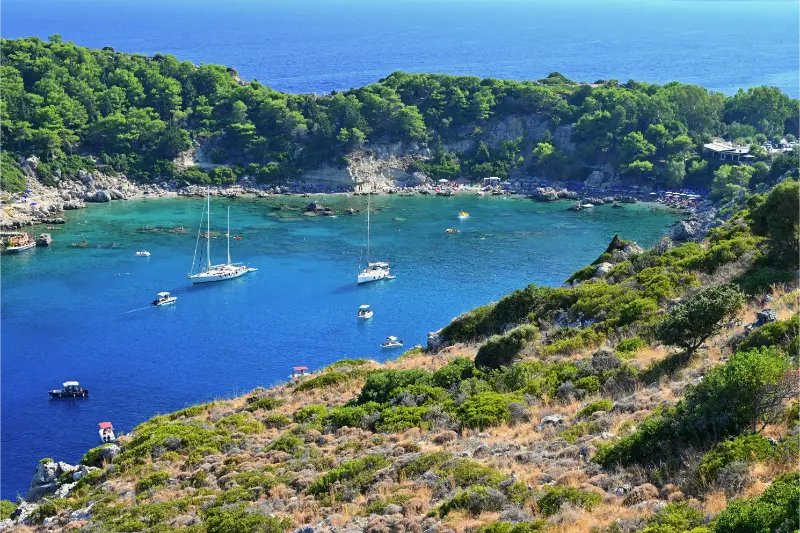
    Peaceful Seaside Scenery Rhodes Island Greece Clear Water Relaxing Atmosphere

    How Rhodes compares with Crete

    Choose Rhodes if you want an easier one-week combination of medieval city, beaches and compact road trips. Choose Crete if food, varied landscapes, large-scale road trips and multiple regional identities are the priority. Both are excellent family choices and both can fill a week without island hopping.

    How Rhodes compares with Santorini

    Santorini is about caldera scenery and a highly distinctive romantic landscape. Rhodes offers a broader conventional beach holiday plus major historical depth. For a short first Greece trip, Santorini fits more naturally into a Cyclades island-hopping route; Rhodes is better treated as its own Dodecanese destination.

    Practical mistakes to avoid

    • Staying in the Old Town with a rental car and no parking/luggage plan.
    • Driving to the far south for a single photo stop without building a full day around the route.
    • Visiting Lindos at the hottest time without shade and water.
    • Assuming every beach is sandy and sheltered.
    • Changing hotels twice during a short stay.
    • Treating Rhodes only as a resort island and missing the medieval city.

    Is Rhodes worth a full week?

    Yes. The island has enough contrast that a week rarely feels repetitive: medieval streets, a major archaeological village, organised beaches, coves, inland scenery and resort comforts. It is particularly strong for travellers who want variety without the logistical cost of changing islands.

    The Rhodes municipal tourist guide includes municipal information on sights, beaches, transport and family travel. Visit Greece also provides destination and beach information. Check current transport, site hours and local restrictions before travel.

    Rhodes FAQ

    Is it better to stay in Rhodes Town or Lindos?

    Rhodes Town is better for history, restaurants, transport and evening variety. Lindos is better for a romantic village atmosphere and access to nearby beaches, but it receives heavy daytime visitor traffic. With a week, you can split the stay; with four nights, I would normally choose one base and day-trip to the other.

    Can you see Rhodes without renting a car?

    Yes. Rhodes Town, Lindos and several popular beaches can be reached by bus or organised excursion. A car becomes valuable when you want multiple beaches, inland villages, the west coast or the far south on your own timetable. Renting for only part of the trip is often the best compromise.

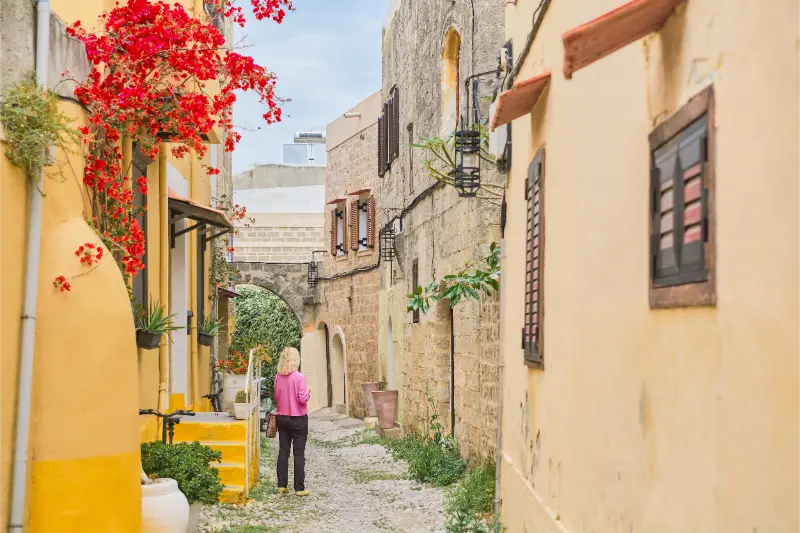
    Walking Through Streets Old Town Rhodes Far From Places Adult Woman Walking Along Street Trip Places Dodecanese Archipelago Greece

    How many days do you need in Rhodes Town?

    Two full days lets you explore the medieval city without rushing and still see the harbour, museums or a nearby beach. One day is enough for highlights, but staying overnight gives you a quieter Old Town after many day visitors leave.

    Is Rhodes good for a September holiday?

    September is one of the island’s strongest periods for travellers who want sea time plus sightseeing. Summer infrastructure remains active while the most intense school-holiday pressure begins to ease. Exact weather varies, but the island’s cultural attractions give you options beyond the beach.

    Which coast should you choose?

    The east coast contains many of the best-known resort beaches and easy access toward Lindos. The west can be windier and appeals more to some water-sports travellers. Your hotel location should reflect the beaches and sights you plan to use most rather than simply the cheapest available package.

    A good first week on Rhodes

    Think in three layers: two days for Rhodes Town, one full Lindos day, two beach days, and one flexible car or boat day. The final day can absorb weather changes or repeat the place you liked most. This structure feels much less like a checklist than driving the entire island every day.

    What should you do on a windy day?

    Use the island’s size to your advantage. Beach conditions can differ by coast, and Rhodes has enough indoor or cultural alternatives that poor swimming conditions do not need to waste a day. Return to Old Town, visit a museum, explore an inland village or move the beach plan to another part of the island after checking local conditions.

    Is a day trip to Rhodes from another island enough?

    A day trip can introduce the medieval city, but it misses the contrast that makes Rhodes interesting. If history, Lindos and beaches are all priorities, staying several nights is far more rewarding. Rhodes is strongest as a destination rather than a quick box to tick between ferry connections.

    Explore Lindos in more depth

    If Lindos is one of your priorities on Rhodes, use the detailed Lindos guide for the Acropolis, beaches and a realistic walking plan.

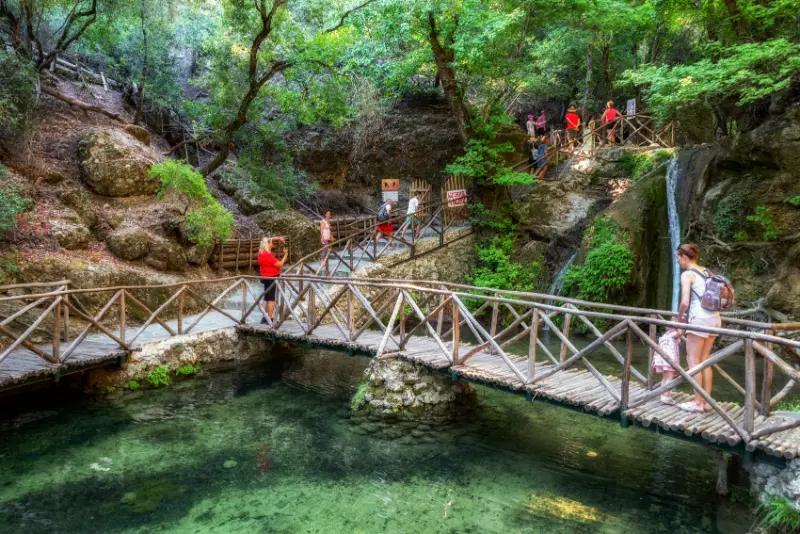
    Tourists Valley Butterflies Petaloudes Rhodes Island Greece

    Spend more time in Rhodes Old Town

    Use the Rhodes Old Town guide for the Palace, Street of the Knights, museums, gates and a full walking route.

    More detailed planning

    Continue with Meteora Hiking Guide for a more detailed plan.

    More detailed planning

    Continue with Valley of the Butterflies Rhodes Guide for a more detailed plan.

    More detailed planning

    Continue with Tsambika Beach Rhodes Guide for more detailed planning.

    More detailed planning

    Continue with Prasonisi Rhodes Guide for more detailed planning.

    More detailed Dodecanese guides

    Continue with Tilos; Kastellorizo; Chalki for more detailed planning.

    More Attica guides for your trip

    Continue with Best Day Trips from Athens for more detailed planning.

    Continue exploring Rhodes

    Plan the island in more detail with Anthony Quinn Bay; Kallithea Springs; Ancient Kamiros; Filerimos Hill; Monolithos Castle; Seven Springs; Stegna; Faliraki; Best Beaches in Rhodes; Rhodes Road Trip.

    Related itinerary: Rhodes and Karpathos in 10 Days: Dodecanese Island-Hopping Itinerary.

  • White Tower and Thessaloniki Waterfront Guide: Museums, Sunset and Walking Route

    White Tower and Thessaloniki Waterfront Guide: Museums, Sunset and Walking Route

    Thessaloniki’s waterfront is not simply a scenic promenade; it is the city’s easiest introduction. The White Tower anchors the historic centre, while the long redesigned seafront extends southeast through gardens, public art, cafés and open views across the Thermaic Gulf. Locals use it for walking, cycling, exercise and evening social life, so it feels integrated into the city rather than separated as a tourist attraction. A good route can occupy two relaxed hours or an entire afternoon if you include museums and food stops.

    If this is your first trip to the area, use this article together with Thessaloniki Travel Guide, Ano Poli Thessaloniki Guide and Kavala Travel Guide. Those guides cover the wider destination, while this page focuses on the practical decisions that make a visit to White Tower and Thessaloniki Waterfront Guide work smoothly.

    Why White Tower and Thessaloniki Waterfront Guide is worth your time

    The waterfront works because it combines orientation, history and daily life. From the White Tower you can understand the relationship between the old city and the sea, then continue into Nea Paralia where the experience becomes more contemporary. Sunset is particularly rewarding when the sky is clear enough to reveal the mountains across the gulf.

    The strongest trips are usually built around a clear reason for being here rather than a list of every possible attraction. Decide whether your priority is history, landscape, food, swimming, photography or walking. Once that is clear, the rest of the itinerary becomes easier: you can choose the right time of day, avoid unnecessary transfers and leave enough space for the experience that brought you here in the first place.

    Main highlights

    • White Tower and its historical exhibition
    • Alexander the Great monument
    • Umbrellas sculpture by George Zongolopoulos
    • the themed gardens of Nea Paralia
    • cafés and benches along the Thermaic Gulf
    • sunset views and evening atmosphere

    White Tower and its historical exhibition

    White Tower and its historical exhibition is one of the elements that gives White Tower and Thessaloniki Waterfront Guide its identity. Do not approach it only as a photo stop. Spend enough time to notice how it connects with the surrounding streets, landscape or historical context. In busy periods, moving even ten minutes away from the obvious focal point often changes the experience completely and gives you a more balanced view of the place.

    Macedonia Thessaloniki International Exhibition

    Alexander the Great monument

    Alexander the Great monument is one of the elements that gives White Tower and Thessaloniki Waterfront Guide its identity. Do not approach it only as a photo stop. Spend enough time to notice how it connects with the surrounding streets, landscape or historical context. In busy periods, moving even ten minutes away from the obvious focal point often changes the experience completely and gives you a more balanced view of the place.

    Umbrellas sculpture by George Zongolopoulos

    Umbrellas sculpture by George Zongolopoulos is one of the elements that gives White Tower and Thessaloniki Waterfront Guide its identity. Do not approach it only as a photo stop. Spend enough time to notice how it connects with the surrounding streets, landscape or historical context. In busy periods, moving even ten minutes away from the obvious focal point often changes the experience completely and gives you a more balanced view of the place.

    the themed gardens of Nea Paralia

    the themed gardens of Nea Paralia is one of the elements that gives White Tower and Thessaloniki Waterfront Guide its identity. Do not approach it only as a photo stop. Spend enough time to notice how it connects with the surrounding streets, landscape or historical context. In busy periods, moving even ten minutes away from the obvious focal point often changes the experience completely and gives you a more balanced view of the place.

    Best time to visit

    Late afternoon into sunset is the classic time, especially outside the hottest part of summer. Morning is better if you want to visit the White Tower with fewer people and continue to nearby museums. In winter, clear days can provide exceptionally crisp views across the gulf.

    Time of day matters almost as much as season. Early mornings are best for archaeological sites, exposed walks and popular viewpoints, while late afternoon is usually more pleasant for neighbourhoods, waterfronts and photography. If a visit depends on opening hours, boats, weather or trail conditions, check the official information the evening before rather than relying on an itinerary saved months earlier.

    How to get there and get around

    The central waterfront is easy to reach on foot from Aristotelous Square and much of downtown Thessaloniki. You do not need a car. If you continue far along Nea Paralia, remember that the return walk can be longer than expected; use public transport or a taxi if you have already spent the day sightseeing.

    Aerial Panoramic View Main Symbol Thessaloniki City White Tower With Boat Tour Ship Pier Landmarks Greece Urban Development

    In Greece, transport decisions should be made around the whole day rather than a single attraction. A rental car gives flexibility but can create parking problems in historic centres. Public transport is often excellent for straightforward city routes but less useful for combining several rural stops. Taxis are valuable for short gaps, especially when they save a steep climb or a long wait, but they become expensive when used as a substitute for a properly planned route.

    How much time do you need?

    For White Tower and Thessaloniki Waterfront Guide, a focused visit can usually fit into half a day, but the right amount of time depends on how deeply you want to explore. Travellers who enjoy museums, hiking, long lunches or photography should protect a full day or at least avoid scheduling another major attraction immediately afterwards. If you are using the place as part of a wider road trip, one well-planned stop is better than three rushed ones.

    Part Byzantine Wall Thessaloniki Greece

    A realistic itinerary

    Start at the White Tower and visit the interior if history is a priority. Walk past the Alexander the Great monument and continue toward the Umbrellas. Pause in the gardens, have coffee by the water and time the return section for sunset. Finish with dinner in the centre rather than eating at the first waterfront venue you see.

    Build a buffer of at least one hour into the day. That margin absorbs a longer meal, traffic, a museum queue, a change in weather or the discovery of a viewpoint where you simply want to stay. Greece is rarely at its best when every thirty minutes are scheduled. Protect the essential logistics, then allow the day to breathe.

    Where to stay

    You do not necessarily need to sleep beside White Tower and Thessaloniki Waterfront Guide. Choose accommodation based on the wider trip. In cities, stay near a metro line or in a neighbourhood you enjoy walking through at night. In mountain and rural areas, staying close to the next morning’s trailhead can be more useful than choosing the prettiest village on a map. On a short trip, convenience usually creates more value than saving a small amount on the nightly rate.

    Food and breaks

    Avoid choosing a restaurant only because it sits beside the most famous landmark. Walk a few streets away, compare menus and look for places where the meal itself can become part of the day. In hot weather, a long lunch during the middle of the afternoon is often smarter than forcing another exposed walk. Carry water even in cities, and never assume a rural viewpoint or archaeological site will have an open café when you need one.

    What to bring

    • comfortable shoes with grip
    • refillable water bottle
    • sun protection and a hat
    • a light layer for wind or cooler evenings
    • offline map or downloaded route
    • charged phone or small power bank
    • a little cash for minor purchases

    Pack for the actual terrain rather than the image you have seen online. Ancient paving can be slippery, mountain trails can be rough, and coastal wind can make a warm day feel much cooler after sunset. Good footwear and water make a bigger difference than carrying extra clothes you will never use.

    Common mistakes to avoid

    • arriving at the same peak hour as every tour group
    • trying to combine too many distant stops
    • ignoring heat, wind or trail conditions
    • assuming old ticket prices or opening hours are still valid
    • forgetting to plan the return journey
    • treating religious, residential or protected areas as photo sets

    The most common mistake at White Tower and Thessaloniki Waterfront Guide is overestimating how much fits comfortably into one day. Distances on a map do not show parking, queues, steep streets, museum fatigue or the simple desire to stop for coffee. Prioritise two or three experiences and leave secondary stops optional.

    Is it suitable for families?

    Usually yes, but the day should be adapted to heat, walking distance and attention span. Families often do better with an early start, a clear lunch break and one major attraction rather than a full adult sightseeing schedule. At archaeological sites and viewpoints, uneven surfaces and unprotected drops require active supervision. A shorter successful visit is better than forcing children through every room or path.

    Accessibility and mobility

    Accessibility varies widely. Modern museums and central promenades may have lifts and smoother surfaces, while old towns, mountain paths and archaeological sites can include steps, cobbles and steep gradients. Check the official accessibility information for the specific place you plan to visit. If mobility is limited, taxis can often eliminate the hardest climbs even when the final attraction still requires some walking.

    What to combine with it

    Combine the waterfront with the Archaeological Museum, Museum of Byzantine Culture or central food districts. Ano Poli belongs in a separate half day because its steep streets and historical character deserve a slower pace.

    For more context, continue with Thessaloniki Travel Guide, then use Ano Poli Thessaloniki Guide and Kavala Travel Guide to build the surrounding itinerary. This keeps White Tower and Thessaloniki Waterfront Guide connected to the rest of the trip instead of turning it into an isolated detour.

    FAQ

    Do I need to book in advance?

    For major museums, organised tours, popular summer activities and time-sensitive transport, advance booking is sensible. For ordinary neighbourhood walks and viewpoints, it is usually unnecessary.

    What is the best time of day?

    Early morning is best for lower temperatures and fewer people. Late afternoon is excellent for atmosphere and photography, provided opening hours and the return journey still work.

    Can I visit without a car?

    In cities, usually yes. Rural attractions and multi-stop mountain days are easier with a car, although organised excursions or taxis can sometimes replace driving.

    Is it worth visiting in the shoulder season?

    Yes. May, June, September and October can be excellent, but seasonal buses, boats and businesses may run less frequently outside peak summer.

    Should I trust prices and timetables from older articles?

    No. Tickets, opening hours, access rules and transport schedules change. Recheck official or local information shortly before your visit.

    Final advice

    Treat White Tower and Thessaloniki Waterfront Guide as an experience rather than a task to complete. Arrive with a clear plan for the essential logistics, then give yourself enough time to notice the details that make the place distinctive. That balance between preparation and flexibility is what turns a technically correct itinerary into a trip that actually feels like Greece.

    More Thessaloniki guides

    Continue with Archaeological Museum; Museum of Byzantine Culture for more detailed planning.

    Continue planning with our new Thessaloniki guides: family guide to Thessaloniki, romantic Thessaloniki, beaches near Thessaloniki.

  • Skiathos Without a Car: Buses, Boats, Walking and the Best Bases

    Skiathos Without a Car: Buses, Boats, Walking and the Best Bases

    Skiathos is one of the easier Greek islands to enjoy without renting a car because the main town, airport, port and most popular south-coast beaches are connected by a compact bus network. Boats cover experiences that roads cannot, and taxis fill the gaps. The challenge is not whether a car-free trip is possible; it is choosing a base that matches the routes you will actually use.

    In 2026 the local transport operator introduced and expanded routes, including service toward Evangelistria and the Kastro junction, and its timetable changed again from 18 September. That is exactly why I recommend using the live official information rather than memorising old bus-stop numbers from previous seasons. For the broad island overview, start with my Skiathos travel guide. For the capital, harbour and evening walks, use the Skiathos Town guide; and for the island’s best-known south-west beach, see the Koukounaries Beach guide.

    Best car-free bases

    BaseWhy it works
    Skiathos TownBest for port, airport, buses, evenings and boat trips
    Megali Ammos/AchladiesClose to town with beach access
    Agia ParaskeviBeach base on the main bus corridor
    TroulosFamily-friendly beach base with easy westbound access
    KoukounariesExcellent if the beach/wetland area is the main priority

    How the bus network works in 2026

    Skiathos Transport publishes routes, stops and current timetables at skiathostransports.gr. The operator states that updated schedules are valid from 18 September 2026 and provides real-time telematics information. Use that live source because shoulder-season frequency can differ substantially from July and August.

    The classic tourist corridor runs from town along the south coast toward Koukounaries. Additional services connect the airport and the Evangelistria side. Keep a screenshot of the last return options if you are spending the evening away from town.

    Why Skiathos Town is the easiest base

    If you want the maximum flexibility, stay in or near Skiathos Town. You can walk to boat departures, reach the airport quickly, use the main buses and enjoy evenings without calculating a return journey after dinner.

    The compromise is that the best sandy beach is not outside your door. For many travellers, that is a good trade: use buses for beach days and keep the town for nights, bad-weather hours and cultural visits.

    Troulos, Agia Paraskevi and Koukounaries as beach bases

    If you want to wake up close to sand, Troulos or Agia Paraskevi are balanced options. They keep you on the main transport corridor without isolating you at the far end of the island. Koukounaries works when beach time is the priority and you do not mind a longer trip into town.

    Check how far the hotel really is from a bus stop and whether the walk includes a steep hill. On Skiathos, 600 metres on a map can feel very different with luggage or summer heat.

    Achladies Skiathos Greece

    Boats as transport and experience

    Lalaria, the Blue Caves and parts of the north coast are naturally boat-based experiences. Use the Lalaria guide to understand why weather controls these plans. Local beach boats may also connect town with selected south-coast beaches in season.

    Do not build your departure day around a boat. Sea trips are the most weather-sensitive part of a car-free itinerary, so schedule them earlier and keep a bus-based alternative ready.

    Taxis: where they are worth the money

    A taxi is especially useful for early flights, late dinners, a hillside hotel or a one-way hiking route. A couple or family can sometimes justify one taxi more easily than losing half a day to an awkward connection.

    Ask about the fare or meter arrangement before a longer trip. If you need a pickup from a remote trailhead, agree on the exact pin and time rather than saying only the name of a large area.

    Walking and the trail network

    Car-free does not have to mean bus-only. The official trail network connects town, Evangelistria and rural parts of the island. My Skiathos hiking guide explains the best first routes and how to combine walking with buses or taxis.

    In summer, walking should be strategic. A shaded forest route early in the day is very different from walking along the road at midday. Do not substitute a dangerous roadside walk for a short taxi just to preserve the idea of a car-free trip.

    A realistic 5-day car-free plan

    DayPlan
    1Skiathos Town, Bourtzi and Megali Ammos
    2Bus to Koukounaries + Agia Eleni or Banana
    3Lalaria/Blue Caves boat day if calm
    4Bus or hike to Evangelistria; return to town
    5Troulos/Agia Paraskevi or a flexible Kastro/hiking day depending on transport

    When a rental car still makes sense

    If your priorities are remote north-west beaches, several rural trailheads and spontaneous sunset stops, two rental days can be useful. You do not need a car for the whole holiday simply because one or two objectives are awkward by bus.

    Partial rental is often the best compromise: spend most days on buses and boats, then use a small car for one geographically focused loop.

    When to go and how to use the weather

    For Skiathos Without a Car, I would treat the weather as part of the plan rather than background information. Skiathos is green, exposed to changing Aegean conditions and small enough that one coast can feel very different from another. In July and August the strongest sun usually falls in the middle of the day, so exposed walks and historic sites are more comfortable early or later. Spring and early autumn are particularly attractive for walking, while the sea remains the priority for most summer visitors.

    Wind matters even more than temperature. A calm morning can be ideal for the north coast, while a northerly wind can cancel small-boat departures or make open beaches uncomfortable. Check the marine forecast and ask local operators about the actual sea, not only the air temperature. If conditions are poor, switch to the south coast, town, a monastery or a forest walk and keep the exposed plan for another day.

    Food, water and a sensible pace

    Skiathos makes it easy to over-plan because distances look short. Leave time for a proper lunch, a swim and an unhurried return. On remote beaches and hiking routes, carry more water than you think you need; tavernas and beach bars are common on the developed south coast but not guaranteed on the north. A refillable bottle and a small snack are worth carrying even on a half-day outing.

    For meals, use the geography of the day. Eat near the beach or village you are already visiting instead of driving back to Skiathos Town for every lunch. In the evening, the town gives you the widest choice, but staying in Troulos, Agia Paraskevi or Koukounaries can be more relaxing if your hotel is on the west side of the bus corridor.

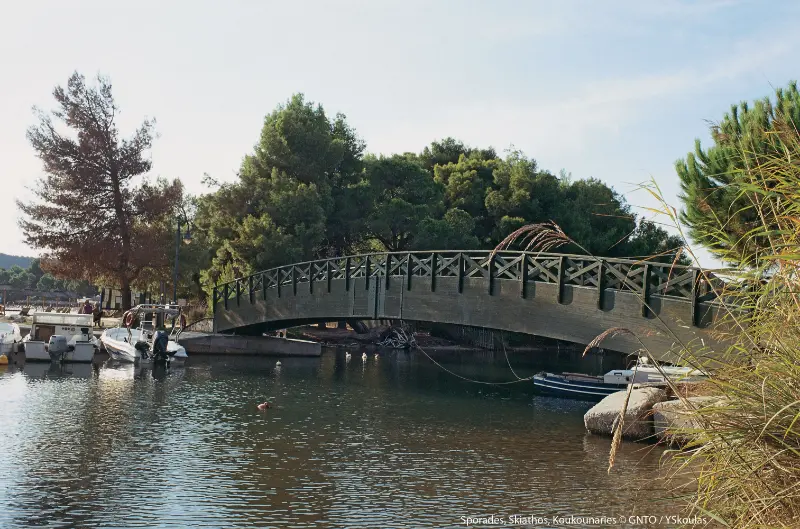
    Sporades Skiathos Koukounaries

    What to pack for this part of Skiathos

    • High-SPF sunscreen, a hat and enough drinking water for exposed stops.
    • Shoes with grip for paths, rocky viewpoints and historic sites; flip-flops are not hiking shoes.
    • A light layer for boat rides and breezy evenings, even in warm weather.
    • Offline maps or saved pins for remote beaches and trail junctions.
    • A small dry bag if the day includes a boat, tender transfer or swimming stop.
    • Cash as a backup for small seasonal businesses, although cards are widely used in tourist areas.

    A planning rule that saves time

    Group each day by geography. The south-coast bus corridor, the Koukounaries end of the island, the northern Kastro area and the town/monastery side each work best as separate clusters. Crossing the island several times in one day adds traffic and parking without adding much experience.

    Also keep the last day conservative if you have a flight or ferry connection. Boat trips can be delayed by weather, buses can run differently outside peak season and summer road traffic around town and the airport can slow unexpectedly. A relaxed final day near your departure point is a better insurance policy than squeezing in a remote north-coast beach.

    Local transport and timing checks before you leave

    For Skiathos Without a Car, check the official Skiathos Transport information on the same day you travel. The network changed several times during the 2026 season, including an extension from Evangelistria toward Profitis Ilias and the Kastro junction, and a revised timetable valid from 18 September. That is useful progress for visitors, but it also means an old screenshot can be wrong. Save the current timetable offline, note the last useful return and allow extra time at busy beach stops when buses can fill quickly.

    Boat schedules deserve the same treatment. North-coast trips depend on sea conditions, and responsible captains may change the order of stops or cancel a landing. Keep one flexible day in the itinerary so weather becomes a planning variable instead of a crisis. If you have a flight or ferry the next morning, spend the final afternoon somewhere easy to reach rather than on the most remote excursion of the holiday.

    Responsible travel on a small island

    Skiathos receives intense summer demand, yet many of its most attractive places are small beaches, forest paths and religious or historic sites. Use marked routes, take rubbish away from remote coves, respect private property and never remove stones or natural material from protected landscapes such as Lalaria. On organised beaches, use the bins provided and keep noise reasonable away from the main beach-bar areas.

    Wildfire risk is another reason to behave carefully in the dry season. Do not smoke on forest trails, do not park where vehicles block narrow access roads and follow any temporary closure immediately. These habits are simple, but they matter on a pine-covered island where a small mistake can have a large effect.

    Frequently asked questions

    Can I visit Skiathos without renting a car?

    Yes. The main town and most south-coast beaches are well suited to a bus-based holiday.

    Can I reach Koukounaries by bus?

    Yes. It is one of the principal destinations on the south-coast corridor.

    Can I reach Lalaria by bus?

    No. Lalaria is accessed by sea.

    Skiathos Island Near Lalaria Beach Sporades Thessaly Greece

    Can I reach Evangelistria without a car?

    Yes. Local bus services operate toward the monastery area, and hiking or taxi are alternatives.

    Where should I stay without a car?

    Skiathos Town is the most flexible; Troulos and Agia Paraskevi are strong beach-base alternatives.

    Final thoughts

    A car-free Skiathos trip works because the island’s transport and geography line up with the places most first-time visitors want to see. Base yourself near the main corridor, let boats handle the wild coast and use taxis only where they solve a specific gap.

  • Samos Hiking Guide: Mount Kerkis, Ambelos, Village Trails and Safety

    Samos Hiking Guide: Mount Kerkis, Ambelos, Village Trails and Safety

    Samos is one of the Greek islands where hiking can be a core reason to visit rather than something you add between beach days. The island rises steeply from the sea into Mount Ambelos and Mount Kerkis, with forests, vineyard terraces, ravines, monasteries and high viewpoints packed into a relatively small area. That variety is exactly what makes route planning important: a shaded village walk and a high summer ascent are not the same activity.

    Visit Greece mountain guide to Samos describes both Ambelos and Kerkis as major natural areas within the Natura 2000 network and highlights the island’s rich plant life, bird habitats and marked trails. Use that inspiration, but match the route to your real fitness, heat tolerance and navigation experience.

    Mount Kerkis

    Mount Kerkis dominates western Samos and is one of the highest island mountains in the Aegean. Routes can be long, exposed and physically demanding. A summit attempt is not something to start late after a beach breakfast. Begin early, carry substantial water, use footwear with grip and download navigation before leaving reliable signal.

    Cloud, heat and wind can change the experience quickly. If you are unfamiliar with the mountain or want a more complex route, use a certified local guide. The cost buys route knowledge, pacing and the ability to adjust to current conditions—not just someone to walk in front of you.

    Mount Ambelos

    Ambelos is greener and closely tied to the vineyard and village landscape of northern Samos. Walks around Vourliotes and Manolates can be shorter and more accessible than a serious Kerkis day while still delivering forest, elevation and views.

    This is a good area for travellers who want “real hiking” without turning the holiday into a mountaineering trip. Combine a morning walk with lunch in a mountain village and a late swim on the north coast.

    Vourliotes to Manolates

    Visit Greece specifically highlights the Vourliotes–Manolates area for hiking and mountain biking. The attraction is not a single viewpoint; it is the transition through vegetation, vineyard terraces and village landscapes. Confirm the current route locally because smaller paths can change after weather or maintenance.

    Seitani beach walks

    Mikro and Megalo Seitani offer the opposite type of reward: the hike leads to remote coastline. This means all beach equipment, drinking water and sun protection must be carried in and out. Do not underestimate the return climb simply because the first half of the day ends with a swim.

    Start early enough that you are not hiking exposed sections in the worst afternoon heat. If sea conditions are rough, enjoy the landscape without assuming a remote beach is automatically safe for swimming.

    Potami waterfall walk

    Potami is shorter and more playful than the mountain routes, with shade, water and slippery rock. It suits travellers who want a nature walk rather than a full hiking day, but footwear still matters. Protect electronics and accept that turning around at a slippery section is sensible.

    Heat and hydration

    In peak summer, the single biggest planning tool is an early alarm. Carry more water than you expect to drink, include electrolytes or salty food on longer hikes, and know the signs of heat exhaustion. A route that is easy in April may be inappropriate at midday in August.

    Navigation

    Download an offline map and carry a power bank. At trail junctions, compare physical markings with your route rather than blindly following a phone arrow. If a path disappears, do not force through vegetation or private land to “rejoin” the track. Backtrack to the last certain point.

    Wildfire and access restrictions

    During hot, dry periods Greek authorities can restrict access to forests or high-risk areas. Check local notices before a mountain day, especially after prolonged heat or strong winds. A closure is not a suggestion and should not be bypassed because you already booked accommodation near the trail.

    What to carry

    • Hiking shoes or trail shoes with grip.
    • More water than a normal city walk.
    • Sun hat, sunscreen and light layer for wind.
    • Offline route and charged phone.
    • Power bank.
    • Small first-aid kit.
    • Snack with salt and carbohydrates.
    • Headlamp if there is any chance of a late return.

    How hiking on Samos fits into a wider Samos trip

    Use this page together with the Samos travel guide, Pythagoreion and Heraion UNESCO guide, Kokkari, Samos Town and Vathy, Karlovasi and Potami, Manolates and Vourliotes, Marathokampos and Votsalakia, Samos wine, best beaches, hiking, Samos without a car and where to stay. The strongest Samos itineraries are built by geography: combine the north coast with mountain villages, the west with Karlovasi or Marathokampos, and the south-east with Pythagoreio and Heraion. That avoids spending the best part of the day repeatedly crossing an island whose roads are far more winding than its map distances suggest.

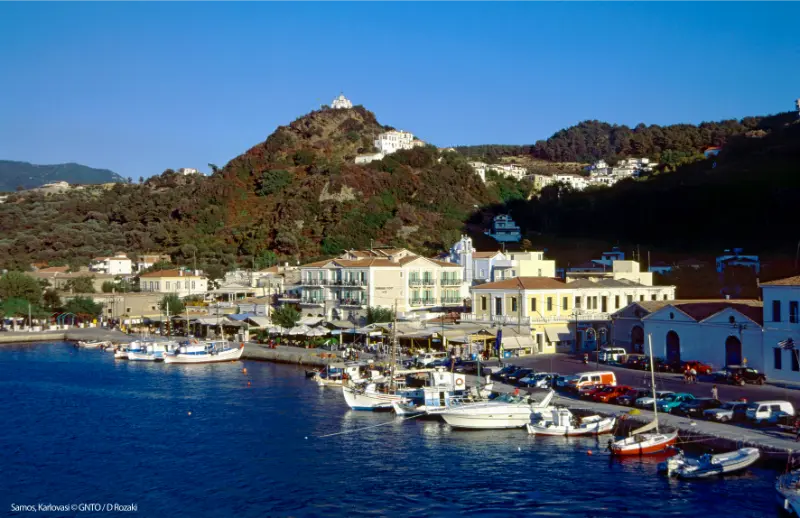
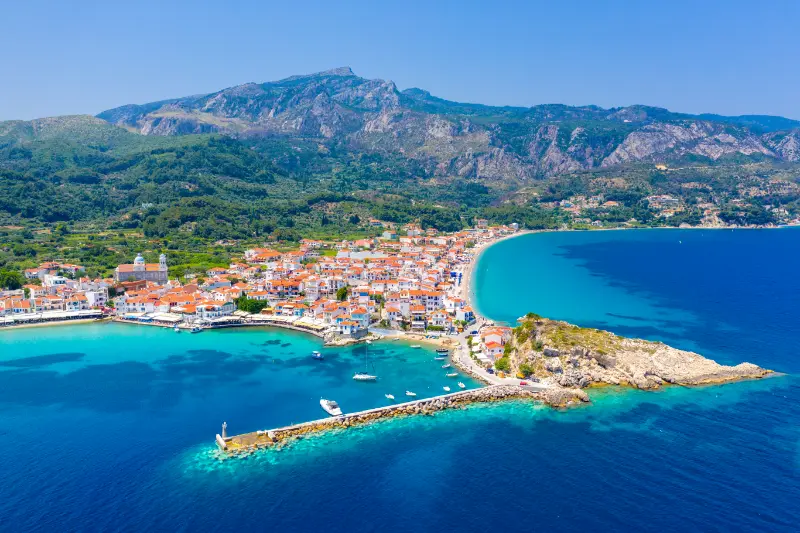
    Kokkari Island Of Samos Greece

    Samos hiking works for everyone from casual village walkers to experienced mountain hikers, but route selection must reflect season, fitness and heat. Do not choose a trail because its destination photograph is famous.

    Getting around and checking transport

    For major trailheads a car, taxi or arranged transfer is often more practical than the bus network. If you are doing a point-to-point walk, solve the return transport before starting rather than hoping for a taxi at a remote end point.

    For buses, use the official KTEL Samos website close to the day you travel. KTEL Samos operates from Vathy and publishes routes and online ticketing; seasonal frequency changes, so an old screenshot should never be treated as a permanent timetable. If one specific connection matters—for example a last bus after a beach day—verify it the same morning and have a taxi number as backup.

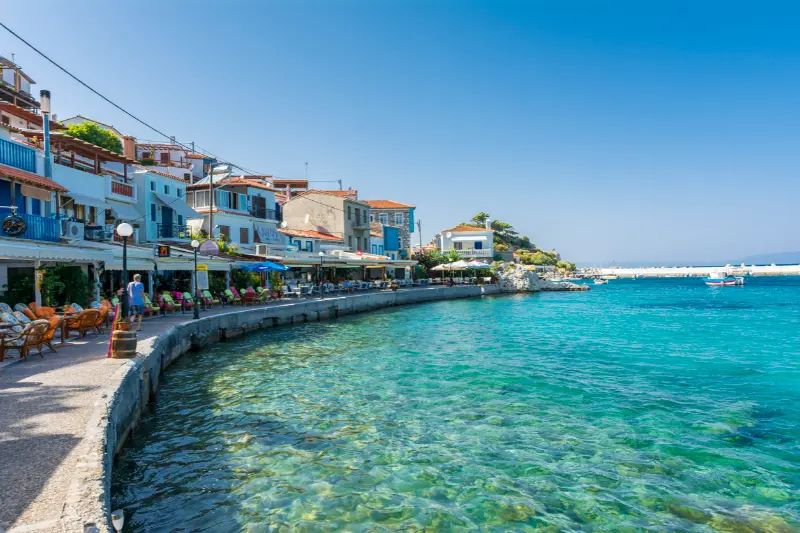
    Kokkari Samos Greece

    Heat, wind and realistic daily pacing

    Samos rewards early starts. In July and August, use the cooler morning for village walks, archaeological sites or hiking, keep the hottest hours for swimming or shade, and return to sightseeing in late afternoon. The north coast can be breezy, while inland roads and trails may feel much hotter than the waterfront. A flexible plan works better than forcing a fixed beach or mountain day in poor conditions.

    Tours and activities

    Boat trips, wine experiences and guided excursions can be useful when they solve a transport problem or add local interpretation. Compare the real time spent at each stop, boat size, shade, swimming access, transfer arrangements and cancellation rules rather than choosing the excursion with the longest list of place names.

    Common planning mistakes

    • Starting a Mount Kerkis hike too late.
    • Carrying too little water.
    • Using beach footwear on mountain or waterfall routes.
    • Relying on mobile signal for navigation.
    • Ignoring wildfire closures or strong-wind warnings.

    Frequently asked questions

    What is the best hiking area in Samos?

    Mount Kerkis offers the biggest mountain challenge, while Ambelos and the Vourliotes–Manolates area are excellent for greener, village-linked walks.

    Samos Greece Vathy Village Street View Samos Island Vathy Village Square Lion Sculpture

    Can you hike in July and August?

    Yes, but serious hikes should start very early and may be inappropriate during extreme heat or fire-risk restrictions.

    Do you need a guide for Mount Kerkis?

    Not every experienced hiker does, but a local guide is strongly recommended if you are unfamiliar with the route or conditions.

    Are the Seitani beaches easy to reach?

    They require walking and therefore suit prepared visitors carrying water and proper footwear.

    Is Potami waterfall a hike?

    It is more of a nature walk, but slippery surfaces and water still require appropriate shoes and caution.

    Final practical advice

    Samos feels most rewarding when you leave room for one unplanned stop each day: a roadside viewpoint, a village square, a swim at a smaller cove or a long lunch. The island has enough variety that you do not need to “complete” it. Pick a strong base, cluster nearby experiences, check time-sensitive transport and opening information again shortly before departure, and let weather decide which day becomes the beach day and which becomes the mountain day.

    Shoulder-season hiking

    April, May, late September and October can be excellent for hiking because temperatures are lower and vegetation can be more interesting. The trade-off is shorter daylight and a higher chance of unsettled weather. Start early, carry a light waterproof layer and check whether seasonal businesses near the trail are actually open before relying on them for water or food.

    Group decision-making

    The strongest hiker should not set the pace for everyone else. Agree before starting that anyone can call for a turn-around without debate. If the group separates, risk increases quickly on unfamiliar terrain. Stay together, protect the slowest member from pressure and remember that reaching a summit is optional; returning safely is not.

    Extra planning notes

    A useful final planning rule is to make the day geographically coherent. Samos looks compact on a map, but mountain roads, village traffic and beach access can turn a short distance into a meaningful part of the day. Keep one main objective, add one or two nearby stops and leave room for weather. In peak summer, carry water in the car, download the map before leaving strong signal and avoid arriving at remote beaches or trailheads just before sunset unless you already understand the return route. In spring and autumn, check seasonal opening hours because beach bars, excursion schedules and some services may be reduced even when the weather is excellent. For any detail that can change—bus times, museum hours, ferry ports, tasting reservations or trail access—verify it again shortly before departure instead of relying on an old blog screenshot.

  • Naxos Road Trip: A Realistic 5-Day Itinerary for Villages, Beaches and Mountain Roads

    Naxos Road Trip: A Realistic 5-Day Itinerary for Villages, Beaches and Mountain Roads

    Naxos is one of the Greek islands where renting a car genuinely changes the trip. The west coast is easy by bus, but the villages, mountain roads, northern quarries and quieter south-west beaches make much more sense when you can stop where you want. A road trip also reveals how large and varied the island is compared with the compact Cyclades stereotype.

    The mistake is trying to see all of Naxos in two frantic days. The roads are generally manageable, but mountain bends, village stops and beach time make journeys longer than they look. I prefer a five-day route that groups places geographically and leaves one flexible afternoon for wind or a place you decide to revisit.

    Why this place belongs in a Naxos itinerary

    Naxos is large enough that every stop needs a role. The strongest itineraries alternate the coast with villages, archaeology and mountain landscapes instead of repeating the same type of day. This place earns its time because it adds a different layer to the island and connects naturally with the wider route rather than requiring an inefficient detour.

    Quick facts before you go

    • Naxos has an extensive paved road network linking Chora with central villages, the north coast and southern beaches.
    • The official tourism authority publishes scenic driving routes through the wild north and the south-west villages-and-beaches corridor.
    • Mountain roads around Apeiranthos, Koronos and Apollonas are winding and require more time than coastal routes.
    • The west-coast beaches are easy to reach, while remote northern and inland stops benefit most from a car.
    • Summer wind can change which beach is comfortable, so a road-trip plan should include inland alternatives.

    What to see and do

    Day 1: Chora and the west coast

    Begin with Chora, Portara and the old town, then drive only a short distance to Agios Prokopios, Agia Anna or Plaka. Keep arrival day easy and use it to learn local driving and parking.

    Naxos Portara

    Day 2: Sangri, Demeter and Chalki

    Head inland for the Temple of Demeter, Sangri and Chalki. Add Panagia Drosiani or Kaloxylos if energy and opening times work. This day explains the agricultural and Byzantine interior.

    Day 3: Filoti, Mount Zas and Apeiranthos

    Start early if hiking Mount Zas. Have lunch in Filoti, then continue toward Apeiranthos when the afternoon cools. Skip the hike in dangerous heat or poor conditions and turn the day into a village circuit instead.

    Day 4: Wild north to Apollonas

    Follow the scenic northern loop through mountain settlements to Apollonas and the giant Kouros. The drive itself is part of the experience, so avoid scheduling a fixed evening commitment in Chora.

    Day 5: South-west beaches

    Use the final day for Plaka, Mikri Vigla, Alyko and the south-west coast. Choose two or three places according to wind rather than racing through every beach.

    Beach Of Plaka Naxos Greece

    A practical plan for the visit

    The most efficient sequence is west coast, central archaeology, mountain villages, north coast and south-west beaches. This reduces backtracking and lets each day have a clear theme. If your accommodation is outside Chora, reverse individual days rather than forcing the exact order.

    Build the day around one priority and one nearby companion stop. In summer, start exposed archaeological sites and walks earlier, use lunch as a deliberate break and move beach time toward the later afternoon when possible. In spring and autumn, the same route can support longer walks because temperatures are usually easier, but seasonal transport and opening times may be reduced.

    How to get there and move around

    Reserve a vehicle sized for narrow village streets rather than one chosen for prestige. Read the insurance terms carefully, check whether unpaved roads are excluded and photograph the car at collection. Fuel before long northern loops and never rely on navigation apps to send you through tiny village alleys simply because the route is shorter.

    If you are travelling by car, save offline maps but follow road signs and local access restrictions rather than every shortcut suggested by a phone. Naxos village streets can become extremely narrow. Park at designated areas and walk the final section. If you are relying on buses, check the current KTEL timetable the day before because frequency changes through the season.

    Who this stop is best for

    A Naxos road trip is ideal for couples, independent families, hikers and repeat Greece visitors who want villages as much as beaches. It is less necessary for travellers spending only two or three nights near Chora and the west-coast resorts. Car-free visitors can still see many highlights using buses plus one organised inland excursion.

    Best time of day and season

    June and September are often the easiest months for combining beaches with active sightseeing. July and August bring the strongest heat, busiest roads and highest demand, so mornings become much more valuable. May and October can be excellent for villages and walking, though some beach services and bus routes operate less frequently. In every season, strong wind is part of Cycladic travel and should be treated as a planning variable rather than a surprise.

    For photography, early and late light usually improves both the atmosphere and comfort. Midday can still work for museums, long lunches or shaded village streets. Do not chase a precise social-media photograph if conditions are wrong; a flexible schedule almost always produces a better day than waiting in a crowd for one viewpoint.

    Food, water and pacing

    Carry drinking water when leaving Chora or the main beach resorts, particularly for archaeological sites, hikes and the north-coast drive. Inland villages are excellent places for a proper meal, and a long lunch can be part of the itinerary rather than lost time. Naxos is known for local cheeses, potatoes, meat, citron products and village cooking, but availability varies by season and restaurant. Ask what is local that day rather than treating a checklist of dishes as mandatory.

    How to combine it with the rest of Naxos

    Useful planning guides include Naxos Travel Guide, Naxos Chora guide, Naxos mountain villages guide, Mount Zas guide and Agios Prokopios and Agia Anna guide. Choose two nearby areas rather than linking distant corners of the island simply because both look interesting on a map.

    Naxos Agios Georgios City Beach Saint George Beach Naxos Island Greece

    Common mistakes to avoid

    • Trying to cross the island repeatedly instead of grouping stops by region.
    • Arriving at an exposed archaeological site or hiking route in the hottest part of the day.
    • Assuming bus frequency is identical in May, August and October.
    • Following navigation shortcuts into narrow village lanes instead of using signed parking.
    • Ignoring the wind forecast when choosing a beach or boat-related activity.
    • Planning every hour so tightly that one long meal or swim ruins the schedule.
    Responsible travel and local etiquette

    Naxos is a working island with farms, churches, homes and protected natural areas mixed directly into tourist routes. Do not park across gates, photograph people at close range without permission, enter private courtyards or treat church interiors like ordinary photo locations. At beaches, stay off fragile dunes and vegetation. At archaeological sites, remain behind barriers even if another visitor has crossed them.

    Small choices matter most in the busiest months. Carry reusable water where practical, take rubbish back from unorganised coves and spend money in villages rather than using them only as backdrops. A coffee, museum ticket or local lunch turns a scenic drive into a more balanced visit.

    Current information and official sources

    Details that can change—opening hours, admission, road access, bus schedules and local restrictions—should be checked shortly before the visit. For the core facts in this guide I used the official Naxos and Small Cyclades tourism information. Treat any exact schedule as temporary rather than assuming it will remain the same next season.

    Frequently asked questions

    How many days do you need for a Naxos road trip?

    Five days gives a balanced first circuit. Three days works if you drop either the far north or a full beach day.

    Do you need a 4×4?

    Not for the main itinerary. Standard paved routes reach the major villages and beaches; follow your rental contract regarding unpaved tracks.

    Is driving difficult?

    Main roads are generally manageable, but mountain sections are winding and village parking can be tight. Drive conservatively.

    Where should I stay?

    Chora is the most practical all-round base; Plaka works well if beaches matter more and you have a car.

    What should I do if it is very windy?

    Shift toward inland villages, archaeology and the more sheltered beach options instead of forcing the original plan.

    One more planning detail that makes the day easier

    Before leaving your accommodation, decide which part of the plan is non-negotiable and which stop can disappear without disappointment. This small decision prevents rushed driving when parking is full, lunch takes longer or the wind changes. Keep water and walking shoes in the car even on a beach day, and keep swimwear available on an inland day. Naxos works especially well when you can switch from a village to a swim or from a windy beach to a museum without returning to your hotel first.

    Final thoughts

    Naxos Road Trip is worth including when it fits the geography and the pace of your trip. Naxos rewards travellers who accept that a good day may contain only a village, a long lunch and one beach rather than seven separate stops. Leave margin for wind, heat and discoveries made after arrival, and the island feels much richer than a simple checklist of famous places.

  • Sitia Travel Guide: Waterfront, Geopark, Beaches and a 3-Day East Crete Itinerary

    Sitia Travel Guide: Waterfront, Geopark, Beaches and a 3-Day East Crete Itinerary

    Sitia is one of the best bases in Crete if you want the island to feel less compressed by headline tourism. The town has a working waterfront, a compact centre and enough restaurants and cafés for easy evenings, but its real strength is location: it opens the door to Vai, Toplou, Palaikastro, Zakros and the wild landscapes of eastern Lasithi.

    The wider Sitia Geopark covers more than 700 square kilometres and belongs to the UNESCO Global Geoparks Network. That single fact explains why east Crete feels so different: gorges, caves, dry-stone landscapes, olive country and remote coastlines sit close together. Use Sitia for at least two or three nights rather than treating it as a lunch stop on a cross-island drive.

    Why this place deserves its own stop

    The reason to stay rather than pass through is the rhythm of the place. A few hours shows the main sights; an overnight stay reveals the morning market, the evening promenade and the ordinary streets between attractions. That slower rhythm is what makes a travel guide useful rather than just a list of things to photograph.

    What to see and do

    Walk the waterfront

    Sitia’s seafront is the simplest introduction to the town. Fishing boats, cafés and the curve of the bay create a relaxed atmosphere that works best in the morning and again in the evening. The town is not trying to be a museum-piece old port; it feels lived in, and that is part of its appeal after several days in more tourism-focused places.

    Climb to the Kazarma

    The Kazarma fortress above the town is a useful orientation point. Even if you are not deeply interested in fortifications, the elevated position helps you understand Sitia’s relationship with the bay and surrounding hills. Go when the light is softer and check current access rather than assuming the interior is always open.

    Use the Archaeological Museum for context

    Eastern Crete has major Minoan sites, and a museum visit makes later stops at Palaikastro or Zakros much easier to understand. Give the museum a focused hour instead of leaving all archaeology for outdoor sites. It also works well during the hottest part of the day.

    Explore the Sitia Geopark

    The geopark is not one fenced attraction. It is a network of landscapes and routes across the eastern tip of Crete. Visit Greece describes marked hiking and cycling routes connecting features such as Toplou Monastery, Itanos, Vai and the Gorge of the Dead. Plan by area rather than trying to “do the geopark” in a single afternoon.

    Eat and drink locally

    Sitia has a strong agricultural identity. The region is known for olive oil and wine, and Visit Greece lists Sitia among Crete’s PDO wine areas. Look for local oil, cheeses, seasonal vegetables and fish, and leave one evening free for a slow meal without a long return drive.

    A realistic plan

    Part of the dayPlan
    Day 1Sitia waterfront, centre, Kazarma and museum
    Day 2Toplou, Itanos and Vai
    Day 3Zakros, Gorge of the Dead or a gentler east-coast road trip
    Extra dayPalaikastro, Chiona and a slower geopark route
    DepartureContinue to Agios Nikolaos or stay east for Xerokampos

    Use this as a framework rather than a timetable. Crete rewards flexibility: parking can take longer than expected, mountain roads slow down, a good lunch becomes part of the day, and heat can change the order of activities. The best itinerary is the one that leaves enough margin to enjoy the main experience rather than simply arriving at every planned pin on a map.

    How to get there and move around

    Sitia has its own airport with limited routes, but many visitors arrive by road from Heraklion or Agios Nikolaos. The drive from central Crete is longer than the map may suggest because the coastal road bends and passes through towns. A car is the most practical choice for the geopark and remote east-coast sites. In town, park once and walk the waterfront and centre.

    Embankment Town Sitia Crete Greece

    How to pace the visit

    Do not treat the historic centre as a checklist. A good walking day has pauses built into it: one museum or monument, one long section on foot, a proper lunch and a quieter hour late in the afternoon. That rhythm is especially important in Crete, where heat and bright light can make a route that looks short on a map feel much longer. Keep the most exposed walking for morning or early evening and use midday for food, museums or a shaded café.

    Parking and luggage

    If you are driving, decide where the car will stay before you choose accommodation. Historic cores often have narrow or pedestrian streets, limited access and parking that fills quickly in high season. A hotel that looks perfectly central can be awkward if you arrive with large luggage and a rental car. I prefer to park once, walk the old centre, and only use the car again when leaving for a day trip.

    Best time to visit

    May, June, September and early October are excellent for combining coast and walking. July and August work for beach-focused trips but require early starts for exposed hikes and archaeological sites. Winter is much quieter; some tourist services reduce hours, but Sitia remains a real town rather than a resort that shuts completely.

    For any outdoor or archaeological visit, check the same-day forecast and the official operating information. Crete can have very local conditions: wind on one coast, heat in an inland valley and cloud over the mountains at the same time. Planning by region and keeping one backup option nearby is more effective than relying on a rigid island-wide schedule.
    Food and local rhythm

    Try local olive oil, fresh fish, cheeses, small pies, vegetables and regional wine. Do not assume the most elaborate menu is the best one. In Sitia, a modest taverna serving a few well-cooked dishes can be more memorable than a place built around international resort expectations.

    One of my favourite planning rules in Crete is to protect lunch. Do not schedule every meal as a 20-minute gap between attractions. A proper stop gives you shade, hydration and a chance to ask local staff about road, wind or beach conditions. It also makes the day feel like a trip through Crete rather than a sequence of parking lots.

    How to combine it with nearby places

    The essential east-Crete pairings are Vai and Kato Zakros. For a broader route, connect Sitia with Agios Nikolaos rather than trying to commute from Chania or Rethymno.

    Sitia Greece

    If your route already includes two long drives, resist adding a third distant highlight simply because it is famous. Crete is large enough that geographic discipline improves almost every itinerary. A day focused on one corner of the island usually produces more time walking, swimming or eating and less time looking through a windscreen.

    Where to stay

    Stay centrally if you want to walk to dinner and avoid driving at night. A property on the edge of town can be better if parking and early road trips are priorities. Check the exact parking arrangement before booking; “parking nearby” can mean a public area rather than a guaranteed private space. For a road trip, easy access to the main road is often more valuable than being fifty metres closer to the waterfront.

    Photography and timing

    The most flattering light is usually early or late, but photography should not dictate unsafe timing. On exposed roads, gorges and archaeological sites, practical considerations come first. Carry a phone or camera securely, avoid stepping backward near drops or uneven stones, and take a moment to look without a screen. The best photographs often come after you have understood the shape of the place.

    Common mistakes to avoid

    • Using Sitia only as a lunch stop on a long drive
    • Trying to visit Vai, Zakros and several gorges in one day
    • Underestimating east-Crete driving time
    • Staying in Heraklion and repeatedly day-tripping all the way east
    • Ignoring the museum and then visiting Minoan sites without context
    • Planning remote hikes in midsummer without early starts and enough water

    Official information

    For current access, opening hours, tickets or regional information, check Visit Greece – Sitia Geopark shortly before the trip. I use official pages for variable details because older travel articles can remain online long after rules have changed.

    Frequently asked questions

    How many days do I need in Sitia?

    Three nights is an excellent minimum for the town plus Vai and Zakros. Two nights works if you choose only one major day trip.

    Is Sitia worth staying in?

    Yes, especially for travellers who want eastern Crete without resort crowds and prefer a real town with easy evening life.

    Do I need a car?

    For the town itself, no. For the geopark, Vai, Toplou and Zakros, a car is the most practical option.

    Is Sitia good for families?

    Yes if your family enjoys road trips, beaches and relaxed evenings. Keep gorge walks optional for younger children.

    Can I combine Sitia with Agios Nikolaos?

    Yes. They make a logical two-base eastern Crete itinerary and reduce unnecessary backtracking.

    Final advice

    Build this stop around one clear reason for going, then let the surrounding area add depth. That approach keeps the day realistic and usually creates better memories than a checklist. In Crete, distance, heat and road shape matter as much as the number of attractions on a map.

    For the wider picture, continue with Vai Palm Beach Guide, Kato Zakros Guide, Agios Nikolaos Guide. These guides make it easier to connect this stop to the rest of the island without unnecessary backtracking.

  • Cape Tainaron and Vathia Guide: Lighthouse Hike, Mani Towers and Porto Kagio

    Cape Tainaron and Vathia Guide: Lighthouse Hike, Mani Towers and Porto Kagio

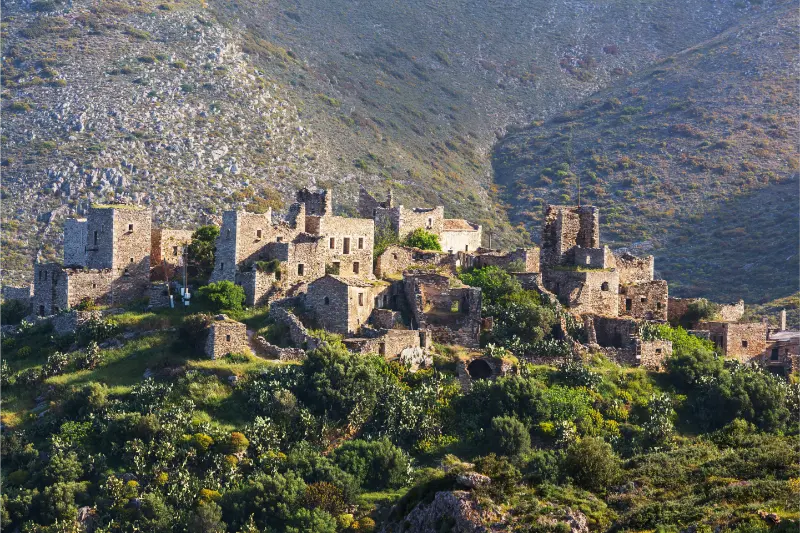
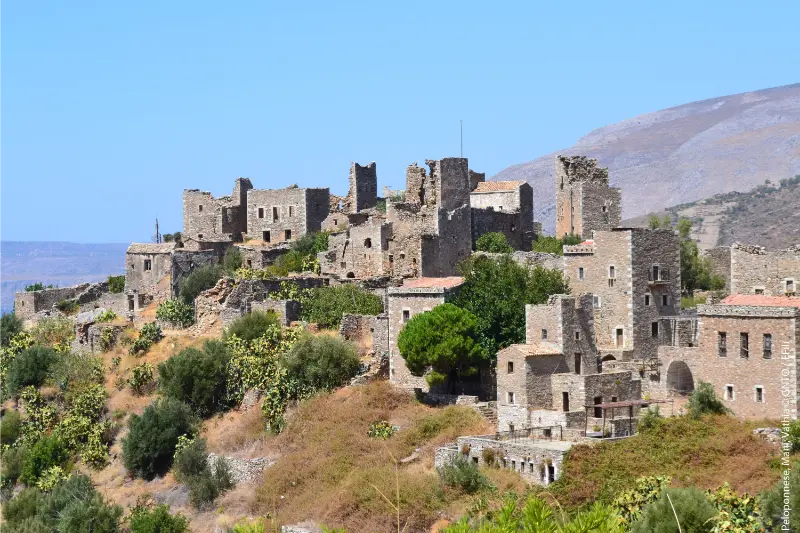
    The road from Vathia to Cape Tainaron is the dramatic finale of an Inner Mani road trip. Tower houses rise from a bare stone landscape, tiny bays appear below the road, and eventually the land narrows toward the southern tip of mainland Greece. The experience is less about a single attraction than about the sequence of village, road, ruins and lighthouse walk.

    Peloponnese Mani Vathia

    Visit Greece describes the path from Kokkinogeia to Cape Tainaron as a relatively easy but exposed hike taking roughly 40–50 minutes to the lighthouse. The route begins near the church of Agioi Asomatoi, built with ancient material from the sanctuary of Poseidon, and passes archaeological remains and the well-known Hellenistic mosaic before reaching the open-sea viewpoint.

    Why this stop is worth adding

    This is one of the strongest scenic days in the Peloponnese for travellers with a car. It suits hikers, photographers and anyone already staying in Areopoli, Gerolimenas or Oitylo. The main challenge is exposure: summer heat and wind can make an easy path feel much harder.

    Quick planning summary

    • Best all-round seasons: April to June and September to October for comfortable sightseeing, walking and road trips.
    • Peak summer: start exposed hikes, castles and archaeological visits early; keep the hottest hours for lunch, shade or swimming.
    • Transport: a car gives the most flexibility across inland Arcadia, Messinia and Mani; mountain and coastal roads are slower than map distances suggest.
    • Always recheck shortly before travel: archaeological access, museum days, trail conditions, boat departures, wildfire restrictions and weather-dependent activities.

    What to see and do

    Walk through Vathia

    Vathia is one of Mani’s best-known tower-house settlements, with a dense concentration of fortified homes and churches. Many buildings are privately owned or fragile, so explore respectfully from public paths. The roadside viewpoints often give a better understanding of the settlement than forcing your way between abandoned structures.

    Allow more time than the map suggests. Parking, viewpoints, meal stops and short walks often turn a quick stop into half a day, and that is usually a better experience than rushing toward the next pin.

    Hike to Cape Tainaron lighthouse

    The lighthouse trail is the geographical climax of the day. Start early, carry water and wear proper shoes. There is almost no shade, and the return doubles the walking time. The reward is an open-horizon view and a powerful sense of remoteness.

    Allow more time than the map suggests. Parking, viewpoints, meal stops and short walks often turn a quick stop into half a day, and that is usually a better experience than rushing toward the next pin.

    See the ancient sanctuary landscape

    Near the trailhead are remains associated with ancient Tainaron and the sanctuary of Poseidon. The area also carries mythological associations with an entrance to the Underworld. Treat the archaeology as part of the landscape rather than expecting a fully interpreted museum site.

    Allow more time than the map suggests. Parking, viewpoints, meal stops and short walks often turn a quick stop into half a day, and that is usually a better experience than rushing toward the next pin.

    Stop at Porto Kagio

    Porto Kagio is a tiny sheltered bay east of the cape and a practical lunch or swim stop. Its harbour setting contrasts with the exposed lighthouse. Parking is limited in peak season, so arrive outside the busiest lunch hour if possible.

    Allow more time than the map suggests. Parking, viewpoints, meal stops and short walks often turn a quick stop into half a day, and that is usually a better experience than rushing toward the next pin.

    Swim at Marmari

    Marmari offers beaches on the western side of the peninsula and can break up the drive. Wind and sea conditions vary, so choose between Marmari and Porto Kagio based on the day rather than a rigid itinerary.

    Allow more time than the map suggests. Parking, viewpoints, meal stops and short walks often turn a quick stop into half a day, and that is usually a better experience than rushing toward the next pin.

    Drive slowly through Inner Mani

    The route itself is one of the attractions. Stone walls, chapels, tower villages and dry hillsides create a landscape unlike greener parts of Greece. Pull over only where safe and avoid stopping on blind bends for photographs.

    Allow more time than the map suggests. Parking, viewpoints, meal stops and short walks often turn a quick stop into half a day, and that is usually a better experience than rushing toward the next pin.

    Return before dark if unfamiliar with the road

    Night driving is possible, but the narrow roads and lack of lighting make the trip less enjoyable. Unless staying nearby, plan the final swim or dinner early enough to complete the longest driving section in daylight.

    Allow more time than the map suggests. Parking, viewpoints, meal stops and short walks often turn a quick stop into half a day, and that is usually a better experience than rushing toward the next pin.

    A realistic itinerary

    • Early morning: drive through Vathia before the heat.
    • Late morning: hike Cape Tainaron to the lighthouse and back.
    • Lunch: Porto Kagio or Gerolimenas.
    • Afternoon: swim at Marmari or another nearby beach, then return north.

    Use this plan as a framework rather than a timetable. Mountain weather, wind on the coast and seasonal access can change the order of the day. Keep one flexible half-day in any multi-day Peloponnese route so you can react without losing an important stop.

    Where to stay

    Gerolimenas is the most atmospheric base for this area, while Areopoli provides more restaurants and services. Porto Kagio and Marmari offer isolated stays for travellers who want maximum quiet. Book early in summer because the number of rooms is limited.

    Before booking, inspect the map at street level and read recent reviews about parking, stairs, road noise and access after dark. In stone villages and Mani settlements, a room that looks central can involve a steep final approach. On the coast, sea view does not always mean direct beach access.

    For accommodation, compare current options on Booking.com. Use map view and recent comments rather than sorting only by rating.

    Getting there and getting around

    A car is essential for a flexible day. Roads are paved but winding and narrow in places. Fuel before entering the far south of Mani, carry water and download maps. There is little reason to rush: distances are short but scenery and road conditions keep average speeds low.

    Keep fuel above a quarter tank when moving into remote sections, download offline maps and avoid blindly following navigation apps onto obviously minor roads simply to save a few minutes. Historic centres are usually best explored on foot once you find legal parking.

    Best time to visit

    Spring is ideal for green landscapes, wildflowers and walking. June and September are excellent if you want both sightseeing and swimming. July and August work well for coast-focused trips but require early starts inland. October can remain pleasant, while winter suits mountain villages and cultural travel if you are prepared for shorter daylight and possible weather changes.

    Weather varies sharply between the mountains and coast. A hot day in Kalamata can coincide with much cooler conditions in Arcadia, while strong wind can make an otherwise sunny Mani or Messinia beach day unsuitable for swimming or boats.

    Food and local products

    Seafood, local pork preparations, sausages, olives, cheeses and simple Mani dishes are common. Gerolimenas and Porto Kagio are good for fish, while inland tavernas may focus more on meat and cooked dishes.

    Across this part of the Peloponnese, quality often comes from simple ingredients: olive oil, olives, seasonal vegetables, local cheeses, herbs, honey, meat from mountain areas and fish on the coast. Ask what is local and seasonal instead of ordering only the most familiar Greek dishes.

    Travelling with children

    Older children who are comfortable walking can enjoy the lighthouse. With younger children, Vathia plus a beach and short archaeological stop may be enough. Avoid midday hiking and keep children away from unstable structures in abandoned tower settlements.

    Family days work best when the demanding element comes first. Do the castle, hike or archaeological site in the morning, then use lunch and a swim as the slower second half. Carry water and hats, and shorten plans quickly if heat or wind makes conditions uncomfortable.

    Costs and practical details

    Village walks, beaches and many viewpoints cost little or nothing, while archaeological tickets, museums, boat trips, rafting, guided activities and organised beach services add variable costs. Keep some cash for small businesses even though cards are common in larger towns.

    How this guide connects to the wider Peloponnese

    Continue planning with Gerolimenas; Areopoli and Limeni; Diros Caves; Mani road trip. These guides create a connected Peloponnese route so you can move between mountain villages, archaeology and the coast without repeating the same planning work.

    Peloponnese Mani Diros Caves

    Common mistakes

    • Starting the lighthouse hike at midday in summer.
    • Entering unsafe abandoned buildings in Vathia.
    • Running low on fuel in the far south.
    • Trying to stop for photos on blind road bends.
    • Planning the day without a weather and wind check.

    Frequently asked questions

    Do I need a rental car?

    For most places in this cluster, yes. Public transport can reach some towns, but a car makes small villages, beaches, trailheads and archaeological side trips dramatically easier.

    How many nights should I stay?

    One night can work for a simple road-trip stop, but two nights are better when the destination includes a hike, boat excursion, beach day or several nearby villages.

    Is this area suitable in July and August?

    Yes, but plan around heat. Start exposed walks and archaeological visits early, use midday for lunch or swimming, and expect more pressure on parking in coastal villages.

    Can I combine this with a first trip to the Peloponnese?

    Yes. These places work best as extensions to better-known anchors such as Olympia, Kalamata, Nafplio or Mani rather than as isolated long detours.

    Beach Water Bay Greek Coast Line Turquoise Blue Transparent Water Unique Rocky Cliffs Greece Mani Peninsula Peloponnese

    What should I verify just before travelling?

    Check current site and museum opening times, boat or activity schedules, road and trail conditions, fire-risk restrictions, local weather and any seasonal transport changes.

    Useful official or regional source

    For information that can change, check Visit Greece – Cape Tainaron and confirm access or local conditions close to your travel date.

    Final advice

    The strongest Peloponnese trips are not built by collecting the maximum number of stops. Choose one major objective each morning, leave room for a village meal or swim, and let the road itself be part of the experience. These less-famous places reward exactly that slower rhythm.

  • Kos Town Guide: Ancient Ruins, Neratzia Castle, Cycling and a 2-Day Plan

    Kos Town Guide: Ancient Ruins, Neratzia Castle, Cycling and a 2-Day Plan

    Kos Town is one of the easiest island capitals in Greece to explore without a rigid plan. Ancient ruins sit beside cafés and bike lanes, the harbour opens directly into the centre, and layers of Hellenistic, Roman, medieval and Italian-era architecture appear within a compact area. It is simultaneously a transport hub and a destination worth at least two days.

    The broader island is famous as the homeland of Hippocrates, and Visit Greece describes Kos as an open-air museum with ancient, medieval and Italian-period monuments. Staying in town makes that history unusually accessible because many sites can be connected on foot or bicycle before you ever rent a car.

    Why this destination is worth adding to your Greece itinerary

    Kos Town Guide works best when you give it a clear role in the wider trip. Rather than adding another stop simply because it appears on a ferry map, decide what you want here that a larger island cannot provide: quieter evenings, a particular landscape, a historical layer or a slower few days between more demanding destinations. That decision makes accommodation, transport and trip length much easier to choose.

    Map Of Kos

    For a wider route, connect this guide with Kos Travel Guide; Asklepieion of Kos Guide; Greece Without a Car. I prefer combinations that reduce backtracking, even when that means visiting fewer islands overall.

    Best things to see and do

    Start with the harbour and Neratzia Castle

    The harbour is the orientation point for Kos Town. On one side are ferry quays and cafés; on the other, the walls of Neratzia Castle mark the medieval layer of the city. The Knights of St John began building the fortress in the 14th century, using its strategic position at the entrance to the port.

    Access conditions can change because archaeological monuments occasionally close for works or weather. Check the official listing before planning your day around entering the castle, and remember that the exterior and harbour walk are still worthwhile if access is restricted.

    Walk through the ancient city rather than treating ruins as separate tickets

    Fragments of the ancient agora, Roman streets, mosaics and later buildings are woven through the modern centre. The pleasure is the juxtaposition: a column beside a bike lane, a ruined wall behind a café, an archaeological zone opening unexpectedly between streets.

    A short guidebook or museum visit helps because the city can otherwise feel like disconnected ruins. Plan one historical walking loop rather than repeatedly crossing town for isolated monuments.

    Visit the Roman Odeon and nearby archaeological remains

    The Roman Odeon is one of the most legible ancient structures in Kos Town and gives useful context for public life under Roman rule. Nearby sites help build a broader picture of an urban centre that changed repeatedly rather than disappearing after a single historical period.

    Go early or late in hot months because many archaeological areas offer limited shade. Carry water even though cafés are never far away.

    Use a bicycle like a local transport tool

    Kos is unusually cycle-friendly by Greek-island standards. Visit Greece notes dozens of kilometres of cycling routes and a strong everyday cycling culture. In town, a bicycle is useful for the waterfront, beaches and flat connections without the hassle of parking.

    Ride defensively at junctions and never assume a cycle lane removes all conflict with pedestrians or vehicles. For mountain or dirt routes, choose a suitable bicycle and separate those rides from casual city cycling.

    Leave time for the modern city

    A purely archaeological schedule misses why Kos Town works so well as a base. The market, harbour, beach access, cafés and evening streets make it easy to combine sightseeing with ordinary holiday time.

    I would rather spend two nights and have one unplanned evening than rush every monument into a day trip. The town is most enjoyable when history and daily life overlap naturally.

    How to get there

    Kos International Airport is outside the town, while ferries arrive directly at or near the centre. Buses, taxis and rental vehicles link the airport with Kos Town. If you are island hopping, staying near the centre makes early ferries much easier, but confirm the exact check-in and gate information for your operator.

    Scenic View Sea Near Kardamaina Greece Kos Island

    Ferry and flight schedules are seasonal, and even a route that runs frequently in July may be limited in spring or autumn. I therefore book the transport skeleton first—arrival and departure—then fit accommodation around it. Leave a meaningful buffer before an international flight, especially when a ferry or small-island flight is involved.

    Getting around

    Walk for the historic core and use a bicycle for longer flat stretches. A car is unnecessary in town and can become a parking burden. Rent one only on the days you plan to explore inland villages, beaches or Kefalos.

    Whatever transport you choose, avoid judging island distances by kilometres alone. Narrow roads, heat, parking, ferry-day traffic and scenic stops make short journeys take longer than expected. A realistic itinerary leaves room for one delay without sacrificing the entire day.

    Where to stay

    The centre suits first-time visitors and ferry travellers. Areas slightly outside the core can be quieter while still bikeable. Compare noise and shade as carefully as distance: a room five minutes farther from the harbour may sleep much better in high season.

    For a first visit, I usually prefer the base that makes evenings and departure day easiest. A spectacular remote room can be excellent for a longer holiday, but on a three- or four-night stay the hidden cost is often extra driving, taxis or missed flexibility. Check recent accommodation reviews for noise, air-conditioning, stairs and parking rather than looking only at the sea view.

    How many days do you need?

    The itinerary in this guide is designed around 2 days or stages because that is enough time to understand the place without forcing every beach, village and museum into the same afternoon. Travellers who mainly want to swim can stay longer; island hoppers can shorten it, but I would rather remove one activity than compress every day.

    • Day 1: harbour orientation, Neratzia area, ancient agora and central streets; finish with an evening waterfront walk.
    • Day 2: Roman Odeon and other archaeological stops, then rent a bicycle for a coastal ride and relaxed beach time.

    Best time to visit

    Late May, June and September usually offer the best balance for travellers who want both outdoor time and working tourist services. July and August bring the widest range of connections but also the strongest heat and demand. April, early May and October can be excellent for walking and local atmosphere, though ferry frequency, beach services and restaurant opening patterns become more variable.

    Wind matters as much as temperature in the Aegean. A clear forecast can still produce rough sea conditions or an uncomfortable exposed walk. I check the local marine forecast each morning before committing to boat trips or long coastal routes.

    What to eat

    Kos Town offers everything from quick gyros to longer seafood meals. Avoid eating every meal on the most obvious waterfront strip. One or two streets inland can feel more local, while village food experiences elsewhere on the island are worth saving for a driving day.

    Kos Aegean Sea

    For a better food experience, move at least one meal away from the most obvious harbour tables and ask what is genuinely local or seasonal. I also avoid scheduling dinner too tightly after a long excursion: island transport delays are common enough that a reservation with no flexibility can create unnecessary stress.

    Who this trip suits best

    This destination works especially well for independent travellers who are comfortable with a little uncertainty and do not need constant organised entertainment. Couples and solo travellers can enjoy the slower rhythm, while families should focus on accommodation convenience, beach access and shade. Travellers with mobility limitations should research steps, slopes and boat boarding carefully because picturesque island terrain is not always accessible.

    Practical mistakes to avoid

    • Do not build a same-day ferry connection with no margin for delays.
    • Do not assume every beach has shade, toilets, food or card payment.
    • Do not rent a vehicle before confirming where it can realistically be used and parked.
    • Do not plan long exposed walks in the hottest part of a summer day.
    • Do not treat residents, religious sites or working harbours as scenery for intrusive photography.
    • Do not rely on an old blog post for current ferry times, tickets or archaeological-site hours.

    A note on responsible travel

    Small islands and historic places absorb visitor pressure quickly. Refill water where practical, refuse unnecessary single-use plastic, stay on marked paths, never remove stones or archaeological material, and keep a respectful distance from wildlife. If a beach, trail or monument has a temporary closure, treat it as a safety or conservation decision rather than an obstacle to work around.

    Frequently asked questions

    Can I stay in Kos Town without a car?

    Absolutely. It is one of the easiest Greek-island bases for walking, cycling and bus connections.

    How many days should I spend in town?

    Two full days is ideal before adding excursions elsewhere on Kos.

    Is cycling safe?

    Kos has an unusually strong cycling network, but normal road awareness is still essential, especially at junctions and outside dedicated lanes.

    Is Kos Town good for families?

    Yes. Flat terrain, short distances, parks, cycling and easy food options make it practical, though summer heat still requires slower midday plans.

    Should I visit the Asklepieion from Kos Town?

    Yes. It is one of the island’s essential archaeological sites and is close enough to combine with a half-day outside the centre.

    Check current information before you travel

    For official destination or site updates, check Visit Greece – Kos. I recommend confirming ferry times, opening hours, trail conditions and any temporary access restrictions again shortly before travel, especially outside the peak summer months.

    Final thoughts

    Kos Town Guide is most rewarding when you resist the urge to optimise every hour. Choose a few experiences that explain the place, leave room for weather and local advice, and allow at least one part of the day to remain unplanned. That balance is what turns a technically efficient itinerary into a trip that actually feels like Greece rather than a sequence of transport bookings.

  • Makrinitsa Pelion Guide: Views, Stone Lanes, Architecture and a Half-Day Plan

    Makrinitsa Pelion Guide: Views, Stone Lanes, Architecture and a Half-Day Plan

    Makrinitsa is one of those Pelion villages that works best when you stop treating it as a viewpoint and start walking slowly. The settlement climbs the mountain above Volos, so even a short route can involve stone steps, shaded lanes, fountains and changing views over the Pagasetic Gulf. That vertical layout is part of the experience, but it also means that the easiest visit is not the one with the longest checklist. It is the one that leaves enough time to wander without repeatedly returning to the car.

    I would use Makrinitsa as a half-day or evening stop rather than a rushed photo break. It pairs naturally with nearby Portaria and with the broader Pelion travel guide. If you are based in Volos, the village also makes a simple mountain escape before dinner back on the waterfront.

    Street View Makrinitsa Village Pelion Greece

    Quick planning facts

    • Allow 2–4 hours for a relaxed first visit.
    • Use designated parking and expect to walk uphill.
    • Combine Makrinitsa with Portaria rather than treating both as separate full days.
    • Visit early or late for easier photography and cooler walking.
    • Keep a layer with you: mountain weather can change faster than on the Volos waterfront.

    Why Makrinitsa deserves more than a quick stop

    Makrinitsa shows the architectural language that makes Pelion feel different from many Greek mountain regions: stone-built houses, slate roofs, narrow kalderimia and homes adapted to steep terrain. The official Greek tourism portal highlights Makrinitsa among Pelion’s traditional villages and describes the wider region as a landscape where village architecture is inseparable from mountain and sea. The pleasure here is not a single monument; it is the relationship between the built fabric and the slope.

    That makes the village especially rewarding outside the busiest middle hours. In the morning you notice local movement and cooler stone lanes. In the late afternoon, the light over the Pagasetic Gulf changes quickly and the square becomes a better place to sit than to rush onward. If your itinerary gives Makrinitsa only thirty minutes, you will see the panorama but miss the texture that makes the village memorable.

    A simple walking route through the village

    Start from the upper edge of the accessible road and walk toward the central square rather than trying to drive deeper into the settlement. From there, let the route form a loop: square, viewpoints, fountains, side lanes and a few short uphill detours. The most satisfying streets are often the ones that seem to go nowhere. They reveal courtyards, rooflines, carved stone and glimpses toward Volos without feeling like a formal attraction.

    Wear shoes with grip. Pelion stone paving can be polished by time and becomes slippery after rain. If you are travelling with a stroller, large luggage or someone with limited mobility, keep expectations realistic: Makrinitsa is beautiful precisely because it is steep and old, and not every lane is accessible. A shorter route around the main square and viewpoints can still be worthwhile.

    Church Makrinitsa Village Pelion Greece

    Views, photography and the best light

    The village faces toward Volos and the Pagasetic Gulf, so clear days produce a wide layered view: tiled roofs, forested slopes, the city below and water beyond. For photographs, I prefer late afternoon when the light softens and the houses stop looking flat. Early morning is better if you want emptier lanes and less contrast.

    Do not photograph only outward. Some of the strongest images are details: slate roofs, wooden balconies, a fountain under plane trees, a doorway framed by greenery. Pelion architecture developed over centuries and the official tourism material describes three-storey mansions, timber reinforcement and carefully adapted stone construction. Looking closely makes the village more interesting than a single “balcony” panorama.

    Parking and driving strategy

    Driving in Pelion requires patience. Roads can be narrow, bends are frequent and village approaches become busy on summer weekends and winter holiday periods. In Makrinitsa, the smartest approach is to use the designated parking areas and accept that the final part of the visit is on foot. Trying to save a few minutes by hunting for the closest possible space usually creates more stress than it removes.

    If you are combining Makrinitsa and Portaria, avoid repeatedly moving the car for tiny distances unless weather or mobility makes that necessary. Build the day around one or two deliberate parking stops, then walk. For a wider mountain loop, see my 7-day Pelion road-trip guide and Volos guide.

    What to eat in Makrinitsa

    Pelion food suits the setting. Look for spetzofai, pies, seasonal greens, mountain herbs, spoon sweets and local products based on apples, chestnuts or preserves. The region’s cuisine is shaped by both mountain and coast, and the official tourism portal specifically identifies spetzofai, Zagora apples, chestnuts, mushrooms, wild greens and spoon sweets as characteristic products.

    Choose a meal for location and kitchen rather than simply the biggest view. A terrace is wonderful, but a smaller taverna or café a lane away can be calmer. If you are continuing to Volos later, leave room for tsipouro and small seafood dishes there; Makrinitsa and Volos work well as two very different food experiences on the same day.

    Best time to visit

    Spring and autumn are excellent for walking because temperatures are comfortable and the forests change dramatically. Summer is pleasant at altitude, but weekends and holiday periods can be busy. Winter gives Makrinitsa a completely different atmosphere, with fireplaces, mist and the possibility of snow in the wider Pelion area, though road conditions deserve more attention.

    Aerial View Makrinitsa Village Pelion Greece

    For a first visit I would aim for a clear weekday afternoon, spend two to four hours in the village, then either stay for dinner or continue to Portaria. If clouds sit low on the mountain, do not dismiss the day: the lost panorama is often replaced by a particularly atmospheric walk through the stone lanes.

    Where Makrinitsa fits in a Pelion itinerary

    Makrinitsa works especially well at the beginning or end of a Pelion trip because it is close to Volos. I would not use it as the only base if your priority is the Aegean beaches around Tsagarada or Zagora; the mountain roads make repeated east-coast day trips longer than they appear on a map. Instead, split the region into logical zones.

    A practical structure is Volos plus Makrinitsa/Portaria first, then Milies and Vyzitsa on the Pagasetic side, followed by Tsagarada, Damouchari or Zagora on the Aegean side. That route reduces backtracking and gives you very different versions of Pelion.

    Staying in Makrinitsa versus visiting from Volos

    If the village atmosphere is central to your trip, an overnight in Makrinitsa gives you quiet early mornings and evenings after the day visitors leave. If you mainly want the view and a walk, staying in Volos can be more practical because you keep easy access to the waterfront, restaurants and onward transport. The decision depends less on distance than on how much mountain atmosphere you want after dark.

    For a multi-day Pelion road trip, I prefer not to keep returning to Volos every night. One night around Makrinitsa or Portaria, followed by nights farther east or south, reduces repeated mountain driving and lets each area feel like a destination rather than an excursion.

    Practical planning checklist

    • Check the mountain forecast as well as the Volos/coastal forecast before driving or hiking.
    • Keep offline directions and your accommodation phone number because mountain roads and village lanes can be confusing after dark.
    • Allow more driving time than the kilometre count suggests; Pelion roads are scenic but winding.
    • Do not overfill the day. One village, one walk and one meal often produces a better Pelion experience than five rushed stops.
    • For the wider region, use my complete Pelion travel guide and Volos travel guide.

    Frequently asked questions

    Is Makrinitsa worth visiting if I only have one day in Pelion?

    Yes. It is one of the easiest villages to combine with Volos and gives you a strong introduction to Pelion architecture, mountain views and village life.

    How long do you need in Makrinitsa?

    Two hours is enough for the central square and a short walk; three to four hours is better if you want lunch, photography and side lanes.

    Can you drive into the centre?

    Do not plan on using a car for the historic core. Park in designated areas and walk; the steep pedestrian lanes are part of the experience.

    Is Makrinitsa good in winter?

    Yes, but check mountain weather and road conditions. Winter creates a beautiful atmosphere, while spring and autumn are easier for long walks.

    Final thoughts

    Makrinitsa is at its best when you let the village set the pace. The view is impressive, but the real reason to stay longer is the walk between stone houses, fountains, shaded squares and small architectural details.

    Use it as part of a coherent Pelion route rather than an isolated photo stop, and the village becomes an excellent introduction to why this mountain deserves several days rather than a quick excursion from Volos.

    How I would make the day less rushed

    The easiest way to enjoy Makrinitsa Pelion guide is to protect one slow block of time. I would avoid booking a timed attraction immediately before or after a mountain drive, and I would not assume that a short road distance means a quick transfer. Pelion travel is shaped by bends, parking, walking surfaces and the temptation to stop for views. Build those realities into the plan instead of treating them as delays.

    I also keep one alternative nearby. If the Aegean is rough, I switch to a village walk. If rain makes stone paths slippery, I use the time for food, architecture or a shorter route. If parking is chaotic, I move on and return later. This flexibility is one of the reasons Pelion is rewarding: mountain, forest, village and sea give you several good versions of the same day.

    What to verify before you leave your hotel

    Before driving, check the weather, road route, parking location and whether your chosen restaurant or attraction is actually open that day. Seasonal businesses may change hours outside peak summer. For hikes, ask whether recent rain, maintenance or fallen trees have affected the path. For beach days, look at wind and sea conditions rather than only air temperature.

    Save your route offline and carry water. In a region of dense forest and winding roads, mobile coverage can vary. These are small preparations, but they keep a pleasant day from becoming an unnecessary logistical problem.