Author: Jessica

  • Paros Park and Monastiri Guide: Hiking Trails, Lighthouse, Beach and Practical Tips

    Paros Park and Monastiri Guide: Hiking Trails, Lighthouse, Beach and Practical Tips

    Paros Park is one of the best places on the island for travellers who want a day that is not built around a road, a beach club or a village café. The protected peninsula west of Naoussa combines marked walking paths, rocky Aegean coastline, small coves, the monastery of Ai Yiannis Detis, a nineteenth-century lighthouse and Monastiri beach. The landscape is exposed and dry rather than lush, and that is exactly what makes it feel so distinctly Cycladic.

    The park is easy to underestimate because Monastiri is often promoted first as a beach. I would do the opposite: treat the peninsula as a walking destination and use the beach as the reward. Start early, hike one or two marked routes, then swim when the temperature rises. In late afternoon, reverse the order if your priority is sunset light.

    For the wider island picture, keep the Paros Travel Guide open alongside this article. Paros is compact enough for day trips, but roads, wind and summer traffic make geographic grouping more important than the map suggests. The island works best when you choose one main area for the day and add one or two nearby stops rather than constantly crossing between Naoussa, Parikia and the south coast.

    Parikia City Beach Paros Island Greece

    What Paros Park actually includes

    The official Paros Park website describes an environmental and cultural park on the Ai Yiannis Detis peninsula with beaches, geological features, a monastery, cultural activities and walking routes. Its marked trail network is about 7 km in total. This is not a fenced theme park: it is open natural terrain where heat, wind and footwear still matter.

    The best walking route for a first visit

    For a first visit, Route 1 is the obvious introduction. The park lists it as approximately 1.92 km and 45 minutes non-stop, running from the monastery toward Aloni tis Syras and the lighthouse. Add photo stops and the walk becomes longer. The official trail description notes cliff-top views along the north-western coastline. Use the official Route 1 page for current trail information.

    Lighthouse and coastal views

    The lighthouse is the visual goal of the classic route, but the better reason to walk is the unfolding coastline. Keep away from unstable edges and do not create shortcuts across fragile vegetation. On windy days, gusts on exposed ridges can be much stronger than around the parking area.

    Monastiri beach

    Monastiri is the practical base for the day because it gives you an easy swim, food and a place to cool down after walking. It is popular in summer, so arriving early helps both parking and trail comfort. If the beach is your only goal, you are missing the most distinctive part of the peninsula.

    Ai Yiannis Detis monastery

    The small monastery is part of the cultural identity of the peninsula. Visit quietly and dress with the same respect you would show at any religious site. Its whitewashed architecture also gives useful visual contrast before or after the stark coastal trails.

    How much time do you need?

    Allow at least three hours for one main walk plus a swim. A half day is better if you want a relaxed lunch or a second short trail. Do not plan a long exposed hike at midday in July or August simply because the route looks short on a map.

    What to bring

    • Closed shoes or walking sandals with grip rather than smooth beach flip-flops.
    • At least one bottle of water per person; more in hot conditions.
    • Hat and sun protection because shade is limited on the peninsula.
    • Swimwear and a light towel for Monastiri.
    • Offline trail map or saved official route page.
    • A wind layer outside midsummer or for sunset.

    Getting there from Naoussa

    Paros Park is close enough to combine with Naoussa and Kolymbithres. Depending on season, travellers use local buses, taxis, rental vehicles or small boats from the Naoussa area. Check current local transport because services change. If driving, arrive early rather than assuming unlimited parking beside Monastiri.
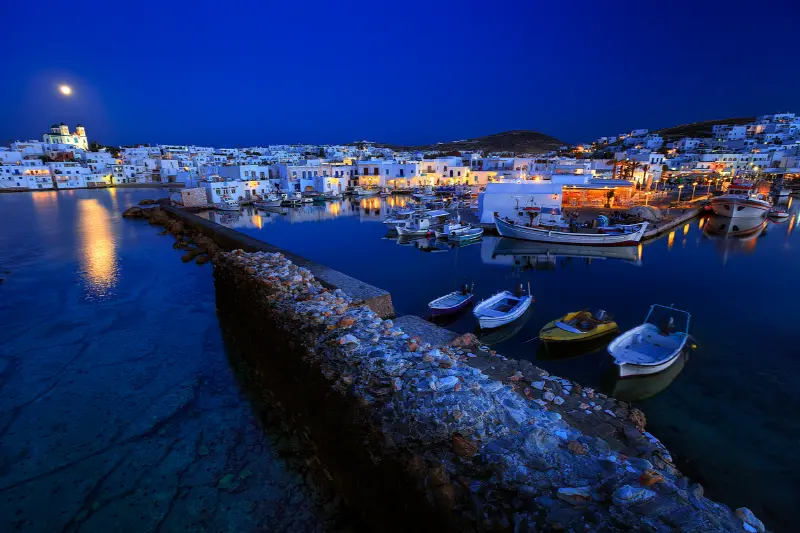
    Naoussa Paros Greece

    Best time of day and season

    June and September are particularly good for combining swimming, walking and village exploration. July and August bring the strongest demand, hotter midday temperatures and busier parking, while the meltemi can make exposed beaches feel very different from one day to the next. May and October suit slower sightseeing and hiking, although some beach services and late-evening transport are reduced. The park itself recommends morning or afternoon walks in summer, with broader walking windows in spring, autumn and winter. That advice is practical: the terrain is highly exposed and offers little natural shade.

    Paros Park with children

    Families can enjoy the park, but choose route length based on age, heat and confidence on rocky ground. Younger children may get more from a short coastal walk and Monastiri beach than from completing a full trail. Carry extra water and do not rely on the promise of a beach at the end to compensate for an overlong midday walk.

    A half-day plan

    • Arrive before 09:00 in peak summer if possible.
    • Walk Route 1 to the lighthouse at a comfortable pace.
    • Return toward Monastiri and cool down in the sea.
    • Have an early lunch or coffee rather than starting a second exposed route at midday.
    • Continue to Naoussa or Kolymbithres later in the day.

    Common mistakes

    • Treating the park as only Monastiri beach.
    • Walking in flip-flops on rocky paths.
    • Starting a summer hike with too little water.
    • Standing too close to cliff edges for photos in strong wind.
    • Assuming every path is shaded because the walk is short.
    • Trying to squeeze Paros Park, Lefkes and the south coast into the same day.

    Frequently asked questions

    Is Paros Park free?

    Access to the natural park and trails is generally open, while food, organised beach services or events may have their own charges.

    How long is the trail network?

    The park describes about 7 km of marked walking routes across the peninsula.

    Which route is best first?

    Route 1 to the lighthouse is the clearest introduction for most visitors.

    Can I combine it with a beach day?

    Yes. Monastiri makes hiking plus swimming the natural way to use the park.

    Is it suitable in August?

    Yes, but walk early or late, carry water and treat heat and strong wind as serious planning factors.

    For details that can change—transport frequency, museum hours, road access and seasonal services—check official information shortly before the visit. Useful starting points are Visit Greece’s official Paros page and the Paros KTEL timetable. For trail maps and current cultural events use the official Paros Park website rather than an old screenshot of the route network.

    Parikia Paros Greece

    More Paros guides for the same trip

    Continue planning with Parikia, Ekatontapyliani, Golden Beach, Santa Maria and Lageri and the main Paros travel guide. Use these pages to build a cluster by geography rather than treating every attraction as a separate cross-island excursion.

    Practical planning notes

    In peak season, make the day easier by choosing parking, lunch and your backup beach before leaving the hotel. Save offline maps, carry water in the car and keep both walking shoes and swimwear available. Paros is small enough that plans can change without ruining the day, but only if you avoid bookings that force you to cross the island at fixed times. Leave at least one flexible afternoon during a five-night stay for wind, fatigue or a place you discover after arrival.

    A note on pace

    The most satisfying Paros days usually contain one major objective, one nearby secondary stop and a long meal or swim. When a day has five villages, three beaches and two sunset viewpoints, most of the time is spent parking and navigating. Treat slower pacing as an efficiency tool: it reduces backtracking, keeps children and less active travellers comfortable and gives you time to notice local details that do not appear in search results.

    Accessibility and comfort

    Accessibility varies widely between seafront promenades, old village lanes, archaeological ground and rocky coastal paths. Travellers with limited mobility should ask accommodation and attractions about step-free access rather than assuming a short distance is easy. Heat is another form of accessibility: even fit visitors may find midday walking unpleasant in July and August. Moving cultural visits to the morning and keeping a shaded lunch break can transform the day.

    Budget and booking choices

    The biggest costs on Paros usually come from accommodation, transport and organised activities rather than from simply reaching a beach or walking through a village. Spend where convenience genuinely improves the trip: a well-located room can remove daily taxi costs, while a rental car is useful only on days when you plan several dispersed stops. Reserve high-demand accommodation and specialist activities early for July and August, but keep ordinary sightseeing flexible so weather and wind can still shape the day.

    Final thoughts

    Paros Park is valuable because it offers a version of Paros that feels spacious and elemental. A lighthouse walk, dry-stone landscape, wind, blue water and a swim afterwards is a much richer half day than moving between crowded viewpoints by car. Put it near the top of the list if you enjoy easy coastal hiking.
  • Spetses Travel Guide: Dapia, Old Harbour, Beaches, History and Where to Stay

    Spetses Travel Guide: Dapia, Old Harbour, Beaches, History and Where to Stay

    Spetses is one of the easiest islands to add to an Athens trip without sacrificing the feeling of a real island escape. It sits in the Saronic Gulf, combines pine-covered interior hills with neoclassical mansions and a strong maritime identity, and has a compact town that rewards walking rather than rushing between sights. The absence of freely circulating private cars changes the rhythm immediately: luggage, beaches and dinner plans are organised around walking, bicycles, buses, boats, sea taxis and a small number of authorised vehicles.

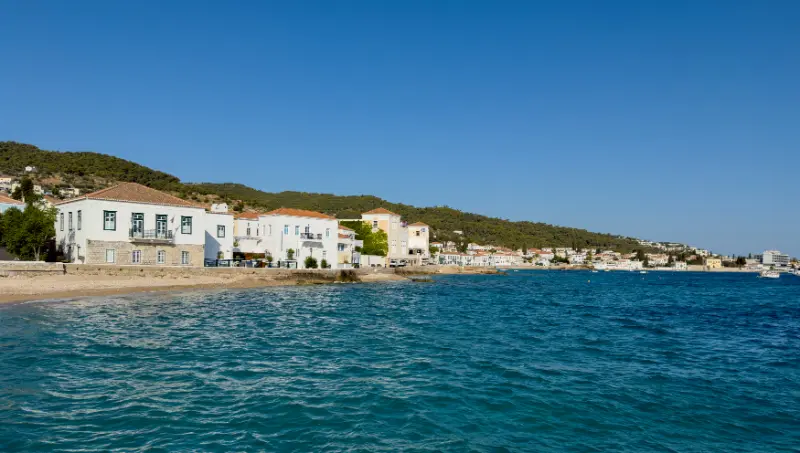
    Spetses Island Greece Seafront Neoclassical Buildings Old Historic Town

    The island works for couples, families, history-focused travellers and anyone who wants a short Greek-island trip without flying. It is also more varied than its elegant harbour image suggests. A four-day stay can include the Bouboulina House Museum, the state Spetses Museum, traditional shipyards, a remote beach reached by boat, a 25-kilometre cycling loop and quiet pine trails. The key is to treat Spetses as a small island with distinct zones rather than as one long seafront resort.

    Quick planning overview

    QuestionBest answer
    Best first baseDapia or nearby Kounoupitsa for easy arrival, restaurants and transport
    Best atmosphereOld Harbour in the evening
    Best beach strategyUse town beaches for short swims and boats/bus for remote beaches
    Best active dayCycle the perimeter road or choose one of the marked walking routes
    Ideal stay3–4 nights for a balanced first trip

    Why Spetses feels different from the Cyclades

    The visual language is not white cube houses and blue domes. Spetses grew through shipping, trade and the fortunes of powerful maritime families, so its identity appears in captain’s mansions, shaded courtyards, terracotta roofs, pebble mosaics and harbours built around boats rather than around a postcard viewpoint. The island’s history during the Greek War of Independence is especially visible through Bouboulina, the 1821 collections and the annual Armata commemoration.

    The pine landscape also changes the experience. On the western and northern sides, beaches sit below wooded slopes; inland paths cross a central ridge; and the 25-kilometre perimeter road gives cyclists a practical way to understand the entire coastline in one day. This mixture of history, forest and sea makes Spetses a better choice for travellers who want activity and culture as well as swimming.

    Arriving at Dapia

    Most ferry passengers arrive directly at Dapia, the town’s central waterfront. Do not plan a complicated first hour. Walk to your accommodation if the distance is realistic, or arrange luggage assistance or an authorised taxi if you are staying farther away. Dapia is where you will find ticket agencies, boats, sea taxis, cafés and many of the services that make the island easy to navigate without a conventional car.

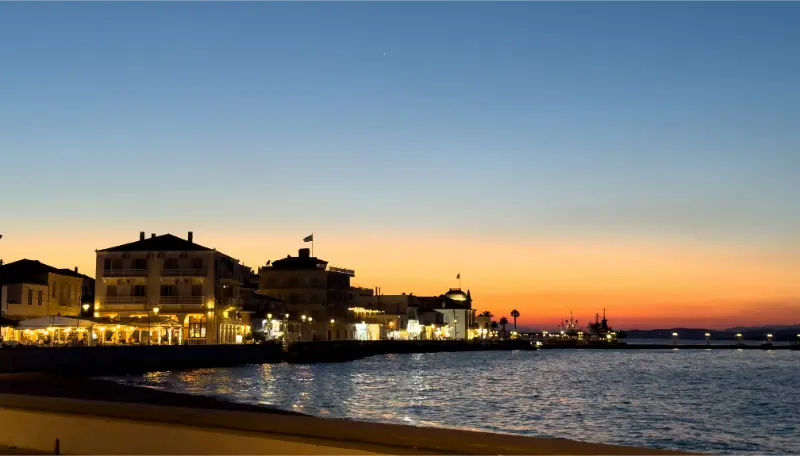
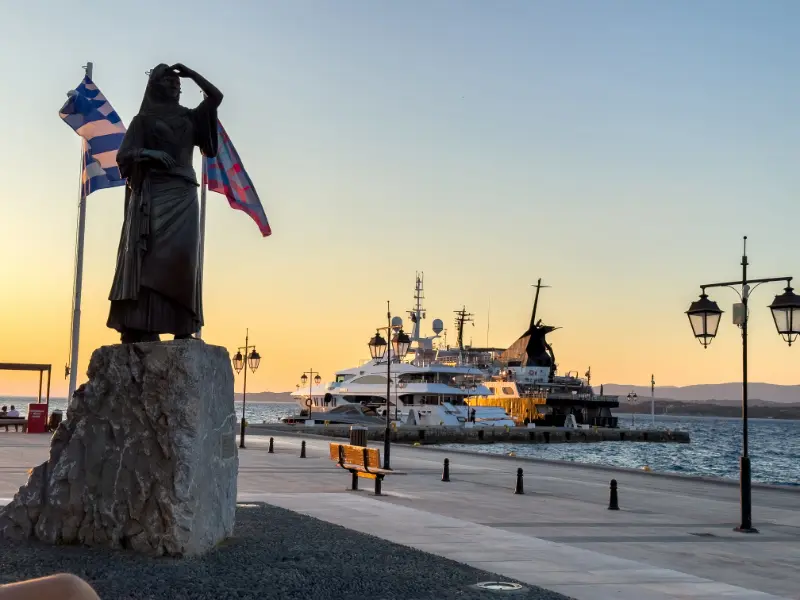
    Spetses Island Sunset Greece Seafront Buildings Shops Cafes Port Dramatic Sky

    If you arrive from the mainland via Kosta rather than Piraeus, you still reach the same island rhythm once you cross the narrow channel. The municipality lists regular high-speed ferry services from Piraeus as well as boat connections from the Argolid coast. Exact timetables change, so build the trip around the actual sailing on your date rather than a generic journey time copied months earlier.

    Dapia, Bouboulina Square and the centre

    Dapia is the practical heart of Spetses, but it is worth looking beyond the ferry ramp. Historic cannons, civic buildings, the Poseidonion frontage and Bouboulina Square introduce the island’s maritime story before you enter a museum. Early morning is the best time for a calm walk because the waterfront is cooler and delivery traffic is lower.

    West of the centre, Kounoupitsa stretches along a pleasant waterfront with restaurants and easy swimming access. Eastward, the route to Agios Mamas and the Old Harbour becomes increasingly atmospheric. Staying near Dapia is especially useful for a short trip because every route begins close to your room.

    Old Harbour and traditional shipyards

    The Old Harbour is the place to understand why Spetses became a naval power. Traditional wooden shipyards still operate here, and the municipality describes them as a living continuation of local shipbuilding rather than a staged attraction. Continue past the yards toward the lighthouse and the outdoor sculptures associated with Natalia Mela for one of the island’s most rewarding late-afternoon walks.

    The Old Harbour changes character after dark. Restaurants and bars create a more polished evening scene than the quieter residential streets around it. You do not need to stay here to enjoy it; walking from Dapia is part of the experience, although tired families or travellers with limited mobility may prefer a carriage or taxi for the return.

    Bouboulina and the museums

    History deserves at least half a day. The Bouboulina House Museum occupies the historic family home connected with Laskarina Bouboulina, while the Spetses Museum is housed in the mansion of Hatzigiannis Mexis. Together they cover the island’s revolutionary history, maritime wealth and a much longer archaeological story. Do not treat them as interchangeable: one is tightly focused on a remarkable historical figure and household, the other places Spetses within broader local history.

    Opening patterns can be seasonal and special events can alter access, particularly around Armata. Check current information before committing a specific hour. If the weather turns windy or overcast, these museums are also an excellent way to rescue a day that is no longer ideal for a boat beach.

    Which beaches to choose

    Agios Mamas and Agios Nikolaos are easy town swims; Kaiki and Scholes are convenient on the western side; Agia Marina is organised and close to town; Agia Paraskevi and Agioi Anargyroi combine a more distant setting with road, bus or boat access; Zogeria is one of the most attractive pine-fringed options; and Xilokeriza offers clear water on the less inhabited side of the island. No single beach is best in every wind condition.

    The official municipal beach guide confirms daily boat services in season from Dapia to several remote beaches, a bus route serving Agia Paraskevi, Agioi Anargyroi and Xilokeriza, and sea taxis for direct coastal transfers. That mix means you can have a varied beach holiday without renting any vehicle, but you should ask about the final return time before settling into a remote cove.

    Getting around without a private car

    Spetses is often described as car-free, but the useful interpretation is that private cars are not freely permitted and visitors rely on other modes. Walking works superbly within the town and along the waterfront. Bicycles are practical for fit travellers, buses serve selected beach corridors, sea taxis reach coves directly, horse carriages operate from central stands and authorised taxis solve luggage or longer transfers.

    The arrangement is part of the island’s appeal, but it requires a different planning mindset. Choose accommodation partly by how far you are willing to walk after dinner. Families should avoid assuming every beach has a direct bus. Cyclists need to account for hills and heat rather than judging the island by its compact map.

    Cycling and hiking

    The municipality lists a 25-kilometre perimeter road around the island and a network of 19 walking routes totalling about 65 kilometres. The cycling loop is a satisfying full-island overview for riders comfortable with moderate hills, while the trail network reaches the central ridge and quieter inland terrain. Start early in summer, carry enough water and do not turn a scenic ride into a midday endurance test.

    Walking is also useful as transport: the Dapia–Old Harbour and Dapia–Kounoupitsa corridors are enjoyable rather than merely functional. For a dedicated active day, choose one inland route and return to the coast for a swim instead of trying to combine a long hike with a distant boat schedule.

    Food and evenings

    Spetses is strongest when dinner is part of the walk. Dapia is easy and central, Kounoupitsa offers a waterside atmosphere, and the Old Harbour becomes the obvious choice for a more polished night out. Rather than chase a single famous restaurant, choose the area that fits the rest of the evening and check recent opening information because seasonal patterns change.

    Local meals are a good time to slow the itinerary down. Build one long lunch into a beach day and one late dinner after a museum or harbour walk. The island is compact enough that you can change atmosphere without needing a car, which is one of its biggest advantages over larger Greek islands.

    Where to stay

    Dapia is the safest first-time choice for ferry convenience and transport. Kounoupitsa works well for travellers who want a quieter waterfront while remaining walkable to the centre. The Old Harbour is strongest for evening atmosphere and architectural character, while properties farther from town suit repeat visitors who prioritise privacy and beach access over immediate services.

    Ask about steps, luggage transfer and the real walking time from Dapia before booking. A room that looks close on a map may involve hills or lanes that feel very different with suitcases. For a two-night trip, convenience usually beats seclusion; for five nights, a quieter location becomes easier to justify.

    How many days do you need?

    Two nights are enough to understand the shape of Spetses Town and enjoy one beach, but three or four nights are much more satisfying. A longer stay allows a museum morning, a slow Old Harbour evening, a remote-beach day and either a cycling or walking day without forcing every activity into the hottest hours.

    If you are combining Spetses with Hydra or Poros, avoid changing islands every night. Three nights on one island usually feels richer than three separate one-night stops because ferry days eat into usable time and the best atmosphere on the Saronic islands often appears before day-trippers arrive or after they leave.

    When to visit

    May, June, September and early October offer the best balance for travellers who want beaches and walking in the same trip. July and August bring the strongest holiday atmosphere, more beach services and the highest demand, while midday heat makes cycling and inland walking less comfortable. Spring can be excellent for hiking and flowers, and the island remains attractive outside peak summer for history, architecture and quiet waterfront walks.

    September has an additional cultural dimension because of Armata, the annual commemoration of the 1822 naval battle. In 2026 the municipality scheduled the wider programme from 28 August to 13 September, with the main reenactment on 12 September. If you travel for Armata, book transport and accommodation early because this is not a normal quiet September weekend.

    What to pack

    Comfortable walking shoes matter more here than on a resort holiday because even a relaxed day involves waterfront promenades, lanes and museum visits. Add reef-safe sun protection, a refillable water bottle, a hat, swim shoes if you dislike pebbles and a light layer for breezy ferry decks or late evenings.

    Cyclists should bring or rent a helmet and carry more water than they expect to need. Families benefit from a compact beach shade for unorganised coves, while anyone staying in an old mansion or lane should pack luggage that is easy to carry over steps and uneven surfaces.

    Practical tips that make the trip easier

    • Book ferries early for July, August and Armata weekends, but still recheck the sailing close to departure because operational changes can occur.
    • Do not assume “car-free” means completely vehicle-free streets; service vehicles, taxis and permitted traffic still exist, so walk attentively.
    • Keep one flexible beach day. Wind direction can make a different coast more comfortable than the beach you originally saved.
    • Ask beach-boat crews about the final return before disembarking, especially if you plan a long lunch or late swim.
    • For a first cycling loop, start after breakfast only in cooler months; in summer, begin much earlier and avoid the strongest heat.
    • Visit at least one museum before Armata or a shipyard walk so the revolutionary and maritime references around town make more sense.
    • Use water taxis strategically for a group: the higher fare can become reasonable when split among several people and can save a complicated transfer.
    • If accessibility is important, note that Agios Mamas has a municipal accessibility ramp; confirm current operation and assistance arrangements before relying on it.
    • Combine nearby sights geographically: Dapia and museums on one half-day, Old Harbour and lighthouse on another, west-coast beaches on a separate day.
    • Leave one evening unplanned. Spetses is at its best when you can stop for a drink, watch boats return and continue dinner later without watching the clock.

    Continue planning your Spetses trip

    Use these guides as one connected cluster rather than separate checklists: Spetses Travel Guide; Dapia and Spetses Town Guide; Old Harbour Spetses Guide; Bouboulina and Spetses Museums Guide; Best Beaches in Spetses; Spetses Without a Car; Spetses Cycling and Hiking Guide; Spetses with Kids; Where to Stay in Spetses; Spetses 4-Day Itinerary. For nearby alternatives, compare Hydra, Poros and Aegina.

    Useful official sources before you go

    For time-sensitive details I cross-check the Municipality of Spetses visitor portal, the official transport page, the official beach guide and Visit Greece. Ferry schedules, beach boats, bus frequencies, museum access and event programmes can change, so verify the details that affect a specific day shortly before travelling.

    Frequently asked questions

    Is Spetses worth more than a day trip?

    Yes. A day trip shows Dapia and perhaps one museum, but two to four nights let you experience the Old Harbour after day visitors leave, reach remote beaches and enjoy cycling or walking.

    Can I visit Spetses without a car?

    Yes. Private cars are not freely permitted, and visitors normally use walking, bicycles, buses, sea taxis, boats, horse carriages and authorised taxis.

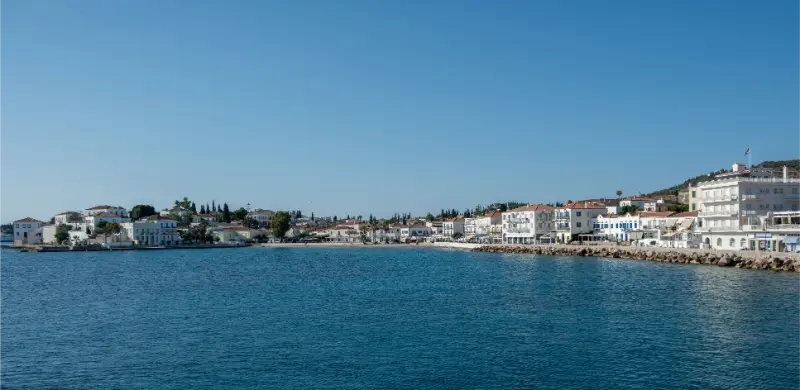
    Spetses Island Greece Seafront Buildings View From Sea

    Which beach is best for a first visit?

    Agia Paraskevi, Agioi Anargyroi and Zogeria are strong destination beaches, while Agios Mamas or Agios Nikolaos are easiest for a quick swim close to town.

    Is Spetses good for children?

    Yes, especially for families comfortable with walking and boats. Choose a convenient base, match beaches to age and sea conditions, and avoid overloading each day.

    Can I combine Spetses with Hydra?

    Yes. Ferry links within the Saronic Gulf make the pairing practical, but stay long enough on each island to avoid turning the trip into constant packing.

    Final planning advice

    Treat Spetses as an island of layers: a maritime town, a museum destination, a beach escape and an active car-light landscape. If you give each layer its own half-day rather than chasing everything at once, the island feels elegant and relaxed instead of logistically complicated.

  • Chania Travel Guide: Old Town, Best Beaches and a 5-Day Itinerary

    Chania Travel Guide: Old Town, Best Beaches and a 5-Day Itinerary

    Chania is the part of Crete I would choose when I want a trip to feel varied from the first day: a beautiful old harbour for slow evenings, mountain villages within driving distance, famous beaches to the west and south, and enough restaurants and local life that the city never feels like a resort built only for visitors. It can work as a two-night city break, but it becomes much more rewarding with four to six nights and a car for at least part of the stay.

    If this is your first trip to Crete, read the complete Crete travel guide first. Chania makes an excellent western base, but distances on Crete are larger than they look, so I would not use it to explore the entire island. The best plan is to give western Crete its own days and move east if you also want Heraklion or Rethymno.

    What makes Chania special

    The Venetian harbour gives Chania its postcard image, but the old town is more interesting when you wander beyond the waterfront. Topanas, Splantzia, Kastelli and the old Jewish quarter reveal different layers of Venetian, Ottoman and modern Cretan history. The lanes are compact enough to explore on foot, yet they change character from morning to night.

    In 2025, the Minoan palace of Kydonia—represented by archaeological remains scattered through the modern city—was included in the UNESCO World Heritage inscription of the Minoan palatial centres of Crete. That adds another historical layer to a place many travellers initially choose only for beaches and the harbour.

    Where to stay in Chania

    For a first visit without a car, I would stay in or just outside the old town. You can walk to the harbour, restaurants and evening streets, while taxi and bus connections remain simple. Inside the historic lanes, check luggage access carefully: some hotels require a short walk over cobbles and steps.

    If you will rent a car, an address slightly outside the pedestrian core can be more practical. Nea Chora is useful for travellers who want a town beach and easy access to the centre. Halepa feels quieter and more residential. Families may prefer accommodation with parking and a pool rather than the most atmospheric lane in the old town.

    A first walking route through the old town

    Start early at the Venetian harbour before day-trip crowds fill the promenade. Walk toward the Egyptian lighthouse viewpoint, then return through the back streets rather than retracing the waterfront. Make time for the Municipal Market area, Splantzia, small churches and the lanes of Topanas.

    I prefer to split Chania sightseeing into two walks rather than one long march. Do the harbour and old town in the morning, take a long lunch or beach break, then return for the golden-hour walk when the façades soften and the restaurants begin to fill.

    Best beaches near Chania

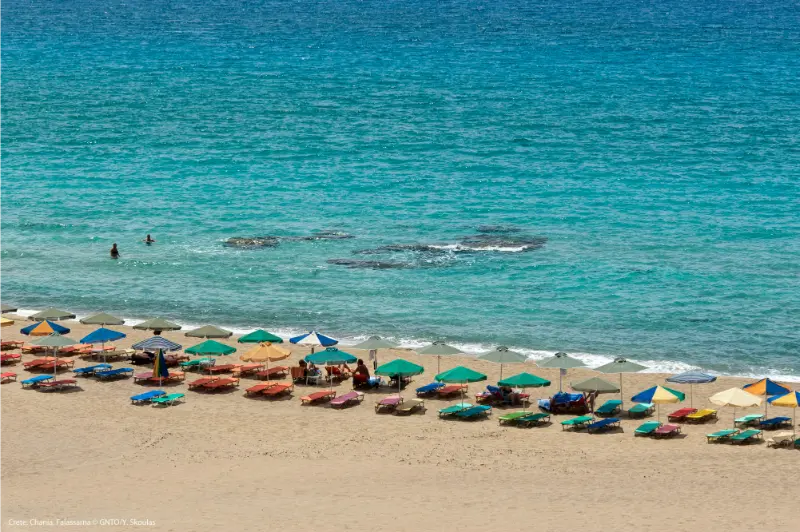
    Western Crete has some of the most photographed beaches in Greece, but the famous names require planning. Balos is about the landscape as much as the swim; access can involve a boat or a rough road plus walking. Elafonissi is easier to understand as a full-day outing because driving, parking and peak crowds take time. Falassarna is more straightforward for a beach day and is known for open sunsets.

    Crete Chania Kissamos Ag Ioannis

    Do not assume the most famous beach will be the best choice every day. Wind direction matters, especially on exposed coasts. Ask locally, check conditions in the morning and keep a simpler alternative. With young children, shade, toilets, food and walking distance from the car can matter more than the colour of the water.

    Day trips into the mountains and villages

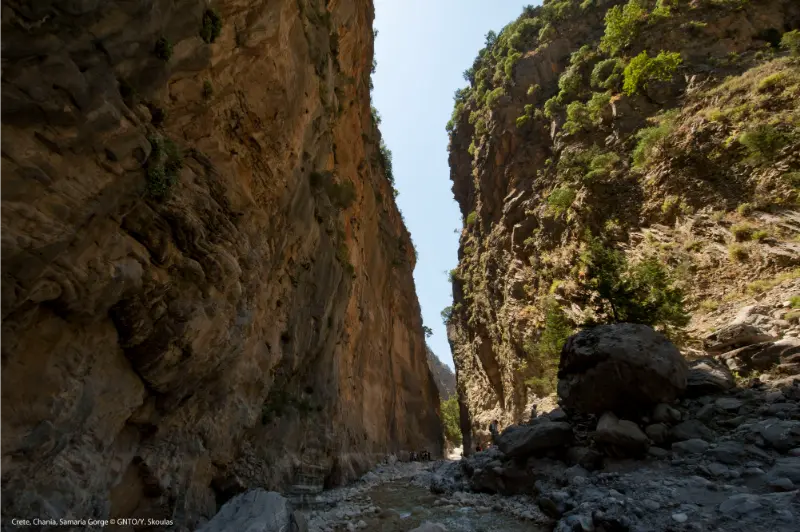
    A day away from the coast changes the trip completely. Theriso, Vamos and villages around Apokoronas offer slower roads, tavernas and a greener side of Crete. Serious hikers may look toward the Samaria Gorge, but that is a real hiking day rather than a casual attraction: seasonal opening, weather, transport and fitness all matter.

    If you want mountain scenery without committing to a major gorge crossing, choose a shorter walk, village route or drive through the foothills. The point is not to collect place names but to experience how quickly Crete changes from sea-level tourism to farms, olive groves and high terrain.

    Food in Chania

    Chania is a good place to understand Cretan food beyond a list of famous dishes. Look for dakos, greens, local cheeses, pies, slow-cooked lamb or goat, grilled fish and seasonal vegetables. I would mix one planned dinner in the old town with smaller neighbourhood tavernas and a bakery breakfast.

    Restaurants directly on the harbour are convenient for the view, but the best meal does not always come with the best postcard. Walk one or two streets inland and compare menus, especially if you want simpler local cooking and a quieter table.

    How many days do you need?

    StayWhat it allows
    2 nightsOld town, harbour and one nearby beach
    4 nightsCity plus two strong day trips
    5–6 nightsBest balance for western Crete
    7+ nightsEnough time for slow days, villages and multiple beaches

    A practical 5-day Chania itinerary

    1. Day 1: arrive, walk the Venetian harbour and old town, then have dinner close to your hotel.
    2. Day 2: choose Falassarna or another accessible western beach, with an unhurried evening back in Chania.
    3. Day 3: visit Elafonissi or Balos, but not both; each deserves its own day.
    4. Day 4: mountain villages or a hiking day, depending on season and fitness.
    5. Day 5: slow morning in Chania, Nea Chora for a swim or lunch, and leave buffer time before departure.

    How I would plan the trip before booking

    For Chania, I would book the trip in this order: decide how many nights you genuinely have, choose the old town edge or Nea Chora if you value walkability, check the transport that controls your arrival and departure, and only then reserve day trips. This order matters because attractive hotel prices can tempt you into a base that creates unnecessary driving, transfers or early-morning stress. A good location often saves more holiday time than a slightly cheaper room.

    The transport question is especially important here: a rental car is useful for western beaches, while the city itself is easier on foot. I would keep the first and final day lighter than the middle of the trip. That leaves space for delayed flights or ferries, heat, wind, children needing a slower morning, or simply discovering a place you want to stay longer.

    For seasonality, May, June, September and early October are especially attractive for sightseeing and beach time with less extreme heat; July and August need earlier starts and more advance booking. I also avoid building a plan in which every day depends on perfect beach weather. A museum, old town, village, food stop or short scenic walk gives the itinerary resilience when conditions change.

    Who will enjoy this destination most?

    Chania works best for travellers who like a mixture of sightseeing and unstructured time rather than rushing between checklist attractions. It rewards mornings that start early, a long lunch or coffee break, and evenings close to the accommodation rather than another long transfer.

    For families, choose fewer long beach drives, prioritise shade and easy-access beaches, and confirm whether the hotel is reachable with a stroller. Couples can make the trip more relaxed by staying somewhere walkable for dinner. Solo travellers generally benefit from central bases and public transport connections. Road-trippers should check parking before choosing accommodation, because a beautiful historic centre can be inconvenient with a car.

    If you are combining this stop with another part of Greece, compare the pacing with the wider Crete guide. One of the biggest mistakes in Greece is treating a short transfer on a map as a short travel day; ferry check-in, port access, parking, waiting time and mountain roads all add invisible hours.

    Small details that make the trip easier

    I keep a small offline map on my phone, carry water in warm months, save the exact accommodation entrance rather than only the property name, and photograph parking or bus-stop information when I arrive. These tiny habits are more useful than a minute-by-minute itinerary.

    Comfortable shoes matter in Greece more often than visitors expect. Polished stone, steps, uneven lanes and archaeological ground are common. Sun protection, a light layer for wind or air-conditioned transport, and a reusable bottle cover most day-to-day needs. At religious sites, modest clothing may be required, so it is useful to carry something that covers shoulders or knees.

    Finally, leave one block of two or three hours completely unscheduled. The most memorable part of a trip is often the bakery you did not plan, a swim that lasts longer than expected, a village square at dusk or a viewpoint found on the way back to the hotel.

    Frequently asked questions

    Do you need a car in Chania?

    Not for the old town itself. A car becomes valuable for beaches, villages and flexible western Crete day trips. I would rent it only for the days you actually need it if parking is difficult at your hotel.

    Crete Chania Falassarna

    Is Chania better than Heraklion?

    They serve different trips. Chania is stronger for a romantic old town and western beaches; Heraklion is better placed for Knossos, the archaeological museum and central Crete. Many first-time visitors enjoy both if they have at least a week.

    Can Chania work with children?

    Yes. The old harbour is easy to enjoy at a slow pace, and western Crete has family-friendly beaches. The main challenge is long drives to famous beaches, so reduce the number of ambitious day trips.

    Crete Chania Kournas Lake

    Three major day trips from Chania

    For western Crete, compare my guides to Samaria Gorge, Elafonissi and Balos Lagoon before deciding how many long excursion days to include.

    More detailed planning

    Continue with Falassarna Beach Crete Guide for a more detailed plan.

    More detailed Crete planning

    Continue with Chania Old Town and Venetian Harbour; Lake Kournas; Imbros Gorge for more detailed planning.

    For deeper planning, continue with Palaiochora, Kissamos, Falassarna.

    Continue planning with our new guides to Chania vs Heraklion, Georgioupolis, Seitan Limania.

    Continue planning with our new Crete guides: where to stay in Chania, best beaches near Chania, Chania with kids.

    Related itinerary: Western Crete in 7 Days: Chania, Rethymno, Balos and Samaria Gorge Itinerary, Crete in 14 Days: Chania, Rethymno, Heraklion and Eastern Crete Road Trip.

  • Hydra Art and Museums Guide: Mansions, Historical Archives, DESTE and Cultural Spaces

    Hydra Art and Museums Guide: Mansions, Historical Archives, DESTE and Cultural Spaces

    Hydra has an unusually rich cultural life for a small island. Maritime history is visible in the harbour mansions and museum collections, while contemporary artists and foundations use historic buildings and unexpected spaces for summer exhibitions. You can spend a full day moving between revolutionary history, domestic architecture and experimental art without ever needing a car.

    The important planning point is seasonality. Permanent museums have formal opening patterns, but contemporary exhibitions may run only for part of the year or on limited days. Build the day around one or two priority interiors, then treat the rest as flexible discoveries. Visit Greece identifies the Red House, Tombazis Mansion, Melina Mercouri cultural hall, DESTE and Hydra School Projects among the island’s notable art spaces.

    At a glance

    Best forHistory, architecture and contemporary art
    Core history stopHistorical Archives–Museum of Hydra
    Historic houseLazaros Kountouriotis Mansion
    Contemporary artDESTE project space and seasonal venues
    Planning ruleCheck exhibition dates and opening hours close to travel

    Historical Archives–Museum of Hydra

    Start here if you want the island’s maritime and revolutionary history to make sense. The collection connects ships, documents, portraits and political figures with the prosperity visible around the harbour. Give yourself enough time to read selectively rather than rushing every display. When you leave, look back at the waterfront architecture: the museum turns what might have seemed like a picturesque backdrop into evidence of a powerful seafaring community.

    Lazaros Kountouriotis Historical Mansion

    A historic mansion gives you a different scale of history. Instead of thinking only about fleets and national events, you see the domestic setting of a prominent Hydriot family and understand how architecture, wealth and politics intersected. Opening arrangements can change, so check official cultural listings. Even if you cannot enter, walking the upper lanes around the mansion helps you appreciate the steep urban form of Hydra Town.

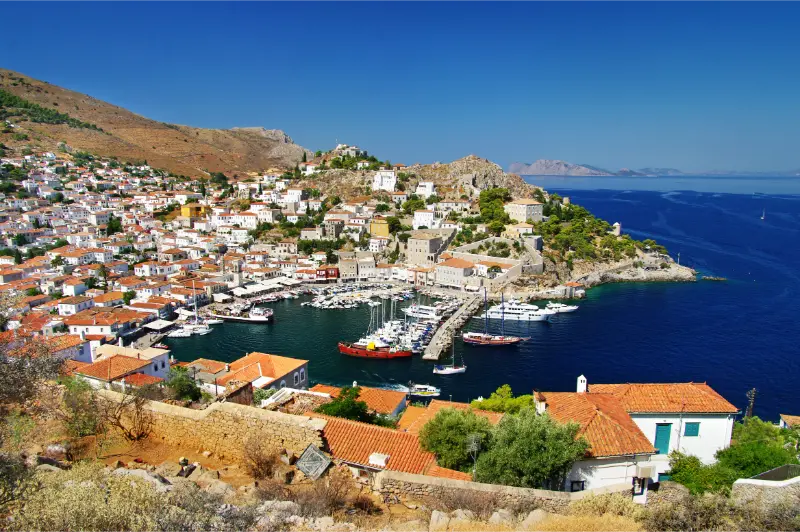
    View Notturna Of Port Of Hydra In Greece

    Ecclesiastical collections and churches

    Hydra’s churches and ecclesiastical heritage add another layer to the town. Treat active religious spaces respectfully: cover shoulders when requested, avoid intrusive photography during worship and keep conversation quiet. If an ecclesiastical museum is open, it can balance the naval narrative with icons, vestments and church history. Do not assume every church that looks open from the lane is operating as a tourist attraction.

    DESTE Foundation at the former slaughterhouse

    One of Hydra’s most distinctive cultural experiences is the DESTE Foundation project space in the former slaughterhouse east of town. Since 2009 the building has hosted contemporary exhibitions, and Visit Greece notes the permanent presence of Jeff Koons’ Apollo Wind Spinner on the roof after the 2022 project. The walk to the space is part of the visit. Check DESTE’s current programme because exhibition access is seasonal.

    The Red House in Kamini

    Visit Greece describes the Red House as the former residence of Andreas Miaoulis in the small harbour of Kamini, dating to 1786 and used for temporary summer exhibitions. This makes it easy to combine culture with the western coastal walk. Plan the day around the Kamini and Vlychos Guide and consider the exhibition a bonus unless you have verified exact opening details.

    Tombazis Mansion and the School of Fine Arts

    The Tombazis Mansion on the western side of town has been associated with the Athens School of Fine Arts since the 1930s. Its role reinforces Hydra’s long relationship with artists rather than presenting contemporary culture as a recent tourism trend. Events may not be open every day, so appreciate the building and setting even when no public programme coincides with your trip.

    Hydra School Projects and seasonal exhibitions

    Hydra School Projects and other temporary programmes mean the island’s cultural map changes from one summer to another. This is excellent for repeat visitors because there may be something genuinely new, but it makes static “top ten” lists unreliable. Search current exhibition announcements a few weeks before travel and again after arrival. Local posters and gallery notices can be more useful than old social-media posts.

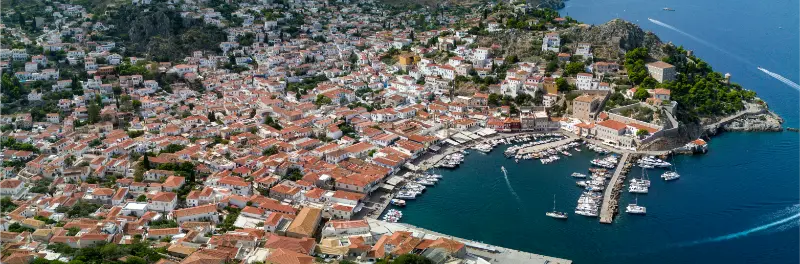
    Aerial View Hydra Island Greece With Boats Port

    Build a one-day art and history route

    Begin with the Historical Archives–Museum near the port, walk into the upper town for a historic mansion, have lunch, then choose either the western route toward Kamini/Red House or the eastern route toward DESTE. Do not try to cover both sides plus every museum in one afternoon. A second day can pair the remaining art spaces with swimming or the Hydra Town Guide.

    Best time to plan Hydra art and museums

    Spring and autumn are particularly comfortable for a trip built around Hydra art and museums because walking is easier and the island is less dominated by midday heat. Summer gives the fullest range of beach boats, restaurants and seasonal cultural activity, but it also demands an early-start/late-afternoon rhythm. Winter is quieter and can be rewarding for walkers, though ferry frequency, beach services and exhibition schedules are reduced. Always check the exact services that matter to your plan rather than assuming peak-season operating patterns apply year-round.

    Heat, wind and sea conditions

    Hydra is rocky and exposed, so weather changes the practical difficulty of even a simple plan. In July and August, avoid turning a short uphill route into a midday endurance test. Wind can affect small boats and the comfort of exposed beaches without necessarily making the whole island unusable. Ask locally which coast is sheltered and keep one town-based alternative available. The Hydra Town Guide is especially useful as a backup when swimming or boating conditions are poor.

    What to pack for Hydra

    Bring supportive walking shoes, a hat, high-SPF sunscreen, a refillable water bottle and water shoes if you dislike pebbles or rocky entries. A small daypack is more useful than carrying beach gear by hand on steep lanes. Keep a light layer for evening boat rides and shoulder-season wind. Because you cannot put spare equipment in a rental car, organise each day before leaving your room: water, medication, charger, swimwear and ferry tickets should travel with you.

    Costs and booking strategy

    Hydra can be expensive in peak summer, particularly for harbour-view accommodation and private water taxis. Save money by booking rooms early, using scheduled beach boats where practical, walking short distances and eating some meals away from the prime waterfront tables. Do not sacrifice location blindly for a cheaper room: a difficult luggage transfer or repeated water taxi can erase the saving. Reserve critical ferries and accommodation first; ordinary walking and swimming days can remain flexible.

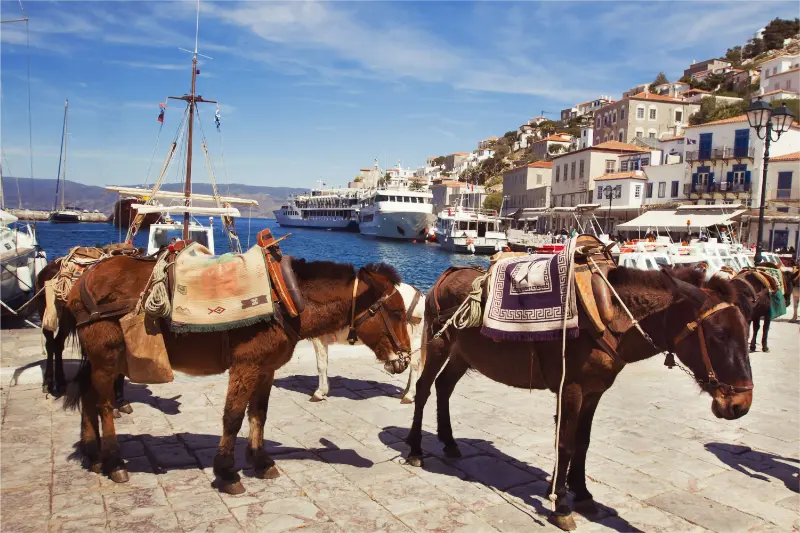
    Port Hydra Greece

    Responsible travel on a car-free island

    The car-free character works because public space is shared by residents, workers, pedestrians and service animals. Keep narrow lanes clear, step aside for people carrying loads and avoid treating working animals as scenery. Reduce luggage, use professional transfer arrangements and carry your own small day bag. On beaches, take rubbish back with you when bins are limited. On trails, stay on marked routes and respect temporary restrictions connected with heat, fire risk or maintenance.

    How this guide fits the wider Hydra cluster

    For a first trip, use the main Hydra travel guide as the overview, then choose two or three specialist guides rather than reading every page as a separate checklist. Useful companions are Hydra Town Guide, Best Beaches in Hydra, Kaminia and Vlychos Guide, Mandraki Guide. The goal is to build one coherent holiday: town time, one or two swimming days and, if you enjoy walking, a mountain or long coastal route.

    Official sources and current checks

    For destination background, use Visit Greece – Hydra. For hiking, Visit Greece – Hiking on Hydra describes the five main route directions, while the Municipality of Hydra hiking map gives route distances and mapped walking times. Cultural programmes and ferry schedules can change, so verify the specific museum, exhibition or operator close to your travel date.

    A realistic pace for this part of Hydra

    Hydra rewards travellers who do fewer things well. Start the day with the activity that depends most on temperature or calm water, keep the middle hours for food, shade or culture, and save the easiest walking for evening. If you arrive from Athens on the same day, count the ferry journey as part of the travel load rather than pretending you have a full fresh day. A relaxed schedule also gives you room to respond to boat changes without losing the experience you came for.

    Frequently asked questions

    What is the main museum in Hydra?

    The Historical Archives–Museum of Hydra is the clearest starting point for maritime and revolutionary history.

    Is Hydra good for contemporary art?

    Yes. Seasonal exhibitions and DESTE’s project space give the island a cultural scene much larger than its size suggests.

    Are art spaces open all year?

    Not necessarily. Many programmes are seasonal, so verify dates and hours close to your visit.

    Can I walk to DESTE?

    Yes, the east-coast walk is part of the experience for active visitors.

    Can I combine museums with a beach day?

    Very easily. Do museums in the hotter part of the day and swim or walk in the morning or late afternoon.

    Final planning advice

    Hydra Art and Museums Guide works best when you leave enough space for Hydra’s slow rhythm. Do not schedule every hour. The island’s strongest moments often happen between the formal sights: a quiet harbour before breakfast, a swim after a walk, an unexpected exhibition or the light changing on the stone houses. Secure the non-negotiables—ferry, room and any time-sensitive boat—then let weather and energy decide the exact order of the rest.

  • Ios Hiking Guide: Best Trails, Skarkos, Profitis Ilias, Valmas and Safety

    Ios Hiking Guide: Best Trails, Skarkos, Profitis Ilias, Valmas and Safety

    Walking is one of the best ways to discover the version of Ios that disappears behind nightlife marketing. Dry-stone walls, chapels, old agricultural routes and coastal paths connect landscapes that are easy to miss from a bus. Visit Greece currently describes a marked footpath network totalling about 13.5 kilometres, with routes from Mylopotas toward Klima, Chora toward Agia Theodoti, Chora through Skarkos, Agia Irini to Valmas and the climb from the Odysseas Elytis Theatre toward Profitis Ilias.

    These are not high-Alpine expeditions, but summer heat, wind and rough ground can make a short route demanding. Use this guide alongside the Ios archaeology guide and the beach guide, because several walks make the most sense when combined with a cultural site or swim.

    Quick trail chooser

    Easy coastal optionAgia Irini to Valmas
    Culture + walkingChora – Skarkos – Ellinika / Agia Triada
    Views above ChoraOdysseas Elytis Theatre – Profitis Ilias
    Longer cross-landscape feelChora toward Agia Theodoti
    Beach-hike combinationMylopotas toward Klima via Sapounochoma

    When to hike

    May, June, September and early October are generally more comfortable than the hottest part of July and August. In midsummer, start early and plan to be off exposed slopes before the strongest heat. Evening walks can be excellent, but only if you know the route and have enough daylight to return safely.

    Wind can make the air feel cooler while your body is still losing water. Carry more water than you think you need, use sunscreen and wear a hat. Do not rely on a beach bar being open at the end of a trail, especially outside peak season.

    Agia Irini to Valmas

    Visit Greece describes the coastal path from Agia Irini to Valmas as a gentle route ending at a beach. This is a strong first walk because it combines scenery with a clear reward. It is also easier to fit into an arrival or departure day if you are staying near the port.

    Even on a gentle route, footwear matters. Loose stones and dry surfaces can be slippery. Carry swimwear and water, but also plan the return: a beach destination feels less relaxing if you reach it without knowing whether you are walking all the way back.

    Chora to Skarkos and beyond

    The route from Chora down toward Skarkos is the best walk for travellers interested in history. Visit Greece suggests continuing toward Ellinika and Agia Triada, passing a landscape of terraces and chapels. You can shorten the outing by making Skarkos the objective and returning, or extend it when temperatures and fitness allow.

    Visit the Archaeological Museum in Chora before the walk if possible. The archaeology guide explains why the Early Cycladic settlement matters and how to avoid treating it as just another stone ruin.

    Profitis Ilias above Chora

    The climb toward Profitis Ilias begins around the Odysseas Elytis open-air theatre according to Visit Greece. It gains height above Chora and rewards you with broad sea and island views. This is the route to choose when you want elevation without driving to a remote trailhead.

    Start early or go in late afternoon with enough daylight. Do not aim to reach a summit or chapel at the exact moment of sunset if that means descending unfamiliar terrain in darkness. A headlamp is small, light and worth carrying on evening walks.

    Mylopotas toward Klima

    This route leaves the famous beach environment and heads toward Klima via the sculpted rock landscape of Sapounochoma. It is a useful way to understand how quickly Ios changes once you step away from organised sand and bars. Because the trail is more exposed than a village walk, temperature and water become central planning factors.

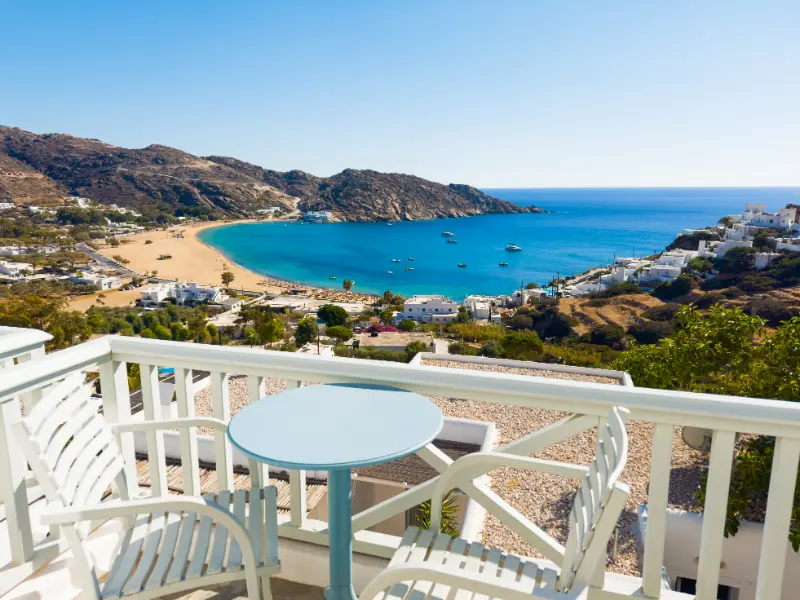
    Mylopotas Beach Ios Island Cyclades Aegean Greece

    Combine the walk with a swim only if you have preserved enough energy for the return. For a standard beach day, use the Mylopotas guide instead of turning every visit into a hike.

    Chora toward Agia Theodoti

    The older axis between Chora and Agia Theodoti passes through a dry agricultural landscape that feels far from Ios nightlife. This is the kind of walk where the journey matters more than a single viewpoint. Stone walls, chapels and terraces reveal how the island was used before tourism concentrated activity on the coast.

    Treat it as a serious outing in hot weather. Check the exact route, current markings and return logistics before leaving. If you are uncertain about path conditions, ask locally or choose a shorter route rather than improvising across private land.

    Navigation and safety

    Download an offline map, but do not assume every digital line represents a maintained trail. Follow official markings where available. If a path becomes unclear, turn back rather than cutting across slopes. Close gates, respect livestock and avoid disturbing chapels or agricultural property.

    Tell someone your route when walking alone. Carry a charged phone, identification, water and basic first-aid items. In summer, fire-risk restrictions can affect access to natural areas; obey municipal or civil-protection notices even if the trail was open the previous day.

    What to wear

    • Trail shoes or trainers with reliable grip
    • Hat and sunglasses
    • Lightweight breathable clothing
    • A thin wind layer for exposed ridges
    • Swimwear if the route ends at a beach
    • At least one full water bottle; more for longer exposed walks
    • Small headlamp for late-afternoon routes

    Walking with children

    Choose short routes with a clear objective: Valmas for a swim, Skarkos for archaeology or the windmills and theatre for views. Avoid exposed long walks in midday heat. Children who dislike “hiking” often enjoy a route much more when it leads to a beach or a story rather than a distance target.

    The Ios with Kids guide focuses on easier family days and transport. A family holiday does not need to include the longest trail to benefit from the island’s walking landscape.

    Frequently asked questions

    How long is the marked hiking network?

    Visit Greece currently describes a footpath network with a total length of about 13.5 km. Individual route conditions and markings should still be checked locally.

    Can I hike in July and August?

    Yes, but start very early, choose shorter routes and carry enough water. Midday exposed walking is a poor idea during hot spells.

    Do I need hiking boots?

    For most standard routes, sturdy trail shoes or trainers with good grip are more important than heavy boots. Avoid smooth sandals on loose or polished surfaces.

    What is the easiest scenic walk?

    Agia Irini to Valmas is a good coastal introduction, while the windmills and theatre area above Chora provides views with less commitment.

    Continue planning

    Pair walking with Chora, Skarkos and the archaeology sites, and the best beaches in Ios. The main Ios travel guide shows how to fit active days into a short stay.

    Planning details that make a real difference

    Ios looks compact on a map, but the island is hilly and summer heat changes how long simple journeys feel. Group each day geographically instead of bouncing from the port to the north, back to Chora and then to the south. One beach area plus one cultural or evening area is usually enough. This reduces transport time and leaves room for swims, meals and the unexpected delays that are normal on an island.

    Ios Island Greece Cyclades Panoramic Aerial Drone View Chora Town

    In July and August, protect the middle of the day. Use early morning for walking, archaeology or village exploration, then move to the beach, lunch or shade. September often keeps warm sea temperatures while making active days easier, but some seasonal services gradually reduce frequency. May and early June are attractive for walking and quieter travel, although the sea may feel cooler and not every beach business will operate at peak-summer hours.

    Wind should remain a flexible part of the plan. The Meltemi can affect beaches, small boats and comfort even on a cloudless day. Ask locally which coast is behaving best rather than forcing a beach because it was written into the itinerary. This is also why cultural options in Chora are valuable: a windy morning can become a museum-and-village morning without feeling wasted.

    For money, carry a payment card plus some cash. Do not rely on a single ATM on the day of departure, and keep enough cash for a taxi if a card terminal fails. If you are travelling in peak season, reserve accommodation and important ferry connections early, but leave ordinary beach days flexible.

    How I would fit this into a first Ios trip

    On a first four- or five-night visit, I would give one full day to Mylopotas, one to Manganari or another remote coast, one morning to Chora and archaeology, and one flexible block to hiking, a boat trip or the north. Evenings naturally return to Chora for sunset and food. This structure shows both the social and quiet sides of the island without turning the trip into a checklist.

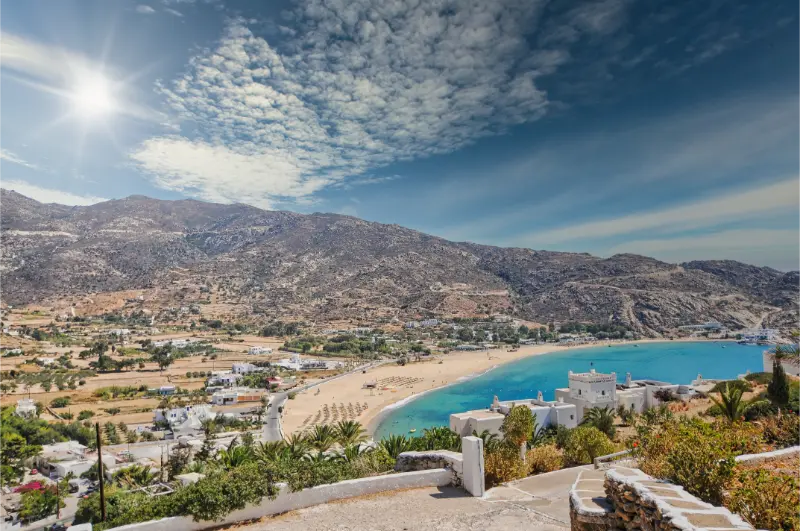
    Ios Mylopotas

    Ferry times should shape the first and last day. If you arrive late, do not schedule a remote beach immediately; settle in, eat and walk through Chora. If you leave early, protect the final evening from transport stress by confirming the bus or taxi before dinner. The best island itinerary is not the one with the most stops, but the one that still feels enjoyable when wind, heat or ferry timing changes the order.

  • Where to Stay in Evia: Chalkida, Eretria, Edipsos, Limni, Kymi, Marmari or Karystos?

    Where to Stay in Evia: Chalkida, Eretria, Edipsos, Limni, Kymi, Marmari or Karystos?

    Choosing where to stay in Evia matters more than on many Greek islands because the island is exceptionally long. A hotel that looks central on a map may still leave you two or three hours from the places you want to visit. The right base depends on whether your trip is about beaches, hiking, thermal springs, archaeology, South Evia or simply an easy break from Athens.

    For most first trips longer than four nights, I would use two bases. Chalkida or Eretria pairs well with North Evia, while Marmari or Karystos makes sense for a southern itinerary. Kymi is better for the Aegean side and Skyros connections. There is no single “best town” for the whole island.

    Aegean Sea Leisure Women Near Town Marmari Greek Island Evia Greece

    Chalkida: best for access and city convenience

    Chalkida is the island’s capital and the easiest place to reach from Athens by road. It has the widest year-round services, restaurants and transport connections, plus the Euripus Strait and Karababa Castle.

    Choose Chalkida for a short break without much beach ambition, for the first or last night of a road trip, or if you prefer city facilities. Skip it as your only base if remote beaches and mountain villages are the main goal.

    Eretria: best balanced central base

    Eretria combines a seaside setting with archaeology and manageable access to Chalkida. It has hotels, apartments and restaurants without feeling as urban as the capital.

    This is one of the best choices for families and first-time visitors spending two or three nights in central Evia. A car remains useful for beaches and day trips.

    Edipsos: best for thermal springs and North Evia

    Loutra Edipsou is the obvious choice if thermal water and wellness are central to the trip. Visit Greece notes more than 80 hot springs in the wider area, and the town has substantial accommodation infrastructure.

    Use Edipsos as a north-west base for Lichadonisia and nearby coastal drives. It is too far from South Evia to treat as an island-wide base.

    Limni and Rovies: best for a quieter north-coast stay

    Limni offers the prettier walkable waterfront, while Rovies gives more rural space and olive landscapes. Both suit couples, road trippers and travellers who want evenings away from a busier spa resort.

    They work especially well after a stay in Chalkida or Steni. A car is strongly recommended for exploring beyond the immediate coast.

    Kymi: best for the Aegean side and Skyros ferries

    Kymi is an excellent base for east-coast beaches, mountain villages and the ferry connection to Skyros. The upper town and port are separate, so check your accommodation location carefully.

    Choose Kymi when the east coast is the point of the trip. It is less convenient for Edipsos or far-southern beaches.

    Marmari or Karystos: best for South Evia

    Marmari is convenient for ferries from Rafina and boat-oriented beach days, while Karystos has a larger town centre and stronger access to Mount Ochi and Dimosari Gorge.

    View Aegean Sea Greek Resort Town Marmari Island Evia Greece

    For a short South Evia break from Athens, either can work without visiting Chalkida at all. Karystos generally suits travellers who want more restaurants and services; Marmari suits those prioritising the harbour and nearby coast.

    How much time should you allow?

    For where to stay in Evia, I would allow at least a full day if you are visiting from another part of Evia, and longer when the area itself is your base. Evia’s distances are deceptive because many roads cross mountains or follow indented coastlines. A schedule that looks efficient in kilometres can become rushed once you add parking, lunch, swimming and photo stops.

    If you have only one day, choose two priorities and leave the rest for another trip. With two or three days, you can add a slower beach afternoon, a local dinner and one inland or cultural excursion. That extra time is usually what turns an Evia visit from a driving exercise into an actual holiday.

    Best time to visit

    Late spring and early autumn are excellent for road trips because temperatures are usually more comfortable for walking and driving. July and August bring the warmest sea and the widest range of seasonal beach services, but also stronger sun, busier weekends and higher fire risk in dry landscapes.

    For hiking or exposed archaeological sites, start early even outside peak summer. For beach days, check wind as well as temperature: the Aegean coast can be rough while the gulf side is comfortable, or vice versa. In winter, Evia remains accessible by road, but seasonal accommodation, boat trips and beach businesses may close.

    Getting around this part of Evia

    A rental car is the most useful tool for exploring Evia beyond the main towns. Public buses connect important settlements, but they are not designed around a visitor trying to combine remote beaches, trailheads and villages in one day. Taxis work well for specific transfers but become expensive as a substitute for a car over long distances.

    Download offline maps before crossing the mountains, keep fuel above half a tank on remote drives and avoid planning unfamiliar rural roads after dark. If you are renting in Athens, check the company’s rules before taking the vehicle on any ferry route. Road conditions and temporary closures should be verified locally after severe weather or during periods of high fire danger.

    Where to stay and booking strategy

    For live availability, compare accommodation across Evia on Booking.com. On this island, the map pin matters as much as the hotel rating. A property advertised under a well-known town name may be several kilometres away on a hillside or rural coast.

    Before paying, check parking, road access, walking distance to dinner and whether air conditioning is included. If you are building a road trip, choose accommodation that shortens the next day’s drive instead of returning to the same base purely out of habit. Two well-chosen bases usually beat one central-looking base for a week.

    Eating well without overplanning

    Evia rewards simple meals: grilled fish on the coast, meat and pies in mountain villages, salads, local cheese, honey, figs and olive-oil-based dishes. Ask what is fresh and regional rather than ordering only the same famous Greek dishes at every stop.

    For restaurants that matter to you, book ahead on summer weekends. Otherwise, keep some flexibility and eat where the day naturally ends. Long evening drives on mountain roads are rarely worth it just to reach a restaurant with a slightly higher online score.

    Common planning mistakes

    • Treating North Evia, central Evia and South Evia as if they were one compact resort area.
    • Ignoring wind and sea conditions when choosing an Aegean-facing beach.
    • Scheduling a remote beach, a mountain hike and a long transfer on the same day.
    • Following an old boat or bus timetable without checking the current season.
    • Underestimating summer heat, fire restrictions and the lack of shade at exposed sites.
    • Booking accommodation without checking its exact road access and parking situation.

    A simple one-day plan

    Start early and make the main purpose of the day where to stay in Evia. Use the coolest morning hours for walking, archaeology or driving to a viewpoint. Break for a long lunch rather than adding another distant attraction, then use the afternoon for a swim, an easy town walk or a short coastal stop.

    Keep the last hour flexible. If the weather is good, stay for sunset or another swim. If wind rises or everyone is tired, return to your base before dark. This flexibility is especially valuable in Evia, where the best days often come from doing less driving than you originally planned.

    Useful official information

    For destination background, start with Visit Greece. For mountain routes around Steni, the official tourism site also publishes descriptions of the marked trail network and the Stropones Gorge. Always recheck opening hours, local transport, ferry departures and seasonal boat trips close to your travel date.

    Weather and fire-risk information are particularly important for mountain and forest areas. If a road, trail or beach access is officially closed, do not bypass barriers because an older map suggests a route continues.

    Tours and activities

    Organised experiences on Evia are more seasonal than on Santorini or Mykonos. The widget below is useful for checking whether boat trips, outdoor activities, food experiences or transfers are available on your dates. Verify meeting points and cancellation terms before paying.

    Continue planning your Evia trip

    Final advice

    Where to Stay in Evia works best when it is treated as part of Evia rather than an isolated attraction. Build the day around realistic road times, weather and one or two strong experiences. The island’s advantage is variety: when wind, heat or energy levels change, you can often switch from beach to village, mountain to waterfront, or archaeology to a long lunch without wasting the day.

    The most useful habit is to check tomorrow’s conditions each evening. Ten minutes spent confirming weather, transport and opening information can save hours of unnecessary driving. Leave room to change your mind, because Evia is large enough to reward a second trip rather than a first trip overloaded with every possible stop.

    \n

    More Evia practical guides: Evia Without a Car, Best Time to Visit Evia, Where to Stay in Chalkida, Chalkida with Kids, Where to Stay in Edipsos, Edipsos Thermal Springs Guide, Where to Stay in Eretria, Where to Stay in Karystos, Evia in 3 Days, Solo Travel in Evia.

    \n
  • Where to Stay in the Small Cyclades: Donousa, Koufonisia, Schinoussa or Iraklia?

    Where to Stay in the Small Cyclades: Donousa, Koufonisia, Schinoussa or Iraklia?

    Choosing where to stay in the Small Cyclades is really two decisions: first choose the island, then choose the village or coast. Because these islands are tiny, travellers sometimes assume accommodation location does not matter. It does. A room beside the ferry can save a stressful luggage transfer; a beachside studio can be perfect at noon and inconvenient after dinner; a panoramic inland property can mean a steep climb every evening. The goal is not to find one universal ‘best’ base but to match the island’s scale to your daily habits.

    Quick planning table

    Easiest first choiceKoufonisia / Chora
    Best for hikingDonousa / Stavros
    Best for foodSchinoussa / Chora
    Best for natureIraklia / Agios Georgios
    Best shoulder seasonJune or September

    Choose Koufonisia for the easiest first trip

    Koufonisia has the widest range of accommodation, restaurants and beach access among the four. Chora is the most flexible base because ferries arrive below it and the east-coast beaches begin within walking range. Staying farther east can feel wonderfully close to the sea but increases the importance of luggage transfer and evening walks.

    Choose Koufonisia for first-time visitors, couples who want some evening choice, families who value sandy beaches, and travellers who want a car-free holiday without giving up tourism infrastructure.

    Choose Donousa for hiking and quiet

    Donousa suits travellers who want their island days to include walking as well as swimming. Stavros is the practical base, with the port, beach, tavernas and services. Outlying rooms can be more peaceful, but they require confidence with walking or local transfers.

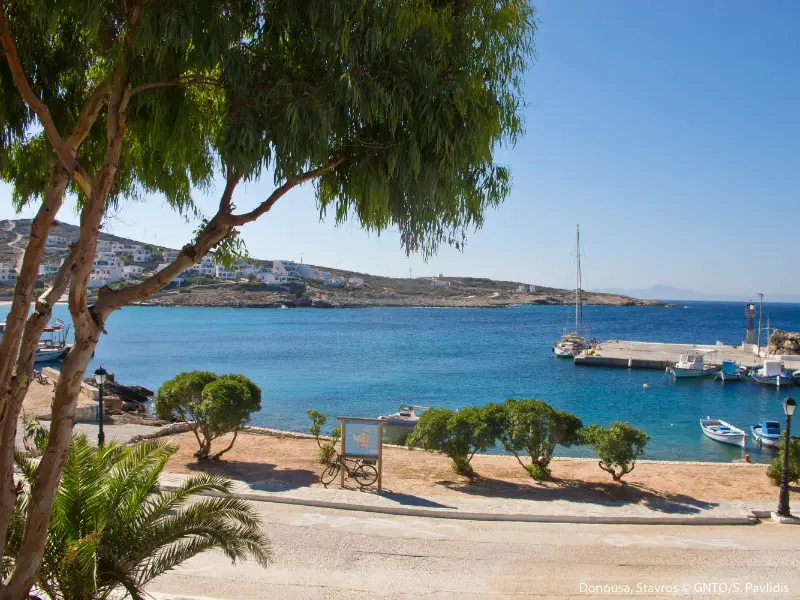
    Donousa Stavros

    Choose Donousa if an ideal day includes a morning path to Kedros or Livadi, a long swim and a quiet dinner rather than boutique shopping or bar-hopping.

    Choose Schinoussa for food and village life

    Schinoussa is a strong choice for travellers who want to live around Chora’s evening rhythm and walk to different beaches by day. Mersini is useful for port convenience, while Chora offers the best mix of dinner options and centrality. Mesaria is quieter and more agricultural.

    Choose Schinoussa if food matters, you enjoy walking and you want an island that feels social at dinner without becoming a nightlife destination.

    Choose Iraklia for nature and the slowest rhythm

    Iraklia appeals to hikers and repeat Greece travellers who actively want fewer choices. Agios Georgios is the most practical base; Panagia gives you an inland atmosphere and easier access to some walking routes, but fewer immediate services.

    Choose Iraklia if the cave of Agios Ioannis, Natura 2000 landscapes and quiet trails sound more exciting than a long list of beach clubs or shops.

    Best island for families

    Koufonisia is the easiest overall because of sandy beaches, short distances and more dining choice. Schinoussa can be even calmer, but families need to be comfortable walking and carrying beach gear. Donousa and Iraklia suit active families with older children better than families who need constant organised facilities.

    For toddlers, the exact accommodation may matter more than island choice. Check stairs, cot availability, fridge access, distance to a mini-market and whether the route to the beach is pushchair-friendly.

    Best island for couples and solo travellers

    Couples can find romance on all four, but the mood differs. Koufonisia feels the most polished, Donousa the most remote, Schinoussa the most village-centred and Iraklia the most nature-focused. Solo travellers may prefer Koufonisia for easier social contact or Donousa for purposeful hiking days.

    Greece Small Cyclades Islands Aerial Drone Panoramic View Koufonisia Islands

    If you travel alone in shoulder season, confirm how many restaurants and rooms will be open. A wonderfully quiet island in August can feel genuinely isolated in late October.

    Booking strategy and season

    July and especially August reward early booking. Small accommodation inventories mean the best-located rooms disappear quickly, and a compromise that looks minor online can translate into a daily hill or long hot walk. June and September offer a better balance of choice, sea swimming and lower pressure.

    Read recent reviews for location, stairs, noise and transfers rather than judging only decor. Compare current accommodation across the Small Cyclades on Booking.com.

    Practical planning: season, wind and daily rhythm

    For these islands, season changes the trip more than distance. June usually brings warm swimming weather and a calmer accommodation market, while July and August bring the fullest restaurant schedules, more visitors and stronger booking pressure. September is excellent for sea temperatures and a slower rhythm, but ferry frequency can begin to thin later in the month. Outside the core season, never assume every taverna, beach service or local transport option is operating simply because it appears on a summer map.

    The meltemi deserves respect. Strong northerly winds can change which beach is comfortable, delay ferries and make a simple boat excursion inappropriate. I prefer to decide each next day’s beach or sea activity the evening before using both a weather forecast and local advice. Keep hiking as an alternative on moderate days, but in high summer move strenuous walks to early morning and protect the middle of the day for shade, lunch or a short swim close to your base.

    Budget and booking strategy

    The Small Cyclades are not automatically cheap. Ferry tickets may be modest on local hops, but the small supply of rooms can push accommodation prices up in August. Restaurant prices also reflect island logistics and the cost of bringing supplies by sea. Save money by travelling in June or September, staying several nights rather than moving daily, and choosing a room with a fridge for breakfast and water. Spend on location: a well-placed room can remove repeated taxi or transfer costs.

    Compare current accommodation on Booking.com. Check the exact map position, recent comments about stairs or transfers, cancellation terms and whether the property is open for your dates before booking.

    How I would use this guide in a real itinerary

    For a first trip, I would use where to stay in the Small Cyclades as one part of a wider day rather than as a checklist to complete. Start with the activity or place that depends most on cool temperatures, calm water or opening hours, then leave the afternoon flexible. On these islands, a short distance can still take time because you stop for a swim, wait for a local boat or decide that lunch is worth extending. Building that margin into the plan is not wasted time; it is what keeps a small-island holiday from feeling like a city-break timetable.

    If you are combining islands, protect arrival and departure days. After a ferry, use the first hours to learn the village, buy water, photograph the current transport timetable and ask your host about wind-exposed beaches. Before departure, stay close to the port and avoid a remote hike or boat trip that leaves no recovery time. This simple structure gives you four or five genuinely useful full days from a week-long holiday instead of losing the best parts of the trip to unnecessary transfers and tight connections.

    Official and current information

    Use Visit Greece for destination background and the Municipality of Naxos and Small Cyclades maps and guides for local planning material. For ferry logistics, the municipality also publishes practical access guidance. For date-specific 2026 sailings, cross-check Ferryhopper and the published Small Cyclades Lines / Express Skopelitis timetable, then confirm your exact departure close to travel.

    Tours and activities

    Boat trips and organised activities are highly seasonal in the Small Cyclades. Always check the departure point, return time, cancellation policy, minimum passenger requirements and weather conditions before paying.

    Continue planning the Small Cyclades

    Small Cyclades Travel Guide: Donousa, Koufonisia, Schinoussa and Iraklia Compared | Donousa Travel Guide: Stavros, Kedros, Kalotaritissa, Hiking and Where to Stay | Koufonisia Travel Guide: Chora, Pori, Italida, Fanos and Kato Koufonisi | Schinoussa Travel Guide: Chora, Mersini, Beaches, Food and Where to Stay | Iraklia Travel Guide: Agios Georgios, Panagia, Agios Ioannis Cave and Beaches | Best Beaches in the Small Cyclades: Pori, Italida, Kedros, Livadi, Tsigouri and More | Small Cyclades Island Hopping Guide: Naxos, Donousa, Koufonisia, Schinoussa and Iraklia | Small Cyclades Without a Car: Walking, Local Transport, Boats and the Best Bases | How to Get to the Small Cyclades in 2026: Ferries from Piraeus, Naxos and Amorgos | Naxos Travel Guide | Amorgos Travel Guide | Greek Island Hopping Guide

    Donousa Kedros Beach Greece

    FAQ

    Which island is best for a first-time visitor?

    Koufonisia offers the easiest combination of beaches, walkability, restaurants and accommodation.

    Where should you stay on Donousa?

    Stavros is the most convenient base for most first visits.

    Where should you stay on Schinoussa?

    Chora is the best all-round base; Mersini is useful for ferry convenience.

    Where should you stay on Iraklia?

    Agios Georgios is easiest for ferries and services, while Panagia suits walkers seeking a quieter inland stay.

    Final practical advice

    The Small Cyclades are easiest to enjoy when you leave margin. Do not schedule a long hike, remote beach, boat trip and ferry transfer on the same day. Keep one main goal, check wind and transport, and let meals and swims expand when they are going well. The islands are small enough that you will see a great deal without forcing the pace, and that is exactly why they make such a strong contrast to busier Cycladic destinations.

  • Sami and Antisamos Kefalonia Guide: Harbour, Beach, Caves and Where to Stay

    Sami and Antisamos Kefalonia Guide: Harbour, Beach, Caves and Where to Stay

    Sami is one of the most practical bases in Kefalonia because several of the island’s headline sights sit within a short radius. The harbour town is close to Melissani Lake, Drogarati Cave and Antisamos Beach, while ferries and excursion boats add options for travellers who want to spend time on the water. The centre is relatively flat, which also makes everyday life easier than in many steep Ionian villages.

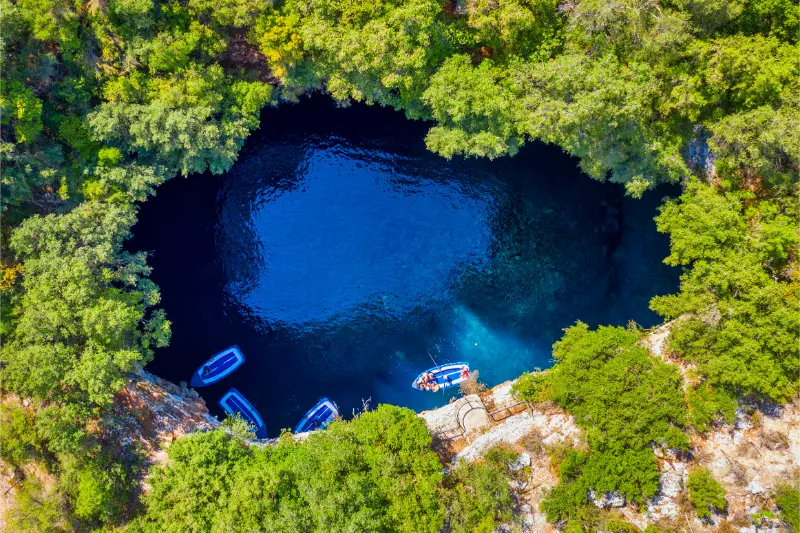
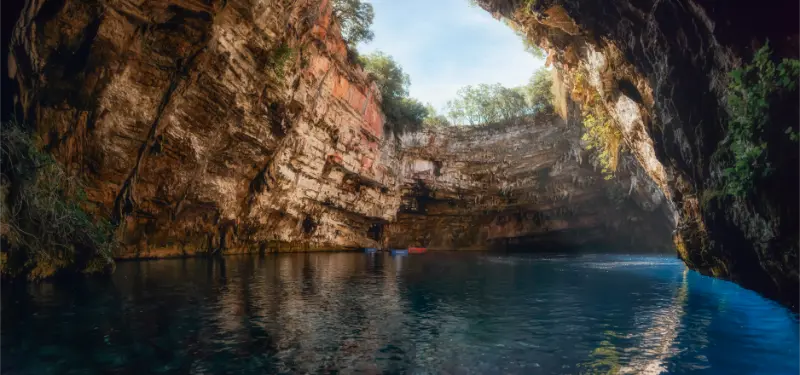
    Attraction Aerial Drone View Iconic Cave With Melissani Lake Near Sami Village Kefalonia Island Greece

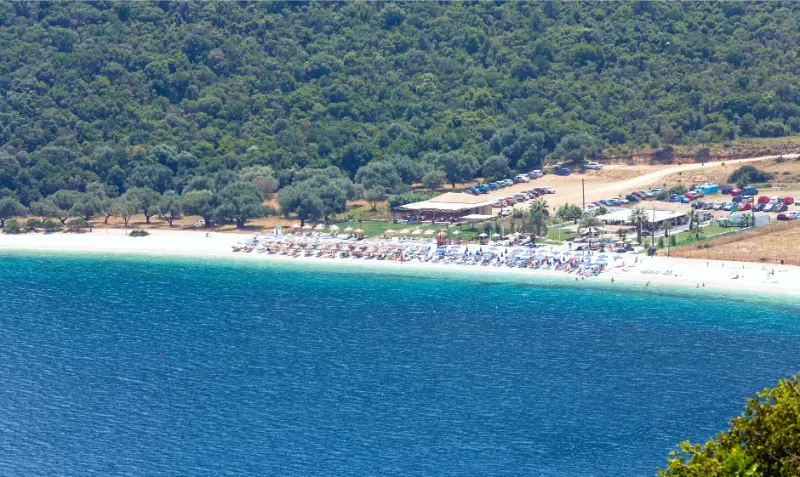
    Antisamos is the natural beach companion to a Sami stay. The beach lies about 4.5 km from the quayside and combines white pebbles, green hills and very clear water. It is beautiful but not a shallow paddling beach: local visitor information notes that the water becomes deep quickly. For the caves, use my Melissani and Drogarati Caves guide, and for the broader island plan start with the Kefalonia travel guide.

    Sami and Antisamos Kefalonia Guide at a glance

    QuestionPractical answer
    Best forCaves, east-coast scenery, boat trips and a practical touring base
    AntisamosPebble beach about 4.5 km from Sami; clear water that deepens quickly
    Car essential?Helpful, but seasonal buses cover some key routes
    Nearby highlightsMelissani, Drogarati, Ancient Sami area, Karavomylos
    Good stay length3–5 nights as part of a split-island trip

    Why Sami is unusually convenient

    Sami does not have to compete with Fiskardo for prettiness to be useful. Its strength is location. You can begin the morning at Melissani, continue to Drogarati, spend the afternoon at Antisamos and still return to the harbour for an easy evening. That concentration of sights saves time on an island where cross-island driving can otherwise dominate the day.

    The harbour also gives Sami a working feel. Ferries, yachts and excursion boats share the waterfront with restaurants and everyday shops. For travellers who dislike isolated resorts, that mixture of tourism and transport is a practical advantage.

    Antisamos Beach: scenery and swimming

    The road from Sami to Antisamos climbs and winds through green hills before descending toward the bay. The beach is pebbly, the water is strikingly clear and the surrounding slopes create the enclosed landscape that makes Antisamos so photogenic.

    The same water clarity can make the depth look deceptive. The beach becomes deep fairly quickly, so young children and nervous swimmers need closer supervision. Snorkelling can be rewarding near the edges of the bay, while organised facilities make it easier to stay for several hours.

    A caves-and-beach day that actually works

    A sensible sequence is to visit the caves before the hottest part of the day and use the afternoon for the sea. Melissani can become busy when coach groups arrive, so an early start is valuable. Drogarati has steps and a different physical character, making it worth treating as a separate visit rather than simply another stop on a checklist.

    After the caves, eat or pause in Sami before heading to Antisamos. This keeps the day compact and avoids the common mistake of adding Myrtos, Assos and Fiskardo on top of the same itinerary. The Melissani and Drogarati Caves guide explains how to plan both caves without rushing.

    Sami without a car

    Sami is one of the better secondary bases for travellers relying on buses, but service remains seasonal and route frequency is not comparable with a city network. In September 2026 KTEL published multiple weekday links between Argostoli and Sami, and local services can also connect key visitor points in season.

    Always check the current official KTEL Kefalonia timetable on the day before travel, because frequencies change as the season winds down. A taxi can be worth budgeting for one or two specific gaps rather than rejecting a car-free trip entirely.

    Where Sami fits in a longer trip

    Sami pairs particularly well with a first stay in Lassi or Argostoli and a second stay farther north in Fiskardo. It also works as a base for an Ithaca day trip if ferry times fit your dates. Do not assume the same schedule operates every month; island connections are seasonal.

    If your main priorities are Myrtos, Assos and Fiskardo, staying farther north reduces driving. If caves, Antisamos and a flat harbour town matter more, Sami is one of the island’s strongest choices.

    When to go and how the season changes the experience

    For Sami and Antisamos Kefalonia, June and September are usually the easiest months to balance warm swimming conditions with less pressure on roads, parking and restaurants. July and August bring the widest range of seasonal services, boat trips and nightlife, but they also bring the strongest heat and the most competition for parking. May and October can be rewarding for walking and quieter travel, yet weather and seasonal opening hours become less predictable.

    Antisamos Beach View Greece Kefalonia All People Identifiable

    Do not plan the entire trip from average temperature charts. Wind direction, recent weather and sea state can change the best beach for a particular day. Keep one or two flexible days and move the most weather-sensitive boat or west-coast plan when conditions look best.

    Driving, roads and parking

    Kefalonia rewards a car, but the driving is slower than the map suggests. Mountain roads, village streets, bends and summer traffic all add time. Build margin into every estimate, especially when you have a ferry, boat departure or restaurant reservation. Avoid stopping on blind corners for photographs and use formal viewpoints or safe pull-outs instead.

    Parking is usually the hidden problem at famous places. Arriving before the middle of the day can make Myrtos, Assos, Fiskardo and other popular stops much easier. If you dislike driving on steep roads, choose a base that reduces the number of cross-island days rather than forcing yourself through a seven-day road-trip schedule.

    Buses and car-free planning

    KTEL Kefalonias publishes seasonal local routes linking Argostoli with the airport, Lassi, Sami, Fiskardo, Myrtos and other destinations. Frequencies change through the season, sometimes substantially. Use buses for the routes they serve well and accept that a taxi, boat excursion or one-day car rental may be the sensible tool for places outside the main network.

    Before travelling, check the official KTEL Kefalonia local timetable. Do not rely on a blog timetable copied months earlier. For a full strategy, see my Kefalonia without a car guide.

    Food, water and the rhythm of the day

    A good Kefalonia day has space for lunch. Long coastal drives and beach parking feel much easier when you are not trying to fit six attractions around them. Keep water in the car, especially for remote beaches and hiking, and do not assume every scenic cove has a taverna or kiosk.

    Robola wine is one of the island’s best-known local products, while meat pies, seafood and simple grilled dishes appear widely. If wine tasting is part of the day, designate the driver or use a transfer; winding island roads are not the place to combine driving with alcohol.

    How to connect this guide with the rest of Kefalonia

    Start with the Kefalonia travel guide if this is your first visit. The Myrtos Beach guide, Assos guide, Fiskardo guide, Melissani and Drogarati Caves guide and Mount Ainos guide cover the island’s major landscape and sightseeing anchors in more depth. Use those pages to build clusters of nearby stops instead of crossing the island several times in one day.

    Melissani Cave Melissani Lake Near Sami Town Kefalonia Island Greece

    If you have seven nights, one base can work for a relaxed holiday but two bases usually reduce driving for travellers who want to see both the north and south. The point of a split stay is not to collect hotels; it is to move once so that several later days become easier.

    Booking experiences and boat trips

    Kefalonia has boat trips, sea kayaking, sailing, cave visits and day excursions, but availability is seasonal and weather-dependent. Compare duration, transport included, boat size, shade and cancellation terms before booking. A shorter high-quality trip can be better than an all-day itinerary with too many stops.

    Common planning mistakes to avoid

    • Trying to combine Myrtos, Assos, Fiskardo, Melissani, Drogarati and a sunset stop in one day.
    • Choosing accommodation only by nightly price without checking how much driving it creates.
    • Assuming every famous beach has sand, shallow water, shade and full facilities.
    • Saving a seasonal bus timetable and assuming it will still apply on different dates.
    • Booking a weather-sensitive boat excursion on the only free day of the trip.
    • Underestimating the sun on remote pebble beaches where natural shade may be limited.

    Frequently asked questions

    Is Antisamos Beach sandy?

    No. It is primarily a pebble beach, with clear water and a relatively quick increase in depth.

    Can I reach Antisamos without a car?

    Seasonal bus services can operate between Sami and Antisamos, but check the current KTEL timetable because service varies by period.

    Is Sami a good base for first-time visitors?

    Yes, especially for travellers interested in Melissani, Drogarati, Antisamos and boat connections. It is less convenient for repeated evenings in Argostoli.

    How long do I need in Sami?

    Two nights can cover the highlights, but three to five nights makes the area feel relaxed and gives room for a boat day or Ithaca.

    Is Antisamos good for young children?

    Facilities are convenient, but the water can deepen quickly. Families wanting very shallow entry should compare other beaches as well.

    Can Sami be combined with Myrtos in one day?

    Yes, but I would avoid adding too many additional stops. Myrtos plus Sami/caves can already fill a satisfying day.

    More Kefalonia in-depth guides

    Continue planning the island with Lassi and Makris Gialos Kefalonia Guide; Skala Kefalonia Guide; Lixouri and Paliki Kefalonia Guide; Agia Efimia Kefalonia Guide; Fteri Beach Kefalonia Guide; Best Beaches in Kefalonia; Kefalonia Without a Car; Kefalonia with Kids; Where to Stay in Kefalonia.

  • Hydra Day Trip from Athens: Ferry Planning, One-Day Itinerary and Is It Worth It?

    Hydra Day Trip from Athens: Ferry Planning, One-Day Itinerary and Is It Worth It?

    Hydra is one of the most satisfying island day trips from Athens because arrival drops you directly into the main town and you do not lose time collecting a rental car or crossing a large island. Direct fast ferries operate from Piraeus, and current schedules can put Hydra within practical day-trip range. The important word is current: ferry times change by date and weather, so build the plan around the actual sailing you book rather than an old blog timetable.

    A day trip is enough to understand why Hydra is special, but it is not enough to do everything. The most successful version focuses on the harbour, the upper town and one coastal extension. If you try to add a mountain hike, a remote boat beach, three museums and a long lunch, the island becomes a race. If your schedule allows, one overnight is better because evening and early morning are when Hydra Town is most atmospheric.

    At a glance

    Departure pointUsually Piraeus for direct fast ferry services
    Ideal island timeAim for a long day, not a rushed few hours
    Best first visitHarbour + upper lanes + one museum + coastal walk
    Beach add-onSpilia or Kamini/Vlychos depending on time
    Biggest mistakeBooking the last return too tightly around a remote activity

    Choose the ferry first, itinerary second

    Search the exact travel date before deciding what you will do on the island. Hellenic Seaways and other operators can adjust sailing times, vessels and intermediate stops. Buy the return at the same time if the date is busy. Then work backward from the departure: be physically near the port well before boarding rather than swimming at a remote cove when you should be checking in.

    Port Hydra Greece

    A strong morning in Hydra Town

    On arrival, resist the urge to sit immediately at the first waterfront café. Walk one side of the harbour, climb into the lanes while temperatures are comfortable and reach a viewpoint or upper church area. Then choose one museum that matches your interests. The Hydra Town Guide gives a route through the harbour, mansions and cultural stops without turning the morning into a checklist.

    Lunch without losing the entire afternoon

    A long Greek lunch is part of the pleasure, but on a day trip I would eat slightly earlier than peak time and choose somewhere that does not require a separate transfer. This preserves the afternoon for a coastal walk or swim. If you have food allergies or specific dietary needs, check a menu before sitting rather than trying to solve everything after ordering.

    Choose one afternoon: west walk or east walk

    The west-coast walk to Kamini and possibly Vlychos is the easiest first choice because it combines scenery, swimming and small-harbour atmosphere. Mandraki to the east is a good alternative if you want a different landscape or a seasonal art stop. Do not attempt both unless you genuinely enjoy walking and have a late ferry. See Kamini and Vlychos and Mandraki for the trade-offs.

    Can you add a beach?

    Yes, but keep it simple. A quick swim at Spilia or on the western edge of town is the safest addition to a tight itinerary. Vlychos works with a longer afternoon. Remote boat beaches are better when you stay overnight because a delayed return introduces unnecessary ferry stress. The Hydra beaches guide sorts beaches by access rather than just beauty.

    What I would skip on a day trip

    I would not climb Mount Eros, take a long western hiking route or commit to a multi-hour remote beach excursion unless hiking or boating is the single purpose of the visit. Those experiences deserve space and contingency time. Use a second or third day for the Profitis Ilias and Mount Eros hike instead of compressing it into an Athens day trip.

    Day trip versus overnight

    Stay overnight if you enjoy photography, art, slow dinners, walking or simply dislike watching the clock. Day visitors concentrate around the middle of the day; the town becomes calmer after departures. An overnight also lets you separate culture from swimming. If budget is the concern, compare a weekday shoulder-season room with the cost and stress of squeezing extra activities into a single ferry window.

    Backup plan for wind or ferry changes

    Ferries can be affected by weather. Keep your final evening in Athens flexible if the next morning involves an international flight, and never schedule a same-day island excursion before a critical long-haul departure. If your Hydra sailing changes, use the time for Athens rather than forcing a complicated alternative route. Travel insurance can be useful when separate bookings create financial risk.

    Best time to plan Hydra day trip from Athens

    Spring and autumn are particularly comfortable for a trip built around Hydra day trip from Athens because walking is easier and the island is less dominated by midday heat. Summer gives the fullest range of beach boats, restaurants and seasonal cultural activity, but it also demands an early-start/late-afternoon rhythm. Winter is quieter and can be rewarding for walkers, though ferry frequency, beach services and exhibition schedules are reduced. Always check the exact services that matter to your plan rather than assuming peak-season operating patterns apply year-round.

    Heat, wind and sea conditions

    Hydra is rocky and exposed, so weather changes the practical difficulty of even a simple plan. In July and August, avoid turning a short uphill route into a midday endurance test. Wind can affect small boats and the comfort of exposed beaches without necessarily making the whole island unusable. Ask locally which coast is sheltered and keep one town-based alternative available. The Hydra Town Guide is especially useful as a backup when swimming or boating conditions are poor.

    Greek Islands Panorama Hydra Saronic Gold Greece

    What to pack for Hydra

    Bring supportive walking shoes, a hat, high-SPF sunscreen, a refillable water bottle and water shoes if you dislike pebbles or rocky entries. A small daypack is more useful than carrying beach gear by hand on steep lanes. Keep a light layer for evening boat rides and shoulder-season wind. Because you cannot put spare equipment in a rental car, organise each day before leaving your room: water, medication, charger, swimwear and ferry tickets should travel with you.

    Costs and booking strategy

    Hydra can be expensive in peak summer, particularly for harbour-view accommodation and private water taxis. Save money by booking rooms early, using scheduled beach boats where practical, walking short distances and eating some meals away from the prime waterfront tables. Do not sacrifice location blindly for a cheaper room: a difficult luggage transfer or repeated water taxi can erase the saving. Reserve critical ferries and accommodation first; ordinary walking and swimming days can remain flexible.

    Responsible travel on a car-free island

    The car-free character works because public space is shared by residents, workers, pedestrians and service animals. Keep narrow lanes clear, step aside for people carrying loads and avoid treating working animals as scenery. Reduce luggage, use professional transfer arrangements and carry your own small day bag. On beaches, take rubbish back with you when bins are limited. On trails, stay on marked routes and respect temporary restrictions connected with heat, fire risk or maintenance.

    How this guide fits the wider Hydra cluster

    For a first trip, use the main Hydra travel guide as the overview, then choose two or three specialist guides rather than reading every page as a separate checklist. Useful companions are Hydra Town Guide, Best Beaches in Hydra, Kaminia and Vlychos Guide, Mandraki Guide. The goal is to build one coherent holiday: town time, one or two swimming days and, if you enjoy walking, a mountain or long coastal route.

    Official sources and current checks

    For destination background, use Visit Greece – Hydra. For hiking, Visit Greece – Hiking on Hydra describes the five main route directions, while the Municipality of Hydra hiking map gives route distances and mapped walking times. Cultural programmes and ferry schedules can change, so verify the specific museum, exhibition or operator close to your travel date.

    Frequently asked questions

    Is Hydra possible as a day trip from Athens?

    Yes. Direct ferry services from Piraeus make it one of the most practical Saronic island day trips.

    Argosaronic Golf Hydra

    How many hours do I need on Hydra?

    A long day is far better than a short stop. Prioritise the town and one coastal extension.

    Can I visit Hydra and another island in one day?

    Some organised routes combine islands, but independent travellers usually get more from giving Hydra the full day.

    Should I book ferries in advance?

    For busy weekends and peak summer, yes. Always check the exact current schedule.

    Is an overnight really better?

    For atmosphere, hiking, art and unhurried swimming, yes. A day trip is best for a first taste.

    Final planning advice

    Hydra Day Trip from Athens works best when you leave enough space for Hydra’s slow rhythm. Do not schedule every hour. The island’s strongest moments often happen between the formal sights: a quiet harbour before breakfast, a swim after a walk, an unexpected exhibition or the light changing on the stone houses. Secure the non-negotiables—ferry, room and any time-sensitive boat—then let weather and energy decide the exact order of the rest.

    Continue planning with Agistri day trip from Athens.

  • Ikaria Travel Guide: Beaches, Villages, Hot Springs and a 7-Day Itinerary

    Ikaria Travel Guide: Beaches, Villages, Hot Springs and a 7-Day Itinerary

    Ikaria is famous internationally for longevity, but that headline can distract from what the island actually feels like: mountainous, green in places, deeply local and slower than most visitors expect. Roads twist between villages, beaches sit below steep slopes, and social life often follows its own timetable.

    I would not choose Ikaria for a rushed three-day island hop. A week makes far more sense because the geography rewards patience, and because some of the best experiences are not “sights” at all: a long lunch, an evening village festival or a swim after a mountain drive.

    Why visit Ikaria?

    Ikaria appeals to travellers who value atmosphere over polish. The island has beautiful beaches, hot springs and hiking, but its personality comes from village life and the feeling that tourism has not reorganised everything around visitors.

    It is also one of the best Greek islands for travellers willing to drive slowly and accept imperfect logistics. That lack of efficiency is part of the experience rather than a problem to solve.

    Where to stay

    Because Ikaria is long and mountainous, one base can mean a lot of driving. Splitting the trip between north-west and south/east is often worth it.

    Armenistis

    A popular west-coast base near beaches and the village of Raches. Good for a relaxed summer stay and sunsets.

    Evdilos

    A practical northern port town with access to central villages and beaches.

    Agios Kirykos

    The main town in the south-east, useful for transport, services and access to Therma.

    Therma

    A small spa-oriented base known for thermal springs, suitable for travellers who prioritise wellness and a quieter pace.

    Best things to do

    Swim around Armenistis and Nas

    The north-west combines attractive beaches with dramatic coastal scenery. Respect currents and local warnings, especially on exposed days.

    Drone Panorama Gialiskari Armenistis Coast Turquoise Water Ikaria Island Greece

    Explore Raches villages

    Mountain villages around Raches are central to the island’s social identity. Visit slowly and stay into the evening rather than treating them as a drive-through photo stop.

    Experience a panigyri

    Traditional village festivals can be memorable, combining food, music and dancing. Dates vary, and visitors should participate respectfully rather than treating them as staged entertainment.

    Visit Therma

    Thermal springs are part of Ikaria’s long spa tradition. Check current access rules and health guidance before using very hot water.

    See Seychelles Beach carefully

    This striking cove is famous for clear water and rock formations, but access can involve a rough descent and conditions may not suit everyone.

    Bay Seychelles Beach Ikaria Aegean Sea Greece

    Hike the interior

    Trails, ravines and forested areas reveal a greener Ikaria. Use local route information and avoid starting demanding walks in midday heat.

    Beaches and nature

    Ikaria’s beaches can be wild, and sea conditions deserve respect. Exposed north-coast beaches can develop waves and currents quickly. A beautiful-looking beach is not automatically a safe swimming day.

    The interior gives the island depth: forests, streams, rock formations and terraces make driving and hiking as important as beach hopping.

    Food and local character

    Ikaria is associated with simple seasonal cooking: vegetables, legumes, goat, local wine, herbs and dishes built around what grows nearby. Meals are often less about presentation and more about time at the table.

    If you attend a festival, go with patience. Food may be served communally, music can continue very late and the experience makes more sense when you follow the local rhythm rather than demanding a tourist timetable.

    How to get there

    Ikaria has an airport and two important ferry ports, Agios Kirykos and Evdilos. This flexibility is useful but also means you must check exactly where your ferry arrives or departs.

    Flights and ferries are seasonal and weather-sensitive. If you are connecting to an international flight, build a buffer rather than leaving Ikaria on the same day as a critical long-haul departure.

    Getting around

    A rental car is the most useful option for a first visit. Distances on the map are misleading because mountain roads are winding and night driving can be tiring.

    Public transport exists but is not designed for dense tourist sightseeing. If you do not drive, choose a base carefully and plan around taxis, buses and a smaller number of destinations.

    How many days do you need?

    Seven days is ideal. Four or five can work if you focus on one side of the island, but trying to see everything in a short stay creates too much driving.

    A realistic 7-day Ikaria itinerary

    Day 1 – Agios Kirykos and Therma

    Settle in the south-east, walk the main town and visit Therma if it suits your interests.

    Day 2 – Southern coast

    Explore selected beaches and viewpoints without trying to circle the entire island.

    Day 3 – Move north

    Drive toward Evdilos or Armenistis, stopping in one inland village on the way.

    Day 4 – Armenistis and beaches

    Make this a slow beach day, adapting to sea conditions.

    Armenistis Village Beach Ikaria Island Greece Hillside Houses Blue Aegean Sea Water

    Day 5 – Raches and mountain villages

    Explore the north-west interior, staying for dinner or a festival if timing aligns.

    Day 6 – Hiking or boat day

    Choose one active experience rather than combining several distant places.

    Day 7 – Flexible final day

    Repeat a favourite beach or village and keep departure logistics simple.

    Best time to visit

    June and September are excellent for swimming and exploration. July and August have the most active festival calendar but also the highest heat and demand.

    Spring is beautiful for greenery and walking, while autumn remains attractive if transport and accommodation schedules fit your route.

    Is it a good choice for families?

    Ikaria can be rewarding for families who enjoy road trips and nature, but it is less effortless than a compact resort island. Long mountain drives and steep beach access require planning.

    Choose a stable base near an easy beach for younger children and avoid turning every day into a cross-island excursion.

    Budget and booking tips

    Accommodation prices change sharply with season, location and room type. I prefer to compare a few bases before booking rather than choosing the first hotel that looks inexpensive. A cheaper room far from the places you actually want to see can cost more once transport, parking and lost time are included.

    For ferries, flights, rental cars, boat trips and guided activities, treat schedules and prices as dynamic. Check the operator again shortly before travel, especially outside July and August. Weather can affect sea transport, while seasonal businesses may open later in spring or close earlier in autumn.

    Mistakes to avoid

    The biggest mistake is underestimating driving time. Plan one geographic zone per day and let the island stay slow.

    Another mistake is romanticising every famous beach. Check sea conditions, access difficulty and shade before going, especially with children.

    Who Ikaria suits best

    Ikaria works best for travellers who are comfortable giving a destination enough time to reveal its character. If your priority is to collect as many islands or regions as possible in a single week, this may feel slower than expected. If instead you enjoy mixing beaches or landscapes with local food, village walks, cultural stops and unplanned pauses, the trip becomes much more rewarding. Couples can build quiet evenings around scenic towns, solo travellers gain flexibility to follow weather and transport conditions, and repeat visitors to Greece will appreciate seeing a side of the country that is less dominated by the most internationally famous stops.

    It is also a strong choice for independent travellers who like making decisions day by day. A rental vehicle can open up more options, but it should not turn the holiday into a driving challenge. Pick one main objective for each day, then add nearby stops only if time and energy allow. That approach keeps the itinerary useful for different ages and budgets and reduces the temptation to race from viewpoint to viewpoint.

    Planning the pace of your trip

    My preferred way to plan this kind of Greece trip is to separate transfer days from sightseeing days. Arrival and departure always take longer than the timetable suggests once luggage, check-in, parking, meals and possible delays are included. Treating those hours as real travel time makes the itinerary far more realistic. On full days, start early for exposed archaeological sites, long drives or hikes, then reserve the hottest part of the afternoon for lunch, swimming or rest.

    Keep at least one half-day flexible. Wind, heat, ferry changes or a beach you unexpectedly love can easily change priorities. A flexible block prevents one cancelled boat trip or poor-weather morning from becoming a problem. It also leaves space for the experiences that are difficult to schedule in advance: a village festival, a recommendation from a hotel owner, a quiet cove discovered on the road or simply the decision to stay longer over lunch.

    How to combine Ikaria with the rest of Greece

    Ikaria works well in a North Aegean trip with Samos when transport aligns. It can also stand alone as the only island after a few days in Athens.

    If you want a different slow-island experience in the Cyclades, compare it with Amorgos, though the landscapes and transport patterns are very different.

    Frequently asked questions

    Why is Ikaria famous?

    It is known for longevity research, village festivals, hot springs, beaches and a distinctive slow social rhythm.

    Do I need a car?

    For a broad first-time itinerary, a car is strongly recommended.

    How long should I stay?

    A week is ideal because of the island’s size and winding roads.

    Is Ikaria good for nightlife?

    It has lively local festivals and social evenings, but not a conventional club-resort nightlife scene.

    Are the beaches safe?

    Many are wonderful, but exposed beaches can have strong waves and currents. Follow local advice and conditions.

    Practical final advice

    Build your days around geography rather than a checklist. Group nearby beaches, villages and sights together, leave room for a long lunch or an unexpected swim, and avoid crossing the same area repeatedly. This matters even more on islands and mountain roads, where short distances can take longer than they appear on a map.

    Carry water, sun protection and shoes suitable for uneven ground. Download an offline map before remote drives or hikes, and do not rely on mobile coverage in every cove or mountain village. If a route uses an unpaved road, confirm the conditions locally and check whether your rental agreement permits it.

    Most importantly, allow the destination to feel different from the headline islands. The value of this trip is not in reproducing Santorini or Mykonos somewhere else, but in experiencing its own landscapes, food, architecture and daily rhythm. A slower itinerary usually produces a better trip than adding another island simply because it fits on the map.

    Useful official information

    For destination updates and inspiration, consult the Greek National Tourism Organisation: Visit Greece – Ikaria. Always recheck transport timetables and seasonal opening details close to your travel dates.