Author: Jessica

  • Kythnos Hiking Guide: Castle of Oria, Vryokastro, Dryopida and Coastal Routes

    Kythnos Hiking Guide: Castle of Oria, Vryokastro, Dryopida and Coastal Routes

    Kythnos is easy to underestimate as a hiking island because its highest hills are not dramatic by Greek standards. The appeal is historical rather than alpine: old rural paths link villages, chapels, archaeological sites, beaches, windmills and dry valleys. The municipal hiking programme highlights routes toward the Castle of Oria, Dryopida and Lefkes, and Vryokastro. In spring and autumn, these walks can be as memorable as the beaches.

    This guide is designed to sit beside my complete Kythnos travel guide, not replace it. The general guide covers the island as a whole; here I focus on the decisions that matter for kythnos hiking guide: access, timing, wind, where to stop, what to combine in one day and what is better saved for another outing.

    Quick planning summary

    • Best trip length for Kythnos: four to six nights for a relaxed first visit; two or three nights works for a focused short break.
    • Best seasons for walking and sightseeing: spring and autumn; summer is strongest for swimming and the widest range of seasonal services.
    • Transport: a rental car gives the most beach freedom, while buses, taxis and boats can support a simpler car-free itinerary.
    • Wind matters: choose beaches according to conditions on the day rather than locking the whole week into a fixed list.
    • Remote coves may have no shade, food, toilets or phone signal; carry water and a backup plan.
    • Lavrio is normally the fastest mainland gateway, while Piraeus also serves Kythnos on many schedules; always confirm the current ferry timetable.

    When to hike

    The municipality explicitly recommends spring and autumn as ideal walking seasons because summer heat makes exposed routes harder. I would extend that advice to summer visitors: hike at first light or late afternoon, choose shorter routes and do not rely on a sea breeze to keep you cool inland.

    Strong wind can also change the risk profile on ridges and exposed archaeological terrain. Check the forecast, tell someone your route and carry more water than the distance alone suggests. Kythnos trails are not urban promenades; shade can disappear for long sections.

    Route to the Castle of Oria

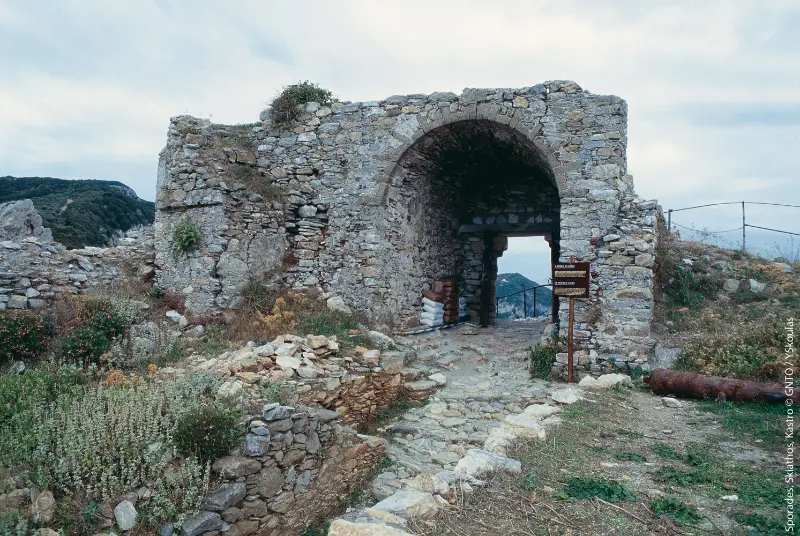
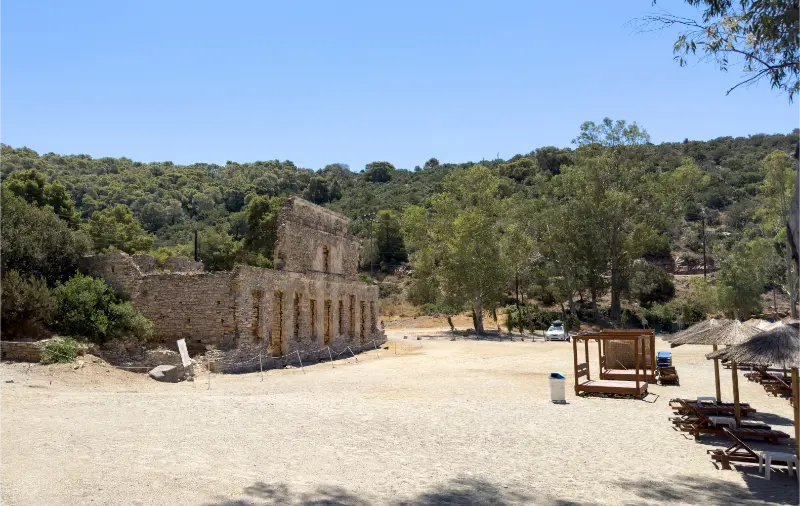
    One of the official highlighted routes leads toward the Castle of Oria in the north. The site preserves ruins of a medieval settlement destroyed in 1570 and the church of Panagia Kyraleoussa. The reward is the combination of history and wide island views rather than a restored castle interior.

    Approach ruins conservatively. Do not climb unstable masonry or step beyond barriers for a photograph. If the route is not recently marked, use an updated hiking map and offline navigation as a backup, not as a substitute for paying attention to the terrain.

    Dryopida to Lefkes

    Another municipal route passes through Dryopida and heads toward Lefkes beach. The description highlights the old wash houses built in 1852 along the way. This route is a good example of what Kythnos hiking does best: it connects ordinary cultural infrastructure with a beach rather than treating walking as a separate sport.

    A one-way beach hike creates a transport problem, so decide before you start whether you will walk back, arrange a pickup or continue to another road. Do not assume a taxi will be waiting at a quiet beach.

    Vryokastro and ancient Kythnos

    The route toward Vryokastro leads into the area of the ancient capital. The municipality describes sanctuaries and remains associated with Apollo, Artemis, Aphrodite and Demeter, while archaeological work has also explored the ancient harbour. This is an active archaeological landscape, not a conventional fenced attraction with a visitor centre at every turn.

    Walk with respect for excavation areas and never remove pottery fragments, stones or other material. The landscape makes more sense if you read about the site before setting out, because many ancient remains are subtle unless you know what you are looking at.

    Equipment and navigation

    Use closed footwear with grip, a hat, sunscreen, at least one refillable water bottle per person and a light pack. Trekking poles are optional but useful on loose descents. Download an offline map and carry a power bank if your phone is your main navigation tool.

    A route that is easy in April can feel completely different at 14:00 in August. Distance, elevation and exposure all matter. If you are unsure, choose a village-based walk first and save the most remote route for a cooler day.

    Building hiking into a beach holiday

    The best Kythnos schedule alternates effort and recovery. Hike early, eat in a village and swim at a beach reached by the route or a short transfer. This makes the day feel coherent and reduces driving.

    Do not schedule a major hike on the morning of a ferry departure. Weather, navigation and transport delays are all easier to handle when you have time. Keep the final day close to Merichas and use hiking days in the middle of the trip.

    How this fits into a first Kythnos trip

    A first visit should have three layers: one village day, one or two easy beach days and one day for the place that requires extra logistics, such as Kolona, a remote southern cove or a long hike. Chora and Dryopida provide the cultural backbone; Loutra adds the thermal-spring story; Merichas keeps ferry days simple. The mistake is trying to touch every coast in 48 hours because the island looks small on a map.

    Greece Kythnos Island Loutra Port White Buildings Rocky Hill View From Sea Cyclades

    If you have five nights, keep at least one half-day deliberately empty. Use it for weather changes, a beach you want to repeat, a delayed ferry or an unexpected local festival. That empty space is often what makes a small-island holiday feel relaxed rather than over-planned.

    Getting around: car, bus, taxi or boat?

    A car is the easiest way to explore Kythnos because beaches are scattered around a deeply indented coastline. It is not mandatory. The municipality lists local bus and taxi services, and seasonal boats can help with selected beaches. The important point is that public transport is not designed to reproduce the freedom of a rental car. Build a smaller, coherent itinerary instead of using taxis to chase every remote cove.

    If you rent a vehicle, ask specifically about unpaved-road exclusions. Some famous beaches are approached by tracks whose condition can change. A small island is exactly where a damaged tyre, blocked track or contract exclusion can consume half a holiday. For a no-car trip, use my Kythnos without a car guide to choose a base before booking accommodation.

    When to go and how weather changes the plan

    June and September are particularly attractive for travellers who want warm-weather island life without the most intense August pressure. July and August offer the strongest summer atmosphere but also the highest heat, demand and road traffic. May and October can be excellent for hiking and villages, although sea temperature and seasonal beach services are less predictable.

    The meltemi is not merely a weather footnote. Wind can change swimming comfort, boat excursions and the value of a west- or east-coast plan. Check conditions each morning and be willing to switch sides of the island. That simple habit improves Kythnos more than a rigid seven-day schedule.

    Costs and booking priorities

    Accommodation is the item I would book first for July and August, followed by ferry tickets if your dates are fixed. Car rental can also become scarce in peak periods because the island fleet is finite. Restaurants generally require less advance planning than famous Santorini or Mykonos venues, but a special dinner or festival night can still be worth reserving.

    Keep some budget for taxis or boat transfers even if you rent a car. A one-way taxi can turn a hike into a much better route, and a calm-weather boat trip can remove the stress of a difficult beach road. Spend for convenience where it buys time rather than automatically choosing the cheapest transport every day.

    Common mistakes to avoid

    • Choosing a remote beach because it looks close on the map without checking the final road or walking access.
    • Planning Kolona for the ferry-departure day and leaving no buffer for transport or wind.
    • Assuming every cove has umbrellas, drinking water and food.
    • Walking exposed roads or trails in the hottest part of an August day.
    • Booking accommodation without asking about steps, parking and luggage access.
    • Relying on an old bus timetable saved from a previous season.
    • Treating Chora and Dryopida as quick photo stops instead of part of the island experience.
    • Ignoring wind direction when choosing a beach.
    • Driving unsuitable rental cars onto rough tracks.
    • Trying to visit five beaches per day instead of spending meaningful time at one or two.

    Continue planning Kythnos

    Use this guide with the rest of the Kythnos cluster: Chora and Loutra Kythnos Guide: Cycladic Lanes, Thermal Springs, Food and Where to Stay; Dryopida and Katafyki Cave Kythnos Guide: Village, Museums, Pottery and Visiting Tips; Merichas and Episkopi Kythnos Guide: Port, Beaches, Ferries and Where to Stay; Kolona and Apokrousi Kythnos Guide: Sandbar, Access, Swimming and Sunset; Panagia Kanala Kythnos Guide: Church, Beaches, South-East Coast and Where to Stay; Best Beaches in Kythnos: 15 Beaches for Families, Snorkelling, Wind and Quiet Days; Kythnos Without a Car: Buses, Taxis, Boats and the Best Car-Free Bases; Kythnos with Kids: Family Beaches, Villages, Easy Days and Practical Tips; Where to Stay in Kythnos: Chora, Loutra, Merichas, Kanala or Beach Areas?. If this is your first article, start with the Kythnos Travel Guide and then open the detailed pages that match your base, transport and beach priorities.

    Useful official sources before you go

    For information that can change, recheck these official or municipal sources before travelling: Official hiking guide; Archaeological sites; Traditional settlements. Ferry schedules, buses, museum or cave opening arrangements, beach services and road conditions can change by season. I would verify any detail that affects a specific day rather than relying on a screenshot saved months earlier.

    Frequently asked questions

    Is Kythnos good for hiking?

    Yes, particularly for cultural and coastal walks linking villages, ruins, chapels and beaches rather than high-mountain trekking.
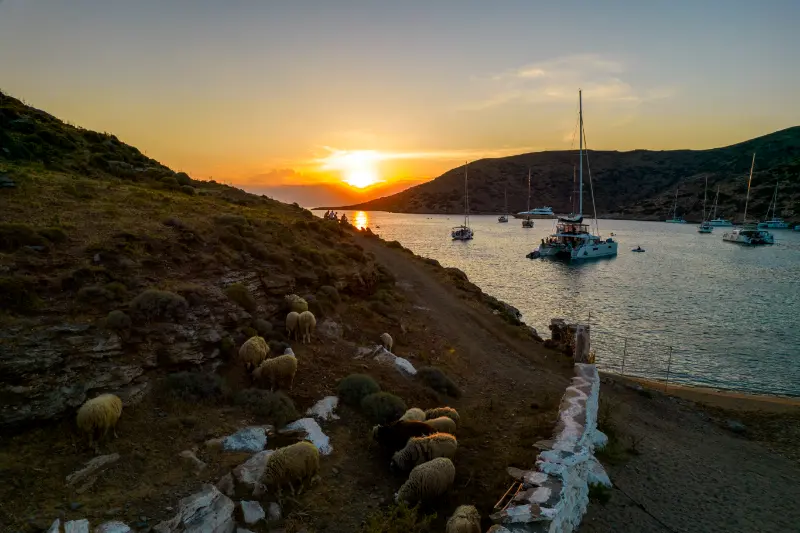
    Sunset Kythnos Greece

    What is the best season?

    Spring and autumn are the municipality’s recommended seasons. In summer, start very early or choose short walks.

    Are the trails marked?

    Some are marked, while others require an updated map or local route information. Do not depend on phone signal.

    Can I hike to archaeological sites?

    Routes reach areas such as Vryokastro, but visitors must respect excavation zones and any access restrictions.

    What should I carry?

    Water, sun protection, footwear with grip, offline navigation and a charged phone are the minimum for exposed routes.

    Final planning advice

    Kythnos is at its best when the plan stays flexible. Choose one good base, keep a car or transport strategy that matches your priorities, and let wind decide some of the beach choices. The island does not need a checklist mentality. A slow village evening, one memorable swim and a well-timed walk can be more satisfying than racing around every named cove.

    The final test is simple: if the itinerary leaves no time to sit in Chora, linger over lunch in Dryopida, repeat a favourite beach or change plans because the wind shifted, it is too full. Kythnos rewards the opposite approach—fewer transfers, longer stops and enough flexibility to enjoy the island you actually find when you arrive.
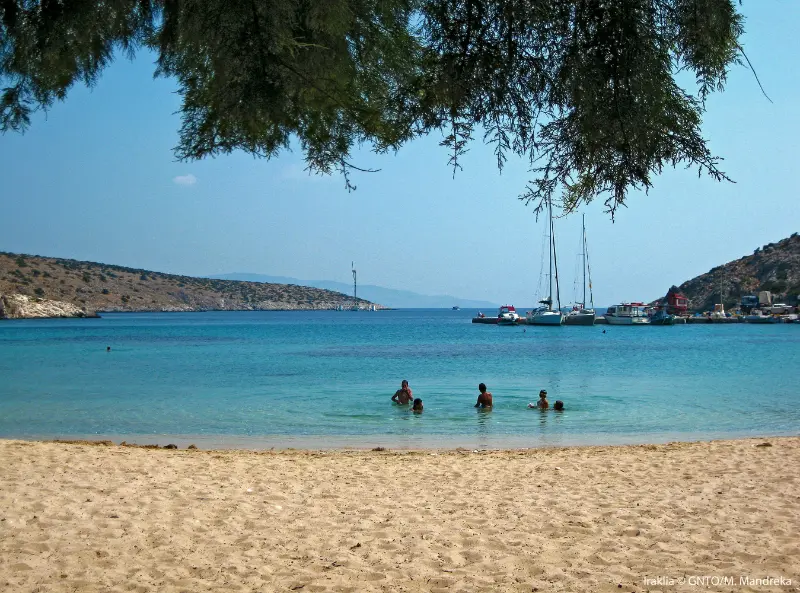
  • Small Cyclades Travel Guide: Donousa, Koufonisia, Schinoussa and Iraklia Compared

    Small Cyclades Travel Guide: Donousa, Koufonisia, Schinoussa and Iraklia Compared

    The Small Cyclades are the answer when you want the blue-and-white beauty of the Cyclades without building a trip around nightlife, large resorts or constant driving. Donousa, Koufonisia, Schinoussa and Iraklia sit around Naxos and Amorgos, but they are not interchangeable. Koufonisia is the easiest for travellers who want celebrated sandy beaches and a larger choice of restaurants. Donousa feels more remote and rewards walkers. Schinoussa is tiny, food-focused and easy to explore slowly. Iraklia is the most rugged of the four, with hiking, caves and a strong sense of open landscape.

    Quick planning table

    Best for first-timersKoufonisia
    Best for hikingDonousa / Iraklia
    Best for food-focused slow travelSchinoussa
    Best trip length3–5 nights per island
    Car essential?No

    The four islands at a glance

    Koufonisia is the most developed for tourism and the most immediately beach-oriented. Ano Koufonisi has Chora, the port, beach paths and frequent summer activity, while Kato Koufonisi is largely an excursion destination. Donousa is quieter and more spread out, with Stavros as the port village and walking routes toward Kedros, Mersini and Kalotaritissa. Schinoussa is compact, with Mersini port, Chora and Mesaria forming a simple triangle. Iraklia combines Agios Georgios, Panagia, beaches and the cave of Agios Ioannis in a landscape protected through Natura 2000.

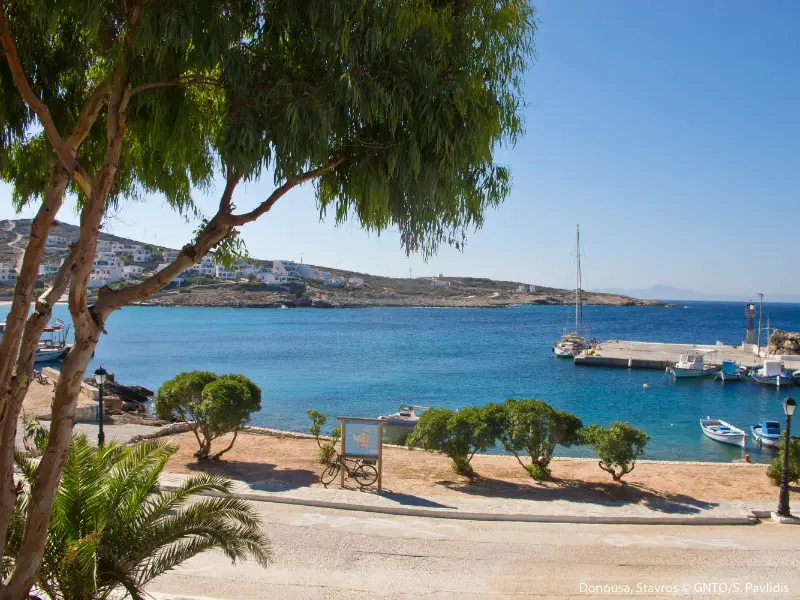
    Donousa Stavros

    If you have never visited the Small Cyclades, choose by travel style rather than by a single photograph. Beach-first travellers generally find Koufonisia easiest. Hikers who enjoy a low-key island often prefer Donousa or Iraklia. Travellers who want excellent food and a village-centred rhythm should look closely at Schinoussa. None of these islands needs a packed sightseeing list; the appeal is having enough time to walk, swim and change plans with the wind.

    How many days do you need?

    Two nights can work as a taste, but three nights is a much better minimum for any of the four. A four-night stay gives you weather flexibility and enough time to experience an island after day-trippers leave. Koufonisia can absorb four or five nights if beaches and slow evenings are the priority. Donousa benefits from at least three because some of its best walks and beaches sit away from Stavros. Schinoussa is physically tiny but is exactly the kind of place where an extra unscheduled day becomes the point. Iraklia needs time if you want both hiking and beach days.

    For a first multi-island trip, I would choose two islands over seven to ten nights rather than trying to tick off all four. Ferry connections are good by small-island standards, but every move costs part of a day and weather can reshape schedules. A strong pairing is Koufonisia plus Donousa for contrast, or Schinoussa plus Iraklia for very short sea crossings and a particularly slow pace.

    Which island has the best beaches?

    Koufonisia has the strongest concentration of famous sandy beaches within easy walking or cycling distance: Finikas, Fanos, Italida and Pori create a sequence that makes beach-hopping feel effortless. Donousa counters with Kedros, Livadi and Kalotaritissa, where the experience feels wilder and less continuous. Schinoussa has numerous small beaches around a compact coastline, including Tsigouri, Livadi, Psili Ammos and Almyros. Iraklia mixes Livadi, Agios Georgios and more isolated coves with a more rugged backdrop.

    Pori Beach Koufonisia Greece

    Wind matters more than rankings. A beach that looks perfect online can be uncomfortable on a strongly exposed day, while a less famous bay can suddenly become the best option. Ask locally which side is sheltered, especially if you are travelling with children or relying on walking. The dedicated beach guide in this cluster compares access, sand, shade, facilities and who each beach suits.

    Walking, cars and local transport

    One reason these islands feel different from larger Cyclades is that a car is not automatically the default. Schinoussa is only about 9 square kilometres and is designed around short walks. Ano Koufonisi is compact and relatively flat, making walking and cycling practical. Donousa and Iraklia are also excellent on foot, but their terrain, summer heat and longer distances mean you need to plan water and start times seriously.

    Local minibuses, seasonal beach boats or taxis may operate on some islands, but frequency changes by season. Do not design a car-free itinerary around an old timetable copied from a previous summer. Confirm locally after arrival and choose accommodation that still works if the last bus is earlier than expected. If mobility is limited, hills and unpaved approaches matter more than the island’s total size.

    Food and evening atmosphere

    These islands are not nightlife destinations in the conventional sense, but evenings are not dull. Chora in Ano Koufonisi has the broadest restaurant and bar choice. Schinoussa has a deserved food reputation, especially for local fava and simple Cycladic cooking. Donousa and Iraklia reward travellers who enjoy a small set of tavernas where the menu follows season, catch and family tradition rather than a huge tourist catalogue.

    Reserve selectively in peak August, but do not over-plan every dinner. Small islands can have unusual rhythms around ferry arrivals, local festivals and supply days. Ask about fresh fish prices before ordering by weight, try local cheese and pulses, and remember that a long dinner is one of the main evening activities rather than a gap between attractions.

    Best island for families, couples and solo travellers

    Families who prioritise sandy beaches and short distances often find Koufonisia easiest, though July and August can be busy. Schinoussa is excellent for families who are comfortable walking and want quiet evenings. Donousa suits active families with older children who enjoy hiking, while Iraklia works best when the family is happy with a very calm itinerary and a smaller range of services.

    Couples can choose any of the four based on pace. Solo travellers should think about transport and evening atmosphere: Koufonisia offers the easiest social environment, while Donousa and Iraklia can feel beautifully quiet but genuinely quiet. For solo hiking, tell your accommodation where you are going, carry enough water and avoid assuming mobile signal will be reliable in every cove.

    Best time to visit

    June and September are excellent for swimming, walking and lower crowd levels. July brings reliable summer energy but stronger demand. August has the fullest atmosphere, the highest prices and the greatest pressure on accommodation and ferries. May and October can be rewarding for walkers, but sea temperatures, restaurant openings and ferry frequency become more variable.

    Meltemi winds can affect comfort and ferry operations in summer. Build a buffer before an international flight and avoid scheduling your most important activity for the final few hours before departure. The Small Cyclades reward flexible travellers more than those trying to run a minute-by-minute itinerary.

    Practical planning: season, wind and daily rhythm

    For these islands, season changes the trip more than distance. June usually brings warm swimming weather and a calmer accommodation market, while July and August bring the fullest restaurant schedules, more visitors and stronger booking pressure. September is excellent for sea temperatures and a slower rhythm, but ferry frequency can begin to thin later in the month. Outside the core season, never assume every taverna, beach service or local transport option is operating simply because it appears on a summer map.

    The meltemi deserves respect. Strong northerly winds can change which beach is comfortable, delay ferries and make a simple boat excursion inappropriate. I prefer to decide each next day’s beach or sea activity the evening before using both a weather forecast and local advice. Keep hiking as an alternative on moderate days, but in high summer move strenuous walks to early morning and protect the middle of the day for shade, lunch or a short swim close to your base.

    Budget and booking strategy

    The Small Cyclades are not automatically cheap. Ferry tickets may be modest on local hops, but the small supply of rooms can push accommodation prices up in August. Restaurant prices also reflect island logistics and the cost of bringing supplies by sea. Save money by travelling in June or September, staying several nights rather than moving daily, and choosing a room with a fridge for breakfast and water. Spend on location: a well-placed room can remove repeated taxi or transfer costs.

    Compare current accommodation on Booking.com. Check the exact map position, recent comments about stairs or transfers, cancellation terms and whether the property is open for your dates before booking.

    How I would use this guide in a real itinerary

    For a first trip, I would use Small Cyclades travel guide as one part of a wider day rather than as a checklist to complete. Start with the activity or place that depends most on cool temperatures, calm water or opening hours, then leave the afternoon flexible. On these islands, a short distance can still take time because you stop for a swim, wait for a local boat or decide that lunch is worth extending. Building that margin into the plan is not wasted time; it is what keeps a small-island holiday from feeling like a city-break timetable.

    If you are combining islands, protect arrival and departure days. After a ferry, use the first hours to learn the village, buy water, photograph the current transport timetable and ask your host about wind-exposed beaches. Before departure, stay close to the port and avoid a remote hike or boat trip that leaves no recovery time. This simple structure gives you four or five genuinely useful full days from a week-long holiday instead of losing the best parts of the trip to unnecessary transfers and tight connections.

    Official and current information

    Use Visit Greece for destination background and the Municipality of Naxos and Small Cyclades maps and guides for local planning material. For ferry logistics, the municipality also publishes practical access guidance. For date-specific 2026 sailings, cross-check Ferryhopper and the published Small Cyclades Lines / Express Skopelitis timetable, then confirm your exact departure close to travel.

    Tours and activities

    Boat trips and organised activities are highly seasonal in the Small Cyclades. Always check the departure point, return time, cancellation policy, minimum passenger requirements and weather conditions before paying.

    Continue planning the Small Cyclades

    Donousa Travel Guide: Stavros, Kedros, Kalotaritissa, Hiking and Where to Stay | Koufonisia Travel Guide: Chora, Pori, Italida, Fanos and Kato Koufonisi | Schinoussa Travel Guide: Chora, Mersini, Beaches, Food and Where to Stay | Iraklia Travel Guide: Agios Georgios, Panagia, Agios Ioannis Cave and Beaches | Best Beaches in the Small Cyclades: Pori, Italida, Kedros, Livadi, Tsigouri and More | Small Cyclades Island Hopping Guide: Naxos, Donousa, Koufonisia, Schinoussa and Iraklia | Small Cyclades Without a Car: Walking, Local Transport, Boats and the Best Bases | Where to Stay in the Small Cyclades: Donousa, Koufonisia, Schinoussa or Iraklia? | How to Get to the Small Cyclades in 2026: Ferries from Piraeus, Naxos and Amorgos | Naxos Travel Guide | Amorgos Travel Guide | Greek Island Hopping Guide

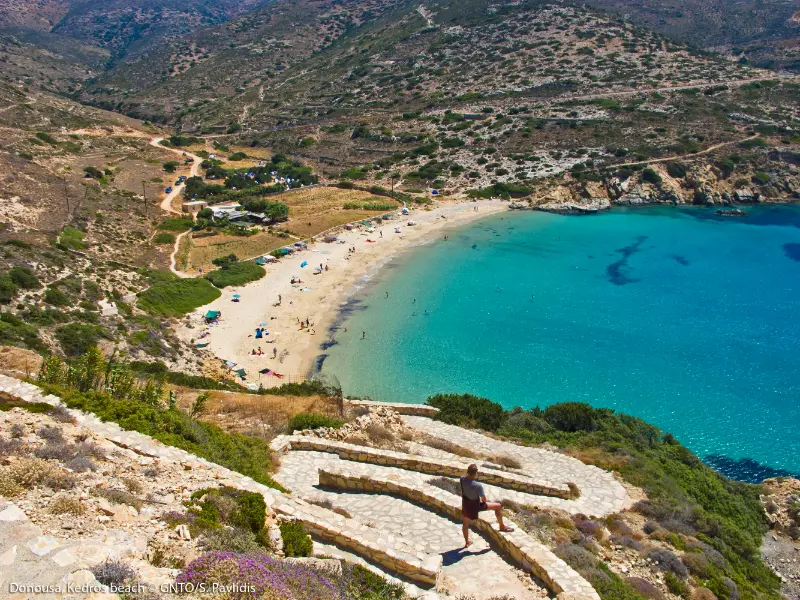
    Donousa Kedros Beach Greece

    FAQ

    Which Small Cyclades island is best for a first visit?

    Koufonisia is the easiest introduction for most first-time visitors because of its beaches, walkability and broader choice of accommodation and restaurants. Donousa, Schinoussa and Iraklia are stronger if your priority is quiet and a less developed feel.

    Can you visit all four Small Cyclades in one trip?

    Yes, especially with the local ferry network, but a rushed four-island trip misses the point. Allow at least 10–14 nights if you want all four to feel like stays rather than port calls.

    Do you need a car?

    Usually no. Walking is central to the experience, although local transport or taxis can be useful for luggage, heat and longer distances.

    Which island is quietest?

    Iraklia and Donousa generally feel the most remote, while Schinoussa is also very calm. Exact atmosphere changes by month and ferry arrival patterns.

    Final practical advice

    The Small Cyclades are easiest to enjoy when you leave margin. Do not schedule a long hike, remote beach, boat trip and ferry transfer on the same day. Keep one main goal, check wind and transport, and let meals and swims expand when they are going well. The islands are small enough that you will see a great deal without forcing the pace, and that is exactly why they make such a strong contrast to busier Cycladic destinations.

  • Syros with Kids: Family Beaches, Easy Days, Museums and Practical Tips

    Syros with Kids: Family Beaches, Easy Days, Museums and Practical Tips

    Syros can work extremely well for families because it combines a real town, short driving distances, organised beaches and enough cultural variety to break up consecutive beach days. The island is not built around giant resorts or amusement attractions; its strength is that ordinary family days can stay simple—swim, eat, rest, walk a square and have ice cream without spending hours in transit.

    The main challenge is choosing activities that fit children’s age and heat tolerance. Ano Syros has many steps, Asteria is not a shallow sandy beach, and remote northern coves require more logistics. On the other hand, Galissas, Agathopes, Vari and Megas Gialos offer easier beach conditions, while Ermoupoli provides museums, cafés, pharmacies and evening walks close together.

    This guide focuses on realistic family planning rather than trying to turn every adult attraction into a “kid activity.”

    At a glance

    Easy family beachesGalissas, Agathopes, Vari, Megas Gialos
    Best base for servicesErmoupoli
    Best beach baseGalissas
    Good cultural stopIndustrial Museum or short town walk
    Main challengeHeat, steps and late transport

    Choosing the right family base

    Ermoupoli is the most practical base if you value supermarkets, medical services, restaurants, buses and easy ferry logistics. It works especially well with older children who can enjoy a town walk and take buses to beaches. Families with toddlers who want to return to the room at lunchtime may prefer accommodation directly in Galissas or near another easy sandy beach.

    Look beyond the property’s star rating. Ask about stairs, cot availability, kitchen facilities, blackout shutters, road noise and the exact walking route to the beach. On a hilly island, 400 metres can be very different with a stroller.

    Best beaches with younger children

    Galissas is a strong first choice because of its sand, generally shallow entry and nearby services. Agathopes also offers easy family conditions, while Vari and Megas Gialos are useful southern alternatives. Kini works well too, especially if you want to stay for sunset and dinner.

    Conditions change with wind, so no beach is guaranteed calm every day. Ask locally which bay is sheltered that morning. Water shoes can help on pebbly sections, and a compact beach shade is valuable when natural shade is limited.

    Asteria with children

    Asteria below Vaporia is visually memorable but should not be confused with a toddler beach. Access uses steps and platforms, and deeper water can begin quickly. Confident older children may enjoy a swim in calm conditions with close supervision, but families seeking shallow sand are better served elsewhere.

    You can still visit Vaporia without swimming. Walk the lanes, see Agios Nikolaos and admire the mansions, then take the bus or taxi to a more suitable beach. This is a good example of adapting an adult highlight rather than forcing every family member into the same activity.

    Museums that can fit a family day

    The Industrial Museum can be more tangible for children than a long archaeological collection because machinery, industry and the city’s working history are easier to connect with ships and buildings visible outside. Keep the visit short and pair it with a snack or waterfront walk rather than demanding museum-level attention for two hours.

    The Archaeological Museum is compact and useful for older children interested in ancient history. Choose one museum rather than both on the same hot day. Current hours and closure days should be checked before leaving the hotel so you do not waste family energy on a locked door.

    Ano Syros with kids

    Ano Syros can be enjoyable with school-age children who like exploring lanes and viewpoints, but the many steps make strollers awkward. A taxi to a higher access point can reduce the climb, and turning the walk into a search for arches, churches and sea views works better than a long history lecture.

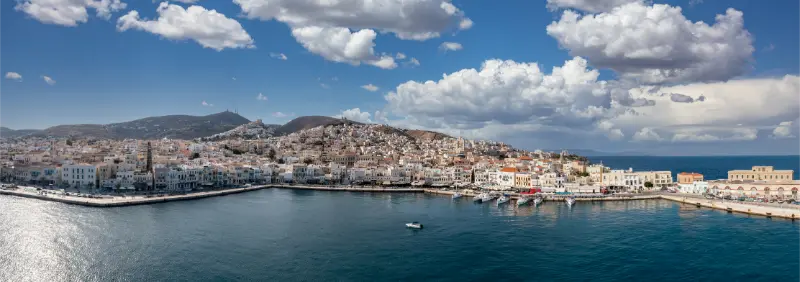
    Syros Island Hermoupolis Cityscape Panorama Aerial Drone View Greece Cyclades

    Go late in the afternoon, carry water and plan dinner afterward. Descending after dark requires care, so keep a light available and do not let tired children run ahead on polished stone steps.

    Food with children

    Syros is easy for family meals because Greek menus usually offer simple grilled foods, pasta, potatoes, bread, yogurt, fruit and shareable dishes alongside local specialties. Let children sample loukoumi or halvadopita as a small island-specific treat rather than relying on a separate children’s menu at every meal.

    Greek dinner times can run later than some families prefer. Eating earlier often means easier tables and calmer service, especially in popular waterfront locations. Keep snacks and water available between beach and dinner so hunger does not dictate the whole evening.

    A realistic three-day family pattern

    Day one can stay in Ermoupoli: settle in, explore Miaouli Square, have a short museum visit and walk Vaporia. Day two can be a full sandy-beach day at Galissas or Agathopes with a long midday break. Day three can combine a gentle morning swim with Ano Syros late in the afternoon and dinner.

    The important feature is the amount of empty space. Children rarely benefit from adding another village simply because it is nearby. A slow lunch, hotel rest or second swim often produces a better family memory than another transfer.

    How much time to allow

    Four to seven nights gives families enough time to alternate beaches, town days and rest without packing every morning. Syros is compact on a map, but steep streets, beach stops and meal times make a rushed schedule less enjoyable than it looks. Build the day around two or three meaningful anchors rather than a list of ten pins. That gives you room for a swim, a museum that takes longer than expected, or a bus connection that is less frequent outside the busiest summer weeks.

    If you are visiting on a day trip, identify the one experience that matters most and protect time for the return to the port. If you are staying several nights, group places by coast: Ermoupoli and Ano Syros together, Galissas with the south-west, and Kini with the west. This simple geographic approach cuts backtracking and gives every stop a more relaxed rhythm.

    Getting around and transport reality

    Buses can work well with older children, while families with toddlers may appreciate a rental car or occasional taxis for naps, luggage and flexible returns. The public bus network is useful for the main settlements and beaches, but timetables are seasonal. Check the official KTEL Syros schedule shortly before travelling rather than planning from an old screenshot. Taxis are valuable for early ferries, late dinners and combinations that do not line up neatly with buses.

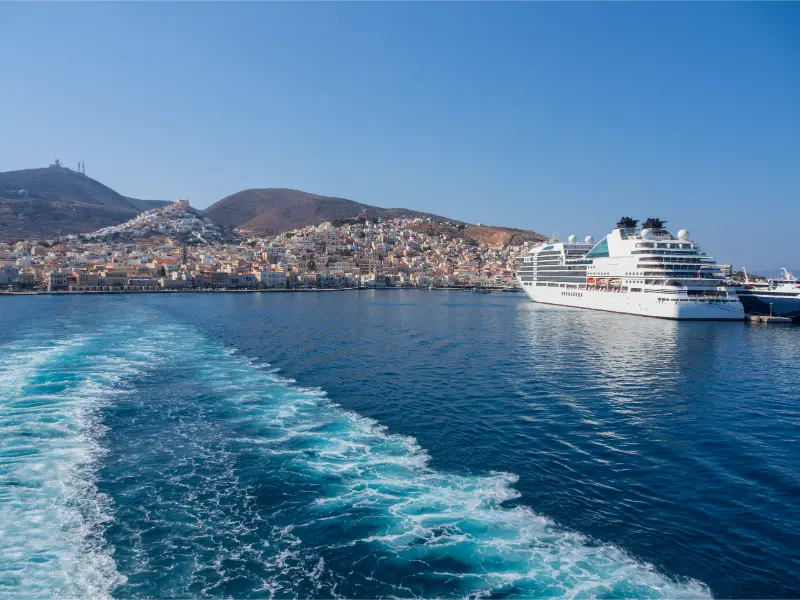
    Panoramic View Ermoupolis City Syros Island With Ferries Cruise Liners Greece

    A rental car gives more flexibility for remote coves and village combinations, but it is not automatically the best choice in Ermoupoli. Central streets can be steep, narrow and busy, and parking may be some distance from your accommodation. Travellers who stay centrally can often combine walking, buses and an occasional taxi and avoid driving every day.

    Best time of day

    Protect midday rest in hot weather and place uphill walks or sightseeing in the morning or late afternoon. In July and August, the middle of the day can feel much hotter on stone streets and exposed beaches than the air temperature suggests. Use morning for uphill walking, museums or uncrowded swimming, keep lunch unhurried, and save sunset-facing beaches or waterfront walks for later.

    Wind matters as much as temperature in the Cyclades. A beach that looks perfect in a photograph may feel very different on a strong northerly day. Keep at least one flexible beach afternoon and ask locally which coast is calmer that day; this is more useful than locking every swim into the itinerary weeks in advance.

    What to bring

    Pack sun hats, refillable bottles, high-protection sunscreen, basic medicines, water shoes and a lightweight layer for windy evenings. Add a refillable bottle, strong sun protection, a light layer for evening wind and offline maps. Shoes with grip are much more useful than smooth sandals in Ano Syros, on polished marble steps and on rough paths to quieter coves.

    For beaches, pack a small dry bag or waterproof pouch for phones and ferry tickets. For churches and cultural sites, carry something that lets you dress respectfully without returning to your room. Families should add water shoes when children dislike pebbles and a compact shade solution for beaches with limited natural cover.

    Costs and reservations

    Family costs are controllable because beaches and town walks are inexpensive; budget mainly for accommodation, meals, transport and any sunbed rentals you choose. Accommodation prices rise sharply around popular summer weekends, so lodging and ferry tickets deserve priority. Ordinary beach days and village walks do not need to be over-planned, and leaving some free time makes it easier to react to wind, heat and local events.

    For paid museums and attractions, confirm opening hours on the official site on the day before your visit. Small Cycladic museums sometimes close one weekday or change seasonal hours. For restaurants with a specific sunset table in mind, reserving ahead is sensible in July and August; otherwise, eating a little earlier or later usually provides more flexibility.

    How this fits into a wider Syros trip

    Start with the Syros Travel Guide for the island overview, then use Where to Stay in Syros, Ermoupoli Guide, Ano Syros Guide, Vaporia & Asteria, Galissas & Kini for the parts of the trip that need more detail. Linking the guides by geography and travel style makes it easier to plan realistic days instead of zig-zagging across the island.

    Tours and activities

    If you want a guided experience, boat trip or organised activity, compare what is available for your exact dates. Check the meeting point, cancellation terms, language, duration and what is included before booking; on an island, wind can also affect marine activities.

    Common mistakes to avoid

    • Choosing a hill accommodation without checking stroller access.
    • Treating Asteria like a shallow toddler beach.
    • Scheduling museums and Ano Syros during peak afternoon heat.
    • Trying to keep an adult sightseeing pace with young children.
    • Assuming every beach provides natural shade.

    Frequently asked questions

    Is Syros good for families?

    Yes. Short distances, sandy beaches, Ermoupoli services and varied activities make it a practical family island.

    What is the easiest beach with young children?

    Galissas is one of the simplest all-round choices, with Agathopes, Vari and Megas Gialos also worth considering.

    Do families need a car?

    Not always. Ermoupoli plus buses can work well, but a car or taxis add flexibility with toddlers and lots of beach gear.

    Is Ano Syros stroller-friendly?

    Much of the historic core has steps, so a stroller is difficult; a carrier is usually more practical for small children.

    Are there things to do besides beaches?

    Yes. Ermoupoli architecture, the Industrial Museum, squares, food tasting and a short Ano Syros visit add variety.

    Final practical advice

    Family travel on Syros is easiest when you resist over-programming. Choose a base that matches your children’s age, use shallow organised beaches on windy or tired days, add one compact cultural experience at a time and protect the midday break. The island’s small scale is an advantage only if you allow it to keep the holiday simple.

  • Best Beaches in Kefalonia: 15 Beaches for Scenery, Families, Snorkelling and Quiet Days

    Best Beaches in Kefalonia: 15 Beaches for Scenery, Families, Snorkelling and Quiet Days

    The best beach in Kefalonia depends on what you want from the day. Myrtos wins the postcard contest for many visitors, Antisamos combines clear water with green hills, Xi looks different from almost anywhere else on the island, and Fteri rewards travellers willing to use a boat or hiking trail. Families may care more about easy facilities and short transfers than dramatic cliffs.

    Fteri Beach Kefalonia Island Greece One Untouched Pebble Beach With Pure Azure Emerald Sea Water Surrounded By High White Rocky Cliffs

    The most useful way to compare Kefalonian beaches is by access, exposure, surface and facilities rather than fame. The island is large, and a beach that is perfect from one base can be an exhausting day trip from another. This guide groups the main choices so you can build beach days around where you are already staying. For individual detail, use my Myrtos Beach guide, Fteri Beach guide and Sami and Antisamos guide.

    Best Beaches in Kefalonia at a glance

    BeachBest for
    MyrtosIconic scenery and a dramatic west-coast stop
    AntisamosClear water, snorkelling and organised facilities
    Makris GialosConvenience near Lassi and Argostoli
    XiDistinctive reddish sand and Paliki road trips
    PetaniWest-coast scenery and sunset atmosphere
    FteriRemote scenery and boat/hike access
    SkalaLong resort beach and easy holiday days

    Myrtos: the iconic choice

    Myrtos is the landscape many travellers associate with Kefalonia: a bright crescent below steep mountains and a sea that changes colour with the light. Stop at safe viewpoints on the approach, then decide whether conditions make swimming sensible. The beach can feel very different when wind reaches the west coast.

    Do not measure the day only by how long you stay in the water. The drive, viewpoints and scale of the bay are part of the experience. Read the Myrtos Beach guide before going.

    Antisamos: green hills and clear water

    Antisamos is excellent for snorkelling and a full organised beach day. The white pebbles and green slopes create a strong colour contrast, while facilities reduce the amount of gear you need to carry.

    The sea becomes deep relatively quickly, so it is not automatically the easiest choice for toddlers or hesitant swimmers. Pair it with Sami and the caves rather than crossing the island for only one swim.

    Makris Gialos and Platis Gialos

    These Lassi beaches win on logistics. They are close to Argostoli and the airport side of the island, so they work particularly well on arrival/departure days or when you do not want a long drive. Organised sections also make them simple for families.

    Beaches Of Platis Gialos And Makris Gialos Vicino Lassi Argostoli Kefalonia

    Their convenience means more people in peak season. Go earlier, or use the fact that you are staying nearby to return later in the afternoon when day-trippers begin to leave.

    Xi and Petani: two very different Paliki beaches

    Xi is memorable for its reddish sand and pale cliffs. Petani is a dramatic west-coast bay reached by a descending mountain road. They should not be treated as interchangeable: Xi is about unusual geology and a developed beach day, while Petani delivers broader landscape drama.

    Both fit naturally into a Lixouri/Paliki itinerary. The Lixouri and Paliki guide explains how to connect them without overloading the day.

    Fteri: the remote-beach option

    Fteri is for travellers who want less infrastructure and are prepared to plan access. Go by seasonal boat/water taxi from the Zola area or hike if you are properly equipped. There are no reliable facilities, so self-sufficiency matters.

    The Fteri Beach guide covers the boat, hiking and safety details. I would give Fteri most of a day rather than using it as a rushed tick on a beach checklist.

    Skala, Lourdas, Avithos and other easier days

    Skala is useful when you want a long beach with resort services. Lourdas combines a developed south-coast setting with the mountain rising behind it. Avithos and beaches around the airport side can work well when your accommodation is in the south-west.

    These may not dominate social media, but they can produce better holiday days because you spend less time driving. A beach 15 minutes from the hotel often beats a famous bay 90 minutes away when the sea is equally inviting.

    Five more beaches worth putting on the map

    Emblisi near Fiskardo is a compact northern cove with clear water and a rocky-pebbly shore, useful when you are already exploring the far north. Agia Kyriaki near Zola is a much easier road-access alternative to Fteri and a logical stop before or after arranging a water taxi. Trapezaki and Kaminia on the south coast are useful for slower beach days, while Koroni rewards travellers who are already driving the south-west rather than making a special cross-island journey.

    Those five complete the list of fifteen: Myrtos, Antisamos, Makris Gialos, Platis Gialos, Xi, Petani, Fteri, Skala, Lourdas, Avithos, Emblisi, Agia Kyriaki, Trapezaki, Kaminia and Koroni. I would still choose only one or two for any single day. The purpose of a longer list is to give you alternatives near your base and in different wind conditions, not to turn the holiday into a race.

    Platis Gialos And Makris Gialos Beach Kefalonia Island Greece

    When to go and how the season changes the experience

    For best beaches in Kefalonia, June and September are usually the easiest months to balance warm swimming conditions with less pressure on roads, parking and restaurants. July and August bring the widest range of seasonal services, boat trips and nightlife, but they also bring the strongest heat and the most competition for parking. May and October can be rewarding for walking and quieter travel, yet weather and seasonal opening hours become less predictable.

    Do not plan the entire trip from average temperature charts. Wind direction, recent weather and sea state can change the best beach for a particular day. Keep one or two flexible days and move the most weather-sensitive boat or west-coast plan when conditions look best.

    Driving, roads and parking

    Kefalonia rewards a car, but the driving is slower than the map suggests. Mountain roads, village streets, bends and summer traffic all add time. Build margin into every estimate, especially when you have a ferry, boat departure or restaurant reservation. Avoid stopping on blind corners for photographs and use formal viewpoints or safe pull-outs instead.

    Parking is usually the hidden problem at famous places. Arriving before the middle of the day can make Myrtos, Assos, Fiskardo and other popular stops much easier. If you dislike driving on steep roads, choose a base that reduces the number of cross-island days rather than forcing yourself through a seven-day road-trip schedule.

    Buses and car-free planning

    KTEL Kefalonias publishes seasonal local routes linking Argostoli with the airport, Lassi, Sami, Fiskardo, Myrtos and other destinations. Frequencies change through the season, sometimes substantially. Use buses for the routes they serve well and accept that a taxi, boat excursion or one-day car rental may be the sensible tool for places outside the main network.

    Before travelling, check the official KTEL Kefalonia local timetable. Do not rely on a blog timetable copied months earlier. For a full strategy, see my Kefalonia without a car guide.

    Food, water and the rhythm of the day

    A good Kefalonia day has space for lunch. Long coastal drives and beach parking feel much easier when you are not trying to fit six attractions around them. Keep water in the car, especially for remote beaches and hiking, and do not assume every scenic cove has a taverna or kiosk.

    Robola wine is one of the island’s best-known local products, while meat pies, seafood and simple grilled dishes appear widely. If wine tasting is part of the day, designate the driver or use a transfer; winding island roads are not the place to combine driving with alcohol.

    How to connect this guide with the rest of Kefalonia

    Start with the Kefalonia travel guide if this is your first visit. The Myrtos Beach guide, Assos guide, Fiskardo guide, Melissani and Drogarati Caves guide and Mount Ainos guide cover the island’s major landscape and sightseeing anchors in more depth. Use those pages to build clusters of nearby stops instead of crossing the island several times in one day.

    If you have seven nights, one base can work for a relaxed holiday but two bases usually reduce driving for travellers who want to see both the north and south. The point of a split stay is not to collect hotels; it is to move once so that several later days become easier.

    Booking experiences and boat trips

    Kefalonia has boat trips, sea kayaking, sailing, cave visits and day excursions, but availability is seasonal and weather-dependent. Compare duration, transport included, boat size, shade and cancellation terms before booking. A shorter high-quality trip can be better than an all-day itinerary with too many stops.

    Common planning mistakes to avoid

    • Trying to combine Myrtos, Assos, Fiskardo, Melissani, Drogarati and a sunset stop in one day.
    • Choosing accommodation only by nightly price without checking how much driving it creates.
    • Assuming every famous beach has sand, shallow water, shade and full facilities.
    • Saving a seasonal bus timetable and assuming it will still apply on different dates.
    • Booking a weather-sensitive boat excursion on the only free day of the trip.
    • Underestimating the sun on remote pebble beaches where natural shade may be limited.

    Frequently asked questions

    Which beach is most beautiful in Kefalonia?

    Myrtos is the iconic landscape, but Fteri, Petani and Antisamos can be equally memorable for different reasons.

    What is the best beach for families?

    There is no single answer. Look for short transfers, facilities and sea conditions on the day; Lassi and Skala are convenient starting points.

    Where is the best snorkelling?

    Antisamos is a popular choice because of its clear water and rocky/pebbly environment. Conditions vary.

    Which beaches have sand?

    Xi is known for distinctive coloured sand; other Kefalonian beaches mix sand, shingle and pebbles.

    Which beach is hardest to reach?

    Fteri is one of the best-known remote options because it is reached by boat/water taxi or hiking rather than a road to the shore.

    Can I visit five beaches in one day?

    You can, but I would not recommend it. Kefalonia rewards two well-chosen beaches more than a rushed island-wide checklist.

    More Kefalonia in-depth guides

    Continue planning the island with Lassi and Makris Gialos Kefalonia Guide; Sami and Antisamos Kefalonia Guide; Skala Kefalonia Guide; Lixouri and Paliki Kefalonia Guide; Agia Efimia Kefalonia Guide; Fteri Beach Kefalonia Guide; Kefalonia Without a Car; Kefalonia with Kids; Where to Stay in Kefalonia.

  • Kos Without a Car: Buses, Cycling, Taxis and the Best Bases

    Kos Without a Car: Buses, Cycling, Taxis and the Best Bases

    Kos is one of the easier Greek islands to enjoy without renting a car. The capital is walkable, cycling is genuinely useful, intercity buses reach the main resorts and villages, and boat excursions cover some days that would otherwise require driving. The mistake is assuming that “possible without a car” means every beach and village is equally easy to reach.

    A successful car-free Kos holiday starts with the right base. Kos Town provides the widest transport choice; Tigaki works for a family beach stay with bus access; Kardamena and Kefalos can work if most of your holiday is centred on their own coast. Remote western beaches and spontaneous multi-stop circuits are the places where a car makes the biggest difference.

    Beach Of Tigaki Or Tigkaki On Coast Northern Of Island Of Kos Greece

    What the KTEL network covers

    The official KTEL Kos routes page currently lists Kefalos, Kardamena, Marmari, Zia, Antimachia, Tigaki, Pyli and Mastichari among the general island services. KTEL announced timetable changes effective from 29 June 2026, a useful reminder that frequencies are seasonal and can change during the same travel year.

    Do not copy one departure time into a permanent itinerary. Open the official timetable the evening before an important day, verify the return as well as the outbound bus, and leave margin for a connection to the airport or ferry.

    Kos Town: the strongest no-car base

    Kos Town combines buses, taxis, bicycle rentals, boat trips, restaurants and archaeology within a compact area. You can spend a full day walking the centre, cycle to Lambi or the eastern waterfront, take a bus to the Asklepieion or resorts, and join excursions without first paying for a transfer from a remote hotel.

    The trade-off is that the best southwest beaches take longer to reach. If those beaches are your main priority, consider a split stay or one rental-car day rather than spending several hours on buses each day.

    Tigaki and Marmari without a car

    Both north-coast resorts can work because buses connect them with the capital and cycling is realistic on flatter terrain. Tigaki is the easier choice if you want restaurants and beach within a compact routine. Marmari can be more spread out, so verify the exact hotel location.

    A bicycle can cover local beach and nature trips, but do not treat it as guaranteed transport home after a very hot or windy day. Keep taxi numbers and bus information available as a backup.

    Kardamena and Kefalos without a car

    Kardamena is self-contained enough for a beach-and-boat holiday. Kefalos is also on the bus network, but the southwest’s many beaches are more dispersed. Staying in Kamari near the coast is easier than choosing an isolated property if you will not drive.

    View Beach Bay Kefalos Kos Greece

    If your dream list includes Cavo Paradiso, several western coves and a sunset village on the same day, rent a car for that specific excursion. Car-free travel is about using each mode where it works, not proving you can avoid a steering wheel at all costs.

    Cycling as everyday transport

    Around Kos Town and toward the north coast, a bicycle can replace short taxi journeys. The official tourism site publishes dedicated cycling routes and highlights the island’s established cycle culture. This is one of Kos’s biggest advantages over steeper islands.

    Choose early-morning riding in midsummer and use lights after dark. Not every road is separated from traffic, so ask the rental shop for the safest route rather than automatically following the fastest route shown by navigation software.

    Taxis: where they add the most value

    Taxis are useful for airport transfers, late dinners, Therma when a bus does not fit, and connecting two places that would require awkward bus changes. For three or four travellers, a taxi can also narrow the cost difference compared with individual tickets plus waiting time.

    At peak arrival times, prearrange an important transfer. Keep the hotel address and phone number offline in case mobile data fails.

    Boat excursions can replace a driving day

    A boat day from Kos Town or Kardamena gives access to scenery and nearby islands without road transport. Compare excursions by actual route and time ashore. Public ferries are different from sightseeing cruises: use ferries for point-to-point travel and excursions when the boat day itself is part of the experience.

    A five-day no-car outline

    DayPlan
    1Kos Town on foot + waterfront cycle ride
    2Bus/taxi to Asklepieion + town museums/archaeology
    3Bus to Tigaki or Marmari for a beach day
    4Boat excursion from Kos Town or Kardamena
    5Bus to Zia/Kefalos depending timetable, or Therma by local transport

    Build the order around the current timetable and weather rather than locking each day months ahead. Wind may make a boat trip better on Tuesday than Wednesday, and buses can operate different frequencies by weekday.

    How Kos without a car fits into a wider Kos trip

    Use this guide together with the main Kos travel guide, Kos Town guide and Asklepieion guide. The newer in-depth pages on Tigaki and Marmari, Kefalos and Kamari, Kardamena, Zia and Mount Dikeos, Therma, cycling, the best beaches, Kos without a car, Kos with kids and where to stay in Kos make it easier to build a trip around one area instead of crossing the island repeatedly.

    Dodecanese Kos Empros Therma

    A no-car trip works best when you accept a smaller geographic radius and use buses, bikes, taxis and boats strategically. The most useful rule is to group places geographically. Kos is compact compared with many Greek islands, but a holiday still feels much better when a beach, village and archaeological stop naturally belong to the same side of the island.

    Getting around and checking transport

    The 2026 KTEL network serves the main resort and village names, but schedules change seasonally. Treat the official timetable as the authority and build connections with generous margin.

    For maximum flexibility choose Kos Town; choose a resort only if most of your desired days can happen within or directly from that resort. Public transport is useful, but seasonal frequency matters. The official KTEL Kos general routes page currently lists services for Kefalos, Kardamena, Marmari, Zia, Antimachia, Tigaki, Pyli and Mastichari. KTEL also announced timetable changes taking effect from 29 June 2026, so always open the live timetable again shortly before the day you travel rather than saving an old screenshot.

    Booking excursions and activities

    Boat trips, island excursions and guided experiences are highly seasonal on Kos. Before booking, compare the actual time spent at each stop, whether transfers are included, the size of the boat or group, shade, swimming opportunities and cancellation conditions. Do not choose an excursion simply because it has the longest list of stops.

    Mistakes that make the day harder

    • Choosing a remote hotel because the room is cheap and then spending the savings on taxis.
    • Checking only the outbound bus and not the final return.
    • Assuming every beach has a nearby stop.
    • Depending on a bicycle for a long ride regardless of heat or wind.
    • Booking a flight or ferry connection with no delay buffer.

    Frequently asked questions

    Can you visit Kos without renting a car?

    Yes. Kos Town, major resorts and several villages are connected by buses, while bikes, taxis and excursions fill many gaps.

    What is the best base without a car?

    Kos Town is the strongest all-round base because it combines transport, boat departures, restaurants and sights.

    Can you reach Kefalos by bus?

    Yes, KTEL lists Kefalos in its general island routes. Check the live seasonal timetable for your travel date.

    Is cycling enough for the whole island?

    No. It is excellent around Kos Town and selected flatter routes, but distant western beaches and mountain trips are easier by bus, taxi or car.

    Should you rent a car for one day?

    Often yes. A single well-planned car day can cover remote beaches and inland stops that are inefficient by public transport, while the rest of the trip remains car-free.

    Final planning advice

    Kos is at its best when you leave some space between the headline attractions. The island is easy enough to explore that there is little benefit in forcing four distant stops into one day. Pick one anchor experience, add one or two nearby places, and keep time for a swim, a long lunch or an evening walk. That slower structure usually produces a better holiday and makes delays, wind or summer heat much easier to handle.

    How to plan around wind and summer heat

    Wind and heat should be treated as planning variables, not annoyances that have ruined the schedule. Kos has enough coastline and enough non-beach alternatives that you can move a swimming day, shorten an exposed walk or swap a western drive for a museum and town afternoon. Check conditions each morning, especially before a boat trip, long cycle ride or remote-beach drive.

    In July and August, schedule archaeological sites, village walks and cycling early. Keep the middle of the day for swimming, shade or a long lunch, then use late afternoon for another short outing. This is more comfortable and usually produces better photographs than forcing outdoor sightseeing under the harshest sun.

    How much should you plan in advance?

    Reserve the things with real capacity constraints—specific hotels, popular boat excursions and important airport transfers—then leave ordinary beach days flexible. A rigid seven-day schedule is vulnerable to one windy day; a flexible plan can move the boat trip and still protect the experiences that matter most.

    Keep addresses, bus information and booking confirmations available offline. Mobile coverage is generally good in populated areas, but a dead battery or weak signal is a poor reason to miss the last bus. For driving days, download an offline map and verify that navigation is not sending a standard rental car onto an unnecessary rough track.

  • Mykonos with Kids: Best Beaches, Easy Days, Transport and Family Tips

    Mykonos with Kids: Best Beaches, Easy Days, Transport and Family Tips

    Mykonos can work surprisingly well with children if you build the trip around the right beaches, short transfers and early-evening routines instead of trying to reproduce the island’s adult nightlife itinerary with a child in tow. The biggest family challenges are heat, wind, narrow roads, expensive last-minute transport and beach venues that are designed for parties rather than play.

    Best areas for families

    Ornos is one of the easiest all-round family bases because the bay is organised and the bus connection from Fabrika is frequent in season. Agios Ioannis is quieter and good for sunset. Platis Gialos is another practical option because beach, accommodation, restaurants and transport are concentrated in one area. Compare these with the Ornos and Agios Ioannis guide.

    Family beaches

    OrnosSheltered feel, services, frequent bus
    Agios IoannisQuieter, sunset, smaller resort atmosphere
    Platis GialosOrganised, easy beach day, useful transport links
    EliaLarge organised beach; choose conditions and section carefully
    Agios StefanosConvenient for families staying near Tourlos/New Port

    Beaches I would not prioritise with young children

    Paradise and Super Paradise can be fine for a morning swim, but their later party atmosphere makes them less useful as an all-day family plan. Agios Sostis is beautiful but unorganised and wind-exposed, so it demands more preparation. The issue is not that children are “not allowed”; it is whether the beach makes the day easy for your family.

    Mykonos Town with children

    Visit Chora early in the morning or late in the afternoon. Midday heat, crowds and uneven lanes can wear children out quickly. Little Venice and the windmills are visually rewarding without requiring a long museum visit. Keep the route short, stop for ice cream or a shaded meal and do not try to push a stroller through every photogenic lane.

    Panoramic View Little Venice With Walking Tourists Mykonos Greece

    Delos with children

    Delos can be fascinating for older children who enjoy myths and ruins, but it is exposed, hot and involves substantial walking. Use the Delos guide to decide whether the timing and walking suit your child. Bring water, hats and sun protection, and avoid turning the visit into a lecture at every stone.

    Transport with kids

    The SeaBus notes that pushchairs and luggage can be carried, which makes the New Port transfer easier for families. Public buses can also work well when staying near Ornos, Platis Gialos or Chora, but peak departures can be crowded. Check the official bus timetable and avoid leaving every return journey to the final service of the night.

    A realistic family day

    • Breakfast and a short walk before the heat builds.
    • Beach from late morning to early afternoon, with a proper shade setup.
    • Long lunch and rest during the strongest sun.
    • Second swim or hotel pool in late afternoon.
    • Early dinner and sunset walk, keeping adult nightlife for a babysitting arrangement if available.

    Food with children

    Greek tavernas are generally easy places to share simple dishes, grilled meat or fish, vegetables, bread and yoghurt-based foods. The challenge on Mykonos is more about timing and price than finding child-friendly flavours. Eating before the main late-night rush often gives families a calmer table and faster service.

    Accessibility and comfort

    Accessibility changes dramatically from one part of Mykonos to another. Waterfront promenades and some modern beach facilities may be relatively straightforward, while Chora lanes, monastery steps, rocky coves and lighthouse ground can be difficult for wheelchairs, pushchairs or anyone with limited mobility. Ask hotels and attractions for the exact route, surface and number of steps rather than relying on the phrase “close to the centre”.

    The SeaBus specifically notes easy wheelchair access on its main connection, but onward routes and old-town streets still require individual assessment. Heat is another accessibility issue: even a short exposed walk can be demanding in mid-summer. Morning visits, shaded breaks and realistic taxi or bus transfers can make a major difference.

    Wind, swimming conditions and the meltemi

    Mykonos is known as the Island of the Winds for good reason. During summer, the meltemi often blows from the north and can transform the character of a beach. South-facing bays are usually the safer default for a calm swimming day, while north-coast beaches can be magnificent when the wind is light and uncomfortable when it is strong. Do not decide purely from photographs or a general island forecast: look at the water, ask locally and keep a second beach in mind.

    Wind matters even when you are not swimming. It increases dehydration, can make an exposed viewpoint feel much cooler than town and can turn an umbrella into a hazard. For families, older travellers and anyone who wants a relaxed sea day, flexibility is more useful than a rigid itinerary. One of the easiest ways to enjoy Mykonos is to treat the wind as a planning variable instead of trying to force the same beach plan in every condition.

    Getting around Mykonos in practice

    Mykonos looks small on a map, but summer traffic, limited parking and the shape of the road network can make short distances take longer than expected. Public buses are genuinely useful when your route matches the network. The operator currently publishes seasonal services from Fabrika and the Old Port/New Peripheral toward Ornos, Agios Ioannis, Platis Gialos, Paradise, Super Paradise, Ano Mera, Elia, Kalafatis, Panormos, the airport and the ports. Check the official Mykonos Bus timetable shortly before every journey because schedules change during the season rather than staying fixed for the whole year.

    Tipica Casa And Decorata In Village Of Ano Mera Mykonos Greece

    For ferry arrivals at Tourlos, the Mykonos SeaBus is often simpler than joining road traffic: its published service connects the New Port with the Old Port/Mykonos Town area and is designed to carry luggage and pushchairs. If you rent a car, treat it as a tool for selected days—Ano Mera, remote beaches, lighthouse viewpoints—rather than assuming you need it every day. Staying near a bus corridor can save money and reduce the stress of parking close to Chora.

    Budget and booking strategy

    Mykonos can be expensive, but the biggest costs are usually accommodation, private transport, premium beach seating and nightlife—not the act of walking through Chora, visiting a monastery or laying a towel on public beach space. Decide which experiences matter enough to pay for and keep the rest simple. A hotel on a useful bus route can be better value than a cheaper room that forces several taxis every day.

    During the busiest weeks, reserve accommodation, high-demand restaurants and any tour with limited capacity in advance. For ordinary beach time, keep some flexibility so you can change coast when the wind changes. Prices, minimum spends and sunbed policies at commercial venues change quickly, so verify them directly rather than building a budget around an old screenshot or social-media post.

    How to plan the day without rushing

    A common mistake on Mykonos is to schedule too many famous places in a single day. The island is compact, but parking, buses, lunch reservations, beach access and slow pedestrian streets add hidden time. A better formula is one major objective in the morning, one nearby beach or village in the afternoon and one evening area. That leaves space for a swim, a long meal and the delays that are normal in peak season.

    In July and August, start cultural visits and scenic drives earlier than you think. Use the hottest hours for lunch, shade or the beach rather than exposed walking. In June and September the same itinerary feels much easier, and May or October can be excellent for sightseeing if you accept that some seasonal beach businesses and late services operate at reduced levels.

    Responsible travel and local etiquette

    Mykonos is both an international resort and a lived-in Cycladic island. Dress respectfully in churches and monasteries, keep voices low around worshippers, avoid blocking narrow lanes for photographs and never enter private courtyards because they look photogenic. On unorganised beaches, take rubbish away with you and avoid driving or parking on dunes, vegetation and informal coastal paths.

    At archaeological sites and museums, follow barriers and photography rules. Around crowded viewpoints, do not step onto unstable walls or road edges for a better angle. These small choices matter on an island that receives very heavy visitor pressure in summer, and they usually make the experience calmer for you as well as for residents.

    Tours and activities

    For family tours, prioritise duration, shade, toilet access and pickup logistics over the number of stops. A private or small-group trip can be worth more than a long excursion if it lets you return when children are tired.

    Frequently asked questions

    Is Mykonos good for families?

    Yes, if you choose a practical base and focus on beaches, short cultural visits and early-evening activities rather than nightlife.

    What is the best family beach?

    Ornos and Platis Gialos are among the easiest because of services and transport; actual swimming conditions still depend on wind.

    Panoramic View Platis Gialos Beach Island Mykonos Greece

    Do I need a car with children?

    Not necessarily. A family staying near a good bus route can use public transport and taxis, renting a car only for one exploration day.

    Is Delos suitable for young children?

    It depends on heat tolerance and walking. The site is exposed and can be demanding for toddlers.

    Is a stroller useful in Mykonos Town?

    On the waterfront, yes; in narrow stepped old-town lanes, a lightweight carrier may be easier.

    More Mykonos guides for the same trip

    Continue planning with Ano Mera, Armenistis Lighthouse, Ornos and Agios Ioannis, Paradise and Super Paradise, Elia and Agrari, plus the main Mykonos travel guide, the Mykonos Town guide and the Mykonos beaches guide.

    Final thoughts

    The family version of Mykonos is not about avoiding the island’s character; it is about using the calmer side of it. Choose a beach base, move early or late, keep transfers short and give children long breaks from the heat. With that rhythm, Mykonos can feel far easier than its party reputation suggests.

  • Where to Stay in Hydra: Harbour, Kamini, Vlychos or Mandraki? Best Areas Compared

    Where to Stay in Hydra: Harbour, Kamini, Vlychos or Mandraki? Best Areas Compared

    Choosing where to stay in Hydra is really a decision about walking. The island is compact around the main harbour, but steep lanes and car-free transport make two hotels that look close on a map feel very different in daily life. Staying beside the port means effortless dinners and ferry mornings; staying higher or farther along the coast can give you silence and views at the cost of steps and transfer planning.

    For a first trip of two or three nights, I usually favour Hydra Town or Kamini because they keep the island easy. Vlychos works beautifully for beach-first travellers, while Mandraki and more isolated properties suit visitors who actively want seclusion. Before booking anywhere, ask how luggage reaches the property. That single answer often tells you more than the distance shown on a booking map.

    At a glance

    Hydra harbourBest for ferries, restaurants and first visits
    Upper townBest for views and quiet if you accept stairs
    KaminiBest balance of atmosphere and walkability
    VlychosBest for a beach-oriented quieter stay
    MandrakiBest for seclusion east of town, with transport planning

    Stay around the harbour for maximum convenience

    The harbour is the simplest choice for a short first visit. You step off the ferry near your hotel, restaurants are close and water taxis or beach boats leave nearby. The downside is activity: central rooms can hear harbour life early and evening conversations late. Look for rooms just behind the waterfront if you want convenience without sleeping directly above the busiest strip.

    Upper Hydra Town for views and atmosphere

    Climb a few lanes and the town becomes quieter, more residential and visually dramatic. This is where some of the most atmospheric guesthouses sit. The trade-off is obvious: stairs. Ask for the exact route from the port, not just a distance in metres. Travellers with knee problems, large suitcases or toddlers should be especially cautious about booking based on a panoramic terrace photo alone.

    Aerial View Hydra Island Greece With Boats Port

    Kamini for the best middle ground

    Kamini is west of the main harbour and feels calmer while remaining walkable. It suits couples, repeat visitors and families who want easy access to town without sleeping in its busiest core. The small harbour and coastal path create a strong sense of place, and you are well positioned for swimming and Vlychos. Read Kamini and Vlychos Guide before choosing the exact property.

    Vlychos for beach-first days

    Vlychos makes sense when you want to wake close to the sea and do not need the harbour every hour. The coast is scenic and nights can feel quieter. The trade-off is repeated travel for restaurants, museums and ferries. If you enjoy walking, this can be a feature; if you dislike hills or will return late every night, it can become a nuisance. Confirm seasonal boat options before relying on them.

    Mandraki for a different side of the island

    Mandraki lies east of Hydra Town and offers a quieter alternative with beach access and a wider bay. It suits travellers who are happy to plan their movements rather than spontaneously walk to every dinner table. Check whether your accommodation provides transfers and how late water transport is realistic. See Mandraki Guide for the east-coast walk.

    Best area for couples

    Couples can choose based on mood. Harbour hotels give evening energy and convenience; upper-town rooms give views and privacy; Kamini creates a romantic coastal walk home after dinner. For a short anniversary stay, convenience often beats isolation because you spend less time arranging transport. For a week, a quieter coastal base becomes more attractive.

    Best area for families

    Families usually benefit from flatter access, nearby food and an easy beach or swimming place. A lower-town or Kamini base reduces stairs and simplifies snacks, naps and early dinners. Ask about room layout, shade and noise rather than simply choosing the property with the highest view. Use Hydra with Kids for a family itinerary.

    Hydra Greece

    Should you split your stay?

    For less than four nights, almost never. Hydra is small enough that moving accommodation usually creates more work than value. Split stays make sense only if you are staying a week and deliberately want two different rhythms, such as several nights around the harbour followed by a quiet beach stay. Otherwise, use boats and walks to change scenery without repacking.

    Best time to plan where to stay in Hydra

    Spring and autumn are particularly comfortable for a trip built around where to stay in Hydra because walking is easier and the island is less dominated by midday heat. Summer gives the fullest range of beach boats, restaurants and seasonal cultural activity, but it also demands an early-start/late-afternoon rhythm. Winter is quieter and can be rewarding for walkers, though ferry frequency, beach services and exhibition schedules are reduced. Always check the exact services that matter to your plan rather than assuming peak-season operating patterns apply year-round.

    Heat, wind and sea conditions

    Hydra is rocky and exposed, so weather changes the practical difficulty of even a simple plan. In July and August, avoid turning a short uphill route into a midday endurance test. Wind can affect small boats and the comfort of exposed beaches without necessarily making the whole island unusable. Ask locally which coast is sheltered and keep one town-based alternative available. The Hydra Town Guide is especially useful as a backup when swimming or boating conditions are poor.

    What to pack for Hydra

    Bring supportive walking shoes, a hat, high-SPF sunscreen, a refillable water bottle and water shoes if you dislike pebbles or rocky entries. A small daypack is more useful than carrying beach gear by hand on steep lanes. Keep a light layer for evening boat rides and shoulder-season wind. Because you cannot put spare equipment in a rental car, organise each day before leaving your room: water, medication, charger, swimwear and ferry tickets should travel with you.

    Costs and booking strategy

    Hydra can be expensive in peak summer, particularly for harbour-view accommodation and private water taxis. Save money by booking rooms early, using scheduled beach boats where practical, walking short distances and eating some meals away from the prime waterfront tables. Do not sacrifice location blindly for a cheaper room: a difficult luggage transfer or repeated water taxi can erase the saving. Reserve critical ferries and accommodation first; ordinary walking and swimming days can remain flexible.

    Responsible travel on a car-free island

    The car-free character works because public space is shared by residents, workers, pedestrians and service animals. Keep narrow lanes clear, step aside for people carrying loads and avoid treating working animals as scenery. Reduce luggage, use professional transfer arrangements and carry your own small day bag. On beaches, take rubbish back with you when bins are limited. On trails, stay on marked routes and respect temporary restrictions connected with heat, fire risk or maintenance.

    How this guide fits the wider Hydra cluster

    For a first trip, use the main Hydra travel guide as the overview, then choose two or three specialist guides rather than reading every page as a separate checklist. Useful companions are Hydra Town Guide, Best Beaches in Hydra, Kaminia and Vlychos Guide, Mandraki Guide. The goal is to build one coherent holiday: town time, one or two swimming days and, if you enjoy walking, a mountain or long coastal route.

    Official sources and current checks

    For destination background, use Visit Greece – Hydra. For hiking, Visit Greece – Hiking on Hydra describes the five main route directions, while the Municipality of Hydra hiking map gives route distances and mapped walking times. Cultural programmes and ferry schedules can change, so verify the specific museum, exhibition or operator close to your travel date.

    A realistic pace for this part of Hydra

    Hydra rewards travellers who do fewer things well. Start the day with the activity that depends most on temperature or calm water, keep the middle hours for food, shade or culture, and save the easiest walking for evening. If you arrive from Athens on the same day, count the ferry journey as part of the travel load rather than pretending you have a full fresh day. A relaxed schedule also gives you room to respond to boat changes without losing the experience you came for.

    Frequently asked questions

    What is the best area for a first visit?

    Hydra Town near the harbour is the easiest all-round choice.

    Is Kamini too far from the ferry?

    No for most active travellers; it is a pleasant coastal walk, but luggage arrangements should still be confirmed.

    Should I stay in Vlychos without a car?

    Yes, because the island is car-free, but make sure you are comfortable walking or using seasonal boat services.

    Where is best for nightlife and restaurants?

    The harbour and central Hydra Town offer the widest immediate choice.

    Which area is quietest?

    Upper-town lanes and coastal locations away from the harbour are generally quieter, but exact noise depends on the property.

    Final planning advice

    Where to Stay in Hydra works best when you leave enough space for Hydra’s slow rhythm. Do not schedule every hour. The island’s strongest moments often happen between the formal sights: a quiet harbour before breakfast, a swim after a walk, an unexpected exhibition or the light changing on the stone houses. Secure the non-negotiables—ferry, room and any time-sensitive boat—then let weather and energy decide the exact order of the rest.

  • Skiathos 5-Day Itinerary: Town, Koukounaries, Lalaria, Kastro and Evangelistria

    Skiathos 5-Day Itinerary: Town, Koukounaries, Lalaria, Kastro and Evangelistria

    Five days is enough to see the different sides of Skiathos without turning the holiday into a race. The key is to give the weather-sensitive north coast flexibility. Put Lalaria or a boat trip early enough that you can move it if the wind changes, and use the south-coast bus corridor for the days when you want predictable logistics.

    This itinerary assumes five full or nearly full days on the island. If your arrival day is late or your departure is early, add a night rather than removing all the breathing room. For the broad island overview, start with my Skiathos travel guide. For the capital, harbour and evening walks, use the Skiathos Town guide; and for the island’s best-known south-west beach, see the Koukounaries Beach guide.

    Koukounaries Beach Skiathos Island Greece World Beach

    Five-day plan at a glance

    DayMain focus
    1Skiathos Town, Bourtzi and an easy first swim
    2Koukounaries + Agia Eleni or Banana
    3Lalaria and north-coast boat trip if calm
    4Evangelistria + hiking or culture
    5Kastro, Troulos/Agia Paraskevi or weather backup day

    Day 1: Skiathos Town and a gentle start

    Begin with the harbour, Bourtzi and the lanes of Skiathos Town. This gives you orientation before you start using buses and boats. If you arrive early, add Megali Ammos for a swim; if you arrive late, keep the first day entirely urban and enjoy dinner near the port.

    Do not schedule a long north-coast excursion immediately after a flight. Delays and luggage logistics can turn a good idea into stress. Use the first day to check current bus timetables and boat conditions instead.

    Day 2: Koukounaries and the south-west beaches

    Take the bus toward Koukounaries in the morning. Spend enough time to enjoy the beach and walk around the wetland/forest area rather than treating it as a photo stop. After lunch, choose either Banana for a livelier afternoon or Agia Eleni for a quieter sunset.

    The Banana and Agia Eleni guide explains the difference. If you are already happy at Koukounaries, stay there; moving is optional.

    Day 3: Lalaria and the Blue Caves, weather permitting

    Make this the first weather-sensitive day. If the sea is calm, choose a boat from town that clearly explains its Lalaria and cave stops. Use the Lalaria guide to compare boat types and understand the beach rules.

    Xanemos Beach Mediterranean Sea Aegean Skiathos Island Greece

    If the north coast is rough, swap Day 3 with Day 4 or Day 5. Do not book a replacement operator solely because they promise to ignore conditions that caused other boats to cancel.

    Day 4: Evangelistria and a walk through the interior

    Visit Evangelistria Monastery by bus, taxi or trail. Allow time for the monastery complex and museum, then decide whether to hike back or continue on a longer route depending on temperature and fitness.

    If walking is a major interest, use the Skiathos hiking guide and choose an official route rather than improvising. Return to town for an easy dinner.

    Day 5: Kastro or a relaxed beach finish

    If you enjoy history and walking, use the final full day for Kastro. The land approach and ruins deserve several hours. If the heat is strong or your group wants a gentler finish, choose Troulos or Agia Paraskevi instead.

    This flexible final day is deliberate. By now you know which coast you liked, how the buses feel and whether another boat is worthwhile. Repeat a favourite rather than chasing a weaker ‘must-see’.

    Sporades Skiathos Kastro

    Where to stay for this itinerary

    Skiathos Town is the simplest base because three of the five days begin naturally from the port or town transport. If beach mornings matter more, Troulos or Agia Paraskevi are comfortable alternatives. My Skiathos without a car guide compares the logic in detail.

    With a rental car, you gain flexibility for Kastro-side access and remote beaches, but parking in town becomes an extra task. Do not rent simply because you think every Greek island requires it.

    How to adjust for 3, 4 or 7 days

    Trip lengthAdjustment
    3 daysTown + Koukounaries + one calm-weather boat day
    4 daysAdd Evangelistria or Kastro, depending on interests
    5 daysUse the full plan above
    7 daysAdd a hiking day, repeated beach day, or day trip/overnight connection to Skopelos

    Budget and booking order

    Book flights and accommodation first. Then reserve any must-do boat experience with a reasonable cancellation policy, but keep ordinary beach days flexible. Buses do not require you to organise every movement weeks in advance.

    If you are travelling in peak season, book a special restaurant, private boat or very specific room type earlier. The ordinary pleasure of Skiathos—swimming, walking and wandering town—does not need to be pre-scheduled.

    Extending the trip to Skopelos or Alonissos

    Skiathos is the air gateway for many Northern Sporades itineraries. If you have a week or more, use my Northern Sporades island-hopping guide to compare ferry logic for Skiathos, Skopelos and Alonissos.

    Do not add another island for a single night unless the ferry times genuinely help you. Two or three nights on the second island is usually more rewarding than a rushed bag-transfer exercise.

    When to go and how to use the weather

    For Skiathos 5-Day Itinerary, I would treat the weather as part of the plan rather than background information. Skiathos is green, exposed to changing Aegean conditions and small enough that one coast can feel very different from another. In July and August the strongest sun usually falls in the middle of the day, so exposed walks and historic sites are more comfortable early or later. Spring and early autumn are particularly attractive for walking, while the sea remains the priority for most summer visitors.

    Wind matters even more than temperature. A calm morning can be ideal for the north coast, while a northerly wind can cancel small-boat departures or make open beaches uncomfortable. Check the marine forecast and ask local operators about the actual sea, not only the air temperature. If conditions are poor, switch to the south coast, town, a monastery or a forest walk and keep the exposed plan for another day.

    Food, water and a sensible pace

    Skiathos makes it easy to over-plan because distances look short. Leave time for a proper lunch, a swim and an unhurried return. On remote beaches and hiking routes, carry more water than you think you need; tavernas and beach bars are common on the developed south coast but not guaranteed on the north. A refillable bottle and a small snack are worth carrying even on a half-day outing.

    For meals, use the geography of the day. Eat near the beach or village you are already visiting instead of driving back to Skiathos Town for every lunch. In the evening, the town gives you the widest choice, but staying in Troulos, Agia Paraskevi or Koukounaries can be more relaxing if your hotel is on the west side of the bus corridor.

    What to pack for this part of Skiathos

    • High-SPF sunscreen, a hat and enough drinking water for exposed stops.
    • Shoes with grip for paths, rocky viewpoints and historic sites; flip-flops are not hiking shoes.
    • A light layer for boat rides and breezy evenings, even in warm weather.
    • Offline maps or saved pins for remote beaches and trail junctions.
    • A small dry bag if the day includes a boat, tender transfer or swimming stop.
    • Cash as a backup for small seasonal businesses, although cards are widely used in tourist areas.

    A planning rule that saves time

    Group each day by geography. The south-coast bus corridor, the Koukounaries end of the island, the northern Kastro area and the town/monastery side each work best as separate clusters. Crossing the island several times in one day adds traffic and parking without adding much experience.

    Also keep the last day conservative if you have a flight or ferry connection. Boat trips can be delayed by weather, buses can run differently outside peak season and summer road traffic around town and the airport can slow unexpectedly. A relaxed final day near your departure point is a better insurance policy than squeezing in a remote north-coast beach.

    Frequently asked questions

    Are five days enough for Skiathos?

    Yes. Five days lets you combine town, beaches, a boat day and at least one cultural or hiking day without rushing.

    Should I book Lalaria on a specific day?

    Book with flexibility if possible and be ready to move the trip according to wind and sea conditions.

    Do I need a car for this itinerary?

    No. The itinerary can be done with buses, boats, walking and occasional taxis.

    Where should I stay for five days?

    Skiathos Town is the most flexible overall; Troulos or Agia Paraskevi suit travellers who want a beach-first base.

    What if the weather is bad on the boat day?

    Swap in Evangelistria, town, a sheltered south-coast beach or a shorter walk and try the boat on a calmer day.

    Final thoughts

    The best five-day Skiathos trip alternates easy beach days with one wild-coast experience and one cultural or walking day. Keep Lalaria flexible, use the bus corridor intelligently and leave enough empty space to repeat the place you unexpectedly liked most.

  • Ios Without a Car: Buses, Walking, Taxis, Beaches and the Best Car-Free Bases

    Ios Without a Car: Buses, Walking, Taxis, Beaches and the Best Car-Free Bases

    Ios is one of the easier Cycladic islands to enjoy without a rental car if your priorities are Chora, Mylopotas, the port and a few organised excursions. The main visitor corridor is compact, and seasonal public transport concentrates on the places most travellers use. The challenge begins when you want remote beaches, the north of the island or complete freedom outside peak summer.

    The solution is not automatically to rent a vehicle. A well-chosen base plus buses, walking, occasional taxis and one organised beach day can be simpler and cheaper. Start by comparing accommodation in Where to Stay in Ios.

    The car-free core of Ios

    Port / GialosFerry access, useful arrival/departure base
    ChoraFood, sights, nightlife, central hub
    MylopotasMain beach, facilities, easy summer connection
    ManganariPossible seasonal connection; verify locally
    Remote north/eastOften easier by taxi, tour or rental vehicle

    Seasonal buses: what to expect

    Municipal planning documents describe public transport focusing on links between the port, Chora and Mylopotas, with broader coastal connections in summer. Exact schedules change, so do not copy a timetable from a previous year into your itinerary. Check when you arrive and photograph the current schedule at the stop if it is posted.

    Build in buffer time around ferries. A bus that is perfect for a beach day is not necessarily the connection you should trust for the final ferry of the trip. When the departure matters, use an earlier bus or arrange a taxi.

    Best base: Chora

    Chora is the strongest car-free base for most first-time visitors because evenings happen there and the main beach connection is nearby. You can walk to restaurants, museums, sunset viewpoints and bars, then use buses for Mylopotas and the port. The trade-off is stairs and steep lanes, especially with luggage.

    Read the Chora Ios guide before choosing a room. “Central” can mean wonderfully atmospheric or inconveniently noisy depending on the exact lane.

    Best base: Mylopotas

    Choose Mylopotas if swimming is more important than nightlife and you want to walk from bed to sand. You can still reach Chora for dinner, but late-night returns require more attention to the last bus or taxi availability. It is particularly good for couples and families who expect to spend several full beach days.

    My Mylopotas Beach guide explains the different beach sections, water activities and family considerations.

    Best base: port / Gialos

    The port area is underrated for short stays and awkward ferry times. You can walk to a beach, eat nearby and avoid hauling luggage through Chora. It is less atmospheric than staying in the village, but one night here can remove a lot of stress from an early departure.

    For a three-night trip, I would usually choose Chora rather than split accommodation. For a very early ferry, moving to the port on the final night can be sensible if your hotel cannot arrange a reliable transfer.

    Reaching Manganari without a car

    Manganari is the remote beach most car-free travellers want to add. Seasonal buses or organised services can make it possible, but availability varies by date. Confirm on the island before promising yourself a specific day. If transport is limited, a boat or shared excursion may be the better use of time.

    The Manganari guide explains why the south deserves a dedicated day rather than a rushed out-and-back.

    When taxis make sense

    A car-free trip does not have to mean zero taxis. Two strategic rides can solve a remote dinner, an early ferry or a one-way hike and still cost less than renting, fuelling and parking a vehicle for a week. Ask about approximate fares before setting off and keep a local taxi contact saved.

    During ferry arrivals and late-night peaks, demand can exceed supply. Do not wait until the last minute when the journey is time-critical.

    Walking between key areas

    Walking is part of the Ios experience, but hills and heat matter. Chora, the windmills and nearby cultural stops are naturally walkable. Fit travellers may walk sections toward the port or Mylopotas, yet a route that looks short on a map can feel much longer at 14:00 in August.

    Ios Mylopotas

    For walking as an activity, use the Ios hiking guide. For simple transport, do not turn every bus replacement into a hike; protect your energy for the places where walking is actually rewarding.

    A four-day car-free plan

    • Day 1 – arrive, settle in Chora, sunset and dinner
    • Day 2 – bus to Mylopotas, return for Chora evening
    • Day 3 – seasonal bus/tour to Manganari or a boat day
    • Day 4 – Archaeological Museum, Skarkos and an easy walk near Chora/port

    When I would rent a vehicle anyway

    Consider a one- or two-day rental if you want Homer’s Tomb, Agia Theodoti, Psathi and multiple remote beaches on your own schedule. Renting for the entire stay is unnecessary for many visitors; concentrating it into one exploration day reduces cost and parking hassle.

    Only rent the vehicle type you are licensed and confident to drive. Cycladic roads, wind and nighttime visibility are not the place to learn scooter handling.

    Frequently asked questions

    Can I visit Ios without driving at all?

    Yes. Chora, Mylopotas, the port and selected excursions can fill a satisfying short trip.

    Is Ios good for a car-free beach holiday?

    Yes if you stay at Mylopotas or use it as your main beach. Remote-beach collectors will find a vehicle more useful.

    Mylopotas Beach Ios Island Cyclades Aegean Greece

    Should I pre-book taxis?

    For early ferries, late arrivals or time-critical transfers, yes. For ordinary daytime journeys, ask locally based on season and demand.

    What is the biggest mistake without a car?

    Booking remote accommodation because it looks peaceful, then discovering every dinner or beach requires a taxi. Choose the base before the room.

    Continue planning

    Use Where to Stay in Ios to choose your base, Best Beaches in Ios to decide which shore is worth the effort, and the Ios Travel Guide for the full trip structure.

    Planning details that make a real difference

    Ios looks compact on a map, but the island is hilly and summer heat changes how long simple journeys feel. Group each day geographically instead of bouncing from the port to the north, back to Chora and then to the south. One beach area plus one cultural or evening area is usually enough. This reduces transport time and leaves room for swims, meals and the unexpected delays that are normal on an island.

    Ios Town Chora Village Ios Island Cyclades Greece

    In July and August, protect the middle of the day. Use early morning for walking, archaeology or village exploration, then move to the beach, lunch or shade. September often keeps warm sea temperatures while making active days easier, but some seasonal services gradually reduce frequency. May and early June are attractive for walking and quieter travel, although the sea may feel cooler and not every beach business will operate at peak-summer hours.

    Wind should remain a flexible part of the plan. The Meltemi can affect beaches, small boats and comfort even on a cloudless day. Ask locally which coast is behaving best rather than forcing a beach because it was written into the itinerary. This is also why cultural options in Chora are valuable: a windy morning can become a museum-and-village morning without feeling wasted.

    For money, carry a payment card plus some cash. Do not rely on a single ATM on the day of departure, and keep enough cash for a taxi if a card terminal fails. If you are travelling in peak season, reserve accommodation and important ferry connections early, but leave ordinary beach days flexible.

    How I would fit this into a first Ios trip

    On a first four- or five-night visit, I would give one full day to Mylopotas, one to Manganari or another remote coast, one morning to Chora and archaeology, and one flexible block to hiking, a boat trip or the north. Evenings naturally return to Chora for sunset and food. This structure shows both the social and quiet sides of the island without turning the trip into a checklist.

    Ferry times should shape the first and last day. If you arrive late, do not schedule a remote beach immediately; settle in, eat and walk through Chora. If you leave early, protect the final evening from transport stress by confirming the bus or taxi before dinner. The best island itinerary is not the one with the most stops, but the one that still feels enjoyable when wind, heat or ferry timing changes the order.

    Ferry arrival and luggage strategy

    Car-free planning begins at the ferry, not after check-in. If your hotel is in upper Chora, ask whether there is a luggage transfer or a practical drop-off point. Dragging a suitcase up steps in afternoon heat can make an otherwise short transfer unpleasant. Travellers arriving late should also check whether reception, buses and taxis are still operating at the expected arrival time, especially if the ferry is delayed.

    On departure day, reverse the logic. Pack before dinner, confirm the next morning’s transport and keep ferry documents accessible. If the sailing is early, allow enough time to reach the port without depending on the final possible connection. A relaxed extra half-hour at the harbour is better than watching a ferry depart while waiting for a taxi.

    Shoulder-season transport

    May, early June, late September and October can be excellent for a quieter Ios trip, but public transport usually runs around demand. A route that is frequent in August may operate less often or not at all on your dates. This does not make a car-free trip impossible; it means concentrating on Chora, Mylopotas and walking, then using one paid transfer or excursion for a remote objective instead of expecting summer-level mobility every day.

  • Poros Travel Guide: Town, Beaches, Pine Forests and a 4-Day Itinerary

    Poros Travel Guide: Town, Beaches, Pine Forests and a 4-Day Itinerary

    Poros is one of the easiest Greek islands to combine with Athens, yet it feels distinctly slower once you step onto the waterfront. Pine-covered slopes, neoclassical houses and a narrow sea channel facing the Peloponnese give it a character unlike the whitewashed Cyclades.

    This guide is designed for independent travellers who want a realistic pace. Instead of treating the destination as a collection of photo stops, the plan leaves time for beaches, meals, transport delays and the simple pleasure of returning to the same square or waterfront more than once.

    Why this destination is worth adding to a Greece trip

    Poros is one of the easiest Greek islands to combine with Athens, yet it feels distinctly slower once you step onto the waterfront. Pine-covered slopes, neoclassical houses and a narrow sea channel facing the Peloponnese give it a character unlike the whitewashed Cyclades. It is particularly rewarding if you already know the most famous Greek destinations and want a trip with a stronger local rhythm.

    The key is to match the destination to the right traveller. If your priority is nonstop nightlife, luxury shopping or a long list of major monuments, another Greek base may suit you better. If you value landscape, food, walking and days that are not over-scheduled, it can be an excellent choice.

    How to get there and plan the arrival

    Most visitors arrive by ferry from Piraeus. A second useful route is to travel by road through the Peloponnese to Galatas and cross the narrow channel to Poros; the official Greek tourism site notes that the boat crossing from the mainland side is very short. Always compare the timetable for your actual travel date because frequency changes by season.

    I would avoid booking a tight international-flight-to-ferry or long-distance-bus connection on the same day. Greek transport is generally straightforward, but weather, traffic and seasonal timetables can turn an elegant spreadsheet into a stressful holiday. One buffer night is often worth more than an extra attraction.

    Where to stay

    Poros Town

    The best base for first-time visitors, with the harbour promenade, restaurants, cafés and the clock tower within walking distance. Choose this area if it matches the part of the trip you care about most; changing accommodation every night is rarely necessary.

    Askeli

    A practical beach-oriented base east of town, useful if swimming matters more than nightlife. Choose this area if it matches the part of the trip you care about most; changing accommodation every night is rarely necessary.

    Neorio

    A greener and quieter side of the island with pine trees close to the water. Choose this area if it matches the part of the trip you care about most; changing accommodation every night is rarely necessary.

    Galatas side

    Not on the island itself, but useful for travellers arriving by car through the peloponnese and making the short crossing. Choose this area if it matches the part of the trip you care about most; changing accommodation every night is rarely necessary.

    Best things to do

    Climb to the Clock Tower

    The landmark above Poros Town is the classic orientation point. Go late in the afternoon, when the roofs, harbour and mainland coast are easier to appreciate without the harsh midday light.

    Walk the waterfront slowly

    Poros rewards an unhurried harbour walk more than a checklist. Fishing boats, yachts, cafés and narrow lanes create a compact town that changes mood between morning and evening.

    Poros Island Greece Traditional Fishing Boat Anchored Blue Sea Coastal Town Hillside Houses

    Visit the Monastery of Zoodochos Pigi

    The monastery adds a quieter cultural stop to a beach-heavy itinerary. Dress respectfully and check current visiting arrangements before setting out.

    See the Temple of Poseidon area

    The ancient sanctuary is less monumental than major mainland sites, but its hill setting explains an older layer of the island and works well for travellers who like archaeology away from crowds.

    Cross to Galatas or Lemon Forest country

    The mainland opposite Poros is close enough to become part of the trip rather than merely an arrival point. It is useful if you want a change of scenery without another long ferry journey.

    Poros Greece Overview Town Poros Island Galatas Mainland Sunset

    Beaches and swimming

    Beach conditions in Greece are shaped by wind as much as by sunshine. A beach that is perfect one morning can be exposed the next day, so ask locally and keep an alternative coast in mind. Water shoes can be useful on pebbly entries, and shade should never be assumed.

    Love Bay

    A small, pine-framed cove that looks especially appealing early in the day. In July and August, arrive earlier if parking or limited shade is a concern.

    Russian Bay

    A scenic stop combining clear water with traces of the island’s naval history. In July and August, arrive earlier if parking or limited shade is a concern.

    Russian Naval Dockyard Historic Stone Ruins Sandy Russian Bay Beach Poros Island Greece

    Askeli

    One of the easiest organised beach areas for travellers staying near town. In July and August, arrive earlier if parking or limited shade is a concern.

    Monastiri

    A pleasant option near the monastery side, often chosen for a more relaxed swim. In July and August, arrive earlier if parking or limited shade is a concern.

    Getting around

    For a short stay, the best transport choice depends on where you sleep. Central bases reduce the need for a vehicle, while beaches, trailheads and scattered villages often make a rental car useful. Before renting, read our guide to renting a car in Greece and driving in Greece guide.

    Do not rent a scooter simply because it looks convenient. Wind, uneven road surfaces, heat and unfamiliar traffic can make two-wheel travel demanding. Use only a vehicle covered by your licence and insurance, wear proper protection and choose the slow option when conditions feel marginal.

    What and where to eat

    Keep meals simple: grilled fish, octopus, vegetables, local cheeses and dishes built around olive oil work well in a harbour setting. Poros is also a good place to enjoy a long breakfast or sunset drink rather than treating every meal as a destination in itself. For broader context before ordering, see our Greek food guide.

    A useful rule is to separate “view meals” from “food meals”. A waterfront table can be worth choosing for atmosphere, while a backstreet taverna may offer better value and a more local menu. Over several days, do both rather than expecting one restaurant to deliver every part of the experience.

    A realistic itinerary

    • Day 1: arrive, settle into Poros Town, walk the waterfront and climb to the Clock Tower before dinner.
    • Day 2: combine Love Bay and Russian Bay, then return to town for a slow evening.
    • Day 3: visit Zoodochos Pigi, add Monastiri or Askeli, and leave time for the lanes above the harbour.
    • Day 4: make a short mainland excursion toward Galatas or keep the day flexible for a final beach and late ferry.

    The itinerary is intentionally not packed from breakfast to midnight. Build in one slow period every day. In Greece, the memorable part is often the hour you did not schedule: a swim after the wind drops, a village coffee, or a longer dinner because the light is beautiful.

    Best time to visit

    Late spring and early autumn are particularly attractive because walking is comfortable and the island is lively without needing peak-summer intensity. July and August bring the strongest beach atmosphere but also higher demand. Winter and very early spring are much quieter and require more careful ferry and accommodation planning.

    For any shoulder-season trip, verify accommodation, ferry or bus frequency and museum opening days before paying for non-refundable bookings. Small destinations can feel wonderfully local outside summer, but that also means fewer services designed specifically for visitors.

    Travelling without a car

    A car-free trip is possible if you choose a central base and accept that you will see less of the destination. Build days around walking, local buses, taxis and boats instead of trying to reproduce a driving itinerary. Our Greece without a car guide explains how to design the wider trip around that idea.

    Families, couples and solo travellers

    Families should prioritise simple transfers, shade and accommodation within walking distance of food. Couples often get more from a quieter village base and late dinners than from trying to visit every beach. Solo travellers benefit from staying near the main settlement, where transport and evening dining are easier without a car.

    For children, alternate sightseeing with swimming rather than scheduling several cultural stops in a row. For adults, remember that heat changes everyone’s patience and energy: a shorter plan executed comfortably is usually a better holiday than a “complete” itinerary completed exhausted.

    Budget planning

    The biggest variables are accommodation, vehicle rental and transport to the destination. Food can remain reasonable if you mix tavernas with bakeries and simple lunches. Book peak-summer rooms early, but compare cancellation terms rather than choosing the lowest headline price automatically. See our Greece on a budget guide for a broader strategy.

    What to pack

    Bring breathable clothing, strong sun protection, a reusable water bottle, swim shoes if you dislike rocky entries and at least one pair of footwear suitable for uneven lanes or trails. A light layer is useful on windy ferries and in shoulder season. For a complete checklist, use our Greece packing list.

    Responsible travel tips

    Water and waste management are real constraints in many Greek destinations. Use refillable bottles where safe, avoid unnecessary linen changes, never leave rubbish at remote coves, and stay on established paths in fragile landscapes. At archaeological and religious sites, follow local rules even when other visitors ignore them.

    Useful nearby guides

    If you are building a longer itinerary, these guides connect naturally with this destination: Aegina travel guide, Hydra travel guide, Greek island hopping guide.

    For the wider trip, start with the Greece travel guide for first-time visitors and then use the 7-, 10- and 14-day Greece itineraries to keep transfer time realistic.

    Common mistakes to avoid

    • Trying to see every beach or village in one day instead of choosing a coherent area.
    • Assuming ferry, bus or museum schedules stay identical all year.
    • Underestimating heat, wind and the time needed for uphill walking.
    • Booking a rental vehicle before checking licence, insurance and parking conditions.
    • Leaving no flexibility for weather-dependent boat trips or outdoor plans.
    • Choosing accommodation only by price without checking how you will reach dinner, beaches and the departure port.

    Frequently asked questions

    Is Poros good without a car?

    Yes. Poros Town is compact, and local transport, taxis, walking and seasonal boats can cover many common visitor needs. A car is more useful if you are linking Poros with a Peloponnese road trip.

    How many days do I need?

    Three nights is enough for a relaxed introduction; four days gives more room for beaches and a mainland side trip.

    Is Poros suitable for families?

    Yes, especially for families wanting a compact island with straightforward logistics and several accessible swimming options.

    Can I combine Poros with other Saronic islands?

    Yes, but ferry patterns vary. Build the route around actual sailings rather than assuming every island pair has a convenient daily connection.

    Final advice

    The best version of this trip is not the one with the most pins saved on a map. Choose a sensible base, protect the middle of the day from excessive driving or hiking, and leave enough space to repeat the places you genuinely enjoy. That slower rhythm is often what turns a Greece itinerary into a holiday rather than a logistical exercise.