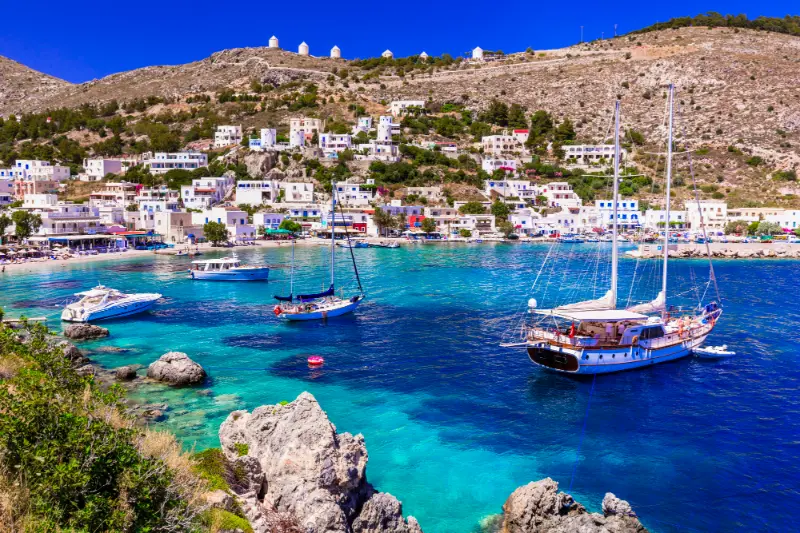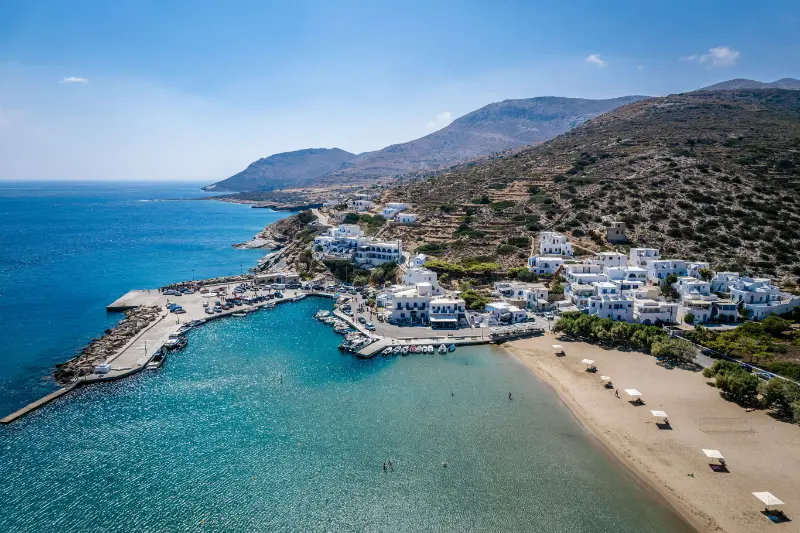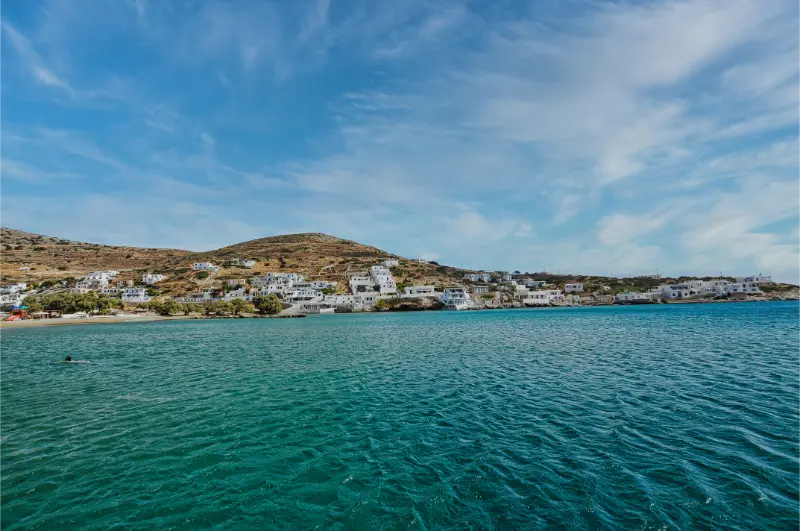
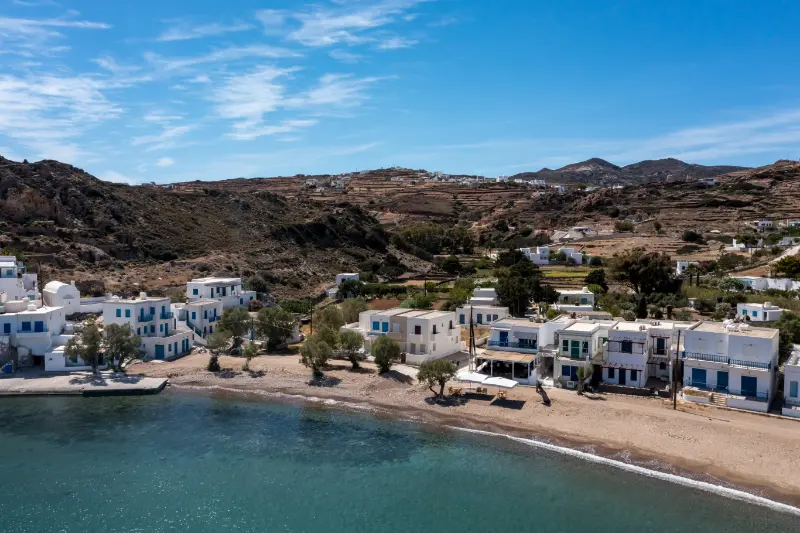
Author: Jessica

  • Kimolos with Kids: Family Beaches, Easy Walks, Boat Trips and Practical Tips

    Kimolos with Kids: Family Beaches, Easy Walks, Boat Trips and Practical Tips

    Plan Kimolos with kids using realistic advice on family beaches, Chorio, short walks, boat trips, heat, transport, food, accommodation and a relaxed multi-day rhythm.

    Kimolos rewards travellers who plan around its small scale rather than trying to treat it like a larger resort island. The practical details in this guide are designed for independent visitors: what is genuinely walkable, where transport saves time, how wind changes a beach day, and which places deserve unhurried time.

    Quick planning notes

    • Choose accommodation with easy access rather than the prettiest staircase if you use a stroller.
    • Bonatsa, Aliki and Kalamitsi are generally easier family choices than remote coves.
    • Schedule outdoor sightseeing before late morning and protect a long midday rest in summer.
    • Ask boat operators about shade, toilet access, life jackets and trip length before booking with children.

    Why Kimolos works for families who like small islands

    Kimolos is not a resort island filled with children’s clubs and organized entertainment. Its appeal for families is different: short distances, clear water, a compact village, simple food and days that can be built around swimming rather than driving. Families who enjoy low-key travel often find the island easy to settle into after the first day.

    The main challenge is limited infrastructure. Buses are seasonal, pavements are not continuous, some beaches are unorganized and rural tracks can be rough. That does not make the island unsuitable for children; it means parents should choose accommodation and daily routes more carefully than they would in a large resort.

    Best beaches with younger children

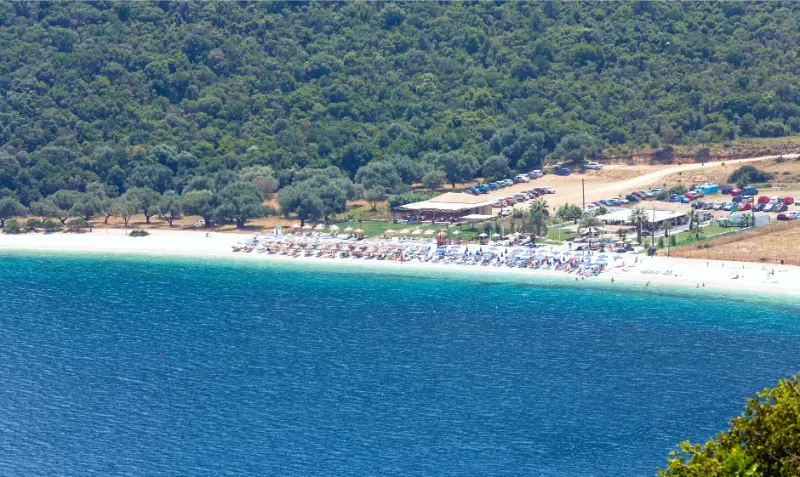
    Bonatsa is one of the most straightforward family choices because access is relatively easy and the beach suits a long, uncomplicated day. Aliki and Kalamitsi add nearby alternatives, allowing you to change plans if wind or crowds make one option less comfortable. Prassa is spectacular but can be busier and more exposed, so treat it as one beach in the rotation rather than the only goal.

    Rema can be fun for confident children because of the rock scenery, but it requires closer supervision than a broad sandy bay. Remote northern beaches are better for families with older children who are comfortable walking and can manage a day without facilities.

    Chorio with children

    Chorio is small enough to explore without turning sightseeing into a marathon. The castle lanes, churches and museums create natural short stops, while bakeries and squares provide easy breaks. The Archaeological Museum is compact, which can work better for children than a huge collection, especially if you explain one or two objects rather than trying to read every label.

    In summer, explore early and return after sunset. White stone reflects heat and toddlers tire quickly on steps. A carrier is often easier than a stroller in the historic core. Older children may enjoy looking for old gates, windmills and different house details as a simple walking game.

    Easy walks and introducing children to hiking

    Kimolos has a waymarked trail network, but not every route is a family walk. Start with short sections near Chorio or a gentle approach toward a viewpoint. The classic Skiadi walk can suit older children in cool weather if they are accustomed to hiking, but the exposed plateau is inappropriate during strong midday heat.

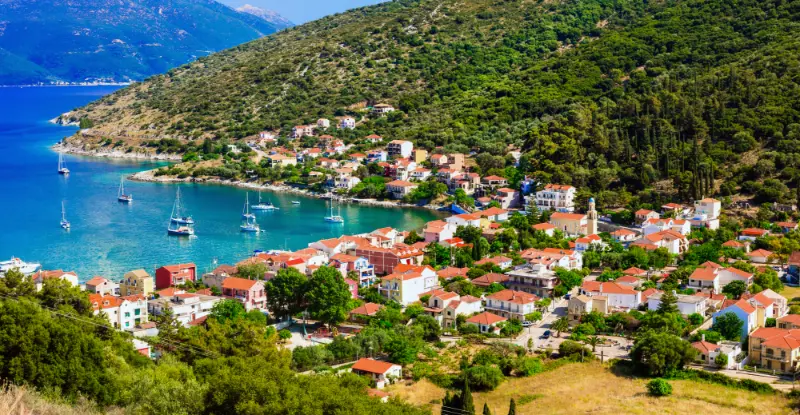
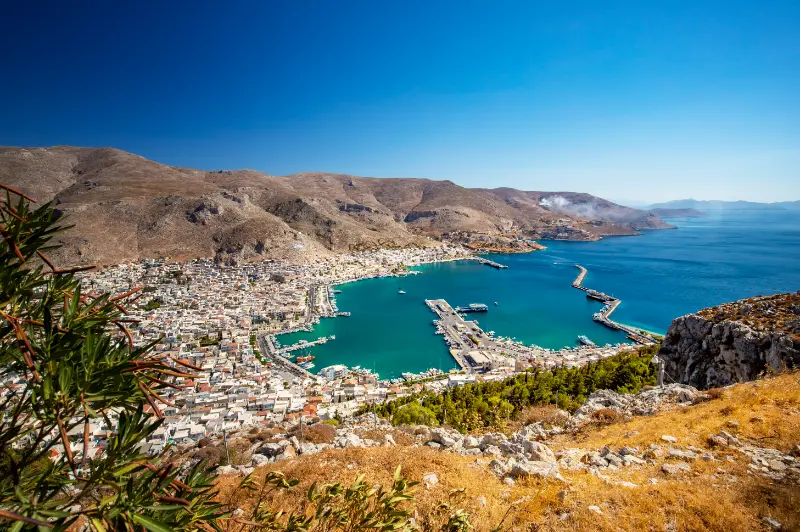
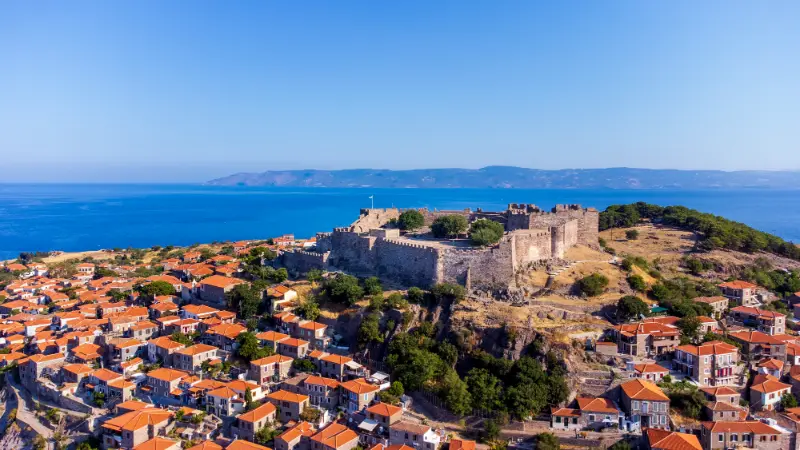
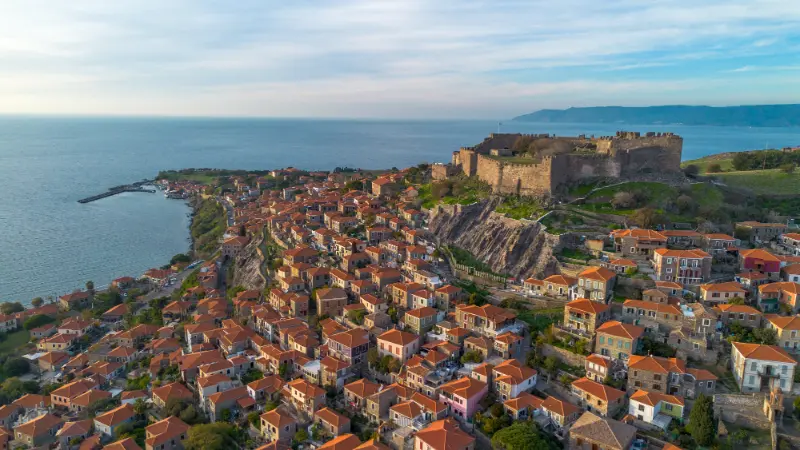
    Greece Kimolos Island Cyclades Chorio Aerial Drone View

    Carry more water than you would for an urban walk and insist on hats. Let the weather decide the distance. Turning around early is good planning, not a failed hike. The goal is to make children curious about the landscape, not to complete a route at any cost.

    Boat trips with children

    A calm-day boat trip can be a highlight, especially for children who enjoy swimming and snorkeling. Polyaigos offers extraordinary water, but full-day excursions can be long. Ask operators about shade, toilets, life jackets in the correct size and whether swimming is mostly from the boat or from beaches.
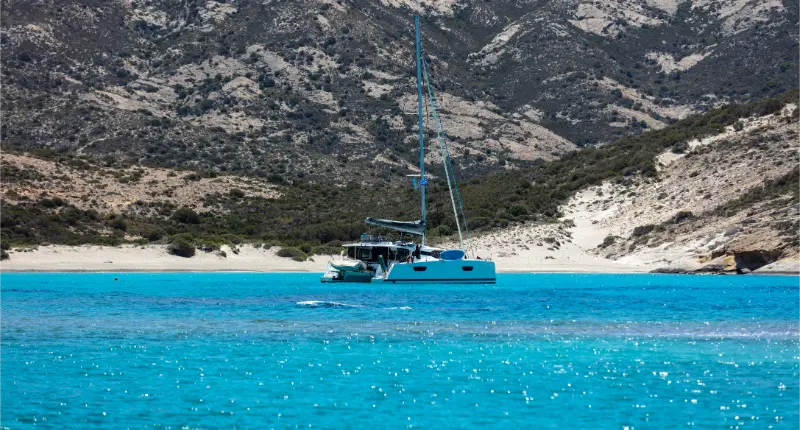
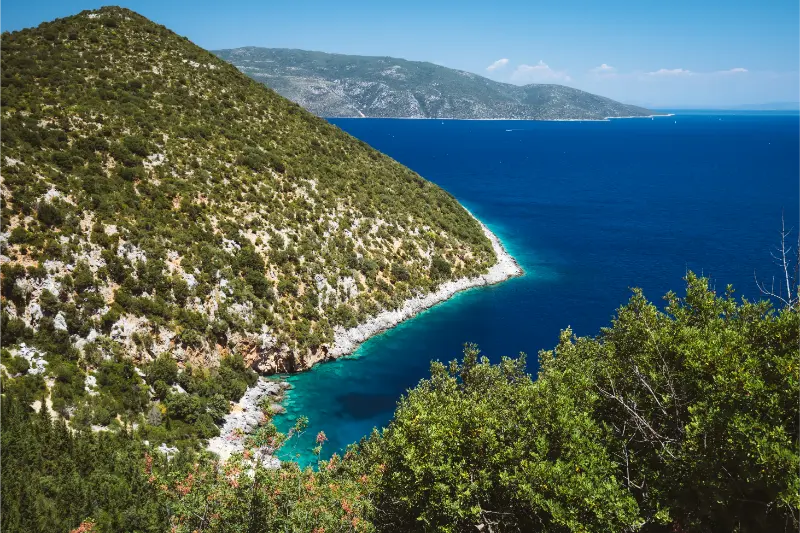
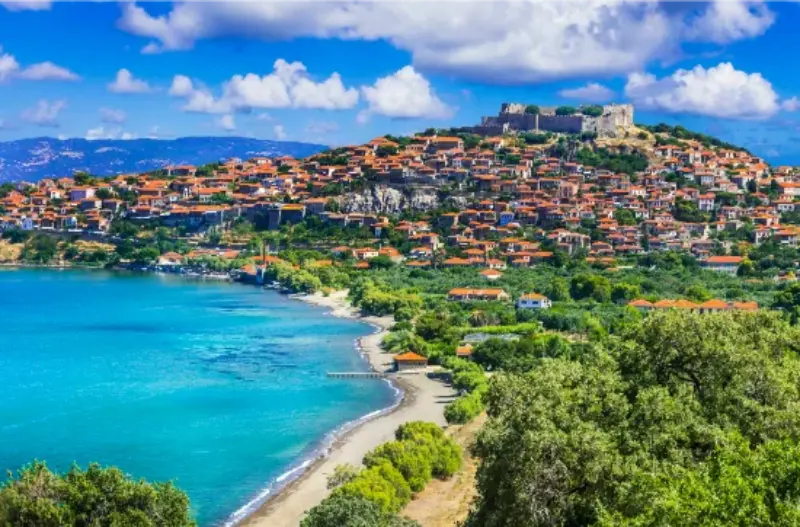
    Polyaigos Volcanic White Sand Beach Turquoise Sea Blue Sky Kimolos Island Cyclades Greece

    For younger children, a shorter Kimolos coastal trip may be easier than an all-day circuit. Bring familiar snacks, dry clothes and sun protection. Even children who never feel carsick can become queasy at sea, so avoid a heavy breakfast and sit where they can see the horizon.

    Getting around as a family

    Without a car, base yourself in Chorio or close to a reliable bus stop. Buses can connect the port, village and several beaches in season, but frequency is limited. A taxi is valuable for one-way transfers when children are tired. If you rent a vehicle, confirm child-seat availability in advance rather than expecting one at the desk.

    Some rural roads are unpaved or rough. Do not let a map’s short distance tempt you onto a track that exceeds your comfort or rental agreement. For family travel, the easiest beach is often the best beach because arriving relaxed improves the whole day.

    Where to stay with kids

    Chorio is the most practical choice for restaurants, groceries and evening walks, while south-coast areas such as Bonatsa or Aliki give faster beach access. Families with toddlers should ask specifically about stairs, balcony safety, kitchen facilities, blackout shutters and the walking distance to parking or a bus stop.

    A pool is not essential on an island with excellent sea access, but air conditioning is valuable in midsummer. A small kitchen or fridge helps with breakfast and snacks, reducing the pressure to coordinate every meal with restaurant hours.

    A relaxed four-day family plan

    Day one can stay close to Psathi, Rema and Chorio. Day two is a long beach day at Bonatsa or Aliki. Day three can be a morning boat trip or, for older children, a short hike, followed by a quiet afternoon. Day four can focus on Prassa if conditions are calm, with a final dinner in Chorio.
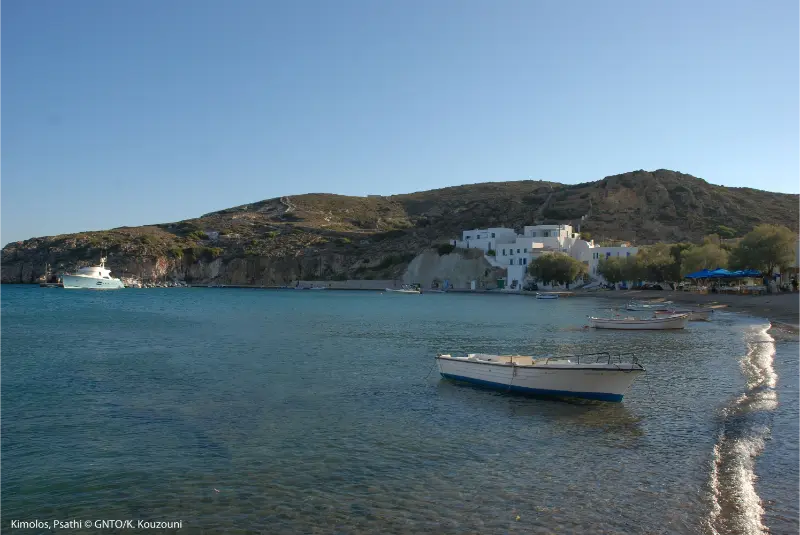
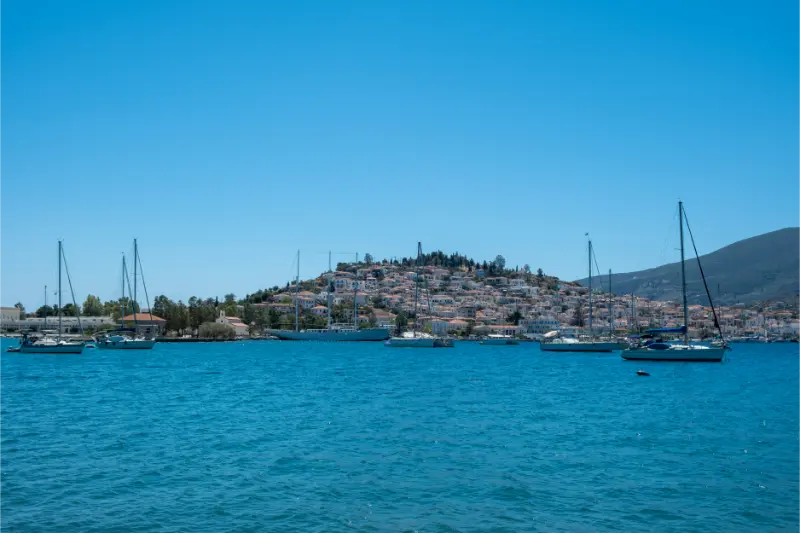
    Kimolos Psathi

    This plan intentionally leaves space. Children often want to repeat the same beach, sleep late after a busy day or spend an hour watching fishing boats instead of visiting another attraction. Kimolos rewards that slower pace.

    Where to book accommodation

    Accommodation is limited compared with larger Cycladic islands, especially in July and August. Compare location carefully rather than choosing only by room style: a property in Chorio gives the easiest evenings, while coastal stays trade convenience for quicker beach access. Check current Kimolos accommodation on Booking.com.

    Frequently asked questions

    Is Kimolos good for toddlers?

    Yes for families comfortable with limited resort infrastructure. Choose accommodation with straightforward access, use sandy south-coast beaches, and avoid long exposed walks in summer heat.

    Do I need a car with children?

    Not necessarily if you stay in Chorio and use buses, taxis and boats, but a car can make beach logistics easier. Reserve child seats in advance.

    Which Kimolos beach is best for families?

    Bonatsa is a strong all-round choice, with Aliki and Kalamitsi nearby. Conditions still matter, so ask locally about wind before setting out.

    Useful official resources

    For information that can change after publication, use the Municipality of Kimolos for local services and island information, the Visit Greece Kimolos page for destination background, and the municipality’s ferry timetable page before fixing transfers. Ferry and local transport times can change by season, weather and operator, so confirm the exact day rather than relying on an old screenshot.

    Related Kimolos guides

    Food and snacks for children

    Kimolos is easy for children who like bread, tomatoes, cheese, grilled meat, pasta and fruit. Ladenia can be a useful shared snack, while bakeries make breakfast logistics simple. Carry familiar snacks for remote beaches because a seasonal canteen may be closed on the exact day you visit. In hot weather, prioritize water and salty food over sugary drinks, and build a shade break into lunch.

    Medical and practical preparation

    Pack basic medicines you already know how to use, sun protection, insect repellent and any prescription items in sufficient quantity. Chorio has essential services, but a small island cannot offer the retail choice of Athens or Milos. Save emergency numbers and your accommodation contact offline. For a child with significant allergies or medical needs, discuss contingency plans with a healthcare professional before travel.

    Final planning note

    Kimolos is small enough that a change of plan rarely ruins the day. Keep the most weather-sensitive activity in the first half of your stay, check wind and local transport each morning, and avoid committing to a remote beach or exposed walk when conditions are marginal. Carry water, save important tickets and maps offline, and leave enough time to return to Chorio or Psathi before the final bus, boat or ferry. This simple flexibility is especially valuable for Kimolos with kids, because the island’s limited infrastructure is part of its charm but also means that alternatives are easier to use when you decide early rather than after a connection has already been missed.

    Before finalizing the day, ask your accommodation or a local business whether anything practical has changed: bus timing, sea conditions, road access or an event in Chorio. Small islands often communicate useful changes locally before they appear on travel websites. Keeping one simple alternative in mind—an easier beach, a museum visit, a village meal or a shorter walk—usually protects the day without adding complicated planning.

  • Where to Stay in Aegina: Town, Agia Marina, Souvala or Perdika?

    Where to Stay in Aegina: Town, Agia Marina, Souvala or Perdika?

    Choosing where to stay in Aegina is a transport decision as much as a hotel decision. The island is small enough to explore on a short trip, but not so small that every beach, temple and harbour is walkable from one base. Aegina Town is strongest for ferries and car-free travel, Agia Marina for a beach-first stay, Perdika for harbour atmosphere and Souvala for a quieter coastal rhythm.

    For first-time visitors with only two or three nights, I usually prefer one base rather than changing hotels. A good location saves more time than a slightly cheaper room on the opposite side of the island. Think about where you want to be after dinner, not only what you want to see at 11 in the morning.

    Quick planning summary

    QuestionPractical answer
    Best forTravellers who want an easy Saronic-island trip combining culture, food and sea
    Ideal paceOne major sight or area plus one beach/meal rather than an island-wide checklist
    TransportFerry from Piraeus; buses, taxis and rentals on the island
    Best seasonsLate spring, summer and early autumn; cultural trips work year-round

    Aegina Town: best for first visits and no-car travel

    The main town puts the ferry, taxi rank, buses, restaurants, market and Kolona within easy reach. It is the most forgiving base if your schedule changes and the simplest choice for an early departure to Piraeus. Evening walks are easy and you have more dining choice than in smaller settlements.

    The drawback is that the immediate beaches are convenient rather than the island’s best. If swimming is your number-one priority, plan day trips or choose Agia Marina instead.

    Agia Marina: best for a beach-first holiday

    Agia Marina offers the most straightforward resort setup on the island, with a proper beach and the Temple of Aphaia close by. It suits families and travellers who want to spend several hours a day by the sea without organising transport first.

    Outside peak season, check how many restaurants and buses are operating. A quiet resort can be wonderful, but it is less convenient if you expected full summer service in April or late October.

    Souvala: best for a quieter coastal base

    Souvala appeals to repeat visitors, couples and travellers who want a coastal village without the constant movement of the main port. It gives access to the north side and can feel more residential. The decision depends heavily on current transport if you are not renting a car.

    Main Square Aegina Port Greece

    Before booking, map the exact room relative to the waterfront, bus stop and restaurants. Some properties marketed under a village name can be farther from the centre than expected.

    Perdika: best for harbour evenings and couples

    Perdika’s waterfront tavernas, fishing boats and access to seasonal Moni trips create one of the island’s best evening atmospheres. It is excellent for couples and slow travel, especially if you have a car and enjoy a smaller settlement after dark.

    It is less convenient for a first-time car-free stay because most major archaeological sights lie elsewhere. Visit for sunset if you are based in town, or stay here because the harbour itself is the experience you want.

    Marathonas and other beach areas

    Marathonas works well for travellers who want beach access while staying reasonably close to Aegina Town and Perdika. It is particularly practical with a car. Smaller coastal areas can offer peaceful rooms, but always check where you will eat and how you will reach the town after dark.

    A lower nightly price can disappear quickly if you need multiple taxis. Add transport to the accommodation cost before deciding which area is truly cheaper.

    Should you split your stay?

    For two to four nights, no. One base keeps the trip simple. For a week, splitting between Aegina Town and Agia Marina or Perdika can make sense if you want both easy logistics and a slower beach/harbour phase. Move only once and only if the second area changes the character of the trip.

    If you are combining Aegina with Athens or another Saronic island, keep Aegina accommodation simple and close to the ferry. Too many hotel changes can turn a relaxed island-hopping plan into luggage management.

    When to visit Aegina

    Aegina works year-round, but the experience changes by season. Late spring and September are excellent for combining archaeology, walking and swimming without the intensity of peak summer. July and August offer the warmest sea and the broadest seasonal service, but weekends can be busy because the island is so close to Athens. Winter is better for town life, food and cultural sites than for a classic resort holiday.

    For any season, check ferry schedules before booking accommodation. Aegina’s accessibility is a major advantage, but frequency and vessel type vary. On very hot summer days, place exposed archaeological sites early in the morning and save beaches or shaded lunches for midday.

    How to plan transport efficiently

    Think in zones. Aegina Town and Kolona are one zone; Aphaia and Agia Marina are another; Agios Nektarios and Paleochora form an inland cultural zone; Marathonas and Perdika form a south-coast zone. A good day normally combines places within one or two neighbouring zones instead of crossing the island repeatedly.

    Buses are useful but seasonal, taxis save time, and a rental vehicle creates flexibility for beaches and inland sights. If you are visiting only for a day, calculate how much of the visit you are willing to spend waiting or driving before choosing transport.

    Useful Aegina guides to read next

    Continue planning with Aegina Food Guide: Pistachios, Seafood, Local Products and What to Try, Aegina Town and Kolona Guide: Waterfront, Archaeology, Markets and Where to Stay, Temple of Aphaia and Agia Marina Aegina Guide: Archaeology, Beach and Practical Tips, Agios Nektarios and Paleochora Aegina Guide: Monastery, Medieval Churches and Visiting Tips, Perdika and Moni Island Aegina Guide: Harbour, Boat Trip, Swimming and Sunset.

    Frequently asked questions

    What is the best area for a first visit?

    Aegina Town is the easiest all-round choice, especially without a car.

    Where should families stay?

    Agia Marina for beach convenience or Aegina Town for transport and restaurants.

    Where is best for couples?

    Perdika for harbour atmosphere, or Aegina Town for food and evening walks.

    Is Souvala convenient without a car?

    It can be, but check the seasonal bus timetable before booking.

    Should I stay near the ferry for one night?

    Yes. Aegina Town is usually the most efficient choice for a very short stay or an early departure.

    Greek Weekend Small Town Aegina Island Greece

    Check before you go

    Use Visit Greece to understand the island’s settlement pattern, then check the exact accommodation pin, walking route and current transport before booking.

    Final planning advice

    Aegina rewards realistic planning more than aggressive sightseeing. Keep your transport simple, leave a buffer before ferries and choose one or two experiences that match the day’s weather. The island’s great advantage is that history, sea and food are close enough to combine without turning the trip into a race.

    If this is your first Saronic-island trip, use Aegina as an easy introduction rather than trying to prove how much you can cover. A slower lunch, one archaeological site and one swim often create a stronger memory than five short stops. Save something for the next visit; the island is close enough to Athens that returning is realistic.

    One more practical detail

    One detail I would confirm locally for this specific plan is the day’s transport and opening pattern. Aegina is close to Athens, which makes spontaneous travel tempting, but ferry arrivals, bus departures and seasonal businesses do not all follow the same rhythm. Saving screenshots of the latest timetable and one taxi contact can prevent a small delay from changing the whole day.

    Extra planning note

    For photography and comfort, early morning and late afternoon are usually more rewarding than the middle of a summer day. The island’s pale stone, pine-covered hills and harbour light can look flat at noon but much richer when the sun is lower. This also gives you a natural reason to reserve midday for lunch or swimming rather than another exposed walk.

    Extra planning note

    Budget planning should include island transport, not only ferry and hotel prices. A cheap room far from the places you want to visit can create repeated taxi costs, while a slightly more expensive central base may reduce daily spending. Compare the full trip pattern before deciding what counts as good value.

    Extra planning note

    If you are combining Aegina with Athens, keep the arrival or departure day deliberately light. Ferry travel is usually easy, but port transfers, luggage and weather can still add friction. One waterfront walk and dinner on arrival is often a better start than trying to squeeze in a major site before closing time.

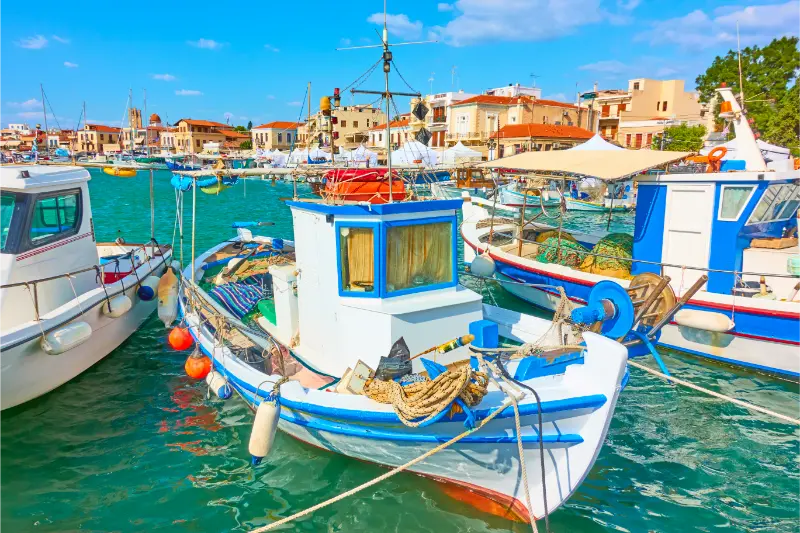
    Picturesque Fshing Boats Port Aegina Town Greece

    Extra planning note

    One detail I would confirm locally for this specific plan is the day’s transport and opening pattern. Aegina is close to Athens, which makes spontaneous travel tempting, but ferry arrivals, bus departures and seasonal businesses do not all follow the same rhythm. Saving screenshots of the latest timetable and one taxi contact can prevent a small delay from changing the whole day.

    Extra planning note

    For photography and comfort, early morning and late afternoon are usually more rewarding than the middle of a summer day. The island’s pale stone, pine-covered hills and harbour light can look flat at noon but much richer when the sun is lower. This also gives you a natural reason to reserve midday for lunch or swimming rather than another exposed walk.

  • Falassarna Beach Crete Guide: Sunset, Swimming, Ancient Ruins and Practical Tips

    Falassarna Beach Crete Guide: Sunset, Swimming, Ancient Ruins and Practical Tips

    Falassarna is one of western Crete’s easiest big-beach days: a broad stretch of sand, open sea, clear water, organised sections and enough space to feel less compressed than some of the island’s headline lagoons. The wider area actually includes several beaches, with Pachia Ammos the best-known. Its west-facing position also makes sunset part of the experience. The trade-off is exposure: when the wind is strong, waves can be significant and the beach feels very different from a sheltered cove.

    This guide is designed to help you decide not only what to see at Falassarna Beach Crete Guide, but how to fit it into a wider Greece itinerary without wasting time. For the bigger picture, use the Chania Travel Guide. You can also continue with the Elafonissi Beach Guide when it matches your route.

    Why Falassarna Beach Crete Guide is worth adding to your trip

    The strongest reason to include Falassarna Beach Crete Guide is that it offers a very specific experience rather than another generic stop. The landscape, local rhythm and practical details are different enough to justify dedicated time. It also works well as part of a larger route, so you do not need to build your entire holiday around it. The key is to give the place enough time to move beyond the first photograph: walk a little farther, arrive outside the busiest hour and leave space for a meal, swim, museum room or viewpoint that is not dictated by a checklist.

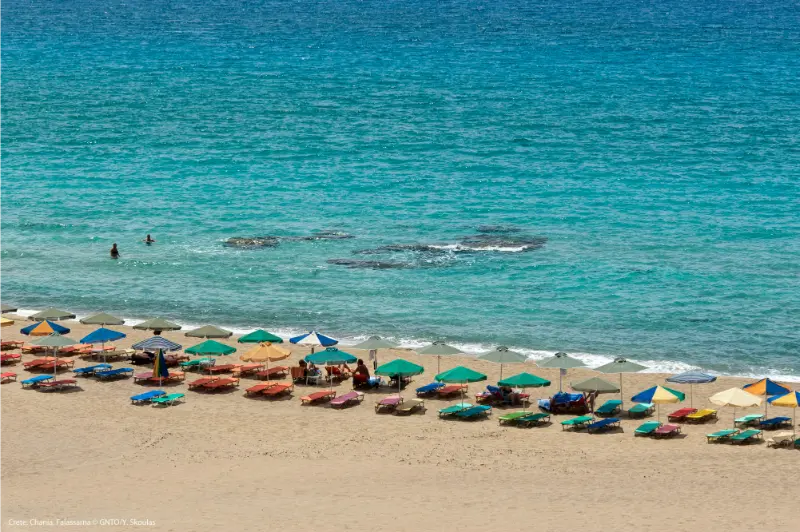
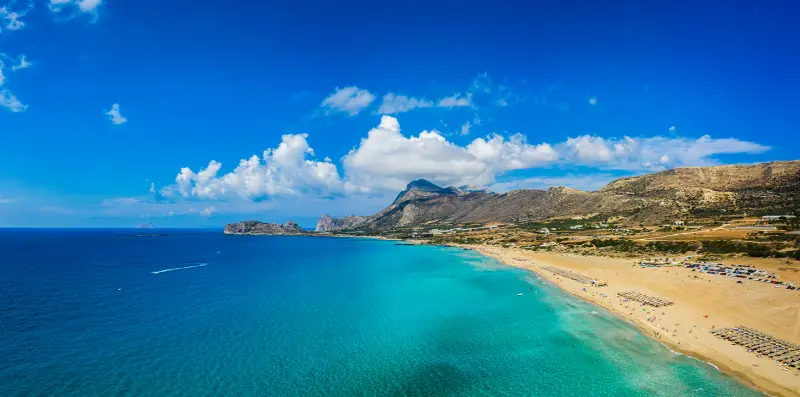
    Falassarna Crete Greece

    Top things to see and do

    • Pachia Ammos and the long sandy shoreline
    • clear water on calm days
    • sunset over the western horizon
    • ancient Falassarna nearby
    • space for long beach walks
    • easy pairing with Kissamos or northwest Crete

    Pachia ammos and the long sandy shoreline

    Pachia ammos and the long sandy shoreline is one of the defining parts of the visit. Rather than treating it as a five-minute photo stop, look at how it fits the setting around it. Arriving earlier or later than the main rush usually changes the experience significantly. Take time to notice access, shade, wind, pedestrian routes and where people naturally congregate; moving just a short distance from the obvious focal point often gives you a quieter view and a better understanding of the place.

    Clear water on calm days

    Clear water on calm days is one of the defining parts of the visit. Rather than treating it as a five-minute photo stop, look at how it fits the setting around it. Arriving earlier or later than the main rush usually changes the experience significantly. Take time to notice access, shade, wind, pedestrian routes and where people naturally congregate; moving just a short distance from the obvious focal point often gives you a quieter view and a better understanding of the place.

    Sunset over the western horizon

    Sunset over the western horizon is one of the defining parts of the visit. Rather than treating it as a five-minute photo stop, look at how it fits the setting around it. Arriving earlier or later than the main rush usually changes the experience significantly. Take time to notice access, shade, wind, pedestrian routes and where people naturally congregate; moving just a short distance from the obvious focal point often gives you a quieter view and a better understanding of the place.

    Ancient falassarna nearby

    Ancient falassarna nearby is one of the defining parts of the visit. Rather than treating it as a five-minute photo stop, look at how it fits the setting around it. Arriving earlier or later than the main rush usually changes the experience significantly. Take time to notice access, shade, wind, pedestrian routes and where people naturally congregate; moving just a short distance from the obvious focal point often gives you a quieter view and a better understanding of the place.

    Space for long beach walks

    Space for long beach walks is one of the defining parts of the visit. Rather than treating it as a five-minute photo stop, look at how it fits the setting around it. Arriving earlier or later than the main rush usually changes the experience significantly. Take time to notice access, shade, wind, pedestrian routes and where people naturally congregate; moving just a short distance from the obvious focal point often gives you a quieter view and a better understanding of the place.

    Where to stay

    Falassarna is most practical as a day trip from Chania, Kissamos or accommodation in western Crete. A rental car gives the most flexibility, especially if you want to stay for sunset. Seasonal buses may operate, but schedules should be checked locally because they can change outside peak summer.

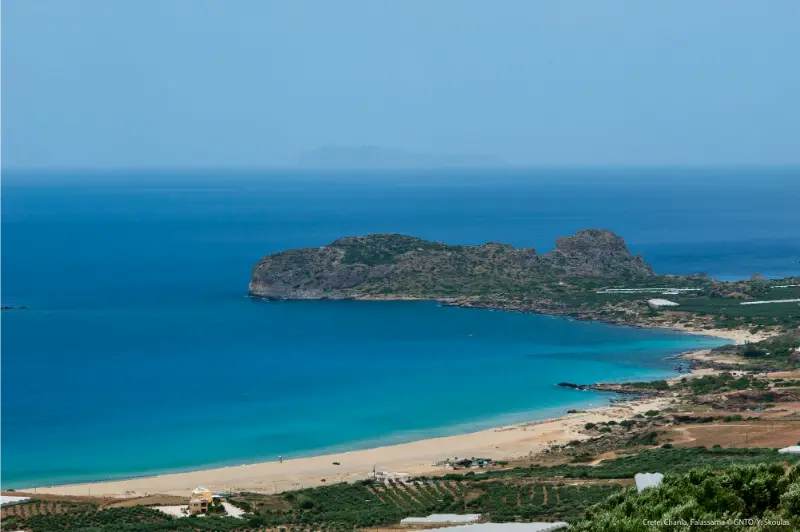
    Crete Chania Falassarna

    When comparing accommodation, look at walking time and road access rather than distance in a straight line. On Greek islands, a hotel that appears close on a map can involve a steep climb, a busy road or difficult parking. For short stays, convenience is usually worth more than a small saving. For longer stays, choose a base that makes your most important day trips easy rather than trying to be equally close to everything.

    Best time to visit

    Choose a day with moderate wind rather than simply the hottest day of your trip. Early morning is quieter; late afternoon is excellent if you want sunset. Families should assess waves carefully because the open western coast can become rough even when conditions elsewhere on Crete seem calm.

    Weather in Greece can change the character of a day even in summer. Wind is especially important on exposed islands and beaches, while heat matters at archaeological sites and on steep walking routes. Check the forecast the evening before and be willing to swap beach, museum and village days. Shoulder season travellers should also verify seasonal buses, boats and restaurant opening days because services are less frequent than in July and August.

    How to get there and get around

    For Falassarna Beach Crete Guide, transport should be planned around the wider region rather than in isolation. Rental cars offer flexibility for beaches and villages, but they are unnecessary in compact pedestrian centres. Buses can be excellent on popular summer routes but are less useful for combining several remote stops in one day. Taxis solve short gaps but become expensive if used as a substitute for a full-day car. If boats are part of the experience, confirm departure point, return time and cancellation policy before committing to the rest of your itinerary.

    A realistic day plan

    Arrive before late morning, choose the section of beach that matches your preference for facilities or space, and swim only in conditions that feel comfortable. Break the beach day with a visit to the ancient site if open and accessible, then return for the softer afternoon light and sunset.

    Keep at least one flexible hour in the plan. That buffer absorbs parking delays, a longer lunch, a change in sea conditions or simply the discovery of a place where you want to stay. Greece rewards travellers who protect the essential logistics but do not schedule every thirty minutes. The goal is a day that feels full without becoming a race.

    Food and drink

    Do not choose a restaurant at Falassarna Beach Crete Guide only because it occupies the most photogenic terrace. Walk one or two streets away from the busiest viewpoint and compare menus, local clientele and whether dishes are cooked to order. Look for seasonal vegetables, grilled fish where appropriate, local cheeses, pies and regional wine. A long Greek lunch can be part of the sightseeing rather than a break from it, especially during the hottest hours of the day.

    Landscape Near Georgioupoli Village Chania Regional Unit Crete Island Greece

    What to pack

    • refillable water bottle
    • sun hat and high-SPF sunscreen
    • comfortable shoes with grip
    • light layer for wind or evening
    • swimwear and quick-drying towel when relevant
    • offline map and enough phone battery
    • small amount of cash for minor purchases

    Footwear matters more than many visitors expect. Whitewashed towns can have polished stone, archaeological sites are uneven, and beach access may involve rough paths or stairs. Pack for the actual terrain rather than the photograph. In high summer, carrying water is not optional, particularly where natural shade is limited.

    Common mistakes to avoid

    • arriving at the same peak hour as everyone else
    • assuming parking will be easy in July or August
    • ignoring wind and sea conditions
    • trying to combine too many distant stops
    • booking transport without checking the return journey
    • treating protected natural or archaeological areas like ordinary leisure spaces

    The most common planning mistake at Falassarna Beach Crete Guide is overestimating how much fits into one day. Distances on a map are only part of the calculation: summer traffic, queues, steep access and the simple desire to stop for a swim or meal all add time. Build a route around two or three priorities and let secondary stops remain optional.

    Is it good for families?

    In most cases, yes, provided you adapt the day to heat, walking distance and water conditions. Families should start earlier, schedule shade and food before children are tired, and avoid building a day around a difficult late-afternoon return. Beaches with open sea require active supervision regardless of how clear the water looks. At museums and archaeological sites, a shorter focused visit is often more successful than trying to see every gallery or ruin.

    Is it worth visiting without a car?

    Often yes, but the answer depends on your base and season. Compact towns and major sights can be easier without a vehicle, while remote beaches and multi-stop road trips favour a car. If you prefer not to drive, design the itinerary around one well-connected base and use buses, organised excursions, boats or occasional taxis instead of trying to reproduce a driving itinerary with public transport.

    FAQ

    How much time do I need?

    Allow at least half a day for a focused visit and longer if you are combining it with swimming, a museum, a boat trip or a long meal.

    Do I need to book in advance?

    For accommodation, popular summer restaurants, major museums and organised boat trips, advance booking is sensible in peak season. Simple beach visits and town walks usually do not require reservations.

    What is the best time of day?

    Early morning is usually best for lower temperatures and fewer people. Late afternoon can offer beautiful light, but always consider transport, wind, closing times and the journey back.

    Can I visit in the shoulder season?

    Yes. May, June, September and early October are often excellent, although seasonal transport and businesses may operate on reduced schedules outside the core summer months.

    Should I trust old prices and timetables online?

    No. Entrance fees, boat schedules, buses and access rules can change. Recheck official or local information shortly before the visit.

    Final advice

    Build your visit to Falassarna Beach Crete Guide around the conditions you actually find rather than a rigid online itinerary. Arrive with two or three priorities, verify any time-sensitive access information, and leave enough space to enjoy the setting. That approach gives you better photographs, calmer meals and a much more convincing sense of place than trying to collect every attraction in the shortest possible time.

  • Skala Kefalonia Guide: Beach, Restaurants, Roman Villa, Boat Trips and Where to Stay

    Skala Kefalonia Guide: Beach, Restaurants, Roman Villa, Boat Trips and Where to Stay

    Skala is one of Kefalonia’s largest and most established beach resorts, stretching along the south-east coast with a long sand-and-shingle beach, a broad choice of accommodation and an easy holiday rhythm. It suits travellers who want to unpack once, walk to dinner and make day trips when they feel like exploring rather than driving every day.

    The resort is not central to every famous sight. Myrtos, Assos and Fiskardo are a long way from the south-east, so Skala works best when you accept that geography rather than trying to turn it into an all-island base. Local tourism information describes Skala Beach as roughly 2.8 km long and confirms Blue Flag status for 2026. Use the Kefalonia travel guide for the island overview before deciding whether the south-east fits your priorities.

    Skala Kefalonia Guide at a glance

    QuestionPractical answer
    Best forLong beach stays, couples, families and low-effort evenings
    BeachLong sand/shingle shoreline with organised sections
    SwimmingClear water; depth increases after a short distance in many sections
    Car essential?Not for a resort holiday; useful for wider exploration
    Main trade-offFar from Myrtos, Assos and Fiskardo

    Why travellers choose Skala

    Skala is built for easy holiday days. The beach and town are close enough that you can move between breakfast, swimming, lunch and an evening walk without planning every transfer. This is a major advantage for families and for anyone who does not want a car for the entire stay.

    The resort has a more developed tourism feel than smaller villages such as Assos or Agia Efimia. That can be either a benefit or a drawback. If you value choice, convenience and late-evening atmosphere, it works; if you want a tiny harbour and minimal resort infrastructure, choose a different base.

    Places Of Greece Island Ionica Kefalonia Pittoresco Village Of Agia Efimia

    Understanding Skala Beach

    The beach is long enough that conditions and atmosphere can vary by section. Some stretches are organised with loungers and nearby food; others feel quieter. The sand-and-shingle mix means beach shoes can be useful for sensitive feet, especially where pebbles dominate.

    The sea can become deep within a few metres. Confident swimmers often enjoy the clear water, but parents should not assume the long shoreline means uniformly shallow conditions. Check the exact section near your accommodation and reassess after windy weather.

    Roman remains and a break from the beach

    Skala is associated with Roman-era remains, including a villa site known for mosaic floors. Archaeological access and opening arrangements can change, so treat the site as a bonus rather than building an entire day around an unverified timetable.

    The broader point is that Skala can support a mixed holiday. You can spend the morning at the sea, take a cultural stop during the cooler part of the day and return for dinner without moving hotels or crossing the island.

    Boat trips from the south-east

    Boat excursions can add variety when you have already had several beach days. Depending on operator and season, routes may focus on nearby coastline or connect toward Ithaca or Zakynthos. Compare the actual itinerary, boat size, shade and swimming stops rather than booking on the strength of a destination name alone.

    Keep at least one flexible day because sea conditions can change. A cancellation is easier to absorb when you have not packed every day with prepaid activities.

    Day trips that make sense from Skala

    Mount Ainos and the Robola-producing interior are more logical from Skala than trying to visit Fiskardo and back repeatedly. The Mount Ainos guide is useful if you want a cooler mountain day. Sami and the caves are also possible, but they require more road time.

    Small Bay Near Antisamos Beach Sami Kefalonia Island Greece

    For a one-week stay I would choose two major excursions, not five. A resort base works precisely because it lets you alternate activity with rest. If every day begins with a 90-minute drive, you lose the reason for choosing Skala.

    When to go and how the season changes the experience

    For Skala Kefalonia guide, June and September are usually the easiest months to balance warm swimming conditions with less pressure on roads, parking and restaurants. July and August bring the widest range of seasonal services, boat trips and nightlife, but they also bring the strongest heat and the most competition for parking. May and October can be rewarding for walking and quieter travel, yet weather and seasonal opening hours become less predictable.

    Do not plan the entire trip from average temperature charts. Wind direction, recent weather and sea state can change the best beach for a particular day. Keep one or two flexible days and move the most weather-sensitive boat or west-coast plan when conditions look best.

    Driving, roads and parking

    Kefalonia rewards a car, but the driving is slower than the map suggests. Mountain roads, village streets, bends and summer traffic all add time. Build margin into every estimate, especially when you have a ferry, boat departure or restaurant reservation. Avoid stopping on blind corners for photographs and use formal viewpoints or safe pull-outs instead.

    Parking is usually the hidden problem at famous places. Arriving before the middle of the day can make Myrtos, Assos, Fiskardo and other popular stops much easier. If you dislike driving on steep roads, choose a base that reduces the number of cross-island days rather than forcing yourself through a seven-day road-trip schedule.

    Buses and car-free planning

    KTEL Kefalonias publishes seasonal local routes linking Argostoli with the airport, Lassi, Sami, Fiskardo, Myrtos and other destinations. Frequencies change through the season, sometimes substantially. Use buses for the routes they serve well and accept that a taxi, boat excursion or one-day car rental may be the sensible tool for places outside the main network.

    Before travelling, check the official KTEL Kefalonia local timetable. Do not rely on a blog timetable copied months earlier. For a full strategy, see my Kefalonia without a car guide.

    Food, water and the rhythm of the day

    A good Kefalonia day has space for lunch. Long coastal drives and beach parking feel much easier when you are not trying to fit six attractions around them. Keep water in the car, especially for remote beaches and hiking, and do not assume every scenic cove has a taverna or kiosk.

    Robola wine is one of the island’s best-known local products, while meat pies, seafood and simple grilled dishes appear widely. If wine tasting is part of the day, designate the driver or use a transfer; winding island roads are not the place to combine driving with alcohol.

    How to connect this guide with the rest of Kefalonia

    Start with the Kefalonia travel guide if this is your first visit. The Myrtos Beach guide, Assos guide, Fiskardo guide, Melissani and Drogarati Caves guide and Mount Ainos guide cover the island’s major landscape and sightseeing anchors in more depth. Use those pages to build clusters of nearby stops instead of crossing the island several times in one day.

    Melissani Cave Melissani Lake Near Sami Town Kefalonia Island Greece

    If you have seven nights, one base can work for a relaxed holiday but two bases usually reduce driving for travellers who want to see both the north and south. The point of a split stay is not to collect hotels; it is to move once so that several later days become easier.

    Booking experiences and boat trips

    Kefalonia has boat trips, sea kayaking, sailing, cave visits and day excursions, but availability is seasonal and weather-dependent. Compare duration, transport included, boat size, shade and cancellation terms before booking. A shorter high-quality trip can be better than an all-day itinerary with too many stops.

    Common planning mistakes to avoid

    • Trying to combine Myrtos, Assos, Fiskardo, Melissani, Drogarati and a sunset stop in one day.
    • Choosing accommodation only by nightly price without checking how much driving it creates.
    • Assuming every famous beach has sand, shallow water, shade and full facilities.
    • Saving a seasonal bus timetable and assuming it will still apply on different dates.
    • Booking a weather-sensitive boat excursion on the only free day of the trip.
    • Underestimating the sun on remote pebble beaches where natural shade may be limited.

    Frequently asked questions

    Is Skala good for families?

    Yes for many families because the resort is walkable and services are close, but the sea can deepen quickly, so choose your exact beach section carefully.

    Do I need a car in Skala?

    Not for a simple beach holiday. A car is useful for caves, Mount Ainos, Argostoli and the north of Kefalonia.

    Is Skala Beach sandy?

    It is generally a mix of sand and shingle rather than uniformly fine sand.

    How many nights should I stay?

    Four to seven nights works well for a relaxed resort holiday; shorter stays make sense if Skala is one stop in a split-island itinerary.

    Can I visit Myrtos from Skala?

    Yes by car, but it is a substantial cross-island outing. Combine it with one or two nearby northern stops instead of making repeated trips.

    Is Skala lively at night?

    It has a broad choice of restaurants and bars in season, but it is not primarily a clubbing destination.

    More Kefalonia in-depth guides

    Continue planning the island with Lassi and Makris Gialos Kefalonia Guide; Sami and Antisamos Kefalonia Guide; Lixouri and Paliki Kefalonia Guide; Agia Efimia Kefalonia Guide; Fteri Beach Kefalonia Guide; Best Beaches in Kefalonia; Kefalonia Without a Car; Kefalonia with Kids; Where to Stay in Kefalonia.

    A simple way to plan the day without rushing

    When I build a day around Skala Kefalonia guide, I start with one non-negotiable experience and treat everything else as optional. That might be a particular beach, a cave visit, a harbour dinner or a boat departure. I then add one nearby secondary stop and leave the rest of the day open. This sounds conservative on paper, but it is exactly what prevents Kefalonia from becoming a sequence of car parks and rushed photographs.

    Keep a weather backup in the same part of the island. If the sea is rough, switch from a beach to a village, cave or inland drive; if the afternoon is extremely hot, reverse the order and save the open-air stop for later. The best itineraries are not the ones with the most reservations. They are the ones that can absorb wind, traffic, a late lunch or the discovery of a beach you did not expect to love.

    What I would prioritise on a short visit

    With only three or four days on Kefalonia, I would not attempt complete island coverage. Choose one part of the island, add Myrtos or another major landmark if the route is sensible, and protect at least one slow beach afternoon. On a one-week trip, add a second base or two longer day trips. With ten days or more, the island finally gives you room for remote beaches, a mountain day and weather flexibility without sacrificing the evenings.

    That approach also improves value. Fewer long drives mean less fuel, fewer emergency taxis and fewer meals bought only because you are late. More importantly, it creates time for the small things that make an Ionian island memorable: swimming twice in the same bay because the light changed, staying for dessert, or stopping at a viewpoint when the road is quiet.

  • Monemvasia Travel Guide: Castle Town, Where to Stay and a 2-Day Plan

    Monemvasia Travel Guide: Castle Town, Where to Stay and a 2-Day Plan

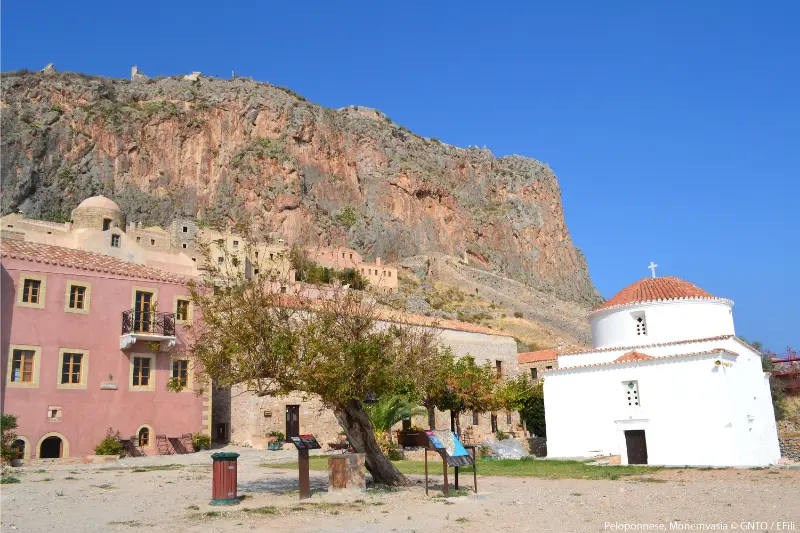
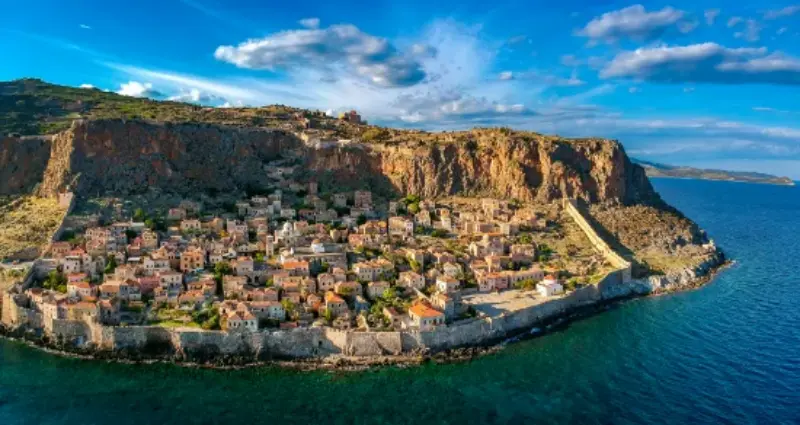
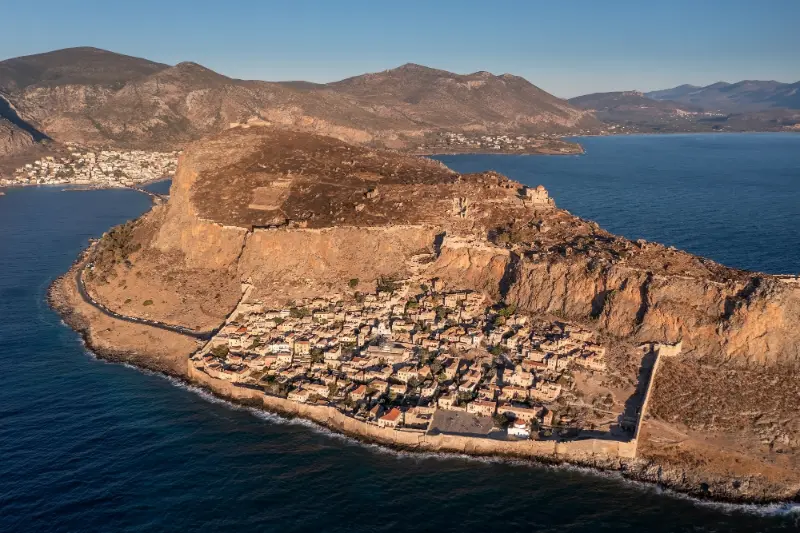
    Monemvasia is one of the few places in Greece where the arrival itself feels like a reveal. You approach a massive rock off the southeastern Peloponnese, cross the narrow causeway and then pass through a gate into a medieval town hidden from the mainland road. Cars stay outside the historic settlement, and almost immediately the trip slows to walking pace.

    It works beautifully as the atmospheric stop in a Peloponnese road trip. I would give it at least one night inside or near the castle town because early morning and evening are when the lanes feel most special. A rushed midday visit misses exactly what makes Monemvasia different.

    Understanding Lower Town and Upper Town

    Lower Town is the inhabited historic settlement: stone houses, churches, small hotels, restaurants and lanes squeezed between the rock and the sea. Upper Town is reached by a steep path and contains ruins plus the church of Agia Sofia. The climb changes the scale of the place and gives wide views, but it should be treated as a real uphill walk.

    If you have limited mobility, focus on Lower Town and the sea-level atmosphere. Monemvasia is still worthwhile without climbing to the top.

    Walking the castle town

    The best route is deliberately imprecise. Enter through the gate, follow the main lane long enough to orient yourself, then take side alleys toward small squares, churches and sea views. The settlement rewards curiosity because stairways and arches reveal themselves gradually.

    Go out early before day visitors arrive, then walk again after dinner. The same streets feel completely different when shopfronts close and the stone is lit softly.

    Agia Sofia and the Upper Town

    Agia Sofia stands high on the rock and is one of Monemvasia’s most memorable landmarks. The climb can be hot and exposed, so I would attempt it early in the morning or late afternoon, wearing shoes with grip and carrying water.

    Do not rush the descent. Loose stone and polished surfaces demand more attention going down than going up. In strong heat or wind, it is perfectly reasonable to skip the climb and spend longer in Lower Town.

    Where to stay: inside or outside the walls?

    Staying inside the castle gives you the strongest atmosphere and lets you experience Monemvasia after many visitors leave. The trade-offs are luggage, steps and the absence of cars. Ask the hotel exactly how far you will carry bags from the entrance.

    Staying in Gefyra on the mainland is easier for parking, larger rooms and quick vehicle access. You can walk or use local transport toward the gate. For families with lots of luggage, this can be the more relaxed choice.

    Swimming and slow time

    Monemvasia is primarily a cultural and romantic destination, but you can still swim nearby. Portelo offers direct sea access by the rock when conditions are suitable, and beaches on the mainland side are easy to reach by car.

    Peloponnese Monemvasia

    I would not fill the day with distant excursions. The point of sleeping here is to give the medieval town time to breathe: a long lunch, a quiet hour with a view, another walk after sunset.

    Food and Malvasia wine

    The name Monemvasia is historically linked with Malvasia wine, and local meals are a good reason to slow down. Try regional dishes rather than ordering only familiar Greek standards. A dinner inside the walls is part of the experience even if prices can be higher than in ordinary mainland villages.

    Book ahead in busy periods if one particular terrace or restaurant matters to you, but keep at least one meal spontaneous.

    How many nights?

    StayExperience
    Day tripEnough to see Lower Town, but misses the evening mood
    1 nightExcellent minimum
    2 nightsBest for Upper Town plus a slow day
    3 nightsFor travellers combining beaches and complete downtime

    A 2-day Monemvasia plan

    1. Day 1: arrive by early afternoon, check in, explore Lower Town, enjoy sunset and dinner inside the walls.
    2. Day 2: climb to Upper Town early, visit Agia Sofia, return for lunch, swim or rest, then continue your Peloponnese route.

    How I would plan the trip before booking

    For Monemvasia, I would book the trip in this order: decide how many nights you genuinely have, choose inside the castle for atmosphere or Gefyra for easier parking and luggage, check the transport that controls your arrival and departure, and only then reserve day trips. This order matters because attractive hotel prices can tempt you into a base that creates unnecessary driving, transfers or early-morning stress. A good location often saves more holiday time than a slightly cheaper room.

    Monemvasia In Lakonia Of Peloponnese Greece

    The transport question is especially important here: cars remain outside the medieval town, so the key transport decision is where you will park and how you will move luggage to the room. I would keep the first and final day lighter than the middle of the trip. That leaves space for delayed flights or ferries, heat, wind, children needing a slower morning, or simply discovering a place you want to stay longer.

    For seasonality, spring and autumn are ideal for walking the rock; summer is beautiful but the Upper Town climb should be early. I also avoid building a plan in which every day depends on perfect beach weather. A museum, old town, village, food stop or short scenic walk gives the itinerary resilience when conditions change.

    Who will enjoy this destination most?

    Monemvasia works best for travellers who like a mixture of sightseeing and unstructured time rather than rushing between checklist attractions. It rewards mornings that start early, a long lunch or coffee break, and evenings close to the accommodation rather than another long transfer.

    For families, choose accommodation with simple access, carry as little luggage as possible and consider staying outside the walls if stairs are difficult. Couples can make the trip more relaxed by staying somewhere walkable for dinner. Solo travellers generally benefit from central bases and public transport connections. Road-trippers should check parking before choosing accommodation, because a beautiful historic centre can be inconvenient with a car.

    If you are combining this stop with another part of Greece, compare the pacing with Ancient Olympia if your road trip continues west. One of the biggest mistakes in Greece is treating a short transfer on a map as a short travel day; ferry check-in, port access, parking, waiting time and mountain roads all add invisible hours.

    Ancient City Monemvasia Fortress Wall Shore Big Island Sunrise Peloponnese Greece

    Small details that make the trip easier

    I keep a small offline map on my phone, carry water in warm months, save the exact accommodation entrance rather than only the property name, and photograph parking or bus-stop information when I arrive. These tiny habits are more useful than a minute-by-minute itinerary.

    Comfortable shoes matter in Greece more often than visitors expect. Polished stone, steps, uneven lanes and archaeological ground are common. Sun protection, a light layer for wind or air-conditioned transport, and a reusable bottle cover most day-to-day needs. At religious sites, modest clothing may be required, so it is useful to carry something that covers shoulders or knees.

    Finally, leave one block of two or three hours completely unscheduled. The most memorable part of a trip is often the bakery you did not plan, a swim that lasts longer than expected, a village square at dusk or a viewpoint found on the way back to the hotel.

    Frequently asked questions

    Can you drive into Monemvasia Castle?

    No. The historic castle town is pedestrian. Cars stay outside, which is why luggage planning and the exact location of your hotel matter.

    Is one night enough?

    Yes, and it is much better than a day trip because you experience the lanes after the busiest visiting hours. Two nights are ideal if you want the Upper Town without rushing.

    Is Monemvasia suitable for children?

    It can be magical for children who enjoy castles, but strollers and steep steps are awkward. Families should choose accommodation carefully and avoid the Upper Town climb during hot midday hours.

    My final planning rule

    The best version of a Monemvasia travel guide is not the itinerary with the most stops; it is the one that gives each stop enough time to feel different from the last. I would rather remove one attraction and arrive at dinner relaxed than spend the day checking the time. Greece rewards travellers who protect their mornings, allow long meals and accept that wind, heat or a ferry schedule may change the original plan.

    Before departure, I recheck the opening hours of any archaeological site or museum that anchors the day, the transport timetable for the next move, and the exact hotel access or parking instructions. Those three checks prevent most avoidable problems. Everything else can stay flexible: the beach, the lunch stop, the viewpoint and the order of smaller sights.

    I also keep one backup idea that requires little transport. That might be a town walk, an urban beach, a museum, a café neighbourhood or a slow meal. A backup is not a second full itinerary; it is permission to change the day without feeling that the trip has failed.

    Continue planning Laconia with Geraki, Neapoli Voion, Cape Maleas.

    Continue planning Laconia with Kyparissi, Plytra, Archangelos.

  • Where to Stay in Kalymnos: Pothia, Massouri, Myrties, Kantouni or Emporios?

    Where to Stay in Kalymnos: Pothia, Massouri, Myrties, Kantouni or Emporios?

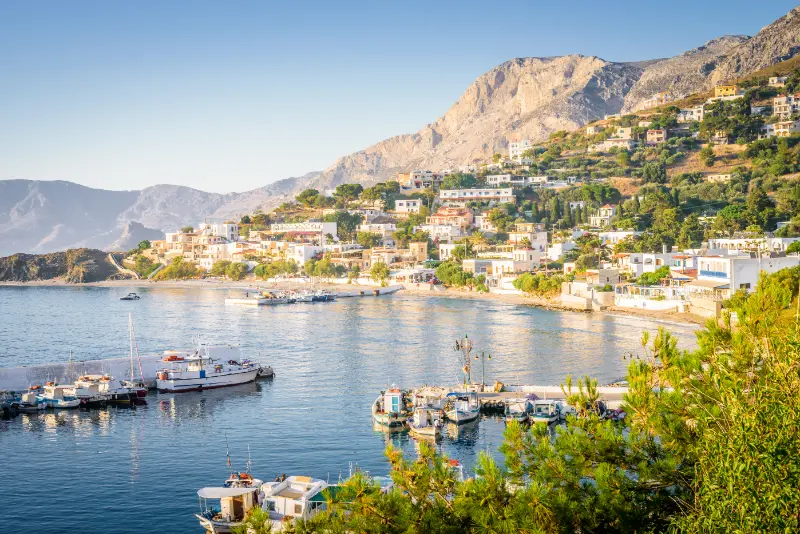
    Choosing where to stay in Kalymnos is less about finding the “prettiest” village and more about deciding how you want each day to begin. Pothia puts ferries, museums and buses on the doorstep. Massouri gives you beach life and climbing. Myrties adds Telendos boats. Kantouni and Panormos suit a quieter west-south balance, while Emporios rewards travellers who deliberately want to slow down.

    This guide compares the main bases rather than repeating the island itinerary in my Kalymnos Travel Guide. A good accommodation choice can reduce half the transport decisions of the trip, especially if you do not plan to rent a vehicle.

    Quick comparison

    AreaBest forMain trade-off
    PothiaFirst nights, ferries, museums, transport, local life.Harbour-town feel; weaker for resort-beach mornings.
    MassouriClimbers, couples, restaurants, beach and sunset.Busier and more visitor-oriented in season.
    MyrtiesTelendos access, quieter west-coast atmosphere.Slightly fewer dining/nightlife choices than Massouri.
    Kantouni / PanormosFamilies, beaches, slower local base.Less immediate for famous climbing sectors and ferries.
    EmporiosQuiet north-coast escape, repeat visitors.Car or careful transport planning strongly helps.
    VathyLandscape, silence, local atmosphere.Not the easiest base for island-wide touring.

    Pothia: best for transport and culture

    Choose Pothia if you arrive late, leave early, stay only a few nights or want museums and local life to be central. Ferry logistics are simple, taxis are easier to find, and the public-transport network starts from the capital. The town also gives you the strongest rainy-day or non-beach plan.

    The compromise is obvious: this is a working harbour, not a classic beachfront resort. If you imagine breakfast followed by a two-minute walk to a long holiday beach, Massouri or Kantouni fits better. Read Pothia Kalymnos Guide for neighbourhood-level planning.

    Massouri Island Of Kalymnos Greece

    Massouri: best all-round holiday base

    Massouri is the easiest recommendation for visitors who want a recognisable island-holiday rhythm without losing access to outdoor activities. The beach, restaurants, bars and climbing sectors are close, while Telendos fills the sunset view.

    It works for climbers and non-climbers travelling together because each person can have an independent day. The downside is popularity: in the main season it feels less “undiscovered” than northern villages. For practical differences with the harbour next door, see Massouri and Myrties.

    Myrties: best for Telendos and a quieter west coast

    Myrties gives you almost all the west-coast convenience while keeping a slightly smaller, more harbour-oriented feel. The boat to Telendos is the defining advantage. Couples who value sunset dinners and walkers who want a car-free island day often prefer it.

    Accommodation can sit on slopes, so ask about steps if luggage, small children or mobility are concerns. A property may be “close” to the sea horizontally while still involving a significant climb.

    Kantouni and Panormos: best for a relaxed beach base

    Kantouni, Linaria and the wider Panormos area work well for travellers who want beaches and a more residential feel. You can still reach Pothia and Massouri, but you are not living inside the main climbing-resort strip.

    Families should check the exact beach and road access from the room. If you are without a car, confirm the current bus timetable before booking a property that is several kilometres from your preferred evening restaurants.

    Emporios: best for quiet and the north

    Emporios is the choice for travellers who already know that they do not need nightlife or constant movement. The northern setting makes sense for beach time, scenic drives and access to less busy areas. It can also appeal to climbers targeting northern sectors.

    The trade-off is transport. A car or scooter makes a large difference, and taxis add cost if used daily. I would not choose Emporios for a first two-night stay with an early ferry from Pothia unless the quiet is the entire point.

    Vathy: best for landscape and local atmosphere

    Vathy offers a completely different environment: citrus valley, agricultural land and the narrow Rina inlet. It is attractive for travellers who want nature and silence rather than beach-resort infrastructure.

    For most first-timers, Vathy is better as a day trip because the west coast gives easier swimming and dining choice. Stay here only if you are comfortable with a slower, more self-contained itinerary. See Vathy and Rina for the trade-offs.

    Telendos: best for a one-night escape

    Telendos is technically a separate islet, reached by small boat from Myrties, but it deserves mention because staying overnight changes the mood of a Kalymnos trip. No-car evenings and quiet mornings feel far removed from Pothia traffic or Massouri’s climbing scene.

    Panoramic View Kalymnos Island Greece Town Harbor Mountains

    I would normally spend one night rather than moving the whole holiday there. That gives you the experience without making every Kalymnos museum, beach or transport connection depend on a boat crossing. See Telendos Island Guide.

    Best areas by travel style

    • First-time short trip: Pothia or Massouri.
    • Climbing holiday: Massouri, Armeos or Myrties.
    • Couples and sunset: Massouri or Myrties, with one Telendos evening.
    • Families: Massouri or Kantouni/Panormos after checking beach access and steps.
    • Without a car: Pothia, Massouri or Myrties.
    • Quiet repeat visit: Emporios or Vathy.
    • Maritime culture: Pothia.
    • One-night reset: Telendos.

    One base or split stay?

    For four or five nights, one base is usually enough. Kalymnos is not so large that moving hotels every two nights creates value. A split stay makes sense when the experiences are genuinely different: for example, two nights in Pothia for museums and ferry convenience followed by four nights in Massouri for beach and climbing, or a single night on Telendos.

    Avoid splitting only to save driving time. Packing, checkout and check-in often consume more energy than one extra taxi or bus. The best split is about atmosphere, not kilometres.

    Questions to ask before booking

    • How many steps are there from the road or beach to the room?
    • Is parking private, easy street parking or not available?
    • How far is the nearest current bus stop?
    • Will late ferry arrival or early departure be a problem?
    • Is air conditioning included and adequate for the room size?
    • For climbers: is gear storage practical and are approach trails walkable from the property?
    • For families: does “sea view” mean a steep hillside far above the water?

    When to go and how to use the day

    Kalymnos works in more than one season, but the ideal timing depends on what you want to do. Summer is straightforward for swimming and long evenings, yet exposed walks and limestone cliffs can become very hot in the middle of the day. Spring and autumn are better for active itineraries, and Visit Greece specifically highlights September as an excellent climbing month because the rock conditions and sea temperatures can work well together. Wind can change swimming, boating and climbing comfort from one coast to another, so keep at least one day flexible.

    In July and August I would front-load anything strenuous: walk, climb or explore archaeological sites early, take a long lunch or swim around midday, and return outside later in the afternoon. In the shoulder season the same itinerary can be more continuous, but daylight and boat frequency may be reduced. The practical habit that improves almost every Kalymnos trip is to check wind and sea conditions before committing to a remote beach or a boat-based day.

    Kalymnos Greece Interior Orthodox Church Saint Savvas Patron Saint Greek Island

    What to pack for this part of Kalymnos

    • Shoes with grip rather than relying only on beach sandals; limestone paths and village steps can be polished or loose.
    • A refillable water bottle and more water than you expect for exposed walks, beaches without services and climbing approaches.
    • Sun protection that works while moving: hat, high-SPF sunscreen and a light layer for shoulders.
    • Swim shoes if you dislike pebbles or rocky entries; many of the island’s most attractive coves are not soft-sand beaches.
    • A small dry bag or waterproof phone pouch for caiques, sea taxis and beach days.
    • A light layer for breezy evenings, especially outside peak summer or after sunset on the west coast.

    A realistic planning rule

    For choosing a base, avoid building a day that depends on every connection, meal and swim happening at an exact minute. Kalymnos is compact, but its mountain spine, indented coast and seasonal transport mean that a short distance can still require a deliberate route. Two strong experiences plus an unhurried meal usually create a better day than five photo stops. This is especially true if one element depends on wind, a boat, a museum timetable or a trail that you have not walked before.

    It is also worth separating “possible” from “comfortable.” You may be able to combine a morning in Pothia, a west-coast swim, Telendos and a sunset dinner, but that does not mean every traveller will enjoy the transfers. Families, slower walkers and anyone visiting in extreme heat should reduce the number of moves. Climbers should treat approach walks and recovery time as part of the schedule rather than invisible minutes between sightseeing stops.

    Continue planning Kalymnos

    Build the rest of the trip with Pothia Kalymnos Guide; Massouri and Myrties Kalymnos Guide; Telendos Island Guide; Vathy and Rina Kalymnos Guide; Kalymnos Climbing Guide; Best Beaches in Kalymnos; Kalymnos Hiking Guide; Kalymnos Diving and Sponge Heritage Guide; Kalymnos Without a Car. Start with the Kalymnos Travel Guide if you want the broader five-day overview before choosing detailed day plans.

    Where to stay in Kalymnos FAQ

    What is the best area for a first trip?

    Massouri is the easiest all-round holiday base, while Pothia is better for a short transport-and-culture visit. Your answer changes if climbing or a no-car itinerary is the priority.

    Where should climbers stay?

    Massouri, Armeos and Myrties give the easiest access to many sectors, climbing services and restaurants.

    Where should families stay?

    Massouri and the Kantouni/Panormos area can work well. Confirm beach surface, road crossing, steps and room access before booking.

    Where is best without a car?

    Pothia for transport, or Massouri/Myrties for beach life and the west-coast bus corridor. Myrties also gives direct access to Telendos boats.

    Is it worth staying on Telendos?

    One night is worthwhile if you value quiet, sunset and a car-free atmosphere. Most visitors do not need to move the entire trip there.

    Useful official information

    For current destination information I check the Municipality of Kalymnos and Visit Greece – Kalymnos. Transport, museum opening hours, boat services, climbing access and seasonal businesses can change, so recheck the details that matter to your day shortly before travel.

  • Poros Town Guide: Clock Tower, Waterfront, Museums, Food and Where to Stay

    Poros Town Guide: Clock Tower, Waterfront, Museums, Food and Where to Stay

    Poros Town Guide is the kind of Poros experience that rewards practical planning more than a long checklist. The island is compact, green and closely connected to the Peloponnese, so you can combine town life, swimming and history without spending hours in transit. The challenge is deciding what belongs in the same day and what deserves its own slower visit.

    I would approach this as a guide for first-time visitors, short breaks, car-free stays and travellers who like an evening waterfront. The most useful base is usually Poros Town, especially around the harbour or the quieter lanes above it. If you have extra time, pair the plan with Askeli for a swim, the Temple of Poseidon for history, or Galatas and the Lemon Forest for a mainland detour. The details below focus on how the place actually fits into a holiday rather than simply listing sights.

    Quick planning summary

    QuestionPractical answer
    Best forfirst-time visitors, short breaks, car-free stays and travellers who like an evening waterfront
    Ideal paceat least half a day; one or two nights if Poros Town is your base
    Best basePoros Town, especially around the harbour or the quieter lanes above it
    Pair it withAskeli for a swim, the Temple of Poseidon for history, or Galatas and the Lemon Forest for a mainland detour

    Start with the harbour and understand the town layout

    Poros Town is built around a narrow, busy waterfront and climbs amphitheatrically over the small volcanic island of Sferia. The harbour is the transport hub, restaurant strip and evening promenade all at once, so it is worth walking it slowly before turning uphill. Note the ferry and water-taxi points first, then explore the lanes behind the seafront where the pace changes quickly and traffic noise fades.

    The town is compact, but the slopes matter in summer. I prefer to walk uphill toward the clock tower in the morning or late afternoon, then descend through the residential lanes when the light is softer. If you arrive with luggage, ask your accommodation about stairs and porter access before booking; a room that looks a few hundred metres from the port on a map can still involve a steep climb.

    The clock tower and the best town views

    The historic clock tower is the visual symbol of Poros and the most useful orientation point. From the upper town, the view opens across the red-roofed settlement, the narrow channel, Galatas and the green Peloponnese opposite. It is not a complicated sight that needs hours, but the climb gives you the clearest sense of how tightly Poros Town, the harbour and the mainland fit together.

    Sunset is popular, but do not assume the exact viewpoint will feel empty. If you want photographs without crowds, go earlier and return to the waterfront for sunset. Wear shoes with grip because polished steps and irregular paving can be slippery. The climb is also much more pleasant with a small bottle of water than after carrying shopping or beach gear all day.

    Museums, neoclassical houses and everyday history

    The Archaeological Museum of Poros on Koryzi Square is the town’s most useful cultural stop. The municipal tourism site notes that its collections include finds from Troezen, Kalaureia, Methana and Ermioni, so it works especially well before visiting the Temple of Poseidon. The town also has neoclassical buildings, churches, the municipal library and smaller cultural collections that make a walk more than a café crawl.

    Do not try to turn every building into a checklist item. Poros Town is best experienced by alternating short cultural stops with ordinary streets, the fish market area, the waterfront and a long meal. Opening hours for small museums can change by season, so verify them on the day rather than planning a tight sequence that collapses if one door is closed.

    Where to eat and how to choose a waterfront table

    The harbour has the widest choice of food, but location alone does not guarantee the best meal. Walk one full stretch before deciding, compare daily fish prices when relevant and look one or two streets inland for quieter tavernas. A simple lunch of grilled fish, vegetables, local cheese and seasonal fruit fits Poros better than rushing through multiple snack stops just because you are on a day trip.

    For dinner, the waterfront is at its best after the day-visitor rush eases. If you want a front-row table in peak summer, reserving can make sense; otherwise, keep flexibility and choose by atmosphere. The town also works well for breakfast and coffee, which is one reason I prefer it as a base for travellers without a car.

    Swimming from town and the nearest beaches

    Poros Town itself is not the island’s strongest beach base, but Kanali is close enough to combine with a town day and Askeli is only a short ride farther east. On the west side, Mikro Neorio, Megalo Neorio, Love Bay and Russian Bay give you pine-framed water and a different mood. The best choice depends on whether you value walking access, water sports, shade or a quieter cove.

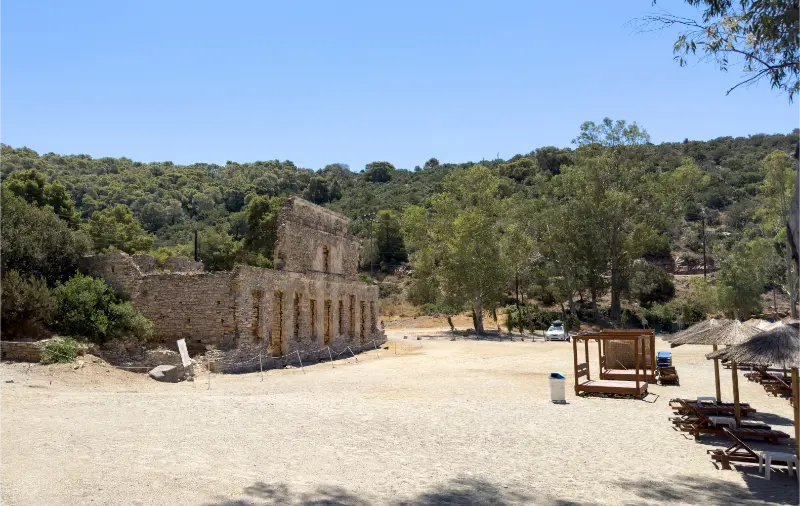
    Russian Naval Dockyard Historic Stone Ruins Sandy Russian Bay Beach Poros Island Greece

    If you are staying only one night, do not spend half the day chasing the “best” beach. Choose the most convenient beach that fits the weather, then return to town for the evening. For a longer stay, use the dedicated beach guide to compare the south and west coasts instead of changing beaches every two hours.

    Where to stay in Poros Town

    Choose the harbour level if easy ferry access, restaurants and minimal luggage handling matter most. Choose the lanes above the waterfront if you want more atmosphere and a view, accepting steps and uphill walking. The town is particularly practical for short stays, late arrivals and travellers who plan to use buses or water transport rather than renting a vehicle.

    Light sleepers should ask about street orientation and nearby bars, especially in July and August. Families with a stroller or travellers with reduced mobility should also ask for the exact route from the port, not just the straight-line distance. Poros is compact, but terrain can matter more than kilometres.

    How much time should you allow?

    For this plan, at least half a day; one or two nights if Poros Town is your base. Poros is compact enough to encourage overplanning, but short distances do not mean every stop belongs in the same day. Travel time, waiting for a bus or taxi, swimming, changing clothes and sitting down for a meal all use time that does not appear on a map.

    A useful rule is one main area in the morning and one in the afternoon. If you are staying several nights, leave at least one unstructured half-day. Poros is at its best when you have time to choose a beach based on that day’s wind and to stay longer at a waterfront table when the atmosphere is good.

    Transport and realistic day planning

    The official Poros municipality tourism site lists buses, taxis, sea transportation and ferry boats to and from Galatas. Frequencies are seasonal, so I would not build a trip around an old timetable. Photograph the current schedule when you arrive, save one taxi contact and keep the final part of any ferry-departure day close to Poros Town.

    If you rent a car or scooter, use it to reach places that are genuinely awkward by public transport rather than moving it for every meal. Parking can be more stressful than walking in the compact town. For isolated beaches or the Temple of Poseidon, agree on a return plan before a taxi drops you off.

    Best time of year for this Poros experience

    Late spring and September are especially attractive for travellers who want warm days, walking and swimming without the peak pressure of July and August. High summer brings the broadest beach services and liveliest evenings, but small coves fill faster and midday heat makes exposed archaeological or uphill walks less comfortable.

    Poros also works outside the classic beach season because the town, mainland connection and cultural sights do not disappear when sunbeds do. In cooler months, verify ferry frequency, museum hours and seasonal restaurants before booking. The trip becomes more about walking, food and local atmosphere than swimming.

    Food, water and the rhythm of the day

    Build meals into the itinerary rather than treating them as gaps between attractions. Poros Town has the widest choice, while Askeli, Neorio and other beach areas have seasonal options. In summer, a long lunch during the hottest hours can be smarter than forcing another walk. Carry water even when you expect a beach bar to be open.

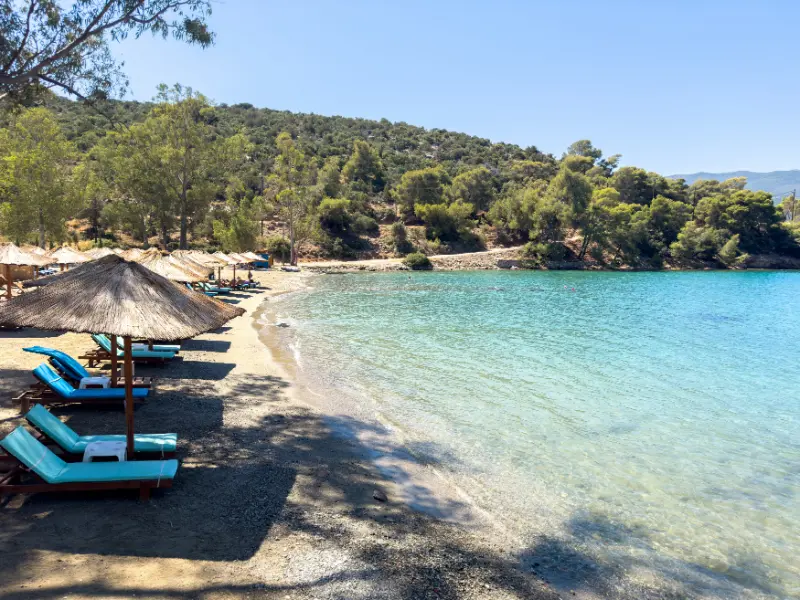
    Russian Bay Beach Poros Island Greece Turquoise Water Sun Loungers Straw Umbrellas Sandy Beach

    For seafood, ask about price by weight before ordering larger fish and compare a few menus. Lemon is part of the area’s identity because of the Lemon Forest opposite the island, but the best meals are often simple Greek dishes rather than elaborate themed menus. Leave room for seasonal fruit and a waterfront coffee.

    Who will enjoy this most?

    This plan is particularly good for first-time visitors, short breaks, car-free stays and travellers who like an evening waterfront. Couples benefit from the island’s short distances and evening waterfront, families can keep transfers brief, and solo travellers can base themselves in Poros Town without needing a vehicle. The main adjustment is pace: children and less-mobile travellers need fewer uphill walks and more certainty about return transport.

    Travellers seeking intense nightlife or huge resort beaches may prefer another Greek island. Poros is strongest as an easy, green Saronic escape where town life, pine coves and mainland access sit close together. That compactness is a feature, not an invitation to schedule every hour.

    Budget and booking strategy

    Compare the total cost of location, not only the room price. A cheap property far from town can create repeated taxi costs, while a central room may remove most evening transport. The same logic applies to ferries: a faster service may cost more but create meaningful extra time on a short trip.

    In July and August, book well-located accommodation and popular ferry departures earlier. For shoulder season, flexibility can save money, but verify that the beach services or water-sports operators you care about are running. Museum and archaeological opening patterns can also differ from summer schedules.

    What to pack

    • Shoes with grip for the clock-tower lanes, archaeological ground and uneven coastal paths.
    • A refillable water bottle, hat and high-SPF sunscreen for summer.
    • A light cover-up for Zoodochos Pigi Monastery and other religious sites.
    • A small dry bag for water taxis, beach days and boat crossings.
    • A downloaded ferry ticket and screenshots of current local transport information.

    Keep the beach bag lighter than you think. Poros is easy when you can switch from town to bus or boat without carrying a full day’s luggage. Buy heavy water locally and keep valuables in a small bag you can take onto ferries and water taxis.

    Poros Island Harbor Greece Boats Calm Blue Water Traditional Architecture Hillside Houses Sky

    Common mistakes to avoid

    • Trying to visit Poros Town, three beaches, the Temple of Poseidon and Lemonodasos in one day.
    • Assuming a small cove will have unlimited shade or sunbeds in August.
    • Using last year’s bus or ferry timetable without checking current service.
    • Booking a hillside room without asking about stairs and luggage access.
    • Walking long exposed road sections at midday simply because the island looks small on a map.
    • Ignoring summer fire-risk restrictions in pine-covered areas.

    More Poros guides

    Continue planning with Askeli and Monastiri Poros Guide: Beaches, Monastery, Water Sports and Where to Stay; Love Bay and Russian Bay Poros Guide: Pine Coves, Naval History, Swimming and Sunset; Temple of Poseidon Poros Guide: Ancient Kalaureia, Demosthenes, Access and Visiting Tips; Lemon Forest and Galatas from Poros: Day Trip, Ferries, Citrus Groves and Practical Tips; Best Beaches in Poros: 12 Beaches for Families, Pine Coves, Water Sports and Quiet Swims. For the island overview, also read the Poros Travel Guide.

    Frequently asked questions

    Do I need a car for this Poros trip?

    No for most short stays. Poros Town, popular beaches and Galatas can be managed with walking, buses, taxis and boats. A rental vehicle is most useful for inland sights, flexible beach-hopping or mainland road trips.

    How many nights should I spend on Poros?

    Two nights is enough for a relaxed introduction; four or five nights lets you add several beaches, the Temple of Poseidon and a mainland outing without rushing. A day trip is possible but should be deliberately simple.

    Is Poros good in September?

    Yes. September is often a strong balance for warm sea, active services and less intense peak-season pressure. Ferry and business schedules still need to be checked for the exact dates.

    Can I combine Poros with another Saronic island?

    Yes, but direct connections vary by date and vessel. Check real ferry schedules before designing an island-hopping route rather than assuming nearby islands connect every day.

    What should I check on the morning of the trip?

    Check ferry or local transport status, wind and heat, any fire-risk restrictions, and opening hours for the specific cultural site you plan to visit. Then keep one backup beach or town activity in mind.

    Check official information before you go

    For destination, transport, beaches and municipal visitor information, use the official Poros Municipality tourism website. For broader destination context and beach descriptions, see Visit Greece: Poros. Opening hours, ferry services and local transport can change, so verify the specific service you need close to travel.

    Final planning advice

    Poros works best when you use its compact size to reduce stress rather than increase the number of stops. Pick one cultural anchor, one beach or neighbourhood, and a good meal. If the wind, heat or ferry timing changes, the island gives you enough alternatives to adjust without losing the day.

    The biggest advantage is choice without huge distances: a waterfront morning can become a pine-cove afternoon, and a beach day can end with a clock-tower sunset. Leave a little empty time in the schedule. On Poros, that is often when the trip begins to feel like a holiday rather than an itinerary.

  • Molyvos Lesvos Guide: Castle, Harbour, Stone Lanes and a 2-Day Stay

    Molyvos Lesvos Guide: Castle, Harbour, Stone Lanes and a 2-Day Stay

    Molyvos, officially Mithymna, is one of the places on Lesvos where the settlement itself is the main attraction. Stone houses climb a steep hillside below a medieval castle, wooden balconies project over narrow lanes, wisteria and vines soften the masonry, and the harbour sits below the old town like a separate little world. It is photogenic, but the reason to stay overnight is not to collect views. It is to experience how the village changes between the hot middle of the day, the golden-hour climb to the castle and the slower harbour evenings.

    Traditional Greece Lesvos Island View Town Molyvos Mithymna With Old Castle

    I would give Molyvos at least two nights if it fits the route. Northern Lesvos is too far from Mytilene and the island’s western geological sights to treat every day as a return trip from one base. Molyvos works especially well as the northern anchor of a longer Lesvos road trip, paired with Petra, Eftalou and inland villages. Use the broader Lesvos Travel Guide for the whole island; this article focuses on how to experience Molyvos without reducing it to a castle stop.

    Where this fits in a Greece itinerary

    For wider planning, continue with Lesvos Travel Guide; Petrified Forest Guide. The most efficient Greece trips connect places geographically and leave enough time for delays, heat and spontaneous stops instead of chasing the largest possible number of destinations.

    What makes this place worth your time

    Walk uphill through the old stone lanes

    The best route is not the shortest route to the castle. Start close to the lower village and let the lanes zigzag upward. Molyvos is known for traditional stone architecture, tiled roofs and projecting wooden upper floors, and these details are easier to notice when you move slowly. Some passages are steep and polished underfoot, so shoes with grip make a real difference.

    The climb is most pleasant early in the morning or later in the afternoon. Midday heat can turn a charming walk into an endurance exercise, while softer light makes the stone colours warmer and the sea visible through gaps between houses. Do not block doorways or photograph residents at close range without permission; this is a living village, not an open-air set.

    Visit the castle for context, not only the panorama

    The fortress above Molyvos occupies a strategic hill that has been used and modified across different historical periods. Even if you are not a specialist in medieval architecture, the location explains why the settlement developed here and why the harbour, coast and routes inland could be watched from above. Check current opening hours before climbing because seasonal schedules can change.

    I like to visit after first walking the village. From the top, streets you have just crossed become part of a coherent pattern rather than a maze. If the castle is closed, the upper village is still worth the climb; simply avoid turning a temporary closure into a reason to abandon the entire area.

    Spend one evening around the harbour

    The harbour feels distinct from the upper old town. Fishing boats, waterfront tavernas and lower light on the water make it a natural place for dinner, especially after a day that involved climbing. Walk there before you are hungry so you can look around rather than sitting at the first table you see.

    A harbour meal is also a good moment to slow the trip down. Lesvos is large, and road-trip travellers often arrive in Molyvos already thinking about the next day’s kilometres. I would resist that impulse. One long dinner and a short walk back through the quieter streets can be more memorable than adding another viewpoint to the schedule.

    Use Molyvos as a base for Petra and Eftalou

    Petra lies close enough to combine with Molyvos without turning the day into a major drive, while Eftalou adds a different coastal atmosphere to the east. The exact order should depend on wind, swimming conditions and where you want to eat. Do not assume the same beach will be ideal every day; north-coast exposure matters.

    If you only have two full days, I would spend one mainly in Molyvos and one on this nearby northern loop. With more time, keep Molyvos as a base and explore farther inland rather than changing accommodation every night.

    Photograph the village from more than one angle

    The classic elevated view is beautiful, but some of the strongest photographs come from details: stone thresholds, shaded passages, painted shutters, harbour reflections and the way the castle appears above rooftops. Morning and late afternoon give different light directions, so repeating a short walk is worthwhile.

    Avoid drones unless you have confirmed current Greek aviation rules, local restrictions and privacy requirements. In a dense settlement, a conventional camera or phone is usually enough and creates less disturbance.

    Planning and getting around

    Molyvos is easiest with a car if it forms part of a Lesvos circuit, but you do not need to drive inside the old core. Park legally at the edge and walk. The steep lanes are part of the experience, yet they also make luggage awkward. If your accommodation is high in the village, ask about vehicle access and luggage transfer before arrival rather than discovering the final staircase with a heavy suitcase. For travellers without a car, build the itinerary around current bus schedules and keep the northern stay compact.

    Island Of Lesvos City Of Molyvos Molivos Greece

    Before travel, I save offline maps, check fuel or public-transport options, and confirm the exact opening hours of any archaeological site or museum that anchors the day. Island schedules change seasonally, and the fact that a bus, ferry or ticket existed last year is not enough reason to assume it works the same way now. A flexible backup plan is part of good Greece travel planning, not a sign that the itinerary is incomplete.

    A realistic itinerary

    This is the pacing I would use for a first visit. It deliberately leaves space for weather, meals and local advice rather than treating every hour as a booking slot.

    • Day 1: arrive by early afternoon, settle in, walk the lower and middle old town, climb toward the castle in softer light, then have dinner by the harbour.
    • Day 2: start early with another village walk, spend late morning and afternoon around Petra or Eftalou depending on weather, then return to Molyvos for sunset.

    Best time to go

    Late May, June and September offer the best balance for walking the old town and swimming nearby. July and August bring the liveliest atmosphere but also the strongest heat and higher demand for parking and rooms. Spring is especially good for architecture and landscapes if swimming is secondary. In autumn, verify transport and seasonal businesses because the island’s scale means reduced services can affect a road trip more than they would on a compact Cycladic island.

    Wind is especially important in the Aegean. A sunny forecast does not automatically mean calm sea conditions, comfortable boat travel or an easy exposed walk. I check the same-day wind and marine forecast before committing to ferries, boat excursions, rock pools or long coastal hikes.

    Food and the rhythm of the day

    Northern Lesvos is a good place to keep meals simple: grilled fish when fresh, vegetables, local cheeses, legumes, olive-oil dishes and meze with ouzo if that suits you. Lesvos has a strong ouzo tradition, but I would treat it as a food accompaniment rather than a tasting challenge, particularly if you are driving. Ask what is local and seasonal instead of ordering only famous Greek dishes you could eat anywhere.

    I also try to avoid driving long distances immediately after a heavy lunch or alcohol. On islands with winding roads, the safer and more enjoyable pattern is to finish the main driving first, then settle into dinner. It sounds obvious, but it is one of the easiest ways to make a road trip feel less tiring.

    Practical mistakes to avoid

    • Driving into narrow old-town lanes when walking is easier
    • Trying to see Molyvos only as a quick castle stop
    • Climbing at midday in peak summer without enough water
    • Booking a room for the view without checking stairs and luggage access
    • Using the harbour only for dinner and missing its morning atmosphere
    • Combining too many northern Lesvos stops into one rushed day

    The recurring lesson is to choose depth over accumulation. These destinations are rewarding because landscape, history and daily life overlap; rushing between famous names usually removes exactly the context that makes them interesting.

    Accessibility and comfort

    Accessibility varies widely in old villages, archaeological sites and natural landscapes. Stone paving, stairs, steep slopes, heat and limited shade can matter more than the straight-line distance shown on a map. Travellers with reduced mobility should contact the specific site or accommodation for current access details. Families with small children should also plan around shade, toilets and safe parking rather than assuming every scenic stop has full visitor infrastructure.

    Responsible travel

    Stay on marked paths, respect temporary closures and never remove archaeological, geological or natural material. Use refillable water bottles where practical, keep noise low in residential and religious areas, and avoid intrusive photography. On beaches and natural sites, take every item you brought back out with you. Small island communities absorb visitor pressure quickly, so simple behaviour has a visible impact.

    Frequently asked questions

    Is Molyvos worth staying overnight?

    Yes. The village is much more enjoyable before day visitors arrive and after the main sightseeing hours end.

    How many days do I need?

    Two days is a good minimum. Three nights work even better if you want Petra, Eftalou and a slower village rhythm.

    Do I need a car?

    Not for the old town itself, but a car is useful if Molyvos is part of a wider Lesvos road trip.

    Is Molyvos very steep?

    Parts of the old town are steep and paved with stone. Travellers with mobility concerns should check the exact location of accommodation carefully.

    Can I visit from Mytilene as a day trip?

    You can, but the distance makes an overnight stay more rewarding and reduces time spent on the road.

    Check current information before your visit

    For official background and current destination information, see Visit Greece – Lesvos. I recommend checking transport, tickets, opening hours and any temporary access restrictions again shortly before travel, especially outside July and August.

    A small planning detail that makes a big difference

    Keep one flexible hour in the middle or at the end of the day. On Greek islands, that buffer absorbs a late meal, a parking delay, a longer museum visit, a change in wind or simply the discovery of a place you want to enjoy for longer. Without that margin, even a good itinerary can start to feel like a timetable. With it, the same route becomes calmer and usually produces better decisions about what to skip and what deserves more time.

    I also keep a screenshot or offline note with the address, opening time and phone number of the day’s most important stop. Mobile signal is usually fine in towns, but remote roads, archaeological areas and mountain sections are exactly where you do not want the entire plan to depend on a live connection. This takes a minute before leaving and can save a surprising amount of frustration later.

    Final thoughts

    The best version of this trip is not the one with the most saved pins. It is the one that leaves enough time to understand why the place looks and feels different from the last stop. Build the day around one or two essential experiences, keep a buffer for heat or transport changes, and let a meal, swim or village walk remain unscheduled. That is usually where the trip starts to feel personal rather than processed.

  • Leros Without a Car: Buses, Taxis, Walking and the Best Bases

    Leros Without a Car: Buses, Taxis, Walking and the Best Bases

    You do not need a rental car to enjoy Leros, but you do need to choose the right base. The island’s most useful car-free areas cluster around Agia Marina, Platanos, Panteli, Alinda and Lakki, while the quietest coves and remote corners require more deliberate transport planning.

    I would build a no-car trip around everyday convenience rather than trying to reproduce a road-trip itinerary with taxis. Stay where you can walk to dinner and at least one swim, then spend transport money on the few places that genuinely add something different: Lakki and the War Museum, the castle ridge or one beach on another coast.

    Can you enjoy Leros without renting a car?

    Yes, but the answer depends heavily on where you stay. Leros is small enough that taxis are realistic for selected trips and several of the most interesting places cluster around Agia Marina, Platanos, Panteli, Alinda and Lakki. The challenge is not distance alone; it is seasonal bus frequency, hills and the fact that some quiet beaches are easiest by private vehicle.

    A no-car trip works best when you accept that you will not sample every cove. Choose a base with a beach or evening restaurants on foot, then use buses and taxis for two or three deliberate excursions. That usually costs less energy than renting a car merely to move it twice a day.

    Best bases without a car

    BaseWhy it worksMain limitation
    Agia Marina / PlatanosServices, castle access, central positionHills and less resort-style beach time
    PanteliBeach, tavernas and evenings on footSlopes; smaller range of practical services
    Alinda / KrithoniEasy beach routine and central accessSpread-out bay; check exact bus stop location
    LakkiFerry port, taxis, architecture and historyLess romantic for a pure beach holiday

    Buses: useful, but keep the schedule flexible

    Public buses connect the main settlements seasonally, but I would not copy a timetable into a long-term travel plan. Frequencies can change and online schedules are not always updated everywhere at the same time. Check the current timetable after arrival, then use it for the days where the route is straightforward.

    If a museum has fixed hours and you need two bus connections to reach it, a taxi can be the better use of money. Save the bus for beach or village days with a wider time window.

    Taxis: where they add the most value

    • Late ferry arrival or early departure from Lakki.
    • War Museum visit when bus timing is awkward.
    • Castle approach for travellers who want to avoid the steepest climb.
    • One remote beach day chosen according to wind.
    • Evening return after dinner when buses have finished or walking is uncomfortable.

    Walking as everyday transport

    Central Leros is very walkable if you choose accommodation well. Agia Marina, Platanos and Panteli can form one walking zone for fit travellers, while Alinda and Krithoni add a second coastal zone. The biggest planning mistake is booking a property that looks close to everything on a flat map but sits high on a slope.

    Marina Of Agìa Marina Leros Island In Dodecanese Greece

    Ask the accommodation about steps, gradients and the nearest practical road pickup point. A “500-metre walk” can be pleasant at 08:00 and miserable at 14:00 in August.

    A four-day no-car plan

    DayPlan
    1Agia Marina, Platanos, castle and Panteli on foot/taxi
    2Alinda, Krithoni and Bellenis Tower
    3Bus or taxi to Lakki, War Museum and nearby swim
    4Choose one beach or boat excursion according to wind and current transport

    When I would still rent a car for one day

    Renting for a single day can be the best compromise if you want Blefoutis, Gourna, Xirokampos and several viewpoints without depending on multiple taxis. Keep the car day geographically coherent, and do not use it for the central settlements where parking and hills can make walking simpler.

    When to go and how to use the day

    A car-free Leros holiday works differently by season. In July and August I would put walks, castle visits, museums and exposed viewpoints early in the day, then use the hottest hours for lunch, a shaded rest or swimming. Late afternoon is when the villages and waterfronts become more enjoyable again. May, June, September and early October are easier for travellers who want to combine sightseeing with walking rather than organising the entire day around heat.

    Wind matters on Leros because the coastline is deeply indented. A beach that feels exposed one day may be pleasant the next, while another bay can stay relatively calm. I would keep one flexible afternoon rather than assigning every beach to a fixed date. Choose beaches based on the transport you actually have that day rather than the theoretical island-wide list.

    Transport and realistic pacing

    Combine walking with buses and occasional taxis; confirm seasonal service after arrival and keep ferry-day transfers simple. The island is not huge, but short map distances do not always mean a quick, flat walk. Hills, summer heat and the shape of the bays make route planning important. If you are relying on buses, confirm the current timetable locally rather than building the day around an old online schedule.

    For most visitors, two substantial experiences plus a good meal and a swim create a better day than five rushed stops. This is especially true around the central settlements and Alinda, where it is easy to underestimate how much time disappears into viewpoints, photographs, museum rooms and unplanned waterfront breaks.

    What to pack

    • Shoes with useful grip for castle approaches, stone lanes and uneven coastal paths.
    • A refillable water bottle; exposed hills and quieter beaches may have limited services.
    • High-SPF sunscreen, a hat and a light shoulder cover for strong summer sun.
    • Swim shoes if you prefer them for pebble or mixed-surface beaches.
    • A light layer for breezy evenings and boat rides outside peak summer.
    • Offline maps or saved pins if your plan includes minor roads, remote coves or walking routes.

    Who this plan suits best

    It suits couples, solo travellers, short-stay visitors and families who choose a practical beachfront or central base rather than a remote villa. Leros rewards travellers who leave space in the schedule. The island is not about racing between a long list of blockbuster sights; its appeal comes from the combination of small bays, layered twentieth-century history, low-key villages and evenings that still feel local.

    Common mistakes to avoid

    • Treating every beach as equally sheltered regardless of wind direction.
    • Assuming a short distance on the map is automatically an easy walk in midday heat.
    • Using old museum or bus hours without checking them again for the current season.
    • Planning only beaches and missing the island’s unusually important Italian and Second World War heritage.
    • Changing accommodation unnecessarily on a short stay instead of using one practical base.
    • Trying to fit a museum, a castle, a remote beach and a long dinner into one tightly timed afternoon.

    How I would make the plan more reliable

    The most useful way to plan Leros without a car is to separate fixed commitments from flexible ones. A museum opening time or ferry departure is fixed; a swim, café stop or sunset viewpoint is flexible. Put the fixed element first, then keep the beach or meal that follows adjustable. This prevents a small timetable change from collapsing the entire day.

    I would also avoid judging travel time from distance alone. Leros has bays, hills and narrow roads, and a route that looks very short can include parking, a climb or a wait for a taxi. Add buffer time, especially when you have a ferry later that day. On a holiday this small adjustment is more valuable than adding one extra attraction.

    Finally, use local conditions as information rather than an inconvenience. If wind makes your planned beach uncomfortable, switch bay. If the castle is closed, spend longer in the villages and return another morning. If a museum hour changes, move the swim forward. Leros works best when the itinerary responds to the island instead of trying to force the island to follow a spreadsheet.

    Budget and booking notes

    Leros is generally easier to manage financially than islands dominated by luxury resorts, but summer accommodation and transport still reward early planning. Book the room that solves the most daily problems: walkable dinner, acceptable beach access, manageable steps and a sensible route from the ferry. Spending slightly more on the right base can save repeated taxi fares and wasted time.

    Leros Dodecanese Greece

    For tours and activities, compare the cancellation terms, exact meeting point and whether transport is included. For independent days, keep small cash available for local services that may not fit a fully digital routine. Prices and opening periods change, so treat any old blog total as a reference rather than a promise.

    Accessibility and slower travel

    Travellers with limited mobility should ask unusually specific questions on Leros: number of steps from the road to the room, whether the restaurant route is level, where a taxi can actually stop and whether a beach has a stable entry. Historic lanes and hillside accommodation can be beautiful but demanding. A well-chosen base and a few taxi transfers can make the same island much easier.

    Slow travel also improves the experience for everyone else. Staying longer in one bay, returning to the same taverna and walking a village twice at different times of day reveals more than a fast island checklist. Leros has enough detail for this approach, especially when history, swimming and local life are all part of the reason you came.

    Continue planning Leros

    Start with the Leros Travel Guide for the island-wide overview, then use these dedicated guides: Agia Marina, Platanos and Panteli Leros Guide; Lakki Leros Guide; Leros War Museum and WWII Guide; Alinda and Krithoni Leros Guide; Best Beaches in Leros; Leros Diving Guide; Leros Hiking Guide; Leros with Kids; Where to Stay in Leros.

    Leros Without a Car FAQ

    What is the best base in Leros without a car?

    Panteli works well for beach-and-evening atmosphere, Agia Marina/Platanos for central services and sightseeing, and Alinda for an easy beach holiday.

    Are buses enough for the whole island?

    They are useful for the main corridor, but seasonal frequency can limit remote-beach plans. Mix buses with taxis rather than forcing every day around the timetable.

    Can I walk between Agia Marina and Panteli?

    Yes if you are comfortable with hills. Avoid the hottest part of the day and remember that accommodation can sit above the water.

    How do I reach the War Museum without a car?

    Use the current bus service if it fits the museum hours or take a taxi. The museum is close enough to Lakki to combine both in one outing.

    Should I rent a car for one day?

    It can be worthwhile for a north-and-south beach circuit or remote coves, while keeping the rest of the holiday car-free.

    Useful official information

    For current local information I check the Municipality of Leros and Visit Greece – Leros. Bus schedules are seasonal; use the municipality and local stops to confirm the current service after arrival rather than relying on an old timetable. Opening hours, local transport, boat services and seasonal businesses can change, so recheck anything time-sensitive shortly before the day you plan to use it.

  • Sikinos Chora Guide: Kastro, Chorio, Monastery, Squares and Where to Stay

    Sikinos Chora Guide: Kastro, Chorio, Monastery, Squares and Where to Stay

    Explore Sikinos Chora with a practical guide to Kastro, Chorio, Panagia Pantanassa, the folklore and Byzantine museums, Zoodochos Pigi and where to stay.

    Chora is where Sikinos reveals its character most clearly. The settlement sits high above the sea rather than around the ferry harbour, and its whitewashed lanes, old houses, small squares and cliff-edge views make it worth more than a quick evening visit. Visit Greece emphasizes the traditional Cycladic architecture, while local tourism material distinguishes the historic Kastro core from quieter Chorio.

    Quick planning notes

    • Give Chora at least one full morning and two evenings; the atmosphere changes dramatically after the day heat fades.
    • Kastro and Chorio are adjacent but feel different: one more compact and social, the other quieter and more residential.
    • Panagia Pantanassa, the folklore museum and the Byzantine collection add useful context beyond the picturesque lanes.
    • The walk to Zoodochos Pigi is one of the easiest ways to combine Chora with a sunset or late-afternoon viewpoint.

    Kastro: the compact historic core

    Kastro forms the tightest part of Chora, with narrow paved lanes, white houses and small gathering spaces that feel almost theatrical in the evening. Fast Ferries notes the survival of traditional mansions and Cycladic architecture, but the best way to appreciate the area is not to follow a strict route. Walk slowly, notice doorways and courtyards, and return to the same lanes at a different hour when light and activity have changed.

    The settlement is small enough that orientation comes quickly. That is useful because you can separate practical errands from sightseeing: buy water and breakfast supplies first, then explore without constantly checking a map. The absence of traffic inside the narrowest lanes is part of the appeal, but luggage can be awkward, so confirm how close a taxi or transfer can get to your accommodation.

    Panagia Pantanassa and the main squares

    Panagia Pantanassa is one of the principal churches of the island and, according to Fast Ferries, dates to 1787. Its central position makes it a natural reference point when moving through Kastro. Respect services and local worship; a church that looks like a sightseeing landmark is still an active religious space.

    Nearby squares and cafe tables become the social center after sunset. Rather than rushing to dinner at a fixed time, use the evening to understand the rhythm of Chora: families appear, walkers return from trails, and visitors who spent the afternoon at the beach gather in a surprisingly compact area. This is one reason to sleep in Chora rather than visit only on a bus from the port.

    Sikinos Greek Island Port White Buildings Blue Sky Cyclades Greece

    Chorio and the folklore museum

    Chorio is quieter and more residential, with traditional houses and a slower pace than Kastro. The Folklore Museum is housed in an old olive press and presents tools and everyday objects connected with older island life. It is a small museum, but on Sikinos scale is an advantage: the collection helps explain the terraces, agriculture and domestic architecture you see on walks.

    Opening patterns on small islands can change by season, so confirm locally rather than building an entire day around a published hour. If the museum is closed, Chorio is still worth walking through. The relationship between the houses, lanes and agricultural edge of the village provides much of the context the exhibits are designed to explain.

    Byzantine art and island churches

    Fast Ferries also highlights a Byzantine museum in Chora with icons from the fifteenth and sixteenth centuries. Together with Panagia Pantanassa, the many chapels around the island and the later Christian use of Episkopi, it shows how religious history is woven into everyday geography rather than concentrated in one monumental site.

    Dress with the same modesty you would use in other Greek churches and avoid photographing people during worship without permission. When a building is closed, do not treat that as a failure: many of the island’s churches are better understood as part of a living landscape than as formal museums.

    Zoodochos Pigi Monastery

    The fortified Monastery of Zoodochos Pigi stands above Chora on the cliff edge. Fast Ferries describes it as fortress-like, while Visit Greece includes the Chora–monastery walk among the island’s recommended signed routes. The ascent is not a major hike, but sun and wind can make it feel more exposed than the distance suggests.

    Late afternoon is ideal for the landscape, provided you leave enough daylight for the return. Respect any access restrictions and avoid treating monastery grounds as a sunset terrace. The strongest experience is the combination of the walk, the defensive architecture and the view over the Aegean.

    Eating and evenings in Chora

    Chora has the island’s strongest concentration of cafes and tavernas, but choice is still modest compared with Ios or Santorini. This makes advance research less important than asking what is available that day. Local dishes may include fava fritters, caper preparations, pies, goat and rooster cooked with wine, while local wine is part of Sikinos identity.

    View Sikinos Island From Greece

    In high summer, eat a little earlier or reserve if there is one place you particularly want. At quieter times, be flexible about opening days. A small island does not need dozens of restaurants to offer a good food experience; the quality often comes from seasonal ingredients and repeat visits where staff recognize you.

    Who should stay in Chora

    Chora is the best base for travellers who value atmosphere, restaurants, sunset walks and direct access to several hiking routes. It is also convenient if you plan to visit Episkopi and the monastery more than once or want to experience village life before day visitors arrive from the port.

    Alopronia is easier for people with very early ferry departures, families who want immediate beach access or anyone with limited tolerance for hill transfers. If you stay in Chora, ask your host about luggage help and current bus connections from the port, especially when arriving on an evening ferry.

    Alopronia Sikinos Island Greece

    Where to stay and when to book

    Sikinos has a much smaller accommodation supply than Santorini, Paros or Naxos. That is part of its appeal, but it also means that the best-located rooms in Chora and Alopronia can disappear early for July and August. Compare the exact position on a map, not only the property name, because a beautiful hillside room may involve steps, steep lanes or a walk that feels very different with luggage in midday heat. Check current Sikinos accommodation on Booking.com.

    For a short first visit, convenience usually matters more than a dramatic view. Chora is stronger for evenings, atmosphere and trail access, while Alopronia is easier for ferry days and quick swims. If you are travelling without a car, ask the host how far the nearest bus stop is and whether they can help with luggage when ferries arrive late.

    How to make the trip work in practice

    Sikinos works best when the itinerary follows the island rather than fighting it. Plan one main objective per half-day: a monument, a trail, a beach or a long meal. Boat-access beaches depend on wind, walking routes are exposed to sun, and small museums or churches may not operate with big-island opening patterns. Keep a second option ready and confirm local details after arrival.

    Carry water, sun protection and an offline map whenever you leave the two main settlements. Services are intentionally limited outside Chora and Alopronia. That does not make the island difficult; it simply rewards travellers who prepare before setting out and who leave enough time to enjoy a place instead of rushing between checkpoints.

    Frequently asked questions

    Is Sikinos Chora worth staying in?

    Yes. Chora offers the strongest evening atmosphere, restaurants, traditional architecture and access to several trails. It is the best all-round base if beach-at-the-door convenience is not your first priority.

    How far is Chora from Alopronia?

    Visit Greece describes Alopronia as about 3 km from Chora. The road is short, but the elevation makes walking with luggage less attractive than using the bus or a transfer.

    What is the best time to walk around Chora?

    Early morning is quiet and good for photography; late afternoon into evening gives softer light and more local activity.

    Useful sources for current information

    For details that can change, use the Municipality of Sikinos, the official Visit Greece Sikinos page, the Visit Greece hiking guide and the official Sikinos beaches overview. Ferry routes and seasonal sailings should be checked again shortly before travel through the Fast Ferries Sikinos page or your booked operator.

    Related guides

    • Alopronia Sikinos Guide: Port, Beach, Ferries and Where to Stay
    • Episkopi Sikinos Guide: Roman Mausoleum, Byzantine Church and Archaeology
    • Sikinos Hiking Guide: Seven Trails, Monastery, Episkopi and Coast
    • Where to Stay in Sikinos: Chora, Alopronia or the Countryside?

    A slower rhythm is part of the destination

    One of the easiest mistakes on Sikinos is to judge the island by the number of formal attractions. Its strength is the relationship between Chora, terraced fields, dry-stone walls, chapels, old paths and small coves. A morning walk that ends with lunch can be a complete day rather than a gap between major sights. The same is true of an evening in Kastro: there is no need to add another excursion simply because the map looks small.

    This slower approach also protects the trip from weather changes. If wind makes a boat excursion unattractive, walk a signed trail or spend more time in Chora. If the afternoon is too hot for hiking, use the beach and move the trail to early morning. Travellers who leave this flexibility usually see more of the island in a meaningful way than those who try to complete a fixed checklist.