Author: Jessica

  • Kimolos Chorio Guide: Medieval Castle, Alleys, Museums, Food and Where to Stay

    Kimolos Chorio Guide: Medieval Castle, Alleys, Museums, Food and Where to Stay

    Explore Chorio in Kimolos with a practical guide to the medieval Kastro, Archaeological and Folk museums, churches, sunset walks, food and the best areas to stay.

    Kimolos rewards travellers who plan around its small scale rather than trying to treat it like a larger resort island. The practical details in this guide are designed for independent visitors: what is genuinely walkable, where transport saves time, how wind changes a beach day, and which places deserve unhurried time.

    Quick planning notes

    • Use the local name Chorio rather than assuming every Cycladic capital is called Chora.
    • Plan at least one daylight walk and one evening walk: the lanes feel very different after sunset.
    • Museum opening days can change outside high season, so verify locally before building a tight schedule.
    • If you have heavy luggage, ask your host about the nearest vehicle-access point before arrival.

    Why Chorio deserves more than an evening stroll

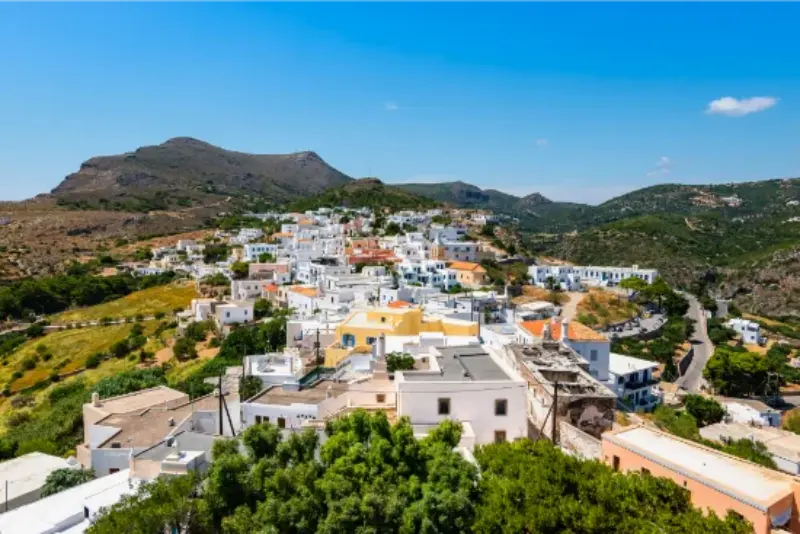
    Chorio is the only true town on Kimolos and the place where most daily life, shops, bakeries, tavernas and evening activity are concentrated. It spreads below Xaplovouni rather than forming a simple seafront strip, so the village rewards slow exploration. A first walk should be deliberately unstructured: follow the lanes around the castle, note the small squares and churches, and learn where the useful services sit. Once you know the layout, later evenings become effortless because you can move between dinner, a drink and a viewpoint without checking a map every few minutes.

    The village also works as the best all-round base for travellers without a car. Buses and taxis are easiest to use from here, many hiking routes begin in or near Chorio, and the port at Psathi is close enough for arrival and departure logistics. The trade-off is that you do not wake beside a large sandy beach. For most first-time visitors, that is a sensible compromise because Kimolos is small and the variety of beaches is better explored than experienced from a single resort strip.
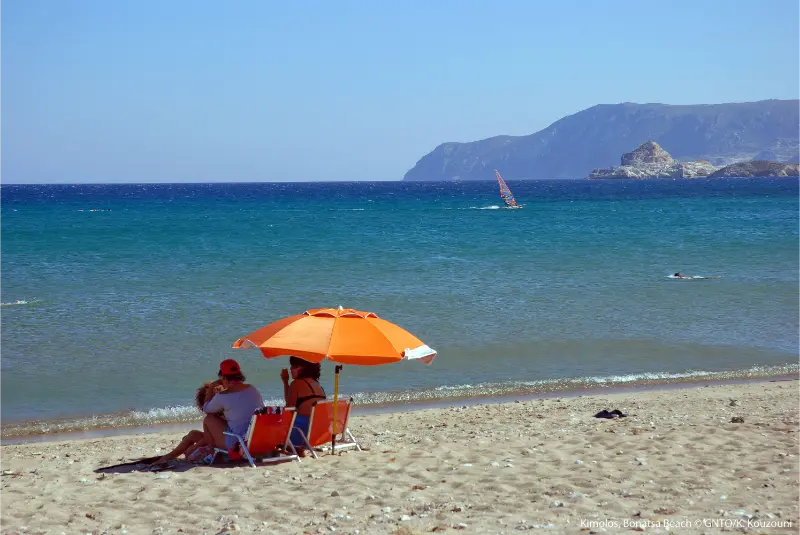
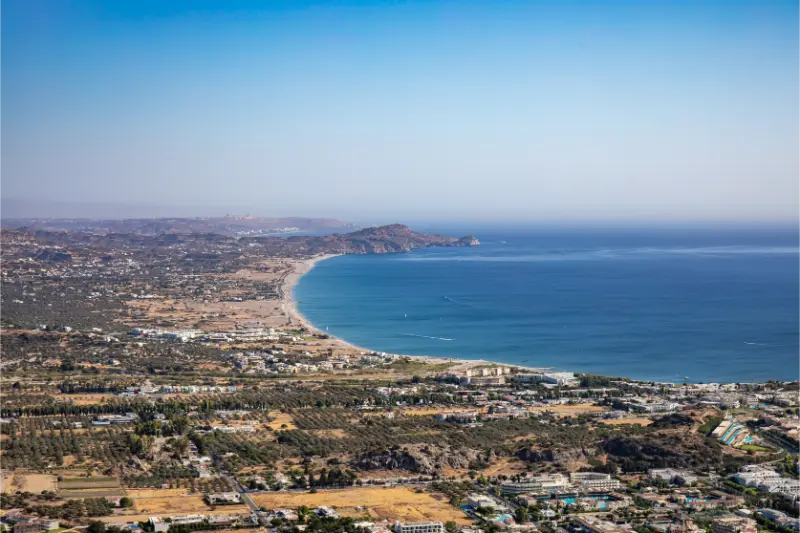
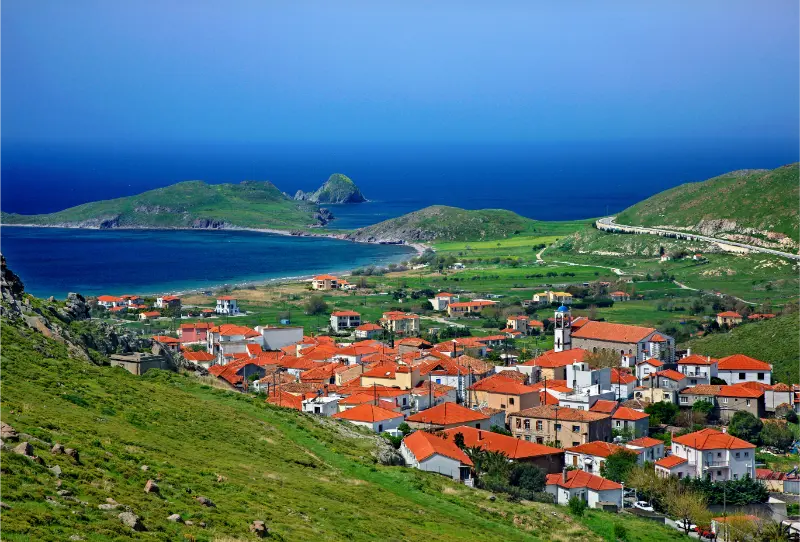
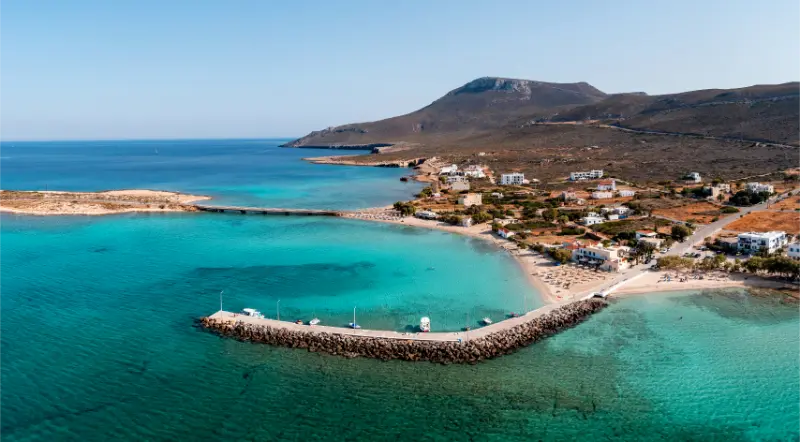
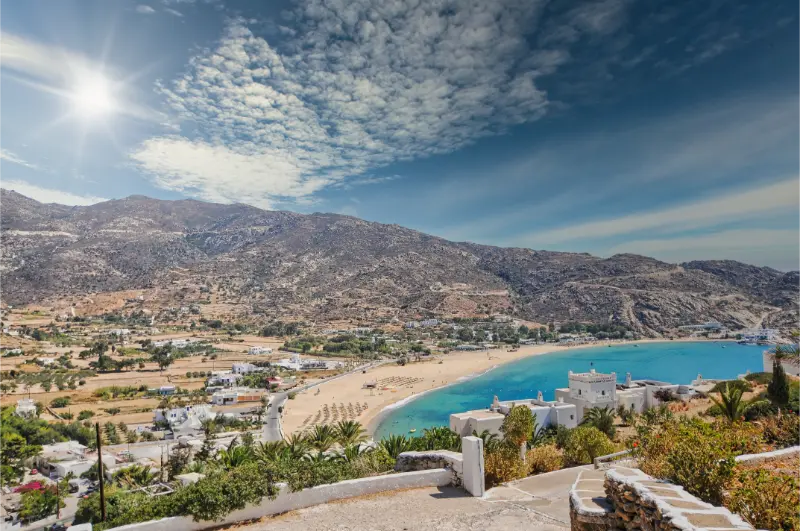
    Kimolos Bonatsa Beach

    Mesa Kastro and Exo Kastro: understanding the medieval core

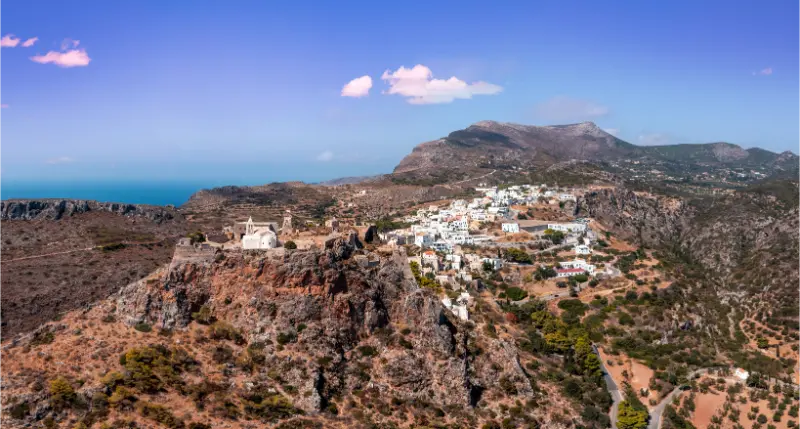
    The historic heart of Chorio is its medieval castle, a fortified residential complex rather than a single monumental fortress. The older inner section, Mesa Kastro, and the surrounding Exo Kastro preserve the logic of a settlement designed for defense during an era of piracy. Houses themselves formed part of the outer defensive wall, and narrow passages still reveal how compact the protected core once was. Look for changes in masonry, old lintels and the relationship between gates, houses and tiny open spaces instead of expecting a reconstructed citadel.

    The castle is best visited in the morning or late afternoon, when the light reveals the texture of the local stone and the lanes are cooler. Because people still live around the historic fabric, keep voices low, avoid blocking doorways and do not treat private terraces as viewpoints. The Folk and Maritime Museum is positioned in the castle area, making it easy to combine architecture with a more detailed look at household life, traditional occupations and Kimolos’s relationship with the sea.

    Archaeological Museum and Folk and Maritime Museum

    The Archaeological Museum stands opposite the Metropolitan Church of Panagia Odigitria in a traditional two-storey building. Its compact scale suits the island: rather than overwhelming visitors with thousands of objects, it traces the history of Kimolos through finds and interpretation. One memorable feature is the transparent floor above a reconstructed ancient burial. Allow roughly an hour if the museum is open, more if you like reading labels carefully and want context before visiting archaeological landscapes elsewhere on the island.

    The Folk and Maritime Museum complements it by focusing on everyday island life. Displays include tools connected with farming and trades, textiles, household objects and maritime material. Visiting both museums before a hiking or village day makes details in the landscape easier to read: dry-stone walls, old agricultural terraces, boat houses and the relationship between the settlement and surrounding countryside stop looking decorative and start making historical sense.

    Churches, windmills and the upper village

    Kimolos has an unusually dense collection of churches and chapels for such a small island. In Chorio, the Metropolitan Church of Panagia Odigitria is an obvious landmark, but smaller post-Byzantine churches are equally rewarding if you enjoy architecture. Dress respectfully if a church is open, avoid photography during services and remember that many chapels remain active parts of local religious life rather than tourist exhibits.
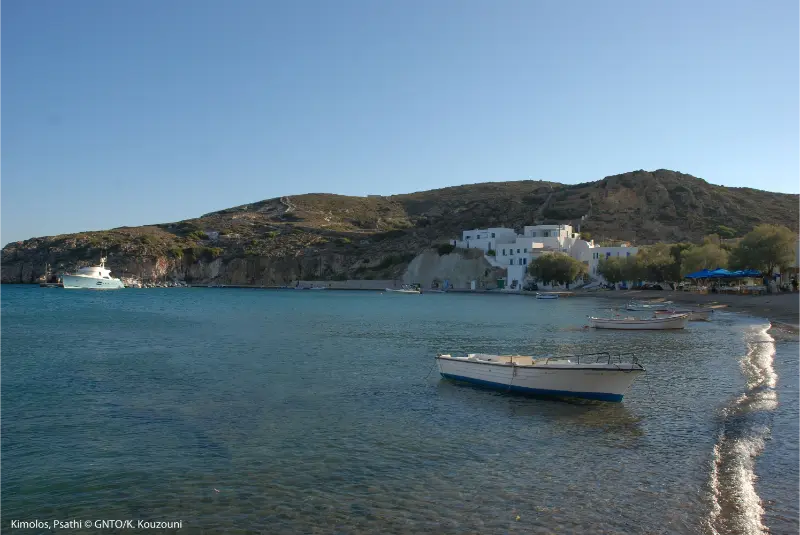
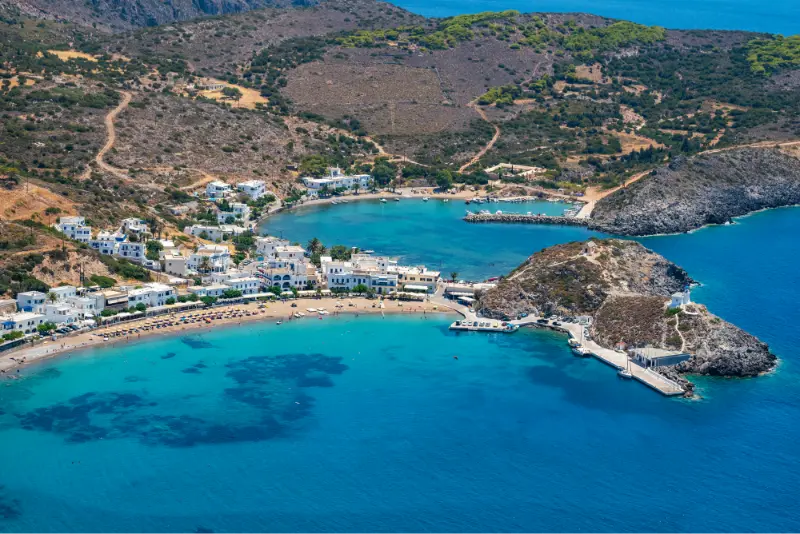
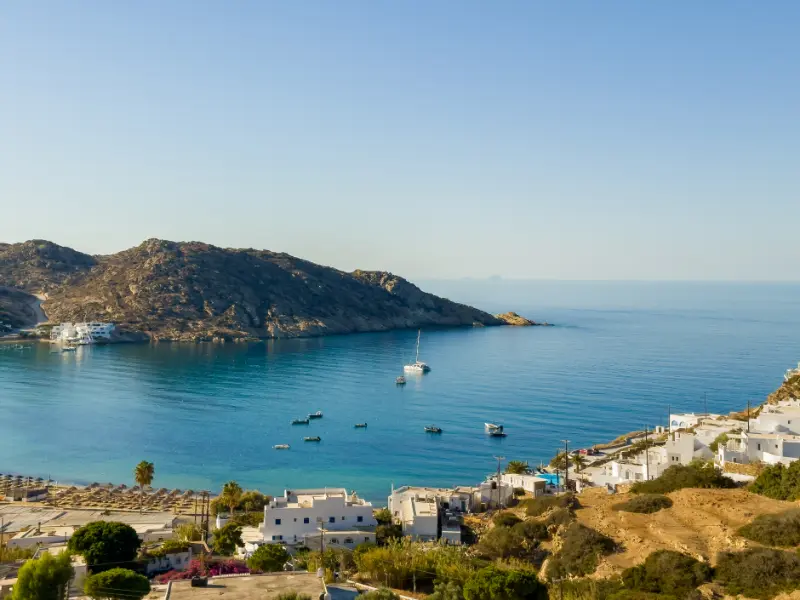
    Kimolos Psathi

    For broader views, walk toward Xaplovouni and the old windmill area. The route lifts you above the dense white houses and opens perspectives toward the surrounding Cyclades. Pantokratoras is another useful viewpoint. Go near sunset, but bring a small light or use your phone torch for the return because uneven lanes and rural path sections become harder to read after dark.

    Food, coffee and evening atmosphere

    Chorio is the best place to sample Kimolos’s distinctive food without planning every meal around transport. Look for ladenia, the island’s baked flatbread topped with tomato and onion, along with tirenia, local cheeses such as xino and manoura, capers and seasonal dishes built around simple Cycladic produce. Not every restaurant serves every specialty every day, so ask what is actually homemade rather than treating a checklist as an obligation.

    Evenings are social but not dominated by large clubs. Dinner often flows into a drink in one of the small squares or lanes, and the atmosphere is livelier in August without losing the village scale. Families can eat relatively early; couples and groups may prefer a later dinner after a beach day. In peak weeks, reserving one or two dinners can be useful, but leaving some evenings spontaneous helps you follow local recommendations.

    Where to stay in Chorio

    Central Chorio is ideal if you want restaurants and shops within a few minutes, but exact access matters more than the map suggests. Some rooms require stairs or a walk through narrow pedestrian lanes. If mobility, a stroller or heavy luggage is a concern, ask the property where a taxi can stop and whether someone can help with bags. A room on the village edge may offer easier vehicle access or a wider view, while a room deep inside the old lanes gives more atmosphere.

    Noise varies street by street rather than neighborhood by neighborhood. A room above an active square can be cheerful but late, while a lane only a few turns away may be quiet. Read recent reviews for practical comments about steps, air conditioning and nighttime noise. On Kimolos, those details usually matter more than resort-style amenities.

    How Chorio fits into a three-day plan

    On a short stay, give Chorio your arrival evening, one early morning and at least one relaxed dinner. Use the first evening to learn the layout and the next morning for the museums or castle before beach heat builds. A second evening can focus on the upper village and sunset. This rhythm prevents Chorio from becoming merely the place where you sleep between beach trips.

    If you have four or five nights, pair the village with a hiking morning, a Prassa beach day and a boat excursion to Polyaigos. Because all roads and many paths relate back to Chorio, the village naturally becomes the point where separate experiences connect. That makes it useful to learn it well early in the trip rather than saving it for the final afternoon.

    Best time of day and seasonal considerations

    June and September usually offer the easiest balance for walking, sightseeing and swimming, while July and August bring the greatest choice of open businesses and the largest crowds. Midday heat can make the stone lanes feel exposed, so museums, a long lunch or a beach break fit naturally into the hottest hours. Spring is appealing for walkers, but ferry frequency and hospitality services can be more limited.

    Wind also changes how the village feels. Strong meltemi conditions can make exposed viewpoints unpleasant even when the inner lanes remain comfortable. Instead of canceling a day, use the sheltered core, museums and food stops, then move to a viewpoint when conditions ease.

    Where to book accommodation

    Accommodation is limited compared with larger Cycladic islands, especially in July and August. Compare location carefully rather than choosing only by room style: a property in Chorio gives the easiest evenings, while coastal stays trade convenience for quicker beach access. Check current Kimolos accommodation on Booking.com.
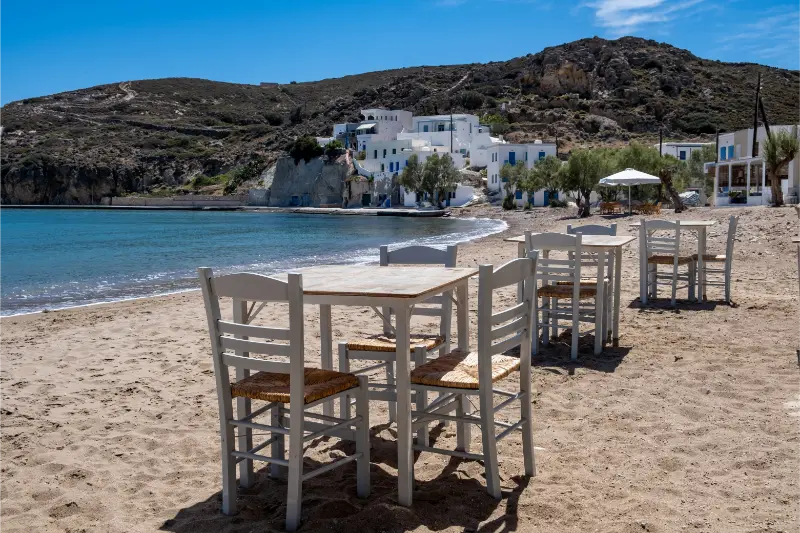
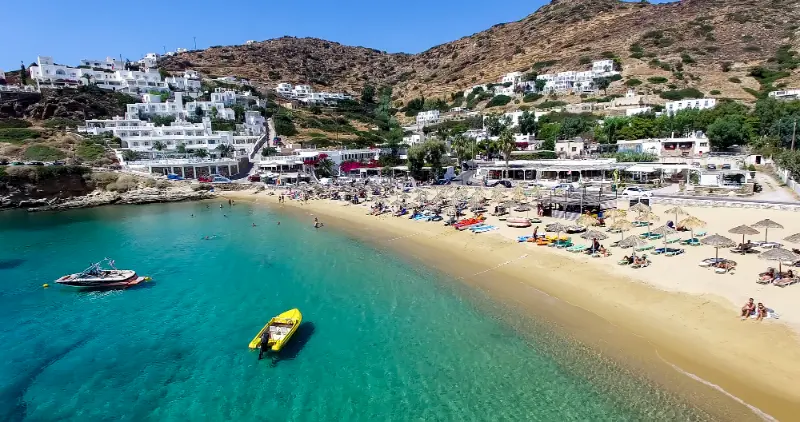
    Beach Of Psathi On Island Of Kimolos In Greece

    Frequently asked questions

    Is Chorio the same as Chora in Kimolos?

    Locally, the municipality uses the name Chorio. You will still see “Chora” in some travel material, but Chorio is the island’s own name for its main settlement.

    How long do I need in Chorio?

    A half-day covers the main sights, but staying in or near the village lets you experience the atmosphere after day-trippers leave and makes transport easier.

    Can I visit Chorio without a car?

    Yes. Chorio is the best base for a car-free trip because you can walk locally and use buses, taxis or boats for beaches and excursions.

    Useful official resources

    For information that can change after publication, use the Municipality of Kimolos for local services and island information, the Visit Greece Kimolos page for destination background, and the municipality’s ferry timetable page before fixing transfers. Ferry and local transport times can change by season, weather and operator, so confirm the exact day rather than relying on an old screenshot.

    Related Kimolos guides

  • Tsambika Beach Rhodes Guide: Golden Sand, Monastery and a Perfect Beach Day

    Tsambika Beach Rhodes Guide: Golden Sand, Monastery and a Perfect Beach Day

    Tsambika is one of Rhodes’ classic east-coast beach stops: a broad strip of fine golden sand beneath the hill of Panagia Tsambika. Visit Greece specifically highlights the beach for its golden sand and its position below the historic monastery, while Rhodes municipal tourism information describes the upper monastery at roughly 320 metres above sea level. The result is a rare day where a straightforward beach can be paired with a short but steep cultural walk.

    This guide is designed for travellers who want to use the area well rather than simply photograph it. For wider planning, keep Rhodes Travel Guide, Lindos Travel Guide, Valley of the Butterflies Rhodes Guide open in another tab so you can see how this stop fits into the rest of the trip.

    Why this place deserves its own guide

    A destination becomes much easier to enjoy when you understand its scale, the best time of day and the trade-offs between convenience and atmosphere. The most common planning error in Greece is not choosing the wrong attraction; it is stacking too many good places into one day. The sections below focus on the practical decisions that make the experience calmer, more flexible and more rewarding.

    What to see and do

    The beach

    Tsambika is long enough to absorb more visitors than a tiny cove, and its sand makes it especially appealing to families. Organised sections provide loungers, food and water sports in season. Even on a family-friendly beach, sea conditions deserve attention: wind and boat activity can change the water, so choose swimming areas appropriate to your ability.

    The upper monastery

    The old monastery sits high above the coast. Rhodes municipal information describes a steep approach of roughly 500 metres and about 300 steps from the upper parking area. The climb is short but exposed, especially in summer. Go early, carry water and wear proper shoes. The reward is a panoramic view over Tsambika and the east coast rather than a large architectural complex.

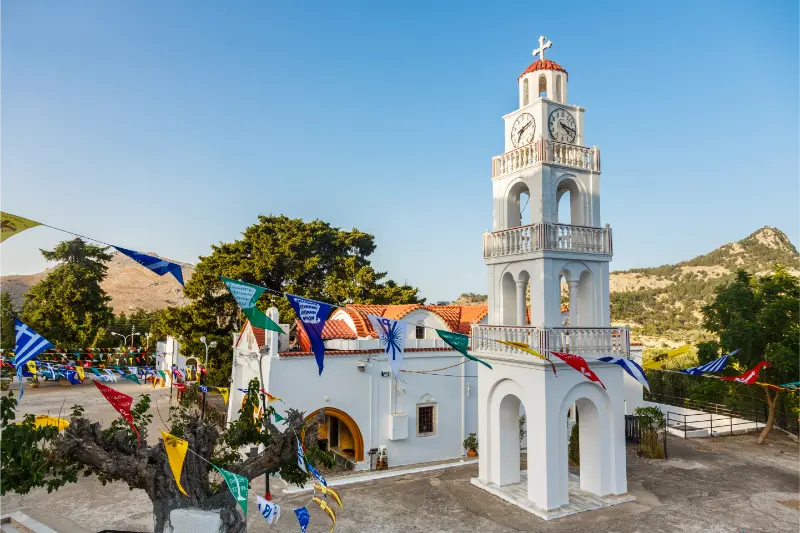
    Monastery Panagia Tsambika Rhodes Dodecanese Greece

    The lower monastery

    Do not confuse the hilltop chapel with the lower monastery beside the main road. The two are connected by tradition but are separate stops. If religious history interests you, allow time for both and dress respectfully. Opening access can vary around services and celebrations, so treat interior visiting as dependent on local conditions.

    A beach day with children

    The combination of sand, facilities and relatively easy road access makes Tsambika popular with families. Arrive early to choose a comfortable spot and bring sun protection because natural shade is limited. The monastery climb is a different activity: families with young children should judge heat and stamina rather than treating it as obligatory.

    East-coast road trip position

    Tsambika sits between Rhodes Town and Lindos, which makes it easy to include on an east-coast driving day. The danger is overloading the itinerary. Lindos deserves several hours on its own, and a long beach session deserves time too. Combine only if you are happy to keep one of the stops short.

    Best time to visit

    June and September are excellent for warm water and slightly lower crowd pressure. July and August bring the busiest beach atmosphere and strongest midday heat. If you want to climb to the monastery, morning is far better than afternoon. Late-day beach time can be beautiful, but remember the mountain changes where direct sun disappears first.

    Whatever the month, use the weather you actually have. Strong wind, heat, rough sea or a local event can matter more than the seasonal average. On exposed walks, beaches and archaeological terrain, an early start often improves both comfort and photography. Keep one flexible block in the day so a delay does not force you to rush the experience you came for.

    How to get there and move around

    Tsambika lies on the east side of Rhodes between the main town and Lindos. A rental car is the easiest option, though public buses serve major east-coast routes in season. The beach access road and the monastery access are separate, so do not expect to park once and casually walk between them in beach sandals. Plan the climb and swim as two distinct parts of the day.

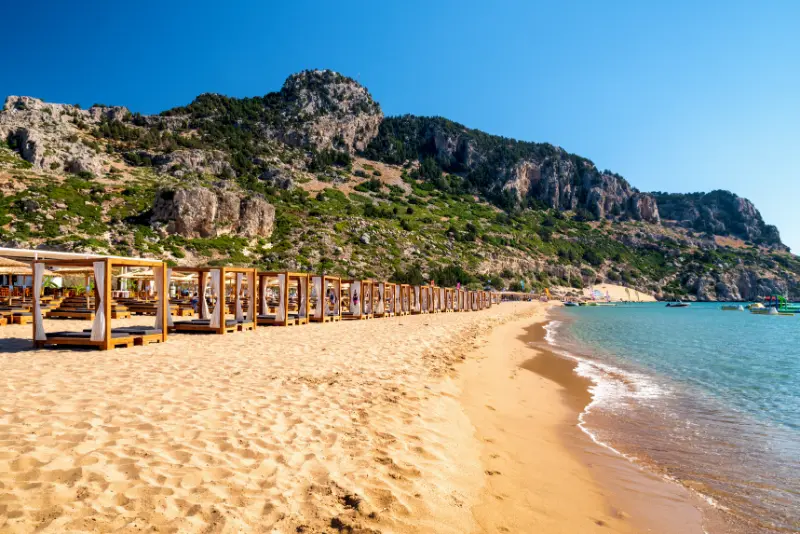
    Tsambika Greece Sandy Tsambika Beach Rhodes Island Greece

    Do not judge transport only by kilometres. Island roads, central-city traffic, parking searches and walking access can turn a short map distance into a much longer transfer. When public transport is part of your plan, recheck the current timetable close to travel day. When driving, save the parking point in advance and avoid entering pedestrian lanes simply because navigation software suggests the shortest line.

    Where to stay

    There is no need to stay directly at Tsambika to enjoy it. Kolymbia, Archangelos and Lindos-area accommodation provide different atmospheres within driving distance. Families may prefer a resort with a pool and evening services; couples may choose Lindos or Rhodes Town for atmosphere. Pick your base for the whole trip, not for one beach.

    Before booking, zoom in on the exact property location rather than trusting the neighbourhood name. Check stairs, road access, bus stops, late-night noise and the walk back after dinner. A room that looks only 500 metres from a beach or landmark can feel very different when the route is steep, unlit or exposed to traffic. Location should support the way you actually plan to spend your days.

    Food and evening atmosphere

    Seasonal beach tavernas and snack options make a full day easy. For a more substantial local meal, continue toward Archangelos or another village rather than assuming the beach is the only dining choice. Ask prices before ordering extras at organised beach sections and keep water with you if climbing the monastery.

    Greek travel is better when meals are given enough time. Avoid planning dinner as a 45-minute gap between attractions. Sit down after the hottest part of the day, order at the pace of the place and keep room for an unplanned walk afterwards. In heavily visited areas, moving one or two streets away from the obvious viewpoint often changes both prices and atmosphere.

    A realistic one-day plan

    Arrive early and either climb to the upper monastery before the heat or begin with a quiet swim. If you climb first, descend, change into beach clothes and spend the rest of the morning swimming. Have lunch near the beach, then stay for a slow afternoon or continue to Archangelos. Save Lindos for a separate morning unless your trip is very short and you are comfortable with a faster pace.

    Build the day around one priority and one secondary activity. If the priority takes longer, drop the secondary stop without regret. This is especially important on islands, where parking, buses, wind or heat can alter timing. A good itinerary should survive a 30-minute delay without collapsing into stress.

    Families, mobility and accessibility

    Families should plan around shade, toilets, meal timing and realistic walking stamina rather than adult sightseeing speed. For travellers with reduced mobility, accessibility varies sharply between modern promenades and historic lanes, rocky beaches or stair-heavy villages. Contact accommodation or the relevant site directly if step-free access is essential; generic labels such as “easy walk” are not precise enough for important mobility decisions.

    Common mistakes to avoid

    • Climbing to the monastery at midday in peak summer
    • Assuming beach parking and monastery parking are the same
    • Trying to combine a full Lindos visit and full beach day
    • Underestimating sun exposure because facilities are available
    • Treating a religious site primarily as a photo prop

    Most of these mistakes come from the same habit: planning from a map without considering how the place behaves in real life. A few minutes spent checking terrain, weather, parking and current access rules can save hours of frustration. Keep screenshots of essential transport information, but do not rely on an old screenshot when conditions or seasonal schedules may have changed.

    What to combine with it

    For a broader east-coast plan, use Rhodes Travel Guide and Lindos Travel Guide. For a completely different landscape on another day, see Valley of the Butterflies Rhodes Guide.

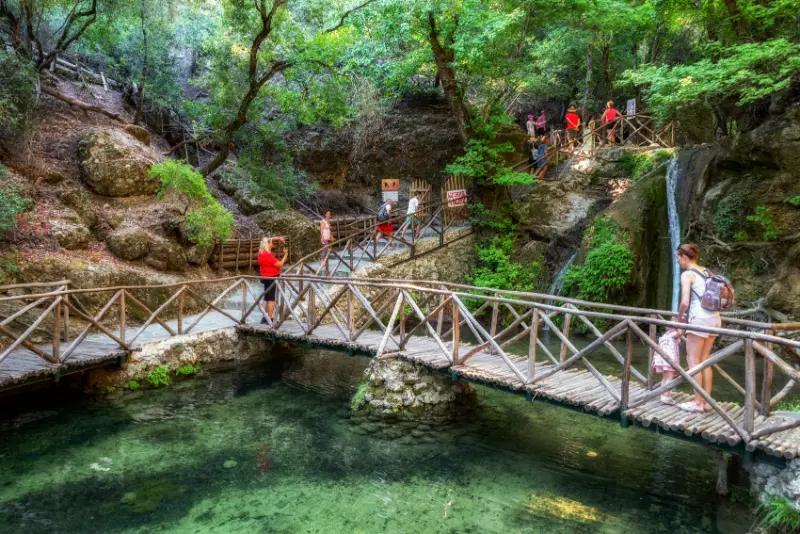
    Tourists Valley Butterflies Petaloudes Rhodes Island Greece

    Try to combine places that sit naturally on the same route. Crossing an island twice in one day or zigzagging through central Athens wastes energy that could be spent walking, swimming or eating. If two attractions pull you in opposite directions, split them across separate days even if a map makes them look close.

    FAQ

    How much time should I allow?

    A focused visit usually needs at least half a day once transport, walking, breaks and a meal are included. If this is one of your main priorities, protect most of a day instead of squeezing it between two distant attractions.

    Do I need a rental car?

    Not always. Central Athens neighbourhoods and well-connected island resorts can work very well without a car, while rural viewpoints and multi-stop island days are easier with one. Rent only for the days when it adds real flexibility.

    Is it suitable for families?

    Usually yes, but the right version of the day depends on age, heat and terrain. Beach facilities, shaded breaks and shorter walks matter more with young children than completing every viewpoint or monument.

    Should I book in advance?

    Book accommodation and high-demand experiences early in peak season. Ordinary walks and beaches generally do not need reservations, but organised loungers, popular restaurants, boat trips and guided visits can fill up.

    Can I trust old prices and timetables?

    No. Transport frequency, ticket systems, road access and seasonal services can change. Check official or local information shortly before the visit, especially if the entire day depends on one bus, boat or opening window.

    Final advice

    Use this guide as a framework rather than a timetable you must obey minute by minute. The best travel days in Greece usually have a clear structure but enough empty space for a longer swim, an unexpected church, a café you like or a sunset that convinces you not to move. Plan the logistics carefully, then give the place room to surprise you.

  • Kalambaka Travel Guide: Meteora Base, Old Stagoi, Museums, Food and Practical Planning

    Kalambaka Travel Guide: Meteora Base, Old Stagoi, Museums, Food and Practical Planning

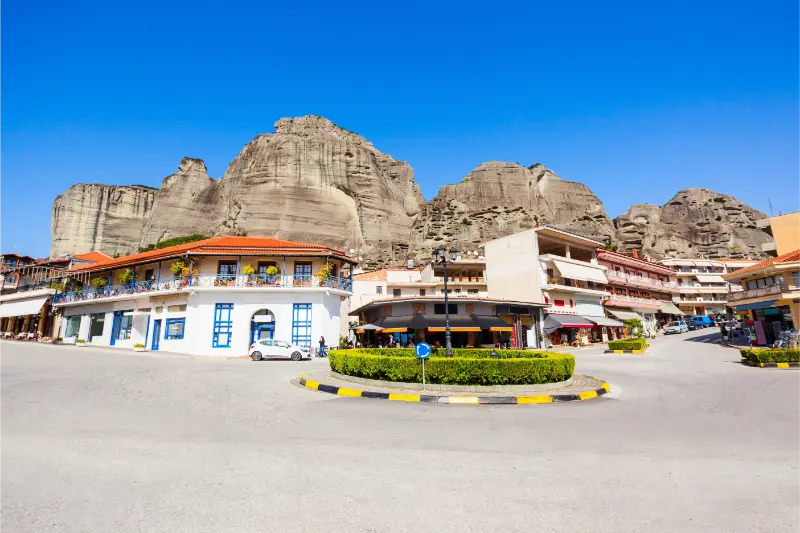
    Kalambaka is often treated as the place where travellers sleep between monastery visits, yet the town deserves a little attention of its own. It sits directly beneath the Meteora rock towers, has a history that predates modern tourism, and provides the services that make a stay in this part of Thessaly easy: restaurants, bakeries, museums, supermarkets, pharmacies and a wide range of accommodation. If you are visiting Meteora for more than a day trip, understanding Kalambaka helps you plan the whole area more intelligently.

    The strongest itinerary separates the town from the monasteries instead of trying to compress everything into the same few hours. Explore the historic corners below the rocks, visit the Natural History Museum of Meteora and Mushroom Museum, see the old basilica, then use a second block of time for the monasteries and viewpoints. The regional tourism authority describes Kalambaka and neighbouring Kastraki as the secular settlements inseparably linked to Meteora; its official destination page is useful for current context.

    Quick planning summary

    • Best for: travellers who want the most convenient base for Meteora.
    • Allow: at least one town-focused half day in addition to monastery time.
    • Key sights: Dormition basilica, old neighbourhoods, Natural History and Mushroom Museum.
    • Best side trip: Theopetra Cave and museum when access is open.
    • Alternative base: Kastraki for a smaller village atmosphere.

    Kalambaka beyond the monastery shuttle

    The centre is practical rather than museum-like, and that is part of its value. Travellers can eat early, buy picnic supplies, arrange hiking or taxi transfers and return to a lively town after the viewpoints empty. The skyline is never ordinary because the rock pillars rise directly behind the roofs, constantly reminding you that the urban fabric sits at the edge of one of Greece’s most distinctive landscapes.

    Do not judge Kalambaka only from the main road. Walk toward the older streets at the base of the rocks, where the scale changes and stone walls, churches and small lanes make the relationship between settlement and cliffs easier to read. This slower circuit works particularly well in the late afternoon, after the busiest monastery visiting hours.

    From Aiginion and Stagoi to modern Kalambaka

    The wider area has been inhabited since prehistory, with Theopetra providing the clearest evidence nearby. In antiquity the settlement is associated with Aiginion, while in the Byzantine period the town was known as Stagoi. That name survives in the ecclesiastical history of the area and helps explain why the town should not be viewed simply as a modern tourism service centre.

    The modern name has several proposed explanations, and visitors will encounter different versions in guidebooks. Rather than treating one etymology as certain, use the change of names as a reminder that the settlement has repeatedly adapted to new political, linguistic and economic contexts while the rocks remained the defining physical landmark.

    The Basilica of the Dormition

    The Basilica of the Dormition of the Virgin is one of the most important historical stops in town. It stands below the rock of Agia and preserves layers of Byzantine and later history, including a notable marble pulpit. Its position makes it an excellent bridge between a town walk and the sacred landscape above.

    Dress and behave as you would in an active religious monument. Opening access can vary, so do not build a minute-by-minute itinerary around an assumed visiting window. Even if the interior is not available, the walk to the church and the surrounding old quarter is worthwhile for understanding the pre-tourism settlement.

    Natural History Museum and Mushroom Museum

    The Natural History Museum of Meteora and Mushroom Museum is one of the town’s strongest non-monastic attractions. The official regional tourism page describes a combined collection devoted to wildlife and mushrooms, presented through realistic displays. It is especially useful on a hot afternoon, rainy day or family itinerary when everyone needs a change from stairs and viewpoints.

    The mushroom theme is not a novelty added only for tourists. The forests and mountain environments around Thessaly support a strong mushroom culture, and the museum uses that subject to connect food, biodiversity and local landscapes. Check its own website before visiting because opening hours and special activities such as truffle-related events can change.

    The wood-carving tradition

    Kalambaka is also associated with a specialist wood-carving school founded in the mid-20th century. The presence of this craft education is easy to overlook when monastery art dominates visitors’ attention, yet it belongs to the same wider culture of carved ecclesiastical furniture, icon screens and skilled manual work found across Greek religious architecture.

    You do not need to turn the visit into a technical craft tour. Simply notice carved details in churches and local shops with a more critical eye, distinguishing serious craftsmanship from mass-produced souvenirs. Buy only objects you actually value and can transport safely.

    Using Kalambaka for Meteora

    Kalambaka is the most flexible base for Meteora. It has the broadest choice of services and lets you start early for monasteries, sunset viewpoints or guided hikes. The road system makes it possible to reach the main monastery circuit quickly, but parking pressure rises during busy periods.

    For walking, pair the town with our Meteora hiking guide. Some routes connect the settlement to old paths beneath the rocks, but the terrain can be uneven and exposed. A hiking day should not be planned as an afterthought after several hours of monastery stairs.

    Theopetra as a side trip

    The prehistoric site at Theopetra adds an entirely different time scale. Our Theopetra Cave guide explains the cave and museum in detail. Because access has changed in recent years, verify current opening before driving out; do not rely on an old blog post or map listing.

    Theopetra works particularly well on a two-night stay: monasteries and viewpoints on one day, then town, museum and prehistory on another. This also protects your itinerary from poor weather, because you have indoor and outdoor options rather than a single fixed programme.

    How much time to allow

    For Kalambaka, the right amount of time depends on whether you are treating it as a destination or as part of a wider Thessaly route. A rushed stop can cover the headline sights, but the character of the area appears in the quieter details: a village square, a short walk, a local museum, a stretch of coast or a meal that is not squeezed between two long drives. Two nights are ideal for most visitors: one full day for Meteora and a separate half day for Kalambaka, Kastraki or Theopetra.

    Build the day around one or two priorities rather than a checklist. Thessaly is geographically compact on a map but mountain roads, river valleys and agricultural traffic can slow travel. If a visit starts feeling hurried, remove the least important detour rather than cutting time from the place you actually came to see.

    Getting there and getting around

    Kalambaka is connected by road with Trikala and the wider Thessaly network. Rail and coach arrangements can change, so check the current operator before travel rather than assuming a historic timetable still applies. Once in town, central streets are walkable, while monasteries and more distant viewpoints require hiking, taxi, tour transfer or a car.

    Kalabaka Kalambaka Kalampaka City Center Town Amunicipality Trikala Region Greece

    A car gives the most flexibility, especially if you want to combine Kalambaka with Kastraki, Theopetra and Trikala. Public transport can work for larger towns, but small villages, trailheads, archaeological sites and remote beaches are harder to connect efficiently. Recheck road conditions after severe weather and never assume a mountain shortcut is faster than the signed main route.

    Where to stay

    Stay in central Kalambaka if you value restaurants and easy evening walks. Properties on the edge of town can offer quieter surroundings and rock views, while Kastraki is better for a village feel and immediate trail access.

    For a broader trip, Kalambaka itself is the most practical reference point. Choose accommodation for parking, realistic driving time and the kind of evenings you want, not only for a low room rate. In rural Thessaly, a beautiful guesthouse can be excellent, but confirm check-in arrangements, heating or air conditioning, stairs and food options if you are arriving late.

    Check accommodation in Kalambaka on Booking.com.

    Best time to visit

    April to June and September to October are excellent for combining town walks with Meteora without the strongest summer heat. July and August remain workable if you start outdoor sightseeing early and use museums or lunch for the hottest part of the day.

    Spring and autumn generally reward travellers who want walking, archaeology and village life without peak heat. Summer is best when swimming or high mountain air is part of the plan, while winter can be atmospheric but requires more conservative driving and more attention to daylight, frost and snow. Always check the short-range forecast rather than planning only from seasonal averages.

    Food and local stops

    Kalambaka has everything from quick bakeries to tavernas and more tourism-oriented restaurants. Look for regional pies, grilled meats, local cheeses and mushroom dishes, but judge each restaurant on what it actually serves rather than assuming every menu is traditional.

    Treat food as part of the route rather than a final obligation at the end of a long day. In smaller places, lunch may be the most reliable meal, while evening choice can be limited outside weekends or summer. Ask what is local and in season, and avoid assuming that every regional speciality is available in every taverna.

    Families and different travel styles

    Families often find Kalambaka easier than staying in an isolated mountain guesthouse because food, pharmacies and indoor attractions are close. The museum is a strong counterbalance to monastery stairs, while school-age children may enjoy linking Meteora to the much older story of Theopetra.

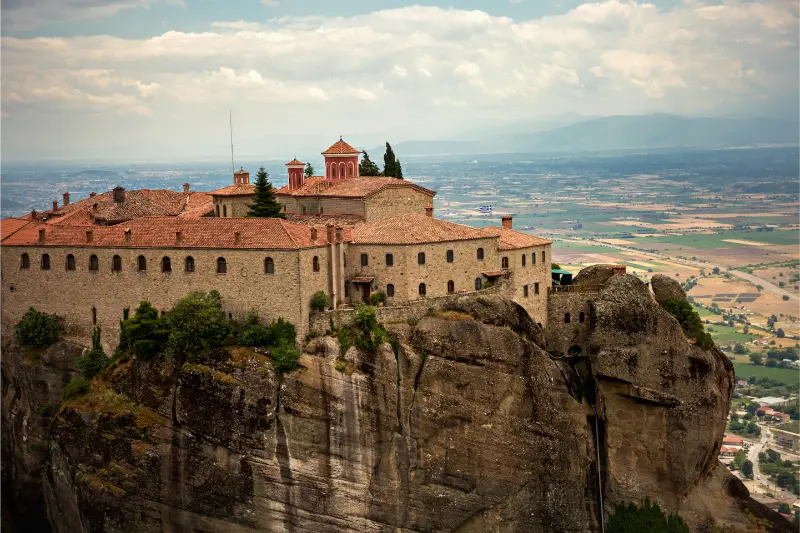
    Monastery St Stephen Cliff Greece Kalambaka

    Travellers who prefer slow travel should reduce the number of stops and spend more time in the streets beneath the Meteora rocks. Photographers benefit from early and late light, while hikers need a separate time budget for route-finding and weather changes. Older travellers or anyone with limited mobility should verify gradients, steps and surface conditions at monasteries, old villages and archaeological sites before committing to a long circuit.

    Safety and responsible travel

    The town itself is straightforward, but the rocks introduce obvious hazards once you move onto trails or viewpoints. Keep children away from unprotected edges, wear proper shoes on old paths and avoid improvised shortcuts between the road and rock formations.

    Carry water, keep a charged phone and respect closures, barriers, private land and protected habitats. Do not enter unstable ruins or damaged buildings for photographs. In summer, wildfire restrictions can affect forest access; on the coast, wind and waves can change quickly; in mountain areas, fog and thunderstorms can reduce visibility far faster than on the plain.

    How to combine it with a Thessaly itinerary

    Kalambaka naturally pairs with Kastraki, Theopetra and Trikala. A longer loop can continue toward Pyli and the Koziakas villages, but do not add that mountain drive to a full monastery day unless you are comfortable with a late arrival.

    If you are building a longer regional trip, connect this article with our Thessaly road-trip itinerary, where to stay in Thessaly and Thessaly with kids. Those guides help decide which stops belong in the same travel day and which are better treated as separate bases.

    Final advice

    Do not use Kalambaka only as a bedroom. Giving the town a few unhurried hours makes the Meteora experience richer because you see the human settlement that has lived beside the rocks through many different eras.

    The best version of a visit to Kalambaka is the one that leaves enough margin for the unexpected: a viewpoint, a conversation, a local product, changing weather or a road that takes longer than expected. That flexibility is not wasted time; it is often what turns a technically efficient itinerary into a trip that actually feels like Thessaly.

    Official information and planning checks

    For current destination information, consult Visit Thessaly’s Kalambaka–Kastraki page and the official websites of individual museums or monasteries before travel.

  • Lemnos Travel Guide: Myrina, Beaches, Sand Dunes and a 7-Day Itinerary

    Lemnos Travel Guide: Myrina, Beaches, Sand Dunes and a 7-Day Itinerary

    Lemnos is one of the Greek islands I would choose when the goal is space rather than spectacle. The landscape is broad and volcanic, with low hills, fertile plains, wetlands, sand dunes, long beaches and archaeological sites spread across an island that feels very different from the whitewashed Cyclades.

    It belongs naturally in the same planning conversation as Lesvos, Chios and Samos, but its open terrain and strong agricultural identity give it a character of its own.

    Why visit Lemnos?

    Visit Greece describes Lemnos as a volcanic jewel of the northeastern Aegean. The island combines rocky volcanic formations with farmland, dunes, bays and beaches, making it ideal for travellers who like road trips and uncrowded landscapes.

    It also has an unusually rich archaeological story. Sites connected with ancient Hephaistia, Kavirio and prehistoric Poliochni can turn a beach holiday into a much deeper cultural trip.

    Where to stay

    Myrina

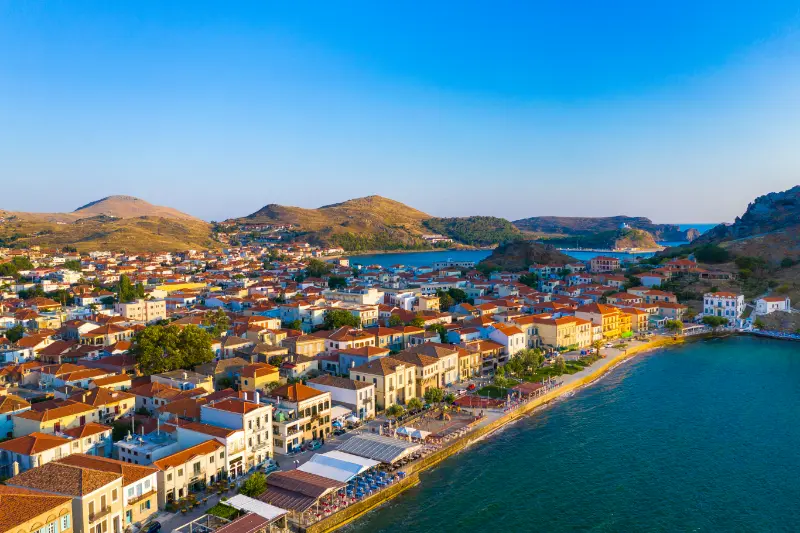
    The capital is the easiest first base, with the castle, waterfront, restaurants and the broadest choice of accommodation.

    Moudros

    A practical base for the east and southeast, with a large natural bay and easier access to several archaeological and natural sites.

    Village stay

    A rural guesthouse can work well for repeat visitors who value quiet evenings and local food more than walking to restaurants every night.

    Best things to do

    Climb to Myrina Castle

    The castle dominates the capital and offers one of the best introductions to the island’s scale. Go outside the hottest part of the day and respect any access restrictions.

    See the sand dunes

    The inland dunes around Gomati are one of Lemnos’ most unusual landscapes. Treat them as a fragile natural area rather than an off-road driving attraction.

    Explore ancient Hephaistia and Kavirio

    These archaeological areas help explain Lemnos’ long strategic and religious importance in the northern Aegean.

    Visit Poliochni

    The prehistoric settlement is one of the island’s major cultural stops. Opening hours can change seasonally, so verify them before driving across the island.

    Beach-hop without rushing

    The island has many long beaches, and the best choice often depends on wind. Plati, Thanos, Keros and Gomati are among the names travellers frequently encounter.

    Explore wetlands and rural landscapes

    Lemnos is more than coastline. Seasonal wetlands, grazing land and agricultural plains make early-morning driving and birdwatching particularly rewarding.

    Food and wine

    Local food is a major reason to stay longer: cheeses, pasta, wheat products, honey, wine and seafood reflect the island’s farming culture. I would leave room for bakery stops and village meals rather than eating only on the Myrina waterfront.

    How to get there

    Lemnos has an airport and ferry connections. Visit Greece lists direct domestic air links from Athens and Thessaloniki, while sea routes vary by season. For international travellers, flying via a major Greek airport is often the simplest option.

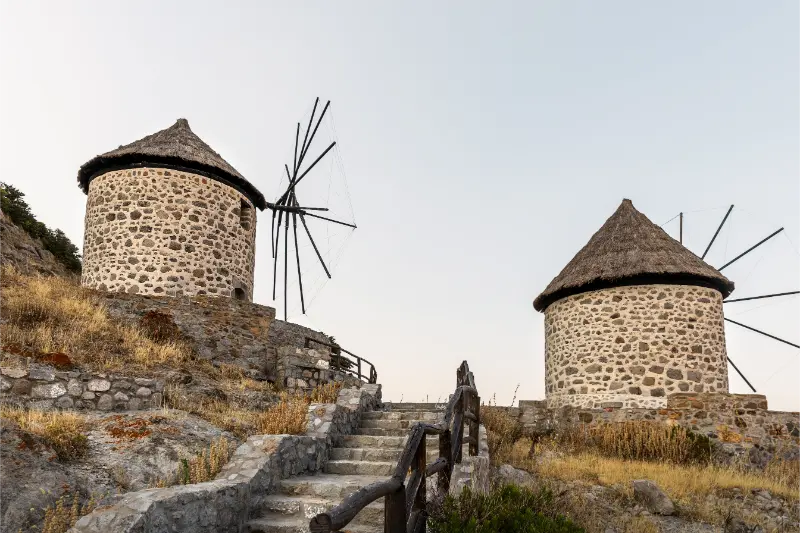
    Traditional Windmills Near Kontias Village Lemnos Island Greece Aegean Sea Panoramic View

    Getting around

    A rental car is strongly recommended. The island is not especially mountainous, but sights are widely dispersed and public transport does not give the same flexibility for beaches, dunes and archaeological sites.

    A realistic 7-day itinerary

    Day 1 – Myrina

    Explore the town, waterfront and castle area.

    Day 2 – Western beaches

    Choose one or two beaches and keep the day deliberately simple.

    Day 3 – North and sand dunes

    Visit the dune landscape and nearby coast, respecting weather and road conditions.

    Day 4 – Hephaistia and Kavirio

    Use the day for archaeology and a quiet northern beach.

    Day 5 – Moudros and the east

    Explore the bay, villages and eastern landscapes.

    Day 6 – Poliochni and south coast

    Combine the prehistoric site with a nearby beach or food stop.

    Day 7 – Flexible day

    Follow the wind, revisit a favourite beach or spend more time in Myrina.

    How I would plan the trip

    I would build a trip to Lemnos around geography rather than a list of attractions. Choose one main area for each day, add only nearby stops, and keep at least one half-day flexible. On a Greek island, the distance on the map rarely tells the full story: narrow roads, parking, ferry schedules, heat and the temptation to stop at an unexpected beach can all stretch a simple transfer.

    Transfer days deserve their own space in the itinerary. A morning ferry, a rental-car pickup or a mountain drive can consume more time than the timetable suggests once luggage, check-in and meals are included. Treating those hours as real travel time is one of the easiest ways to make the holiday feel relaxed rather than rushed.

    Best time to visit

    For a first trip to Lemnos, late spring and early autumn are usually the easiest seasons to balance warm weather with a calmer pace. July and August bring the most reliable beach conditions but also the highest demand, stronger midday heat and more pressure on parking and accommodation. In shoulder season, some seasonal services may run less frequently, so transport and opening times should be checked close to the trip.

    If walking, archaeological sites or road trips are central to the plan, I would avoid putting the most exposed activities in the middle of the day. Start early, leave the hottest hours for lunch or swimming, and return to villages and viewpoints later in the afternoon.

    Budget and booking strategy

    Accommodation prices can change dramatically by month and by exact location. I compare the total cost of the stay rather than the room rate alone: a cheaper property can become less attractive if it requires daily taxis, long drives or paid parking. On small islands and in mountain regions, location is often worth more than an extra category of hotel.

    Ferry timetables, domestic flights, rental-car prices and boat excursions are dynamic. I would book the fixed parts of the trip first, then leave weather-dependent activities flexible where possible. Always recheck schedules a few days before travel and again on the day when sea conditions are relevant.

    Practical mistakes to avoid

    The most common mistake in Lemnos is trying to see too much in too little time. A better trip usually comes from choosing fewer bases, driving the same roads less often and leaving space for a beach, village or meal that turns out to be better than expected.

    Village Of Platy Island Of Lemnos Greece

    Do not assume every attractive cove has easy access, shade, facilities or reliable phone coverage. Carry water, sun protection and shoes suitable for uneven ground. Download an offline map before remote drives or hikes, and ask locally before taking a rental car onto rough roads that may not be covered by the rental agreement.

    Who this destination suits

    Lemnos works especially well for independent travellers who enjoy combining landscapes with local food and small-scale sightseeing. Couples can build days around beaches, sunset walks and slow dinners, while solo travellers gain flexibility to follow weather and transport conditions. Families can also enjoy the destination, but the most comfortable plan usually uses fewer bases and avoids very long transfer days.

    Travellers with limited mobility should check accommodation access carefully. Historic villages can have steep lanes, steps and parking outside the centre, while some beaches require rough paths or stairways. A beautiful location on a map is not always the most practical base for every traveller.

    How to combine it with the rest of Greece

    For a broader North Aegean journey, compare Lemnos with Lesvos, Chios, Samos and Ikaria. These islands are not interchangeable, so ferry planning should follow the actual seasonal network rather than a theoretical map route.

    Frequently asked questions

    How many days do I need in Lemnos?

    For a first visit, four to seven days usually gives enough time to understand the destination without turning every day into a transfer. A shorter stay can work if you focus on one area and accept that you will leave some places for another trip.

    Do I need a car?

    It depends on the destination and your base, but a car is often the easiest way to reach beaches, villages and archaeological sites away from the main town. If you prefer not to drive, choose accommodation around the strongest public-transport hub and build the itinerary around available buses, boats and organised excursions.

    Is it suitable for a first trip to Greece?

    Yes, provided you match the destination to your travel style. It is particularly rewarding for travellers who want to go beyond the most famous Greek islands while still having enough infrastructure for an independent holiday.

    Should I book everything in advance?

    Book the parts that can sell out or determine the structure of the trip, such as peak-season accommodation, flights and important ferry connections. Keep beach days and weather-sensitive excursions more flexible whenever cancellation terms allow.

    What should I pack?

    Bring sun protection, a reusable water bottle, comfortable walking shoes and a light layer for windy evenings or mountain areas. For beach-heavy itineraries, water shoes can be useful on pebbled or rocky shores.

    Final advice

    The best way to experience Lemnos is to resist the temptation to turn it into a checklist. Spend enough time in one area to notice the rhythm of the place, eat where the day naturally takes you, and leave room for local recommendations. That slower approach is what makes a second-tier destination in the guidebooks feel like a first-rate travel experience.

    Useful official information

    For destination information and current travel inspiration, consult the Greek National Tourism Organisation: Visit Greece. Transport timetables, seasonal opening hours and excursion schedules should always be checked again close to your travel dates.

    Lemnos beyond the beaches

    The island’s open landscapes make archaeology and geology unusually easy to combine. A morning at an ancient site can be followed by wetlands, dunes or a broad beach without crossing a high mountain range.

    Because the terrain feels spacious, travellers sometimes underestimate driving time and wind exposure. Leave room for unscheduled stops and treat the eastern and western halves as separate day-trip zones.

    More North Aegean guides

    Continue with Myrina and Poliochni for more detailed planning in this part of Greece.

    Explore more Lemnos guides

    Best Beaches in Lemnos: Plati, Thanos, Agios Ioannis, Keros, Gomati and Fanaraki; Keros Beach and East Lemnos Guide: Windsurfing, Kitesurfing, Wetlands and Kalliopi; Lemnos Sand Dunes and Falakro Guide: Ammothines, Gomati and Volcanic Landscapes; Hephaistia, Kavirio and Philoctetes Cave Guide: Ancient Lemnos Road Trip; Moudros Lemnos Guide: Bay, WWI History, Fanaraki Beaches and Day Trips; Lemnos Villages Guide: Kontias, Portianou, Nea Koutali, Kaspakas and Rural Stops; Lemnos Food and Wine Guide: Kalathaki, Melichloro, Flomaria, Muscat and Local Taverns; Where to Stay in Lemnos: Myrina, Plati, Agios Ioannis, Moudros or Keros?; Lemnos with Kids: Family Beaches, Easy Sights, Wildlife and Practical Tips; Lemnos Without a Car: Buses, Taxis, Myrina Base, Beaches and What You Can Realistically See

  • Monastiraki and Psyrri Guide: Flea Market, Street Art, Food and Nightlife in Athens

    Monastiraki and Psyrri Guide: Flea Market, Street Art, Food and Nightlife in Athens

    Monastiraki and Psyrri sit side by side in the historic centre, but they feel different. Monastiraki is a transport hub and a crossroads of ancient monuments, shopping streets and market lanes; Psyrri becomes more intimate, with small squares, workshops, cafés, tavernas, bars and some of the city’s best-known street art. The official Greek tourism portal describes Monastiraki as part of old Athens and Psyrri as one of the city’s important nightlife areas, which is exactly why the two work so well in a single walking day.

    This guide is designed for travellers who want to use the area well rather than simply photograph it. For wider planning, keep Athens Travel Guide, Plaka and Anafiotika Guide, Ancient Agora of Athens Guide open in another tab so you can see how this stop fits into the rest of the trip.

    Why this place deserves its own guide

    A destination becomes much easier to enjoy when you understand its scale, the best time of day and the trade-offs between convenience and atmosphere. The most common planning error in Greece is not choosing the wrong attraction; it is stacking too many good places into one day. The sections below focus on the practical decisions that make the experience calmer, more flexible and more rewarding.

    What to see and do

    Monastiraki Square and the rooftop view

    Start in Monastiraki Square before the lanes get crowded. The square is useful for orientation because the Acropolis rises above the roofs while the metro station connects the area directly with other parts of Athens. Do not rush away immediately: the mix of the Tzistarakis Mosque, the church of Pantanassa, the railway, street vendors and the Acropolis skyline explains why this corner feels more layered than a conventional postcard square.

    View Acropolis Monastiraki Area Athens Greece

    The flea-market lanes and Avissinias Square

    The so-called flea market is not one single market hall. It is a web of lanes where souvenir shops, clothing, antiques, second-hand objects and small specialist stores mix together. Avissinias Square and the surrounding streets are the part to explore slowly if you enjoy old furniture, records, vintage objects and the feeling of browsing without a fixed shopping list. Sunday can feel especially busy, so weekday mornings are better if you want space to look rather than simply move with the crowd.

    Ancient remains on the edge of the neighbourhood

    Monastiraki is unusual because important archaeological sites sit directly against everyday city life. Hadrian’s Library, the Roman Agora and the Ancient Agora are all close enough to combine with a neighbourhood walk, but trying to tour all three in depth on the same afternoon can turn the day into a checklist. Choose one major site and leave the others for another day if you care about history. The strongest contrast comes from moving directly from ruins into market lanes and cafés.

    Psyrri street art and small streets

    Cross toward Psyrri and the atmosphere changes quickly. Look up as well as ahead: murals occupy entire façades, smaller pieces appear on shutters, and workshop streets still reveal traces of the neighbourhood’s older commercial life. Street art changes, so any fixed list of “must-see murals” dates quickly. A better strategy is to wander around Iroon Square, Sarri, Miaouli and the surrounding lanes and let the current city reveal itself.

    Evening food and nightlife

    Psyrri is at its best when lunch service gives way to the evening. Traditional tavernas, modern Greek restaurants, bars, dessert shops and live-music venues are packed into a small area. That variety is convenient but also means noise. If you stay here, check whether your room faces a busy pedestrian street. If you are only visiting, arrive before sunset, walk while there is still light, then choose dinner after you understand which streets feel lively rather than overwhelming.

    Best time to visit

    Spring and autumn are especially pleasant because a large part of the experience happens outdoors. In summer, use the morning for markets and archaeological sites, rest during the hottest hours, and return in the evening for Psyrri. Winter is more local in feel and works very well for food, cafés and museums. The neighbourhoods are active year-round, so season matters less here than it does on the islands.

    Whatever the month, use the weather you actually have. Strong wind, heat, rough sea or a local event can matter more than the seasonal average. On exposed walks, beaches and archaeological terrain, an early start often improves both comfort and photography. Keep one flexible block in the day so a delay does not force you to rush the experience you came for.

    How to get there and move around

    Monastiraki metro station is one of the easiest access points in central Athens and is served by Lines 1 and 3. That also makes the area convenient for airport transfers on Line 3, although luggage plus crowded platforms can be tiring at busy times. Once you arrive, walking is the right way to explore. Distances to Plaka, the Ancient Agora, Ermou Street, Syntagma and the Central Market are short enough that a taxi usually adds more complication than convenience.

    Athens Monastiraki

    Do not judge transport only by kilometres. Island roads, central-city traffic, parking searches and walking access can turn a short map distance into a much longer transfer. When public transport is part of your plan, recheck the current timetable close to travel day. When driving, save the parking point in advance and avoid entering pedestrian lanes simply because navigation software suggests the shortest line.

    Where to stay

    Choose Monastiraki if you want maximum transport convenience and immediate access to sightseeing. Choose Psyrri if nightlife, restaurants and evening atmosphere matter more. Light sleepers should avoid rooms directly above busy bars or late-night pedestrian streets. For a calmer base within walking distance, compare Koukaki, Plaka edges or quieter streets toward Thissio rather than assuming the most central address is automatically the best one.

    Before booking, zoom in on the exact property location rather than trusting the neighbourhood name. Check stairs, road access, bus stops, late-night noise and the walk back after dinner. A room that looks only 500 metres from a beach or landmark can feel very different when the route is steep, unlit or exposed to traffic. Location should support the way you actually plan to spend your days.

    Food and evening atmosphere

    The biggest mistake is choosing the first restaurant with the most aggressive menu display on a high-traffic corner. Walk a few streets, look for places with a focused menu and decide whether you want classic taverna cooking, modern Greek small plates, grilled meat, meze or simply coffee and dessert. Psyrri is also useful for late eating, while the nearby Central Market and Athinas Street add another layer for travellers interested in ingredients and everyday food culture.

    Greek travel is better when meals are given enough time. Avoid planning dinner as a 45-minute gap between attractions. Sit down after the hottest part of the day, order at the pace of the place and keep room for an unplanned walk afterwards. In heavily visited areas, moving one or two streets away from the obvious viewpoint often changes both prices and atmosphere.

    A realistic one-day plan

    Begin around Monastiraki Square, then walk through the market lanes toward Avissinias Square. Spend the late morning at either the Ancient Agora or the Roman Agora rather than trying to rush both. After lunch, move toward Psyrri and explore the mural-covered streets while shops and workshops are still open. Continue toward Iroon Square, pause for coffee or dessert, and stay for dinner. If energy remains, end with a short walk toward Thissio for illuminated Acropolis views instead of adding another formal attraction.

    Build the day around one priority and one secondary activity. If the priority takes longer, drop the secondary stop without regret. This is especially important on islands, where parking, buses, wind or heat can alter timing. A good itinerary should survive a 30-minute delay without collapsing into stress.

    Families, mobility and accessibility

    Families should plan around shade, toilets, meal timing and realistic walking stamina rather than adult sightseeing speed. For travellers with reduced mobility, accessibility varies sharply between modern promenades and historic lanes, rocky beaches or stair-heavy villages. Contact accommodation or the relevant site directly if step-free access is essential; generic labels such as “easy walk” are not precise enough for important mobility decisions.

    Common mistakes to avoid

    • Treating the flea market as a single building instead of a network of streets
    • Booking a hotel without checking nighttime noise
    • Trying to visit every nearby archaeological site in one afternoon
    • Following an old street-art map too literally
    • Eating only on the busiest corners without exploring side streets

    Most of these mistakes come from the same habit: planning from a map without considering how the place behaves in real life. A few minutes spent checking terrain, weather, parking and current access rules can save hours of frustration. Keep screenshots of essential transport information, but do not rely on an old screenshot when conditions or seasonal schedules may have changed.

    What to combine with it

    This area combines naturally with Plaka, the Ancient Agora and a walk up toward Syntagma. If you are building your first Athens itinerary, connect this guide with Athens Travel Guide, Plaka and Anafiotika Guide and Ancient Agora of Athens Guide.

    Try to combine places that sit naturally on the same route. Crossing an island twice in one day or zigzagging through central Athens wastes energy that could be spent walking, swimming or eating. If two attractions pull you in opposite directions, split them across separate days even if a map makes them look close.

    FAQ

    How much time should I allow?

    A focused visit usually needs at least half a day once transport, walking, breaks and a meal are included. If this is one of your main priorities, protect most of a day instead of squeezing it between two distant attractions.

    Do I need a rental car?

    Not always. Central Athens neighbourhoods and well-connected island resorts can work very well without a car, while rural viewpoints and multi-stop island days are easier with one. Rent only for the days when it adds real flexibility.

    Is it suitable for families?

    Usually yes, but the right version of the day depends on age, heat and terrain. Beach facilities, shaded breaks and shorter walks matter more with young children than completing every viewpoint or monument.

    Should I book in advance?

    Book accommodation and high-demand experiences early in peak season. Ordinary walks and beaches generally do not need reservations, but organised loungers, popular restaurants, boat trips and guided visits can fill up.

    Can I trust old prices and timetables?

    No. Transport frequency, ticket systems, road access and seasonal services can change. Check official or local information shortly before the visit, especially if the entire day depends on one bus, boat or opening window.

    Final advice

    Use this guide as a framework rather than a timetable you must obey minute by minute. The best travel days in Greece usually have a clear structure but enough empty space for a longer swim, an unexpected church, a café you like or a sunset that convinces you not to move. Plan the logistics carefully, then give the place room to surprise you.

    For the city after dark, see our Athens nightlife guide; for markets and retail streets, use our Athens shopping guide.

  • Platis Gialos Sifnos Guide: Beach, Pottery, Hiking and Where to Stay

    Platis Gialos Sifnos Guide: Beach, Pottery, Hiking and Where to Stay

    Platis Gialos is the beach base I would shortlist first for travellers who want a classic sandy holiday on Sifnos without giving up restaurants, pottery and access to walking routes. The bay is broad, the settlement has useful services and the surrounding south coast contains some of the island’s best combinations of beach, culture and hiking.

    It is also easy to misunderstand. Platis Gialos is not a nightlife resort and it is not automatically the calmest beach every day. Wind direction matters, transport is seasonal and the island’s best experiences still require leaving the bay. This guide helps you decide whether it is the right base and how to use it well.

    Platis Gialos at a glance

    Best forLong sandy beach, families, couples, relaxed stays
    FacilitiesAccommodation, restaurants, cafés, groceries, pottery
    Nearby sightsWhite Tower, Kitriani, Chrysopigi
    WalkingRoutes toward Fikiada, Vathi and central villages
    Good without a car?Yes in season, with timetable planning

    The beach and swimming

    The municipality describes Platis Gialos as one of the largest sandy beaches on Sifnos and a long-standing popular choice for Greek visitors. Its scale is the attraction: you can find a different section of the bay rather than treating one organised strip as the entire beach.

    Sea conditions still deserve attention. Sifnos is exposed to Aegean wind and no beach should be judged from one calm photograph. If the bay is uncomfortable, use the Best Beaches in Sifnos guide to switch coast rather than forcing the plan.

    What the village feels like

    Platis Gialos has enough restaurants, cafés, groceries and accommodation to function as a self-contained holiday base. That is useful for families and for travellers who want to reduce daily driving. Evenings are generally quieter than Apollonia, with the focus on dinner and the waterfront rather than bars.

    The bay also retains a craft connection: pottery workshops operate in the area, and the island’s official site lists several active potters in and around Platis Gialos. This makes a workshop visit an easy alternative when you want a break from the beach.

    The White Tower

    About 1.5 km north-east of the beach stands the White Tower, one of the best preserved of the ancient beacon towers associated with Sifnos. The island has dozens of these structures, which help connect today’s leisure landscape with a much older network of observation, communication and defence.

    Do not expect a large staffed archaeological complex. Treat it as a landscape stop and combine it with other south-coast sights. Good shoes and sun protection are more useful than trying to schedule it like a museum appointment.

    Kitriani and the bay view

    Opposite Platis Gialos lies the uninhabited islet of Kitriani. Its church, Panagia Kitriani, is described by the municipality as the oldest church on Sifnos, dating to the 10th–11th century. The islet is part of the visual identity of the bay and may also appear on seasonal boat outings.

    If considering a boat trip, ask about sea conditions, landing arrangements and what is actually included. A beautiful islet offshore does not mean every tour lands there.

    Walking from Platis Gialos

    Platis Gialos is a useful starting point for routes toward Fikiada and Vathi, as well as connections toward central settlements. Fikiada is particularly rewarding for walkers because it is reached by path or sea rather than ordinary road access. The route should be treated as a hike, not a flip-flop beach transfer.

    For route selection, distance, water and seasonal conditions, use the Sifnos Hiking Guide and the official trail maps. Spring and autumn are much more forgiving than a midday July crossing.

    Platis Gialos or Kamares?

    Choose Platis Gialos if the beach is the centre of your holiday and you want a south-coast base. Choose Kamares if ferry convenience, a shorter transfer on arrival and strong central transport connections matter more. Both are sandy, practical bases; the difference is location and daily rhythm.

    Platis Gialos or Faros?

    Platis Gialos offers the broader beach and more resort-style convenience. Faros feels smaller and more intimate, with three small beaches and the beautiful path toward Chrysopigi. Couples who prioritise quiet coastal walking may prefer Faros; families wanting more sand often prefer Platis Gialos.

    Transport without a car

    Municipal buses connect Platis Gialos with the central villages on seasonal timetables. In peak season this can make a no-car stay realistic, but shoulder-season services may be thinner. Check the current schedule before booking a non-refundable stay if you expect to eat in Apollonia most evenings.

    Taxis fill the gaps but should not be treated as an unlimited substitute for planning during busy summer nights.

    A three-day base plan

    • Day 1: beach and an easy pottery visit.
    • Day 2: Chrysopigi and Apokofto, with dinner back at Platis Gialos.
    • Day 3: early hike toward Fikiada or Vathi, followed by a slow afternoon swim.

    Official information

    The official Platis Gialos page covers the bay, White Tower, Kitriani, services and walking connections.

    Tours and activities

    If you want a guided walk, food experience, boat trip or another organised activity, compare what is available for your exact dates. On a small Cycladic island the choice can change by season, so check the meeting point, duration, language, cancellation terms and whether transport is included before booking.

    Frequently asked questions

    Is Platis Gialos good for families?

    Yes. The long sandy beach, accommodation and services make it one of the easiest family bases on Sifnos.

    Sifnos Kastro

    Can I stay without a car?

    Yes in the main season if the current bus timetable matches your plans.

    Is Platis Gialos better than Kamares?

    It is better for a south-coast beach holiday; Kamares is better for ferry convenience and port logistics.

    What can I do besides the beach?

    Visit pottery workshops, see the White Tower, walk toward Fikiada or Vathi, and explore nearby Chrysopigi.

    Is there nightlife?

    Evenings are focused more on waterfront dining than nightlife. Apollonia is livelier.

    How many nights work well?

    Three or four nights are enough for a beach-focused stay, while a full week works if you want slow days and hiking.

    Final practical advice

    Platis Gialos works best when you use the beach as a base rather than the entire itinerary. Add pottery, one real hike and at least one evening in the central villages. That balance captures the reason Sifnos is more rewarding than a simple resort island.

    Planning details that are easy to overlook

    Build each day around geography rather than a list of saved pins. Sifnos is compact, but repeated returns through the central road network can still waste time. Group central villages together, south-coast beaches together and Kastro with the eastern side. This leaves more time for meals and swimming, which are not empty gaps in a Sifnos itinerary but part of the experience.

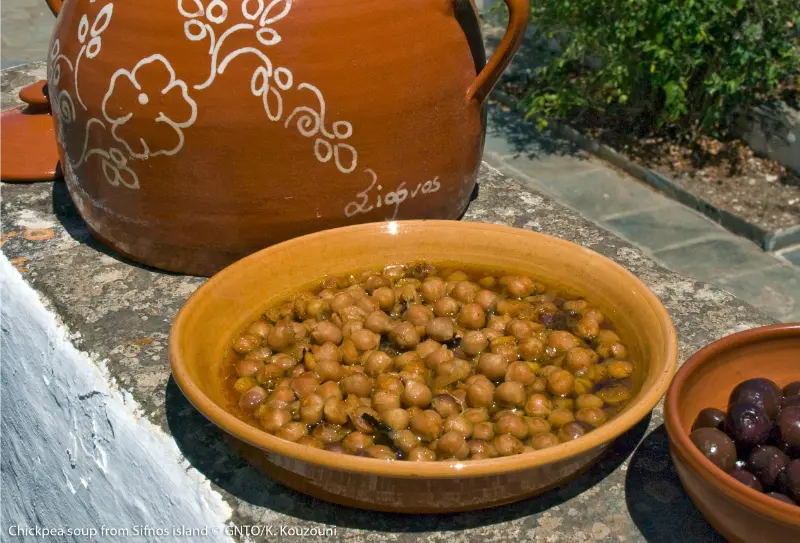
    Gastronomy Sifnos Chickpea Soup

    In July and August, heat changes the order of the day. Walk early, swim through the hottest hours and return to villages in late afternoon. In May, June, September and October, longer daytime walks become more realistic, but ferry and bus frequency may be lower. Always verify the transport that operates on your exact dates before making a non-refundable plan around it.

    Carry a refillable bottle, sun protection and shoes with grip even on days that are not labelled “hiking”. Stone lanes can be polished, coastal paths can be dusty and a five-minute viewpoint detour can become uncomfortable in smooth sandals. A light layer is useful for wind on evening terraces and ferry decks.

    For churches and monasteries, dress respectfully and avoid entering during services simply to take photographs. For pottery workshops, ask before photographing artisans at work. For beaches, leave stones, plants and shells where they are and take rubbish back to a serviced settlement if there are no bins.

    Finally, keep one flexible half-day in the itinerary. Wind, a changed bus timetable, a festival or a restaurant recommendation may give you a better plan than the one you made months earlier. Sifnos rewards travellers who organise the essentials but leave enough room for the island to change the schedule.

    A realistic pace for the day

    Avoid planning Sifnos as a sequence of ten-minute stops. Roads are short, but parking, bus waits, stone lanes, meals and beach access all add time. A realistic day normally has one main village or walk, one swim and one unhurried meal. This rhythm also makes it easier to adapt when wind changes the beach choice or when a small museum has different seasonal hours than expected.

    If you are combining this area with another part of the island, choose the nearest logical neighbour rather than crossing Sifnos repeatedly. Keep Kastro with the eastern side, Faros and Chrysopigi with the south-east, Platis Gialos with the south and Kamares with ferry-day logistics. This simple approach reduces unnecessary transfers and creates more time for the experiences that make the island distinctive.

    Sifnos Chrysopigi

    One final planning point is to keep arrival and departure days simple. Ferry times, wind and luggage can make even a short transfer feel longer than expected, so do not schedule a remote beach, long hike or fixed restaurant reservation too close to the port. Use those days for a nearby village, an easy swim or a meal close to your base, and save the more ambitious parts of Sifnos for full days when you can adjust the order without watching the clock.

  • Kythira with Kids: Family Beaches, Easy Days and Practical Tips

    Kythira with Kids: Family Beaches, Easy Days and Practical Tips

    Kythira can be excellent with children, but the best family itinerary is different from an adult road trip. Long drives to remote coves, exposed castle visits at midday and ambitious gorge walks quickly turn a beautiful island into a logistics exercise. I would build family days around one swim, one short discovery and a reliable meal.

    The island’s variety is actually an advantage. You can alternate beach mornings with Chora, shaded Mylopotamos, small coves in Avlemonas and a short boat experience from Kapsali, adjusting the plan to age and weather.

    Quick planning summary

    QuestionPractical answer
    Best forKythira With Kids travellers and first-time visitors
    Car needed?Very useful for broad island exploration; selected bases can work without one
    Best timingMorning and late afternoon for walking; beach or shade around midday in summer
    What to verifySeasonal hours, road access, wind and local transport close to the travel date

    Best family bases

    Kapsali is strong for families who want beach access and food on foot. Agia Pelagia offers a practical waterfront in the north. Avlemonas is charming for confident swimmers and calm evenings, while Chora works better for families prioritising atmosphere and history over immediate sand.

    Choose accommodation with parking, air conditioning, refrigerator space and a short walk to dinner. A pool can be useful, but a genuinely walkable evening routine often saves more family stress than another hotel amenity.

    Family beach strategy

    Do not create a list of ten must-see beaches. Pick two or three practical favourites and one scenic adventure. Kapsali is convenient; Agia Pelagia offers a straightforward base; Paleopolis gives space; Avlemonas is fun with older children who are comfortable using rocky entries.

    Kaladi is beautiful but requires more effort, so judge whether steps and heat suit your group. Carry shade, water and snacks even when a beach is described as organised—seasonal services can change.

    Mylopotamos with children

    Mylopotamos is one of the best non-beach family days because the square, trees, running water and old mills create natural variety. The easy waterfall area can be engaging for children, but slippery rock and pools require close supervision. Do not continue into difficult gorge terrain simply because the first section felt easy.

    Add a relaxed lunch and Kato Chora rather than trying to combine the day with a distant coast. Agia Sophia cave may be memorable for older children if current opening arrangements suit the day.

    Chora, Kapsali and a short boat trip

    Visit Chora early, keep the castle walk short enough that children still enjoy the view, then descend to Kapsali for swimming. A weather-dependent boat trip toward Chytra can add excitement without requiring another long drive.

    Ask operators about life jackets, shade, trip length and sea conditions. For very young children, a simple beach afternoon may be better than a longer boat excursion.

    Chora Kythira Greece

    Heat, naps and meal timing

    In July and August, protect the middle of the day. Put castles, walking and villages before 11:00 when possible, then swim, eat and rest. Return outdoors later. Children often handle an island holiday much better when adults stop trying to maximise sightseeing during peak heat.

    Keep water and simple snacks in the car. Many of Kythira’s most beautiful spots are not designed around constant retail access.

    Safety details that matter

    Use proper footwear at waterfalls, caves and rocky coves. Keep children away from cliff edges and old ruins that lack modern barriers. Check sea conditions before letting them use inflatables, which can drift quickly in wind.

    If you need medical supplies or specific baby products, buy essentials before heading to a remote beach or village day. Kythira has services, but they are not located beside every attraction.

    How Kythira changes the way you plan a Greek-island day

    Kythira is not a compact resort island where every attraction sits around one bay. Villages, beaches and historical sites are spread across a rugged landscape, so the best days normally focus on one side of the island rather than crossing from north to south several times. I plan mornings around one anchor place, add a nearby beach or village, and leave dinner close to wherever the afternoon naturally ends.

    The island also rewards flexibility. Wind can change which beach feels comfortable, a waterfall can be less dramatic after a dry period, and seasonal businesses do not all keep the same hours outside the busiest weeks. Treat the itinerary as a framework, not a contract. One unhurried village, one swim and one meaningful cultural stop often produce a better day than a long checklist.

    Driving, parking and realistic travel time

    Even when map distances look short, allow extra time for bends, village streets, parking and short walks from the road. Kythira is manageable by car, but it is not an island where I would schedule activities back-to-back. In popular places such as Chora, Kapsali, Kaladi or Mylopotamos, arriving earlier also makes parking and photography noticeably easier.

    Aerial View On City Of Kapsali On Kythira Island Greece

    If you rent a car, choose a vehicle you are comfortable using on narrow roads and never assume that every road to a remote beach has the same surface. Ask locally about the final approach before committing to an isolated cove, especially after unusual weather. For no-car travel, build the holiday around a strong base and use taxis or seasonal public transport selectively rather than trying to imitate a full road trip.

    Best season and daily rhythm

    Late spring and early autumn are especially attractive if walking, villages and archaeology matter as much as swimming. July and August deliver the warmest sea and the widest choice of seasonal services, but they also require earlier starts, more careful parking and a serious approach to shade and hydration. September is often a useful compromise for travellers who want warm water without the same daytime intensity.

    In summer, I keep exposed walks, castles and viewpoints for morning or late afternoon. Midday is better for a shaded lunch, a protected beach or a long break. Kythira’s most memorable places are often atmospheric rather than monumental, so giving them time is part of the experience rather than wasted schedule space.

    Food, water and what to carry

    Kythira is known for products such as thyme honey, local rusks and the aromatic Fatourada liqueur, but the practical food rule is simpler: eat where the day already takes you. A lunch in Mylopotamos, a waterfront meal in Kapsali or Avlemonas, and a village dinner in the north all make more sense than driving across the island for one saved restaurant pin.

    For remote beaches and trails, carry water, sun protection and at least a small snack. Some coves have seasonal facilities while others have none. I also keep swim shoes, a light shoulder cover for churches and monasteries, and an offline map on my phone. Small preparations matter more here than on an island built around organised beaches.

    Accessibility and slower travel

    Historic settlements, castle approaches, waterfall paths and rocky coves can involve steps or uneven ground. Travellers with limited mobility should ask accommodation hosts very specific questions about stairs, parking distance and the route to the nearest restaurant or beach. A beautiful room can be inconvenient if every outing begins with a steep climb.

    Slow travel works exceptionally well on Kythira. Staying longer in one area reduces driving and makes room for repeat swims, village cafés and weather changes. If you have only three nights, do less. With a week, divide the island into south, east, west/inland and north rather than changing hotels repeatedly.

    Common mistakes to avoid

    The most common mistake is underestimating how spread out the island feels. The second is treating every beach recommendation as suitable in every wind direction. Other avoidable errors include wearing sandals on rough trails, arriving at a cave or museum without checking seasonal hours, and assuming a waterfall will look identical in late August and after spring rain.

    I would also avoid booking accommodation solely on a low map price. Location affects almost every day on Kythira. A base with dinner, a swim and a useful road connection nearby can save enough driving and taxi time to be worth a slightly higher room rate.

    How this fits into a complete Kythira trip

    Use this guide as one part of a regional plan. The existing Kythira Travel Guide gives the island-wide overview, while the dedicated guides below let you plan the areas and travel styles in more detail. I would normally combine one cultural or walking focus with one beach area each day rather than criss-crossing the island.

    Continue planning with Chora and Kapsali Kythira Guide: Castle, Twin Bays, Chytra and Where to Stay; Avlemonas and Paleopolis Kythira Guide: Coves, History, Beaches and Where to Stay; Agia Pelagia Kythira Guide: Beaches, North Coast, Food and Where to Stay; Mylopotamos Kythira Guide: Kato Chora, Watermills, Waterfall and Village Life; Kythira Waterfalls and Caves Guide: Fonissa, Watermills and Agia Sophia; Best Beaches in Kythira: 15 Beaches for Families, Snorkelling and Wild Scenery; Kythira Hiking Guide: Best Kythera Trails, Gorges, Villages and Safety; Kythira Without a Car: Taxis, Buses, Transfers and the Best Bases; Kythira with Kids: Family Beaches, Easy Days and Practical Tips; Where to Stay in Kythira: Chora, Kapsali, Avlemonas, Agia Pelagia or Mylopotamos?.

    Kythira Island Greece Aerial View Chora Town Buildings Venetian Castle Rocky Landscape

    Kythira With Kids FAQ

    Is Kythira good for young children?

    Yes, with a slower itinerary and a practical base. Avoid turning the holiday into a daily cross-island road trip.

    Which area is easiest for families?

    Kapsali and Agia Pelagia are practical because beach and food options are close.

    Can kids visit the waterfall?

    Yes on the easier sections with close supervision and proper footwear.

    Is Avlemonas suitable for children?

    It is lovely for confident swimmers; very small children may prefer a beach with a gradual sandy entry.

    Do we need a car?

    For most families wanting to explore widely, a car is very useful and often simplifies luggage and beach equipment.

    Useful official information

    For family planning I cross-check stable destination information on Visit Kythera. Beach conditions, boat trips and seasonal opening times should always be verified during the trip.

    Opening times, local road conditions, public transport, boat trips and seasonal businesses can change. Recheck anything time-sensitive shortly before you use it, especially outside July and August or after unusual weather.

  • Ancient Agora of Athens Guide: Tickets, Temple of Hephaestus and Walking Route

    Ancient Agora of Athens Guide: Tickets, Temple of Hephaestus and Walking Route

    The Ancient Agora is one of the most rewarding archaeological sites in Athens because it explains how the city functioned beyond temples and monuments. This was the civic, political and commercial heart of classical Athens, where citizens gathered, institutions operated and public life unfolded beneath the Acropolis. The site is broad rather than compact, with paths moving between foundations, trees, reconstructed architecture and one of the best-preserved ancient temples in Greece. It deserves more time than many first-time itineraries allow.

    If this is your first trip to the area, use this article together with Athens Travel Guide, Acropolis Guide and Plaka and Anafiotika Guide. Those guides cover the wider destination, while this page focuses on the practical decisions that make a visit to Ancient Agora of Athens Guide work smoothly.

    Landscape Athens Greece Panoramic View Old Agora Plaka District Acropolis Distance

    Why Ancient Agora of Athens Guide is worth your time

    The strongest reason to visit is context. At the Acropolis you see monumental religion and civic identity; in the Agora you begin to understand everyday public life and the institutions associated with Athenian democracy. The Temple of Hephaestus provides the visual highlight, while the reconstructed Stoa of Attalos houses the Agora Museum and helps visitors imagine the scale of ancient colonnaded public spaces.

    The strongest trips are usually built around a clear reason for being here rather than a list of every possible attraction. Decide whether your priority is history, landscape, food, swimming, photography or walking. Once that is clear, the rest of the itinerary becomes easier: you can choose the right time of day, avoid unnecessary transfers and leave enough space for the experience that brought you here in the first place.

    Main highlights

    • Temple of Hephaestus
    • Stoa of Attalos and Agora Museum
    • Church of the Holy Apostles
    • views toward the Acropolis
    • the Panathenaic Way
    • remains connected with civic and political life

    Temple of Hephaestus

    Temple of Hephaestus is one of the elements that gives Ancient Agora of Athens Guide its identity. Do not approach it only as a photo stop. Spend enough time to notice how it connects with the surrounding streets, landscape or historical context. In busy periods, moving even ten minutes away from the obvious focal point often changes the experience completely and gives you a more balanced view of the place.

    Stoa of Attalos and Agora Museum

    Stoa of Attalos and Agora Museum is one of the elements that gives Ancient Agora of Athens Guide its identity. Do not approach it only as a photo stop. Spend enough time to notice how it connects with the surrounding streets, landscape or historical context. In busy periods, moving even ten minutes away from the obvious focal point often changes the experience completely and gives you a more balanced view of the place.

    Church of the Holy Apostles

    Church of the Holy Apostles is one of the elements that gives Ancient Agora of Athens Guide its identity. Do not approach it only as a photo stop. Spend enough time to notice how it connects with the surrounding streets, landscape or historical context. In busy periods, moving even ten minutes away from the obvious focal point often changes the experience completely and gives you a more balanced view of the place.

    Church Holy Apostles Ancient Agora Athens Greece Monument Greek Byzantine Culture

    views toward the Acropolis

    views toward the Acropolis is one of the elements that gives Ancient Agora of Athens Guide its identity. Do not approach it only as a photo stop. Spend enough time to notice how it connects with the surrounding streets, landscape or historical context. In busy periods, moving even ten minutes away from the obvious focal point often changes the experience completely and gives you a more balanced view of the place.

    Best time to visit

    As of September 2026, Hellenic Heritage lists a full ticket at €20 and reduced ticket at €10. On September 16–30 the published daily opening time is 08:00–18:30, with seasonal hours changing during the year. These details are time-sensitive, so verify the official Hellenic Heritage page before visiting. Early morning is best in warm weather because much of the site is exposed.

    Time of day matters almost as much as season. Early mornings are best for archaeological sites, exposed walks and popular viewpoints, while late afternoon is usually more pleasant for neighbourhoods, waterfronts and photography. If a visit depends on opening hours, boats, weather or trail conditions, check the official information the evening before rather than relying on an itinerary saved months earlier.

    How to get there and get around

    The official visitor information places the site at 24 Adrianou Street, a short walk from Monastiraki and Thiseio metro stations. Since late July 2026, the entrance arrangement has changed, so do not rely on old blog posts or map pins showing a previous gate. Bring water, wear shoes suitable for uneven ground and allow extra time if you want to study the museum rather than simply photograph the temple.

    In Greece, transport decisions should be made around the whole day rather than a single attraction. A rental car gives flexibility but can create parking problems in historic centres. Public transport is often excellent for straightforward city routes but less useful for combining several rural stops. Taxis are valuable for short gaps, especially when they save a steep climb or a long wait, but they become expensive when used as a substitute for a properly planned route.

    How much time do you need?

    For Ancient Agora of Athens Guide, a focused visit can usually fit into half a day, but the right amount of time depends on how deeply you want to explore. Travellers who enjoy museums, hiking, long lunches or photography should protect a full day or at least avoid scheduling another major attraction immediately afterwards. If you are using the place as part of a wider road trip, one well-planned stop is better than three rushed ones.

    A realistic itinerary

    Enter from Adrianou and begin with a slow walk toward the Stoa of Attalos. Visit the museum while your concentration is fresh, then cross the site toward the Temple of Hephaestus, pausing at the Church of the Holy Apostles and viewpoints across the archaeological landscape. Finish near Thiseio for lunch or continue uphill toward the Acropolis area only if temperatures are comfortable.

    Build a buffer of at least one hour into the day. That margin absorbs a longer meal, traffic, a museum queue, a change in weather or the discovery of a viewpoint where you simply want to stay. Greece is rarely at its best when every thirty minutes are scheduled. Protect the essential logistics, then allow the day to breathe.

    Where to stay

    You do not necessarily need to sleep beside Ancient Agora of Athens Guide. Choose accommodation based on the wider trip. In cities, stay near a metro line or in a neighbourhood you enjoy walking through at night. In mountain and rural areas, staying close to the next morning’s trailhead can be more useful than choosing the prettiest village on a map. On a short trip, convenience usually creates more value than saving a small amount on the nightly rate.

    Food and breaks

    Avoid choosing a restaurant only because it sits beside the most famous landmark. Walk a few streets away, compare menus and look for places where the meal itself can become part of the day. In hot weather, a long lunch during the middle of the afternoon is often smarter than forcing another exposed walk. Carry water even in cities, and never assume a rural viewpoint or archaeological site will have an open café when you need one.

    What to bring

    • comfortable shoes with grip
    • refillable water bottle
    • sun protection and a hat
    • a light layer for wind or cooler evenings
    • offline map or downloaded route
    • charged phone or small power bank
    • a little cash for minor purchases

    Pack for the actual terrain rather than the image you have seen online. Ancient paving can be slippery, mountain trails can be rough, and coastal wind can make a warm day feel much cooler after sunset. Good footwear and water make a bigger difference than carrying extra clothes you will never use.

    Common mistakes to avoid

    • arriving at the same peak hour as every tour group
    • trying to combine too many distant stops
    • ignoring heat, wind or trail conditions
    • assuming old ticket prices or opening hours are still valid
    • forgetting to plan the return journey
    • treating religious, residential or protected areas as photo sets

    The most common mistake at Ancient Agora of Athens Guide is overestimating how much fits comfortably into one day. Distances on a map do not show parking, queues, steep streets, museum fatigue or the simple desire to stop for coffee. Prioritise two or three experiences and leave secondary stops optional.

    Is it suitable for families?

    Usually yes, but the day should be adapted to heat, walking distance and attention span. Families often do better with an early start, a clear lunch break and one major attraction rather than a full adult sightseeing schedule. At archaeological sites and viewpoints, uneven surfaces and unprotected drops require active supervision. A shorter successful visit is better than forcing children through every room or path.

    Accessibility and mobility

    Accessibility varies widely. Modern museums and central promenades may have lifts and smoother surfaces, while old towns, mountain paths and archaeological sites can include steps, cobbles and steep gradients. Check the official accessibility information for the specific place you plan to visit. If mobility is limited, taxis can often eliminate the hardest climbs even when the final attraction still requires some walking.

    What to combine with it

    The Agora pairs naturally with Monastiraki, Thiseio and Plaka. It can also be combined with the Roman Agora, but visiting both quickly may blur the historical differences. If ancient Athens is a priority, give the Ancient Agora a dedicated morning and keep the Roman Agora as a shorter second stop.

    Roman Agora Athens Greece Tower Winds Acropolis Distance

    For more context, continue with Athens Travel Guide, then use Acropolis Guide and Plaka and Anafiotika Guide to build the surrounding itinerary. This keeps Ancient Agora of Athens Guide connected to the rest of the trip instead of turning it into an isolated detour.

    FAQ

    Do I need to book in advance?

    For major museums, organised tours, popular summer activities and time-sensitive transport, advance booking is sensible. For ordinary neighbourhood walks and viewpoints, it is usually unnecessary.

    What is the best time of day?

    Early morning is best for lower temperatures and fewer people. Late afternoon is excellent for atmosphere and photography, provided opening hours and the return journey still work.

    Can I visit without a car?

    In cities, usually yes. Rural attractions and multi-stop mountain days are easier with a car, although organised excursions or taxis can sometimes replace driving.

    Is it worth visiting in the shoulder season?

    Yes. May, June, September and October can be excellent, but seasonal buses, boats and businesses may run less frequently outside peak summer.

    Should I trust prices and timetables from older articles?

    No. Tickets, opening hours, access rules and transport schedules change. Recheck official or local information shortly before your visit.

    Final advice

    Treat Ancient Agora of Athens Guide as an experience rather than a task to complete. Arrive with a clear plan for the essential logistics, then give yourself enough time to notice the details that make the place distinctive. That balance between preparation and flexibility is what turns a technically correct itinerary into a trip that actually feels like Greece.

    For a nearby neighbourhood walk after the site, see our Thissio and Petralona guide.

  • Best Beaches in Ios: 15 Beaches for Sand, Families, Snorkelling and Quiet Days

    Best Beaches in Ios: 15 Beaches for Sand, Families, Snorkelling and Quiet Days

    Ios has a much stronger beach variety than its party reputation suggests. Mylopotas is the easy all-rounder, Manganari provides a south-coast escape, Gialos is practical near the port, and smaller coves reward travellers who are willing to walk, drive or accept fewer services. The key is not finding one universally “best” beach; it is matching the beach to the day’s wind, transport and the people you are travelling with.

    Mylopotas Beach Ios Island Cyclades Aegean Greece

    This guide compares 15 beaches and beach areas rather than pretending they offer the same experience. If you want a simple first trip, start with Mylopotas and Manganari, then add one quieter coast based on weather.

    Quick beach chooser

    Easiest all-round beachMylopotas
    Best south-coast dayManganari
    Near the portGialos / Yialos
    Sunset-oriented outingKoumbara
    Quieter east/north optionsAgia Theodoti and Psathi
    Walking coveValmas

    1. Mylopotas

    Mylopotas is the most useful beach for a first visit because it combines sand, facilities, food, water activities and straightforward access from Chora. It can be lively in peak season, but the long bay gives you room to choose a different atmosphere. Families should inspect the day’s water conditions and select a calmer section rather than assuming the entire beach behaves identically.

    2. Manganari

    Manganari is the beach day I would choose when I want Ios to feel remote. The south-coast bays have clear water and a slower rhythm, but getting there requires more planning. Give it at least half a day and verify seasonal transport if you do not have a vehicle.

    3. Gialos (Yialos)

    Gialos is the practical port beach. It is not the reason most travellers fly to Greece, but it is extremely useful on arrival or departure days because you can swim without crossing the island. It also suits families who want food and services nearby.

    4. Tzamaria

    Tzamaria sits beyond the main port area and can feel quieter than Gialos. It is a good short outing when you want a swim without committing to a full beach transfer. As with other smaller beaches, facilities can be more limited, so bring water and do not count on finding everything on the sand.

    5. Koumbara

    Koumbara is popular for a relaxed west-coast outing and evening light. It works well when you want to combine a beach afternoon with sunset rather than returning to Chora immediately. Wind and seasonal business openings still matter, so check conditions before building the entire evening around it.

    6. Agia Theodoti

    Agia Theodoti shows the quieter side of Ios. The east/north setting makes it a useful contrast to Mylopotas, especially for travellers exploring with a car or scooter. It is better treated as part of a regional outing than as a quick bus-based stop unless current public transport makes it easy.

    7. Psathi

    Psathi is another choice for travellers who want fewer people and do not need a long row of beach services. The open coast can be affected by wind, so it is worth asking locally which side of the island is comfortable on the day. Bring more supplies than you would to Mylopotas.

    8. Kalamos

    Kalamos is for beach explorers who value a quieter setting over convenience. Access and facilities can be more basic, and that is part of the appeal. A rental vehicle makes the day easier; without one, confirm whether any seasonal service fits your dates.

    9. Papa

    Papa is a smaller south-side option often visited by travellers exploring beyond the main beaches. Treat it as a cove rather than a resort: conditions, access and available services should be checked locally. It makes most sense when you already have private transport or are joining a boat itinerary.

    10. Tris Klisies

    Tris Klisies is another name that appears in beach-exploration routes around southern Ios. It suits independent travellers more than people looking for guaranteed loungers and cafés. Use updated local directions because access conditions to smaller beaches can change.

    11. Valmas

    Valmas is attractive because it can be incorporated into a walk from the port area via Agia Irini. Visit Greece specifically highlights the Agia Irini–Valmas coastal path as a gentle route. This turns the swim into a small hiking experience rather than a transport exercise.

    12. Kolitsani

    Kolitsani is close enough to the main visitor zone to be tempting yet can feel more secluded than Mylopotas. Access may involve walking, and shade and services should not be assumed. It is a good choice for travellers who want a quieter cove without driving to the far ends of the island.

    13. Klima

    Klima is most interesting when connected with the Mylopotas hiking route described by Visit Greece. Think of it as a destination for active travellers rather than a default family beach. Carry water, check the heat and know how you plan to return before committing to the walk.

    14. Sapounochoma

    Sapounochoma is associated with the rock-sculpture landscape on the hiking route from Mylopotas toward Klima. The attraction is the combination of geology, walking and sea rather than organised beach life. It is a good reminder that some of Ios’s best coastal experiences require effort.

    Blue Sea Blue Sky Ios Island Greece View Beach Sunrise

    15. Plakes and small coves

    Ios contains additional small coves that may be known by local or map-specific names. These are worth exploring only with current directions and a realistic sense of access. Do not treat a pin on a map as proof of a maintained road, parking, shade or safe path.

    Which beaches are best for families?

    Mylopotas is the simplest because facilities and transport are strong. Gialos is convenient around ferry days. Manganari can be excellent when conditions are calm, but the journey adds complexity. Always choose based on sea conditions that morning, not only the beach’s reputation.

    For more detail, see Ios with Kids. Families often enjoy the island more when they repeat one easy beach instead of chasing a different remote cove every day.

    Beaches without a car

    Mylopotas, Gialos and the main Chora–port corridor are easiest. Koumbara and remote beaches depend more on current seasonal services or taxis. Manganari may have seasonal connections, but do not design a car-free trip around an outdated timetable.

    Read Ios Without a Car before choosing accommodation. Staying near the beach you will use most can save more time than trying to optimise every bus connection.

    Wind strategy

    The Meltemi can completely change a beach day. Ask at your hotel, a local café or a transport desk which coast is likely to be calmer. If a beach is uncomfortable, change plans rather than waiting hours for the wind to improve. Chora’s museums and archaeological sites are useful alternatives.

    Frequently asked questions

    What is the best beach in Ios?

    Mylopotas is the best all-round option for convenience, while Manganari is the strongest dedicated excursion for many beach lovers. The “best” choice changes with wind and travel style.

    Ios Beach Greece

    Does Ios have sandy beaches?

    Yes. Sand is one of the island’s strengths, particularly at Mylopotas and Manganari, although smaller coves vary in surface and access.

    Do I need a rental car for the beaches?

    No for the main beaches, but a vehicle makes the quieter coasts much easier. Car-free travellers should focus on the main bus corridor and use occasional taxis or tours strategically.

    How many beach days should I plan?

    On a four-night trip, two substantial beach days plus shorter swims around sightseeing is a good balance. Beach-focused visitors can easily stay a week.

    Continue planning

    Use the Ios Travel Guide for an overall itinerary, the Ios Hiking Guide for walk-in coves, and Where to Stay in Ios to choose the right base.

    Planning details that make a real difference

    Ios looks compact on a map, but the island is hilly and summer heat changes how long simple journeys feel. Group each day geographically instead of bouncing from the port to the north, back to Chora and then to the south. One beach area plus one cultural or evening area is usually enough. This reduces transport time and leaves room for swims, meals and the unexpected delays that are normal on an island.

    In July and August, protect the middle of the day. Use early morning for walking, archaeology or village exploration, then move to the beach, lunch or shade. September often keeps warm sea temperatures while making active days easier, but some seasonal services gradually reduce frequency. May and early June are attractive for walking and quieter travel, although the sea may feel cooler and not every beach business will operate at peak-summer hours.

    Wind should remain a flexible part of the plan. The Meltemi can affect beaches, small boats and comfort even on a cloudless day. Ask locally which coast is behaving best rather than forcing a beach because it was written into the itinerary. This is also why cultural options in Chora are valuable: a windy morning can become a museum-and-village morning without feeling wasted.

    For money, carry a payment card plus some cash. Do not rely on a single ATM on the day of departure, and keep enough cash for a taxi if a card terminal fails. If you are travelling in peak season, reserve accommodation and important ferry connections early, but leave ordinary beach days flexible.

    How I would fit this into a first Ios trip

    On a first four- or five-night visit, I would give one full day to Mylopotas, one to Manganari or another remote coast, one morning to Chora and archaeology, and one flexible block to hiking, a boat trip or the north. Evenings naturally return to Chora for sunset and food. This structure shows both the social and quiet sides of the island without turning the trip into a checklist.

    Ferry times should shape the first and last day. If you arrive late, do not schedule a remote beach immediately; settle in, eat and walk through Chora. If you leave early, protect the final evening from transport stress by confirming the bus or taxi before dinner. The best island itinerary is not the one with the most stops, but the one that still feels enjoyable when wind, heat or ferry timing changes the order.

  • Kerameikos Archaeological Site Guide: Ancient Cemetery, Museum and 2026 Access

    Kerameikos Archaeological Site Guide: Ancient Cemetery, Museum and 2026 Access

    Kerameikos is one of the most atmospheric archaeological areas in central Athens because it shows a side of the ancient city that is very different from the monumental Acropolis. The area stood around important roads and gates and became the city’s principal cemetery. Funerary monuments, walls, road traces and the small museum create a landscape about movement, memory and death rather than temples and political power.

    It also rewards visitors who enjoy quieter archaeology. Kerameikos lies close to busy nightlife and restaurant districts, yet inside the site the open ground and funerary remains can feel remarkably spacious. The contrast helps explain how ancient Athens extended beyond the postcard core and how the roads leading out of the city shaped ritual and daily life.

    For wider planning, use my Athens Travel Guide and Best Neighborhoods in Athens. This guide stays focused on one part of the city so you can decide whether it genuinely fits your trip rather than adding it simply because it appears on a checklist.

    Quick planning facts

    • The archaeological site is at 148 Ermou Street.
    • Hellenic Heritage currently lists full admission at €10 and reduced admission at €5.
    • As of 18 September 2026, the official page states that the site is temporarily closed during the summer-hours period.
    • Published winter hours are 08:00–15:00 from November 1 to March 31.
    • The nearest practical metro options include Thisseio on Line 1 and Kerameikos on Line 3.

    Why this stop deserves time in an Athens itinerary

    Athens becomes much more rewarding when the itinerary alternates between archaeology, museums, neighbourhood life and open-air breaks. This stop earns its place because it adds a different layer rather than repeating what you already learn at the Acropolis. Think about what question you want the visit to answer: how Greeks understood history, how modern Athenians use public space, how food reaches the city, or how a neighbourhood’s identity developed. That simple question makes the experience more focused.

    It also helps with pacing. Four days of temples and galleries can become surprisingly tiring even for travellers who love history. Pairing one concentrated cultural visit with a market, garden, hill or café district keeps attention high. I prefer to plan one major anchor in each half-day and leave enough time to walk between nearby places. Athens rewards transitions: the streets between attractions often explain the city as clearly as the attractions themselves.

    What to focus on

    The ancient gates

    The Dipylon Gate and Sacred Gate area help you understand Kerameikos as an edge of the ancient city where major roads passed through the fortification.

    The Sacred Way

    This road connected Athens with Eleusis and is one of the most evocative pieces of context for travellers who also visit the Eleusinian sanctuary.

    Funerary monuments

    Grave markers and sculpted stelae turn abstract history into individual memory. Look for how families presented age, status and relationships.

    The archaeological museum

    The museum is compact but important because original funerary sculpture and finds give the open ruins detail and human scale.

    The landscape itself

    Kerameikos is best understood slowly. Paths, vegetation, wall lines and changes in ground level explain the site more effectively than racing from one labelled point to another.

    A practical way to structure the visit

    Because the official page currently lists the site as temporarily closed, do not build a fixed 2026 itinerary around entering Kerameikos without checking again. If access has reopened by your travel date, visit in the morning or later afternoon and combine it with Thisseio, the Ancient Agora or Gazi. If it remains closed, the surrounding neighbourhood and external viewpoints can still fit naturally into a walk between Monastiraki and Gazi.

    Do not judge the success of the visit by how many rooms, monuments or streets you cover. Choose a small number of details to remember and give yourself time to notice how the place connects to the rest of Athens. If a temporary exhibition, event or closure changes your plan, adapt rather than forcing the original schedule. The city has enough alternatives within a short distance that a changed plan rarely needs to become a lost day.

    Getting there and what to combine nearby

    Thisseio station is convenient from the historic centre, while Kerameikos station works well if you are coming from Line 3. The site is also walkable from Monastiraki. The route is flat by Athens standards, which makes it a useful archaeological stop on a day when you want less climbing than the Acropolis or Lycabettus.

    Archaeological Site Kerameikos Athens Greece

    Useful nearby reading: Ancient Agora guide; Monastiraki and Psyrri guide; Athens Travel Guide. These guides make it easier to build a route that stays in one part of Athens instead of wasting time zigzagging across the city.

    How much time to allow

    When open, allow about 90 minutes including the museum. Shade can be limited on the archaeological ground, so summer heat still matters. Because current access status is unusual, use the official Hellenic Heritage page shortly before your visit rather than relying on an older blog or map listing.

    Add a buffer rather than scheduling the next reservation at the exact moment you expect to finish. Security lines, a room that interests you more than expected, a coffee stop or simply heat can all change the pace. My preferred approach is to keep at least thirty minutes of slack between a major cultural visit and the next fixed-time activity. That small margin makes Athens feel much less stressful.

    Best time of day and seasonal strategy

    In summer, outdoor walking is usually easiest early and late, while museums and indoor cultural spaces are valuable during the hottest hours. In spring and autumn, the city is more forgiving and you can walk longer between stops. Winter brings shorter days and occasional rain but can make museums, markets and neighbourhood cafés especially enjoyable. Always check the current official opening page near your visit because Athens attractions can use seasonal hours, holiday closures or temporary access rules.

    For the latest practical details, use the official visitor information. Prices, entrance arrangements and temporary closures can change after an article is published, so the official source should win if it conflicts with an older travel guide.

    Accessibility, families and comfort

    Athens is improving accessibility, but the experience varies sharply between a modern museum and an ancient hill. If step-free access is essential, check the venue’s current accessibility page rather than assuming a route is barrier-free. Families should plan shorter focused visits, regular water and snack breaks, and one outdoor space where children can move. Older travellers may prefer taxis for short transfers that look walkable on a map but involve heat, traffic or steep pavements.

    Comfort also includes mental pace. A child who remembers one object, a couple who spend twenty quiet minutes over coffee, or a solo traveller who pauses to sketch a view may get more from Athens than someone who races through twenty landmarks. Build the itinerary around how you actually travel, not around the maximum number of pins that can fit into a day.

    Photography and respectful visiting

    Photography rules vary. Museums may restrict flash, tripods or photography in temporary exhibitions; religious or commemorative spaces deserve additional sensitivity; markets and neighbourhoods are workplaces and homes rather than sets. Photograph architecture and public space freely where permitted, but ask before taking close portraits of vendors or residents. In crowded places, step aside before stopping for a photo so you do not block doors, paths or working areas.

    Common mistakes to avoid

    • Adding the stop only because it is famous, without deciding what you want to learn or experience.
    • Planning several major museums or archaeological sites back-to-back with no outdoor break.
    • Relying on old opening hours instead of checking the official page close to the visit.
    • Underestimating heat, hills and walking time between places that look close on a map.
    • Trying to photograph everything instead of slowing down for a few memorable details.
    • Ignoring the neighbourhood around the attraction and travelling immediately to the other side of the city.

    Most of these mistakes are easy to fix: reduce the number of fixed stops, group attractions geographically and let one or two places be the centre of the day. Athens is compact enough that you do not need to optimise every minute, but large enough that poor sequencing can still waste energy. The best itineraries feel deliberate without feeling rigid.

    Why funerary archaeology matters

    Ancient cemeteries often reveal social history more directly than monumental temples. Names, family relationships, professions, age and imagery survive in ways that make ordinary lives visible. Kerameikos is also where roads, city walls and burial custom meet, so it explains how Athenians thought about the boundary between the living city and the world beyond it. That makes the site especially valuable after the Agora, where civic and commercial life dominates the story.

    Frequently asked questions

    Is Kerameikos open in September 2026?

    The official Hellenic Heritage page currently states that the site is temporarily closed. Check again immediately before your visit because the status can change.

    Why is Kerameikos important?

    It preserves major gates, ancient roads and the principal cemetery area of Athens, giving a different perspective from temple-focused sites.

    Ruins Ancient Kerameikos Athens Greece

    How long should I allow when it is open?

    Around 60 to 90 minutes works for most visitors, including the museum.

    Can I walk there from Monastiraki?

    Yes. It fits easily into a wider walk through Thisseio and the historic centre.

    Is it suitable for children?

    Older children interested in archaeology can enjoy the open site and museum, but the theme of graves and funerary monuments may require age-appropriate explanation.

    Final thoughts

    Kerameikos Archaeological Site Guide is most rewarding when it is treated as part of the wider Athens story rather than an isolated attraction. Give the visit enough time to understand its character, connect it with one nearby neighbourhood or outdoor stop, and leave room for the city to interrupt your schedule with a café, a view or a street you did not plan to explore.

    That balance is what I would keep throughout an Athens trip: one serious cultural experience, one walkable neighbourhood and enough unplanned time to notice how ancient, Byzantine, modern and contemporary Athens overlap. It produces a much stronger memory of the city than a checklist of ticket gates.

    To connect the archaeological site with the modern district, see our Gazi and Kerameikos guide.