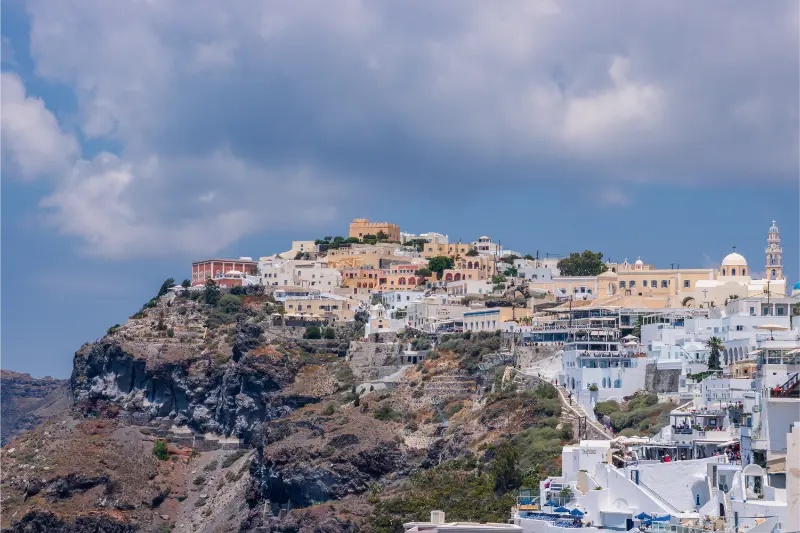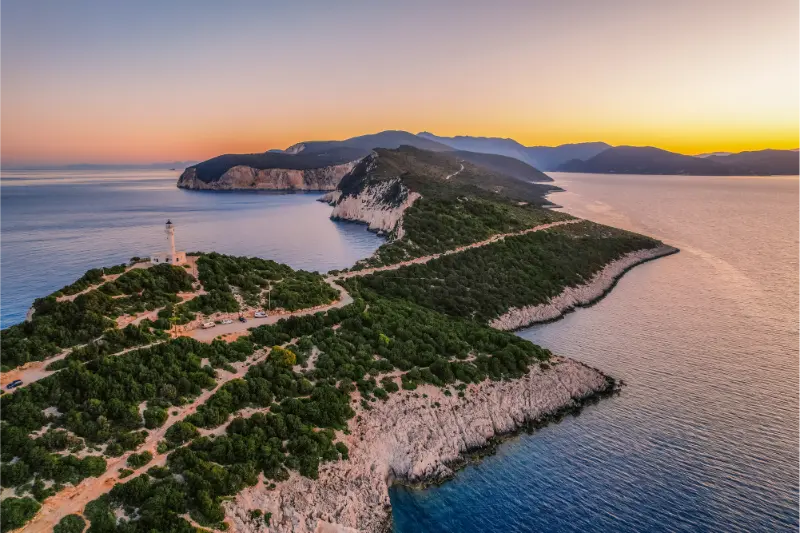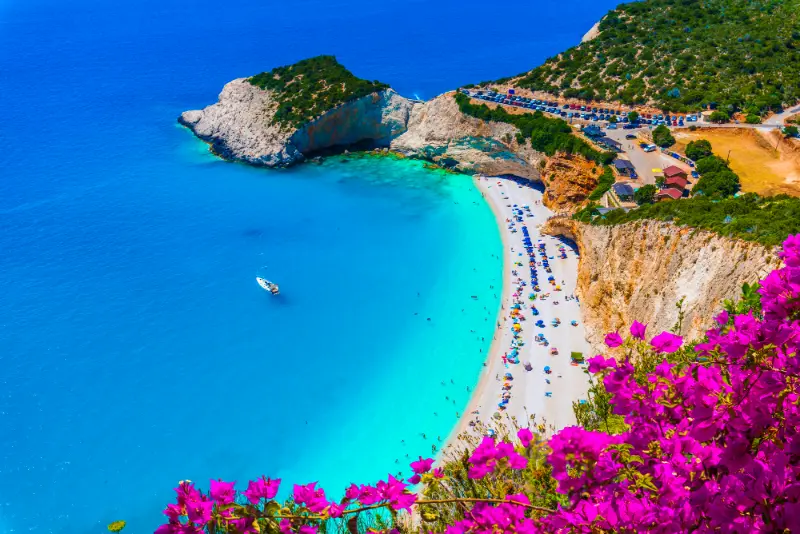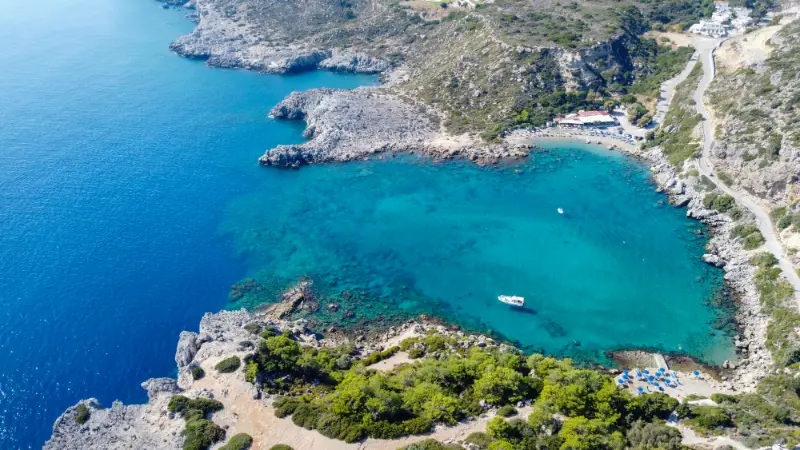
Author: Jessica

  • Where to Stay in Amorgos: Chora, Katapola or Aegiali? Best Areas Compared

    Where to Stay in Amorgos: Chora, Katapola or Aegiali? Best Areas Compared

    Choosing where to stay in Amorgos is more important than it looks. The island is long and mountainous, and its three main traveller bases offer genuinely different holidays. Chora gives you the classic whitewashed village and the best evening atmosphere; Katapola gives you ferry convenience and central buses; Aegiali gives you the easiest sandy beach and immediate access to the northern villages.

    There is no universal winner. A couple coming for hiking and village dinners may love Chora, a family may be happier walking onto Aegiali beach, and a short-stay traveller arriving late by ferry may save hours of friction by sleeping in Katapola. For a week, splitting the stay can make sense because the north feels distinct from central Amorgos.

    At a glance

    Best for atmosphereChora
    Best for ferry convenienceKatapola
    Best for sandy beachAegiali
    Best for hikersChora or Langada/Aegiali
    Best without a carKatapola or Aegiali
    Best for familiesAegiali

    Chora: best for atmosphere and central access

    Chora is the emotional choice. White lanes, little squares, windmills and the castle create the strongest “Cycladic village” experience on Amorgos, and evenings are excellent because restaurants and bars are within walking distance once you are back from the day.

    The compromise is the lack of a walk-out sandy beach and the steep village fabric. Choose Chora if you value atmosphere, Hozoviotissa and central positioning more than beach convenience. Read the full Chora guide.

    Katapola: best for arrivals and transport

    Katapola wins on logistics. If your ferry arrives late or departs early, being able to walk to the quay can remove stress. Buses radiate toward Chora and Aegiali, and seasonal boats can serve nearby beaches.

    The harbour is attractive rather than spectacular, but staying here often produces a more efficient trip. Xylokeratidi on the opposite side of the bay is worth considering if you prefer a quieter waterfront. See the Katapola guide.

    Aegiali: best for beach and longer stays

    Aegiali is the strongest choice for travellers who want a real sandy beach as part of everyday life. You can swim before breakfast, return easily after a hike and stay out for dinner without arranging transport.

    Langada and Tholaria rise behind the bay, giving you village life and hiking access close to a practical resort base. Families and no-car travellers often find this balance ideal. Use the northern Amorgos guide for detail.

    Amorgos Aigiali

    Langada and Tholaria: for walkers and village life

    If you are willing to sacrifice immediate beach access, staying in Langada or Tholaria puts traditional village evenings and trailheads outside the door. This is a strong choice for repeat visitors or walkers who already know they do not need a waterfront every night.

    Check bus frequency and luggage access before booking. A beautiful hillside room can be less charming when you arrive with a heavy suitcase after the last convenient bus.

    Best area for couples

    Chora is the easiest recommendation for couples who want atmospheric dinners and village walks. Aegiali is better for couples who imagine the trip around swimming and sunset by the water. Katapola suits couples who prefer practical transport and day trips over a “honeymoon” setting.

    Boutique character matters less than exact location: a quiet room five minutes from the square may be more enjoyable than a more stylish room above late-night noise.

    Best area for families

    Aegiali is generally the easiest family base because the sandy beach, food and services are together. Katapola is practical for ferries and buses, but the swimming setup is less straightforward. Chora has charm but more stairs and no main beach.

    Families with older children who hike may enjoy Chora or a split stay. Families with toddlers should prioritise shade, flat access and the ability to return to the room quickly.

    Best area without a car

    Katapola and Aegiali are the safest no-car choices because each combines transport with enough local life for a “zero-transport” day. Chora can also work well if the seasonal timetable matches your beach and ferry plans.

    Read Amorgos Without a Car before booking a remote villa or a mountain room simply because the nightly rate looks attractive.

    Should you split your stay?

    For three or four nights, stay in one place. For six or seven nights, a Katapola/Chora plus Aegiali split can reduce backtracking and let you experience both central and northern Amorgos.

    Do not move hotels just to save a 30-minute bus ride once. Moving is worthwhile only when it changes the rhythm of several days.

    Questions to ask before booking

    Ask whether the room is reachable by car, how many stairs are involved, where the nearest bus stop is, whether luggage transfer is offered and how late nearby restaurants stay open in your month of travel.

    Also ask about wind exposure. A terrace with an enormous sea view may be less usable than expected during strong Meltemi, especially on an exposed ridge.

    Tours and experiences

    Organised activities on Amorgos are more limited than on Santorini or Mykonos, which is part of the island’s appeal. When a guided hike, boat trip or cultural tour fits the plan, compare the exact meeting point, duration, cancellation conditions and whether transport is included before booking.
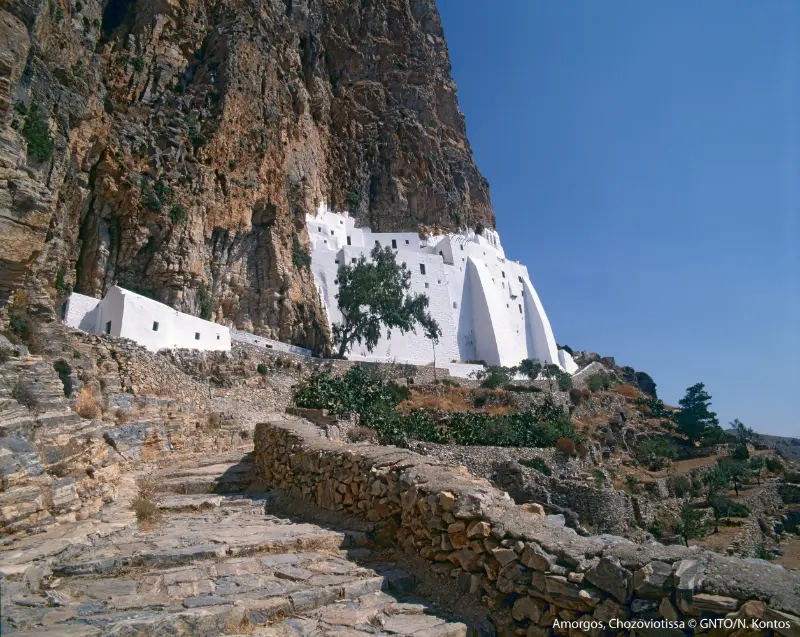
    Amorgos Chozoviotissa

    Frequently asked questions

    What is the best area for a first trip?

    Chora offers the strongest atmosphere, while Katapola is the easiest logistically. Choose Aegiali if beach time is central to the holiday.

    Where should families stay?

    Aegiali is the easiest for most families because of its sandy beach and services.

    Where should I stay without a car?

    Katapola or Aegiali are the safest choices, with Chora also practical when buses fit your dates.

    Is it worth staying in two areas?

    Yes for a week, especially if you want both the north and central island without repeated long transfers.

    Which area is best for hiking?

    Chora is excellent for Palia Strata and central routes; Langada/Aegiali are ideal for Melania and Krikelos.

    Which area is closest to Hozoviotissa?

    Chora is the natural base for the monastery and Agia Anna.

    Planning details that make a real difference

    Amorgos looks compact on a map, but choosing accommodation and a base on Amorgos works best when you respect the island’s long, mountainous shape. Roads bend around ridges, buses are seasonal and several beaches or trailheads still require walking. Build the day around one part of the island instead of repeatedly crossing from north to south.
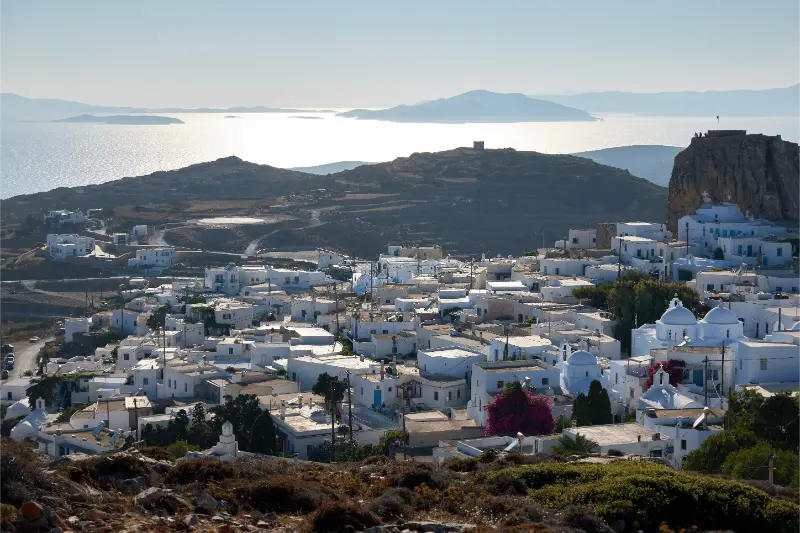
    Amorgos Greece

    In July and August, start exposed walks early and treat the middle of the day as swimming, lunch or shade time. The Meltemi can make the air feel cooler than it is, so do not use wind as a substitute for sun protection. In May, June, September and early October, walking is often more comfortable, but transport and boat services may run less frequently than at peak summer.

    Keep water, a hat and shoes with reliable grip in your day bag even when the plan does not sound like a hike. Many rewarding places on Amorgos are reached by stone steps, rough paths or steep village lanes. For remote beaches, assume there may be no shade, shower, shop or mobile signal exactly where you need it.

    Finally, leave some flexibility. Strong wind can change boat trips and beach conditions, a bus timetable can be revised, and a village festival may be a better evening than the restaurant reservation you planned months earlier. Organise the essential logistics, then allow the island to change the order of the day.

    Continue planning Amorgos

    For the rest of the island, continue with Chora Amorgos Guide; Katapola Amorgos Guide; Aegiali, Langada and Tholaria Guide; Hozoviotissa Monastery Guide; Agia Anna and Mouros Beaches Guide; Best Beaches in Amorgos; Amorgos Hiking Guide. These guides are designed to work together, so you can move from a general idea to the practical details of transport, beaches, walking and where to base yourself.

    Useful official resources

    For current destination information use Amorgos Municipality tourism guide. For public buses check the Amorgos Bus Company timetable page, which explicitly advises travellers to confirm route changes on arrival. For walking and beach overviews, Visit Greece hiking information and Visit Greece beaches of Amorgos are useful starting points. Recheck opening hours, buses and boat departures shortly before travel.

    Final practical advice

    Use this guide to choose by daily routine: what do you want before breakfast, what should be outside the door, and how much transport are you willing to organise every day?

    How I would fit this into a first Amorgos trip

    For a first visit, I would avoid using this subject as an isolated checklist. Build it into a route that gives Chora, Katapola and the north enough time to feel different. A five- to seven-night stay can include one dedicated hiking day, two flexible swimming days, one cultural day around Hozoviotissa and Chora, and an evening in both a port and a mountain village. This balance is more revealing than trying to collect every beach and viewpoint in one loop.

    Ferry times should shape the first and last day. If you arrive in Katapola, keep the first evening local instead of immediately crossing the island. If you arrive in Aegiali, enjoy the north first. The same logic applies on departure: sleep where the morning connection is easiest when the ferry is early, rather than creating a stressful taxi transfer simply to spend one final night in a prettier village.

    Amorgos also rewards seasonal thinking. May and early June suit walking and flowers but the sea may feel cool; July and August bring the broadest visitor services plus stronger heat and wind; September often combines warm water with better hiking temperatures, although bus and boat frequencies can begin to ease. October can be beautiful for independent travellers who accept a quieter island and fewer daily connections.

    Budget for occasional taxis even if you plan to use buses. One well-timed taxi can protect a hiking plan, solve an early ferry connection or let you eat in another village after the last convenient bus. That is usually better value than renting a car for an entire week if you only need private transport twice.
  • Kefalonia with Kids: Best Bases, Family Beaches, Easy Days and Practical Planning

    Kefalonia with Kids: Best Bases, Family Beaches, Easy Days and Practical Planning

    Kefalonia can be an excellent family island, but the best family itinerary looks different from an adult road trip. Long drives, steep beach roads and a new hotel every two nights are usually less rewarding than a base with an easy beach, a pool or shaded terrace, and two or three carefully chosen excursions.

    The island offers a useful mix: caves that break up beach days, harbour towns for evening walks, Mount Ainos for a cooler change of scenery and beaches ranging from organised resorts to remote coves. The key is matching the child’s age and swimming confidence to the exact beach rather than assuming every famous bay is family-friendly. Start with the Kefalonia travel guide and then use this guide to simplify the route.

    Kefalonia with Kids at a glance

    QuestionPractical answer
    Easiest basesLassi, Skala and Argostoli/Lassi combination
    Good quieter baseSami for caves and Antisamos; Agia Efimia for a slower stay
    Best principleShorter drives and fewer hotel changes
    Watch carefullyBeaches where water deepens quickly, midday heat, steep roads
    Good non-beach dayMelissani/Drogarati or Mount Ainos depending on age

    Choosing a family base

    For toddlers and younger children, convenience usually beats scenery. Lassi puts beaches, restaurants and Argostoli close together. Skala provides a long resort beach and walkable evenings. Sami gives you caves and Antisamos nearby, reducing the number of long transfer days.

    Small Bay Near Antisamos Beach Sami Kefalonia Island Greece

    Assos and Fiskardo are beautiful but may involve more driving, hills or parking challenges depending on the accommodation. They can be wonderful visits without necessarily being the best family base.

    Beach safety matters more than beach fame

    Myrtos and Antisamos are visually spectacular, but both can have conditions that require more attention than a sheltered shallow beach. Antisamos is known to deepen fairly quickly, and west-coast beaches can receive swell. Always judge the sea on the day.

    For younger children, choose a section with easy facilities, shade options and a short walk back to the room or car. The best beaches in Kefalonia guide compares beaches by practical use, not just photographs.

    Caves with children

    Melissani is an easy way to add wonder without a long hike, while Drogarati involves steps and a different underground experience. Go earlier in the day when possible and carry a light layer if your child feels temperature changes strongly.

    Do not stack the caves, Myrtos, Assos and Fiskardo into one family day. Two major stops plus a relaxed meal is usually a better memory than five hurried photo stops. The Melissani and Drogarati Caves guide gives the detailed cave logistics.

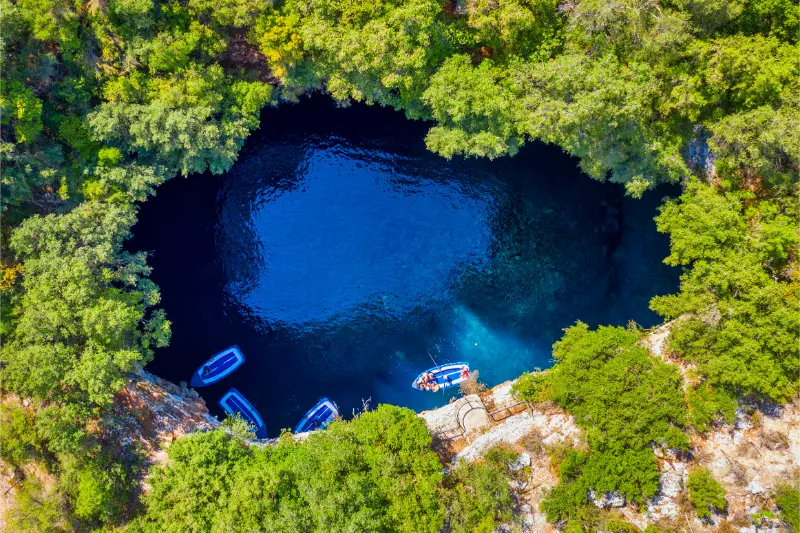
    Attraction Aerial Drone View Iconic Cave With Melissani Lake Near Sami Village Kefalonia Island Greece

    Boat trips and motion sensitivity

    Boat days can be a highlight for school-age children, but vessel size, shade, toilet access and sea conditions matter. Ask operators how long you remain on the boat, whether swimming stops are from a beach or ladder, and what happens if wind changes.

    For children prone to motion sickness, a short local boat outing may be better than an all-day circuit. Keep water, hats and dry clothes easy to reach rather than buried in luggage.

    A realistic family week

    I would alternate active and easy days: arrival and local beach; caves plus Sami; local beach/pool; one north-coast road trip; rest; one boat or mountain day; final flexible day. That rhythm leaves space for weather, tiredness and the simple fact that children may prefer returning to the same beach.

    A family itinerary should have permission to change. If everyone is happy at the pool at 16:00, you do not need to drive an hour for a sunset simply because it was in the spreadsheet.

    When to go and how the season changes the experience

    For Kefalonia with kids, June and September are usually the easiest months to balance warm swimming conditions with less pressure on roads, parking and restaurants. July and August bring the widest range of seasonal services, boat trips and nightlife, but they also bring the strongest heat and the most competition for parking. May and October can be rewarding for walking and quieter travel, yet weather and seasonal opening hours become less predictable.

    Do not plan the entire trip from average temperature charts. Wind direction, recent weather and sea state can change the best beach for a particular day. Keep one or two flexible days and move the most weather-sensitive boat or west-coast plan when conditions look best.

    Driving, roads and parking

    Kefalonia rewards a car, but the driving is slower than the map suggests. Mountain roads, village streets, bends and summer traffic all add time. Build margin into every estimate, especially when you have a ferry, boat departure or restaurant reservation. Avoid stopping on blind corners for photographs and use formal viewpoints or safe pull-outs instead.

    Parking is usually the hidden problem at famous places. Arriving before the middle of the day can make Myrtos, Assos, Fiskardo and other popular stops much easier. If you dislike driving on steep roads, choose a base that reduces the number of cross-island days rather than forcing yourself through a seven-day road-trip schedule.

    Buses and car-free planning

    KTEL Kefalonias publishes seasonal local routes linking Argostoli with the airport, Lassi, Sami, Fiskardo, Myrtos and other destinations. Frequencies change through the season, sometimes substantially. Use buses for the routes they serve well and accept that a taxi, boat excursion or one-day car rental may be the sensible tool for places outside the main network.

    Before travelling, check the official KTEL Kefalonia local timetable. Do not rely on a blog timetable copied months earlier. For a full strategy, see my Kefalonia without a car guide.

    Food, water and the rhythm of the day

    A good Kefalonia day has space for lunch. Long coastal drives and beach parking feel much easier when you are not trying to fit six attractions around them. Keep water in the car, especially for remote beaches and hiking, and do not assume every scenic cove has a taverna or kiosk.

    Robola wine is one of the island’s best-known local products, while meat pies, seafood and simple grilled dishes appear widely. If wine tasting is part of the day, designate the driver or use a transfer; winding island roads are not the place to combine driving with alcohol.

    How to connect this guide with the rest of Kefalonia

    Start with the Kefalonia travel guide if this is your first visit. The Myrtos Beach guide, Assos guide, Fiskardo guide, Melissani and Drogarati Caves guide and Mount Ainos guide cover the island’s major landscape and sightseeing anchors in more depth. Use those pages to build clusters of nearby stops instead of crossing the island several times in one day.

    If you have seven nights, one base can work for a relaxed holiday but two bases usually reduce driving for travellers who want to see both the north and south. The point of a split stay is not to collect hotels; it is to move once so that several later days become easier.

    Booking experiences and boat trips

    Kefalonia has boat trips, sea kayaking, sailing, cave visits and day excursions, but availability is seasonal and weather-dependent. Compare duration, transport included, boat size, shade and cancellation terms before booking. A shorter high-quality trip can be better than an all-day itinerary with too many stops.

    Common planning mistakes to avoid

    • Trying to combine Myrtos, Assos, Fiskardo, Melissani, Drogarati and a sunset stop in one day.
    • Choosing accommodation only by nightly price without checking how much driving it creates.
    • Assuming every famous beach has sand, shallow water, shade and full facilities.
    • Saving a seasonal bus timetable and assuming it will still apply on different dates.
    • Booking a weather-sensitive boat excursion on the only free day of the trip.
    • Underestimating the sun on remote pebble beaches where natural shade may be limited.

    Frequently asked questions

    Is Kefalonia suitable for toddlers?

    Yes, especially with a convenient base and limited driving. Choose accommodation and beach access carefully.

    Which base is easiest for families?

    Lassi and Skala are convenient resort choices; Sami is strong for families who want caves and east-coast exploration.

    Is Myrtos good for small children?

    It can be visited as a family, but sea conditions and shore break can be stronger than at more sheltered beaches. Supervision is essential.

    Are the caves suitable for children?

    Many families enjoy them. Consider queues, steps at Drogarati and how your child handles enclosed spaces.

    Do we need a car?

    A car makes family logistics much easier outside the main resort areas, but you can plan a simpler Lassi/Argostoli stay without one.

    How many hotel changes should we make?

    For one week, one base is fine; two bases is the maximum I would usually choose with younger children.

    More Kefalonia in-depth guides

    Continue planning the island with Lassi and Makris Gialos Kefalonia Guide; Sami and Antisamos Kefalonia Guide; Skala Kefalonia Guide; Lixouri and Paliki Kefalonia Guide; Agia Efimia Kefalonia Guide; Fteri Beach Kefalonia Guide; Best Beaches in Kefalonia; Kefalonia Without a Car; Where to Stay in Kefalonia.

    A simple way to plan the day without rushing

    When I build a day around Kefalonia with kids, I start with one non-negotiable experience and treat everything else as optional. That might be a particular beach, a cave visit, a harbour dinner or a boat departure. I then add one nearby secondary stop and leave the rest of the day open. This sounds conservative on paper, but it is exactly what prevents Kefalonia from becoming a sequence of car parks and rushed photographs.

    Keep a weather backup in the same part of the island. If the sea is rough, switch from a beach to a village, cave or inland drive; if the afternoon is extremely hot, reverse the order and save the open-air stop for later. The best itineraries are not the ones with the most reservations. They are the ones that can absorb wind, traffic, a late lunch or the discovery of a beach you did not expect to love.

    What I would prioritise on a short visit

    With only three or four days on Kefalonia, I would not attempt complete island coverage. Choose one part of the island, add Myrtos or another major landmark if the route is sensible, and protect at least one slow beach afternoon. On a one-week trip, add a second base or two longer day trips. With ten days or more, the island finally gives you room for remote beaches, a mountain day and weather flexibility without sacrificing the evenings.

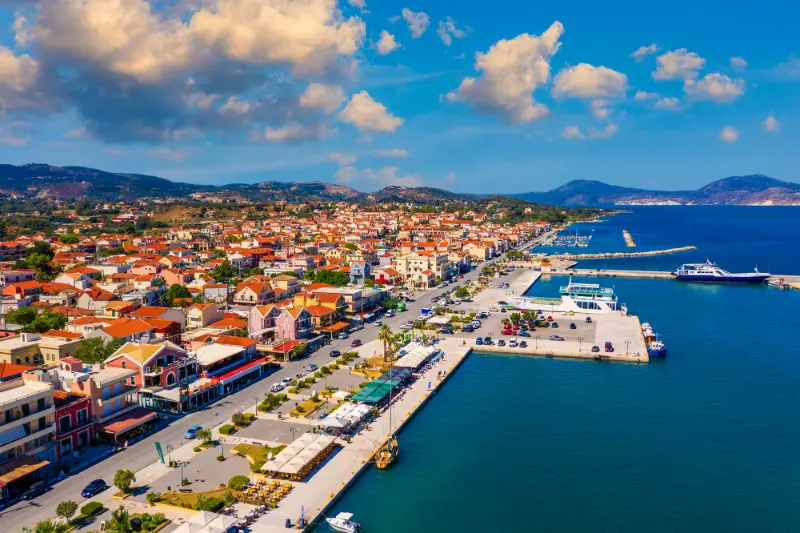
    Lixouri Second City More Large Of Kefalonia Greece

    That approach also improves value. Fewer long drives mean less fuel, fewer emergency taxis and fewer meals bought only because you are late. More importantly, it creates time for the small things that make an Ionian island memorable: swimming twice in the same bay because the light changed, staying for dessert, or stopping at a viewpoint when the road is quiet.

  • Balos Lagoon Guide: Boat or Car, Gramvousa and What to Know Before You Go

    Balos Lagoon Guide: Boat or Car, Gramvousa and What to Know Before You Go

    Balos is one of the most recognizable landscapes in Crete: a broad lagoon of pale sand and changing bands of turquoise water beneath the Gramvousa peninsula. It deserves its reputation, but it is also a place where transport choice can determine whether the day feels spectacular or stressful. You normally reach Balos either by boat from Kissamos, often combined with Gramvousa, or by driving toward the peninsula and walking down to the lagoon.

    Neither option is universally better. The boat is easier for many travellers and adds a maritime perspective; the road option offers the famous high viewpoint and more control over timing but involves rougher access and a demanding return climb. If you are based in Chania, start with the Chania guide and compare Balos with the Elafonissi guide before filling every day with long excursions.

    Why Balos is special

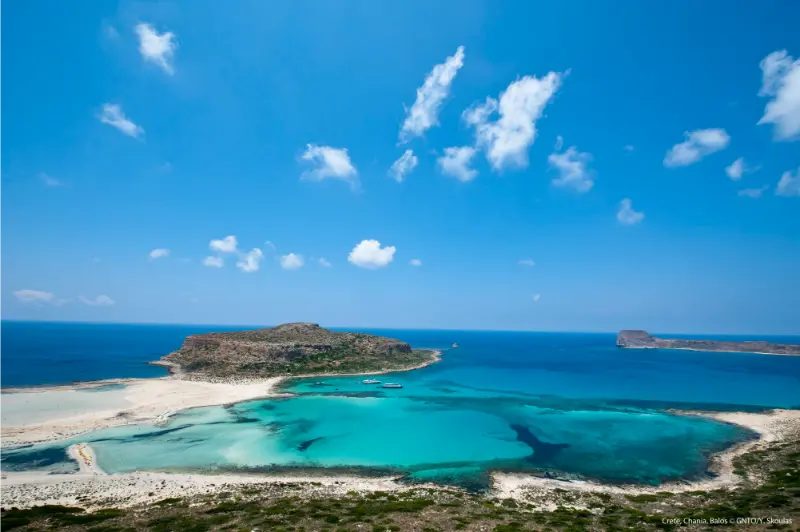
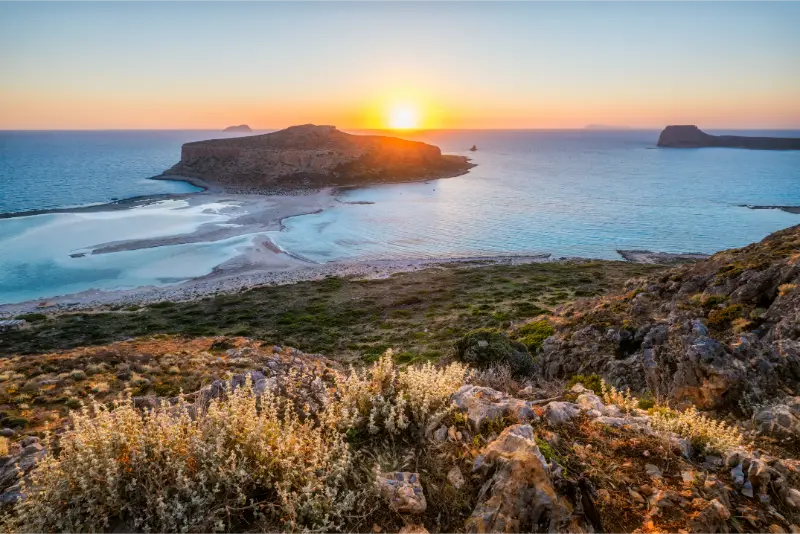
    Balos is a lagoon rather than a conventional straight beach. The water shifts from very shallow areas to deeper channels, and the landscape changes visually with wind, light and sea conditions. The wide view from above is a major part of the experience and explains why many photographs are taken from the descent trail rather than at water level.

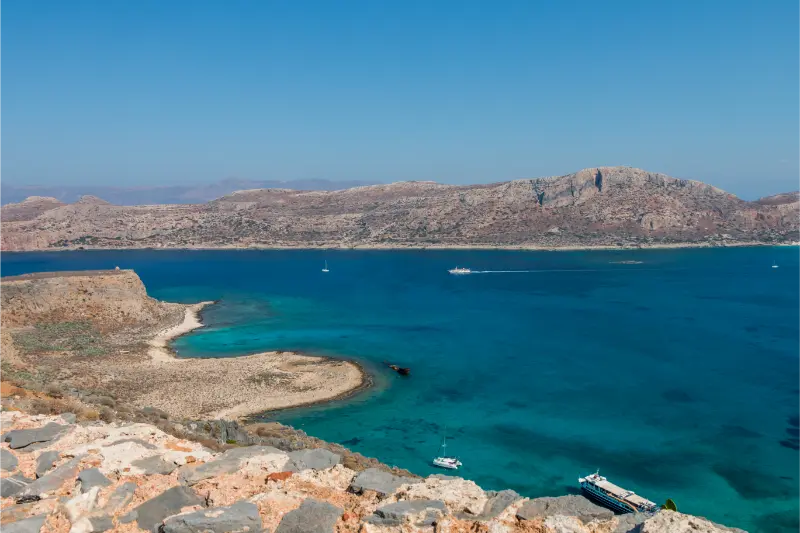
    Balos Bay Greece Ships Boats Mediterranean Sea

    The area is environmentally sensitive. Visit Greece identifies Balos and nearby Gramvousa among the exceptional beaches of Chania and notes that the beach itself is not heavily serviced. That is a reminder to arrive self-sufficient and to treat the landscape as protected nature rather than a resort.

    Option 1: boat from Kissamos

    The boat option removes the rough road and steep walk, which is attractive for families and travellers who do not want to drive on an unpaved peninsula. Excursions commonly combine Balos with Gramvousa, where visitors can see the island and Venetian fortress area.

    The main disadvantage is that you share the schedule with many other passengers. When several boats arrive, the beach can become busy quickly. You also have less freedom to change your day around wind or personal energy once the excursion is underway.

    Option 2: driving and hiking

    Driving lets you arrive earlier than many excursion boats and gives access to the elevated panorama. The final road is known for rough, dusty conditions and is not comparable to a normal paved highway. Rental-car rules can also matter: some contracts restrict use on certain unpaved roads, so read your agreement rather than assuming coverage.

    From the parking area, you still need to walk down to the lagoon and then climb back up later. The return is the harder part because it comes after hours of sun and swimming. Carry enough water for the ascent and avoid flip-flops on loose ground.

    Which option should you choose?

    Choose the boat if you want simple logistics, enjoy being on the water or are uncomfortable with rough roads and steep walking. Choose the road route if the high viewpoint matters to you, you are comfortable with the access conditions and your rental agreement permits the route.

    For small children, older travellers or anyone with mobility limitations, the boat may be more realistic, but even boat access can involve gangways, walking and strong sun. Ask the operator about accessibility rather than assuming a cruise automatically eliminates physical effort.

    Best time to visit

    Early in the season or in September can feel more comfortable than peak midsummer, although weather and boat schedules are less predictable outside July and August. If driving, early arrival is valuable because it reduces heat on the descent and gives you time before large boat groups arrive.

    If taking a boat, you are tied to the operator timetable, so focus on choosing a day with favourable wind and sea conditions. Cancellations are inconvenient, but safety at sea is more important than preserving a rigid itinerary.

    What to bring

    • More water than you would bring to an urban beach, especially if hiking.
    • Hat, sunscreen and clothing that covers exposed shoulders.
    • Good walking shoes for the road-access trail; change into beach footwear later.
    • Food or snacks, particularly if you have dietary needs.
    • A waterproof pouch for phone and documents on boat days.
    • A bag for all rubbish.

    Do not count on abundant shade. If you carry a beach umbrella, use it only in permitted areas and secure it responsibly in wind. Natural coastal systems are easily damaged by careless anchoring or digging.

    Swimming and lagoon conditions

    Shallow water can warm significantly in summer and is appealing to children, while deeper sections provide more conventional swimming. Water depth and currents vary, so supervise children closely and pay attention to wind.

    The most photogenic colour does not always correspond to the best swimming spot. Walk a little, observe conditions and choose a comfortable area rather than following the densest cluster of people.

    Gramvousa

    Boat excursions often stop at Gramvousa before or after Balos. The island’s fortress sits above the landing area, and the climb can be hot and exposed. If you choose to go up, wear proper shoes and watch the clock so you do not delay boarding.

    If the fortress is not important to you, staying near the water can preserve energy for Balos. An itinerary is better when you decide what matters instead of automatically doing every optional climb because everyone else is moving in that direction.

    Balos with children

    Families can have an excellent day at Balos, but the access method should match the youngest traveller. A toddler carried down and back up a steep trail in strong heat creates a very different day from an older child who hikes comfortably.

    For family travel, the boat is often simpler, while Elafonissi can be easier still. Read the Greece with kids guide for pacing ideas, and remember that a famous beach is not worth turning the whole family into exhausted passengers.

    Environmental responsibility

    Stay on established paths, do not remove sand or shells, and never leave rubbish. Balos receives heavy visitor pressure, so tiny individual choices add up. I also avoid single-use beach gear that is likely to be abandoned at the end of the day.

    If new access rules, parking limits or visitor-management measures are introduced, follow them even if older blogs say something different. Protection measures are part of keeping the lagoon worth visiting.

    How Balos fits into a Crete itinerary

    From Chania, Balos is a full excursion day. I would not pair it with Samaria Gorge on adjacent days unless you are very active, because both require early starts and physical effort. A relaxed Chania day between them produces a better trip.

    Crete Chania Balos

    For a longer island journey, use the Crete road trip itinerary to group western Crete experiences together before moving east toward Rethymno and Heraklion.

    Frequently asked questions

    Is Balos better by boat or car?

    The boat is easier logistically; the road route offers the famous high viewpoint and more control over timing. The right choice depends on mobility, driving confidence, rental-car rules and how much you value the panorama.

    Can I drive a normal rental car to Balos?

    Check your specific rental agreement. Unpaved-road restrictions and insurance exclusions vary, and contract terms matter more than advice from another traveller who used a different company.

    How much walking is involved?

    Road access still requires a substantial downhill walk and an uphill return. Boat access reduces that effort but does not eliminate walking, sun exposure or boarding steps.

    Can I do Balos and Elafonissi in one day?

    I would not. Each deserves its own day from Chania, and combining them turns two beautiful landscapes into a long driving exercise.

    Photography without letting it dominate the day

    The classic Balos photograph is taken from above, which is one reason the road-and-hike approach appeals to photographers. But the viewpoint is exposed and can become congested. Step aside after taking your photographs so other visitors can pass safely, and never move beyond barriers for a slightly wider composition.

    At lagoon level, reflections and water colour change through the day. A phone camera is more than enough in bright conditions, and a polarising filter can help advanced photographers manage glare. Protect equipment from sand, salt and sudden wind; changing lenses on an exposed beach is an easy way to introduce dust into a camera body.

    Most importantly, put the camera away for part of the visit. Balos is spatially much larger and quieter in feeling than a screen can communicate. Walking, swimming and watching the colour shift across the lagoon are the memories that make the logistical effort worthwhile.

    Additional practical notes

    Boat operators and sailing conditions vary, so compare departure time, vessel style and duration rather than choosing only by price. A smaller boat is not automatically more comfortable in rough conditions.

    If you become seasick easily, take preventive measures you already know work for you and sit where motion is tolerable. Do not experiment with unfamiliar medication without appropriate advice.

    A realistic Balos day

    If you are driving, leave early enough that the approach road and descent happen before the strongest heat. Photograph the lagoon from the viewpoint while your legs are fresh, then continue down without spending an hour in direct sun. At beach level, identify shade strategy, water and meeting point before everyone scatters. This is especially useful for families and groups travelling with several bags.

    If you are using the boat, arrive at Kissamos with a generous margin for parking, ticket collection and boarding. Ferry-style excursions can involve queues, and starting the day stressed makes the whole schedule feel more crowded. Once on board, note the return time immediately and set an alarm well before departure from each stop.

    Whichever access method you choose, keep the evening simple. Balos is visually spectacular but physically tiring because of sun, walking or time at sea. A quiet dinner near your accommodation is usually a better finale than driving across western Crete for another viewpoint.

    Sunset Balos Beach Crete Greece

    For deeper planning, continue with Kissamos, Falassarna.

  • Zagori Travel Guide: Vikos Gorge, Stone Villages and a 4-Day Road Trip

    Zagori Travel Guide: Vikos Gorge, Stone Villages and a 4-Day Road Trip

    Zagori is the Greece that surprises travellers who imagine the country only as islands and archaeological sites under a hot sun. In northwestern Epirus, stone villages sit among forested mountains, rivers and deep gorges. The cultural landscape was added to UNESCO’s World Heritage List in 2023, recognising the relationship between the villages, stone paths, bridges and the mountain environment.

    This is road-trip country. You can spend days moving between Monodendri, Papingo, Aristi, Kipi and other Zagorochoria, stopping at arched bridges and viewpoints over the Vikos Gorge. The region pairs perfectly with Ioannina and can be combined with Meteora on a wider mainland itinerary.

    Why Zagori is UNESCO listed

    UNESCO describes a cultural landscape where traditional stone settlements, cobbled paths, staircases and arched bridges formed an interconnected system adapted to the Pindus mountains. The villages are not isolated museum pieces; together they show how communities lived and moved through difficult terrain.

    Understanding that network changes the way you travel here. A bridge is not simply a photogenic object, and a stone path is not just a hiking trail. They were infrastructure connecting communities. Treating the region as a linked landscape makes a road trip far more meaningful.

    Where to base yourself

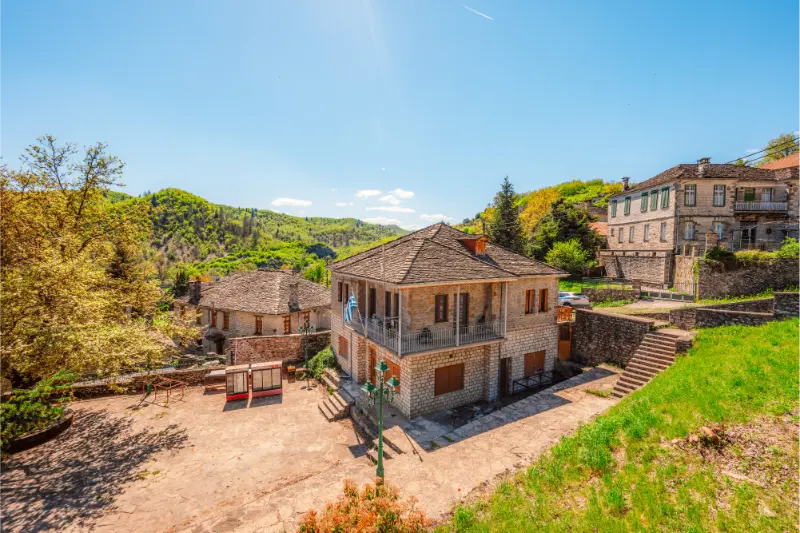
    Monodendri is convenient for famous Vikos viewpoints and has a good selection of accommodation and tavernas. Papingo is spectacular beneath the Towers of Astraka and is ideal for hikers. Aristi sits strategically between western villages and the Voidomatis area. Kipi is excellent for historic stone bridges.

    For four nights, one base is possible, but splitting between central Zagori and Papingo reduces driving. Roads are winding, so a distance that looks tiny on the map can take longer than expected.

    Vikos Gorge viewpoints

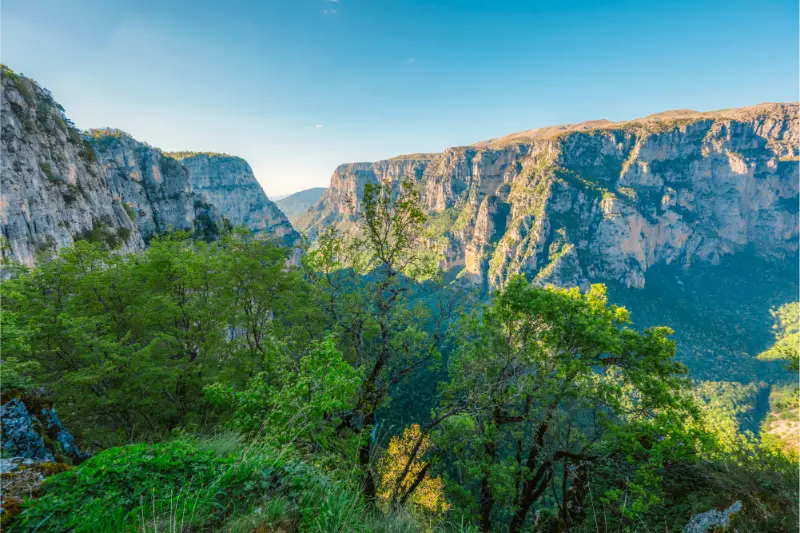
    The gorge is the region’s signature natural feature. The viewpoints around Monodendri and the Oxya area are accessible options for travellers who do not want a full hike. Another dramatic perspective comes from Beloi, reached by a walk from the village of Vradeto.

    Traditionally Houses Mountains Village Monodendri Zagori Greece Near Vikos George

    Edges can be exposed and weather changes quickly. Stay behind barriers where provided, supervise children closely and do not step onto unstable rock for a photograph. Morning light and clearer air can improve visibility.

    Hiking Vikos Gorge

    The full gorge hike is a serious mountain day rather than a casual sightseeing walk. Route conditions, water availability, weather and transport back to your vehicle all need planning. Use current local information and consider a guide if your mountain experience is limited.

    Spring and autumn are often more comfortable than midsummer, but rainfall can affect conditions. Proper footwear, water, food and a charged phone are minimum requirements. Do not begin late simply because the first section feels easy.

    Stone bridges and villages

    The bridges around Kipi are among the easiest ways to understand Zagori’s historic transport network. Combine several in one loop, but avoid parking carelessly on narrow roads. The villages themselves deserve slow walks through central squares, churches and stone lanes.

    Dilofo, Vitsa, Tsepelovo and Koukouli each have different atmospheres. You do not need to see all 40-plus villages. Choose a coherent group and spend time in them instead of turning Zagori into a driving challenge.

    Papingo and the natural pools

    Megalo and Mikro Papingo sit beneath dramatic limestone peaks and are among the region’s most photographed settlements. Nearby rock pools, often called the Rogovo or Papingo pools, can be beautiful, but water levels and safety vary with season.

    Do not assume every pool is suitable for swimming at every time of year. Rocks can be slippery and sudden water flow is possible after rain. Visit for the landscape first.

    Food and mountain evenings

    Epirus cuisine suits the climate: pies, cheeses, mushrooms, meat dishes and hearty seasonal cooking are common. Village tavernas are part of the travel experience, especially after a day outside.

    Even summer evenings can be cool at altitude. Bring a light layer, particularly if you are arriving from the coast and have packed only beach clothes.

    Driving in Zagori

    A car is the most practical way to explore. Roads are generally paved but narrow and winding, with livestock, fallen rocks or fog possible in places. Drive conservatively and avoid building an itinerary that depends on maintaining urban-road speeds.

    Fuel options are limited inside the mountain area, so fill up before long loops. Download offline maps because mobile reception can be uneven.

    A four-day Zagori itinerary

    Day one: arrive from Ioannina, explore Monodendri and a nearby Vikos viewpoint. Day two: drive the Kipi bridge area and visit two or three central villages. Day three: move toward Aristi and Papingo, adding the Voidomatis landscape. Day four: choose a substantial hike or a slower village day depending on weather and fitness.

    Vikos Gorge National Park Vikosaoos Northern Greece Traditional Stone Building Monodendri Village Zagori Greece

    With six days, add Tsepelovo, Vradeto/Beloi or a guided activity. The extra time lets you respond to mountain weather rather than forcing every outdoor plan.

    Best time to visit

    May, June, September and October are excellent for walking and road trips. Summer days can still be hot in exposed areas, while nights remain cooler. Autumn colours make the region especially beautiful. Winter brings snow and a completely different mountain experience.

    Weather is more variable than on the islands. Check forecasts at village altitude, not only Ioannina city, and keep a backup plan for rain.

    Frequently asked questions

    How many days do I need in Zagori?

    Four days is a strong first trip. A week allows more hiking and a slower exploration of different village groups.

    Do I need a car?

    Yes for most independent itineraries. Public transport is not designed for moving efficiently between the many villages and viewpoints.

    Is Zagori UNESCO listed?

    Yes. The Zagori Cultural Landscape was inscribed on the UNESCO World Heritage List in 2023.

    Can beginners hike Vikos Gorge?

    Fit beginners may complete some routes with proper planning, but the full gorge is a serious mountain hike. Current conditions and transport logistics should be checked locally.

    Traditionally Houses Mountains Village Kipoi Zagori Greece Near Vikos George

    Planning a safe Zagori road trip

    Mountain weather deserves more respect than a coastal forecast. A sunny morning in Ioannina does not guarantee stable conditions on higher trails. Check precipitation, wind and temperature for the specific village or mountain area, and keep a museum, long lunch or short bridge walk as a backup plan.

    Driving after dark is possible but less pleasant because roads are narrow and wildlife or livestock can appear. Try to reach your overnight village before sunset, especially on the first day when you do not yet know the road. This also lets you enjoy the evening square rather than arriving tense and hungry.

    Hikers should separate scenic viewpoints from full-day routes. A viewpoint may require only a short walk, while crossing the gorge involves sustained effort and transport logistics. Read route details carefully and do not assume that seeing the gorge and hiking the gorge are the same activity.

    Finally, support villages by eating locally and staying overnight rather than using the region only as a free landscape. Tourism helps maintain traditional buildings and businesses when spending is spread beyond a few famous photo stops.

    Winter travel requires different planning: snow, ice and reduced services can affect roads and hiking. Use winter tyres or chains when required and confirm accommodation heating and road access before setting out.

    Travel days also deserve their own space in the itinerary. Leave time for breakfast, packing, transfers and delays instead of counting a ferry or drive as invisible time. This simple adjustment makes the entire Greece trip feel calmer and more realistic.

    Winter travel requires different planning: snow, ice and reduced services can affect roads and hiking. Use winter tyres or chains when required and confirm accommodation heating and road access before setting out.

    Winter travel requires different planning: snow, ice and reduced services can affect roads and hiking. Use winter tyres or chains when required and confirm accommodation heating and road access before setting out.

  • Santorini Travel Guide: Where to Stay, What to Do and How Many Days You Need

    Santorini Travel Guide: Where to Stay, What to Do and How Many Days You Need

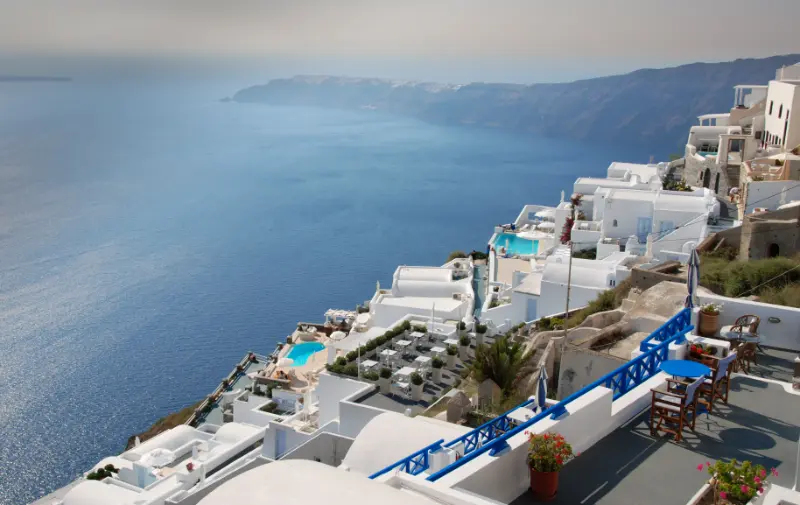
    Santorini is one of the few destinations where the geography explains almost everything. The villages are arranged around a volcanic caldera, the cliffs create extraordinary views, the most desirable hotels are often built into steep slopes, and the famous sunsets draw people toward the same western-facing viewpoints. If you understand that structure before booking, the island becomes much easier to enjoy.

    Santorini is ideal for two to four nights on a first Greece trip. It can work longer if you want a slow romantic stay, but it is not an island I would rush through as a day trip if you have the choice. The best experiences happen before day-trippers arrive, after they leave, and in the quieter hours between the iconic photos.

    Where to stay: Oia, Fira, Imerovigli or elsewhere?

    Oia is the most famous choice for sunsets, whitewashed lanes and luxury caldera stays. It is also crowded and expensive in peak periods. Fira is the transport and commercial hub, with restaurants, nightlife and bus connections. Imerovigli is often a strong compromise for caldera views and a quieter atmosphere. Firostefani sits between the energy of Fira and the calmer northern cliff villages.

    If beach time matters more than a caldera balcony, consider the eastern and southeastern side of the island around beach resorts such as Kamari or Perissa. You lose the direct cliff view but gain easier beach access and often better value. The right answer depends on whether your hotel itself is meant to be part of the experience.

    How many days in Santorini?

    NightsWhat you can realistically do
    1 nightVery compressed; sunset + one main area
    2 nightsCore caldera experience + one excursion
    3 nightsBest first-visit balance
    4 nightsAdd slower villages, beach time, winery or boat trip
    5+ nightsWorks for a relaxed romantic stay, but consider pairing with another island for contrast

    The Fira to Oia hike

    The cliff path between Fira and Oia is one of the island’s signature experiences. The route is exposed and includes uneven ground and climbs, so treat it as a real walk rather than a city promenade. Start early outside the cooler months, carry water, use proper footwear and check current conditions. The reward is a changing perspective across the caldera that you cannot reproduce from a bus window.

    You do not need to complete the whole route to enjoy the scenery. A shorter section around Fira, Firostefani and Imerovigli can be enough for travellers with limited time or mobility. Sunset is beautiful, but midday heat can be punishing in summer.

    Oia without making sunset stressful

    Oia is worth seeing even if you dislike crowds. Visit early in the morning, explore side lanes, look at the architecture and then decide whether the famous sunset is important enough to justify the evening crowd. The postcard viewpoints are not the only places to watch the light change. A caldera terrace elsewhere on the island can feel more personal.

    Rooftop Terrace With Sunbeds Overlooking Hillside Architecture Fira Santorini Greece

    Fira: more than a transport hub

    Fira is practical because buses radiate from the main station and the town offers a wide range of restaurants, shops and accommodation. It is also visually impressive in its own right, with caldera views and a lively evening atmosphere. Travellers staying only two or three nights may find Fira more convenient than Oia because getting around the island is simpler.

    Akrotiri and Santorini’s ancient history

    Santorini is not only a landscape. The archaeological site of Akrotiri preserves evidence of a Bronze Age settlement buried by volcanic material. It is a useful counterpoint to the modern villages and helps explain why the island’s volcanic history is more than scenery. Combine it with nearby viewpoints or the southern part of the island rather than crossing back and forth repeatedly.

    Volcanic beaches

    Santorini’s beaches are distinctive rather than universally soft and sandy. Dark volcanic shorelines, cliffs and unusual colours create dramatic settings. Perissa and Kamari are easy for organised beach time; other coastal areas are better treated as scenic stops. Do not compare Santorini’s beaches to the long sandy stretches of Naxos or some parts of Crete—the appeal is different.

    Boat trips and the caldera

    A boat trip changes your understanding of the island because you see the cliffs from sea level. Options range from larger group cruises to smaller sailing trips, often combining volcanic areas, swimming stops and sunset. The experience can be excellent, but check the exact itinerary, boat size and transfer arrangements rather than choosing on sunset photos alone.

    Wine and food in Santorini

    Santorini has a distinctive agricultural identity shaped by volcanic soil, wind and limited rainfall. Local wine is a major part of the food experience, and winery visits can be a welcome change from cliff walking. Look for dishes using local tomatoes, fava and other island products, and make at least one meal about food rather than the view.

    Getting around Santorini

    Public buses connect Fira with major towns and beaches, making a car optional for many short visits. The challenge is that routes generally centre on Fira, so travelling between two non-Fira points can require a change. Taxis and private transfers are convenient but can be expensive and limited in peak demand. A rental car or scooter gives flexibility, but parking and narrow roads require patience.

    If you are combining Santorini with other islands, read Getting Around Greece and check your specific ferry port transfer. The ferry port is below steep cliffs and traffic can build around arrival times.

    Santorini in peak summer

    July and August bring heat, strong demand and the most crowded version of the island. You can still have an excellent trip by shifting your schedule: early walks, midday pool or beach time, and later dinners. Book important accommodation and special restaurants well ahead if your dates are fixed. Shoulder season often feels more forgiving.

    Santorini for families

    Santorini can work for families, but choose accommodation carefully. Many caldera properties have steep stairs, unfenced drops, small terraces or adult-focused layouts. A beach-side base can be easier with young children. If views are the priority, ask the hotel specific questions about access rather than assuming every “family room” is stroller-friendly.

    Santorini for couples

    Couples are where Santorini’s hotel-led experience makes most sense. A private terrace, caldera view, slow breakfast and one special dinner can justify staying fewer nights at a better property. Do not fill every hour with tours; the location itself is one of the activities.

    What I would do with three nights

    1. Arrival: settle in, explore your base, watch sunset away from the biggest rush.
    2. Full day 1: Fira–Imerovigli walk or full Fira–Oia hike, then relaxed evening.
    3. Full day 2: Akrotiri + beach or winery, or a caldera boat trip.
    4. Departure day: breakfast and one final village walk if transport allows.

    Common mistakes

    • Booking a cheap room without checking whether it is actually on the caldera side.
    • Choosing Oia automatically when Fira would be more practical for a short trip.
    • Scheduling the ferry port transfer too tightly.
    • Expecting Santorini to be Greece’s ultimate sandy-beach island.
    • Doing the cliff hike in intense midday heat without enough water.
    • Spending the entire trip chasing sunset photos instead of exploring in the morning.

    Is Santorini worth it?

    If the caldera landscape and architecture are part of your image of Greece, yes—especially on a first trip. But it is strongest when paired with a different island rather than used as a model for all Greek islands. Combine it with a beach-focused or more relaxed destination to see contrast. For planning, compare the Greek island guide and the Greece itineraries.

    The Santorini official tourism portal publishes local attractions and events, while Visit Greece provides national tourism information. Conditions, access rules and transport schedules can change, so recheck details for your exact dates.

    Santorini FAQ

    Is Oia or Fira better for first-time visitors?

    Oia is better if the dream is a romantic caldera stay and you are comfortable paying for location. Fira is better for transport, restaurants and a short practical stay because bus routes centre there. Imerovigli is often the compromise for travellers who want views but less evening congestion.

    Fira Town Caldera Santorini Greek Island Aegean Sea Greece

    Do you need a rental car in Santorini?

    Not necessarily. A short visit based in Fira or another well-connected area can work with buses, taxis and transfers. A car adds flexibility for wineries, beaches and quieter villages, but parking and peak-season traffic reduce the benefit. Rent because your itinerary needs it, not because you assume every island requires a car.

    Can you visit Santorini on a day trip?

    It is possible from some nearby islands or cruises, but the result is concentrated around the busiest hours. Staying overnight gives you early mornings and evenings when the island feels more relaxed. If Santorini is one of the main reasons for travelling to Greece, I would prioritise at least two nights.

    Are Santorini sunsets overrated?

    The light and caldera setting are genuinely memorable; the stressful part is often the crowd at a handful of famous viewpoints. You do not need the most photographed wall in Oia to enjoy sunset. A hotel terrace, restaurant, path or quieter caldera point can produce a better memory than competing for the same spot.

    Blue Domed Churches Whitewashed Houses Oia Santorini Greece Overlooking Aegean Sea Caldera

    Is Santorini suitable for travellers afraid of heights?

    Many caldera hotels and paths involve steep stairs and exposed views. If this is a concern, choose accommodation away from the cliff edge or on the beach side of the island and ask precise access questions before booking. You can still enjoy villages, archaeology, food and beaches without sleeping on a cliff.

    A smarter way to book accommodation

    When comparing hotels, separate the words “Santorini,” “sea view” and “caldera view.” A property can be on Santorini and face the sea without facing the caldera. Read the map, room category and recent guest photos carefully. If the view is the reason you are paying a premium, confirm that the exact room type includes it.

  • Lefkada Travel Guide: Porto Katsiki, Egremni, Villages and a 5-Day Itinerary

    Lefkada Travel Guide: Porto Katsiki, Egremni, Villages and a 5-Day Itinerary

    Lefkada is unusual among major Greek islands because you can drive onto it from mainland Greece via a bridge. That changes the logistics completely. There is no need to coordinate a ferry simply to reach the island, making Lefkada a natural addition to a mainland road trip or a flight into nearby Aktion/Preveza airport. Once you arrive, the island delivers some of the most dramatic beaches in the Ionian Sea.

    The western coast is defined by pale cliffs and intensely blue water, while the east around Nydri is greener, more sheltered and filled with small islands. Vasiliki in the south is known for windsurfing, and Lefkada Town provides a pleasant urban base near the bridge.

    Lefkada Town

    Lefkada Town is the island’s capital and the first place you encounter after crossing from the mainland. The centre has pedestrian streets, colourful low-rise buildings, churches, cafés and a marina. It is a practical base for travellers who want restaurants and evening atmosphere without committing to a beach resort.

    The nearby lagoon and causeway landscape give the town a distinctive setting. For pure beach access, however, you may prefer the west coast or south; Lefkada Town works best as a logistical and cultural base.

    Porto Katsiki

    Porto Katsiki is Lefkada’s signature beach, set below a high white cliff on the southwest coast. The view from above is extraordinary, but access involves driving mountain roads and descending steps. In peak summer, parking and traffic can become stressful.

    Go earlier in the day, carry what you need and check current access conditions because coastal roads and stairways can be affected by weather or maintenance. The water deepens relatively quickly, so families should judge conditions on the day rather than assuming a famous beach is automatically ideal for small children.

    Port Katsiki Beach Ionian Sea Lefkada Island Greece Views Azure Sea Water Nature With Cliffs Cave

    Egremni

    Egremni is another spectacular west-coast beach with a long ribbon of pale shore beneath towering cliffs. Access arrangements have changed over the years after earthquakes and reconstruction, so verify current road, parking and stair conditions before setting out. Boat excursions may also provide access depending on season and sea conditions.

    The scale is part of the appeal: even when the beach is busy, the long coastline can feel more open than smaller coves. Bring substantial water and sun protection because services may be limited compared with resort beaches.

    Kathisma

    Kathisma is easier to integrate into a casual beach day. It has road access, organized facilities, restaurants and a broad beach below green hills. That convenience makes it popular and busy, but it is a useful choice when you do not want the logistical effort of Porto Katsiki or Egremni.

    Lefkada Egremni Greece

    Sea conditions on the west coast can become rough. Watch the waves, follow lifeguard advice and be particularly cautious with children.

    Nydri and the east coast

    Nydri is one of Lefkada’s busiest resorts and a major hub for boat trips. The east coast is sheltered by a cluster of smaller islands, creating a very different seascape from the exposed west. Day cruises often explore Meganisi and nearby islets, while private boat hire is also popular for experienced travellers who follow local safety rules.

    Stay in Nydri if boat access, restaurants and convenience matter more than having a dramatic west-coast beach outside your hotel.

    Vasiliki and windsurfing

    Vasiliki sits in a large bay in the south and is internationally known for windsurfing conditions. Official Visit Greece information highlights the area as a major water-sports destination. Mornings can be calmer, with stronger afternoon winds depending on weather patterns, making the bay suitable for different ability levels through the day.

    Even if you do not windsurf, Vasiliki is a pleasant base with tavernas, boat connections and access to the southern part of the island. Families should choose the quieter side of the bay if watersports traffic is intense.

    Agios Nikitas

    Agios Nikitas is a small west-coast village with a pedestrian centre leading to the sea. It is one of the most attractive places to stay if you want evening atmosphere and access to nearby beaches without the scale of Nydri. Parking is generally outside the compact centre, which adds to the village feel.

    From here, Kathisma is close by road and Milos Beach can be reached by footpath or seasonal boat depending on conditions. The steep trail is not ideal for everyone in midday heat, so ask locally about the easiest option.

    Where to stay

    **Lefkada Town** suits arrivals, dining and access to the mainland. **Agios Nikitas** is excellent for west-coast atmosphere. **Nydri** is best for boat trips and a lively resort base. **Vasiliki** suits water-sports travellers and southern exploration.

    For five nights, choose one base if you dislike changing hotels. For seven or more, splitting between west and east/south can reduce driving and show both sides of the island.

    Do you need a car?

    A car is extremely useful for the famous west-coast beaches, villages and viewpoints. Bus services exist, but they do not provide the same flexibility for early beach arrivals or sunset stops. Road distances are not huge, yet mountain bends make journeys slower than they look.

    Parking at the most famous beaches can fill quickly. Start early and never stop on unsafe bends simply because other cars are doing it.

    Boat days and Meganisi

    One of the best breaks from driving is a day on the water. The sheltered east coast opens toward Meganisi, Kalamos and Kastos. Boat trips vary from large excursions to small-group sailing. Read the route carefully and choose based on how much swimming time you want.

    If you rent a small boat, follow the operator’s instructions, weather limits and navigation boundaries. Confidence from driving a car does not equal boating experience.

    A five-day Lefkada itinerary

    Day 1: Lefkada Town and Agios Nikitas

    Arrive, walk the capital, then move toward your base. Spend the late afternoon at Agios Nikitas or a nearby beach.

    Day 2: Porto Katsiki and the southwest

    Leave early for Porto Katsiki. Keep the day simple rather than trying to add every beach. Stop at a viewpoint or village on the return journey.

    Day 3: Nydri and boat trip

    Use a boat excursion to explore the smaller islands and sheltered bays. Enjoy dinner in Nydri after returning.

    Day 4: Kathisma and west-coast villages

    Spend a relaxed day at Kathisma or another western beach. Visit a hill village for lunch or sunset.

    Day 5: Vasiliki and the south

    Explore Vasiliki, try a water sport if interested and visit a southern beach. Keep enough time for your onward drive or airport transfer.

    Lefkada with children

    Families should choose beaches according to access and sea conditions, not fame. East-coast water is often more sheltered, while west-coast beaches can have stronger waves and steep access. Nydri offers easy services and excursions; Vasiliki can work well for active families.

    If you have toddlers, a hotel with a pool or an easy local beach reduces the need for daily cliff-road journeys. Save Porto Katsiki for one carefully planned outing rather than making it the everyday routine.

    Lefkada Beach Of Port Katsiki On Ionian Sea Greece

    Water sports

    Lefkada is one of Greece’s strongest islands for wind-based sports. Vasiliki attracts windsurfers, while Agios Ioannis near Lefkada Town is known for kitesurfing. Beginners should use professional schools rather than renting advanced equipment independently.

    Conditions change rapidly. Respect local flags and instructor advice even if the sea looked calm earlier.

    Food and villages

    The island’s interior is easy to overlook, but hill villages offer a cooler atmosphere, traditional tavernas and views across olive groves. Use lunch as a reason to move away from the coastal resorts for a few hours. Local products include olive oil, lentils from Englouvi and regional wines.

    A road trip feels much richer when every day is not only beach-parking-beach. One village stop can change the rhythm completely.

    Best time to visit

    June and September are excellent for beach weather with somewhat lower traffic. July and August bring the busiest roads and strongest demand for accommodation. May is beautiful for greenery and road trips, though sea temperatures are cooler. October can be pleasant but seasonal boat services become less predictable.

    Lefkada with Kefalonia

    Lefkada and Kefalonia make a logical Ionian combination. Seasonal ferry connections can link the islands, but routes and departure ports vary, so confirm schedules before building a fixed itinerary. Read my Kefalonia travel guide for the second half of the trip.

    Common mistakes

    • Trying to visit Porto Katsiki, Egremni and Kathisma in one rushed day.
    • Ignoring wave conditions on exposed west-coast beaches.
    • Assuming road distances equal fast driving times.
    • Booking a remote hotel without a car and expecting frequent transport everywhere.
    • Renting a boat without understanding weather and navigation limits.

    Frequently asked questions

    Can you drive to Lefkada?

    Yes. Lefkada is connected to mainland Greece by a bridge/causeway system, so no ferry is required simply to reach the island by car.

    How many days do you need?

    Five days gives you beaches, a boat day and some villages. Seven days is better if you want slower mornings and less driving.

    Which side has the best beaches?

    The west coast has the most dramatic cliff-backed beaches; the east is generally more sheltered and convenient for boating.

    Is Lefkada good for families?

    Yes, especially if you choose accommodation near easy services and select beaches according to access and sea conditions.

    Why Lefkada is different

    Lefkada combines the freedom of a road trip with the visual drama people expect from an island holiday. You can drive from the mainland, spend one day under white cliffs, the next among small east-coast islands, and the next watching windsurfers in Vasiliki. That variety is why the island works for both active travellers and people who simply want a beautiful place to swim.

    More detailed planning

    Continue with Porto Katsiki and Egremni Guide for a more detailed plan.

    More detailed planning

    Continue with Vasiliki Lefkada Guide for a more detailed plan.

    More Ionian Islands guides

    Continue with Lefkada Town; Nydri and Dimosari Waterfalls for more detailed planning in the Ionian Islands.

    More Lefkada in-depth guides

    Continue planning Lefkada with Agios Nikitas, Mylos and Kathisma; Meganisi from Lefkada; Karya and Eglouvi; Sivota and Mikros Gialos; Cape Lefkatas; Best Beaches in Lefkada; Lefkada Without a Car; Lefkada with Kids; Where to Stay in Lefkada; Lefkada 7-Day Itinerary.

    \n

    If you are approaching Lefkada overland, the nearby mainland coast is worth time too: see our Vonitsa and Palairos guide and Astakos and Mytikas guide.

    \n
  • Best Beaches in Rhodes: 15 Beaches for Swimming, Families, Snorkelling and Wind

    Best Beaches in Rhodes: 15 Beaches for Swimming, Families, Snorkelling and Wind

    Choosing the best beaches in Rhodes is less about finding one universal winner and more about matching the coast to the day you want. The east side generally offers many of the island’s most popular swimming beaches and coves; the west is windier and feels more open; the south gives you long drives, dramatic landscapes and places such as Prasonisi where wind sports shape the experience. A good beach plan uses that geography instead of chasing a ranked list.

    For the wider island context, start with my Rhodes travel guide. If you are still deciding how to split your time, the Rhodes road trip itinerary brings the main areas together into a realistic route.

    15 Rhodes beaches worth knowing

    Elli Beach

    The easiest beach for travellers staying in Rhodes Town. It is urban, convenient and good when you want to swim without dedicating a day to transport.

    Kallithea

    A scenic option near the restored springs, with rocky coves and clear water. Best for travellers who like combining swimming with architecture.

    Faliraki

    A long, organised sandy resort beach with services, water activities and easy logistics. One of the simplest choices for families and car-free days.

    Anthony Quinn Bay

    Small, rocky and photogenic, with excellent appeal for snorkelling. Go early because the compact shoreline feels crowded quickly.

    Ladiko

    A nearby cove that pairs naturally with Anthony Quinn Bay. Use it as a second swim rather than driving to a distant part of the island.

    Traganou

    A broader east-coast beach known for its pebbly character and cliffs. It is useful when you want more space than the tiny coves.

    Afandou

    Long and open, with plenty of room to spread out. Good for travellers who care more about swimming space than postcard architecture.

    Tsambika

    One of the island’s classic sandy beaches, framed by hills. It is especially popular with families and works well with the monastery viewpoint if you separate the climb from the midday heat.

    Stegna

    A relaxed bay with tavernas and a small-resort feel. Better for a slow lunch-and-swim day than for nightlife.

    Agathi

    A sheltered-looking sandy bay near Haraki that is popular with families. Arrive early in high season because the easy access attracts day visitors.

    Haraki

    A low-key seafront beneath Feraklos Castle, useful for travellers who want a village atmosphere and an evening meal near the water.

    Aerial Birds Eye View Drone Agia Agathi Beach Near Feraklos Castle Rhodes Island Dodecanese Greece Panorama With Sand Beach Clear Blue

    St Paul’s Bay

    The coves below Lindos are scenic and close to the village, but space is limited. Combine them with an early or late visit to Lindos rather than arriving at the busiest hour.

    Glystra

    A south-east coast beach that can work as a quieter stop between the Lindos area and Kiotari, depending on current conditions and development.

    Scenic View Coastline Kiotari Rhodes Island Greece With Gravel Beach

    Kiotari

    A long resort coast in the south-east, practical for travellers staying in this part of Rhodes and less useful as a special day trip from the north.

    Prasonisi

    A landscape and wind-sports destination at the southern tip rather than a standard calm swimming beach. Conditions can be powerful, so read the day’s wind and sea before entering the water.

    Aerial Birds Eye View Drone Prasonisi Rhodes Island Dodecanese Greece Panorama With Lagoon Sand Beach Clear Blue Water

    How to choose the right coast

    If the day is windy, do not assume every beach will feel the same. The west coast is exposed to prevailing winds and often attracts wind-sports users, while the east can be calmer. Local conditions still vary, so use the forecast as a starting point and assess the water when you arrive. Families should prioritise easy access and appropriate swimming conditions over social-media fame.

    My beach strategy for a first trip

    I would not spend seven days driving to seven “best” beaches. Choose one broad resort beach near your hotel, one scenic cove, one classic sandy beach such as Tsambika and one south-coast day if you have a car. That gives variety without turning the holiday into a parking project. If you are staying in Rhodes Town, Elli plus two day trips may be enough; if you are based in Stegna or Lindos, the east coast is already at your door.

    Beach safety and etiquette

    • Judge wind and waves on the day, not from old photographs.
    • Keep distance from cliff edges and never sit directly below unstable rock faces.
    • Do not block narrow access roads while searching for a photograph.
    • Take rubbish with you and avoid leaving plastic near the sea.
    • Use reef-safe habits where possible and never touch or remove marine life while snorkelling.
    • Remember that sunbed prices and beach services can change during the season; ask before using paid facilities.

    Useful Rhodes beach guides

    For detailed planning, continue with Anthony Quinn Bay, Tsambika, Stegna and Prasonisi. These four places show how different a “Rhodes beach day” can be.

    Frequently asked questions

    Which side of Rhodes has the calmest beaches?

    The east coast is often chosen for easier swimming, while the west is typically windier, but conditions change day by day.

    What is the best beach for families?

    Faliraki and Tsambika are practical choices because of space and services, but the best option depends on the day’s sea conditions and where you are staying.

    What is the best beach for snorkelling?

    Anthony Quinn Bay is popular because of its rocky setting. Always remain aware of boat traffic and your own swimming ability.

    Which beach is best without a car?

    Elli is easiest from Rhodes Town. Faliraki is also practical if you are staying there or using current public transport.

    Is Prasonisi good for ordinary swimming?

    It is famous for wind and water sports and should be approached according to conditions. It is not my automatic recommendation for a calm family swim.

    Final thoughts

    Rhodes has enough coastline that the “best beach” changes with your base, the wind and the kind of day you want. Use the island’s geography, choose a few contrasting beaches and leave room to return to the one you actually enjoyed most. That usually produces a better holiday than trying to complete a list.

    Extra planning notes before you go

    Rhodes is easiest to enjoy when you separate fixed facts from decisions that should be made on the day. Opening hours, bus schedules, sea conditions, event closures and parking pressure can all change. Recheck the official source for any attraction that would ruin your day if it were closed, and keep one nearby alternative in mind. This is especially important in the shoulder season, when a place can be open while transport or beach services operate on a reduced timetable.

    If you are driving, save offline maps before leaving your accommodation but do not follow every shortcut blindly. Village lanes can narrow quickly, and the main signed road is often less stressful even if navigation software shows a slightly longer journey. In beach areas, park only where access remains clear for residents and emergency vehicles. A few extra minutes of walking is better than creating a problem at a crowded cove.

    Finally, give yourself permission to drop a stop. The most memorable days on Rhodes often come from staying longer at one beach, village or archaeological site because conditions are good. A travel guide should help you make choices, not force you to complete every line. Build the day around one priority, one natural companion stop and one optional extra; that structure works in almost every part of the island.

  • Kastraki Village and Meteora Guide: Trails, Rock Views, Agios Georgios Mandilas and Where to Stay

    Kastraki Village and Meteora Guide: Trails, Rock Views, Agios Georgios Mandilas and Where to Stay

    Kastraki is the village that gives Meteora its most intimate human scale. The rock towers rise directly behind houses, gardens and tavernas, and several old paths begin close to the settlement. Compared with larger Kalambaka, Kastraki feels quieter and more immediately connected to the landscape, which is why many hikers and photographers prefer to sleep here even though services are more limited.

    The village works best when you do not treat it as a scenic backdrop. Walk the lanes around Mesochori, notice how the rocks shape the street plan, and leave time for the small religious sites embedded in cliffs. The official Kalambaka–Kastraki destination page describes Kastraki as the settlement most directly embraced by Meteora’s stone towers and highlights its role as a base for hiking.

    Quick planning summary

    • Best for: hikers, couples, photographers and travellers who prefer a village base.
    • Allow: one relaxed half day for the village in addition to monastery time.
    • Signature experience: walking directly from the village into the Meteora landscape.
    • Tradition: the feast associated with Agios Georgios Mandilas.
    • Alternative: Kalambaka for a wider range of shops and services.

    A village inside the landscape

    Kastraki is not separated from Meteora by a long access road; the rocks form its immediate horizon. That changes the rhythm of a stay. Early in the morning and after sunset, when tour coaches have gone, you can walk a few minutes and find yourself beneath cliffs that feel dramatically different from the roadside panoramas.

    The settlement expanded from older neighbourhoods that were gradually joined together. Today tourism is central to the local economy, but traces of the older village survive in the lanes, churches and relationship between houses and cultivated ground. Look beyond hotel signs and you will still find a living community rather than a purpose-built resort.

    Mesochori and the village walk

    Mesochori, literally the middle of the village, is the natural focus for an unhurried walk. From here, short lanes branch toward tavernas, churches and the foot of the rocks. The point is not to follow a rigid sightseeing route but to understand the settlement’s scale before heading to the monasteries.

    Walk in the morning or late afternoon, when the light on the rocks is softer. Respect residents’ privacy and do not enter courtyards for photographs. Kastraki is heavily photographed, but it remains a home for people who should not have to treat every doorway as a public viewpoint.

    Agios Georgios Mandilas

    One of the most distinctive local traditions is associated with the small chapel of Agios Georgios Mandilas, set in the rock. During the saint’s feast, local climbers traditionally replace scarves or cloth offerings placed high on the cliff. The custom is spectacular to watch but should not be imitated by untrained visitors.

    Outside the festival, view the site from safe ground and appreciate how religious practice adapted to the vertical landscape. The chapel is part of a wider network of hermitages and rock shelters that preceded or complemented the large monasteries on the summits.

    Hiking from Kastraki

    Kastraki is a strong starting point for the paths covered in our Meteora hiking guide. Walking gives you a very different understanding of the rock formations because you move through forest, old tracks and gaps between towers rather than simply driving from parking area to parking area.

    Panoramic View Meteora Mountains Village Kastraki Greece

    Trail conditions vary with rain, maintenance and season. Use a current map or local guide, carry water and start early in hot weather. A route that looks short in horizontal distance may include steep ascent, stone steps and loose surfaces.

    Planning the monasteries from the village

    The main monastery circuit is close, but a realistic day still needs planning. Read our guide to the active Meteora monasteries and choose a limited number rather than racing through all six. Opening days differ, dress rules apply, and stairs make the physical load larger than the driving distance suggests.

    Kastraki’s advantage is that you can break the experience into pieces. Visit monasteries early, return for lunch and rest, then head out again for a viewpoint or short walk when the light improves.

    Sunrise, sunset and photography

    The village itself is excellent for blue-hour and early-morning photography because lights, roofs and cliffs sit in the same frame. For sunset, use established roadside viewpoints rather than scrambling onto rocks. Popular lookouts can become crowded, so arrive early and never park in a way that narrows the mountain road.

    After sunset, carry a light if walking back on unlit sections. The rocks disappear quickly into darkness, and uneven verges can be harder to see than they appear in daylight.

    Eating in Kastraki

    Kastraki has tavernas and cafés oriented to visitors, but the atmosphere becomes noticeably calmer once day-trippers leave. That makes dinner one of the pleasures of staying overnight. Choose a place where the menu and kitchen fit your appetite rather than chasing a single ‘best’ restaurant.

    If you are hiking the next morning, buy water and snacks in advance. Small shops can have limited hours compared with Kalambaka, especially outside the main season.

    How much time to allow

    For Kastraki, the right amount of time depends on whether you are treating it as a destination or as part of a wider Thessaly route. A rushed stop can cover the headline sights, but the character of the area appears in the quieter details: a village square, a short walk, a local museum, a stretch of coast or a meal that is not squeezed between two long drives. Two nights allow one full monastery day plus village walks, hiking or a second sunrise/sunset session without constantly moving the car.

    Build the day around one or two priorities rather than a checklist. Thessaly is geographically compact on a map but mountain roads, river valleys and agricultural traffic can slow travel. If a visit starts feeling hurried, remove the least important detour rather than cutting time from the place you actually came to see.

    Getting there and getting around

    Kastraki is only a short distance from Kalambaka and can be reached easily by road or taxi. The village centre is walkable, but gradients increase quickly toward trails and monastery roads. If arriving without a car, confirm the current local transfer options before booking a property high above the centre.

    A car gives the most flexibility, especially if you want to combine Kastraki with Kalambaka, Theopetra and Trikala. Public transport can work for larger towns, but small villages, trailheads, archaeological sites and remote beaches are harder to connect efficiently. Recheck road conditions after severe weather and never assume a mountain shortcut is faster than the signed main route.

    Where to stay

    Stay in Kastraki if immediate rock views and trail access matter more than a large choice of shops. Choose central accommodation for easier dinners on foot; hillside properties can have exceptional views but may involve steep walks or narrow access.

    For a broader trip, Kastraki or nearby Kalambaka is the most practical reference point. Choose accommodation for parking, realistic driving time and the kind of evenings you want, not only for a low room rate. In rural Thessaly, a beautiful guesthouse can be excellent, but confirm check-in arrangements, heating or air conditioning, stairs and food options if you are arriving late.

    Check accommodation in Kastraki and Meteora on Booking.com.

    Best time to visit

    Spring and autumn are ideal for hiking and village walks. Summer works well if you start before the heat and use the middle of the day for lunch or indoor visits. Winter can be beautiful and quiet but may bring ice, snow or fog.

    Spring and autumn generally reward travellers who want walking, archaeology and village life without peak heat. Summer is best when swimming or high mountain air is part of the plan, while winter can be atmospheric but requires more conservative driving and more attention to daylight, frost and snow. Always check the short-range forecast rather than planning only from seasonal averages.

    Food and local stops

    Village tavernas generally focus on familiar mainland Greek cooking: pies, meat, vegetables, cheese and seasonal dishes. Ask about local mushrooms when available, but do not expect the same menu year-round.

    Treat food as part of the route rather than a final obligation at the end of a long day. In smaller places, lunch may be the most reliable meal, while evening choice can be limited outside weekends or summer. Ask what is local and in season, and avoid assuming that every regional speciality is available in every taverna.

    Families and different travel styles

    Children who like walking may enjoy Kastraki more than a purely road-based visit because the rocks feel close and immediate. Families with strollers should choose accommodation carefully and remember that monastery stairs and old paths are not stroller-friendly.

    Etoloakarnania Kastraki Lake

    Travellers who prefer slow travel should reduce the number of stops and spend more time in a compact village enclosed by Meteora’s stone towers. Photographers benefit from early and late light, while hikers need a separate time budget for route-finding and weather changes. Older travellers or anyone with limited mobility should verify gradients, steps and surface conditions at monasteries, old villages and archaeological sites before committing to a long circuit.

    Safety and responsible travel

    Never climb cliffs, enter hermitages or approach edges because you have seen others do so online. Rockfall, loose stone and steep drops are genuine hazards. Use established paths and qualified guides for any technical activity.

    Carry water, keep a charged phone and respect closures, barriers, private land and protected habitats. Do not enter unstable ruins or damaged buildings for photographs. In summer, wildfire restrictions can affect forest access; on the coast, wind and waves can change quickly; in mountain areas, fog and thunderstorms can reduce visibility far faster than on the plain.

    How to combine it with a Thessaly itinerary

    Pair the village with Kalambaka, then add Theopetra if you have a second day. Trikala makes a good low-stress stop before or after Meteora if you need a flatter urban day.

    If you are building a longer regional trip, connect this article with our Thessaly road-trip itinerary, where to stay in Thessaly and Thessaly with kids. Those guides help decide which stops belong in the same travel day and which are better treated as separate bases.

    Final advice

    Kastraki rewards travellers who sleep beneath the rocks rather than arriving only for the monastery circuit. Dawn, dinner and the quiet hours between tours reveal a side of Meteora that is difficult to experience on a rushed day trip.

    The best version of a visit to Kastraki is the one that leaves enough margin for the unexpected: a viewpoint, a conversation, a local product, changing weather or a road that takes longer than expected. That flexibility is not wasted time; it is often what turns a technically efficient itinerary into a trip that actually feels like Thessaly.

    Official information and planning checks

    Use Visit Thessaly for destination context and verify individual monastery schedules with official monastery or tourism information shortly before your visit.

  • Mykonos Beaches Guide: Psarou, Paradise, Elia, Agios Sostis and the Best Beach for You

    Mykonos Beaches Guide: Psarou, Paradise, Elia, Agios Sostis and the Best Beach for You

    Mykonos is famous for beach clubs, but choosing a beach only by reputation is one of the easiest ways to misread the island. Psarou, Paradise, Super Paradise, Elia and Agios Sostis offer very different days, from highly organised luxury to quieter sand with little infrastructure. Wind direction, transport and the cost of organised seating can matter as much as water colour. The best beach is therefore the one that matches the atmosphere you want rather than the one with the loudest global name.

    Elia Beach Aerial Panoramic View From Viewpoint Mykonos Island Cyclades Greece

    This guide is built for travellers who want more than a quick photo stop. Keep Mykonos Travel Guide, Mykonos Town Guide, Delos Day Trip Guide open while planning so this place fits naturally into the wider trip instead of forcing unnecessary backtracking.

    Why this place deserves its own guide

    The difference between an average visit and a very good one is usually logistical rather than dramatic: arriving at the right time of day, understanding the terrain, leaving space for weather changes and knowing what not to combine. Greece rewards flexible planning. A destination can be world-famous and still feel disappointing if the day is overpacked, while a simple walk or village lunch can become a highlight when the schedule leaves room for it.

    What to see and do

    Psarou

    Psarou is associated with upscale beach culture, yachts and high-end organised service. It can be an excellent choice if that polished environment is exactly what you want. It is a poor choice if you dislike reservations, premium pricing or a social scene built around seeing and being seen. Confirm minimum-spend or lounger policies directly with venues before committing, because conditions can change by date and season.

    Mykonos Island Cyclades Greece Psarou Sandy Beach

    Paradise and Super Paradise

    These southern beaches became synonymous with Mykonos nightlife and beach-party culture. During the day they can be relatively straightforward swimming beaches before music and energy increase. Travellers who want quiet should not choose them merely because they are famous. Transport is generally easier than at remote northern beaches, but late returns can be busy, so know your bus or taxi options before drinking.

    Elia

    Elia is one of the island’s larger organised beaches and can feel less compressed than some club-focused bays. It works well for travellers who want services, swimming and a full beach day without necessarily making the party scene the main purpose. Wind and sea state still matter, and organised zones can take up substantial space in high season.

    Panoramic Elia Sea Beach With Sunset Mykonos Greece

    Agios Sostis

    Agios Sostis on the north side represents a very different Mykonos. It is less developed, with no dense row of beach clubs, and appeals to travellers looking for a simpler landscape. That also means fewer facilities and more dependence on a car or taxi. Bring what you need, respect the natural setting and do not expect the convenience of the southern resort beaches.

    Ornos and family-friendly convenience

    Ornos is popular because it combines an accessible beach with accommodation, restaurants and transport connections. Families and travellers without a car often find it easier than more remote options. It can become busy and heavily organised, so “family-friendly” should not be confused with “quiet.” Its real advantage is convenience.

    How the wind changes your choice

    Mykonos is called the island of the winds for good reason. The meltemi can make one coast uncomfortable while another side of the island is more sheltered. Check the day’s wind rather than locking every beach into your itinerary weeks in advance. A flexible plan can turn a mediocre beach day into an excellent one without changing the island.

    Best time to visit

    June and September are strong months for warm weather with somewhat less pressure than peak summer. July and August bring the fullest beach-club calendar and highest demand. Morning is best if you want easier parking and a calmer swim. For party beaches, the atmosphere often builds later, so choose arrival time based on whether swimming or nightlife is your priority.

    Check conditions close to the day of your visit. Heat, wind, sea state, religious services, archaeological works or seasonal opening hours can matter more than the average weather for the month. When an official website publishes current access information, use that as the final reference instead of an old blog post or a saved social-media screenshot.

    How to get there and move around

    Public buses connect Mykonos Town with several popular beaches, and water taxis may link parts of the south coast seasonally. Remote beaches are easier with a rental car or scooter, but driving and parking become stressful in peak season. Scooters and ATVs are not automatically “easy” choices: wind, road surfaces and traffic require confidence and proper licensing.

    Build realistic transfer time into the day. Greek islands and historic city centres often look compact on a map, but narrow roads, parking searches, pedestrian zones and seasonal traffic slow everything down. If public transport is central to the plan, verify the latest timetable shortly before travel and keep a backup option for the final connection of the day.

    Where to stay

    Stay in Mykonos Town if you want nightlife and the widest transport choices. Ornos and Platis Gialos work well for beach-first stays with easier local access. If quiet mornings matter, a remote villa can be attractive, but you will depend more heavily on driving or taxis. Decide whether you want to commute to the beach or to nightlife; doing both every day wastes time.

    For accommodation, zoom in on the exact property rather than relying on the neighbourhood label. Check stairs, parking, bus access, late-night noise and the walk back after dinner. A property that is geographically close can still be inconvenient if the route is steep or the last bus finishes earlier than expected.

    Food and local experience

    Beach restaurants range from simple meals to high-end dining. Before sitting down at an organised venue, ask about lounger charges, minimum spends and reservation rules. For value, consider spending the morning on an organised beach and eating later in a village or Mykonos Town. Water and a proper meal are especially important if you are combining sun with alcohol.

    Give meals enough time. Greek travel is rarely improved by treating lunch as a twenty-minute gap between attractions. A slower meal also creates a useful buffer when the morning has taken longer than expected. In heavily visited places, moving one or two streets away from the most obvious viewpoint often changes both atmosphere and value.

    A realistic itinerary

    Choose one primary beach and one backup based on wind. Spend the morning swimming rather than trying to sample three beaches. Have a long lunch, then decide whether to stay for the late-afternoon atmosphere or return to Mykonos Town. On another day, use a northern beach such as Agios Sostis for contrast. The island feels much richer when you experience both its organised and natural sides.

    Use one priority and one secondary activity as the backbone of the day. If weather, traffic or a long lunch pushes the schedule back, drop the secondary stop instead of compressing everything. A good itinerary should survive a delay without turning the rest of the day into a race.

    Families, mobility and accessibility

    Families should plan around shade, toilets, meal timing and realistic walking stamina. Historic lanes, archaeological ground, fortress paths, beaches and mountain villages vary greatly in accessibility. Travellers who need step-free access should contact the site, transport provider or accommodation directly because general descriptions such as ‘easy walk’ are not precise enough for an important mobility decision.

    Safety and responsible travel

    Follow barriers, lifeguard instructions, religious-site rules and local signs even when other visitors ignore them. Do not climb unstable ruins, walk close to eroding cliffs, enter sea caves in rough water or drive onto protected sand for convenience. Responsible behaviour is not only about preserving the destination; it usually produces a calmer and safer trip for you as well.

    Common mistakes to avoid

    • Choosing a beach solely because it is famous
    • Assuming all loungers and beach clubs have similar prices or policies
    • Ignoring wind forecasts
    • Riding scooters or ATVs without appropriate experience
    • Trying to visit four beaches in one day instead of enjoying one properly

    What to combine with it

    Plan the full stay with Mykonos Travel Guide, spend an evening using Mykonos Town Guide and reserve a separate morning for Delos rather than combining archaeology and a major beach day.

    Combine places that sit naturally on the same route. Crossing an island twice in one day or zigzagging through Athens wastes energy that could be spent walking, swimming or eating. If two excellent attractions pull you in opposite directions, separate them into different days and enjoy both properly.

    FAQ

    How much time should I allow?

    Protect at least half a day for a focused visit once transport, walking, breaks and a meal are included. If this is one of your main priorities, give it most of the day rather than squeezing it between two distant attractions.

    Do I need to book in advance?

    High-demand tours, tastings, organised beach services and timed archaeological visits can require or benefit from advance booking in peak season. Ordinary village walks and many beaches do not, but current access conditions should always be checked.

    Can I visit without a rental car?

    Often yes in central Athens and on well-served island routes. Rural villages, remote beaches and multi-stop road-trip days are easier by car. Rent only when it adds meaningful flexibility, and never treat a scooter or ATV as the default solution if you lack experience.

    Is it suitable for children?

    Usually, with an adjusted pace. Heat, stairs, exposed paths, long boat days and limited shade affect children more quickly than adults. Plan a shorter version of the day and keep swimming, food or playground time available as a reset.

    How reliable are old prices and timetables?

    Not very. Ticket prices, ferry schedules, museum hours, beach-service policies and bus frequency change. Use official or local sources close to the visit, particularly when one connection or opening window determines the entire day.

    Final advice

    Plan the logistics carefully, then leave space for the destination to change the plan. The most satisfying days in Greece usually have a clear structure but enough flexibility for a longer swim, an unexpected viewpoint, a village café or a sunset that makes the next scheduled stop suddenly unimportant.

    More Mykonos in-depth guides

    Continue planning Mykonos with Ano Mera; Armenistis Lighthouse; Ornos and Agios Ioannis; Paradise and Super Paradise; Elia and Agrari; Panormos and Agios Sostis; Archaeological Museum of Mykonos; Mykonos without a car; Mykonos with kids; Mykonos 4-day itinerary.

  • Naxos Mountain Villages Guide: Chalki, Filoti, Apeiranthos and a Scenic Driving Route

    Naxos Mountain Villages Guide: Chalki, Filoti, Apeiranthos and a Scenic Driving Route

    Naxos is one of the Cyclades where the interior is important enough to compete with the beaches. Chalki, Filoti and Apeiranthos form the core of a mountain-village day, each with a different character: former commercial centre and citron tradition in Chalki, a lively agricultural village below Mount Zas in Filoti, and marble-paved lanes and strong cultural identity in Apeiranthos. Driving through them reveals why Naxos feels less like a beach resort and more like a complete island landscape.

    Greek Chapel Alyko Beach Naxos Greece

    This guide is built for travellers who want more than a quick photo stop. Keep Naxos Travel Guide, Mount Zas Guide, Naxos Chora Guide open while planning so this place fits naturally into the wider trip instead of forcing unnecessary backtracking.

    Why this place deserves its own guide

    The difference between an average visit and a very good one is usually logistical rather than dramatic: arriving at the right time of day, understanding the terrain, leaving space for weather changes and knowing what not to combine. Greece rewards flexible planning. A destination can be world-famous and still feel disappointing if the day is overpacked, while a simple walk or village lunch can become a highlight when the schedule leaves room for it.

    What to see and do

    Chalki

    Chalki, also written Halki, was historically an important centre of the Tragea valley. Today its compact lanes combine neoclassical houses, galleries, cafés and the Vallindras citron distillery tradition. The village works best as a slow first stop rather than a quick photograph. Walk beyond the central square and, if you have time, continue toward Byzantine churches in the surrounding olive groves.

    Filoti

    Filoti is one of Naxos’ largest villages and sits below Mount Zas. Its central square is busy with cafés and tavernas, making it an excellent lunch stop. The village feels lived-in rather than preserved for tourism. If you plan to hike Mount Zas, treat Filoti as a base for a different day rather than combining a serious mountain walk with a full village driving circuit.

    Mountain Village Filoti Naxos Island Greece

    Apeiranthos

    Apeiranthos is built around 600 metres above sea level and is known for marble-paved lanes, arches and a strong local cultural identity. Parking is outside the pedestrian core, which is exactly why the village rewards walking. Small museums, weaving traditions and cafés make it easy to spend longer than expected. The approach road also opens broad views across the interior and toward the east.

    The road itself

    The drive between villages is part of the experience, winding through olive groves, mountain slopes and high plateaus. Distances are not huge, but frequent stops make the day longer. Avoid treating the route as a race to collect village names. Pull over only at safe lay-bys, and never block narrow roads for a photograph.

    Local products and crafts

    Citron liqueur, cheeses, potatoes, meat, herbs, woven goods and ceramics all connect the villages with Naxos’ agricultural and craft traditions. Buy from producers or established shops when possible, but do not turn every stop into shopping. A conversation over coffee or a simple lunch can teach more about the island than a bag of souvenirs.

    Extending toward the east coast

    Travellers with a full day can continue from Apeiranthos down toward Moutsouna, the old emery-export harbour, and the eastern coast. The road is winding and dramatically changes the rhythm of the day. Do this only if you enjoy driving and are happy to return late; otherwise, save the east coast for another excursion.

    Best time to visit

    Spring brings greener landscapes and comfortable walking temperatures. Summer is lively but midday heat can make village lanes surprisingly tiring, so start early and use lunch as a long break. Autumn is excellent for food-focused travel. The mountain interior can be cooler and windier than Chora, so carry a light layer outside midsummer.

    Check conditions close to the day of your visit. Heat, wind, sea state, religious services, archaeological works or seasonal opening hours can matter more than the average weather for the month. When an official website publishes current access information, use that as the final reference instead of an old blog post or a saved social-media screenshot.

    How to get there and move around

    A rental car offers the easiest flexibility, though seasonal buses connect major villages. If driving, use official parking areas outside pedestrian centres rather than pushing into narrow lanes. Fuel up before a long interior circuit and download an offline map. Mountain roads are generally manageable but demand attention, especially when buses or delivery vehicles meet on narrow sections.

    Build realistic transfer time into the day. Greek islands and historic city centres often look compact on a map, but narrow roads, parking searches, pedestrian zones and seasonal traffic slow everything down. If public transport is central to the plan, verify the latest timetable shortly before travel and keep a backup option for the final connection of the day.

    Where to stay

    Most first-time visitors will still prefer Chora or a west-coast beach base, then visit the villages by day. For a slower trip, a night in the interior can reveal a quieter Naxos after day-trippers leave. Filoti is practical for Mount Zas, while Apeiranthos offers strong atmosphere. Choose this only if you are comfortable being farther from evening beach life.

    For accommodation, zoom in on the exact property rather than relying on the neighbourhood label. Check stairs, parking, bus access, late-night noise and the walk back after dinner. A property that is geographically close can still be inconvenient if the route is steep or the last bus finishes earlier than expected.

    Food and local experience

    Plan lunch in Filoti, Chalki or Apeiranthos rather than carrying a packed meal. Village tavernas are a good place to try local cheeses, meat dishes and seasonal vegetables. Ask what is local that day instead of ordering only familiar island staples. Citron liqueur is associated with Naxos, but taste responsibly if you are driving.

    Naxos Island Aerial Panoramic View Night Naxos Largest Cyclades Island Group Aegean Greece

    Give meals enough time. Greek travel is rarely improved by treating lunch as a twenty-minute gap between attractions. A slower meal also creates a useful buffer when the morning has taken longer than expected. In heavily visited places, moving one or two streets away from the most obvious viewpoint often changes both atmosphere and value.

    A realistic itinerary

    Leave Chora after breakfast and stop first in Chalki for a walk and coffee. Continue to Filoti, explore the village and have an early lunch. Spend the afternoon in Apeiranthos, giving yourself enough time for the pedestrian lanes and museums or craft shops that interest you. Return toward Chora before dark, or continue to Moutsouna only if you still have several hours and enjoy winding roads.

    Use one priority and one secondary activity as the backbone of the day. If weather, traffic or a long lunch pushes the schedule back, drop the secondary stop instead of compressing everything. A good itinerary should survive a delay without turning the rest of the day into a race.

    Families, mobility and accessibility

    Families should plan around shade, toilets, meal timing and realistic walking stamina. Historic lanes, archaeological ground, fortress paths, beaches and mountain villages vary greatly in accessibility. Travellers who need step-free access should contact the site, transport provider or accommodation directly because general descriptions such as ‘easy walk’ are not precise enough for an important mobility decision.

    Safety and responsible travel

    Follow barriers, lifeguard instructions, religious-site rules and local signs even when other visitors ignore them. Do not climb unstable ruins, walk close to eroding cliffs, enter sea caves in rough water or drive onto protected sand for convenience. Responsible behaviour is not only about preserving the destination; it usually produces a calmer and safer trip for you as well.

    Common mistakes to avoid

    • Trying to drive into pedestrian village centres
    • Combining a full Mount Zas hike with three villages in one day
    • Underestimating winding-road travel time
    • Treating villages as photo stops without walking beyond the main square
    • Drinking multiple citron tastings when you are the driver

    What to combine with it

    Use Naxos Travel Guide for the island plan, Mount Zas Guide for a separate hiking day and Naxos Chora Guide for your evening base.

    Combine places that sit naturally on the same route. Crossing an island twice in one day or zigzagging through Athens wastes energy that could be spent walking, swimming or eating. If two excellent attractions pull you in opposite directions, separate them into different days and enjoy both properly.

    FAQ

    How much time should I allow?

    Protect at least half a day for a focused visit once transport, walking, breaks and a meal are included. If this is one of your main priorities, give it most of the day rather than squeezing it between two distant attractions.

    Do I need to book in advance?

    High-demand tours, tastings, organised beach services and timed archaeological visits can require or benefit from advance booking in peak season. Ordinary village walks and many beaches do not, but current access conditions should always be checked.

    Can I visit without a rental car?

    Often yes in central Athens and on well-served island routes. Rural villages, remote beaches and multi-stop road-trip days are easier by car. Rent only when it adds meaningful flexibility, and never treat a scooter or ATV as the default solution if you lack experience.

    Is it suitable for children?

    Usually, with an adjusted pace. Heat, stairs, exposed paths, long boat days and limited shade affect children more quickly than adults. Plan a shorter version of the day and keep swimming, food or playground time available as a reset.

    How reliable are old prices and timetables?

    Not very. Ticket prices, ferry schedules, museum hours, beach-service policies and bus frequency change. Use official or local sources close to the visit, particularly when one connection or opening window determines the entire day.

    Final advice

    Plan the logistics carefully, then leave space for the destination to change the plan. The most satisfying days in Greece usually have a clear structure but enough flexibility for a longer swim, an unexpected viewpoint, a village café or a sunset that makes the next scheduled stop suddenly unimportant.

    More Naxos in-depth guides

    Continue planning Naxos with Temple of Demeter Naxos Guide; Apeiranthos Naxos Guide; Chalki Naxos Guide; Filoti Naxos Guide; Apollonas and Kouros Naxos Guide; Plaka Beach Naxos Guide; Mikri Vigla Naxos Guide; Alyko and Hawaii Beach Naxos Guide; Panagia Drosiani Naxos Guide; Naxos Road Trip.