Author: Jessica

  • Nafplio Travel Guide: Old Town, Palamidi and the Best Day Trips

    Nafplio Travel Guide: Old Town, Palamidi and the Best Day Trips

    Nafplio is one of the easiest places to recommend to travellers who want a mainland Greek town that feels romantic, historical and manageable without a complicated itinerary. The old town is compact, the waterfront is made for evening walks, Palamidi rises dramatically above the rooftops, and Mycenae and Epidaurus are close enough to turn Nafplio into a practical base rather than a one-night stop.

    It also fits naturally into the Peloponnese road trip. If you are nervous about driving a full loop around southern Greece, Nafplio is a gentler introduction: you can reach it from Athens, stay several nights and explore major sites without changing hotels every day.

    Why Nafplio works so well for a first mainland trip

    Nafplio has the visual appeal many visitors expect from an island town—waterfront cafés, colourful buildings, balconies and narrow lanes—but with road access from Athens and easy archaeological day trips. It was the first capital of the modern Greek state from 1827 to 1834, and its Venetian, Ottoman and neoclassical layers are visible throughout the centre.

    Urban With Restaurants Bars Narrow Street Mediterranean Town Nafplio Greece

    The town is small enough that a two-night trip feels satisfying, while four nights lets you slow down and visit Mycenae, Epidaurus and nearby beaches without turning every day into a transfer.

    Palamidi Fortress

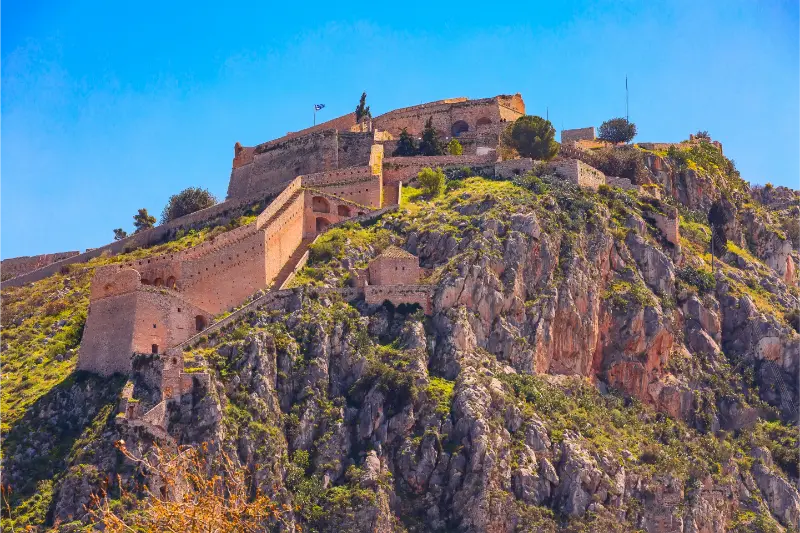
    Palamidi is the landmark above Nafplio and the place to go for wide views over the Argolic Gulf. You can reach it by road or climb the famous staircase from town. In warm weather, I would go early or late and take water; the climb plus fortress walking can be more demanding than it looks from below.
    Palamidi Castle Hill Nafplion Greece

    If mobility is limited, driving or using a taxi avoids turning the fortress into a fitness test. The goal is to enjoy the views and fortifications, not prove anything on the steps.

    Bourtzi and the waterfront

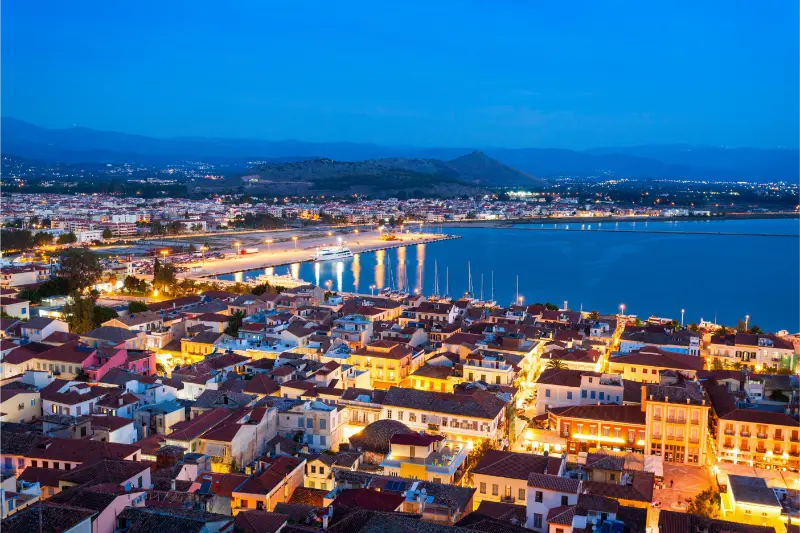
    Bourtzi is the small fortress on the islet just off the harbour and one of Nafplio’s signature views. Even without taking a boat, the waterfront walk is part of the experience. Continue around the Arvanitia promenade when conditions permit for a quieter perspective on the coast.

    Nafplio Nafplion City Greece Old Town Bourtzi Fortress Aerial Drone View

    The best time for the waterfront is late afternoon into evening. Nafplio is a town where dinner after a slow walk is more important than squeezing in another attraction before closing time.

    Where to stay

    Inside the old town you can walk to restaurants and the harbour, making it ideal for a short romantic stay. The trade-off is parking and luggage access. If you have a car, an address just outside the core can be more practical while still keeping the centre within an easy walk.

    Families should prioritise room space, parking and noise level. Couples may value a balcony or historic building more. In both cases, check stairs: older guesthouses do not always have lifts.

    Mycenae and Epidaurus as day trips

    Mycenae is the archaeological site for travellers fascinated by Bronze Age Greece, while Epidaurus is famous for its ancient theatre and sanctuary. Both can be combined in one long day, but I prefer giving them more breathing room if you have three or four nights.

    Start early, especially in summer. Exposed archaeological sites are far more enjoyable before the strongest heat. A lunch stop in a village or coastal town gives the day a rhythm instead of making it a sequence of ruins.

    Beaches near Nafplio

    Arvanitia is close enough for a quick swim, while Karathona gives you a longer beach experience. The wider Argolid has many coastal options if you have a car. This is useful in summer because a history-heavy morning can turn into a beach afternoon without moving hotels.

    Do not choose Nafplio primarily as a beach resort; choose it because beach time is easy to add to a cultural trip.

    How many nights?

    StayWhat it feels like
    1 nightBeautiful evening but rushed
    2 nightsTown plus one archaeological day trip
    3 nightsBest first-time balance
    4 nightsRoom for beaches and slower exploration

    A 3-day Nafplio itinerary

    1. Day 1: old town, waterfront, Bourtzi views and sunset dinner.
    2. Day 2: early Mycenae and Epidaurus, then return for a relaxed evening.
    3. Day 3: Palamidi, Arvanitia or Karathona beach, and one final old-town walk.

    How I would plan the trip before booking

    For Nafplio, I would book the trip in this order: decide how many nights you genuinely have, choose inside or beside the old town, depending on whether parking or atmosphere matters more, check the transport that controls your arrival and departure, and only then reserve day trips. This order matters because attractive hotel prices can tempt you into a base that creates unnecessary driving, transfers or early-morning stress. A good location often saves more holiday time than a slightly cheaper room.

    The transport question is especially important here: a car is useful for Mycenae, Epidaurus and beaches, while the town itself is best explored on foot. I would keep the first and final day lighter than the middle of the trip. That leaves space for delayed flights or ferries, heat, wind, children needing a slower morning, or simply discovering a place you want to stay longer.

    For seasonality, spring and autumn are excellent for archaeology and walking; summer works well if you start sites early and use the afternoon for the sea. I also avoid building a plan in which every day depends on perfect beach weather. A museum, old town, village, food stop or short scenic walk gives the itinerary resilience when conditions change.

    Who will enjoy this destination most?

    Nafplio works best for travellers who like a mixture of sightseeing and unstructured time rather than rushing between checklist attractions. It rewards mornings that start early, a long lunch or coffee break, and evenings close to the accommodation rather than another long transfer.

    For families, choose a central base, shorten fortress time in heat and combine one major ancient site with beach or pool time rather than stacking ruins. Couples can make the trip more relaxed by staying somewhere walkable for dinner. Solo travellers generally benefit from central bases and public transport connections. Road-trippers should check parking before choosing accommodation, because a beautiful historic centre can be inconvenient with a car.

    If you are combining this stop with another part of Greece, compare the pacing with the seven-day Peloponnese road trip. One of the biggest mistakes in Greece is treating a short transfer on a map as a short travel day; ferry check-in, port access, parking, waiting time and mountain roads all add invisible hours.

    Small details that make the trip easier

    I keep a small offline map on my phone, carry water in warm months, save the exact accommodation entrance rather than only the property name, and photograph parking or bus-stop information when I arrive. These tiny habits are more useful than a minute-by-minute itinerary.

    Comfortable shoes matter in Greece more often than visitors expect. Polished stone, steps, uneven lanes and archaeological ground are common. Sun protection, a light layer for wind or air-conditioned transport, and a reusable bottle cover most day-to-day needs. At religious sites, modest clothing may be required, so it is useful to carry something that covers shoulders or knees.

    Finally, leave one block of two or three hours completely unscheduled. The most memorable part of a trip is often the bakery you did not plan, a swim that lasts longer than expected, a village square at dusk or a viewpoint found on the way back to the hotel.

    Frequently asked questions

    Can Nafplio be a day trip from Athens?

    Yes, but an overnight stay changes the experience because the old town is especially pleasant after day visitors leave. Two or three nights also let you combine nearby archaeological sites.

    Do you need a car?

    Not to enjoy Nafplio itself. A car is useful for Mycenae, Epidaurus and wider coastal exploration. Buses connect Nafplio with Athens for travellers who prefer not to drive.

    Is Nafplio good for couples?

    Very. Walkable evenings, historic guesthouses and the waterfront give it a naturally romantic atmosphere without requiring a luxury-island budget.

    My final planning rule

    The best version of a Nafplio travel guide is not the itinerary with the most stops; it is the one that gives each stop enough time to feel different from the last. I would rather remove one attraction and arrive at dinner relaxed than spend the day checking the time. Greece rewards travellers who protect their mornings, allow long meals and accept that wind, heat or a ferry schedule may change the original plan.

    Before departure, I recheck the opening hours of any archaeological site or museum that anchors the day, the transport timetable for the next move, and the exact hotel access or parking instructions. Those three checks prevent most avoidable problems. Everything else can stay flexible: the beach, the lunch stop, the viewpoint and the order of smaller sights.

    I also keep one backup idea that requires little transport. That might be a town walk, an urban beach, a museum, a café neighbourhood or a slow meal. A backup is not a second full itinerary; it is permission to change the day without feeling that the trip has failed.

    Best archaeological day trips from Nafplio

    Nafplio is an excellent base for Mycenae and Epidaurus. The dedicated guides include current visitor information and realistic timing.

    More detailed Peloponnese planning

    Continue with Palamidi and Bourtzi Guide; Ancient Nemea Guide for more detailed planning.

    For more ideas in northern Peloponnese, continue with Corinthia road trip.

    For more ideas in Argolis, continue with Best beaches near Nafplio, Nafplio with kids, Argolis road trip.
  • Lake Plastira Travel Guide: Villages, Hiking and a 3-Day Mountain Escape

    Lake Plastira Travel Guide: Villages, Hiking and a 3-Day Mountain Escape

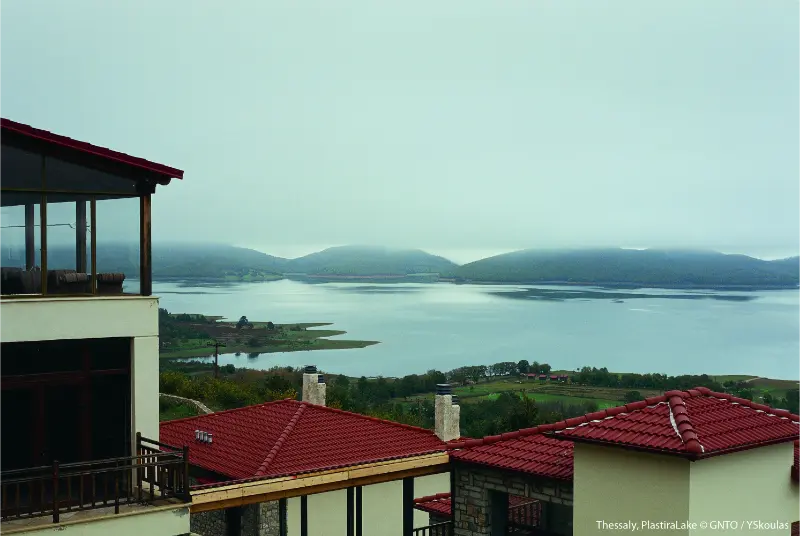
    Lake Plastira offers a very different image of Greece: mountain roads, forested slopes, stone villages and a broad blue lake in the heart of Thessaly. It is ideal for travellers who want a quiet road-trip stop, outdoor activities and cool evenings far from the summer island crowds.

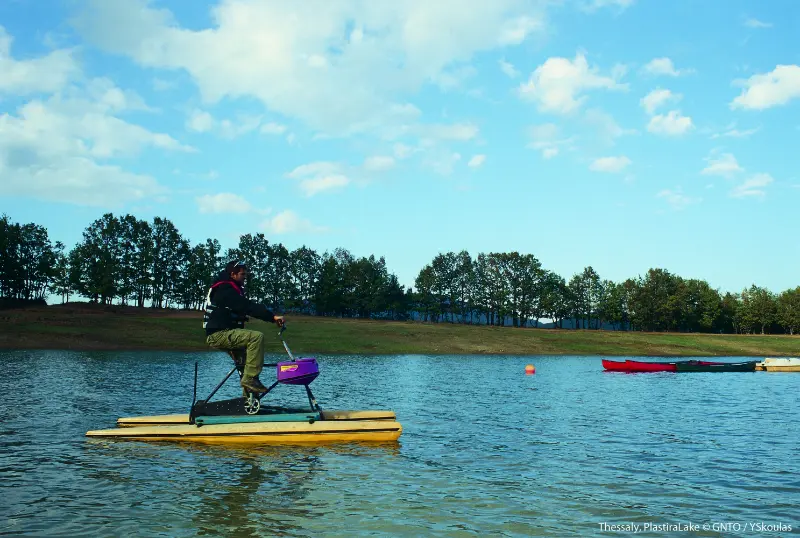
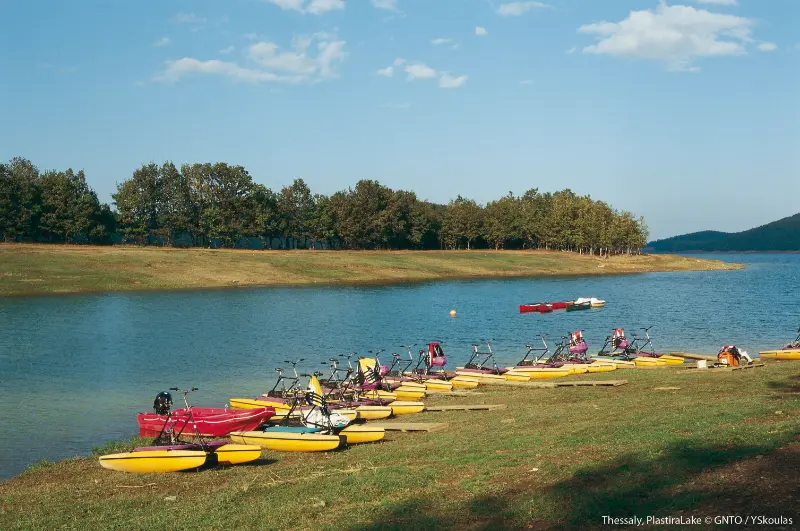
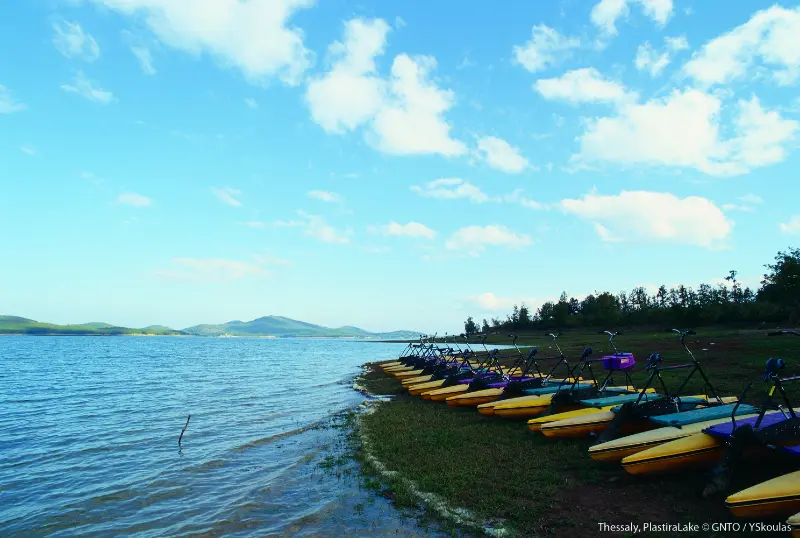
    Thessaly Plastira Lake

    Why Lake Plastira is a different kind of Greek escape

    Lake Plastira is an artificial lake surrounded by mountains, forests and villages in western Thessaly. The scenery feels alpine compared with the coastal image most international visitors associate with Greece, and that contrast is the main reason to come. This is a destination for drives, viewpoints, short hikes, local food and quiet guesthouses rather than a list of famous monuments.

    The lake is large enough that choosing a base matters. Roads curve around slopes rather than following the shoreline in a perfect loop, so driving times can be longer than the map suggests. Plan one side of the lake at a time and avoid spending the whole day moving between viewpoints.

    The dam and the southern viewpoints

    The dam is one of the classic stops because it explains how the landscape was created and provides broad views across the water. It is also a useful orientation point if you are driving the southern side of the lake. Stop safely in designated areas and remember that mountain roads require attention even when traffic is light.

    From the dam, continue toward nearby villages rather than immediately doubling back. The best Lake Plastira days are circular in spirit even when the roads are not a perfect ring: one scenic route, one village lunch and one outdoor activity is enough.

    Neochori and the western shore

    Neochori is one of the most popular bases because it sits above the lake with panoramic views and easy access to accommodation and tavernas. It works well for first-time visitors who want the classic balcony-over-the-water experience without feeling isolated.

    The western shore also gives you access to viewpoints and walking routes. In summer, mornings are best for hiking; in winter, road conditions can change quickly with altitude. Ask locally before taking minor roads after snow or heavy rain.

    Activities on and around the lake

    Depending on season and local operators, visitors may find canoeing, kayaking, cycling, horse riding and guided outdoor activities. The tourism authority describes the lake as suitable for water sports including rowing and canoeing. Availability is not guaranteed every day, so contact operators in advance if one activity is central to your trip.

    Hiking is the simplest activity to plan independently, but choose a route that matches daylight and weather. Forest tracks can become muddy, and phone coverage may be inconsistent away from villages. Carry water and do not rely on a casual map screenshot for a long route.

    Mountain villages and local food

    The villages around Lake Plastira are a major part of the experience. Stone houses, squares and traditional tavernas make the trip feel more like a mountain retreat than a conventional sightseeing circuit. Order regionally: pies, cheeses, grilled meats, legumes, mushrooms and seasonal mountain products are more meaningful here than imported beach-resort menus.

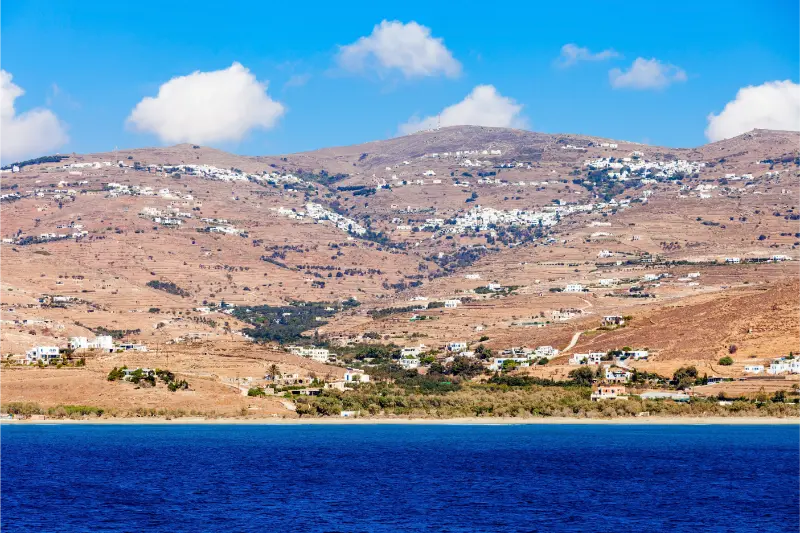
    Thessaly Plastira Lake

    A long lunch is often the best midday plan, especially in winter or after a morning walk. It also keeps the itinerary realistic: mountain roads, viewpoints and village stops take more time than their distances imply.

    A 3-day Lake Plastira itinerary

    • Day 1: arrive via Karditsa, settle into a lakeside or hillside village, visit the dam and stop at two viewpoints before dinner.
    • Day 2: devote the morning to hiking, cycling or a water activity, then explore Neochori and nearby villages at a slower pace.
    • Day 3: complete a different section of the lake and continue toward Trikala, Meteora or the Pindus mountains.

    Three days is ideal for a first visit because it allows one weather-dependent outdoor day. If you are combining the region with city time, use the Trikala guide as the next step.

    Where to stay

    Choose accommodation based on how you want to spend evenings. A panoramic guesthouse outside a village can be wonderfully quiet, but you may need to drive to dinner. Staying within a village gives you easier access to tavernas and creates a more social evening routine.

    In winter, confirm heating, road access and parking. In summer, a balcony view and shaded outdoor space can matter more. Do not assume every property described as ‘lakefront’ is literally beside the water; many of the best views come from higher slopes.

    Best time to visit

    Autumn is arguably the most photogenic season, with changing forest colour and cool walking weather. Spring is green and fresh, summer is good for outdoor activities at elevation, and winter offers a cosy mountain atmosphere that pairs naturally with fireplaces and local food.

    Because the experience is weather-led, flexible planning matters. Rain can turn a hiking day into a village-and-food day without ruining the trip. In winter, snow may improve the scenery while complicating access, so check conditions before setting out.

    How to get there

    Most visitors reach Lake Plastira by car via Karditsa, and a vehicle is strongly recommended for moving between villages and viewpoints. Public transport does not provide the same freedom around the lake. Drive slowly on bends and avoid building the route around optimistic map times.

    Thessaly Plastira Lake

    The lake combines naturally with Trikala and Meteora. If you are extending the trip farther east, Volos and Pelion create a varied Thessaly itinerary that moves from mountains and freshwater landscapes to the Aegean coast.

    Who will enjoy Lake Plastira most

    Couples, photographers, hikers and road-trip travellers tend to appreciate the lake immediately. Families can also enjoy it, especially with short walks and organised activities, but the trip works best when children are comfortable with driving between stops.

    Travellers who need major museums, nightlife or dense sightseeing may prefer to use the lake as a two-night break rather than the centre of a long holiday. Its value is quiet, landscape and slow travel.

    Frequently asked questions

    How many days do you need at Lake Plastira?

    Two nights are enough for a first visit; three days are ideal if you want an outdoor activity and multiple villages.

    Do you need a car at Lake Plastira?

    Yes for most itineraries. The villages and viewpoints are spread out and public transport is limited.

    Is Lake Plastira natural?

    No. It is one of Greece’s major artificial lakes, created by a dam on the Tavropos River system.

    What can you do at Lake Plastira?

    Popular activities include scenic drives, hiking, cycling, village visits and, depending on operators and season, canoeing or kayaking.

    Is Lake Plastira worth visiting in winter?

    Yes. Winter is atmospheric, but snow and ice can affect mountain roads, so check conditions and equipment requirements.

    Extra practical planning note

    For photography, the lake is most interesting when clouds, mist or low-angle light add depth to the surrounding slopes. Do not assume a perfectly clear midday sky will produce the best images. Sunrise is quiet, while late afternoon often gives warmer light across the water and villages above the shore.

    Final advice

    Treat Lake Plastira as a landscape to inhabit rather than an attraction to complete. Pick a comfortable village base, plan one active experience and leave the rest of the time for viewpoints, local food and slow drives.

    \n

    Combine Lake Plastira with a city evening using our Karditsa travel guide.

    \n\n\n

    For more detailed Thessaly planning, continue with Mouzaki and Smokovo.

    \n\n\n

    For more detailed Thessaly planning, continue with where to stay in Thessaly and Thessaly with kids.

    \n\n\n

    For more detailed Thessaly planning, continue with Lake Plastira villages.

    \n
  • Where to Stay in Tinos: Best Areas for Villages, Beaches, Couples and No-Car Trips

    Where to Stay in Tinos: Best Areas for Villages, Beaches, Couples and No-Car Trips

    Where you stay in Tinos changes the holiday more than it does on a tiny beach-only island. Chora is best for ferries, buses and restaurant choice; Agios Fokas and the eastern coast make beach access easier; Kionia offers a quieter base close to town; western villages give you atmosphere and sunsets but make evening logistics more dependent on a car. There is no universal “best area,” only a base that matches the way you intend to travel.

    Before booking, decide whether you want to drive after dinner. That one question eliminates many unsuitable options. A beautiful villa above a western bay can be perfect for a couple with a rental car and frustrating for a family hoping to walk to restaurants. Likewise, a central Chora hotel can look ordinary in photos but save hours of transport over a four-night no-car stay.

    At a glance

    AreaBest forCar need
    ChoraFirst visits, no-car trips, restaurantsLow
    Agios FokasFamilies, beach + townLow to medium
    Agios Ioannis/PortoBeach-focused staysMedium
    KioniaQuiet coast near townLow to medium
    Pyrgos/PanormosCulture, slow travelMedium to high
    Kardiani/Isternia/westViews, villas, couplesHigh

    Chora: best all-round base

    Choose Chora for a first visit, a short trip, public transport or maximum evening flexibility. You can walk to the church, restaurants, shops and ferry areas, and seasonal buses radiate to beaches and villages. The drawbacks are traffic around arrivals, less privacy and the possibility of port-road noise. Ask for a room away from the busiest frontage if sleep matters.

    Agios Fokas: beach plus town

    The Agios Fokas side is one of the easiest compromises on Tinos. You can stay near a long beach while remaining close enough to use Chora for dinner and transport. It suits families and couples who want mornings by the water without feeling isolated. Check the exact walking distance: “near Chora” can still mean an unpleasant roadside walk in midday heat.

    Agios Ioannis-Porto and the east coast

    The eastern beach zone works well for travellers who want a resort-like base with swimming close to accommodation. A car is useful for villages, but summer bus links can reduce dependence on driving. Wind exposure varies by bay. If you are booking primarily for beach conditions, read recent reviews from the same month rather than assuming one coast is always calm.

    Kionia

    Kionia lies close enough to Chora to keep the town practical while offering a quieter waterfront feel. It is a good choice for couples and travellers who prefer sunset walks to nightlife. The archaeological site nearby adds interest, but restaurant choice is smaller than in Chora. If you will return late from town repeatedly, compare taxi costs with the value of staying centrally.

    Pyrgos and Panormos

    Pyrgos is for travellers who care about villages, marble culture and slow mornings more than beach convenience. Panormos adds the coast and harbour. Both are atmospheric, but neither gives you Chora’s transport frequency or broad evening choice. A car makes the area much easier, especially if you want to explore western beaches and return after dinner.

    Kardiani, Isternia and western stays

    A western village or villa can be spectacular for views, sunsets and privacy. It works best for experienced independent travellers who are comfortable with winding roads and who do not need a bakery, pharmacy or bus every few steps. Check parking, luggage access and the distance to the nearest open taverna. A map pin does not reveal whether the final 300 metres involve stairs.

    For hikers

    Hikers can base in Chora for transport flexibility or choose central villages for direct access to old paths. The right answer depends on whether you want point-to-point walks or car-supported loops. If buses are part of the hiking plan, Chora is usually safer. If you have a car and prefer sunrise trailheads, a central village can reduce driving.

    For a split stay

    A split stay can make sense on a week-long trip: several nights in Chora or the east, then two or three nights in Pyrgos/western Tinos. It is rarely worthwhile on a three-night visit because packing and check-in consume too much time. Split only when the second base genuinely changes the rhythm, not because a travel blog says you should experience “both sides.”

    How this fits into a wider Tinos trip

    Use this page together with Tinos travel guide, Tinos Chora Guide, Pyrgos and Panormos Tinos Guide, Volax Tinos Guide, Kardiani and Isternia Tinos Guide, Panagia Evangelistria Tinos Guide. Keeping related places and practical topics connected makes it easier to build days by geography instead of repeatedly crossing the island.

    Cyclades Greece Tinos Greek Island Kardiani Village Aerial View

    How to plan around wind and summer heat

    Tinos is famously exposed to Aegean wind, and the same breeze that makes a terrace comfortable can make a north-facing beach rough or an exposed ridge unpleasant. Check the day’s conditions before committing to a remote beach, boat outing or long hike. In July and August, use early morning for villages, churches and walking, reserve the hottest hours for lunch or swimming, and return to sightseeing later in the afternoon. A flexible itinerary is a practical advantage, not a failure to plan.

    Driving realistically on Tinos

    Distances on the map look short, but roads between villages are winding and often narrow. Add time for oncoming traffic, photo stops and finding sensible parking outside historic lanes. Do not follow a navigation app blindly onto a rough shortcut simply because it saves three minutes. If you are uncomfortable with steep bends, base in Chora and use buses, taxis or organised excursions for selected days rather than turning every transfer into stress.

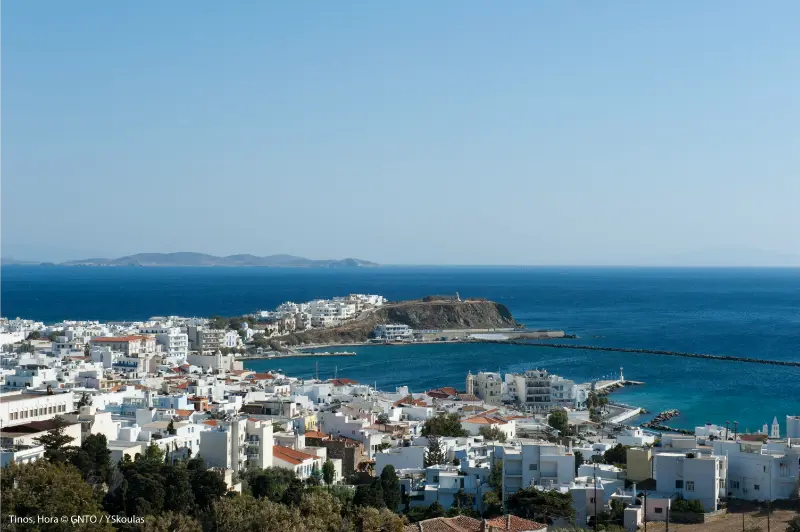
    Tinos Hora

    Food and daily rhythm

    Tinos is a destination where lunch can be part of the sightseeing rather than a break from it. Build time for village squares, bakeries, local cheeses, capers, artichokes, sausages and seasonal dishes instead of planning every meal at the waterfront. Opening patterns outside peak summer can be irregular in small villages, so carry water and a snack even when you expect to find a taverna. In August, reserve famous restaurants but leave ordinary meals spontaneous.

    Booking and time-sensitive information

    Ferry times, bus schedules, museum hours and road access can change. Recheck anything that would cause a serious problem if wrong: the last bus, the final ferry of the day, a museum you are crossing the island to visit, or access to a remote beach after strong weather. Save confirmations offline and keep enough margin before departure. Tinos rewards slow planning; it punishes itineraries where one ten-minute delay breaks the rest of the day.

    Tinos Island Greece

    Tours and activities

    A guided village day, food experience or private transfer can be useful when it reduces transport friction or adds local interpretation. Compare the actual time spent at each stop, pickup location, group size and cancellation policy rather than choosing the itinerary with the longest list of villages.

    Common planning mistakes

    • Choosing accommodation only by sea-view photos.
    • Ignoring parking and luggage access in steep villages.
    • Booking remote west-coast lodging for a no-car trip.
    • Assuming “near Chora” means a pleasant walk.
    • Splitting a very short trip between two hotels.

    Frequently asked questions

    What is the best area for a first visit?

    Chora is the easiest all-round base because ferries, buses, restaurants and services are concentrated there.

    Where should couples stay?

    Chora for restaurants, Kionia for a quieter coast, or western villages for views if you have a car.

    Where should families stay?

    Agios Fokas or an easy eastern beach base works well; Chora is strongest for services.

    Where should you stay without a car?

    Central Chora is clearly the most practical choice.

    Is Pyrgos a good base?

    Yes for culture and slow travel, but it is less convenient for frequent beach changes or late transport.

    Final practical advice

    Tinos is most rewarding when you leave space between the famous stops. One village, one meaningful cultural visit and one swim often make a better day than six pins on a map. Choose a base that suits your transport style, group nearby experiences, check wind and heat each morning, and verify time-sensitive information shortly before you travel. The island’s villages, food and walking routes are not filler between beaches; together they are the reason Tinos feels different from many other Cycladic destinations.

    Photography without slowing everyone down

    The best photographs on Tinos usually come from side light, village details and wide landscapes rather than stopping a car in an unsafe place. In villages, park first and walk back to the viewpoint. Ask before photographing craftspeople at work and never treat worshippers as part of a travel portrait. Early morning and late afternoon also reduce harsh contrast on white walls and marble while making walking more comfortable.

    What to carry each day

    A small day bag should include water, sun protection, a light layer for wind, offline maps and footwear that can handle stone steps. Add swim shoes if your group dislikes pebbles and a reusable bag for beach rubbish. On hiking days carry significantly more water and a power bank. On church days bring clothing that allows you to enter respectfully without having to return to the hotel.

    How much to reserve in advance

    Reserve accommodation, ferries and any must-have rental car first. Book popular restaurants or specialist tours if your dates fall in August, but keep ordinary beach and village days flexible. Weather can change the ideal coast from one morning to the next, and a rigid itinerary often creates unnecessary driving. Leaving two or three uncommitted half-days is one of the simplest ways to improve a Tinos holiday.

  • Kalymnos Diving and Sponge Heritage Guide: Scuba, Museums, Wrecks and Tradition

    Kalymnos Diving and Sponge Heritage Guide: Scuba, Museums, Wrecks and Tradition

    You can visit Kalymnos for climbing and still miss the story that shaped the island for centuries: sponge diving. Long before sport climbers arrived, Kalymnian families built livelihoods around dangerous journeys at sea, diving technology, sponge processing and trade. Today that heritage gives a scuba or museum day far more meaning than simply adding another underwater activity to a beach holiday.

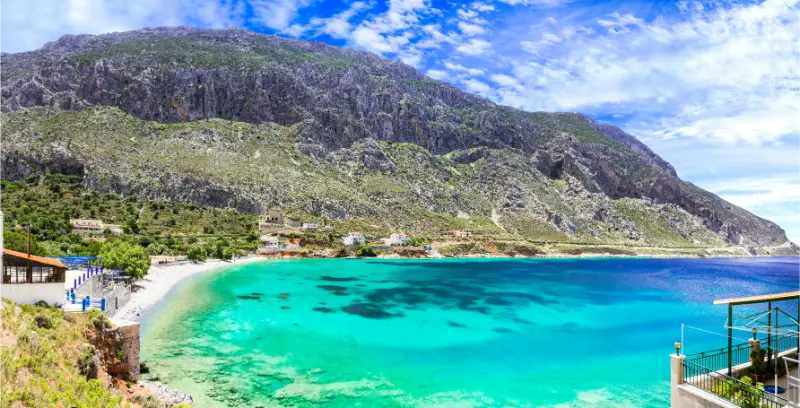
    Natrural Beauty Unspoiled Greek Islands Kalymnos Beach Arginonta Dodecanese Greece

    The Municipality of Kalymnos says the surrounding seabed is rich in marine life and notes established diving infrastructure, including a decompression chamber at the island hospital. That does not make diving risk-free; it means the island has a serious maritime tradition and modern services that should encourage equally serious planning.

    Start with the sponge story in Pothia

    The Maritime Museum is the best introduction because its displays explain sponge fishing, processing, historical equipment, photographs, nautical charts and the skandalopetra stone used by divers. Seeing the heavy suits and tools before you enter the water changes the way you understand the profession.

    Pair it with the Pothia guide and the Archaeological Museum. The latter includes objects recovered from the sea, including the famous bronze Lady of Kalymnos. Together the museums show that underwater Kalymnos is both cultural and natural.

    Scuba diving today

    Modern recreational diving is very different from historical sponge fishing, but the island’s relationship with depth remains visible. Local centres offer training and guided dives for different certification levels. Choose an operator based on safety standards, instructor credentials, group size and the suitability of the site for your actual experience, not on who promises the deepest or most dramatic dive.

    If you are uncertified, a supervised introductory experience should be conservative and clearly briefed. Certified divers should bring proof of qualification and disclose recent illness, medication or long breaks from diving. Never let holiday pressure turn a medical concern into “probably fine.”

    Wrecks, reefs and archaeology

    The waters around the Dodecanese contain a long history of navigation, and Kalymnos museum collections include shipwreck material. Recreational divers may encounter fascinating underwater features, but archaeological remains are protected. Do not lift amphora fragments, metal objects or anything that might be culturally significant.

    The correct reaction to a possible find is to leave it in place, record the location only if safe, and inform the appropriate authorities or dive centre. A souvenir removed from the seabed loses archaeological context and may be illegal to possess.

    How to choose a dive centre

    • Ask which agency or national qualifications instructors hold and whether your planned dive matches your certification.
    • Check how the centre handles equipment inspection, oxygen, emergency communication and weather cancellations.
    • Ask about group size and whether a guide is assigned to divers with similar experience.
    • Do not choose solely on price; an operator willing to cancel for unsafe sea conditions is doing its job.
    • If renting equipment, inspect fit and function before boarding rather than discovering a problem at the site.

    Snorkelling for non-divers

    You do not need scuba certification to appreciate Kalymnos underwater. Clear coves on the west, north and south coasts can offer enjoyable snorkelling when the sea is calm. Choose a protected entry, wear fins only if you can control them without kicking the seabed, and use a bright surface marker where boat traffic is possible.

    Never snorkel alone around headlands or outside sheltered bays just because the water looks transparent. Wind and current are harder to judge from shore than visibility. The beach guide helps you choose a cove that fits the day.

    Sponge shops and responsible buying

    Natural sponges are a legitimate part of Kalymnos identity, but buy with curiosity rather than treating every display as identical. Ask where a sponge came from, how it was processed and what type it is. A knowledgeable seller should be able to explain differences in texture and use.

    Mirties Kalymnos Greece

    The most meaningful purchase comes after understanding the labour and risk behind the trade. Visiting the maritime collection first makes the souvenir less generic and supports a more respectful relationship with the island’s heritage.

    Vlychadia and private maritime collections

    The municipality also describes a private museum at Vlychadia with marine specimens, sponge-diving equipment, wartime material, photographs and objects collected over decades. Private collections can have different opening arrangements from state museums, so confirm before travelling specifically for a visit.

    Vlychadia can be combined with a south-coast swim, making it a good low-intensity day between climbing or hiking days. Avoid trying to fit the museum, Pothia, Vathy and a dive into one schedule; the maritime story deserves time rather than box-ticking.

    Diving after flying or before flying

    Scuba and air travel require conservative timing. Follow your training agency’s no-fly guidance after diving and the instructions of your dive professional. Do not schedule your final dive so close to a departure that delays or repetitive dives remove the recommended surface interval.

    The same principle applies after illness, ear problems or dehydration. A Greek island holiday is not the time to test whether pressure equalisation “might work.” If in doubt, skip the dive and enjoy snorkelling, museums or a boat ride instead.

    A maritime heritage day

    • Morning: Maritime Museum in Pothia after confirming opening.
    • Late morning: Archaeological Museum for the Lady of Kalymnos and wider island history.
    • Lunch: waterfront meal and a slow look at sponge shops.
    • Afternoon: Vlychadia museum or a calm snorkelling bay.
    • Separate day: book scuba with a qualified centre rather than squeezing it between museums.

    When to go and how to use the day

    Kalymnos works in more than one season, but the ideal timing depends on what you want to do. Summer is straightforward for swimming and long evenings, yet exposed walks and limestone cliffs can become very hot in the middle of the day. Spring and autumn are better for active itineraries, and Visit Greece specifically highlights September as an excellent climbing month because the rock conditions and sea temperatures can work well together. Wind can change swimming, boating and climbing comfort from one coast to another, so keep at least one day flexible.

    In July and August I would front-load anything strenuous: walk, climb or explore archaeological sites early, take a long lunch or swim around midday, and return outside later in the afternoon. In the shoulder season the same itinerary can be more continuous, but daylight and boat frequency may be reduced. The practical habit that improves almost every Kalymnos trip is to check wind and sea conditions before committing to a remote beach or a boat-based day.

    What to pack for this part of Kalymnos

    • Shoes with grip rather than relying only on beach sandals; limestone paths and village steps can be polished or loose.
    • A refillable water bottle and more water than you expect for exposed walks, beaches without services and climbing approaches.
    • Sun protection that works while moving: hat, high-SPF sunscreen and a light layer for shoulders.
    • Swim shoes if you dislike pebbles or rocky entries; many of the island’s most attractive coves are not soft-sand beaches.
    • A small dry bag or waterproof phone pouch for caiques, sea taxis and beach days.
    • A light layer for breezy evenings, especially outside peak summer or after sunset on the west coast.

    A realistic planning rule

    For a diving and maritime-heritage itinerary, avoid building a day that depends on every connection, meal and swim happening at an exact minute. Kalymnos is compact, but its mountain spine, indented coast and seasonal transport mean that a short distance can still require a deliberate route. Two strong experiences plus an unhurried meal usually create a better day than five photo stops. This is especially true if one element depends on wind, a boat, a museum timetable or a trail that you have not walked before.

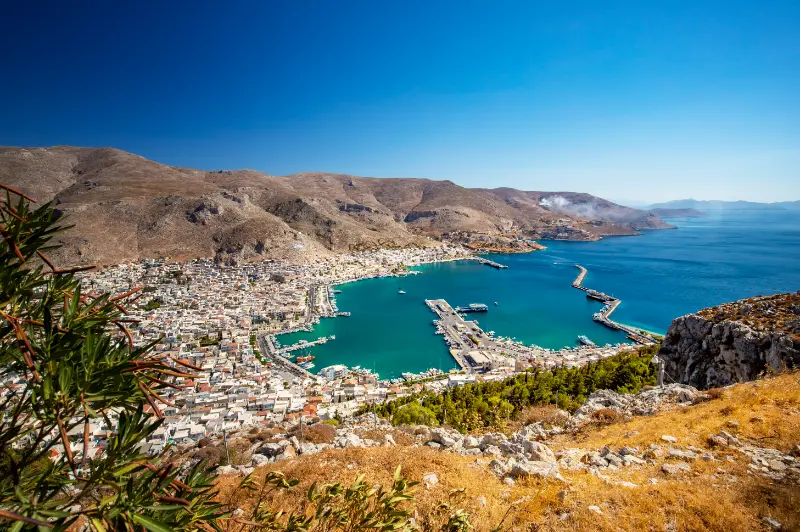
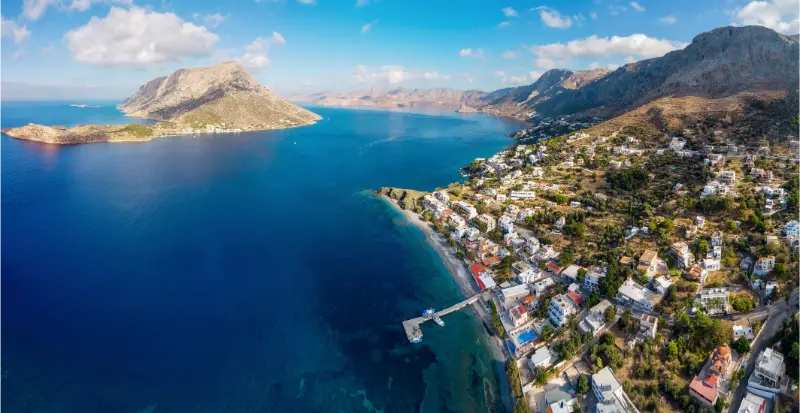
    Kalymnos Greece

    It is also worth separating “possible” from “comfortable.” You may be able to combine a morning in Pothia, a west-coast swim, Telendos and a sunset dinner, but that does not mean every traveller will enjoy the transfers. Families, slower walkers and anyone visiting in extreme heat should reduce the number of moves. Climbers should treat approach walks and recovery time as part of the schedule rather than invisible minutes between sightseeing stops.

    Continue planning Kalymnos

    Build the rest of the trip with Pothia Kalymnos Guide; Massouri and Myrties Kalymnos Guide; Telendos Island Guide; Vathy and Rina Kalymnos Guide; Kalymnos Climbing Guide; Best Beaches in Kalymnos; Kalymnos Hiking Guide; Kalymnos Without a Car; Where to Stay in Kalymnos. Start with the Kalymnos Travel Guide if you want the broader five-day overview before choosing detailed day plans.

    Kalymnos diving FAQ

    Is Kalymnos good for scuba diving?

    Yes. The municipality highlights the island’s marine life, diving infrastructure and decompression chamber, but site suitability still depends on certification, weather and the chosen operator.

    Where can I learn about sponge diving?

    The Maritime Museum in Pothia is the main starting point, with equipment, photographs and material explaining sponge fishing and processing.

    Can beginners try scuba?

    Local centres can offer supervised introductory experiences, but health screening, qualified instruction and conservative conditions are essential.

    Can I take an amphora fragment I find underwater?

    No. Leave possible archaeological material in place and report it through the dive centre or authorities. Removing it destroys context and may break the law.

    Is snorkelling worthwhile?

    Yes on calm days in clear coves. Choose sheltered water, watch boat traffic and do not snorkel alone around exposed headlands.

    Useful official information

    For current destination information I check the Municipality of Kalymnos and Visit Greece – Kalymnos. Transport, museum opening hours, boat services, climbing access and seasonal businesses can change, so recheck the details that matter to your day shortly before travel. The municipal diving and museum pages provide useful background on modern dive infrastructure and the island’s sponge-diving collections.

  • Temple of Poseidon Poros Guide: Ancient Kalaureia, Demosthenes, Access and Visiting Tips

    Temple of Poseidon Poros Guide: Ancient Kalaureia, Demosthenes, Access and Visiting Tips

    Temple of Poseidon Poros Guide is the kind of Poros experience that rewards practical planning more than a long checklist. The island is compact, green and closely connected to the Peloponnese, so you can combine town life, swimming and history without spending hours in transit. The challenge is deciding what belongs in the same day and what deserves its own slower visit.

    I would approach this as a guide for history lovers, walkers, repeat visitors and travellers who want more than beaches. The most useful base is usually Poros Town, using a taxi, rental vehicle or a planned island route. If you have extra time, pair the plan with Vagonia or the eastern coast, then return to Poros Town for the museum and dinner. The details below focus on how the place actually fits into a holiday rather than simply listing sights.

    Quick planning summary

    QuestionPractical answer
    Best forhistory lovers, walkers, repeat visitors and travellers who want more than beaches
    Ideal pace45–90 minutes on site, plus transport and a nearby beach or village stop
    Best basePoros Town, using a taxi, rental vehicle or a planned island route
    Pair it withVagonia or the eastern coast, then return to Poros Town for the museum and dinner

    What survives at the sanctuary

    The Sanctuary of Poseidon stands at Palatia in the interior of Kalaureia, the larger part of Poros. The municipal tourism site dates the archaic temple to around 520 BC and describes a Doric peripteral building with six columns on the short sides and twelve on the long sides. Today the remains are low and fragmentary, so visitors need context more than they need a long list of standing monuments.

    That is important for expectations. This is not a site like the Temple of Aphaia where a large superstructure dominates the skyline. The value is archaeological and historical: foundations, the sanctuary layout and the landscape help you understand a major cult centre in the Saronic Gulf. Read about the site before arriving or visit the Poros Archaeological Museum first.

    Woman With Hat Watching Sunset Mediterranean Sea View Poros Island Saronic Gulf Greece

    Kalaureian Amphictyony and regional importance

    Ancient Kalaureia was connected to a regional religious association often described as an amphictyony. The municipal site notes buildings southwest of the temple that may have served as a council area for representatives of participating cities. Whether every reconstruction is certain or not, the broader point is clear: this sanctuary mattered beyond the small island itself.

    Standing there, look outward as much as down. The sanctuary’s position helps explain why a cult of Poseidon, god of the sea, carried political as well as religious importance in a maritime region. The site is most rewarding when you think of Poros as part of a network of Saronic ports and sanctuaries rather than as an isolated holiday island.

    Demosthenes and the sanctuary

    The sanctuary is closely associated with the Athenian orator Demosthenes. Ancient tradition records that he sought refuge here while fleeing Macedonian power and died in 322 BC after taking poison rather than being captured. The municipal tourism site also refers to remains that have been interpreted as a possible monument connected with him, though the archaeology is not always straightforward.

    This story gives the ruins unusual emotional weight, but it is worth separating the documented ancient tradition from romantic embellishment. Read the information panels where available and avoid expecting a perfectly identified “spot” for every episode. The power of the visit lies in connecting text, landscape and archaeology.

    Access, road conditions and timing

    The sanctuary is inland and is not the easiest sight to reach on foot from Poros Town in summer. A taxi or rental vehicle is usually the simplest option, particularly if you combine it with Vagonia, the monastery or another island stop. Check road conditions and current access before setting out, especially after bad weather or during periods of high fire risk.

    Go early or late rather than at midday. There is limited reason to stand in intense sun over low ruins, and angled light makes the foundations easier to read. Carry water and shoes with grip. If the site is closed or access is restricted, do not bypass barriers; use the Archaeological Museum in town as the cultural alternative.

    How to interpret low ruins without feeling disappointed

    Start by finding the sanctuary’s overall footprint rather than searching immediately for individual artefacts. Identify the temple zone, surrounding structures and the relationship to the hills. Imagine processions and gatherings, not just a single building. A simple site plan can transform what initially looks like scattered stone into a coherent place.

    For travellers who do not enjoy archaeology, keep the visit short and pair it with a scenic drive or swim. There is no prize for spending two hours at a site that does not speak to you. For history lovers, however, the combination of the museum in Poros Town and the sanctuary creates one of the island’s strongest non-beach days.

    Poros Archaeological Museum before or after the site

    The Archaeological Museum on Koryzi Square contains finds from Poros and the wider Troezen–Methana area, including inscriptions, sculpture and architectural elements. Visiting it first gives you vocabulary for the sanctuary; visiting it afterward helps you connect objects with the landscape you have just seen. Either order is better than treating the museum and temple as unrelated stops.

    Check opening hours separately because the museum and outdoor site may not follow identical schedules. If you are on a day trip from Athens, do not build a plan that depends on both being open within a narrow window. Prioritise the one that matters most, then keep the other as a bonus.

    How much time should you allow?

    For this plan, 45–90 minutes on site, plus transport and a nearby beach or village stop. Poros is compact enough to encourage overplanning, but short distances do not mean every stop belongs in the same day. Travel time, waiting for a bus or taxi, swimming, changing clothes and sitting down for a meal all use time that does not appear on a map.

    A useful rule is one main area in the morning and one in the afternoon. If you are staying several nights, leave at least one unstructured half-day. Poros is at its best when you have time to choose a beach based on that day’s wind and to stay longer at a waterfront table when the atmosphere is good.

    Transport and realistic day planning

    The official Poros municipality tourism site lists buses, taxis, sea transportation and ferry boats to and from Galatas. Frequencies are seasonal, so I would not build a trip around an old timetable. Photograph the current schedule when you arrive, save one taxi contact and keep the final part of any ferry-departure day close to Poros Town.

    If you rent a car or scooter, use it to reach places that are genuinely awkward by public transport rather than moving it for every meal. Parking can be more stressful than walking in the compact town. For isolated beaches or the Temple of Poseidon, agree on a return plan before a taxi drops you off.

    Best time of year for this Poros experience

    Late spring and September are especially attractive for travellers who want warm days, walking and swimming without the peak pressure of July and August. High summer brings the broadest beach services and liveliest evenings, but small coves fill faster and midday heat makes exposed archaeological or uphill walks less comfortable.

    Poros also works outside the classic beach season because the town, mainland connection and cultural sights do not disappear when sunbeds do. In cooler months, verify ferry frequency, museum hours and seasonal restaurants before booking. The trip becomes more about walking, food and local atmosphere than swimming.

    Food, water and the rhythm of the day

    Build meals into the itinerary rather than treating them as gaps between attractions. Poros Town has the widest choice, while Askeli, Neorio and other beach areas have seasonal options. In summer, a long lunch during the hottest hours can be smarter than forcing another walk. Carry water even when you expect a beach bar to be open.

    For seafood, ask about price by weight before ordering larger fish and compare a few menus. Lemon is part of the area’s identity because of the Lemon Forest opposite the island, but the best meals are often simple Greek dishes rather than elaborate themed menus. Leave room for seasonal fruit and a waterfront coffee.

    Who will enjoy this most?

    This plan is particularly good for history lovers, walkers, repeat visitors and travellers who want more than beaches. Couples benefit from the island’s short distances and evening waterfront, families can keep transfers brief, and solo travellers can base themselves in Poros Town without needing a vehicle. The main adjustment is pace: children and less-mobile travellers need fewer uphill walks and more certainty about return transport.

    Travellers seeking intense nightlife or huge resort beaches may prefer another Greek island. Poros is strongest as an easy, green Saronic escape where town life, pine coves and mainland access sit close together. That compactness is a feature, not an invitation to schedule every hour.

    Budget and booking strategy

    Compare the total cost of location, not only the room price. A cheap property far from town can create repeated taxi costs, while a central room may remove most evening transport. The same logic applies to ferries: a faster service may cost more but create meaningful extra time on a short trip.

    In July and August, book well-located accommodation and popular ferry departures earlier. For shoulder season, flexibility can save money, but verify that the beach services or water-sports operators you care about are running. Museum and archaeological opening patterns can also differ from summer schedules.

    What to pack

    • Shoes with grip for the clock-tower lanes, archaeological ground and uneven coastal paths.
    • A refillable water bottle, hat and high-SPF sunscreen for summer.
    • A light cover-up for Zoodochos Pigi Monastery and other religious sites.
    • A small dry bag for water taxis, beach days and boat crossings.
    • A downloaded ferry ticket and screenshots of current local transport information.

    Keep the beach bag lighter than you think. Poros is easy when you can switch from town to bus or boat without carrying a full day’s luggage. Buy heavy water locally and keep valuables in a small bag you can take onto ferries and water taxis.

    Common mistakes to avoid

    • Trying to visit Poros Town, three beaches, the Temple of Poseidon and Lemonodasos in one day.
    • Assuming a small cove will have unlimited shade or sunbeds in August.
    • Using last year’s bus or ferry timetable without checking current service.
    • Booking a hillside room without asking about stairs and luggage access.
    • Walking long exposed road sections at midday simply because the island looks small on a map.
    • Ignoring summer fire-risk restrictions in pine-covered areas.

    More Poros guides

    Continue planning with Poros Town Guide: Clock Tower, Waterfront, Museums, Food and Where to Stay; Askeli and Monastiri Poros Guide: Beaches, Monastery, Water Sports and Where to Stay; Love Bay and Russian Bay Poros Guide: Pine Coves, Naval History, Swimming and Sunset; Lemon Forest and Galatas from Poros: Day Trip, Ferries, Citrus Groves and Practical Tips; Best Beaches in Poros: 12 Beaches for Families, Pine Coves, Water Sports and Quiet Swims. For the island overview, also read the Poros Travel Guide.

    Frequently asked questions

    Do I need a car for this Poros trip?

    No for most short stays. Poros Town, popular beaches and Galatas can be managed with walking, buses, taxis and boats. A rental vehicle is most useful for inland sights, flexible beach-hopping or mainland road trips.

    Poros Greece Overview Town Poros Island Galatas Mainland Sunset

    How many nights should I spend on Poros?

    Two nights is enough for a relaxed introduction; four or five nights lets you add several beaches, the Temple of Poseidon and a mainland outing without rushing. A day trip is possible but should be deliberately simple.

    Is Poros good in September?

    Yes. September is often a strong balance for warm sea, active services and less intense peak-season pressure. Ferry and business schedules still need to be checked for the exact dates.

    Can I combine Poros with another Saronic island?

    Yes, but direct connections vary by date and vessel. Check real ferry schedules before designing an island-hopping route rather than assuming nearby islands connect every day.

    What should I check on the morning of the trip?

    Check ferry or local transport status, wind and heat, any fire-risk restrictions, and opening hours for the specific cultural site you plan to visit. Then keep one backup beach or town activity in mind.

    Check official information before you go

    For destination, transport, beaches and municipal visitor information, use the official Poros Municipality tourism website. For broader destination context and beach descriptions, see Visit Greece: Poros. Opening hours, ferry services and local transport can change, so verify the specific service you need close to travel.

    Final planning advice

    Poros works best when you use its compact size to reduce stress rather than increase the number of stops. Pick one cultural anchor, one beach or neighbourhood, and a good meal. If the wind, heat or ferry timing changes, the island gives you enough alternatives to adjust without losing the day.

    The biggest advantage is choice without huge distances: a waterfront morning can become a pine-cove afternoon, and a beach day can end with a clock-tower sunset. Leave a little empty time in the schedule. On Poros, that is often when the trip begins to feel like a holiday rather than an itinerary.

    Waterfront View Poros Town Greece Iconic Clock Tower Hill Traditional Houses Moored Boats
  • Trikala Travel Guide: Riverside Walks, Old Town and Meteora Day Trips

    Trikala Travel Guide: Riverside Walks, Old Town and Meteora Day Trips

    Trikala is one of the most pleasant small cities in mainland Greece and an excellent base for exploring Thessaly. A river runs through the centre, the old quarter climbs toward a Byzantine castle, and Meteora and the Pindus foothills are close enough for rewarding day trips.

    Why Trikala works as more than a transit stop

    Many travellers pass through Trikala on the way to Meteora, but the city is worth at least a day of its own. The Litheos River runs through the centre, bicycles are part of everyday life, and the compact layout makes it easy to combine cafés, markets, the old quarter and the Byzantine castle without a car.

    Trikala also has a practical advantage: it is a useful base for several directions. Meteora lies to the northwest, mountain villages such as Elati and Pertouli are within reach, and Lake Plastira can be added to a wider Thessaly loop. That makes the city especially suitable for travellers who prefer one comfortable base over changing hotels every night.

    Walk the Litheos River

    Start with the Litheos because it gives you the easiest introduction to Trikala. Bridges, cycle paths and riverside cafés create a relaxed urban corridor, and the river helps you move between modern streets and older neighbourhoods. Early morning is quiet; late afternoon is livelier and better for people-watching.

    Trikala is known in Greece for cycling and smart-city initiatives, but as a visitor the practical benefit is simple: the centre feels manageable. You can leave the car parked, walk most attractions and use the river as an orientation point.

    Varousi and the Byzantine castle

    Varousi is the historic district below and around the castle, with narrow lanes, churches and houses that show a different side of the city. The castle provides one of the best viewpoints, especially toward sunset. Check access hours if you want to enter rather than only walk around the surrounding streets.

    Pair Varousi with the nearby old quarter known for traditional tavernas and evening activity. The area is compact enough to explore without planning every turn, which is part of the appeal after more structured sightseeing at archaeological or monastic sites.

    Markets, cafés and local food

    Trikala is a city where everyday life is part of the attraction. Markets, bakeries, coffee shops and tsipouro places give you a chance to eat like a regional traveller rather than a resort guest. Thessaly is a productive agricultural region, so look for pies, local cheeses, grilled meat, seasonal vegetables and simple dishes that change through the year.

    If you are travelling in winter, Trikala’s festive events can make accommodation busier than expected. At other times, the city is usually easygoing and makes a pleasant contrast with the concentration of visitors at Meteora.

    Meteora as a day trip from Trikala

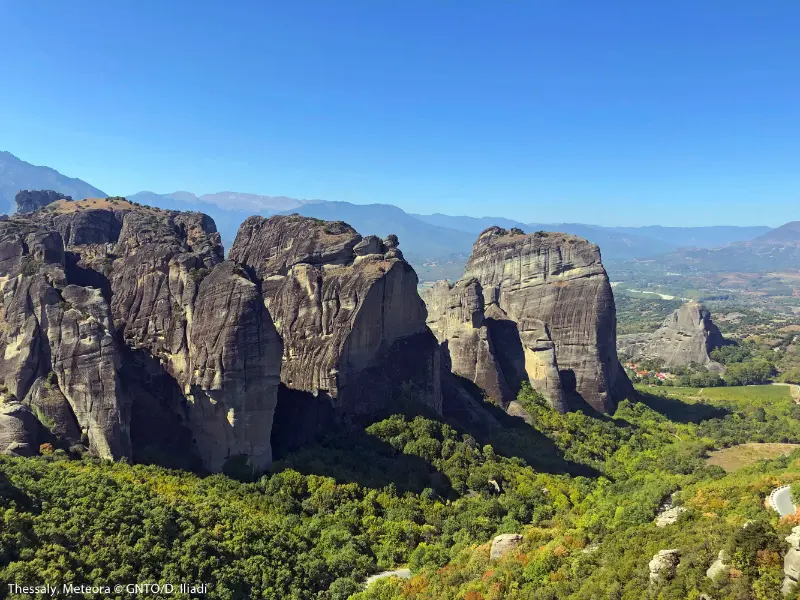
    Meteora is close enough for an easy day trip, but do not underestimate how long the monasteries and viewpoints deserve. Leave early, check which monasteries are open on your chosen day and wear clothing that respects monastery requirements. The Meteora monasteries guide covers the practical details.

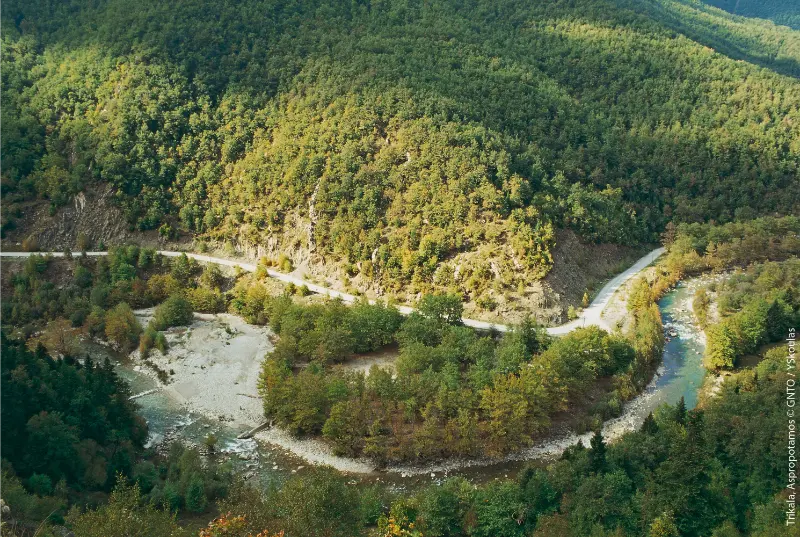
    Trikala Aspropotamos

    Staying in Trikala rather than Kalambaka changes the feel of the trip. You trade immediate views of the rocks for a larger city with more evening options. This is a good choice if Meteora is one part of a broader Thessaly road trip rather than the sole purpose of the visit.

    Mountain villages: Elati, Pertouli and Pyli

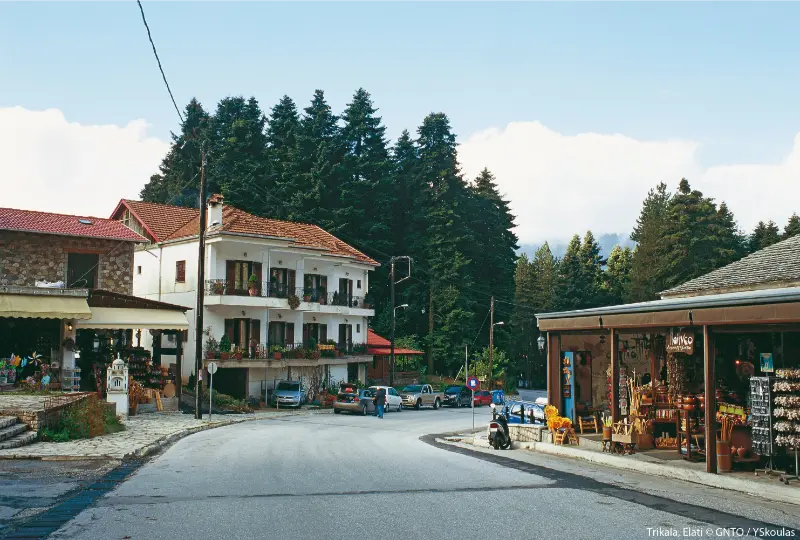
    Southwest of Trikala, the road climbs toward Pindus villages such as Elati and Pertouli. The landscape changes quickly from city plain to fir-covered slopes, making this a strong half-day or full-day excursion. Pyli adds an impressive stone bridge and serves as a natural gateway into the mountains.

    Trikala Elati

    In winter, these roads can require caution and proper equipment. In summer, the mountain temperatures offer relief from the plain. Choose one or two villages and a short walk instead of racing through every name on the map.

    A 3-day Trikala itinerary

    • Day 1: explore the Litheos River, Varousi, the castle and the central food scene.
    • Day 2: devote a full day to Meteora, using Kalambaka and Kastraki as access points.
    • Day 3: choose the Pindus villages or Lake Plastira depending on weather and the direction of your onward journey.

    This structure makes Trikala a base rather than a stopover. If you are continuing east, combine it with the Volos guide and Pelion guide.

    Where to stay in Trikala

    Stay within walking distance of the centre if you want to enjoy evenings without driving. Riverside accommodation is attractive, while streets just outside the busiest core may offer easier parking. Because Trikala is relatively compact, you do not need to obsess over a single perfect neighbourhood.

    If you are using the city for day trips, secure parking and quick road access can matter more than a view. Ask the property about parking before arrival rather than assuming street spaces will be easy during events or weekends.

    Best time to visit

    Spring and autumn are ideal for combining city walking with Meteora and mountain excursions. Summer can be hot on the Thessaly plain, so use mornings and evenings for the city and climb into the mountains during the middle of the day. Winter brings a festive atmosphere and potential snow in higher areas.

    Trikala is a genuine year-round city, which gives it an advantage over strongly seasonal resorts. Even so, some mountain attractions and road conditions change significantly with the weather.

    Getting there and getting around

    Intercity buses connect Trikala with major Greek cities and regional destinations. If you are travelling by car, the city is straightforward to include between Athens, Meteora and northern Greece. Once parked, most of the centre is best explored on foot.

    For a car-free trip, Trikala can still work well if you use buses and organised tours for Meteora. If transport independence matters, compare the options in the Greece without a car guide.

    Frequently asked questions

    How many days do you need in Trikala?

    One day covers the city; three days allow Meteora and a mountain or lake excursion without changing base.

    Is Trikala a good base for Meteora?

    Yes. It is farther from the rocks than Kalambaka, but it offers a larger city atmosphere and more evening options.

    Can you visit Trikala without a car?

    Yes. The centre is walkable and intercity buses are useful, though a car makes mountain excursions easier.

    What is Trikala known for?

    It is known for the Litheos River, cycling, Varousi old quarter, its castle and its location between Meteora and the Pindus mountains.

    Trikala Meteora D Iliadi

    When is the best time to visit Trikala?

    Spring and autumn are especially comfortable; winter is popular for festive events and nearby mountain trips.

    Extra practical planning note

    Trikala also works well for travellers who dislike changing accommodation frequently. From one base you can have a city day, a monastery day and a mountain day, which keeps luggage and check-in time under control. This is especially useful on a longer mainland road trip where too many one-night stops can become exhausting.

    Final advice

    Do not treat Trikala as the place where you sleep before Meteora. Give the city a full day, then use it as a practical base for one or two excursions. The combination creates a more balanced picture of Thessaly than visiting the monasteries alone.

    \n

    For more Thessaly beyond Trikala, add Karditsa, Elati and Pertouli and Larissa.

    \n\n\n

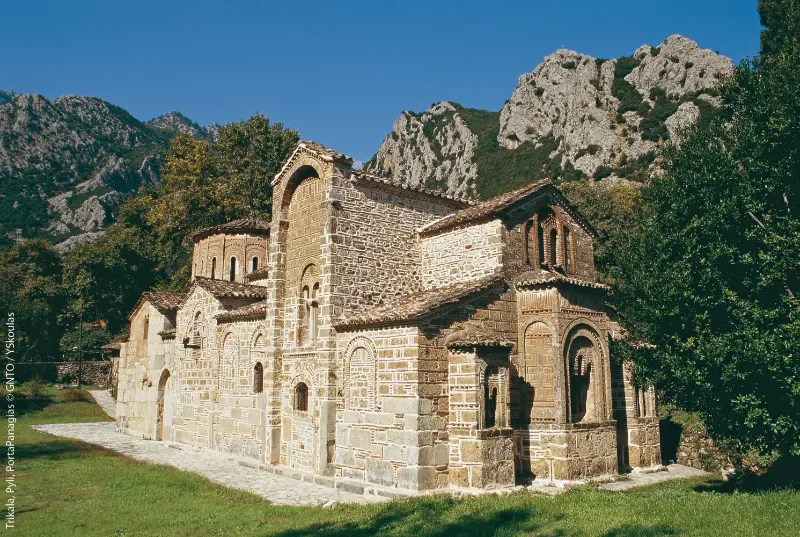
    For more detailed Thessaly planning, continue with Pyli and Porta Panagia.

    \n\n\n

    For more detailed Thessaly planning, continue with Paleokarya and Ropoto, Aspropotamos, Mesochora and the Achelous valley and Thessaly with kids.

    \n
  • Kythira Without a Car: Taxis, Buses, Transfers and the Best Bases

    Kythira Without a Car: Taxis, Buses, Transfers and the Best Bases

    You can visit Kythira without renting a car, but you should not plan the same holiday as someone driving. The island is dispersed, beaches sit on different coasts and many of the best natural sites are not connected by a simple high-frequency network. A no-car trip works when the base itself provides daily value.

    I would choose one walkable area, accept that taxis are part of the budget, and plan only a few cross-island excursions. That approach can be relaxing; trying to reproduce a seven-day road trip through public transport usually is not.

    Quick planning summary

    QuestionPractical answer
    Best forKythira Without A Car travellers and first-time visitors
    Car needed?Very useful for broad island exploration; selected bases can work without one
    Best timingMorning and late afternoon for walking; beach or shade around midday in summer
    What to verifySeasonal hours, road access, wind and local transport close to the travel date

    Best bases without a car

    Kapsali is excellent if swimming and restaurants on foot matter most. Chora gives history and atmosphere but involves hills. Agia Pelagia offers a practical northern waterfront. Avlemonas works for quiet swimming and evenings, although wider exploration still needs transport.

    Mylopotamos is wonderful but less flexible without your own vehicle unless you are deliberately planning a slow village stay. Diakofti can be useful for port logistics but is not the base I would choose for a first culture-heavy trip.

    Seasonal buses: useful but not a complete solution

    Kythira does have public transport, but services are seasonal and frequencies can change. I would never build an article around a fixed timetable copied months in advance. Check the current schedule when you arrive and use buses for routes that line up naturally with your day.

    If a bus gives you only one possible return, treat that as a fixed commitment and keep the rest of the day simple. Do not pair it with a cave opening or boat trip unless there is generous buffer time.

    Taxis and private transfers

    Taxis make a no-car trip much more realistic. Use them strategically: airport or port arrival, one Mylopotamos day, one Chora/Kapsali day from the north, or a return after an evening meal. Ask for approximate fares before a long transfer and save the driver’s number if service is good.

    Pre-booking matters for early flights, late ferries and busy summer evenings. On a dispersed island, assuming a taxi will appear instantly at a remote beach is a risky plan.

    A realistic four-day car-free plan

    Day 1: stay local and learn your base. Day 2: take a taxi or bus to Chora and Kapsali, with enough time to walk the castle and swim. Day 3: choose one organised excursion or a taxi day to Mylopotamos. Day 4: use a nearby beach and keep the schedule light before departure.

    If you stay longer, add Avlemonas or Agia Pelagia as a separate excursion. Do not attempt to visit all famous beaches; choose beaches you can reach reliably and spend longer there.

    Airport and port planning

    Kythira has both air and ferry connections, and your arrival point should influence accommodation. A no-car traveller benefits more from a pre-arranged transfer than from saving a small amount on a room far from everything. Send your accommodation the exact flight or ferry time and ask for the easiest transfer option.

    On departure day, avoid scheduling a remote cave, waterfall or beach. Keep the final hours close to your base and leave generous time for the transfer.

    Who should and should not go car-free

    A no-car trip suits couples, solo travellers and repeat visitors happy to focus on one region. It is also reasonable for a short beach holiday in a practical base. It is less suitable for travellers whose priority list includes ten remote beaches, multiple hiking trailheads and small villages scattered across the island.

    Families can manage without a car if they choose the base carefully, but child seats, luggage and midday waits make transfers more complicated. Compare the cost of several taxis with a rental before deciding.

    How Kythira changes the way you plan a Greek-island day

    Kythira is not a compact resort island where every attraction sits around one bay. Villages, beaches and historical sites are spread across a rugged landscape, so the best days normally focus on one side of the island rather than crossing from north to south several times. I plan mornings around one anchor place, add a nearby beach or village, and leave dinner close to wherever the afternoon naturally ends.

    The island also rewards flexibility. Wind can change which beach feels comfortable, a waterfall can be less dramatic after a dry period, and seasonal businesses do not all keep the same hours outside the busiest weeks. Treat the itinerary as a framework, not a contract. One unhurried village, one swim and one meaningful cultural stop often produce a better day than a long checklist.

    Driving, parking and realistic travel time

    Even when map distances look short, allow extra time for bends, village streets, parking and short walks from the road. Kythira is manageable by car, but it is not an island where I would schedule activities back-to-back. In popular places such as Chora, Kapsali, Kaladi or Mylopotamos, arriving earlier also makes parking and photography noticeably easier.

    Bay Of Kapsali Kythira Island Greece

    If you rent a car, choose a vehicle you are comfortable using on narrow roads and never assume that every road to a remote beach has the same surface. Ask locally about the final approach before committing to an isolated cove, especially after unusual weather. For no-car travel, build the holiday around a strong base and use taxis or seasonal public transport selectively rather than trying to imitate a full road trip.

    Best season and daily rhythm

    Late spring and early autumn are especially attractive if walking, villages and archaeology matter as much as swimming. July and August deliver the warmest sea and the widest choice of seasonal services, but they also require earlier starts, more careful parking and a serious approach to shade and hydration. September is often a useful compromise for travellers who want warm water without the same daytime intensity.

    In summer, I keep exposed walks, castles and viewpoints for morning or late afternoon. Midday is better for a shaded lunch, a protected beach or a long break. Kythira’s most memorable places are often atmospheric rather than monumental, so giving them time is part of the experience rather than wasted schedule space.

    Food, water and what to carry

    Kythira is known for products such as thyme honey, local rusks and the aromatic Fatourada liqueur, but the practical food rule is simpler: eat where the day already takes you. A lunch in Mylopotamos, a waterfront meal in Kapsali or Avlemonas, and a village dinner in the north all make more sense than driving across the island for one saved restaurant pin.

    For remote beaches and trails, carry water, sun protection and at least a small snack. Some coves have seasonal facilities while others have none. I also keep swim shoes, a light shoulder cover for churches and monasteries, and an offline map on my phone. Small preparations matter more here than on an island built around organised beaches.

    Accessibility and slower travel

    Historic settlements, castle approaches, waterfall paths and rocky coves can involve steps or uneven ground. Travellers with limited mobility should ask accommodation hosts very specific questions about stairs, parking distance and the route to the nearest restaurant or beach. A beautiful room can be inconvenient if every outing begins with a steep climb.

    Slow travel works exceptionally well on Kythira. Staying longer in one area reduces driving and makes room for repeat swims, village cafés and weather changes. If you have only three nights, do less. With a week, divide the island into south, east, west/inland and north rather than changing hotels repeatedly.

    Common mistakes to avoid

    The most common mistake is underestimating how spread out the island feels. The second is treating every beach recommendation as suitable in every wind direction. Other avoidable errors include wearing sandals on rough trails, arriving at a cave or museum without checking seasonal hours, and assuming a waterfall will look identical in late August and after spring rain.

    I would also avoid booking accommodation solely on a low map price. Location affects almost every day on Kythira. A base with dinner, a swim and a useful road connection nearby can save enough driving and taxi time to be worth a slightly higher room rate.

    How this fits into a complete Kythira trip

    Use this guide as one part of a regional plan. The existing Kythira Travel Guide gives the island-wide overview, while the dedicated guides below let you plan the areas and travel styles in more detail. I would normally combine one cultural or walking focus with one beach area each day rather than criss-crossing the island.

    Continue planning with Chora and Kapsali Kythira Guide: Castle, Twin Bays, Chytra and Where to Stay; Avlemonas and Paleopolis Kythira Guide: Coves, History, Beaches and Where to Stay; Agia Pelagia Kythira Guide: Beaches, North Coast, Food and Where to Stay; Mylopotamos Kythira Guide: Kato Chora, Watermills, Waterfall and Village Life; Kythira Waterfalls and Caves Guide: Fonissa, Watermills and Agia Sophia; Best Beaches in Kythira: 15 Beaches for Families, Snorkelling and Wild Scenery; Kythira Hiking Guide: Best Kythera Trails, Gorges, Villages and Safety; Kythira Without a Car: Taxis, Buses, Transfers and the Best Bases; Kythira with Kids: Family Beaches, Easy Days and Practical Tips; Where to Stay in Kythira: Chora, Kapsali, Avlemonas, Agia Pelagia or Mylopotamos?.

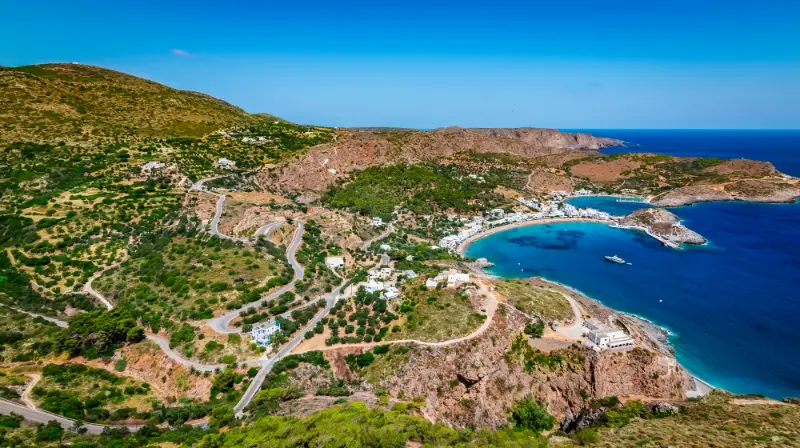
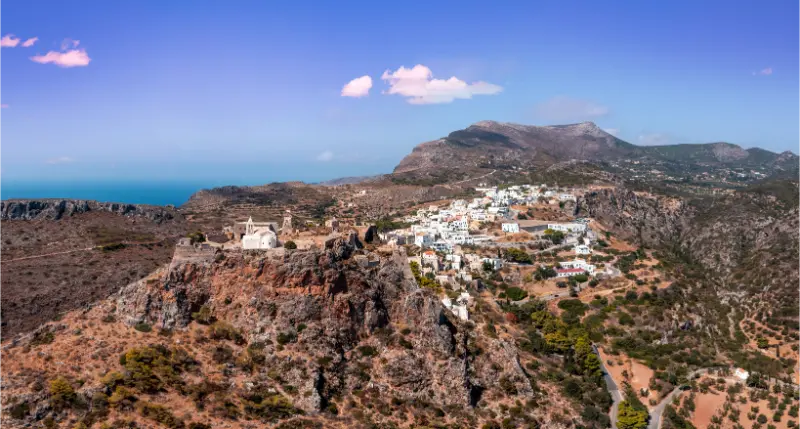
    Kythira Island Greece Aerial View Chora Town Buildings Venetian Castle Rocky Landscape

    Kythira Without A Car FAQ

    Can I visit Kythira without renting a car?

    Yes, if you choose a practical base and accept a smaller sightseeing radius.

    Which base is easiest?

    Kapsali, Agia Pelagia and Avlemonas all work for different types of car-free stay; Chora is excellent for culture but hillier.

    Chora Kythira Greece

    Are there buses?

    Yes, but routes and frequencies are seasonal. Check the current timetable locally.

    Can taxis reach remote beaches?

    Usually by road where access is suitable, but arrange the return rather than assuming a taxi will wait nearby.

    Is a car worth it for a week?

    For travellers who want many beaches, villages and trailheads, a car is usually the most flexible option.

    Useful official information

    Use Visit Kythera and your accommodation host for current transport information. Public transport, taxi availability and ferry connections are time-sensitive, so verify them for your exact dates.

    Opening times, local road conditions, public transport, boat trips and seasonal businesses can change. Recheck anything time-sensitive shortly before you use it, especially outside July and August or after unusual weather.

  • Paxos and Antipaxos Travel Guide: Gaios, Lakka, Beaches and Boat Trips

    Paxos and Antipaxos Travel Guide: Gaios, Lakka, Beaches and Boat Trips

    Paxos is one of those Greek islands that makes more sense when you stop thinking in terms of “top sights” and start thinking in terms of small harbours, olive groves, hidden coves and time on the water. The island is compact, but the west coast cliffs, the villages of Gaios, Loggos and Lakka, and the easy access to tiny Antipaxos create enough variety for several unhurried days.

    Gaios Capital City Paxos Island Aerial View Greece

    I would choose Paxos for a quieter Ionian trip after reading the Corfu travel guide or the Parga travel guide. It is close enough to both to combine naturally, yet its scale and atmosphere are very different.

    Why visit Paxos and Antipaxos?

    Paxos is green, low-rise and deeply shaped by olive cultivation. The east coast is gentler and holds the main settlements, while the west coast is more dramatic, with pale cliffs, caves and viewpoints above deep blue water. Antipaxos, just to the south, is smaller still and famous for bright turquoise coves such as Voutoumi.

    The real strength of the trip is the balance between land and sea. One day can be spent walking old paths between villages, another on a small boat exploring the cliffs, and another simply moving slowly between a beach and a waterfront dinner.

    Cruise Ship Sea Big Cliffs With Sea Blue Sky Paxos Island Greece

    Where to stay

    Gaios

    The main port is the most practical base for first-time visitors. It has the widest choice of restaurants, shops and transport, and the waterfront setting feels lively without becoming a large resort.

    Lakka

    Lakka sits around a sheltered bay in the north and suits travellers who want a compact village with easy access to northern beaches and sunset viewpoints.

    Loggos

    Small Loggos is the quietest of the three main harbours. It works well for couples and repeat visitors who prefer a village atmosphere and are happy to use taxis, buses, boats or a rental vehicle for longer trips.

    Best things to do

    Walk through Gaios

    Start at the harbour, cross the small bridges and lanes around the waterfront, and allow time to watch boats arriving rather than treating the town only as a transport point.

    Explore the west-coast cliffs and sea caves

    A boat trip is the easiest way to understand the island’s dramatic western side. Conditions matter, so I would keep this excursion flexible and choose the calmest day available.

    Spend a day on Antipaxos

    Antipaxos is the classic swimming excursion. Voutoumi and nearby coves can look almost tropical in strong sun, but summer boat traffic means an early departure is usually more pleasant.

    Walk between villages

    Paxos has a strong network of old paths through olive groves. The official tourism site highlights the roughly 12 km Lakka–Gaios route and shorter walks around Loggos, Orkos and Lakka.

    Ionian Island Paxos View Lakka Village Bay Greece

    Watch sunset from the west side

    The cliffs around Erimitis and nearby viewpoints face the open Ionian Sea. Arrive with time to park safely and avoid standing close to unstable cliff edges.

    Rent a small boat if conditions and experience allow

    Independent boating can open up coves that are awkward by road, but it should only be considered within local rules, weather limits and your own boating experience.

    Beaches

    Paxos has many pebble and shingle beaches rather than long sandy stretches. Monodendri, Levrechio and Marmaria are among the easier options, while smaller coves reward travellers who are prepared to walk. Antipaxos provides the most famous turquoise-water beach experience.

    Food and local character

    Meals are part of the destination rather than an activity to squeeze between sights. I would alternate harbour tavernas with quieter village restaurants and look for Ionian dishes, local olive oil, seafood and simple grilled food. The setting matters as much as the menu here.

    How to get there

    Paxos has no airport. Most travellers arrive by sea, often via Corfu or the mainland coast. Services vary by season and operator, so the exact connection should be planned around your travel dates rather than assumed months in advance.

    Getting around

    The island is small but not flat enough to treat every transfer as an easy walk. Local buses, taxis, rental cars, scooters and boats all have a role. If you drive, remember that village lanes and parking areas are much tighter than they may appear on a map.

    A realistic 5-day itinerary

    Day 1 – Gaios and nearby beaches

    Settle in, walk the harbour and choose an easy swim close to town.

    Day 2 – Lakka and the north

    Explore Lakka, nearby coves and a west-facing sunset viewpoint.

    Day 3 – Antipaxos

    Use the best-weather day for a boat excursion and swimming.

    Day 4 – West coast and walking

    Combine an olive-grove walk with cliff viewpoints or a sea-cave trip if conditions are suitable.

    Day 5 – Loggos and a slow final day

    Spend time in Loggos, choose one last beach and avoid an overfilled departure day.

    How I would plan the trip

    I would build a trip to Paxos and Antipaxos around geography rather than a list of attractions. Choose one main area for each day, add only nearby stops, and keep at least one half-day flexible. On a Greek island, the distance on the map rarely tells the full story: narrow roads, parking, ferry schedules, heat and the temptation to stop at an unexpected beach can all stretch a simple transfer.

    Transfer days deserve their own space in the itinerary. A morning ferry, a rental-car pickup or a mountain drive can consume more time than the timetable suggests once luggage, check-in and meals are included. Treating those hours as real travel time is one of the easiest ways to make the holiday feel relaxed rather than rushed.

    Best time to visit

    For a first trip to Paxos and Antipaxos, late spring and early autumn are usually the easiest seasons to balance warm weather with a calmer pace. July and August bring the most reliable beach conditions but also the highest demand, stronger midday heat and more pressure on parking and accommodation. In shoulder season, some seasonal services may run less frequently, so transport and opening times should be checked close to the trip.
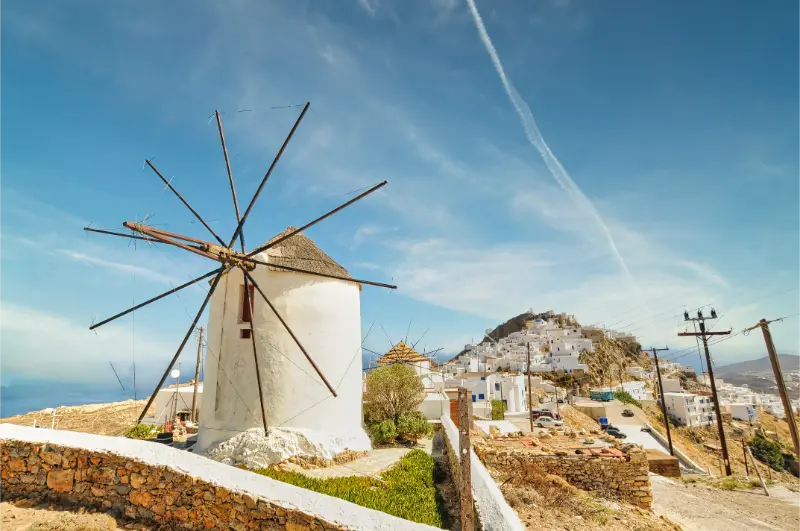
    If walking, archaeological sites or road trips are central to the plan, I would avoid putting the most exposed activities in the middle of the day. Start early, leave the hottest hours for lunch or swimming, and return to villages and viewpoints later in the afternoon.

    Budget and booking strategy

    Accommodation prices can change dramatically by month and by exact location. I compare the total cost of the stay rather than the room rate alone: a cheaper property can become less attractive if it requires daily taxis, long drives or paid parking. On small islands and in mountain regions, location is often worth more than an extra category of hotel.

    Ferry timetables, domestic flights, rental-car prices and boat excursions are dynamic. I would book the fixed parts of the trip first, then leave weather-dependent activities flexible where possible. Always recheck schedules a few days before travel and again on the day when sea conditions are relevant.

    Practical mistakes to avoid

    The most common mistake in Paxos and Antipaxos is trying to see too much in too little time. A better trip usually comes from choosing fewer bases, driving the same roads less often and leaving space for a beach, village or meal that turns out to be better than expected.

    Do not assume every attractive cove has easy access, shade, facilities or reliable phone coverage. Carry water, sun protection and shoes suitable for uneven ground. Download an offline map before remote drives or hikes, and ask locally before taking a rental car onto rough roads that may not be covered by the rental agreement.

    Who this destination suits

    Paxos and Antipaxos works especially well for independent travellers who enjoy combining landscapes with local food and small-scale sightseeing. Couples can build days around beaches, sunset walks and slow dinners, while solo travellers gain flexibility to follow weather and transport conditions. Families can also enjoy the destination, but the most comfortable plan usually uses fewer bases and avoids very long transfer days.

    Travellers with limited mobility should check accommodation access carefully. Historic villages can have steep lanes, steps and parking outside the centre, while some beaches require rough paths or stairways. A beautiful location on a map is not always the most practical base for every traveller.

    How to combine it with the rest of Greece

    Paxos combines naturally with Corfu, which adds a UNESCO-listed old town and a larger island road trip, or with Parga on the mainland. For a broader comparison of western islands, use the Kefalonia guide and Lefkada guide.

    Frequently asked questions

    How many days do I need in Paxos and Antipaxos?

    For a first visit, four to seven days usually gives enough time to understand the destination without turning every day into a transfer. A shorter stay can work if you focus on one area and accept that you will leave some places for another trip.
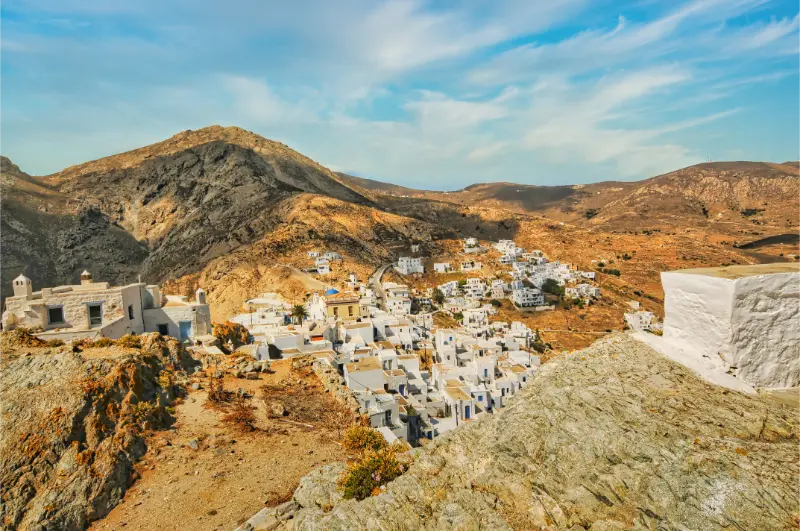
    Do I need a car?

    It depends on the destination and your base, but a car is often the easiest way to reach beaches, villages and archaeological sites away from the main town. If you prefer not to drive, choose accommodation around the strongest public-transport hub and build the itinerary around available buses, boats and organised excursions.

    Is it suitable for a first trip to Greece?

    Yes, provided you match the destination to your travel style. It is particularly rewarding for travellers who want to go beyond the most famous Greek islands while still having enough infrastructure for an independent holiday.

    Should I book everything in advance?

    Book the parts that can sell out or determine the structure of the trip, such as peak-season accommodation, flights and important ferry connections. Keep beach days and weather-sensitive excursions more flexible whenever cancellation terms allow.

    What should I pack?

    Bring sun protection, a reusable water bottle, comfortable walking shoes and a light layer for windy evenings or mountain areas. For beach-heavy itineraries, water shoes can be useful on pebbled or rocky shores.

    Final advice

    The best way to experience Paxos and Antipaxos is to resist the temptation to turn it into a checklist. Spend enough time in one area to notice the rhythm of the place, eat where the day naturally takes you, and leave room for local recommendations. That slower approach is what makes a second-tier destination in the guidebooks feel like a first-rate travel experience.

    Useful official information

    For destination information and current travel inspiration, consult the Greek National Tourism Organisation: Visit Greece. Transport timetables, seasonal opening hours and excursion schedules should always be checked again close to your travel dates.

    A closer look at Antipaxos

    Antipaxos is small enough that many visitors experience it only from a beach boat, but its interior paths and old vineyards add another dimension. If your boat schedule allows a longer stop, walking even part of the island changes the experience from a quick swim into a sense of place.

    Official tourism information describes a network of gentle paths linking the settlement, beaches and viewpoints. The longer Agrapidia–lighthouse–Voutoumi route is around eight kilometres, which means a walking day should be planned around heat and the last return boat rather than improvised at noon.

    More Ionian Islands guides

    Continue with Antipaxos for more detailed planning in the Ionian Islands.

    More detailed Paxos guides

    Related itinerary: Corfu and Paxos in 7 Days: Ionian Island-Hopping Itinerary.

  • Chora Amorgos Guide: Castle, Windmills, Museums, Sunset and Where to Stay

    Chora Amorgos Guide: Castle, Windmills, Museums, Sunset and Where to Stay

    Chora is the kind of Cycladic capital that makes sense only after you stop trying to “do” it quickly. Built high above the sea, around 400 metres according to the municipal tourism guide, it hides from the coast behind folds of rock. White lanes, tiny squares, blue-domed churches and old windmills appear almost without warning as you turn corners. The 13th-century Venetian castle on the rocky outcrop gives the settlement a strong focal point, but the pleasure is in the network of lanes around it.

    For a first visit I would give Chora at least one slow afternoon and evening, then return another day if you are using it as a base for Hozoviotissa or hiking. It is only about 5.5 km from Katapola, yet the atmosphere is completely different: no harbour promenade, more height, cooler evening air, steeper walking and a stronger village feel.

    Beach Of Katapola Amorgos Greece

    At a glance

    Best forAtmosphere, evenings, Hozoviotissa, hiking
    AltitudeAbout 400 m above sea level
    From KatapolaAbout 5.5 km
    From AegialiAbout 16 km
    Car essential?No, if buses match your plans

    Why Chora feels different from a seaside Cycladic town

    The capital developed away from the shore, a defensive pattern that gives it a compact maze rather than a waterfront grid. You move through covered passages, little staircases and irregular squares, with sudden views of the surrounding ridges. The village is particularly rewarding before sunset, when day visitors begin to leave and cafés and tavernas become the focus.

    The municipal guide describes Chora as a medieval mountain village surrounded by windmills. That is useful context: this is not simply a photogenic collection of white houses, but a settlement shaped by exposure, defence and the need to build tightly on difficult ground.

    The Venetian castle and the rock of Kera Leousa

    The castle sits on the prominent rock above the village and is one of Chora’s defining landmarks. Access conditions can change and the final approach is steep, so do not treat it as an effortless viewpoint. Even if you do not climb every last step, the rock is visible from many lanes and helps you orient yourself.

    Nearby churches and old houses create a much richer visit than a quick “castle photo”. Walk slowly around the base, notice how buildings adapt to the rock and look back toward the windmills on the ridge.

    Windmills and sunset viewpoints

    The line of old windmills above Chora is one of the classic Amorgos scenes. Some are ruins rather than restored interiors, but they show how exposed the ridge is to wind. Go late in the day for softer light, yet bring a layer because the temperature can fall quickly after sunset.

    For photography, do not crowd doorways or private terraces. The best compositions often come from stepping back and using the rock, churches and windmills together rather than trying to photograph a single “famous” angle.

    Back View Woman Wearing Red Bikini Looking Shipwreck Olympia Boat Amorgos Island Cyclades Greece

    Museums and churches

    Chora has an archaeological museum, ecclesiastical collections and a folklore dimension that add context to the landscape. Seasonal hours can be limited, so verify locally rather than building an entire day around a museum timetable copied from an old blog post.

    The island has an extraordinary density of chapels and religious sites. Visit respectfully, dress appropriately where requested and remember that small churches are active places of worship rather than decorative interiors.

    Using Chora for Hozoviotissa and Agia Anna

    Chora is the most natural land base for the Monastery of Hozoviotissa. The road reaches the parking/approach area outside the village and the final climb is on foot. Agia Anna lies below the monastery on the same dramatic east coast, so the two are often paired in one half-day.

    For the practical details, use the Hozoviotissa Monastery guide and Agia Anna and Mouros guide. Do not plan a swim as if the monastery dress code, walking time and heat do not exist; order matters.

    Where to stay in Chora

    Stay in Chora if you value evenings, village atmosphere and easy access to the centre of the island more than having a beach outside the door. It is especially good for couples, walkers and travellers who like to return from a day trip, shower and walk to dinner without driving again.

    Before booking, ask about luggage access, stairs, parking and the exact distance to the bus stop. “In Chora” can still involve steep lanes that feel very different with a suitcase. For a full comparison with Katapola and Aegiali, see where to stay in Amorgos.

    Eating and evening rhythm

    Chora is one of the best places to explore Amorgian cooking in a setting that feels alive after dark. Look for patatato, local cheeses, seasonal greens and psimeni raki rather than ordering only generic island dishes. The Amorgos food guide explains what is genuinely local.

    Dinner later in the evening fits the rhythm of summer Chora. If you are hiking early the next morning, keep the late-night bar stop optional: the exposed trails are much more enjoyable when you start rested and before the heat builds.

    Tours and experiences

    Organised activities on Amorgos are more limited than on Santorini or Mykonos, which is part of the island’s appeal. When a guided hike, boat trip or cultural tour fits the plan, compare the exact meeting point, duration, cancellation conditions and whether transport is included before booking.

    Frequently asked questions

    Is Chora the best place to stay in Amorgos?

    It is one of the best choices for atmosphere, restaurants, central access and Hozoviotissa. Katapola is easier for port logistics, while Aegiali is better for a sandy beach and the northern villages.

    Does Chora have a beach?

    No major beach sits in the village itself. Agia Anna and Kambi are reached on the east side, while Katapola and Aegiali provide different beach options.

    Can I visit Chora without a car?

    Yes, when seasonal buses operate on the routes you need. Always check the current timetable because frequency changes through the season.

    How long should I spend in Chora?

    Allow at least half a day plus an evening. Staying overnight gives a much better sense of the village after day visitors leave.

    Is Chora difficult with luggage?

    It can be. Narrow lanes, stairs and vehicle restrictions mean the exact accommodation location matters more than the map distance suggests.

    What should I combine with Chora?

    Hozoviotissa and Agia Anna are the obvious combination, while the Fotodotis trail links Chora toward Katapola for walkers.

    Planning details that make a real difference

    Amorgos looks compact on a map, but a day based in Chora works best when you respect the island’s long, mountainous shape. Roads bend around ridges, buses are seasonal and several beaches or trailheads still require walking. Build the day around one part of the island instead of repeatedly crossing from north to south.

    In July and August, start exposed walks early and treat the middle of the day as swimming, lunch or shade time. The Meltemi can make the air feel cooler than it is, so do not use wind as a substitute for sun protection. In May, June, September and early October, walking is often more comfortable, but transport and boat services may run less frequently than at peak summer.

    Keep water, a hat and shoes with reliable grip in your day bag even when the plan does not sound like a hike. Many rewarding places on Amorgos are reached by stone steps, rough paths or steep village lanes. For remote beaches, assume there may be no shade, shower, shop or mobile signal exactly where you need it.

    Finally, leave some flexibility. Strong wind can change boat trips and beach conditions, a bus timetable can be revised, and a village festival may be a better evening than the restaurant reservation you planned months earlier. Organise the essential logistics, then allow the island to change the order of the day.

    Continue planning Amorgos

    For the rest of the island, continue with Katapola Amorgos Guide; Aegiali, Langada and Tholaria Guide; Hozoviotissa Monastery Guide; Agia Anna and Mouros Beaches Guide; Best Beaches in Amorgos; Amorgos Hiking Guide; Amorgos Without a Car. These guides are designed to work together, so you can move from a general idea to the practical details of transport, beaches, walking and where to base yourself.

    Useful official resources

    For current destination information use Amorgos Municipality tourism guide. For public buses check the Amorgos Bus Company timetable page, which explicitly advises travellers to confirm route changes on arrival. For walking and beach overviews, Visit Greece hiking information and Visit Greece beaches of Amorgos are useful starting points. Recheck opening hours, buses and boat departures shortly before travel.

    Final practical advice

    Chora is best approached as a place to wander rather than a checklist. See the castle and windmills, sit in a square, visit a museum if it is open, then let dinner stretch into the evening. If you stay here, accept the steps and parking limitations in exchange for one of the most atmospheric bases on Amorgos.

    How I would fit this into a first Amorgos trip

    For a first visit, I would avoid using this subject as an isolated checklist. Build it into a route that gives Chora, Katapola and the north enough time to feel different. A five- to seven-night stay can include one dedicated hiking day, two flexible swimming days, one cultural day around Hozoviotissa and Chora, and an evening in both a port and a mountain village. This balance is more revealing than trying to collect every beach and viewpoint in one loop.

    Katapola Island Of Amorgos Cyclades Aegean Greece

    Ferry times should shape the first and last day. If you arrive in Katapola, keep the first evening local instead of immediately crossing the island. If you arrive in Aegiali, enjoy the north first. The same logic applies on departure: sleep where the morning connection is easiest when the ferry is early, rather than creating a stressful taxi transfer simply to spend one final night in a prettier village.

    Amorgos also rewards seasonal thinking. May and early June suit walking and flowers but the sea may feel cool; July and August bring the broadest visitor services plus stronger heat and wind; September often combines warm water with better hiking temperatures, although bus and boat frequencies can begin to ease. October can be beautiful for independent travellers who accept a quieter island and fewer daily connections.

    Budget for occasional taxis even if you plan to use buses. One well-timed taxi can protect a hiking plan, solve an early ferry connection or let you eat in another village after the last convenient bus. That is usually better value than renting a car for an entire week if you only need private transport twice.

  • Chora Serifos Guide: Castle, Square, Churches, Sunset and Where to Stay

    Chora Serifos Guide: Castle, Square, Churches, Sunset and Where to Stay

    Chora Serifos Guide is part of a larger Serifos trip rather than an isolated attraction. Serifos works best when you combine its hilltop Chora, port life, beaches, old villages, mining landscapes and footpaths instead of spending the entire holiday in one resort zone. This guide focuses on the decisions that matter on the ground: access, timing, swimming conditions, transport, where to eat and how to connect the experience with the rest of the island.

    Serifos is compact on a map but topography changes travel time. Roads climb and curve, old paths cross steep slopes and many beaches remain deliberately low-key. The result is an island that feels authentic and easy to understand once you stop trying to visit everything in one day. Build the trip around one main objective each morning and leave room for a second activity only if weather, transport and energy cooperate.

    Quick planning overview

    QuestionPractical answer
    Best forTravellers who want a quieter Cyclades experience with beaches, walking and traditional settlements
    Main transport choiceBus for Livadi–Chora, car or taxi for flexible island exploration, walking for selected old paths
    Best rhythmOne main area or beach per half-day rather than constant driving
    Biggest planning mistakeAssuming every beach has food, shade or frequent transport
    Useful baseLivadi/Livadakia for convenience; Chora for atmosphere

    Understanding Chora before you arrive

    Serifos Chora is built high above Livadi and is split naturally between Kato Chora and Pano Chora. The climb, stepped lanes and changing views are part of the experience, not an inconvenience to rush through. White houses crowd the slope, while the upper settlement rises toward the remains of the Venetian castle and broad Aegean viewpoints.

    The most rewarding approach is to allow at least half a day and avoid treating Chora as a single square. Walk slowly through the lower lanes, climb toward the upper town, stop at churches and viewpoints, and leave enough time to see how the light changes toward sunset.

    Castle and upper viewpoints

    The highest part of Chora preserves the atmosphere of a fortified Cycladic settlement. What survives of the castle is less about monumental walls than about position: from the upper ridge you understand why the settlement was built here, with visibility across the sea and natural defensibility.

    Wear shoes with grip because polished stone, steps and irregular paving can become slippery. The best photographs often come from the walk rather than the final viewpoint, especially where lanes frame the harbour far below.

    Squares, churches and evening life

    Chora becomes social in the evening when its small squares fill with tables and people move between cafés, bars and tavernas. Rather than booking every minute, arrive before sunset, wander first and choose dinner after you understand which square feels right for your mood.

    Churches are woven into the urban fabric. Respect dress and services, keep voices low around active worship and avoid treating doorways as photo props. The contrast between quiet religious spaces and lively evening squares is one of Chora’s most appealing features.

    Walking from Livadi

    The official hiking network lists the traditional Livadi–Chora route at about 2.3 km. It follows an old cobbled ascent with fountains and churches and is far more atmospheric than simply taking the road, but summer heat can make the uphill walk demanding.

    A smart plan is to walk up in the cooler morning or late afternoon and use the bus for the return. If you are travelling with children or luggage, do not use the historic path as a transfer route; enjoy it as an excursion instead.

    A useful cultural stop: the Archaeological Collection in Livadi

    The Archaeological Collection of Serifos is now housed in Livadi and gives useful historical context to the island beyond beaches and modern mining. The permanent display includes sculpture, architectural pieces, funerary reliefs and amphorae connected with sites such as Chora and Aspros Pyrgos, covering periods from Classical to Roman times.

    Windmill Chora Village Serifos Island Greece

    For the 2026 summer season the official museum portal lists general admission at €5, closure on Tuesday and opening from 08:30 to 15:30, with a later Friday schedule. Hours can change on holidays or operationally, so check again before building a ferry or beach day around the museum.

    How many days should you allow?

    A three-night stay is enough for a first taste of Serifos, but four or five nights creates a much better balance between Chora, beaches, villages and the mining landscapes. With only two nights, ferry times can dominate the trip and weather has too much power over your beach plans.

    Panoramic View Traditional Chora Village Island Serifos Cyclades Greece

    If this article focuses on one district or activity, use it as one half-day or one full day inside a longer island stay. Avoid changing accommodation mid-trip unless you have a very specific reason; distances are short enough to explore from one sensible base.

    When to go

    June and September are excellent for travellers who want swimming without the most intense crowds. July and August have the fullest transport and beach-service network but also the strongest heat and accommodation demand. May and October can be superb for walking, although sea temperature and seasonal businesses become less predictable.

    Hikers should prioritise cooler hours in every season and avoid exposed routes in extreme heat or strong wind. Beach travellers should stay flexible because the Cycladic wind can make one coast uncomfortable while another remains calm.

    What to pack

    Serifos rewards practical packing: shoes with grip for Chora and trails, a hat, high-SPF sun protection, a refillable bottle and a light layer for ferry decks or windy evenings. A small daypack is more useful than a large beach bag on cobbled paths.

    For unorganised beaches add water, snacks, basic shade and swim shoes if you dislike mixed sand and pebbles. Do not assume every remote bay has a canteen, toilets or sunbeds just because it appears on a popular map.

    Practical tips that make the day easier

    • Check the current wind before committing to a beach; a protected coast can be dramatically better than the famous beach you planned the night before.
    • Confirm return transport before leaving Livadi or Chora, especially outside the peak July–August timetable.
    • Carry cash as a backup for small tavernas, buses or seasonal services even if cards are commonly accepted.
    • Do not enter abandoned mine galleries or climb industrial ruins; enjoy the mining heritage from safe paths and public areas.
    • Use the cooler first and last hours of the day for Chora steps and hiking routes.
    • Bring your own water to unorganised beaches and villages with limited services.
    • Keep one flexible half-day in the itinerary for wind, ferry changes or a beach you decide to revisit.
    • Respect churches and residential lanes: modest behaviour and low noise matter in small settlements.
    • If you are travelling with children or limited mobility, ask accommodation hosts about steps and road access before booking.
    • Download or photograph useful bus and trail information, but still verify locally because seasonal operations change.

    Continue planning your Serifos trip

    Use this page together with the rest of the new Serifos cluster: Chora Serifos Guide; Livadi and Livadakia Serifos Guide; Mega Livadi and Koutalas Serifos Guide; Psili Ammos and Agios Sostis Serifos Guide; Ganema, Vagia and Koutalas Beaches Serifos Guide; Serifos Villages Guide; Serifos Hiking Guide; Serifos Without a Car; Serifos with Kids; Where to Stay in Serifos. Start with the Serifos Travel Guide if this is your first visit, then choose the detailed guides that match your base and interests.

    Useful official sources before you go

    For details that can change, I cross-check the official Municipality of Serifos portal, the official transport page, the official hiking network and the Archaeological Collection of Serifos. Bus timetables, beach transfers, museum hours and seasonal services can change, so recheck the details that affect a specific travel day.

    Frequently asked questions

    Do I need a car in Serifos?

    Not always. Livadi, Livadakia and Chora can work very well with buses and walking, while a car becomes much more useful for multiple remote beaches, villages and the southwest mining coast.

    Is Serifos good for a short trip?

    Yes. Three nights can work well if ferry times are favourable, but four or five nights gives you enough flexibility for wind, hiking and a slower beach rhythm.

    Which area is best for a first visit?

    Livadi or Livadakia is the easiest base for transport and services. Chora is the most atmospheric choice if hills and luggage logistics do not bother you.

    Are the beaches organised?

    Some have food, umbrellas or nearby tavernas, but many are largely unorganised. Carry water and shade whenever you are unsure.

    Can I hike in summer?

    Yes, but start early or late, avoid extreme heat and carry more water than the route distance alone suggests.

    Final planning advice

    The best Serifos trips are built around contrast: an old stone path followed by a swim, a quiet village followed by Chora at sunset, or a mining-history stop followed by a relaxed taverna by the sea. Keep the schedule light enough to respond to wind and transport, and the island will feel far richer than a simple list of beaches.

    How to use one base efficiently

    Serifos is small enough that one good base is usually better than changing hotels. From Livadi or Livadakia you can solve ferry and bus logistics quickly; from Chora you gain atmosphere but accept more steps. Use taxis strategically for one-way hikes or a late dinner instead of paying for a rental vehicle every day if you only need it occasionally.

    Serifos Island Greece Cyclades Aerial Drone View Livadi Port

    the island is small enough that one good base is usually better than changing hotels. From the port area or Livadakia you can solve ferry and bus logistics quickly; from the hill town you gain atmosphere but accept more steps. Use taxis strategically for one-way hikes or a late dinner instead of paying for a rental vehicle every day if you only need it occasionally.